Просмотр новости
Найдите то, что Вас интересует
 Спутники
 РН
РН SpaceX
 Роскосмос
 NASA
NASA
СпутникиРНSpaceXРоскосмосNASADigital transformation has become a central strategy for improving public service delivery, administrative efficiency, and governance transparency in rural areas. In Indonesia, the Digital Village Program has encouraged villages to adopt information and communication technologies to modernize public administration and strengthen citizen participation. This study examines how the implementation of a village website in Tapenpah Village, a border community located between Indonesia and Timor-Leste, reshapes administrative practices and generates administrative burdens for citizens. Employing a qualitative phenomenological approach with a case study design, data were collected through in-depth interviews with key informants, including the village head, village operators, and community members, complemented by field observations and document analysis. The analysis was guided by Administrative Burden Theory, focusing on learning costs, compliance costs, and psychological costs experienced by citizens when accessing digital public services. The findings indicate that the village website has improved administrative efficiency, transparency, information dissemination, and institutional responsiveness by reducing dependence on conventional face-to-face bureaucratic interactions. Nevertheless, significant barriers remain. Limited internet connectivity, unequal access to digital infrastructure, and insufficient digital literacy restrict the effective utilization of online services, particularly among elderly residents and citizens living in remote hamlets. Consequently, digital governance generates multiple forms of administrative burden, requiring citizens to learn new digital procedures, comply with additional technological requirements, and cope with uncertainty and frustration when navigating online systems. To mitigate these challenges, the village government adopted a hybrid administrative service model that combines digital platforms with assisted face-to-face services provided by village operators. The study concludes that digital governance initiatives in rural border regions require adaptive, inclusive, and citizen-centered implementation strategies. Without adequate investments in digital infrastructure, institutional capacity, and digital literacy, digitalization may inadvertently reproduce administrative exclusion rather than promote equitable access to public services.
Over the past five years, the Indonesian government has strived to promote digital transformation at the village level through the Digital Village Program. In 2023, this program received a budget allocation of IDR 1.4 trillion (Lebang et al., 2023). One example of concrete implementation is Tapenpah Village in Timor Tengah Utara, a village on the border between Indonesia and Timor Leste. The village launched its official website in 2021 as part of its efforts to digitize public services. However, this implementation has revealed significant digital inequality. Although the number of internet users in the village has increased rapidly, this has not been accompanied by a comparable increase in the national digital literacy index. This means that access to technology has not fully impacted the community’s mastery and meaningful use of digital technology.
Based on data reported by Cuponation (2019), fiber-based internet service rates in Indonesia are still relatively expensive compared to neighboring countries in Southeast Asia, such as Singapore, Malaysia, Thailand, and the Philippines (Arifianti & Sakapurnama, 2024; Oktarina et al., 2024; Qashlim et al., 2021; Saputra et al., 2023; Yu et al., 2023). In 2021, according to the Indonesian Internet Service Providers Association (APJII), only around 38% of Indonesia’s population had internet access. The majority of these users are concentrated in urban areas, while rural areas still experience much lower penetration rates (Ali et al., 2022; Ji et al., 2023; Oktarina et al., 2024). This inequality is exacerbated by the uneven distribution of digital infrastructure, which has not yet reached all regions of Indonesia (Fatimah et al., 2023; Margiansyah, 2020; Rozikin et al., 2023). According to data from the Ministry of Communication and Informatics (Kominfo), there are still 12,548 villages in Indonesia that lack telecommunications services. Of these, 9,113 villages are located in the 3 T (frontier, outermost, and disadvantaged) regions, while the remaining 3,435 villages are spread across non-3 T areas, which are considered non-commercial (www.apjii.or.id, 2023). This condition reflects the existence of structural disparities in access to and adoption of information technology between regions in Indonesia, a major challenge to efforts to achieve equitable national digital transformation (Abdussamad, 2024; Ambarsari et al., 2024; Al Waroi et al., 2025; Judijanto & Nurwanto, 2024; Lebang et al., 2023).
According to the Minister of Communication and Informatics, Indonesia still lags behind the ASEAN average in digital literacy and skills, especially in remote and underdeveloped regions (Basir et al., 2020; Bott and Tourish, 2016; Lebang et al., 2023). This is reflected in 2022 data from the Central Statistics Agency (BPS), which shows that Timor Tengah Utara (TTU) Regency, a 3 T (frontier, outermost, and underdeveloped) region, recorded the second-lowest digital literacy index in East Nusa Tenggara Province, with a score of 3.2 out of 10. Poor internet access and connection quality are major obstacles to improving the digital capacity of local communities. This situation not only limits citizen participation in the digital economy but also hinders the utilization of technology-based public services at the local level (Fahmi, 2025; Gasmido et al., 2025; Hartana et al., 2024).
Amidst various challenges in digital infrastructure and literacy, the government continues to encourage digital transformation at the village level through the Digital Village Program. In 2023, this program allocated a budget of IDR 1.4 trillion to expand access to and utilization of information technology in rural areas. One village that has benefited from this initiative is Tapenpah Village, North Central Timor Regency, a village on the border between Indonesia and Timor Leste. The village launched an official website in 2021 (https://tapenpah.desa.id/, 2025) as an effort to modernize public services and local documentation. However, the implementation of this technology has revealed a widening digital inequality gap. Although the number of internet users has increased significantly, this increase has not been accompanied by a comparable increase in the national digital literacy index. A joint survey by the Ministry of Communication and Informatics (Kominfo) and Katadata Insight Center (KIC) showed that Indonesia’s digital literacy index was at 3.47 out of 5, still below the “good” category. This confirms that internet access alone is insufficient without being supported by increased understanding, skills, and effective use of technology by the community (Lee & Hidayat, 2019; Mashis et al., 2023; Rijal et al., 2023).
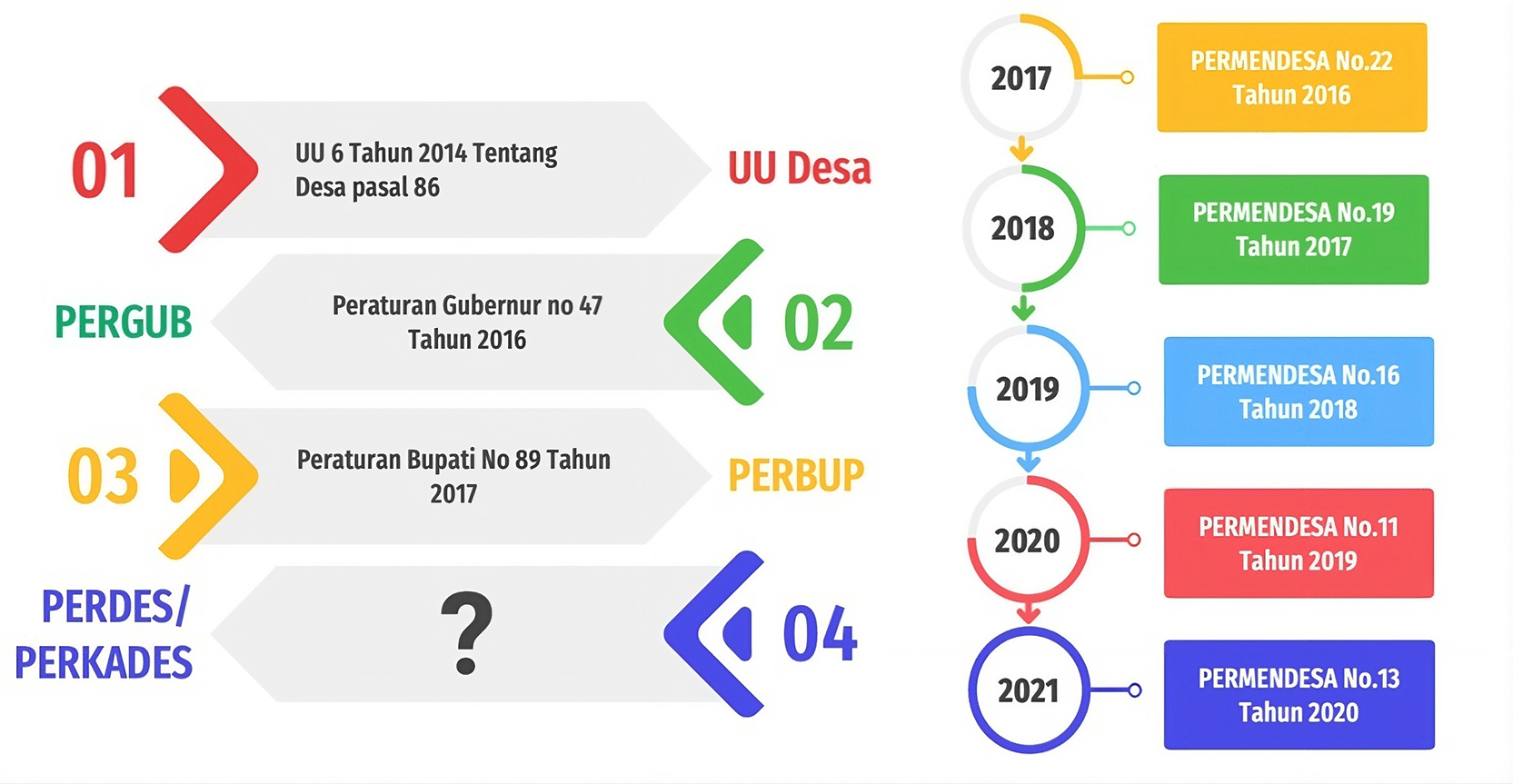
The development of village information systems is also supported by a regulatory framework at national and local levels, including the Village Law and several ministerial regulations governing village governance and digital administration. The evolution of these regulatory instruments is summarized in Figure 1.
This situation is theoretically interesting to examine through the lens of administrative burden, as introduced by Herd & Moynihan (2018). The phenomenon in Tapenpah Village crystallizes this concept: that the community is burdened not only by traditional bureaucratic procedures but also by the demands of digital literacy that are not accompanied by adequate infrastructure or literacy capacity. The theory of digital inequality (Dijk, 2020) strengthens the argument that e-government programs without an inclusive approach have the potential to become new tools of exclusion for marginalized groups, especially in underdeveloped and remote areas (Djatmiko et al., 2025; Kim et al., 2025; Wihlborg et al., 2017). This study aims to critique the universal assumption that digitalization always brings benefits, by showing how administrative burdens actually increase in areas constrained by limited infrastructure and digital literacy (Aziz, 2025; Giest & Samuels, 2023). Yet, the concept of e-government, adopted from New Public Management theory (Hood, 1991), essentially promises bureaucratic efficiency through the use of technology. Furthermore, according to Lipsky’s Street-Level Bureaucracy theory (1980), technology should facilitate the performance of frontline bureaucracies in providing public services. However, the reality on the ground shows the opposite: without adequate infrastructure and capacity support, technology becomes a new burden, not a solution.
From the perspective of administrative burden theory (Herd & Moynihan, 2018), the situation in Tapenpah Village represents a form of “double burden” for border communities. First, there is the learning burden: residents must spend extra time and money learning to use digital technology they are unfamiliar with. Second, there is the compliance burden: public service procedures moved online are more complicated and less intuitive than manual systems, making access more difficult. Third, there is the psychological burden: frustration and self-doubt resulting from failure to access basic citizen rights, which in turn weakens social and political participation (Mao et al., 2024; Nuha et al., 2024; Nuraisiah et al., 2023).
Academic debate surrounding this issue falls into two main camps. The technocratic camp (Heeks, 2017) argues that digital barriers are temporary and will naturally resolve as technology penetration increases. Conversely, the critical camp (Sein et al., 2021) asserts that implementing technology without building local capacity actually deepens structural inequalities. The case of Tapenpah Village supports the latter position: here, administrative burden not only hinders but actively creates digital exclusion for marginalized groups.
Administrative burden, in this context, is not simply a bureaucratic inconvenience but a mechanism that undermines a program’s positive impact (Heinrich, 2015; Herd et al., 2023; Herd & Moynihan, 2018). As (Heinrich, 2015; Herd et al., 2023) emphasize, poorly managed administrative burden can turn inclusive initiatives into instruments of exclusion a stark irony in a region like Tapenpah.
Amidst the academic debate between technocratic groups who view digital issues as a temporary gap (Nugroho et al., 2022) and structuralists who view them as a form of new digital colonialism, this research takes a critical stance. This research is considered urgent for three main reasons: First, there are no previous studies that specifically examine the concept of administrative burden in the context of village-level e-government implementation in border areas, making this the first study to explore this phenomenon. Second, the research findings can inform strategic evaluations of the ongoing Digital Village Program, particularly regarding its effectiveness and inclusiveness. Third, in practical terms, the research findings have the potential to formulate an adaptive e-government model that suits the characteristics of remote and underdeveloped areas (Prisanda and Febrina, 2021; Priyatno et al., 2023; Sihotang et al., 2025).
Using a qualitative phenomenological approach, this study aims to uncover how the administrative burden arising from the use of village websites affects citizen participation, as well as its implications for strengthening or widening the digital divide. This research’s theoretical contribution extends beyond local understanding to enrich the global public administration literature, particularly in understanding the dynamics of administrative burden in the digital space (Herd & Moynihan, 2018).
The object of this study is the implementation of a village website as a digital governance instrument in Tapenpah Village, North Central Timor Regency, a border area between Indonesia and Timor-Leste. The village website represents a local-level application of e-government intended to improve administrative efficiency, transparency, and citizen access to public services, reflecting the broader transformation of public administration through digital technologies (Bovaird, 2003). In practice, however, digitalization within public bureaucracies does not operate in a vacuum but interacts with existing institutional structures, organizational capacities, and social conditions that shape how technological innovations are implemented and experienced by citizens. Bureaucracy remains a central institutional mechanism through which policies are translated into everyday administrative practices, meaning that digital reforms are ultimately mediated by the functioning of local bureaucratic institutions (Goodsell, 2014). In disadvantaged regions such as border villages, the adoption of digital platforms may produce unintended consequences, particularly when technological initiatives are introduced without sufficient infrastructure, digital literacy, or institutional capacity. Recent public administration studies highlight that digitalization can paradoxically increase administrative burdens for citizens by creating additional learning costs, compliance requirements, and psychological pressures associated with navigating digital service systems (Bhuiyan & Baniamin, 2025). At the same time, the expansion of digital governance raises broader questions about the normative implications of digital administrative systems and how they reshape state–citizen relations, bureaucratic authority, and public values within governance processes (Zhang & Wang, 2025). From a governance perspective, local governments are also expected to ensure that digital initiatives support inclusive and responsible public service delivery rather than reinforcing structural inequalities within society (Abellan-Gimenez et al., 2023). Therefore, this study focuses on examining how the implementation of the Tapenpah village website shapes administrative practices and citizen experiences, particularly in relation to the emergence of administrative burdens and their implications for digital exclusion in border communities.
Digital governance refers to the integration of information and communication technologies (ICT) into public administration processes to enhance the effectiveness, transparency, and responsiveness of government institutions. The development of e-government systems has been widely promoted as a mechanism for improving public service delivery, strengthening accountability, and facilitating interaction between governments and citizens (Bovaird, 2003; Septiani et al., 2022). Through digital platforms, administrative procedures that were previously conducted through manual bureaucratic processes can be transformed into more efficient and accessible online services. In the context of rural governance, digital initiatives such as village websites represent an important component of local government innovation aimed at expanding access to information and simplifying administrative services for citizens (Oktarina et al., 2024; Sihombing & Lumbantobing, 2024). The implementation of digital governance does not solely depend on technological availability but is also closely related to the institutional capacity of bureaucratic organizations. Bureaucratic structures remain the central mechanism through which public policies are implemented and public services are delivered, meaning that digital reforms are mediated by administrative practices within government institutions (Goodsell, 2014). In this sense, digital governance should not be viewed merely as a technological transformation but as an institutional process that reshapes the relationship between bureaucratic organizations, technological systems, and citizen participation (Syaebani et al., 2021; Tamrin et al., 2024; Tao et al., 2024; Zhang, 2025).
Despite the rapid development of digital technology, unequal access to digital infrastructure remains a significant challenge, particularly in rural and peripheral regions. The concept of the digital divide describes disparities in access to internet connectivity, digital devices, and the skills required to utilize digital technologies effectively (van Dijk, 2020). In developing countries, these disparities are often more pronounced in rural and border regions where infrastructure development is limited and socio-economic conditions constrain the adoption of digital technologies (Fatimah et al., 2023; Margiansyah, 2020). Digital inequality is not limited to physical access to technology but also includes differences in digital literacy, knowledge, and the ability to meaningfully utilize digital services. Communities with limited digital skills may face difficulties in accessing online public services even when digital platforms are available (Judijanto & Nurwanto, 2024; Mashis et al., 2023). In the context of public service delivery, this condition may create new barriers for citizens, particularly in regions with limited technological infrastructure. Without adequate institutional support, digital government initiatives may unintentionally reinforce existing social inequalities and exclude vulnerable groups from accessing government services (Wihlborg et al., 2017; Djatmiko et al., 2025).
Administrative burden theory provides an important analytical framework for understanding how public policies and administrative procedures can impose various costs on citizens when accessing government programs. According to this perspective, administrative burdens generally consist of three main dimensions: learning costs, compliance costs, and psychological costs that individuals must bear when interacting with public institutions (Herd & Moynihan, 2018; Heinrich, 2015). Learning costs refer to the time and effort required for citizens to understand administrative procedures and eligibility requirements. Compliance costs involve the resources required to fulfill administrative requirements, such as completing forms or providing documentation. Psychological costs, meanwhile, include stress, frustration, or stigma experienced by citizens during administrative interactions. In the context of digital government services, administrative burdens may emerge when citizens are required to adapt to new digital systems without adequate support or digital literacy. Rather than simplifying administrative processes, digitalization can sometimes create additional barriers if technological systems are difficult to access or understand. Recent studies suggest that digital transformation in public administration may inadvertently increase administrative burdens when technological innovations are introduced without considering citizen capacity and institutional readiness (Bhuiyan & Baniamin, 2025; Giest & Samuels, 2023). As a result, digital governance initiatives must be carefully designed to ensure that technological innovations reduce rather than exacerbate administrative barriers.
Based on the theoretical perspectives discussed above, this study conceptualizes the implementation of village websites as a form of digital governance that aims to improve public service delivery at the local level. However, in rural and border areas where digital infrastructure and literacy remain limited, the adoption of digital platforms may interact with existing digital inequalities and generate administrative burdens for citizens. In this framework, digital governance initiatives such as village websites are expected to enhance access to public services, yet their effectiveness depends on the extent to which digital infrastructure, bureaucratic capacity, and citizen readiness are aligned. When these conditions are not fully met, digital service systems may increase learning, compliance, and psychological costs for citizens, ultimately contributing to digital exclusion rather than inclusion. Therefore, this study examines how the implementation of village websites in Tapenpah Village interacts with digital divide conditions and administrative burdens, shaping citizen participation and access to public services in border communities.
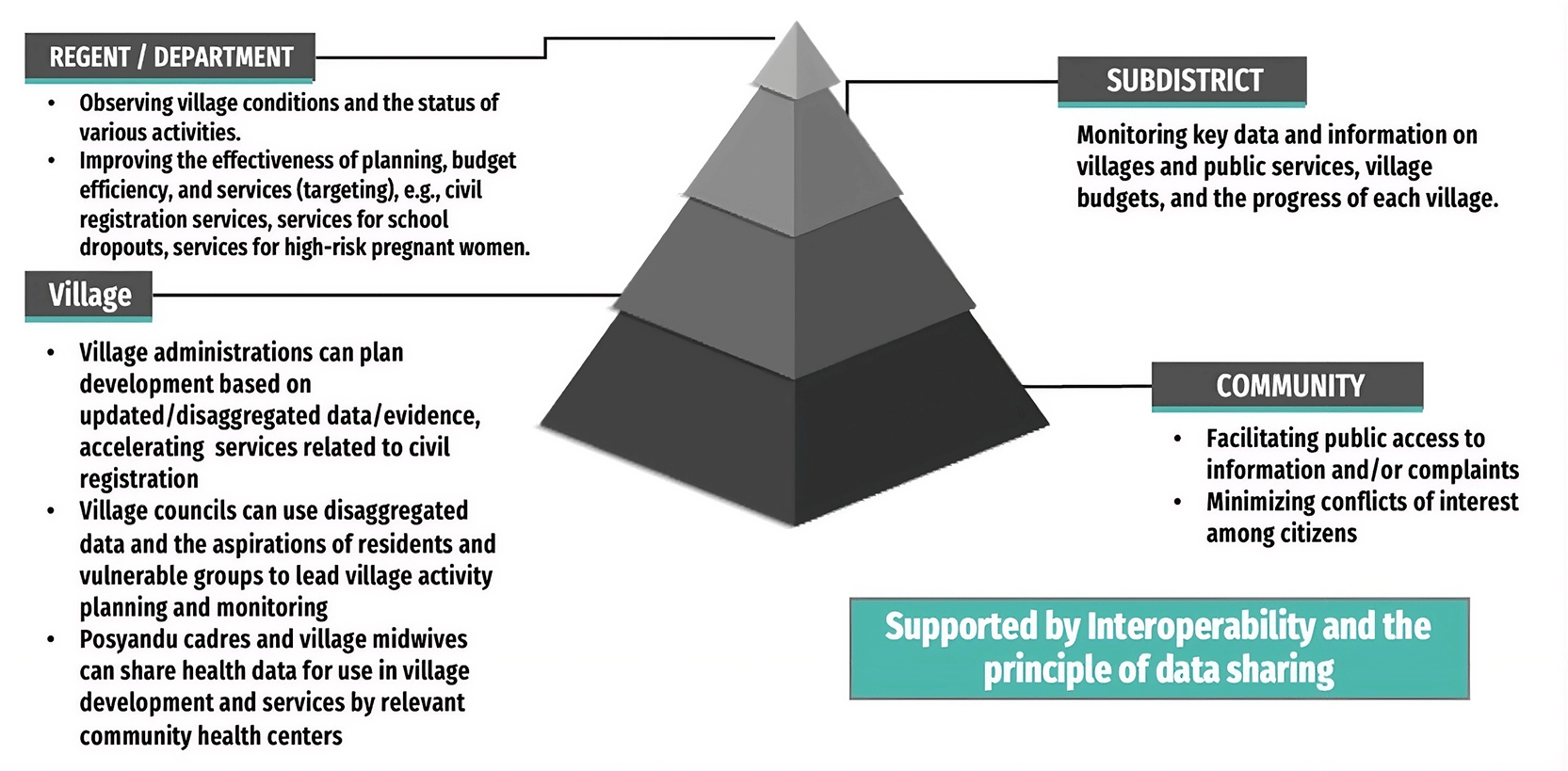
The implementation of village information systems also involves multi-level governance structures that integrate data flows between village governments, subdistrict institutions, and district authorities while ensuring public access to information. This governance structure is illustrated in Figure 2.
This research adopts a qualitative approach focused on in-depth interpretation of specific phenomena (Blumer, 1986) to explore how administrative burden affects citizen participation and its implications for the digital divide in the implementation of village websites in Tapenpah. Data were collected through in-depth interviews, observations, and documentation conducted with key informants such as village heads and village operators, as well as observations of infrastructure conditions and community behavior regarding technology use. Data analysis will focus on interpreting the subjective experiences of residents and village officials, as well as crystallizing the concept of administrative burden (Herd & Moynihan, 2018) and the theory of digital inequality (Dijk, 2020) in a local context. Furthermore, a case study method was chosen to intensively identify one or a set of cases, focusing on the details of each case and its context (Djamba & Neuman, 2002). The data analysis techniques used in this study aim to obtain valid data according to Bogdan & Biklen (2007). In this context, the primary tools of qualitative organizational research (Flanagan, 1954) will be used.
The implementation of the village website in Tapenpah Village represents an important step toward digitalizing local administrative services. Prior to the introduction of the website, administrative processes relied heavily on face-to-face interactions between citizens and village officials. Residents were required to visit the village office or the homes of village administrators to process documents, which often resulted in delays when officials were unavailable.
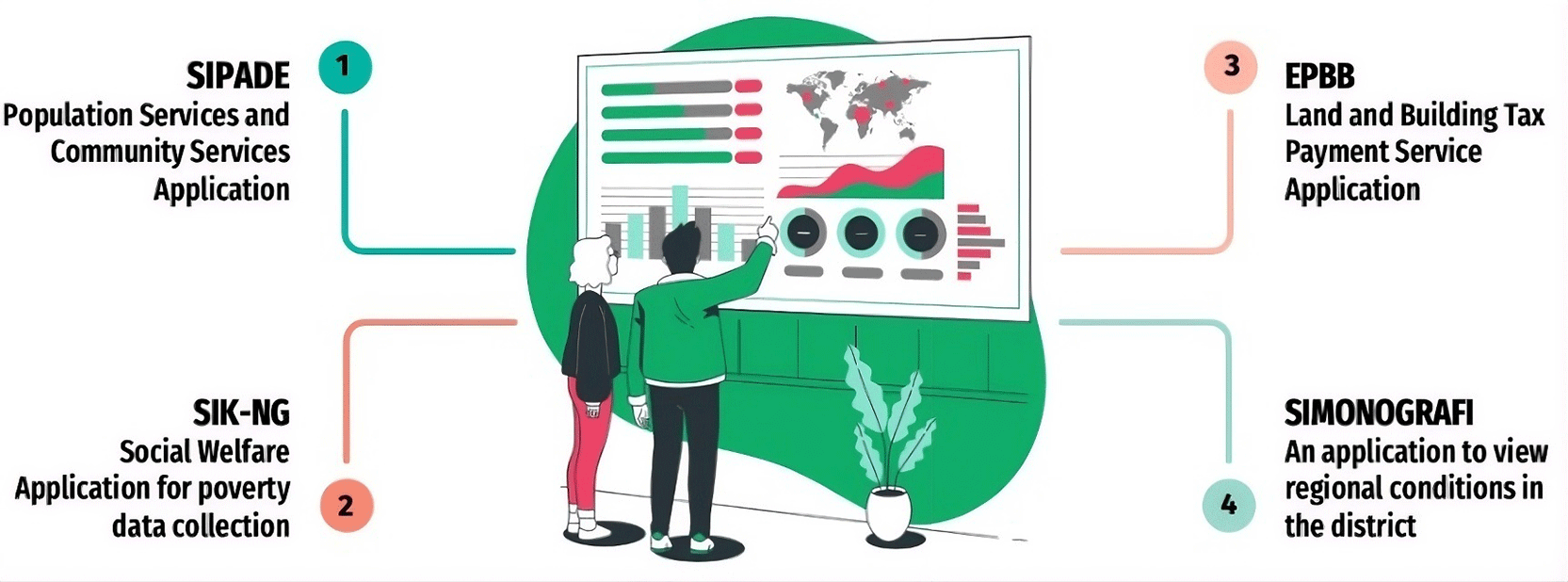
Various digital applications have been introduced to support administrative services and public information management at the village level, ranging from population administration systems to social welfare databases and local monitoring platforms. Examples of these digital service applications are presented in Figure 3. The introduction of the village website has partially transformed these practices by enabling citizens to access administrative services through an online platform. Through the website, residents can submit requests for administrative documents, access village information, and monitor development activities. Village officials reported that the platform also improves transparency by making governance activities more visible to the public. As a result, the website functions not only as an administrative tool but also as a mechanism for strengthening communication between the village government and the community.
The findings indicate that the development of the village website was largely driven by institutional leadership at the village level. The village head played a key role in initiating the digital governance program by allocating village funds and collaborating with external IT developers to build the website. This initiative demonstrates how local leadership can act as a catalyst for digital innovation in rural administrative systems. In addition to initiating the development of the website, the village government organized training activities for village staff to improve their capacity in managing digital administrative services. These training programs focused on website management, digital documentation, and information dissemination. The results suggest that digital governance initiatives require not only technological infrastructure but also organizational learning processes within local government institutions.
Despite the introduction of digital administrative services, the findings reveal significant challenges related to the digital divide in the village. Limited internet connectivity and low levels of digital literacy among residents continue to restrict access to online public services. Field observations indicate that only part of the village area has stable internet coverage, which makes it difficult for residents in remote locations to use the village website consistently.
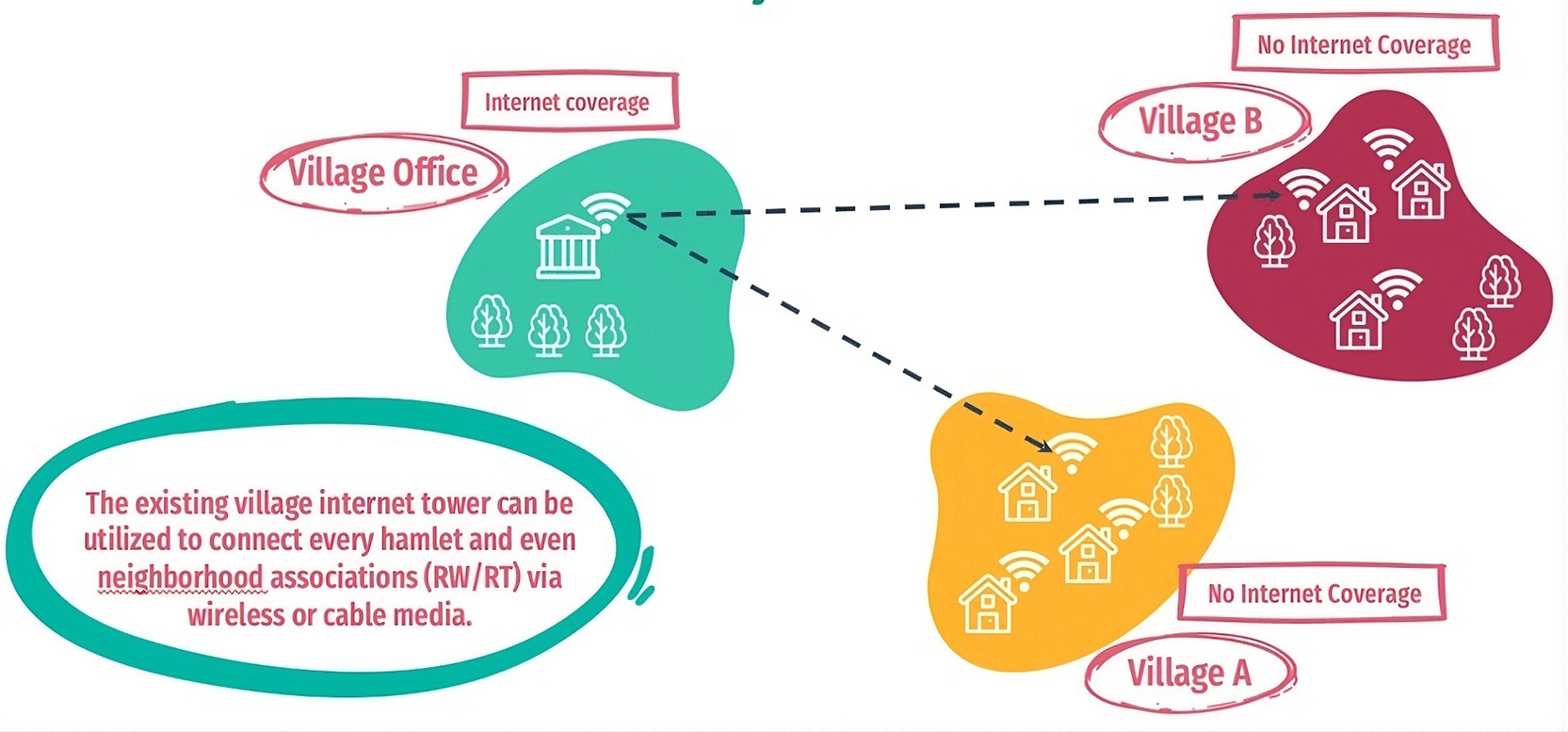
Internet connectivity in Tapenpah Village remains uneven, with stable connections primarily concentrated around the village office, while several hamlets still experience limited or no coverage. This situation reflects the structural infrastructure gap faced by rural border communities (see Figure 4). In addition to infrastructure limitations, several informants reported that many residents still lack the skills required to operate digital platforms. As a result, some citizens remain unaware of the website or prefer to use conventional administrative procedures by visiting the village office directly. These conditions indicate that digital governance initiatives in rural border areas are strongly influenced by structural inequalities in technological access.
The findings also reveal that the implementation of the village website has generated new forms of administrative burden for citizens attempting to access digital services. Three main dimensions of administrative burden were identified through the thematic analysis: learning costs, compliance costs, and psychological costs. Learning costs arise when citizens must invest time and effort to understand how to navigate the website and access administrative services online. Compliance costs emerge when citizens are required to follow digital procedures such as filling out online forms, uploading documents, and completing administrative requirements through the platform. Meanwhile, psychological costs are experienced when residents feel uncertain, frustrated, or discouraged when encountering difficulties while using the digital system.
The thematic structure of these findings is summarized in Table 1, which presents the results of the thematic coding analysis.
Table 1 illustrates how the thematic analysis identified the main dimensions of administrative burden experienced by citizens during the implementation of the village website.
To clarify the analytical process, the qualitative data were analyzed through a three-stage coding procedure consisting of open coding, axial coding, and selective coding. This process enabled the researchers to systematically connect empirical observations with broader conceptual themes. The results of the coding process are presented in Table 2, which shows how initial empirical concepts were aggregated into analytical categories and ultimately into core themes explaining the challenges of digital governance in border villages.
Table 2 demonstrates how the qualitative analysis moved from initial empirical observations toward broader conceptual explanations of administrative burden in digital governance implementation.
To address the challenges associated with digital inequality and administrative burden, the Tapenpah village government has implemented a hybrid administrative service model that combines digital and conventional service mechanisms. Residents who face difficulties accessing the website due to limited internet connectivity or digital skills can still visit the village office and receive assistance from village operators. In this system, village officials assist citizens in completing digital administrative procedures while maintaining face-to-face service interactions. The administrative data generated from these interactions are subsequently entered into the website system to ensure that digital records remain integrated. This hybrid service model reflects an adaptive governance strategy that enables local governments to maintain the benefits of digital governance while ensuring that citizens with limited digital capacity are not excluded from public services.
In the case of Tapenpah Village, limited internet coverage and low levels of digital literacy created significant barriers for residents in accessing digital administrative services. Instead of enforcing a fully digital service model, the village government implemented a hybrid approach that allows residents to access services either online or through direct assistance at the village office. As illustrated in Figure 5, village operators play a key role in mediating between digital platforms and citizens who are unfamiliar with technology. Residents who visit the village office receive assistance in submitting digital administrative requests, while the administrative records remain stored within the digital system. This hybrid administrative service model ensures that digital transformation does not exclude vulnerable groups such as elderly citizens or residents without access to smartphones or internet connectivity. At the same time, it allows the village government to maintain digital administrative records and improve transparency and efficiency in governance processes. By combining digital platforms with assisted services, Tapenpah Village demonstrates how adaptive governance strategies can bridge the gap between technological innovation and social realities in rural communities.
The implementation of the village website in Tapenpah Village reflects the Indonesian government’s broader effort to promote digital transformation through the Digital Village Program. Prior to the introduction of the website, administrative services relied heavily on face-to-face interactions with village officials. Residents were required to visit the village office or the homes of village administrators to process documents, which often resulted in delays when officials were unavailable. As one informant explained:
“So before this website was created, people usually took care of their paperwork directly at the office … if the village head wasn't there or the operator wasn't there, their paperwork wouldn't be processed … so people often had to wait longer.”
This situation illustrates how conventional administrative systems created inefficiencies and limited access to public services. The dependence on the physical presence of village officials caused delays, increased costs, and created frustration among residents, particularly those who lived far from the village office. The introduction of the village website represents an attempt to modernize administrative services by enabling residents to submit document requests online and access village information more easily. The platform reduces dependence on the physical presence of officials and improves transparency by providing access to information on village activities, budgets, and development programs. In addition to administrative efficiency, the website also functions as a medium for promoting local economic potential. As stated by the village head:
“The website was created because I wanted all the activities in the village to be exposed and accessible to everyone … not only our residents, but all internet users can see what the village is like and what local potential we have.”
The development of the website was strongly driven by the leadership of the village head, who allocated village funds and collaborated with external IT developers to build the platform. The village head emphasized that the website development was one of the first initiatives after his inauguration:
“I was elected in October 2019 and inaugurated in January 2020. After that I immediately budgeted for the website … initially around 5 million rupiah for the design and development.”
The sustainability of the website was also supported through periodic domain renewal funded by the village budget:
“The domain was initially paid for three years … then after that we renew it annually, around 1.2 million rupiah per year.”
These findings highlight the importance of institutional leadership in driving digital governance initiatives at the village level. Beyond technological infrastructure, the village government also organized training programs for village staff to strengthen their capacity in managing website content and digital services. As one informant noted:
“Training was provided after the website was created … all village staff were involved, including additional personnel and a photographer, to learn how to upload news and manage content.”
Despite these benefits, the implementation of the village website also reveals significant challenges related to digital inequality. Limited internet infrastructure and low levels of digital literacy among residents restrict the effective use of online services. Field observations indicate that only part of the village area has stable internet coverage, and many residents remain unfamiliar with the website. As one resident stated:
“They didn't know there was a village website; they usually just came directly to the village office.”
From the perspective of administrative burden theory (Herd & Moynihan, 2018), the findings indicate the emergence of three forms of burden experienced by citizens. First, learning costs arise when residents must invest time and effort to understand how to use digital systems. Second, compliance costs emerge when administrative procedures are transferred to online platforms that may appear more complex than manual processes. Third, psychological costs occur when residents experience frustration or uncertainty when attempting to access digital services.
The village government attempted to address these challenges by adopting a hybrid administrative service model that combines digital and conventional service mechanisms. Residents who are unable to access the website due to technological limitations can still visit the village office and receive assistance from village operators. As explained by the village head:
“The office remains open every day for self-service. If residents do not have a smartphone or internet access, they can come to the office and we help them process the request online.”
This approach allows administrative data to remain digitally recorded while ensuring that residents who lack digital skills are not excluded from public services. For many residents, assistance from village operators becomes the main gateway to accessing digital services. One elderly resident stated:
“It’s easy now. Just ask the village operator for help and they will print it quickly.”
The experience of Tapenpah Village also reflects the broader academic debate regarding digital governance. Technocratic perspectives argue that digital barriers will gradually disappear as technology adoption increases. However, the findings of this study support the critical perspective that digital initiatives may reinforce inequality if they are implemented without adequate infrastructure and capacity building. Nevertheless, the persistence of the village government in promoting digital services has received national recognition. Tapenpah Village was selected as one of the finalists in the National Inclusive Village Competition and recognized as a pilot village for website-based governance innovation. As the village head noted:
“I was once invited to the Ministry of Villages because of this website.”
The implementation of the village website demonstrates both the potential and the limitations of digital governance in rural border areas. While digital platforms can improve administrative efficiency and transparency, their effectiveness depends heavily on infrastructure availability, digital literacy, and institutional support. Therefore, adaptive governance strategies such as hybrid service systems, digital literacy programs, and infrastructure improvement are essential to ensure that digital transformation contributes to inclusive public service delivery rather than reinforcing existing inequalities.
One of the goals of implementing e-government in Indonesia is to improve the quality of public services by utilizing technology and information (Septiani et al., 2022; Ummaroh & Choiriyah, 2023). The Tapenah Village website is a project and implementation of e-government as a concrete effort. Improving public services that utilize technology and information. In order to improve public services, good service governance or public service management is required, such as the management of procedures, resources, institutions, and stakeholders (Hayat, 2020; Lestari & Santoso, 2022; Runtu, 2021). Measurement of the improvement in the quality of public services through the implementation of e-government can be measured using the E-GovQual indicator, which can be used to see the extent to which this e-government implementation can meet service facility standards aimed at measuring the level of quality of public services (Papadomichelaki & Mentzas, 2012).
The innovative creation of a village website in Tapenpah Village is a positive step in improving access to information and public participation, in line with the government’s digital transformation program. However, its implementation faces significant challenges that highlight the digital inequality gap. Research shows that only a small portion of the village has adequate signal coverage, the majority of residents are unable to operate basic website features, and most administrative services still rely on manual systems due to distrust of digital platforms. This situation is exacerbated by the low digital literacy index in the region. This phenomenon creates an administrative barrier. Nevertheless, the village government has adopted a hybrid model that combines manual and digital services in an inclusive manner, where village operators assist residents who are not yet tech-savvy to access online services. The commitment of the village head, who has a background in IT, has played a significant role in the initiation and sustainability of this program. Thanks to this persistence, Tapenpah Village has even received recognition from the Ministry of Villages as an inclusive pilot village. This website not only aims to improve administrative efficiency but also serves as a means of promoting local potential, demonstrating the enormous potential of digitalization when implemented with an adaptive and inclusive approach.
To improve the effectiveness and sustainability of village websites, it is recommended that village governments proactively conduct structured and ongoing digital literacy training for all levels of society, especially the elderly, to equip them with basic technology skills. Furthermore, it is important to urge relevant parties to improve the reach and quality of signal infrastructure throughout the village and consider providing public internet access facilities. In outreach efforts, the involvement of community leaders, volunteers, and youth is crucial to bridging the digital divide and encouraging active citizen participation. Village governments also need to plan a long-term strategy for website maintenance, including regular content updates and the development of more user-friendly and intuitive features. Finally, regular evaluation of the website’s effectiveness in reducing administrative burdens and increasing citizen participation is necessary to formulate an e-government model that is more adaptive, inclusive, and responsive to the specific needs of communities in remote areas, ensuring that digitalization becomes a tool of empowerment, not exclusion.
This study has several limitations. First, the scope of the research locus is limited to only one border village, so the resulting findings may not be fully generalizable to other village contexts, especially those in non-border areas or with different infrastructure and cultural characteristics. Second, the qualitative phenomenological approach used allows for in-depth analysis of subjective experiences, but sacrifices the ability to quantitatively measure the administrative impact of digital burdens on citizen participation. Third, the reliance on key informants such as village heads and village operators has the potential to introduce narrative bias, given that they are directly involved in the implementation of the village website and may have a tendency to emphasize the positive aspects of the initiative. Finally, this study did not directly measure changes in residents’ digital literacy indexes before and after website implementation, making it difficult to assess the effectiveness of the training and interventions conducted.
The findings of this study open up several directions for further research. First, cross-village comparative studies are needed to identify administrative variations in digital burden across different geographic contexts, infrastructure, and bureaucratic capacity. Second, quantitative or mixed methods research could be developed to measure the causal relationship between village website usage, digital literacy levels, and citizen participation in public services. Third, exploring hybrid models of public services that combine manual and digital services is worthy of further study to design inclusive transition protocols, particularly for vulnerable groups such as the elderly and those with low education. Fourth, future research could evaluate the long-term sustainability of digital village initiatives, including aspects of financing, local human resource capacity, and the transfer of technical knowledge from external consultants to village officials. Finally, developing an adaptive e-government framework based on theories of administrative burden and digital inequality could be an important theoretical contribution to the literature on public administration in developing countries.
This study provides several theoretical and practical implications for the development of digital governance in rural and border areas. From a theoretical perspective, the findings contribute to the literature on administrative burden by demonstrating how digital governance initiatives can unintentionally generate new forms of burden for citizens when implemented in contexts characterized by limited infrastructure and low digital literacy. While e-government is often assumed to reduce bureaucratic barriers, this study shows that digitalization may also introduce additional learning, compliance, and psychological costs for citizens. By examining the implementation of a village website in a border village context, this research extends the application of administrative burden theory to the domain of rural digital governance and highlights the importance of considering digital inequality in public administration reforms.
From a practical and policy perspective, the findings emphasize that successful digital transformation at the village level requires more than the introduction of technological platforms. Effective implementation must be supported by adequate digital infrastructure, continuous digital literacy programs, and institutional capacity building within local governments. The hybrid administrative service model adopted in Tapenpah Village demonstrates a potential adaptive strategy that combines digital systems with assisted face-to-face services to ensure that vulnerable groups are not excluded from public services. For policymakers, these findings suggest that digital village initiatives should adopt inclusive implementation strategies that prioritize accessibility, user support, and infrastructure development to prevent digitalization from reinforcing existing social inequalities.
This study is subject to several limitations. First, as a single-case study conducted in Tapenpah Village, the findings may not be fully generalizable to other rural contexts with different socio-economic, infrastructural, and institutional conditions. Second, the qualitative approach provides in-depth insights into citizens’ experiences but does not quantify the magnitude of administrative burden or its effects on citizen participation. Third, reliance on interviews with village officials and operators may introduce institutional perspective bias.
Future research should employ comparative, quantitative, or mixed-methods designs to examine variations in digital governance and administrative burden across rural settings. Further studies may also investigate the long-term sustainability of digital village initiatives, including infrastructure, funding, and institutional capacity. Developing and testing adaptive e-government models for rural and border communities would contribute to more inclusive and equitable digital governance.
The authors confirm that artificial intelligence (AI) tools were used only for language editing and minor grammatical improvements in the preparation of this manuscript. All research design, data collection, analysis, interpretation, and conclusions were conducted solely by the authors. The authors take full responsibility for the content of this article.
This study was conducted in accordance with established ethical principles for social science research involving human participants. Ethical approval and research permission were granted by the Institute for Research and Community Service (LPPM), Universitas Timor, Indonesia (Approval No. 338/UN60.6/PM/2025). Prior to participation, all respondents were informed about the purpose of the study, the voluntary nature of participation, and their right to withdraw at any time without consequence. Written informed consent was obtained from all participants. Participant anonymity and data confidentiality were strictly maintained throughout the research process.
The authors gratefully acknowledge the financial and institutional support provided by the Doctoral Scholarship Program for Indonesian Lecturers (BPDDI), Center for Higher Education Funding and Assessment, and Ministry of Higher Education (PPAPT), Directorate General of Higher Education, Research, and Technology (Kemdiktisaintek), Ministry of Education, Culture, Research, and Technology, Republic of Indonesia, and Indonesian Endowment Fund for Education (LPDP). The authors also express their sincere appreciation to the academic mentors, reviewers, and institutional partners who contributed valuable insights to the development of this study.