Просмотр новости
Найдите то, что Вас интересует
 Спутники
 РН
РН SpaceX
 Роскосмос
 NASA
NASA
СпутникиРНSpaceXРоскосмосNASAThe Indonesian government has invested heavily in digital transformation to address persistent challenges in public service delivery, financial accountability, and bureaucratic efficiency. Despite growing adoption of technologies such as artificial intelligence, big data analytics, and e-government platforms, a systemic synthesis of how these digital tools collectively reshape governance and accountability mechanisms remains lacking. This systematic literature review followed the Preferred Reporting Items for Systematic Reviews and Meta-Analyses (PRISMA) 2020 guidelines. A structured search was conducted in the Scopus database for peer-reviewed, open-access, English-language journal articles published between 2016 and 2026, focusing explicitly on the Indonesian public sector. Out of 217 initially screened records, 10 studies met the eligibility criteria after title-abstract and full-text screening. Data were extracted using a standardized form, assessed for risk of bias, and synthesized thematically across the included studies. The synthesis identifies three interconnected mechanisms through which digitalization influences Indonesian public governance. First, digital technologies such as computer-assisted audit techniques, big data analytics, and artificial intelligence enhance financial fraud detection and oversight effectiveness, yet their full potential is constrained by incomplete regulatory frameworks for electronic evidence and insufficient auditor competence. Second, digital service innovations improve operational efficiency and public service quality, but these benefits are contingent upon adequate digital leadership, information technology governance, and a culture supportive of organizational change. Third, institutional reforms driven by integrated information systems strengthen transparency and accountability, while being significantly hindered by governance fragmentation, weak enforcement of interoperability standards, and persistent digital divides across regions. Successful digital transformation of the Indonesian public sector depends less on the mere acquisition of technology and more on synergistic institutional reforms, continuous human capacity building, and legal harmonization. These findings provide evidence-based guidance for policymakers and practitioners to align digital initiatives with the broader objectives of accountable, transparent, and responsive governance in developing economy contexts.
In recent decades, digital transformation has become a central pillar of public sector modernization across the globe. Governments increasingly deploy digital technologies, including artificial intelligence, big data analytics, cloud computing, and integrated information systems, to improve service delivery, strengthen financial accountability, and promote transparent governance (Alvarenga et al., 2020; Mergel et al., 2019). The United Nations E-Government Survey consistently demonstrates that countries with mature digital governance frameworks tend to achieve higher levels of administrative efficiency, citizen trust, and institutional resilience (United Nations, 2024). However, while advanced economies have made substantial progress, many developing nations continue to face structural barriers, such as infrastructure deficits, limited digital literacy, and bureaucratic inertia, that constrain the effective deployment of digital solutions (Heeks, 2003; Sohag et al., 2021).
Indonesia, as the largest economy in Southeast Asia and one of the world's most populous developing democracies, presents a compelling yet challenging case for digital transformation. Recognizing the potential of digitalization to address persistent governance deficits, the Indonesian government has launched a series of ambitious policy initiatives. The introduction of the Electronic-Based Government System (Sistem Pemerintahan Berbasis Elektronik or SPBE) through Presidential Regulation Number 95 of 2018 and its subsequent revision in Presidential Decree Number 82 of 2023 represent significant efforts to coordinate digital governance across central and regional government institutions (Sarjito & Thamrin, 2026). Complementary programs, such as the 100 Smart Cities Movement and the Village Financial System (SISKEUDES), aim to extend digital services to the grassroots level, enhancing public service accessibility and local financial accountability (Ariyanto et al., 2022; Mustofa et al., 2025). These initiatives reflect a growing political commitment to leverage information and communication technologies (ICTs) as instruments of bureaucratic reform and public value creation.
Despite these strategic endeavors, the actual impact of digitalization on Indonesia's public sector remains unevenly understood. On one hand, studies have reported notable improvements in specific areas. The adoption of biometric voter identification (e-KTP) has been credited with reducing electoral fraud, while computer-assisted audit techniques (CAATs) are increasingly utilized by the Indonesian Audit Board (Badan Pemeriksa Keuangan or BPK) to enhance audit efficiency and detect financial irregularities (Purnamasari et al., 2022; Syafhendry et al., 2025). Similarly, ICT-based performance measurement systems, such as the e-Lapkin application in Palembang, have improved real-time employee performance reporting (Febriyanti et al., 2023). On the other hand, persistent challenges, including bureaucratic fragmentation, weak interoperability standards, a pronounced rural-urban digital divide, and insufficient human capital, continue to undermine the realization of these benefits (Febriyanti et al., 2023; Sarjito & Thamrin, 2026).
The Indonesian public sector faces a paradox of digital promise versus governance reality. Although digital technologies are being adopted at an accelerating pace, their transformative potential is frequently obstructed by institutional weaknesses. Regulatory gaps, particularly in the areas of electronic evidence admissibility and data protection, continue to hinder the effectiveness of digital forensic investigations and anti-money laundering efforts (Latuihamallo et al., 2024). Moreover, many public organizations struggle with fragmented data systems, weak enforcement of interoperability standards, and low digital literacy among civil servants, resulting in redundant processes and limited policy coordination (Mustofa et al., 2025; Sarjito & Thamrin, 2026). This disconnect between technological investment and actual governance outcomes suggests that digital transformation is not a purely technical endeavor but a systemic challenge embedded in complex institutional and cultural contexts.
Furthermore, the existing body of research on digital transformation in Indonesia's public sector remains highly fragmented. Most empirical studies focus on isolated applications, examining a single technology, a specific locality, or a narrow set of outcomes, such as user acceptance or operational efficiency (Alamsyah & Aryfiyanto, 2025; Kurniyanta et al., 2026). While these studies provide valuable insights, they lack a systemic perspective that integrates evidence across multiple governance dimensions. Successful digital transformation demands simultaneous attention to financial oversight mechanisms, service delivery processes, and institutional governance frameworks (Putra et al., 2022). Without such integration, policy interventions risk being disjointed, addressing symptoms rather than the root causes of governance failures. Consequently, there is a pressing need for a comprehensive synthesis that can inform more coherent and evidence-based policymaking.
A critical review of the literature reveals that no prior systematic review has holistically synthesized the multifaceted role of digital technologies in shaping financial oversight, service innovation, and institutional governance within the Indonesian public sector. Existing reviews tend to focus exclusively on either e-government adoption patterns or specific audit technologies, without examining the interconnections among these dimensions. Moreover, the literature lacks a clear framework that identifies cross-cutting enablers, such as effective IT governance, digital leadership, and regulatory harmonization, which are essential for translating technological investments into tangible governance improvements. This systematic literature review addresses this gap by integrating evidence from diverse disciplinary perspectives, including accounting, public administration, and information systems, to provide a more comprehensive understanding of digital transformation in Indonesia's public sector.
This review is guided by the following overarching research question: In public sector organizations in Indonesia, how does the adoption of digital technologies influence financial oversight, service innovation, and institutional governance? To provide structure to the analysis, this question is operationalized into three thematic sub-questions. First, how do digital technologies, such as CAATs, big data analytics, artificial intelligence, and electronic evidence, enhance fraud detection, anti-money laundering, and audit effectiveness in the Indonesian public sector? Second, how does digital transformation, including e-government, ICT, and generative AI, improve public service quality, citizen satisfaction, and organizational innovation capacity? Third, how do digital governance frameworks, such as SPBE, IT governance, and village information systems, strengthen institutional accountability, transparency, and bureaucratic reform? These pillars represent interconnected pathways through which digital technologies mediate state-society relationships and public value creation.
The aim of this study is to systematically review and synthesize empirical and theoretical evidence on the impact of digital technologies on the governance, audit, and service innovation functions of the Indonesian public sector. Specifically, the objectives are threefold. The first objective is to examine the effectiveness of digital technologies in enhancing financial oversight, including fraud detection, audit quality, and compliance with financial regulations. The second objective is to evaluate how digital transformation initiatives contribute to service innovation and organizational performance, focusing on efficiency, citizen satisfaction, and innovation capability. The third objective is to assess the role of digital governance frameworks in promoting institutional accountability, transparency, and bureaucratic reform, while identifying the key barriers and enablers affecting their implementation. Collectively, these objectives aim to provide a holistic understanding of the digital governance landscape in Indonesia.
This study contributes to the academic literature and policy discourse in several significant ways. Theoretically, it bridges disciplinary perspectives from accounting, public administration, and information systems, offering an integrated framework that illustrates the interconnected nature of financial oversight, service innovation, and institutional governance in the digital era. Practically, the findings provide actionable, evidence-based recommendations for policymakers, audit institutions, and public managers in Indonesia. By identifying critical success factors, such as IT governance maturity, digital leadership, and legal harmonization, this review can guide the strategic design and implementation of future digital transformation initiatives. Methodologically, by adhering to the PRISMA 2020 guidelines, this review ensures a transparent, replicable, and rigorous process that enhances the credibility of its conclusions. Ultimately, the study aims to support Indonesia's broader ambitions of achieving accountable, transparent, and responsive governance through digitalization, while also offering insights applicable to other developing economies navigating similar transformation challenges.
This study employed a Systematic Literature Review (SLR) methodology following the PRISMA 2020 guidelines to ensure transparency and reproducibility (Page et al., 2021). A thematic synthesis approach was adopted to categorize and integrate findings across diverse study designs, including quantitative surveys, qualitative case studies, comparative analyses, and mixed-methods research (Thomas & Harden, 2008).
Eligibility criteria were defined using the Population, Exposure, and Outcome (PEO) framework. Studies were included if they focused on public sector organizations in Indonesia, examined the adoption or impact of digital technologies, and addressed at least one outcome dimension: financial oversight, service innovation, or institutional governance. The complete inclusion and exclusion criteria are presented in Table 1.
A systematic search was conducted in the Scopus database on 25 July 2026, covering publications from 2016 to 2026. The search combined keywords across three clusters (population, exposure, outcome) with Boolean operators and geographic filtering for Indonesia. Filters were applied for peer-reviewed journal articles, English language, open access, and document type articles. The detailed search query and retrieval results are presented in Table 2.
The study selection process followed the PRISMA 2020 flow diagram and was conducted in three stages: identification, screening, and eligibility. In the identification stage, the initial search of the Scopus database yielded 9,211 records. Duplicates and records that did not meet the predefined filters (non-open access, non-articles, non-English) were removed, resulting in 217 records for title and abstract screening. In the screening stage, two independent reviewers assessed titles and abstracts against the eligibility criteria. Disagreements were resolved through discussion and, when necessary, consultation with a third reviewer. During this stage, 207 records were excluded because they did not meet the PEO criteria, were not conducted in the Indonesian public sector, or were off-topic. In the eligibility stage, the full texts of the remaining 10 records were retrieved and assessed in detail. All 10 full texts met the inclusion criteria, and no further exclusions were made. The PRISMA flow diagram in Figure 1 illustrates the complete screening process, including the number of records excluded at each stage with specific reasons.
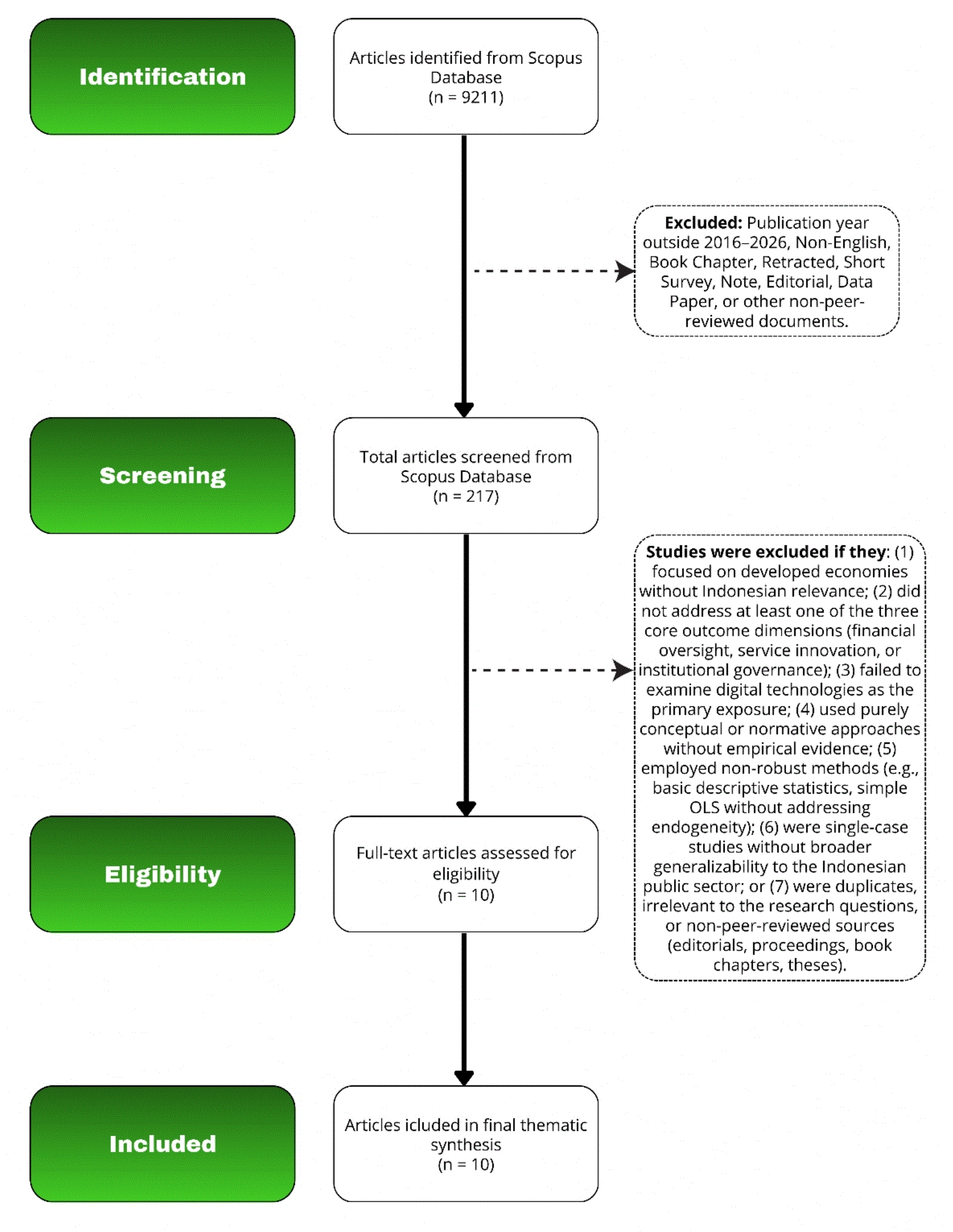
Source: Researcher's Visualisation (2026).
Data were extracted from each included study using a standardized data extraction form developed specifically for this review. The form was pilot-tested on two studies and refined to ensure comprehensive capture of relevant information. The following data items were extracted from each article: author(s) and year of publication; study objective and purpose; study design and methodological approach; population and sample characteristics; type of digital technology or exposure examined (E); outcome focus (O), categorized into financial oversight, service innovation, or institutional governance; and key findings and conclusions. Data extraction was performed independently by the lead author and verified by a second reviewer to minimize errors and bias. Any discrepancies in extracted data were resolved through consensus discussion.
The methodological quality and risk of bias of the included studies were assessed using a customized quality appraisal tool tailored to the diverse study designs in the review. Given the heterogeneity of the included studies, which comprised quantitative surveys, qualitative case studies, comparative legal analyses, and systematic literature reviews, a single standardized checklist was deemed inappropriate. Instead, the assessment considered several dimensions of methodological rigor: clarity of research objectives and questions, appropriateness of study design, transparency of data collection and analysis procedures, validity and reliability of measurement instruments (for quantitative studies), triangulation of data sources (for qualitative studies), and adequacy of sample size or data coverage. Based on these criteria, each study was assigned a quality score of High or Moderate. Studies were categorized as High when they demonstrated robust methodological rigor across multiple dimensions, and Moderate when they relied exclusively on secondary data or were descriptive in nature without primary data validation. The results of the risk of bias assessment for each included study are provided in Table 3.
A thematic synthesis approach was employed to integrate findings across the 10 included studies. Thematic synthesis is widely recommended for systematic reviews in public administration and policy research because it allows for the identification, organization, and interpretation of patterns across heterogeneous evidence (Thomas & Harden, 2008). The synthesis process involved three stages: initial coding of findings from each study, development of descriptive themes, and generation of analytical themes that address the research questions. Based on the three thematic sub-questions guiding this review, the included studies were grouped into three thematic pillars: Theme 1 focused on financial oversight, audit, and fraud prevention (four studies); Theme 2 examined service innovation and digital performance (four studies); and Theme 3 addressed institutional reform and governance infrastructure (two studies). Within each theme, findings were compared and contrasted to identify convergent evidence, divergent perspectives, and overarching patterns.
A total of 10 studies were included in this systematic review following the PRISMA screening process. The included studies were published between 2022 and 2026, reflecting the recent and growing scholarly interest in digital transformation of the Indonesian public sector. In terms of study design, four studies employed quantitative survey methods using Partial Least Squares Structural Equation Modeling (PLS-SEM) (Ariyanto et al., 2022; Kurniyanta et al., 2026; Purnamasari et al., 2022), three studies utilized qualitative case study or comparative analysis approaches (Febriyanti et al., 2023; Sarjito & Thamrin, 2026; Syafhendry et al., 2025), two studies adopted systematic literature review or mixed-method designs (Alamsyah & Aryfiyanto, 2025; Putra et al., 2022), and one study employed a comparative legal analysis (Latuihamallo et al., 2024). The sample sizes in quantitative studies ranged from 94 to 225 respondents, while qualitative studies drew on policy documents, government reports, and expert interviews.
Regarding the technology or exposure examined (E), the studies addressed a diverse range of digital technologies. Four studies focused on financial oversight technologies, including CAATs (Purnamasari et al., 2022), big data analytics (Putra et al., 2022), electronic evidence and blockchain analysis (Latuihamallo et al., 2024), and AI for electoral monitoring (Syafhendry et al., 2025). Four studies examined service innovation technologies, including ICT performance systems (Febriyanti et al., 2023), generative AI (Alamsyah & Aryfiyanto, 2025), e-government and digital transformation (Mustofa et al., 2025), and IT governance frameworks (Kurniyanta et al., 2026). Two studies focused on institutional governance technologies, specifically SPBE and interoperability frameworks (Sarjito & Thamrin, 2026) and the Village Financial System (SISKEUDES) (Ariyanto et al., 2022). This distribution reflects the three thematic pillars of the review.
In terms of outcomes (O), all studies addressed at least one of the three dimensions: financial oversight (including fraud detection, audit effectiveness, and anti-money laundering), service innovation (including service quality, efficiency, and citizen satisfaction), or institutional governance (including transparency, accountability, and bureaucratic reform). The majority of studies (eight out of ten) reported positive impacts of digital technologies on their respective outcome dimensions, while also identifying significant barriers and enabling conditions. The detailed characteristics, including population, sample, and key findings of each study, are presented in Table 4.
The thematic synthesis of key findings across the 10 included studies. The synthesis reveals three interconnected pathways through which digital technologies influence the Indonesian public sector, corresponding to the three thematic pillars of this review.
The first theme, Financial Oversight, Audit and Fraud Prevention, encompasses four studies (Latuihamallo et al., 2024; Purnamasari et al., 2022; Putra et al., 2022; Syafhendry et al., 2025). The synthesis indicates that digital technologies significantly enhance fraud detection and audit effectiveness. Purnamasari et al. (2022) found that CAATs adoption by Indonesian Audit Board auditors is driven primarily by performance expectancy and facilitating conditions, while effort expectancy and social influence are insignificant. Latuihamallo et al. (2024) identified a critical regulatory gap: Indonesia lacks formal integration of electronic evidence into criminal procedural law, undermining the legal admissibility of blockchain and digital forensic analyses in anti-money laundering cases. Syafhendry et al. (2025) demonstrated that Indonesia's biometric e-KTP system reduces voter fraud but raises privacy and algorithmic bias concerns. Putra et al. (2022) synthesized evidence that big data analytics and internal controls significantly mediate fraud prevention in regional governments. Collectively, these studies underscore those technological solutions must be accompanied by legal harmonization, regulatory clarity, and continuous capacity building to realize their full potential.
The second theme, Service Innovation and Digital Performance, comprises four studies (Alamsyah & Aryfiyanto, 2025; Febriyanti et al., 2023; Kurniyanta et al., 2026; Mustofa et al., 2025). The synthesis demonstrates that digital transformation improves service efficiency, citizen engagement, and innovation capability, but success is mediated by digital leadership, IT governance, and organizational culture. Kurniyanta et al. (2026) provided a pivotal finding: digital transformational leadership does not directly affect innovation capability; rather, IT governance and digital transformation fully mediate this relationship, implying that formal governance structures are essential to translate leadership vision into tangible innovation. Alamsyah & Aryfiyanto (2025) found that generative AI can automate workflows and enhance citizen engagement, but adoption is constrained by data fragmentation, ethical concerns, and weak regulatory frameworks. Mustofa et al. (2025) revealed that Indonesia lags behind Singapore due to structural barriers including persistent digital divides, limited human capital, and bureaucratic rigidity. Febriyanti et al. (2023) provided grassroots evidence from Palembang, where the e-Lapkin application improves performance reporting but faces barriers such as system failures, power outages, and low digital literacy. These findings collectively indicate that service innovation depends on the interplay of leadership, governance, infrastructure, and human capital.
The third theme, Institutional Reform and Governance Infrastructure, covers two studies (Ariyanto et al., 2022; Sarjito & Thamrin, 2026). The synthesis reveals that interoperable data systems and integrated information platforms are foundational for long-term accountability and transparency. Sarjito & Thamrin (2026) compared Indonesia's SPBE framework with Estonia's X-Road model, finding that Indonesia's reform trajectory is constrained by fragmented governance structures, weak enforcement of interoperability standards, and persistent trust deficits following data breaches. They proposed a federated interoperability model as a context-sensitive alternative. Ariyanto et al. (2022) examined SISKEUDES adoption in Bali's Sarbagita region, showing that system quality and trust in government drive usage, while net benefits significantly affect the realization of a Sustainable Information Society encompassing economic, socio-cultural, and political sustainability. This highlights the importance of local contextual factors in shaping technology adoption and outcomes. The complete synthesis of key findings, including implications for the Indonesian public sector, is presented in Table 5.
This section interprets the synthesised findings, situates them within the broader literature, and derives theoretical and practical implications. The discussion is organised around the six thematic mechanisms identified in the synthesis, followed by a comparative assessment with prior reviews, theoretical extensions, policy recommendations, and a transparent acknowledgment of methodological limitations.
The synthesis of four studies examining financial oversight reveals that digital technologies significantly enhance the capacity of Indonesian public sector institutions to detect and prevent fraud. However, their effectiveness is contingent upon multiple enabling conditions. Purnamasari et al. (2022) demonstrated that CAATs adoption by Indonesian Audit Board auditors is driven primarily by performance expectancy and facilitating conditions, while effort expectancy and social influence are insignificant. This finding suggests that Indonesian auditors are pragmatic: they adopt technology when they see clear performance benefits and when institutional support is available. The insignificance of effort expectancy implies that usability concerns, while present, do not deter adoption when auditors perceive tangible performance gains. This pattern aligns with technology acceptance literature in developing country contexts (Venkatesh et al., 2003), but it also raises questions about the sustainability of adoption if training and infrastructure are not continuously maintained.
A critical regulatory gap emerges from the comparative analysis by Latuihamallo et al. (2024). Unlike the United Kingdom and the United States, Indonesia has not formally integrated electronic evidence into its criminal procedural law. This gap undermines the legal admissibility of blockchain and digital forensic analyses in anti-money laundering cases, creating vulnerabilities in the prosecution of financial crimes. The study's comparative findings suggest that Indonesia could benefit from adopting standardized protocols for electronic evidence collection and analysis. This regulatory deficit reflects a broader challenge in Indonesian digital governance: policy frameworks often lag behind technological advancements, creating legal uncertainty that undermines the effectiveness of digital interventions. Sarjito & Thamrin (2026) made a similar observation regarding the slow pace of regulatory reform in Indonesia's digital governance landscape.
Turning to electoral governance, Syafhendry et al. (2025) extended these concerns by showing that while Indonesia's biometric e-KTP system reduces voter fraud, it also raises privacy and algorithmic bias risks. Their comparative analysis across Southeast Asian democracies demonstrated that the benefits of AI in electoral management are often offset by concerns about transparency, data security, and the potential for algorithmic manipulation. This finding resonates with broader debates in the AI ethics literature, which emphasize the need for robust governance frameworks to mitigate the risks of algorithmic bias and ensure democratic accountability (Siau & Wang, 2020; Zuiderwijk et al., 2021). The Indonesian case illustrates that technological solutions cannot be implemented in isolation; they must be accompanied by legal safeguards, transparent oversight, and mechanisms for public accountability. This is particularly important in electoral contexts, where public trust in the integrity of the process is paramount.
In a similar vein, Putra et al. (2022) synthesized evidence that big data analytics and internal controls significantly mediate fraud prevention in regional governments. Their systematic review demonstrated that proactive fraud prevention strategies, including whistleblowing systems and risk management frameworks, are essential complements to technological tools. This finding aligns with fraud triangle theory (Cressey, 1953), which posits that fraud occurs when opportunity, pressure, and rationalization converge. Digital technologies reduce opportunity by enhancing monitoring and detection capabilities, but they do not address the underlying pressures or rationalizations that drive fraudulent behavior. Effective fraud prevention therefore requires a holistic approach that combines technological surveillance with organizational culture reform, ethical leadership, and employee empowerment (Kassem & Higson, 2012). The Indonesian public sector, characterized by hierarchical structures and limited whistleblower protection, may require significant cultural change to fully realize the benefits of these technologies.
Looking across these four studies, it becomes evident that financial oversight technologies are not a panacea. Their effectiveness depends on regulatory harmonization, institutional capacity, continuous training, and the creation of a culture that values integrity and accountability. The Indonesian government, through BPK and other audit institutions, should prioritize investments in CAATs infrastructure, mandate continuous professional development in data analytics, and enact clearer guidelines for electronic evidence admissibility. Moreover, the integration of AI-based monitoring in public procurement and elections could further reduce fraud, provided that privacy and bias concerns are adequately addressed through transparent algorithms and independent oversight.
The four studies examining service innovation and organizational performance reveal that digital transformation improves service efficiency, citizen engagement, and innovation capability, but success is mediated by organizational factors. A pivotal finding comes from Kurniyanta et al. (2026), who demonstrated that digital transformational leadership does not directly affect innovation capability. Instead, IT governance and digital transformation fully mediate this relationship. This finding challenges the assumption that charismatic leadership alone can drive innovation. In the Indonesian public sector, where bureaucratic hierarchies are deeply entrenched, leadership vision must be institutionalized through formal governance structures to translate into tangible outcomes. This extends dynamic capabilities theory (Teece et al., 1997) by demonstrating that innovation capability in the public sector emerges not from leadership charisma but from governance mechanisms that coordinate, monitor, and align digital initiatives with organizational goals. The empirical evidence from the Ministry of Finance suggests that digital leaders should focus on strengthening IT governance frameworks rather than relying solely on inspirational vision.
A different angle is provided by Alamsyah & Aryfiyanto (2025), who found that generative AI can automate workflows and enhance citizen engagement, but its adoption in Indonesia is constrained by data fragmentation, ethical concerns, and weak regulatory frameworks. Their mixed-method approach revealed that Indonesian public sector organizations are not yet ready for widespread generative AI adoption due to limited digital infrastructure, insufficient digital literacy among civil servants, and the absence of clear ethical guidelines. This finding is consistent with the broader literature on AI adoption in the public sector, which emphasizes the need for robust governance frameworks, transparency, and accountability mechanisms to build public trust (Wirtz & Müller, 2019; Zuiderwijk et al., 2021). The Indonesian government, through the Ministry of Communication and Digital Affairs, should prioritize the development of a national AI strategy that addresses these challenges while fostering innovation.
A comparative perspective is offered by Mustofa et al. (2025), who revealed that Indonesia lags behind Singapore due to structural barriers including persistent digital divides, limited human capital, and bureaucratic rigidity. Their analysis across Singapore, Indonesia, and Thailand highlighted that digital infrastructure, internet connectivity, and institutional readiness are fundamental prerequisites for successful digital transformation. Singapore's Smart Nation Initiative exemplifies how integrated digital infrastructure, strong political will, and centralized governance can lead to highly efficient, transparent, and citizen-centric public services. Indonesia, with its archipelagic geography and decentralized governance structure, faces unique challenges that require context-sensitive solutions. The study recommended that Indonesia develop policies that strengthen digital infrastructure, enhance digital literacy, and encourage inclusive governance approaches. This finding resonates with the broader development literature on digital divides in the Global South (Heeks, 2003) and underscores the importance of addressing structural inequalities in digital transformation efforts.
At the grassroots level, Febriyanti et al. (2023) provided evidence from Palembang, where the e-Lapkin application improves performance reporting but faces barriers such as system failures, power outages, and low digital literacy among civil servants. Their qualitative analysis revealed that while e-Lapkin enhances accessibility, reduces operational costs, and enables real-time reporting, its effectiveness is undermined by infrastructure limitations and human capacity constraints. This finding underscores the importance of addressing both technological and human factors in digital transformation initiatives. The study recommended improving technological literacy and skills among civil servants, as well as ensuring reliable internet connectivity and power supply. These grassroots challenges reflect a broader pattern in Indonesian digital governance: national-level policies often fail to account for local realities, resulting in implementation gaps that undermine policy effectiveness Sarjito & Thamrin (2026).
Considering these four studies together, service innovation depends on the interplay of leadership, governance, infrastructure, and human capital. The findings suggest that Indonesian public sector organizations should invest in digital leadership development programs for senior officials, institutionalize IT governance frameworks aligned with SPBE, and launch nationwide digital literacy campaigns targeting civil servants and rural communities. Moreover, the comparative evidence from Singapore suggests that Indonesia could benefit from adopting a more integrated, citizen-centric approach to digital service design, ensuring that digital initiatives are accessible, inclusive, and responsive to diverse citizen needs.
Two studies addressed the foundational role of digital infrastructure in institutional reform, and their findings underscore the importance of institutional coordination and legal enforceability. Sarjito & Thamrin (2026) compared Indonesia's SPBE framework with Estonia's X-Road model, finding that Indonesia's reform trajectory is constrained by fragmented governance structures, weak enforcement of interoperability standards, and persistent trust deficits following data breaches. Their comparative institutional analysis revealed that Estonia's success is underpinned by institutional coherence, legally mandated interoperability, universal digital identity, and transparent accountability mechanisms. In contrast, Indonesia's reform efforts are hampered by overlapping institutional functions, limited legal integration, and a lack of public trust in digital systems. The study proposed a federated interoperability model, in which provincial governments function as semi-autonomous digital clusters connected via standardized middleware coordinated at the national level, as a context-sensitive alternative to full centralization.
This finding highlights the importance of institutional alignment and legal enforceability in digital governance reform. Estonia's experience demonstrates that successful digital transformation is not merely a technological project but a systemic governance reform that requires sustained political commitment, cross-sectoral coordination, and citizen-centered accountability (Merchan, 2025). For Indonesia, this implies that SPBE implementation should move beyond compliance checklists to include enforceable interoperability standards, clear accountability mechanisms, and robust data protection frameworks. The study's recommendation to pilot federated digital clusters in provinces aligns with Indonesia's decentralized governance structure and could provide a pragmatic pathway for gradual reform. This is particularly relevant given Indonesia's archipelagic geography, which makes a centralized approach impractical and potentially inequitable.
The second study in this theme, conducted by Ariyanto et al. (2022), examined SISKEUDES adoption in Bali's Sarbagita region, showing that system quality and trust in government drive usage, while service quality does not. Their quantitative analysis revealed that usage and user satisfaction significantly affect net benefits, and net benefits significantly affect the realization of a Sustainable Information Society, encompassing economic, socio-cultural, and political sustainability. This finding highlights the importance of local contextual factors, such as Bali's Tri Hita Karana philosophy, in shaping technology adoption and outcomes. The study demonstrated that SISKEUDES not only improves financial accountability but also contributes to broader sustainability goals, including transparency, public participation, and good governance. This suggests that digital governance initiatives can have spillover effects beyond their immediate objectives, contributing to the achievement of Sustainable Development Goals at the local level.
Interestingly, Ariyanto et al. (2022) also found that service quality does not significantly affect usage or satisfaction, a finding that contrasts with the broader IS success literature (DeLone & McLean, 2003). The authors attributed this to the mandatory nature of SISKEUDES, which requires users to adopt the system regardless of service quality perceptions. This finding underscores the importance of distinguishing between voluntary and mandatory system adoption contexts when evaluating technology acceptance. In mandatory settings, system quality and trust become more critical drivers of usage than service quality, as users have limited alternatives. This has implications for the design and implementation of mandatory e-government systems in Indonesia, suggesting that policymakers should prioritize system reliability and trust-building mechanisms over service enhancements that users may not value.
When these two studies are viewed together, they demonstrate that interoperable data systems and integrated information platforms are foundational for long-term accountability and transparency. However, their effectiveness depends on institutional coordination, legal enforceability, and local contextual factors. The Indonesian government should develop and enforce a National Digital Interoperability Framework with clear standards, accountability mechanisms, and phased implementation. Pilot programs in select provinces could provide valuable lessons for scaling digital governance reforms across Indonesia's diverse regions.
The synthesis of findings across all three themes yields several actionable implications for policymakers, public managers, and practitioners. For financial oversight, the evidence suggests that strengthening BPK's CAATs infrastructure and mandating continuous training in big data analytics are essential priorities. The government should enact clearer legal guidelines for electronic evidence admissibility in corruption and anti-money laundering cases, drawing from best practices in the United Kingdom and United States. Additionally, integrating AI-based monitoring systems in public procurement and elections could further reduce fraud, provided that transparent algorithms and independent oversight mechanisms are established to address privacy and bias concerns.
For service innovation, the findings underscore the importance of investing in digital leadership development programs for senior officials, as leadership alone is insufficient without robust IT governance structures. Public sector organizations should institutionalize IT governance frameworks aligned with SPBE and COBIT or ISO/IEC 38500 standards. Nationwide digital literacy campaigns targeting civil servants and rural communities are critical to bridge the digital divide and ensure equitable access to digital services. The comparative evidence from Singapore suggests that Indonesia could benefit from adopting a more integrated, citizen-centric approach to digital service design, ensuring that digital initiatives are accessible, inclusive, and responsive to diverse citizen needs.
For institutional reform, the development and enforcement of a National Digital Interoperability Framework is paramount. This framework should include clear technical standards, accountability mechanisms, and phased implementation timelines. Piloting federated digital clusters in provinces could accommodate Indonesia's decentralized governance structure while allowing for gradual scaling. The integration of village financial systems into broader e-government architecture, as demonstrated by SISKEUDES, could further enhance transparency and accountability at the grassroots level.
Cross-cutting recommendations include fostering public-private partnerships to bridge infrastructure gaps, especially in eastern Indonesia. Ensuring that digital transformation strategies are inclusive, culturally sensitive, and aligned with local governance realities, such as traditional village structures and customary laws, is essential for sustainable adoption. Finally, establishing independent oversight bodies to monitor digital governance reforms and address citizen grievances could strengthen public trust and accountability.
This review has several limitations that should be acknowledged when interpreting the findings. First, the reliance on secondary data and the exclusion of non-open-access articles may have introduced publication bias, as studies reporting positive findings are more likely to be published in open access journals. However, the inclusion of only open access articles was necessary to ensure accessibility and reproducibility, consistent with the review's methodological transparency goals.
Second, the diversity of study designs, including quantitative surveys, qualitative case studies, comparative analyses, and systematic literature reviews, limited the feasibility of meta-analysis. While thematic synthesis allowed for the integration of heterogeneous evidence, it does not permit statistical generalization or causal inference. The predominance of cross-sectional designs in quantitative studies also limits the ability to establish causal relationships between digital technology adoption and governance outcomes.
Third, the geographical scope of the included studies is predominantly Java-centric. Studies from Palembang (Sumatra), Sarbagita (Bali), and the Ministry of Finance (Jakarta) provide valuable insights but may not fully represent Indonesia's vast and diverse archipelagic context. Eastern Indonesia, including Papua, Maluku, and Nusa Tenggara, where infrastructure gaps and digital divides are most pronounced, is underrepresented in the current evidence base. This geographical imbalance limits the generalizability of findings to remote and underdeveloped regions.
Fourth, the fast-paced evolution of digital technologies means that some findings may become outdated quickly. Technologies examined in this review, such as CAATs and SISKEUDES, may evolve or be replaced by newer solutions, while emerging technologies like generative AI are still in early adoption stages. Future research should employ longitudinal designs to capture the dynamic evolution of digital governance impacts over time.
Fifth, the reliance on secondary data in several included studies e.g., (Mustofa et al., 2025; Sarjito & Thamrin, 2026) may have introduced biases inherent in secondary data sources, including incomplete reporting, selective coverage, and potential inaccuracies. Primary data collection in future research could provide more nuanced insights into implementation challenges and stakeholder perspectives.
Finally, the review did not explicitly examine the role of political economy factors, such as patronage networks, electoral cycles, or bureaucratic interests, in shaping digital transformation outcomes. These factors may significantly influence the adoption and effectiveness of digital technologies in the Indonesian public sector and warrant further investigation.
This systematic review examined how digital technologies influence financial oversight, service innovation, and institutional governance in the Indonesian public sector.
Regarding financial oversight, digital technologies such as CAATs, big data analytics, and electronic evidence do enhance fraud detection and audit effectiveness. However, this occurs only when adequate infrastructure, continuous auditor training, and clear regulations on electronic evidence are in place. Without these, the legal admissibility and practical utility of digital forensic tools remain limited.
Concerning service innovation, digitalization improves service efficiency and citizen engagement, but not through leadership alone. The evidence confirms that digital transformational leadership must be channeled through robust IT governance and structured digital transformation processes to generate meaningful innovation capability. Direct leadership influence without these mediating mechanisms is insufficient.
For institutional governance, integrated information systems and interoperability frameworks are crucial for transparency and accountability. Yet, fragmented institutional structures and weak enforcement of interoperability standards remain the primary obstacles. A federated approach, tailored to Indonesia's decentralized context, offers a more viable path than full centralization.
In summary, the answer to the overarching research question is that digital technologies do influence governance outcomes, but their impact is neither automatic nor uniform. Technology adoption alone does not guarantee better governance. Success depends on a systemic interplay of human capacity building, regulatory coherence, institutional alignment, and sustained political commitment. For Indonesia to realize its digital governance ambitions, digital transformation must be treated not as a technological project, but as a comprehensive governance reform effort that integrates financial oversight, service innovation, and institutional strengthening into a coherent national agenda.
Not applicable. This systematic review did not involve human or animal subjects, nor did it collect primary data. All analyses were based on previously published peer-reviewed articles accessed from the Scopus database. The review followed PRISMA 2020 guidelines and did not require informed consent.