Просмотр новости
Найдите то, что Вас интересует
 Спутники
 РН
РН SpaceX
 Роскосмос
 NASA
NASA
СпутникиРНSpaceXРоскосмосNASAAbstract* Background The increasing adoption of artificial intelligence (AI) in public administration requires local government employees to possess not only technological competence but also sufficient empowerment to effectively utilize AI in delivering high quality public services. However, limited evidence explains how organizational readiness, public service values, learning culture, and technology related psychological factors jointly influence employees’ perceived work empowerment in AI enabled public organizations, particularly in emerging economies such as Indonesia. Methods This study employed a quantitative cross sectional survey involving 687 local government employees in Indonesia. Data were analyzed using Partial Least Squares Structural Equation Modeling (PLS-SEM) to examine the direct effects of AI Governance Preparedness, Public Service Orientation, Learning Culture, and Technology Trust on Perceived Work Empowerment, as well as the moderating role of Technology Trust. Results The findings indicate that AI Governance Preparedness, Public Service Orientation, Learning Culture, and Technology Trust all have positive and significant effects on Perceived Work Empowerment. Technology Trust emerged as the strongest predictor, followed by Learning Culture. In contrast, Technology Trust did not significantly moderate the relationships between AI Governance Preparedness and Perceived Work Empowerment or between Public Service Orientation and Perceived Work Empowerment. Moreover, Technology Trust significantly weakened the positive relationship between Learning Culture and Perceived Work Empowerment. Conclusions Employee empowerment in AI enabled public administration is shaped by the combined influence of organizational readiness, public service values, organizational learning, and employees’ trust in AI technologies. Technology Trust functions primarily as an independent psychological resource rather than as a consistent boundary condition that strengthens organizational factors influencing perceived work empowerment. Recommendations Local governments should strengthen trustworthy AI governance, organizational learning, and employees’ digital competencies through transparent implementation and continuous training. Future research should adopt longitudinal designs and extend comparisons across public sector institutions and countries.
The increasing adoption of artificial intelligence (AI) in public administration has created an urgent need to understand the organizational and psychological conditions that enable government employees to work effectively in AI enabled environments. Although AI offers substantial opportunities to improve administrative efficiency, decision quality, and citizen service delivery, these benefits can only be realized when employees feel competent, autonomous, and confident in utilizing AI technologies. Previous studies suggest that successful AI implementation depends not only on technological capability but also on organizational readiness, effective governance, supportive learning environments, and employees’ trust in AI systems.1,2,3 Likewise, technology acceptance research emphasizes that employees’ perceptions of technology and organizational support strongly influence their willingness to adopt and effectively use digital innovations.4,5 Therefore, understanding the factors that foster Perceived Work Empowerment has become increasingly important for local governments seeking to maximize the value of AI while ensuring that digital transformation strengthens, rather than constrains, employees’ capability to deliver innovative, efficient, and citizen centered public services.
The urgency of examining employee empowerment in AI-enabled public administration is further reinforced by recent developments in Indonesia’s digital transformation agenda. The Indonesian government has announced a national AI roadmap for 2026–2029 that targets the integration of artificial intelligence across ministries and regional governments, with AI expected to support strategic public programs, including the US$15 billion Free Nutritious Meals Program, while contributing up to 12% of national GDP by 2030.6 At the institutional level, Indonesia has become the first country in Southeast Asia to complete UNESCO’s AI Readiness Assessment, providing a comprehensive evaluation of national governance, infrastructure, human capacity, and ethical preparedness for responsible AI implementation.7 Moreover, the OECD reports that Indonesia is strengthening digital government through integrated data governance, interoperable public services, and AI-based applications such as the Immigration Alert Surveillance System, reflecting the government’s commitment to embedding AI into routine public administration.8 These developments indicate that AI adoption in Indonesian public organizations is accelerating rapidly. However, successful implementation depends not only on technological infrastructure and governance frameworks but also on whether public employees possess sufficient confidence, trust, and empowerment to effectively utilize AI in delivering citizen-centered public services.
Although research on artificial intelligence in public organizations has expanded rapidly, existing studies have primarily examined AI adoption, technology acceptance, governance frameworks, and organizational readiness as separate streams of inquiry. Prior studies have shown that AI governance supports responsible AI implementation,2,9,10 while Technology Trust facilitates technology acceptance and use.3,11 Other studies have independently emphasized the importance of Public Service Orientation in improving employee commitment and meaningful work12,13 and highlighted Learning Culture as a driver of competence development and psychological empowerment.14,15 However, limited attention has been devoted to integrating these organizational, technological, and behavioral factors into a unified framework explaining employees’ Perceived Work Empowerment in AI enabled public administration. As a result, the mechanisms through which AI governance, organizational culture, and technology related perceptions jointly shape employee empowerment remain insufficiently understood.
A further limitation concerns the scarcity of empirical evidence from the public sector in emerging economies, particularly Indonesia, where AI adoption in local government is expanding but remains institutionally heterogeneous. Existing studies generally investigate Technology Trust as a direct antecedent of technology adoption11,16 or examine AI governance and organizational readiness independently of employees’ psychological outcomes.2,9 Likewise, research has rarely examined whether Technology Trust conditions the effects of AI Governance Preparedness, Public Service Orientation, and Learning Culture on Perceived Work Empowerment, despite Social Cognitive Theory suggesting that environmental resources become more effective when individuals possess confidence in using them.17 Furthermore, prior studies have predominantly focused on private organizations or developed countries, leaving limited evidence regarding AI enabled empowerment among local government employees in developing public administration settings.1,18 By integrating AI Governance Preparedness, Public Service Orientation, Learning Culture, and Technology Trust within a single Social Cognitive Theory based framework, this study addresses these gaps and extends the literature on AI governance, digital transformation, and employee empowerment in the public sector.
This study aims to examine the determinants of perceived work empowerment among local government employees in Indonesia in the context of the increasing adoption of artificial intelligence (AI) in public administration. As AI technologies become increasingly integrated into government operations and public service delivery, empowering employees to effectively utilize these technologies has become essential for improving organizational performance and service quality. Specifically, this study investigates the direct effects of AI Governance Preparedness, Public Service Orientation, Learning Culture, and Technology Trust on employees’ Perceived Work Empowerment. AI Governance Preparedness reflects the extent to which public organizations establish policies, ethical guidelines, organizational readiness, and institutional support for AI implementation. Public Service Orientation captures employees’ commitment to serving the public interest, while Learning Culture represents the organizational environment that encourages continuous learning, knowledge sharing, and innovation. Technology Trust reflects employees’ confidence in the reliability, fairness, transparency, and effectiveness of AI technologies used within public organizations. Furthermore, this study examines whether Technology Trust positively moderates the relationships between AI Governance Preparedness, Public Service Orientation, and Learning Culture and employees’ Perceived Work Empowerment, thereby strengthening the positive influence of these organizational factors on employees’ sense of autonomy, competence, and capability in performing their work. By integrating organizational, technological, and behavioral perspectives into a unified research framework, this study seeks to advance the emerging literature on AI governance, digital transformation, and employee empowerment in the public sector. The findings are expected to provide practical guidance for policymakers and local government leaders in designing effective AI governance frameworks, fostering a supportive organizational learning environment, strengthening employees’ trust in AI systems, and ultimately promoting empowered public servants capable of delivering more innovative, efficient, and citizen-centered public services in Indonesia.
This study makes several important contributions to the literature on artificial intelligence, public administration, and employee empowerment. First, it extends Social Cognitive Theory by demonstrating that employees’ perceived work empowerment in AI enabled public organizations is jointly shaped by organizational readiness, public service values, learning culture, and technology related psychological factors, thereby integrating organizational, technological, and behavioral perspectives into a single explanatory framework. Second, this study enriches the emerging AI governance literature by showing that Technology Trust is the strongest direct predictor of Perceived Work Empowerment, while AI Governance Preparedness, Public Service Orientation, and Learning Culture also contribute positively to employee empowerment. These findings suggest that successful AI implementation in the public sector depends not only on institutional readiness but also on employees’ confidence in AI supported technologies. Third, this study contributes to the literature on technology trust by demonstrating that Technology Trust does not consistently function as a positive boundary condition. Instead, it primarily operates as an independent psychological resource, as evidenced by its strong direct effect and the absence of positive moderating effects, including its unexpected negative moderation of the relationship between Learning Culture and Perceived Work Empowerment. This finding challenges previous theoretical expectations and provides new empirical evidence that the empowering role of organizational learning may diminish when employees already possess high levels of trust in AI technologies. Finally, by providing empirical evidence from 687 local government employees in Indonesia, this study addresses the limited evidence from emerging economies and offers practical implications for policymakers and public sector leaders to prioritize trustworthy AI governance, continuous organizational learning, and employee centered digital transformation as complementary strategies for strengthening workforce empowerment and improving citizen centered public service delivery.
This study is grounded in Social Cognitive Theory (SCT), which posits that behavior results from reciprocal interactions among personal beliefs, environmental conditions, and behavioral capabilities.17 In AI-enabled public organizations, employees’ perceived work empowerment is shaped by both individual confidence and organizational conditions that support effective technology use. AI Governance Preparedness provides institutional structures, ethical guidelines, and managerial support that reduce uncertainty and strengthen employees’ confidence in using AI. Public Service Orientation encourages the adoption of technologies that enhance public value, while a strong Learning Culture promotes continuous knowledge acquisition and adaptation to digital technologies. In addition, Technology Trust increases employees’ willingness to rely on AI and strengthens the positive effects of organizational readiness and learning on perceived work empowerment. Previous research identifies organizational readiness, trust in AI, and supportive learning environments as key drivers of successful AI implementation and positive employee outcomes.1,18,4,5 Accordingly, integrating SCT with research on AI governance and technology trust provides a robust theoretical foundation for explaining perceived work empowerment among Indonesian local government employees.
AI Governance Preparedness (AGP) reflects an organization’s readiness to establish the technological, institutional, ethical, and managerial foundations for responsible AI deployment. It includes AI infrastructure, governance mechanisms, leadership commitment, employee capability development, transparent decision making, and accountability frameworks.2,9,10 In local governments, effective AI governance enables employees to view AI as a tool that supports their work. Human centered governance emphasizing transparency, fairness, stakeholder participation, and ethical oversight reduces uncertainty and strengthens confidence in AI supported systems.19,20,21 Governance that provides training, leadership support, and organizational resources also enhances employees’ competence and autonomy in using AI.22,23 Consistent with empowerment theory, such conditions increase employees’ perceived work empowerment.
As local governments accelerate digital transformation, AI increasingly supports administrative processes, citizen services, information management, and policy implementation, requiring governance that combines technological capability with ethical accountability.24 Well governed AI improves decision quality, reduces routine workloads, and strengthens trust through transparent processes, sound data governance, and reliable safeguards.25,26 AI readiness also promotes inclusive digital governance and confidence in organizational transformation.27 Consequently, employees who perceive stronger AI Governance Preparedness are expected to experience higher Perceived Work Empowerment. Based on these theoretical arguments and empirical evidence, the following hypothesis is proposed:
AI Governance Preparedness (AGP) has a positive effect on Perceived Work Empowerment (PWE) among local government employees in Indonesia.
Public Service Orientation (PSO) reflects employees’ commitment to serving the public interest by prioritizing citizens’ welfare and societal value over personal gain. Employees with strong public service orientation are intrinsically motivated to contribute to society, strengthening dedication and responsibility in public service delivery. Previous studies show that public service motivation enhances meaningfulness at work and generates positive psychological outcomes.12,13 According to Psychological Empowerment Theory, meaningful work strengthens competence, autonomy, and impact, the core dimensions of perceived work empowerment. Organizational environments that enhance local government autonomy, budgeting quality, and managerial discretion further reinforce empowerment,28 while citizen centered cultures emphasizing ethical conduct encourage employees to create public value.29
During institutional and digital transformation, Public Service Orientation becomes increasingly important. Employees with stronger public service orientation are more likely to embrace change, engage in innovation, and improve service quality (Lin et al., 2023). Positive citizen interactions strengthen public service motivation,30 whereas investments in digital competence and smart public services enhance employees’ competence and autonomy.31 Government support, institutional collaboration, and organizational capacity building create supportive environments for public value creation.32 Likewise, institutional strengthening, workforce modernization, and greater information accessibility expand opportunities for participation and service innovation.33 Supportive institutional environments and organizational resilience also strengthen employees’ confidence and proactive behavior.34,35 Therefore, local government employees with stronger Public Service Orientation are expected to perceive greater Perceived Work Empowerment.
Public Service Orientation (PSO) has a positive effect on Perceived Work Empowerment (PWE) among local government employees in Indonesia.
Learning Culture (LC) refers to an organizational environment that promotes continuous knowledge acquisition, knowledge sharing, collaboration, and competence development. In public organizations, a strong learning culture helps employees adapt to changing work demands and improve problem solving capabilities. Psychological Empowerment Theory argues that opportunities for learning, competence development, autonomy, and participation enhance perceived work empowerment. Supportive organizational practices and developmental environments strengthen psychological empowerment,14 while customized capacity building directly enhances employee empowerment in local government institutions.15 Learning culture also improves employee well being, job satisfaction, knowledge sharing, person job fit, person group fit, collaborative problem solving, and digital capabilities.36,37 Consequently, employees working in learning oriented organizations are more likely to perceive themselves as competent and autonomous.
The importance of Learning Culture increases during public sector transformation. Learning culture promotes innovation and innovative work behavior, particularly when employees have greater autonomy,37 while learning from errors strengthens psychological empowerment and readiness for organizational change.38 Organizations emphasizing learning and public service values improve performance through stronger psychological empowerment and public service motivation.12,39,40,41 Workforce development, mentoring, competence cultivation, stakeholder collaboration, digital competence, and continuous learning further strengthen employee empowerment.42,43 Evidence from Indonesia also highlights the importance of learning oriented institutions, institutional capacity, fiscal management, and community based development for effective governance.44 Similar evidence shows that knowledge acquisition, environmental awareness, adaptive capabilities, and learning orientation strengthen behavioral outcomes, organizational commitment, job embeddedness, and empowerment.45,46,47 Therefore, local government employees who perceive a stronger Learning Culture are expected to experience higher Perceived Work Empowerment.
Learning Culture (LC) has a positive effect on Perceived Work Empowerment (PWE) among local government employees in Indonesia.
Technology Trust (TT) refers to employees’ confidence that digital technologies and artificial intelligence systems are reliable, secure, transparent, and capable of supporting work effectively. In technology enabled organizations, trust is a key determinant of technology acceptance and utilization. Technology Acceptance Model extensions identify trust as an important predictor of technology adoption.11 Likewise, trust in AI improves employees’ satisfaction, productivity, and work engagement,16 while cognitive, emotional, and organizational trust strengthen confidence in AI systems.3 According to Psychological Empowerment Theory, trusted technologies enhance employees’ competence, autonomy, and impact, whereas low trust increases uncertainty and reduces technology adoption.48 Therefore, trustworthy digital environments are expected to strengthen perceived work empowerment.
The role of Technology Trust becomes increasingly important as local governments expand digital transformation. Employees who trust digital systems are more willing to use technology to improve administrative processes, decision making, and public service delivery.49 Trustworthy technologies strengthen digital capabilities and participation in innovation,50,51 while organizational trust, supportive management, transparent communication, ethical technology implementation, and employee involvement reinforce empowerment during technological change.52,53 Technical reliability, transparency, ethical safeguards, governance, digital literacy, accessibility, cybersecurity, and inclusive digital governance further strengthen technology trust and acceptance.54,55,27 Trust in leaders and technology, together with learning orientation and organizational support, enhances psychological empowerment, adaptation, well being, and work effectiveness during digital transformation.56,57 Therefore, local government employees with stronger Technology Trust are expected to experience higher Perceived Work Empowerment.
Technology Trust (TT) has a positive effect on Perceived Work Empowerment (PWE) among local government employees in Indonesia.
Social Cognitive Theory argues that organizational resources produce positive outcomes only when employees have sufficient confidence to use them.17 AI Governance Preparedness provides governance structures, ethical standards, leadership commitment, and institutional support for AI implementation.2,9 However, its effectiveness depends on employees’ Technology Trust. Employees who trust AI are more likely to perceive governance as supportive, increasing their willingness to rely on AI in decision making and public service delivery.11,3 Trustworthy AI governance characterized by transparency, accountability, ethical safeguards, and effective trust management further strengthens employees’ confidence in AI supported work.54,55,53 Therefore, Technology Trust is expected to strengthen the positive effect of AI Governance Preparedness on Perceived Work Empowerment.
Technology Trust (TT) positively moderates the relationship between AI Governance Preparedness (AGP) and Perceived Work Empowerment (PWE) among local government employees in Indonesia.
Social Cognitive Theory also suggests that personal motivation produces stronger behavioral outcomes when supported by favorable environmental conditions.17 Although employees with strong Public Service Orientation are motivated to serve society, empowerment is more likely when they trust the technologies supporting public services. Technology Trust encourages employees to view digital technologies as effective tools for creating public value, reducing uncertainty and increasing technology adoption.16,11 Successful digital transformation in local governments also depends on confidence in digital infrastructure, organizational support, and technology strategies.5 Transparent governance, cybersecurity, digital inclusion, and organizational trust further enhance employees’ competence and autonomy during organizational change.27,56,53 Therefore, Technology Trust is expected to strengthen the positive relationship between Public Service Orientation and Perceived Work Empowerment.
Technology Trust (TT) positively moderates the relationship between Public Service Orientation (PSO) and Perceived Work Empowerment (PWE) among local government employees in Indonesia.
Learning Culture promotes knowledge sharing, continuous learning, experimentation, and competence development, but its benefits are greater when employees trust the technologies supporting learning processes. Social Cognitive Theory argues that learning produces stronger psychological outcomes when individuals have confidence in supportive environments.17 Employees with higher Technology Trust are more willing to use AI applications, digital learning platforms, and knowledge management systems, strengthening the effect of Learning Culture on Perceived Work Empowerment.11 Technology trust also promotes digital capability, innovation, and organizational transformation,50,51 while trustworthy AI and effective trust management create safe environments for learning, experimentation, and innovation.16,53,54 Consequently, Technology Trust is expected to strengthen the positive relationship between Learning Culture and Perceived Work Empowerment.
Technology Trust (TT) positively moderates the relationship between Learning Culture (LC) and Perceived Work Empowerment (PWE) among local government employees in Indonesia.
Based on the theoretical foundations and the hypothesized relationships discussed above, the conceptual framework of this study is presented in Figure 1:
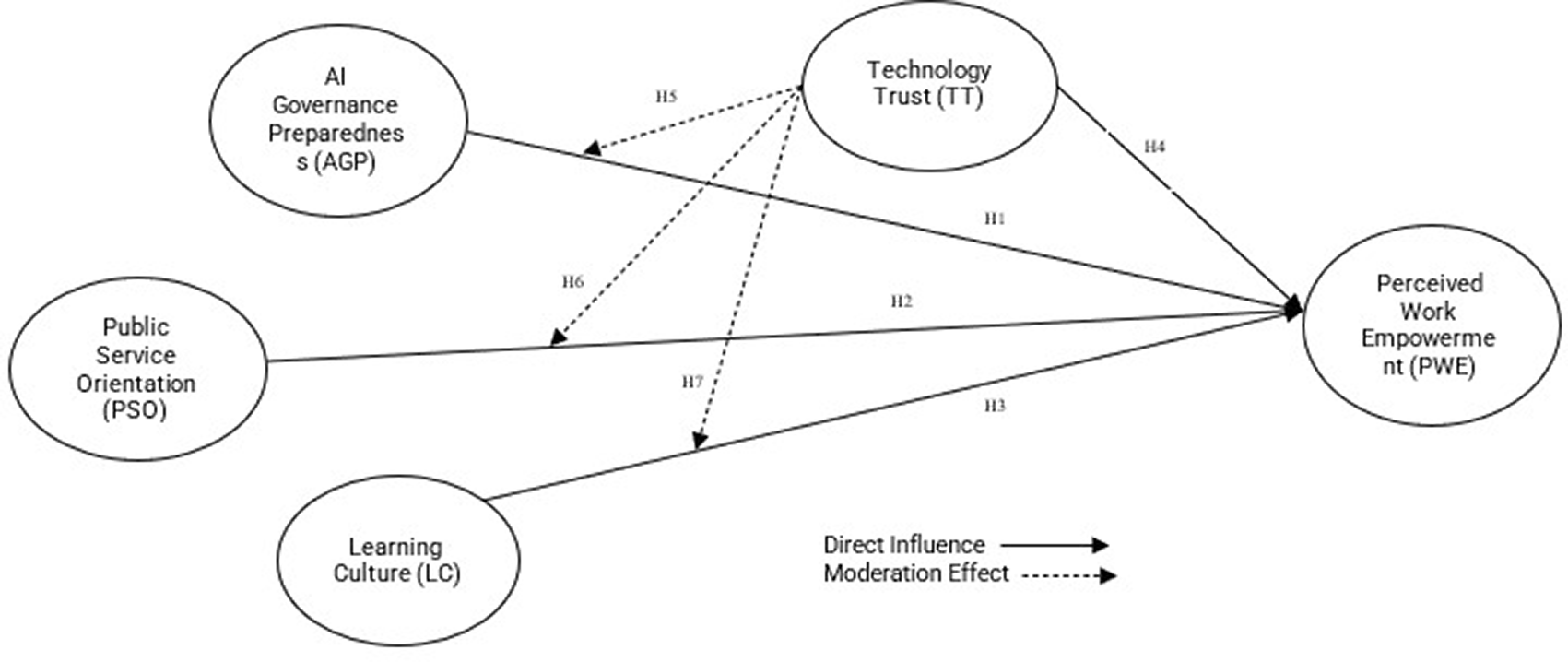
This study employed a quantitative research design to examine the determinants of Perceived Work Empowerment (PWE) among Indonesian local government employees in the context of increasing artificial intelligence (AI) adoption in public administration. A cross sectional survey was conducted to empirically test the proposed research model grounded in Social Cognitive Theory and Psychological Empowerment Theory, focusing on the direct effects of AI Governance Preparedness (AGP), Public Service Orientation (PSO), Learning Culture (LC), and Technology Trust (TT) on employees’ perceived work empowerment, as well as the moderating role of Technology Trust. The quantitative approach was considered appropriate because it enables hypothesis testing and statistical examination of complex relationships among multiple latent constructs.
The study was conducted in local government institutions across Indonesia between November 2025 and April 2026, corresponding to the period during which AI supported digital services were increasingly introduced within public administration. The target population consisted of Indonesian civil servants employed by local government institutions who had experience using AI supported or digital technologies in carrying out their work responsibilities. A purposive sampling technique was employed to ensure that respondents possessed sufficient knowledge and experience relevant to AI implementation. Respondents were required to satisfy three criteria: (1) be employed as a civil servant in a local government institution, (2) have experience using digital applications or AI supported systems in daily work, and (3) have worked in their current institution for at least one year. A total of 687 valid questionnaires were obtained and included in the final analysis.
The respondent profile indicates that the sample adequately represents employees from diverse demographic and organizational backgrounds. Female respondents accounted for 52.5% of the sample and males 47.5%. Most respondents were between 25 and 44 years of age, held a bachelor’s degree, and had varying organizational tenure ranging from less than five years to more than twenty years. The sample also included employees occupying staff, executive, functional, and managerial positions. Furthermore, nearly 89% of respondents reported using AI based digital applications at least fairly frequently, indicating substantial familiarity with digital technologies and making the sample appropriate for investigating employee empowerment in AI enabled public organizations.
Data were collected using a structured self administered questionnaire distributed through both online and offline channels. All measurement items were adapted from well established studies and contextualized to reflect AI enabled public administration in Indonesia. The questionnaire consisted of five reflective latent constructs. AI Governance Preparedness (AGP) was measured using five indicators capturing AI literacy in public administration, acceptance of algorithmic decision making, capability to interpret AI outputs, adaptability to automated policies, and perceived transparency of AI systems, reflecting organizational readiness for responsible AI implementation and governance.2,9,10 Public Service Orientation (PSO) was measured through commitment to digital public service, public service innovation orientation, responsiveness to digital society needs, commitment to bureaucratic modernization, and adherence to digital service values, consistent with studies emphasizing public service motivation, meaningful work, and citizen centered service delivery.12,13,29 Learning Culture (LC) was operationalized using indicators of continuous individual learning, collaborative team learning, knowledge and experience sharing, adaptation to emerging knowledge, and commitment to continuous improvement, reflecting organizational learning processes that enhance employee competence and empowerment.14,15,37,58 Technology Trust (TT) was measured using trust in digital technologies, trust in public sector data, perceived security of digital systems, reliability of technology infrastructure, and transparency of digital systems, representing employees’ confidence in the reliability, security, and ethical implementation of AI supported technologies.11,16,3,54,55 Finally, Perceived Work Empowerment (PWE) was measured through employees’ sense of ownership over work, perceived work autonomy, meaningfulness of job responsibilities, self efficacy in performing tasks, and perceived influence on organizational outcomes, consistent with the dimensions of psychological empowerment discussed in previous studies.14,12 All questionnaire items were assessed using a five point Likert scale, ranging from 1 = strongly disagree to 5 = strongly agree.
Prior to the main survey, the questionnaire was reviewed by experts in public administration and management to ensure content validity and contextual relevance. A pilot study involving a small group of local government employees was subsequently conducted to evaluate item clarity, wording, and reliability before full scale data collection. Participation was voluntary, responses were anonymous, and informed consent was obtained from all participants before completing the questionnaire. The study received ethical approval from the relevant institutional ethics committee.
The measurement model was first evaluated by assessing internal consistency reliability, convergent validity, and discriminant validity. As reported in Table 1, all constructs demonstrated satisfactory psychometric properties. Cronbach’s alpha values ranged from 0.755 to 0.861, while composite reliability values ranged from 0.834 to 0.900, exceeding the recommended threshold of 0.70. Average Variance Extracted values ranged from 0.502 to 0.644, indicating adequate convergent validity because all exceeded the recommended value of 0.50. Indicator loadings varied between 0.603 and 0.823, satisfying acceptable loading criteria for reflective measurement models.
Data analysis was performed using Partial Least Squares Structural Equation Modeling (PLS SEM) because the proposed framework simultaneously examined multiple latent constructs, direct relationships, and interaction effects involving a moderating variable.59 Following assessment of the measurement model, the structural model was evaluated by estimating path coefficients dan coefficients of determination (R2). The significance of all direct and moderating relationships was assessed using the bootstrapping procedure with 5,000 resamples, generating standardized errors, t statistics, confidence intervals, and p values. A hypothesis was considered supported when the t statistic exceeded 1.96 and the corresponding p value was below 0.05. This analytical approach provides robust empirical evidence for understanding how organizational readiness, public service values, organizational learning, and trust in AI technologies jointly influence employees’ perceived work empowerment within Indonesian local governments.
Table 1 presents the demographic profile of the 687 local government employees who participated in this study. Female respondents accounted for a slightly larger proportion of the sample (52.5%) than male respondents (47.5%). The majority of respondents were between 25 and 44 years of age, comprising 28.5% aged 25–34 years and 26.9% aged 35–44 years, indicating that most participants were in their productive working years. Regarding educational attainment, more than half of the respondents (58.8%) held a bachelor’s degree, followed by 19.9% with a high school qualification, 15.0% with a master’s degree, 6.1% with a diploma, and only 0.1% with a doctoral degree. In terms of work experience, 41.5% had served as civil servants for less than five years, while 27.5% had between 11 and 20 years of experience, reflecting a balanced representation of early-career and experienced employees. Staff members represented the largest occupational group (44.8%), followed by functional officers (22.6%), executive or operational personnel (18.3%), and administrative or managerial employees (14.3%). Furthermore, respondents demonstrated substantial exposure to AI-enabled technologies in their daily work, with 35.7% reporting frequent use, 30.3% fairly frequent use, and 23.0% very frequent use of AI-based digital applications, while only 11.1% indicated that they rarely used such technologies. This distribution suggests that the sample is well suited for examining perceived work empowerment within the context of AI-enabled public administration in Indonesia.
Table 2 presents the results of the measurement model assessment, including indicator reliability, internal consistency reliability, and convergent validity for all constructs. The standardized factor loadings range from 0.603 to 0.823, exceeding the recommended minimum threshold of 0.60, indicating that all indicators adequately represent their respective latent constructs. Internal consistency reliability is also satisfactory, as Cronbach’s alpha values range from 0.755 to 0.861 and Composite Reliability (CR) values range from 0.834 to 0.900, both exceeding the recommended threshold of 0.70. In terms of convergent validity, the Average Variance Extracted (AVE) values vary between 0.502 and 0.644, all above the minimum criterion of 0.50, demonstrating that each construct explains more than half of the variance of its indicators. Among the constructs, Public Service Orientation exhibits the highest measurement quality with a Cronbach’s alpha of 0.861, Composite Reliability of 0.900, and AVE of 0.644, while Technology Trust and AI Governance Preparedness record the lowest AVE values (0.502 and 0.506, respectively), although both remain above the acceptable threshold. Overall, these findings confirm that the measurement model possesses satisfactory indicator reliability, internal consistency, and convergent validity, supporting the adequacy of the measurement instrument for subsequent structural model analysis.
Table 3 presents the coefficient of determination (R2) for the endogenous construct. The results show that Perceived Work Empowerment (PWE) has an R2 value of 0.496 and an adjusted R2 of 0.493, indicating that the proposed research model explains approximately 49.6% of the variance in employees’ perceived work empowerment. This finding suggests that AI Governance Preparedness, Public Service Orientation, Learning Culture, Technology Trust, and the moderating effects of Technology Trust collectively provide moderate explanatory power for understanding employees’ perceptions of work empowerment in Indonesian local government institutions. The small difference between the R2 and adjusted R2 values further indicates that the model is stable and not substantially affected by model complexity or the number of predictors included. Consequently, while nearly half of the variation in Perceived Work Empowerment is explained by the proposed organizational and technological factors, the remaining 50.4% may be attributed to other variables not incorporated into the present model, such as leadership style, organizational climate, digital competence, individual characteristics, or other contextual factors. Overall, the results demonstrate that the proposed model possesses satisfactory explanatory capability and provides a solid basis for subsequent structural model and hypothesis testing.
Table 4 reports the results of the direct effect hypotheses examining the determinants of Perceived Work Empowerment (PWE) among Indonesian local government employees. The findings indicate that all four proposed relationships are positive and supported. AI Governance Preparedness (AGP) has a positive effect on Perceived Work Empowerment (β = 0.080, t = 1.813, p = 0.070), providing support for H1, although the magnitude of the relationship is relatively weak compared with the other predictors. This finding suggests that organizational readiness for AI implementation contributes to employees’ empowerment, but its influence remains limited during the early stage of AI adoption in public administration. Public Service Orientation (PSO) also exerts a significant positive effect on Perceived Work Empowerment (β = 0.175, t = 3.433, p = 0.001), supporting H2 and indicating that employees with stronger commitment to public service tend to perceive greater autonomy, competence, and meaningfulness in their work. Learning Culture (LC) demonstrates a stronger positive influence (β = 0.313, t = 6.148, p < 0.001), confirming H3 and highlighting the importance of continuous learning, knowledge sharing, and organizational development in fostering employee empowerment. Among all predictors, Technology Trust (TT) exhibits the strongest positive effect on Perceived Work Empowerment (β = 0.336, t = 7.077, p < 0.001), supporting H4. This result suggests that employees’ confidence in the reliability, transparency, and effectiveness of AI supported technologies is the most influential factor in enhancing their perceptions of competence, autonomy, and influence within AI enabled public organizations. Overall, the findings demonstrate that both organizational factors and technological trust play significant roles in shaping employees’ perceived work empowerment, with Technology Trust and Learning Culture emerging as the most influential determinants in the proposed research model.
Table 5 presents the results of the moderating effect analysis examining whether Technology Trust (TT) strengthens the relationships between AI Governance Preparedness (AGP), Public Service Orientation (PSO), Learning Culture (LC), and Perceived Work Empowerment (PWE). The findings indicate that the proposed positive moderating effects are generally unsupported. The interaction between AI Governance Preparedness and Technology Trust is negative but statistically insignificant (β = −0.026, t = 0.905, p = 0.366), indicating that Technology Trust does not significantly moderate the relationship between AI Governance Preparedness and Perceived Work Empowerment. Therefore, H8 is rejected. Similarly, the interaction between Public Service Orientation and Technology Trust is positive but statistically insignificant (β = 0.049, t = 1.101, p = 0.271), suggesting that Technology Trust does not strengthen the positive effect of Public Service Orientation on Perceived Work Empowerment. Accordingly, H9 is rejected.
In contrast, the interaction between Learning Culture and Technology Trust is statistically significant but negative (β = −0.096, t = 2.259, p = 0.024). Although this result confirms the existence of a moderating effect, its direction is opposite to the proposed hypothesis. Rather than strengthening the positive influence of Learning Culture, higher levels of Technology Trust weaken the positive relationship between Learning Culture and Perceived Work Empowerment. Consequently, the proposed positive moderating effect is not supported, and H10 is rejected. This finding suggests that, within Indonesian local government organizations, employees’ trust in AI supported technologies does not necessarily amplify the empowering effects of organizational learning. Instead, when Technology Trust is already high, the additional contribution of Learning Culture to employees’ perceptions of empowerment becomes less pronounced.
The findings demonstrate that AI Governance Preparedness, Public Service Orientation, Learning Culture, and Technology Trust all positively influence Perceived Work Empowerment, indicating that employee empowerment in AI enabled public organizations is shaped by both organizational readiness and employees’ psychological confidence in digital technologies. From the perspective of Social Cognitive Theory,17 organizational resources only become meaningful when employees perceive themselves as capable of utilizing those resources effectively. Among the four antecedents, Technology Trust emerged as the strongest predictor, followed by Learning Culture, whereas AI Governance Preparedness exhibited the weakest effect. This pattern suggests that although organizational readiness for AI implementation is important, employees derive a stronger sense of competence, autonomy, and influence when they directly trust the technologies supporting their daily work and operate within organizations that continuously encourage learning and capability development. These findings extend previous studies emphasizing the importance of organizational readiness, AI governance, and supportive learning environments for successful digital transformation in the public sector.2,9,10,1 They also reinforce evidence that technology trust plays a central role in technology acceptance and positive employee outcomes.18,11,16
The positive effect of AI Governance Preparedness indicates that establishing AI governance frameworks, ethical standards, leadership commitment, and employee capability development contributes to employees’ perceptions of empowerment, although the relatively small coefficient suggests that governance readiness alone is insufficient to generate substantial psychological benefits. This finding implies that Indonesian local governments are still in the early stages of institutionalizing AI, where governance structures may exist but have not yet been fully translated into employees’ day to day experiences. Consequently, employees may recognize organizational commitment toward AI implementation without fully perceiving improvements in their autonomy or decision making capability. Nevertheless, the result supports previous arguments that transparent governance, ethical safeguards, and organizational support reduce uncertainty and facilitate responsible AI adoption.19,20,21 It also confirms that leadership support, capability development, and organizational readiness contribute to employee empowerment during digital transformation.22,23,24,25,26,27 Therefore, AI governance should be viewed not merely as a regulatory mechanism but as an organizational capability that gradually strengthens employees’ confidence in utilizing AI for public service delivery.
The findings further reveal that Public Service Orientation and Learning Culture significantly enhance employees’ perceived work empowerment, highlighting the complementary roles of intrinsic motivation and organizational learning in AI enabled public administration. Employees with stronger public service orientation are more likely to perceive their work as meaningful because they associate technology adoption with improving citizen welfare rather than merely increasing administrative efficiency. This finding is consistent with Psychological Empowerment Theory, which emphasizes meaningfulness as a fundamental source of competence, autonomy, and impact, and supports previous evidence linking public service motivation with positive psychological outcomes.12,13 Likewise, the relatively stronger effect of Learning Culture indicates that continuous learning, knowledge sharing, collaboration, and competence development provide employees with the confidence required to adapt to rapidly evolving AI technologies. This result strengthens prior studies showing that developmental organizational environments increase psychological empowerment, innovative behavior, and organizational commitment.14,15,37,36 It also extends evidence from the public sector that workforce development, mentoring, digital capability, and institutional learning are essential for effective digital transformation and sustainable governance.60,42,43
The moderating analysis, however, provides a more nuanced understanding of the role of Technology Trust. Contrary to the proposed hypotheses, Technology Trust did not strengthen the effects of AI Governance Preparedness or Public Service Orientation, and instead significantly weakened the positive relationship between Learning Culture and Perceived Work Empowerment. These findings suggest that Technology Trust primarily functions as an independent psychological resource rather than as a universal enhancer of organizational conditions. From the perspective of Social Cognitive Theory, employees’ confidence in AI may directly influence empowerment regardless of the level of organizational governance or intrinsic public service motivation. Moreover, when employees already possess high levels of trust in AI supported technologies, additional investments in organizational learning may yield diminishing psychological returns because employees have already developed sufficient confidence to perform their work effectively. This interpretation helps explain why Technology Trust exhibits the strongest direct effect while failing to strengthen the proposed organizational relationships. The results therefore only partially support the theoretical expectation derived from previous studies on AI trust and digital transformation.11,3,16,54,55,53,61 At the same time, they contribute to the emerging literature by suggesting that, within Indonesian local governments, trust in AI should be conceptualized primarily as a direct antecedent of employee empowerment rather than as a consistent boundary condition that amplifies the effects of organizational readiness, public service orientation, or learning culture. This finding offers a new perspective on AI enabled public administration by demonstrating that the psychological benefits of organizational learning become less dependent on learning environments once employees have already developed strong trust in AI technologies.
This study examined the determinants of Perceived Work Empowerment (PWE) among Indonesian local government employees in the context of increasing artificial intelligence (AI) adoption in public administration. Drawing upon Social Cognitive Theory and Psychological Empowerment Theory, the study investigated the direct effects of AI Governance Preparedness (AGP), Public Service Orientation (PSO), Learning Culture (LC), and Technology Trust (TT), as well as the moderating role of Technology Trust. Using a quantitative cross-sectional survey of 687 local government employees and Partial Least Squares Structural Equation Modeling (PLS-SEM), the findings demonstrate that all four organizational and technological factors positively influence employees’ perceived work empowerment. Among these determinants, Technology Trust emerged as the strongest predictor, followed by Learning Culture and Public Service Orientation, whereas AI Governance Preparedness exhibited a relatively weaker but still positive effect. The moderating analysis further revealed that Technology Trust does not strengthen the effects of AI Governance Preparedness or Public Service Orientation and unexpectedly weakens the positive relationship between Learning Culture and Perceived Work Empowerment. These findings suggest that employee empowerment in AI-enabled public organizations depends not only on organizational readiness but also, and more importantly, on employees’ confidence in the AI technologies they use. Consequently, Technology Trust should be viewed primarily as an independent psychological resource rather than as a universal boundary condition that amplifies the effects of organizational factors.
The findings provide several important implications for policymakers and local government leaders responsible for accelerating AI-enabled public administration. First, strengthening Technology Trust should become a strategic priority because it represents the most influential determinant of employees’ perceived work empowerment. Governments should therefore invest not only in AI infrastructure but also in transparent AI governance, cybersecurity, data protection, algorithmic accountability, explainable AI, and continuous communication regarding the ethical use of AI to enhance employees’ confidence in digital technologies. Second, AI Governance Preparedness should be complemented by systematic employee capacity-building initiatives, including AI literacy programs, leadership support, practical AI training, and organizational change management, to ensure that governance frameworks are translated into employees’ daily work experiences. Third, fostering a strong Learning Culture through continuous professional development, collaborative knowledge sharing, mentoring, and digital competency development remains essential for sustaining employee empowerment during digital transformation. Finally, public sector reforms should continue promoting Public Service Orientation by aligning AI implementation with citizen-centered values, ensuring that AI serves as a tool for improving public service quality rather than merely increasing administrative efficiency. Collectively, these strategies can help local governments create trustworthy, learning-oriented, and employee-centered AI ecosystems that maximize both organizational performance and public value creation.
Several limitations should be acknowledged. First, this study employed a cross-sectional research design, which limits the ability to establish causal relationships and capture changes in employee empowerment as AI adoption matures over time. Future studies could employ longitudinal designs to examine how organizational readiness, technology trust, and employee empowerment evolve throughout different stages of AI implementation. Second, the study focused exclusively on Indonesian local government employees, which may limit the generalizability of the findings to other public sector contexts or countries with different institutional environments. Comparative cross-country studies or investigations across different levels of government would provide broader insights into AI-enabled employee empowerment. Third, although the proposed model explained a substantial proportion of variance in perceived work empowerment, additional psychological and organizational factors, such as organizational support, digital leadership, AI self-efficacy, AI anxiety, organizational justice, or perceived algorithmic fairness, may further enrich understanding of employee responses to AI adoption. Future research is also encouraged to examine alternative mediating and moderating mechanisms and to compare the effects of different AI maturity levels across public organizations. Such investigations would provide a more comprehensive understanding of how AI governance and digital transformation influence employee empowerment in the public sector.
Ethical approval for this study was obtained from the Ethics Committee of the Faculty of Social and Political Sciences, Mulawarman University (Ethical Approval No. 17/2025). All research procedures were conducted in accordance with the ethical principles for research involving human participants. Written informed consent was obtained from all participants prior to data collection. Participation was voluntary, and respondents were assured that all information would be treated confidentially and reported anonymously.
The authors declare their approval for publication in F1000Research and confirm that this manuscript is an original contribution that has neither been published previously nor submitted simultaneously to another journal. Any personal data reported in this study were included only after obtaining informed consent from the relevant individuals, and documentation of consent is retained and available upon reasonable request.
Underlying and extended data: Yudaruddin, R. (2026). Beyond AI Adoption [Data set]. Zenodo. https://doi.org/10.5281/zenodo.21332743
The Zenodo repository provides the fully anonymized respondent-level dataset used in this study, along with supporting research materials, including the survey questionnaire, ethical approval certificate, respondents’ raw response data, and detailed variable operationalization guidelines. All files are made available under the Creative Commons Attribution 4.0 International (CC BY 4.0) license. Researchers and other users may access, share, adapt, and reuse these materials in accordance with the terms and conditions specified by the license.
The authors sincerely thank all Indonesian local government institutions and civil servants who participated in this study. Their valuable time, cooperation, and insights were essential to the successful completion of this research. The authors also appreciate the support provided by the government officials and administrative personnel who facilitated the data collection process.