Просмотр новости
Найдите то, что Вас интересует
 Спутники
 РН
РН SpaceX
 Роскосмос
 NASA
NASA
СпутникиРНSpaceXРоскосмосNASAGrowing environmental concerns have encouraged organizations, including micro, small, and medium enterprises (MSMEs), to adopt sustainable business practices. In this context, Green Human Resource Management has emerged as an important mechanism for promoting environmentally responsible employee behavior and enhancing organizational environmental performance. However, empirical evidence regarding the effectiveness of Green HRM in MSMEs, particularly coffee shops in Indonesia, remains limited. This study aims to examine the influence of Green HRM practices, represented by green ability, green motivation, and green opportunity, on green workplace behavior and worker productivity, as well as their subsequent effects on organizational environmental performance. This study was collected from 304 employees working in Indonesian coffee shops through a structured questionnaire. The proposed relationships were analyzed using Partial Least Squares Structural Equation Modeling (PLS-SEM). The findings demonstrated that neither worker productivity nor green workplace conduct were significantly impacted by green abilities. On the other hand, green opportunity has the greatest influence on both outcomes (β = 0.486 and β = 0.524, respectively), whereas green motivation has a favorable effect on green workplace behavior (β = 0.373) and worker productivity (β = 0.327). Environmental performance is also favorably correlated with worker productivity (β = 0.472) and green workplace behavior (β = 0.507). 92.8% of the variation in organizational environmental performance can be explained by the model. The study concludes that environmental knowledge and training alone are insufficient to encourage sustainable workplace behavior and productivity in coffee shops. Instead, organizational support, recognition, participation opportunities, and environmental facilities play a more critical role in fostering employee engagement in sustainability initiatives. These findings contribute to the Green HRM literature by highlighting the importance of motivation and opportunity dimensions in MSMEs and emphasizing the strategic role of employee behavior and productivity in achieving superior environmental performance.

Fatimah D, Ibrahim MH, Kumala Sari F et al. Green Ability, Motivation, and Opportunity as Drivers of Environmental Performance: The Roles of Green Workplace Behavior and Worker Productivity [version 1; peer review: awaiting peer review]. F1000Research 2026, 15:1151 (https://doi.org/10.12688/f1000research.185407.1)
Research Article
[version 1; peer review: awaiting peer review]
https://orcid.org/0009-0003-5952-8096
1, Muhammad Hanif Ibrahim1, Firdausa Kumala Sari1, [...] Firman Dwi Septianto1, Alfan Abrorul Sofyan1, Aidil Al Hanif1, Toroi Saut Johansen Simaremarehttps://orcid.org/0009-0001-5824-9154
1, Mega Jayadi1, Dian Wahyudihttps://orcid.org/0009-0003-2675-111X
1, Laksmitha Aurelia Dewi1, Teguh Sutanto1, Dewa Anggara1, Kartikasmara Luluh Purwaumbara1, Muhammad Aldi Malik Syahputrahttps://orcid.org/0009-0004-9340-8220
1, llham Ibnu Affan1https://orcid.org/0009-0003-5952-8096
1, Muhammad Hanif Ibrahim1, [...] Firdausa Kumala Sari1, Firman Dwi Septianto1, Alfan Abrorul Sofyan1, Aidil Al Hanif1, Toroi Saut Johansen Simaremarehttps://orcid.org/0009-0001-5824-9154
1, Mega Jayadi1, Dian Wahyudihttps://orcid.org/0009-0003-2675-111X
1, Laksmitha Aurelia Dewi1, Teguh Sutanto1, Dewa Anggara1, Kartikasmara Luluh Purwaumbara1, Muhammad Aldi Malik Syahputrahttps://orcid.org/0009-0004-9340-8220
1, llham Ibnu Affan11 Gadjah Mada University Faculty of Economics and Business, Yogyakarta, Special Region of Yogyakarta, Indonesia
Dwi Fatimah
Roles: Conceptualization, Data Curation, Methodology, Project Administration, Writing – Original Draft Preparation, Writing – Review & Editing
Muhammad Hanif Ibrahim
Roles: Conceptualization, Resources, Software, Validation, Visualization, Writing – Original Draft Preparation, Writing – Review & Editing
Firdausa Kumala Sari
Roles: Conceptualization, Data Curation, Methodology, Project Administration, Resources, Visualization, Writing – Original Draft Preparation, Writing – Review & Editing
Firman Dwi Septianto
Roles: Supervision, Visualization, Writing – Original Draft Preparation, Writing – Review & Editing
Alfan Abrorul Sofyan
Roles: Supervision, Visualization, Writing – Original Draft Preparation, Writing – Review & Editing
Aidil Al Hanif
Roles: Formal Analysis, Investigation, Resources, Writing – Original Draft Preparation, Writing – Review & Editing
Toroi Saut Johansen Simaremare
Roles: Validation, Visualization, Writing – Original Draft Preparation, Writing – Review & Editing
Mega Jayadi
Roles: Resources, Visualization, Writing – Original Draft Preparation, Writing – Review & Editing
Dian Wahyudi
Roles: Validation, Visualization, Writing – Original Draft Preparation, Writing – Review & Editing
Laksmitha Aurelia Dewi
Roles: Funding Acquisition, Investigation, Visualization, Writing – Original Draft Preparation, Writing – Review & Editing
Teguh Sutanto
Roles: Data Curation, Resources, Supervision, Writing – Original Draft Preparation, Writing – Review & Editing
Dewa Anggara
Roles: Visualization, Writing – Original Draft Preparation, Writing – Review & Editing
Kartikasmara Luluh Purwaumbara
Roles: Supervision, Validation, Visualization, Writing – Original Draft Preparation, Writing – Review & Editing
Muhammad Aldi Malik Syahputra
Roles: Data Curation, Funding Acquisition, Software, Validation, Visualization, Writing – Original Draft Preparation, Writing – Review & Editing
llham Ibnu Affan
Roles: Resources, Validation, Visualization, Writing – Original Draft Preparation, Writing – Review & Editing
OPEN PEER REVIEW
REVIEWER STATUS AWAITING PEER REVIEW
Growing environmental concerns have encouraged organizations, including micro, small, and medium enterprises (MSMEs), to adopt sustainable business practices. In this context, Green Human Resource Management has emerged as an important mechanism for promoting environmentally responsible employee behavior and enhancing organizational environmental performance. However, empirical evidence regarding the effectiveness of Green HRM in MSMEs, particularly coffee shops in Indonesia, remains limited. This study aims to examine the influence of Green HRM practices, represented by green ability, green motivation, and green opportunity, on green workplace behavior and worker productivity, as well as their subsequent effects on organizational environmental performance.
This study was collected from 304 employees working in Indonesian coffee shops through a structured questionnaire. The proposed relationships were analyzed using Partial Least Squares Structural Equation Modeling (PLS-SEM). The findings demonstrated that neither worker productivity nor green workplace conduct were significantly impacted by green abilities. On the other hand, green opportunity has the greatest influence on both outcomes (β = 0.486 and β = 0.524, respectively), whereas green motivation has a favorable effect on green workplace behavior (β = 0.373) and worker productivity (β = 0.327). Environmental performance is also favorably correlated with worker productivity (β = 0.472) and green workplace behavior (β = 0.507). 92.8% of the variation in organizational environmental performance can be explained by the model.
The study concludes that environmental knowledge and training alone are insufficient to encourage sustainable workplace behavior and productivity in coffee shops. Instead, organizational support, recognition, participation opportunities, and environmental facilities play a more critical role in fostering employee engagement in sustainability initiatives. These findings contribute to the Green HRM literature by highlighting the importance of motivation and opportunity dimensions in MSMEs and emphasizing the strategic role of employee behavior and productivity in achieving superior environmental performance.
Green Human Resource Management, Green Workplace Behavior, Worker Productivity, Environmental Performance, Coffee Shops, MSMEs, AMO Theory, Resource-Based View.
Corresponding author: Dwi Fatimah Competing interests: No competing interests were disclosed.
Grant information: This study was supported by the Indonesia Endowment Fund for Education (LPDP), Ministry of Finance of the Republic of Indonesia, through a Master's Scholarship Programme. The funder had no role in the study design, data collection, data analysis, interpretation of the findings, preparation of the manuscript.
The funders had no role in study design, data collection and analysis, decision to publish, or preparation of the manuscript.
Copyright: © 2026 Fatimah D et al. This is an open access article distributed under the terms of the Creative Commons Attribution License, which permits unrestricted use, distribution, and reproduction in any medium, provided the original work is properly cited. How to cite: Fatimah D, Ibrahim MH, Kumala Sari F et al. Green Ability, Motivation, and Opportunity as Drivers of Environmental Performance: The Roles of Green Workplace Behavior and Worker Productivity [version 1; peer review: awaiting peer review]. F1000Research 2026, 15:1151 (https://doi.org/10.12688/f1000research.185407.1) First published: 13 Jul 2026, 15:1151 (https://doi.org/10.12688/f1000research.185407.1) Latest published: 13 Jul 2026, 15:1151 (https://doi.org/10.12688/f1000research.185407.1)
Growing attention to environmental sustainability has encouraged businesses in various sectors, including micro, small, and medium enterprises (MSMEs), to reconsider the environmental consequences of their activities. This trend not only signifies shifts in consumer lifestyles but also poses environmental challenges, such as increased waste from single-use plastics, straws, cups, food packaging, and organic waste like coffee grounds. Without effective management, the growth in business activities may exacerbate urban environmental issues (Amrutha & Geetha, 2020; Testa et al., 2020).
Furthermore, organizational success is increasingly assessed not only in terms of financial outcomes but also through an organization’s contribution to sustainable development. The concept of green business therefore emphasizes the incorporation of environmentally responsible practices into all organizational activities, including human resource management. Within this framework, Green Human Resource Management (Green HRM) integrates employees to adopt behaviors that contribute to environmental sustainability (Jackson et al., 2011; Renwick et al., 2012).
Previous studies suggest that organizations can strengthen an environmentally responsible culture by embedding sustainability into key human resource practices. These practices may include recruiting employees with green values, providing environmental training, linking rewards to ecological performances, and involving employees in sustainability related initiatives (Dumont et al., 2017; Tang et al., 2018). Existing studies on Green HRM largely focused on large firms and formally organized industries, while its application in micro, small, and medium enterprises remains relatively underexplored, especially within the culinary business context. The environmental impact of MSMEs is substantial due to their large numbers and rapid growth (Yong et al., 2020).
The association between Green HRM practices and organizational environmental performance can be understood by combining the Ability-Motivation-Opportunity (AMO) framework with Resource-Based-View (RBV). From the AMO perspective, employees are more likely to perform effectively when organizations develop their capabilities, strengthen their motivation, and provide sufficient opportunities to participate in environmentally responsible activities (Appelbaum et al., 2001; Jiang et al., 2012) In parallel, the RBV views employees and their competencies as valuable organizational resources that can support long-term competitive advantage and contribute to improved environmental performance (Barney, 1991; Paillé et al., 2014).
The study examines how Green HRM practices shape employees’ pro-environmental workplace behavior and how such behavior contributes to the environmental performance of coffee shops in Indonesia. By focusing on micro, small and medium enterprises, the study extends the empirical discussion of Green HRM beyond large organizations and provides practical insights for coffee shop managers seeking to embed sustainability principles into their human resource practices.
The theoretical foundation of this study is built upon the Ability Motivation Opportunity (AMO) Theory and the Resource Based View (RBV), which jointly explain how Green Human Resource Management (Green HRM) practices influence employee behavior, worker productivity, and organizational environmental performance. The integration of these two perspectives is particularly relevant because the AMO framework explains the mechanisms through which organizational practices shape employee attitudes and behaviors, whereas the RBV provides a rationale for understanding how employee related outcomes contribute to organizational performance.
The AMO Theory proposes that employee performance is influenced by three essential elements, including ability, motivation, and opportunity (Appelbaum et al., 2001; Jiang et al., 2012). In the context of Green HRM, ability is represented as green ability, encompassing the knowledge, skills and environmental training possessed by employees. Motivation is reflected as green motivation, which includes incentives, awards, managerial support, and organizational encouragement for environmentally sustainable behavior. Opportunities are manifested as green opportunities, referring to the opportunities, facilities, and participatory spaces provided by organizations for employees to engage in sustainability activities (Saeed et al., 2019). These three dimensions are instrumental in promoting green workplace behavior and enhancing worker productivity.
In this study, green workplace behavior refers to employee actions that directly contribute to environmental sustainability within the workplace. Such behaviors include waste segregation, energy conservation, material reuse, and active participation in environmental initiatives. These actions reflect employee commitment to supporting organizational sustainability objectives through their daily work activities. Worker productivity, on the other hand, refers to employee effectiveness in accomplishing assigned tasks, fulfilling job responsibilities, generating innovative ideas, and addressing operational challenges. As employee level outcomes, both green workplace behavior and worker productivity represent important mechanisms through which Green HRM practices can create value for organizations. Therefore, the AMO Theory provides a useful framework for explaining how Green HRM practices encourage environmentally responsible behavior while simultaneously improving employee productivity.
To complement the behavioral perspective offered by the AMO framework, this study also adopts the Resource Based View (RBV) to explain the relationship between employee outcomes and environmental performance. According to the RBV, organizations can achieve sustained competitive advantage through the effective utilization of resources and capabilities that are valuable, difficult to imitate, and strategically managed (Barney, 1991). Among these resources, human resources are widely recognized as one of the most important strategic assets because employees possess knowledge, competencies, skills, and behavioral characteristics that contribute to organizational effectiveness and long-term sustainability.
The integration of the AMO Theory and the RBV provides a comprehensive theoretical basis for this study. The AMO framework explains how green HRM practices develop employee environmental competencies, strengthen their motivation, and create opportunities for participation, which subsequently influence green workplace behavior and worker productivity. The RBV further suggests that these employee related outcomes constitute valuable organizational resources that can enhance environmental performance. Accordingly, this study proposes that green ability, green motivation, and green opportunity foster environmentally responsible behavior and improve worker productivity, which in turn contribute to higher levels of organizational environmental performance.
2.2.1. Green Ability and Green Workplace Behavior
The environmental knowledge, skills, and training that a company offers its personnel is referred to as green ability. These environmental abilities serve as the cornerstone for employees to comprehend sustainability challenges and implement eco-friendly work practices within the context of Green Human Resource Management. Environmental training enhances employees’ understanding of waste reduction, energy conservation, efficient resource use, and waste management in the workplace (Dumont et al., 2017; Renwick et al., 2012). In the context of coffee shops, green ability is demonstrated through employees’ proficiency in waste sorting, minimizing the use of single-use plastics, managing coffee grounds, and implementing work procedures that support sustainability. As a result, individuals with greater levels of green ability are likely to exhibit more green workplace behavior.
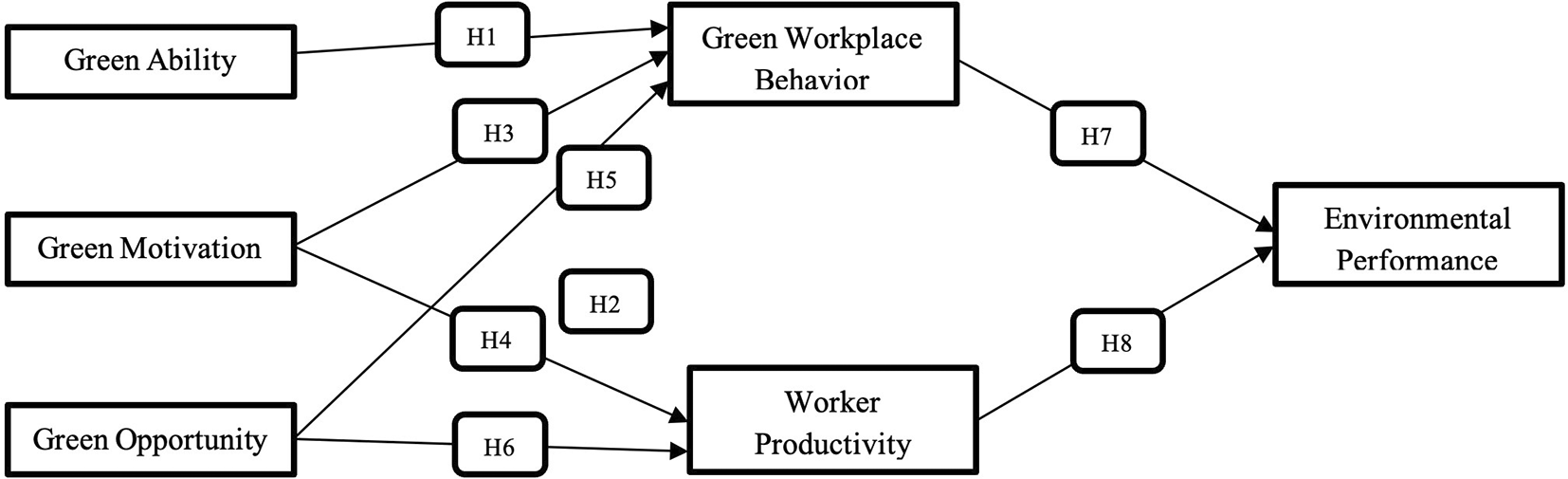
Green ability positively impacts green workplace behavior.
2.2.2. Green Ability and Worker Productivity
Green ability also contributes to the improvement of worker productivity. The ability of employees to effectively complete tasks, comprehend, work procedures, and minimize errors in task execution is enhanced when they are endowed with the necessary knowledge and skills. Competent employees have a greater capacity to perform their work optimally, as the AMO Theory posits that ability is a critical factor in determining individual performance (Appelbaum et al., 2001; Jiang et al., 2012). In coffee shops, environmental training and skills facilitate more efficient work, reduce raw material waste, and support more productive operational processes. Therefore, green ability is anticipated to enhance worker productivity.
Green ability positively impacts worker productivity.
2.2.3. Green Motivation and Green Workplace Behavior
Green motivation is the organization’s provision of acknowledgement, rewards, support, and encouragement to employees who exhibit environmentally favorable behavior. Employees are more likely to implement environmentally friendly work behaviors when their contributions to sustainability activities are valued by the organization. Employee engagement in environmentally friendly practices can be improved through the implementation of reward systems, managerial support, and work environments that prioritize sustainability (Saeed et al., 2019; Tang et al., 2018). In coffee shops, green motivation can be demonstrated through the recognition of employees who actively participate in waste sorting, reducing the use of single-use materials, or proposing waste management ideas. Thus, higher green motivation correlates with a stronger propensity for employees to exhibit green workplace behavior.
Green motivation positively impacts green workplace behavior.
2.2.4. Green Motivation and Worker Productivity
Green motivation not only encourages environmentally friendly behavior but also increases worker productivity. High morale, increased responsibility, and proactive task completion are characteristics of employees who feel valued, supported, and acknowledged for their contributions. In AMO Theory, motivation is crucial because an employee’s ability will not yield optimal performance without the drive to act (Appelbaum et al., 2001; Jiang et al., 2012). In coffee shops, motivation can encourage employees to fulfill their responsibilities, provide ideas for improvement, and find solutions to operational problems. Thus, green motivation is estimated to have a beneficial impact on worker productivity.
Green motivation positively impacts worker productivity.
2.2.5. Green Opportunity and Green Workplace Behavior
Green opportunity describes the degree to which an organization offers employees the opportunity to participate in environmentally responsible activities, as well as the facilities and availability of space. These opportunities may encompass the provision of supporting facilities, waste management SOPSs, spaces to impart ideas for environmental improvements, and employee involvement in environmental decision-making (Saeed et al., 2019). In the context of coffee shops, employees will find it easier to implement environmentally friendly behaviors if there are sorted bins, coffee grounds management procedures, plastic reduction policies, and support for running environmental programs. Thus, green opportunities are an important factor that allows employees to turn intentions and knowledge into real actions. Consequently, it is anticipated that green opportunities will have a beneficial impact on the behavior of employees who prioritize sustainability in the workplace.
Green opportunity positively impacts green workplace behavior.
2.2.6. Green Opportunity and Worker Productivity
Green opportunities can also increase worker productivity because participation opportunities allow employees to contribute more actively to work. When organizations provide space for employees to pitch ideas, engage in operational improvements, and make optimal use of work facilities, employees tend to be more productive and responsible. In AMO Theory, opportunity is an important element because skills and motivation are insufficient if employees do not have the opportunity to apply them at work (Jiang et al., 2012). In coffee shops, the opportunity to brainstorm improvements, devise more efficient ways of working, and participate in sustainability programs can increase worker productivity. Therefore, green opportunities are estimated to have a beneficial impact on worker productivity.
Green opportunity positively impacts worker productivity.
2.2.7. Green Workplace Behavior and Environmental Performance
Employee actions that are specifically designed to mitigate the organization’s environmental impact are referred to as green workplace behavior. These behaviors encompass participation in environmental programs, energy conservation, material reuse, waste processing, and paper reduction (Dumont et al., 2017). The environmental performance of an organization is influenced by the actual behavior of employees in daily operational activities, in addition to organizational policies (Pham et al., 2019). In coffee shops, environmentally friendly work behavior can contribute to the reduction of plastic pollution, the management of coffee grounds, the conservation of water and energy, and the enhancement of the business’s image as one that cares about the environment. Consequently, the organization’s environmental performance is enhanced by the extent to which employees exhibit green workplace behavior.
Green workplace behavior positively impacts environmental performance.
2.2.8. Worker Productivity and Environmental Performance
Worker productivity describes the ability of employees to complete tasks, fulfill job responsibilities, generate improvement ideas, and create solutions beneficial to the organization. Worker productivity can support environmental performance because productive employees tend to work more efficiently, reduce waste, maintain cleanliness in work areas, and improve operational processes. Based on the RBV Theory, productive employees can be seen as valuable internal resources because they support organizational efficiency, innovation, and sustainability (Barney, 1991). In the context of coffee shops, worker productivity can help reduce waste, save energy, minimize excessive use of raw materials, and improve business environmental performance. Therefore, worker productivity is estimated to have a positive effect on environmental performance.
Worker productivity positively impacts environmental performance.
The proposed relationships among green ability, green motivation, green opportunity, green workplace behavior, worker productivity, and environmental performance are illustrated in Figure 1 as research design.
This study was grounded in the positivist paradigm and employed a quantitative research approach. Positivism was considered appropriate because the study examined theoretically derived hypotheses by measuring observable variables and analyzing the resulting data through multivariate statistical procedures (Creswell, 2009; Saunders et al., 2023). A quantitative approach also enabled the relationships among latent constructs to be examined objectively and systematically through statistical testing (Sekaran & Bougie, 2010).
A cross-sectional design was used to collect data from respondents at a particular point in time. This design allowed the proposed relationships among the constructs in the research model to be assessed efficiently. Cross sectional surveys are widely applied in human resource management and organizational behavior research because they facilitate the examination of patterns and associations within a defined population (Bryman, 2016; Saunders et al., 2023). The survey method was also appropriate for obtaining employees’ perceptions of organizational practices, workplace behavior, and organizational performance (Sekaran & Bougie, 2010).
The proposed model investigated whether green ability, green motivation, and green opportunity influenced green workplace behavior and worker productivity. It also examined the subsequent effects of these two employee level outcomes on organizational environmental performance. The hypothesized relationships were tested using Partial Least Squares Structural Equation Modeling (PLS-SEM). This method was selected because it is suitable for prediction-oriented models involving multiple latent constructs and complex relationships, while imposing relatively few restrictions regarding data normality (Hair et al., 2017).
Primary data were collected from employees of coffee shops in Indonesia using a structured questionnaire. A questionnaire was considered suitable for this quantitative survey because it enabled responses to be gathered in a standardized format and subsequently processed through statistical analysis (Saunders et al., 2023; Sekaran & Bougie, 2010). The questionnaire was administered through both face to face and online channels. For the face-to-face procedure, the researchers approached coffee shops that satisfied the study’s eligibility requirements and distributed the instrument directly to qualified employees. The online survey was circulated through a digital link to extend the geographical reach of the study and obtain responses from a broader group of coffee shop employees.
Before participating, respondents received information concerning the purpose of the study, the eligibility requirements, and the academic use of the collected data. Participation was entirely voluntary, and no personally identifiable information was requested. These measures were applied to protect respondent confidentiality and minimize the possibility of response bias. All questionnaire items were measured on a five-point Likert scale, ranging from 1 (“Strongly Disagree”) to 5 (“Strongly Agree”). This measurement format was selected because it is widely used to capture individuals’ attitudes, perceptions, and evaluations of latent constructs in management and organizational behavior studies (Creswell, 2009).
The measurement items for Green HRM, green workplace behavior, productivity, and environmental performance were adapted from relevant previous studies. Several contextual adjustments were made so that the wording and content of the indicators reflected the operational characteristics of coffee shops as small businesses in the culinary sector. After data collection, all submitted questionnaires were screened for completeness and respondent eligibility. Responses containing substantial missing information or originating from individuals who did not satisfy the predetermined criteria were removed. The remaining valid responses were then prepared for analysis using PLS-SEM.
3.2.1 Informed Consent
Participants were presented with written information about the study in the introductory section of the Google Form. This information explained the purpose of the research, the voluntary nature of participation, the confidentiality of responses, and the academic use of the collected data. No separate signature, consent checkbox, or verbal consent was recorded. Participants provided implied informed consent by voluntarily completing and submitting the questionnaire after reading the information provided.
3.2.2 Ethical Approval
Formal approval from an institutional ethics committee was not obtained before data collection. The study involved an anonymous, minimal-risk survey of adult employees and included no experimental intervention. No sensitive, confidential, or personally identifiable information was collected. Participation was entirely voluntary, and information regarding the purpose of the study, confidentiality of responses, academic use of the data, and participants’ freedom to decline participation was provided in the introductory section of the questionnaire. The research procedures followed the relevant ethical principles concerning voluntary participation, informed consent, privacy, and confidentiality set out in the Declaration of Helsinki.
The study population comprised employees of coffee shops operating in Indonesia. Eligible participants were those directly involved in routine outlet operations, including baristas, cashiers, service personnel, cleaning staff, supervisors, and outlet managers. These employees were considered appropriate respondents because their daily responsibilities were closely related to resource use, waste handling, energy consumption, and the implementation of environmentally responsible workplace practices. Participants were recruited using purposive sampling, whereby respondents were selected according to predetermined eligibility requirements that reflected the objectives of the study. To participate, individuals were required to (1) be actively employed by a coffee shop and have at least three months of work experiences; (2) possess sufficient knowledge of the outlet’s operational activities; and (3) be familiar with or involved in environmental policies, practices, or initiatives implemented in their workplace. The study initially targeted approximately 200–300 participants. These criteria were applied to ensure that respondents could provide informed assessments of Green HRM practices, green workplace behavior, worker productivity, and organizational environmental performance.
After the screening process, 304 valid responses were retained for analysis. The sample was relatively balanced by gender, with women representing 50.3% of respondents and men accounting for 49.7%. Most participants held a bachelor’s degree (62.8%), followed by those who had completed senior high school (25.3%) and diploma education (11.8%).
Regarding work experience, the largest proportion of respondents had been employed for four to six years (49.3%). This group was followed by employees with one to three years of experience (21.7%), seven to ten years of experience (16.1%), and less than one year of experience (12.8%), while contract employees, interns, and part-time workers represented 17.1%, 10.5%, and 9.5%, respectively. In terms of monthly income, the largest group earned between IDR 3,000,001 and IDR 5,000,000 (33.6%). A complete summary of the respondents’ demographic characteristics is provided in Table 1.
The empirical model was estimated using PLS-SEM through Smart-PLS. This analytical technique was considered appropriate because the study emphasized prediction and incorporated several latent variables connected through multiple structural paths. PLS-SEM is also relatively flexible regarding sample size and data distribution, as it does not impose stringent multivariate normality requirements (Hair et al., 2017). The evaluation followed a two-step procedure. First, the measurement model was examined to determine whether the indicators and constructs demonstrated satisfactory reliability and validity. Once these measurement requirements had been fulfilled, the structural model was evaluated to estimate the proposed relationships among the latent constructs and determine whether the research hypotheses were supported.
3.4.1 Measurement Model Assessment
Four criteria were used to evaluate the measurement model, discriminant validity, convergent validity, indicator reliability, and internal consistency reliability. The outside loadings of the measurement items were used to assess indicator reliability. Because they showed that the indicators accurately reflected their corresponding latent constructs, loadings of 0.70 or above were deemed satisfactory. Cronbach’s alpha and composite reliability were used to evaluate internal consistency. In management and social science research, values of 0.70 or higher were considered indicative of satisfactory reliability. The Average Variance Extracted (AVE) was used to assess convergent validity. When a construct’s AVE was at least 0.50, meaning it explained more than half of the variance in its indicators, it was deemed to exhibit appropriate convergent validity (Hair et al., 2017). The Fornell-Larcker criterion was used to assess discriminant validity. This criterion states that discriminant validity was demonstrated when the square root of each construct’s AVE was greater than the correlations with the other constructs in the model (Fornell & Larcker, 1981).
3.4.2 Structural Model Assessment
Once the measurement model has met the reliability and validity criteria, the structural model will be evaluated. This evaluation examines the strength of the association between constructs in the research model as well as the model’s prediction capacity. The structural model is evaluated using R2, Q2, f2, and path coefficient significance tests. The R2 value measures how well exogenous variables explain endogenous variables. The Q2 value evaluates the model’s predictive relevance. The f2 value evaluates the impact of an exogenous construct on the endogenous one. Furthermore, a bootstrapping approach was used to determine whether the path coefficient was statistically significant (Hair et al., 2017).
Cronbach’s alpha and composite reliability were used to assess internal consistency reliability. The results indicate that all constructs achieved acceptable reliability levels, with Cronbach’s alpha and composite reliability values exceeding the recommended threshold of 0.70. Convergent validity was assessed using outer loadings and the Average Variance Extracted (AVE). All indicator loadings exceeded 0.70, while the AVE values were above 0.50, indicating satisfactory convergent validity. The complete results of the measurement model assessment, including indicator loadings, Cronbach’s alpha, composite reliability, and AVE values, are presented in Table 2.
Discriminant validity was subsequently assessed using the Fornell-Larcker criterion. The results indicate that the square root of the AVE for each construct exceeded its correlations with the other constructs. The complete results of the discriminant validity assessment are presented in Table 3.
The Standardized Root Mean Square Residual (SRMR) was utilized to evaluate model fit. The SRMR results, as expected, met the requirement of <0.080, with saturated model values of 0.028 (<0.080) and estimated model values of 0.032 (Hair et al., 2014). This signifies the lack of multicollinearity in the model. The research assessed hypotheses utilizing the bootstrap method with 10,000 iterations, integrating bias corrected confidence intervals and two tailed significance p-values (* p: 0.05, ** p: 0.01, *** p: 0.001).
The results of the direct influence study demonstrate that green ability does not significantly impact green workplace behavior (t = 0.653 ns, p > 0.05). Therefore, H1 is unsupported. The green ability does not have a significant impact on worker productivity (t = 0,752 ns, p > 0.05). As a result, H2 is unsupported. Green motivation significantly enhances green workplace behavior (t = 2.716, p < 0.05). Therefore, H3 is substantiated. Green motivation exerts a substantial beneficial influence on employee productivity (t = 2.574, p < 0.05), therefore supporting H4. Moreover, green opportunity has a significant and favorable effect on green workplace behavior (t = 4.394, p < 0.05), thus supporting H5. The green opportunity exhibits a substantial favorable impact on worker productivity (t = 4.236, p < 0.05), therefore supporting H6. The findings indicate that green workplace behavior significantly enhances environmental performance (t = 10.106, p < 0.05), hence supporting H7. Moreover, worker productivity has a significant and favorable impact on environmental performance (t = 9.453, p < 0.05), hence supporting H8. The complete hypothesis-testing results are presented in Table 4. The estimated structural model, including the standardized path coefficients and coefficients of determination, is illustrated in Figure 2.
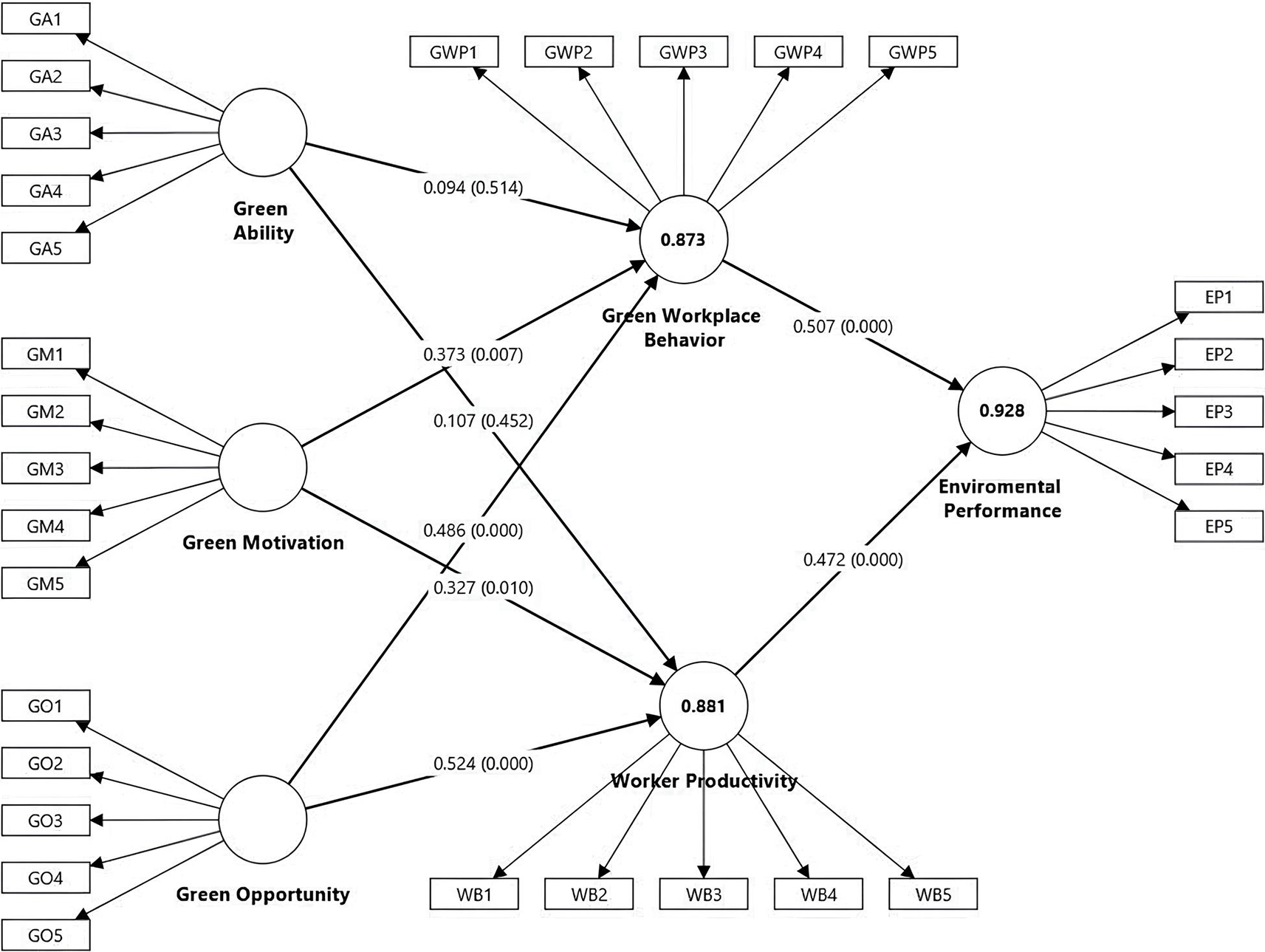
This study employs R2 and PLS predict for a strength assessment. The environmental performance exhibits a substantial determination coefficient (R2 = 0.928) as presented in Table 5. The variables green work behavior and worker productivity 92.8% of the inclination to adopt environmental performance variants. (Hair et al., 2017) assert that R2 values of 0.75, 0.50, and 0.25 signify strong, moderate, and weak explanatory factors for endogenous constructs. The R2 score reflects explanatory power within the sample and does not imply predictive efficacy beyond it ( Table 5).
This study use R2 and PLS predict for evaluating strength. The environmental performance demonstrates a significant determination coefficient (R2 = 0.928) as shown in the Table 5. The variable of green work behavior and worker productivity account for 92.8% of the propensity to adopt environmental performance variations. Hair et al. (2017) state that R2 values of 0.75, 0.50, and 0.25 indicate strong, moderate, and weak explanatory power for endogenous constructs. The R2 score indicates explanatory power within the sample but does not suggest predictive effectiveness beyond it ( Table 5).
The findings of this study show that the three pillars of Green Human Resource Management do not have a consistent link with employee behavior and productivity in Indonesian coffee shops. Green motivation and green opportunity were positively and significantly associated with green workplace behavior and worker productivity, whereas green ability showed no significant relationship with either outcome. Worker productivity and green workplace behavior were favorably and strongly associated with environmental performance. These findings show that Green HRM’s ability, incentive, and opportunity components may be less relevant in small, service-oriented enterprises due to differing dynamics.
Green ability was not significantly associated with green workplace behavior (β = 0.094, t = 0.653), and its confidence interval included zero. Therefore, H1 was not supported. This suggests that employees’ environmental knowledge, skills, and training may not inevitably lead to green workplace behavior. In accordance with (Saputra et al., 2024) green training, as an ability-enhancing Green HRM activity, did not significantly improve employees’ organizational citizenship behavior for the environment. This implies that increasing employees’ environmental competencies alone may not be enough to encourage green behavior without motivation, corporate support, and environmental efforts. However, it differs from studies reporting that environmental training and competence can encourage pro-environmental employee behavior (Saeed et al., 2019). One plausible explanation is that environmental knowledge may remain inactive unless employees are provided with supportive procedures, facilities, incentives, and opportunities to apply it. In the coffee shop context, knowing how to separate waste or conserve energy may have little behavioral effect when appropriate waste bins, operational guidelines, or managerial encouragement are unavailable.
There was no significant correlation between green ability and worker productivity (β = 0.107, t = 0.752), rejecting H2. According to (Kurniawan et al., 2024), green training did not improve employee performance. However, their analysis found a substantial association between green ability and employee success, suggesting mixed evidence. The difference may reflect variation in organizational context, the formality of training systems, and the extent to which environmental competencies are connected to employees’ core job responsibilities. In coffee shops, environmental training may primarily increase awareness without necessarily improving task completion, problem-solving, or innovative productivity. Therefore, green ability may require complementary motivational and opportunity-enhancing practices before it produces measurable productivity outcomes.
Green motivation was positively and significantly linked to green workplace behavior (β = 0.373, t = 2.716), supporting H3. In the Malaysian food business, employees’ green motivation was positively and significantly correlated with green behavior (Junsheng et al., 2020). It supports the motivation component of AMO theory, which states that incentives, recognition, and managerial assistance motivate individuals to use their skills. In Indonesian coffee shops, employees may be more willing to separate waste, conserve energy, reduce disposable materials, and participate in environmental initiatives when these behaviors are recognized and valued by their managers.
Moreover, green motivation substantially correlated with worker productivity (β = 0.327, t = 2.574), supporting H4. This supports (Kurniawan et al., 2024), who found that green motivation greatly enhanced employee performance. Organizational recognition and leadership support can boost employee purpose, responsibility, and engagement. Because coffee shops generally have relatively direct relationships between employees, supervisors, and owners, non-financial forms of motivation, such as appreciation, trust, feedback, and recognition of improvement ideas, may substantially influence employees’ willingness to complete tasks, solve operational problems, and contribute innovative suggestions.
Supporting H5, green opportunity positively and significantly correlated with green workplace behavior (β = 0.486, t = 4.394). According to (Rehman et al., 2025), green employee involvement, representing the opportunity dimension of AMO theory, favorably enhanced organizational citizenship behavior toward the environment. When given proper facilities, operational procedures, and participatory methods, employees are more likely to behave environmentally responsibly. In coffee shops, such opportunities may include segregated waste bins, procedures for managing coffee grounds, policies to reduce single-use plastics, and channels through which employees can propose environmental improvements. Thus, environmental behavior must be enabled through organizational arrangements rather than merely requested through verbal instructions.
Green opportunities were favorably and significantly linked to worker productivity (β = 0.524, t = 4.236), confirming H6. Green opportunity has the highest worker production path coefficient of the three Green HRM aspects. The opportunity component of AMO theory states that employees need autonomy, resources, and participation opportunities to apply their skills and motivation. Direct empirical research isolating the relationship between green opportunity and worker productivity remains limited. Nevertheless, broader evidence indicates that employee engagement and organizational involvement improve worker productivity by strengthening responsibility, initiative, and problem-solving behavior (Papademetriou et al., 2025). In coffee shops, providing employees with opportunities to participate in operational decisions and sustainability initiatives may allow them to identify more efficient working methods and reduce unnecessary resource use.
Workplace behavior was positively and significantly linked with Environmental performance (β = 0.507, t = 10.106), supporting H7. According to (He et al., 2024), Green HRM improves environmental performance through green workplace behavior. According to (Rehman et al., 2025), organizational citizenship behavior toward the environment improved environmental performance. Routine employee actions, including waste separation, energy conservation, material reuse, and participation in environmental programs, can accumulate into measurable environmental improvements. Therefore, the environmental performance of a coffee shop depends not only on formal organizational policies but also on the consistent implementation of those policies through employees’ daily behavior.
Supporting H8, worker productivity was positively and significantly linked with environmental performance (β = 0.472, t = 9.453). These supports (Papademetriou et al., 2025), who found that worker productivity improved environmental performance. Productive employees are more likely to complete operational responsibilities consistently, identify inefficient processes, reduce material waste, and generate practical solutions to workplace problems. In coffee shops, productivity may contribute to environmental performance through more accurate use of ingredients, reduced operational errors, efficient consumption of water and energy, and improved waste-management procedures. This result extends the environmental performance literature by demonstrating that environmental outcomes depend not only on explicitly green behavior but also on the broader quality and productivity of employees’ work.
The results show that motivation and opportunity affect employee behavior and productivity more than talent alone. This pattern is broadly consistent with (Bindeeba et al., 2025), whose meta-analysis showed that motivation-enhancing practices, particularly environmentally linked compensation, were stronger drivers of green innovation than training and recruitment practices. Thus, this study refines AMO theory by showing that its three components may not contribute equally in resource-constrained and informal business situations. Ability provides a necessary foundation, but motivation and opportunity appear to determine whether environmental competence is translated into actual behavior and productive action. The significant relationships of green workplace behavior and worker productivity with environmental performance also support the Resource-Based View by positioning employee behavior and productivity as valuable internal resources for achieving environmental sustainability.
This study seeks to investigate the impact of Green Human Resource Management (HRM) practices on green workplace behavior, employee productivity, and environmental performance in Indonesian coffee shops. The study’s results indicate that the implementation of Green HRM does not exert a consistent effect on employee behavior and productivity. The green ability has been demonstrated to exert no substantial influence on environmentally friendly workplace behavior or employee productivity. These findings indicate that environmental knowledge, training, and skills alone are insufficient to drive changes in work behavior and increase productivity if they are not supported by adequate systems, facilities, and organizational encouragement. Conversely, green motivation and green opportunity have demonstrated a favorable and considerable impact on green workplace behavior and employee productivity. The results affirm that rewards, managerial support, chances for engagement, and access to eco-friendly facilities are significant determinants of employee behavior. In coffee shops, staff are more inclined to adopt environmentally sustainable practices and perform efficiently if the firm gives both guidance and tangible assistance to facilitate action. Furthermore, environmentally conscious workplace behavior and employee productivity have been demonstrated to exert a favorable and substantial impact on environmental performance. This means that the environmental performance of coffee shops depends not only on the policies of business owners but also on the daily operational behavior of employees. Simple practices such as sorting waste, saving energy, reducing raw material waste, and providing ideas for work process improvements can contribute to waste reduction, resource efficiency, and improved organizational environmental performance.
This study includes significant theoretical contributions. First, it applies AMO theory to green human resource management in small firms, particularly coffee shops. According to the study, ability, motivation, and opportunity have different effects. Green motivation and opportunity matter more than green ability. This shows that environmental skills or knowledge alone cannot influence work behavior in MSMEs without organizational support and opportunities. Second, this study distinguishes green ability, motivation, and opportunity, enriching Green HRM literature. Many researchers have viewed Green HRM as a generic construct, making it harder to determine which factors affect employee behavior. This study found that green opportunity increases employee behavior the greatest, followed by green incentive. These data clarify how Green HRM works in small firms. Third, this study supports the Resource-Based View by showing that employees can help achieve environmental performance. Employee behavior, green and otherwise, has been shown to greatly impact environmental performance. Employees are considered as operational implementers and internal assets that may assist firms achieve environmental sustainability. Fourth, our study adds to MSME and coffee shop Green HRM literature. Most Green HRM studies are on major firms, manufacturing, or the formal sector. This study illustrates that Green HRM practices are relevant to small enterprises like coffee shops, despite their informal, flexible, and resource-limited structures.
The findings of this study offer numerous insights for proprietors and managers of coffee establishments. First, environmental training alone is insufficient to enhance employees’ eco-friendly behavior. While knowledge remains important, training should be directly linked to daily work procedures, such as waste sorting, reducing single-use plastics, managing coffee grounds, saving electricity, and using water efficiently. Second, coffee shop owners need to strengthen green motivation. Motivation does not always have to be in the form of financial incentives. Simple appreciation, recognition of an employee’s idea, manager support, or internal appreciation for employees who consistently practice eco-friendly habits can increase employee engagement. At the MSME scale, simple forms of appreciation are often more realistic and easier to implement. Third, coffee shop owners need to provide real green opportunities. The study shows that green opportunity has the strongest influence on employee behavior. Therefore, coffee shops need to provide facilities and supporting systems, include segregated garbage receptacles, waste management standard operating procedures, the utilization of eco-friendly products, coffee grounds collecting initiatives, and areas for staff to provide suggestions for environmental enhancement. Fourth, environmental performance needs to be integrated into the daily work routine. Environmental responsibility should not only be a slogan or a momentary campaign but should be included in job descriptions, operational checklists, and work evaluations. For example, employees should be responsible for ensuring electricity is turned off after operations, reducing the use of single-use materials, separating organic and inorganic waste, and keeping work areas clean. Fifth, coffee shop owners need to view employees as partners in environmental management. In small businesses, significant changes often come from small actions taken consistently. Consequently, engaging employees in environmental decision-making can enhance their sense of belonging and improve the efficacy of implementing sustainable policies.
This study, which uses a quantitative survey approach and focuses on Indonesian coffee shop employees, has limitations in terms of its object and design. Consequently, more study can broaden the scope of studies to include other MSMEs in the culinary industry. In order to document how Green HRM practices evolve over time and influence environmental results in various company contexts, future research may also consider longitudinal or mixed-method techniques.
This study was supported by the Indonesia Endowment Fund for Education (LPDP), Ministry of Finance of the Republic of Indonesia, through a Master's Scholarship Programme. The funder had no role in the study design, data collection, data analysis, interpretation of the findings, preparation of the manuscript.
The funders had no role in study design, data collection and analysis, decision to publish, or preparation of the manuscript.
© 2026 Fatimah D et al. This is an open access article distributed under the terms of the Creative Commons Attribution License, which permits unrestricted use, distribution, and reproduction in any medium, provided the original work is properly cited.
Current Reviewer Status:
AWAITING PEER REVIEW
AWAITING PEER REVIEW
?
Key to Reviewer Statuses VIEW HIDE
ApprovedThe paper is scientifically sound in its current form and only minor, if any, improvements are suggested
Approved with reservations A number of small changes, sometimes more significant revisions are required to address specific details and improve the papers academic merit.
Not approvedFundamental flaws in the paper seriously undermine the findings and conclusions