Просмотр новости
Найдите то, что Вас интересует
 Спутники
 РН
РН SpaceX
 Роскосмос
 NASA
NASA
СпутникиРНSpaceXРоскосмосNASABackground Digital democracy has transformed political communication and participation, especially among Generation Z voters who actively use social media and digital platforms. In the 2024 Indonesian election, digital spaces became important arenas for accessing political information, expressing opinions, and engaging in public debate. However, the rise of post-truth politics also created challenges through misinformation, disinformation, and emotionally driven political narratives. Methods This study used a quantitative survey design to examine the influence of digital democracy, political literacy, and post-truth politics on Generation Z’s political participation in the 2024 Indonesian election. The respondents were Generation Z voters aged 18–28 years who were registered in the 2024 Permanent Voter List across 38 provinces in Indonesia. Data were collected using a structured questionnaire with a four-point Likert scale. The data were analyzed using Structural Equation Modeling (SEM) with AMOS to test direct, mediating, and moderating relationships among the variables. Results The findings show that digital democracy significantly strengthens Generation Z’s political literacy. Political literacy also has a significant positive influence on political participation. In addition, digital democracy directly influences political participation and indirectly influences it through political literacy. This indicates that political literacy functions as a mediator between digital democracy and political participation. The study also finds that post-truth politics negatively moderates the relationship between political literacy and political participation, meaning that the positive effect of political literacy becomes weaker when post-truth politics is high. Conclusions Digital democracy and political literacy are important factors in strengthening Generation Z’s political participation in the 2024 Indonesian election. Political literacy helps Gen Z voters evaluate political information critically and participate more meaningfully, while post-truth politics can weaken this process through biased and manipulative information.
Some observers of cyberspace have assumed that the internet is inherently democratic. However, Diaz (2008) argues that this assumption should be critically examined, particularly because search engines and digital platforms may reproduce sociopolitical biases. At the same time, internet-based communication can provide new spaces for political information, public expression, and civic participation through online public spheres, blogs, social networking sites, citizen journalism, and other forms of online political communication (Dahlgren, 2005; Shah et al., 2005; Best & Krueger, 2005). E-democracy refers to the use of information and communication technology (ICT) in political debates and decision-making processes, either complementing or contrasting traditional forms of communication, such as face-to-face interaction or one-way mass media (Päivärinta & Sæbø, 2006). Similarly, digital democracy can be understood as the pursuit and practice of democracy through digital media in both online and offline political communication (van Dijk, 2012). In the Indonesian context, Manggalanny describes digital democracy as the collective use of digital media and networks for political purposes, whether online, offline, or in combination (Kompas.com, 2021).
E-democracy and digital democracy are closely related to public access to information, online political communication, e-participation, e-deliberation, transparency, and public accountability. These practices may include digital platforms for consultation, petitions, campaigns, polling, deliberative forums, and access to open government data (Council of Europe, 2009; Lindner & Aichholzer, 2019). The internet can extend and pluralize the public sphere by creating new spaces for political information, discussion, and civic engagement, although these spaces do not automatically guarantee deliberative quality or equal participation (Dahlgren, 2005; van Dijk, 2012).
Digital democracy also enables political messages to circulate quickly and widely through social media, websites, and digital applications, facilitating communication among governments, political parties, activists, and citizens. It may encourage civic participation in discussions, campaigns, social movements, and public monitoring. However, digital democracy also faces challenges, including misinformation, disinformation, echo chambers, algorithmic bias, political surveillance, and unequal digital access (Lindner & Aichholzer, 2019; OECD, 2024). Therefore, digital democracy should be understood not only as the expansion of online participation, but also as a democratic process that requires information integrity, digital literacy, transparency, accountability, and protection of citizens’ rights.
Political literacy refers to citizens’ knowledge and understanding of political processes and issues, enabling them to perform their roles effectively and participate in democratic life (Denver & Hands, 1990). It also involves practical understanding of political concepts drawn from everyday life, including the ability to understand political issues, the positions of political actors, and how these issues may affect oneself and others (Crick, 2000). In this sense, political literacy is not limited to factual knowledge, but also includes citizens’ capacity to evaluate political information, understand democratic procedures, and make informed political decisions.
Previous studies show that education and political knowledge are closely related to political engagement. Cassel and Lo (1997) explain that political literacy can be examined through cognitive mobilization, socialization, and structural factors, while Campbell et al. (1960) and Converse (1964) emphasize that political awareness and ideological understanding are shaped by citizens’ level of political information and political socialization. Similarly, Delli Carpini and Keeter (1996) argue that politically informed citizens are more likely to participate, recognize their own interests, and advocate those interests through political action.
The absence of political literacy, particularly among first-time voters, may create several socio-political problems. Voters with low political literacy are more vulnerable to political propaganda, misinformation, vote buying, political apathy, and manipulative campaign strategies (Karim et al., 2015; Sutisna, 2017; Tam, 2016). In the digital context, social media can support political literacy by providing access to political information and public discussion, but it can also expose novice voters to misleading political messages and online misinformation (Ohme, 2019; Kurniasih et al., 2024). Therefore, strengthening political literacy is important for encouraging rational, informed, and independent political participation, especially among young and first-time voters (Pontes et al., 2019; Dudley & Gitelson, 2002).
Post-truth politics can be understood as a form of political discourse that is epistemically dysfunctional because it no longer places objective facts as the main basis for shaping public opinion and political decision-making. Oxford Languages defines post-truth as circumstances in which objective facts are less influential in shaping public opinion than appeals to emotion and personal belief (Oxford Languages, 2016). Rietdijk (2024) argues that post-truth politics does not only damage knowledge and democracy, but may also weaken citizens’ epistemic autonomy through counter-narratives, the discrediting of criticism, and the denial of relatively clear facts. In a similar sense, Keyes (2004) describes the post-truth era as a condition in which the boundaries between truth and lies, honesty and deception, as well as fact and fiction, become increasingly blurred.
In a democratic system, freedom of speech is an essential requirement. However, such freedom still requires a commitment to facts. Without shared facts, deliberation, negotiation, and democratic decision-making can easily turn into a contest of emotions and group-based justification. Arendt (1967) distinguishes between rational truth and factual truth. Factual truth is important in politics because it concerns events and realities that become the basis of public debate. Therefore, truth cannot be separated from democracy, especially in a society marked by polarization, internet penetration, social media use, and the rapid spread of unverified information.
The phenomenon of post-truth becomes stronger in the digital sphere because of information manipulation. Giusti and Piras (2021) explain that disinformation, fake news, and post-truth politics have become serious challenges to democracy because they transform the information landscape and weaken democratic foundations. Al-Rodhan (2017) argues that post-truth politics relies more on emotion and intuition than on facts and evidence. Fake news and conspiracy theories can spread quickly, create alternative realities, and be used for propaganda purposes. In the construction of discourse, Hamad (2017) identifies three important elements: framing, signing, and priming. Framing refers to the selection of issues, actors, storylines, arguments, risks, and responsibilities. Signing refers to the selection of signs, such as words, symbols, images, slogans, colors, and order of presentation. Priming refers to the effort to ensure that a discourse reaches the audience by increasing the opportunity to access, read, remember, and share the message.
The main characteristics of post-truth politics include provoking public emotions, ignoring data and facts, spreading political news whose truth has not been verified, combining populist movements with conspiracy theories, mobilizing fictional narratives about certain figures or events, and polishing dishonesty in order to strengthen the social, political, or economic position of particular actors or groups. Arifin and Fuad (2020), referring to Fahruddin Faiz, explain that the roots of post-truth politics include the human desire for personal identity reinforcement, media orientation toward ratings, clicks, followers, and profit, the commodification of information, technological progress that is not accompanied by social intelligence, short-term pragmatism, a society that is easily attracted to sensational issues, and populism that uses rhetoric such as “for the people” or “defending the people” for specific political interests.
Post-truth politics is also closely related to hoaxes and fake news. Allcott and Gentzkow (2017) define fake news as news articles that are intentionally and verifiably false and that may mislead readers. They distinguish fake news from unintentional reporting errors, rumors, conspiracy theories that are difficult to verify, satire, false statements by politicians, and biased reports that are not entirely false. In UNESCO’s framework, information disorder is divided into misinformation, disinformation, and malinformation. Misinformation refers to false information shared without the intention to cause harm. Disinformation refers to false information deliberately created and shared to deceive. Malinformation refers to genuine information that is used in a particular context to harm a person, group, organization, or country. The motives behind the spread of hoaxes may include political, economic, ideological, sentimental, or personal interests, and sometimes merely entertainment or the desire to gain attention.
Political participation refers to citizens’ involvement in political life through activities such as voting, joining political parties, participating in pressure groups, engaging in campaigns, or taking part in actions aimed at influencing government and public policy. Leach, Coxall, and Robins (2006) describe political participation as citizen involvement in politics through activities such as voting, pressure group activity, and party activity directed toward influencing government and public policy. Ruedin (2007) further explains that political participation is an individual activity, although it is carried out within a particular institutional and social context and often involves interaction with others. Similarly, McClosky (1968) defines political participation as voluntary activities through which members of society take part in selecting rulers and, directly or indirectly, in forming public policy. Huntington and Nelson (1976) define political participation as activity by private citizens designed to influence government decision-making.
In a democratic system, political participation is important because democracy allows citizens in a pluralistic society to express their interests, preferences, and aspirations. However, participation does not always produce healthy democratic deliberation. When citizens participate mainly through partisan affiliation, emotionally charged narratives, and selective information environments, democratic participation can become trapped in an echo chamber. In this condition, individuals are repeatedly exposed to information that confirms their existing beliefs, while opposing perspectives are rejected or ignored. When echo chambers are combined with post-truth politics, political participation may strengthen partisanship, deepen polarization, and reduce the quality of public dialogue.
Participatory citizenship is broader than formal political participation. It includes actions through which individuals contribute to public life, community well-being, and shared social purposes. The Civic Engagement VALUE Rubric developed by the Association of American Colleges and Universities and edited by Rhodes (2010) explains that civic engagement involves actions in which individuals participate in activities of personal and public concern that are both personally meaningful and socially beneficial. Participatory citizenship can be understood through several dimensions. First, civic identity refers to the ability to see oneself as an active participant in society, with responsibility to work with others toward public purposes. Second, civic communication refers to the ability to listen, deliberate, negotiate, build consensus, and use conflict productively. Third, civic action and reflection refer to the ability to show initiative in civic leadership and to reflect critically on the goals and outcomes of one’s civic actions.
The level of political participation is influenced by several factors. The civic voluntarism model developed by Brady, Verba, and Schlozman (1995) explains that participation is shaped by resources, political engagement, and recruitment networks. Resources include time, money, and civic skills. Political engagement includes political interest, information, efficacy, and motivation. Recruitment networks refer to the social and organizational connections through which individuals are invited or encouraged to participate. In this sense, socio-economic status, education, age, political interest, partisanship, and membership in organizations or pressure groups can all affect the extent and form of a person’s political participation.
Political participation can also be discussed through different forms and purposes. Informational participation refers to activities aimed at spreading political information, educating citizens, and increasing public awareness of political issues. Norris (2002) shows that political activism has expanded beyond traditional electoral participation and now includes newer forms of civic and political engagement, including those connected to media, protest, and the internet. Examples of informational participation include sharing verified political information on social media, organizing seminars about citizens’ rights, and creating educational content about democratic processes.
Strategic participation refers to systematic and collective forms of participation aimed at producing political or policy change. Tilly (2004) explains that social movements are vehicles of popular politics that use campaigns, repertoires of action, and public displays of worthiness, unity, numbers, and commitment to make collective claims. Examples of strategic participation include mass movements demanding political reform, alliances among civil society groups to push constitutional amendments, and evidence-based advocacy campaigns aimed at changing public policy.
Instrumental participation refers to participation used as a means to achieve particular objectives. White (1996) explains that participation may serve different interests and should always be understood politically because it can either challenge unequal power relations or reproduce them. White’s model distinguishes nominal, instrumental, representative, and transformative participation. Instrumental participation is often used to achieve practical or short-term goals, while transformative participation aims to change structures of power and create deeper forms of empowerment. Therefore, political participation should not only be measured by how many citizens participate, but also by the quality, purpose, inclusiveness, and democratic impact of their participation.
Generation Z refers to a generational cohort that grew up in an environment shaped by the internet, social media, mobile technology, and digital communication. Singh and Dangmei (2016) describe Generation Z as a generation raised with the social web, in which digital technology becomes central to identity, communication, and everyday life. Francis and Hoefel (2018) define Generation Z broadly as those born between 1995 and 2010 and describe them as “true digital natives” because they have been exposed to the internet, social networks, and mobile systems from an early age. However, the birth-year boundary of Generation Z is not universally fixed. For example, Dimock (2019) explains that Pew Research Center uses 1996 as the final birth year for Millennials, meaning that those born from 1997 onward are categorized as part of the next generation.
The concept of generation can be understood sociologically through Mannheim’s theory of generations. Mannheim (1952/1928) argues that a generation is not only a group of people born within the same period, but also a social location shaped by shared historical experiences. In other words, people in the same generation may develop similar attitudes because they encounter important social, political, cultural, and technological events during the same stage of life. Ryder (1965) also explains that cohorts are shaped by shared historical experiences, peer-group socialization, and changes in education and society. Putra (2016) further explains that generational differences emerge because individuals who are born in a similar period tend to experience similar social and historical conditions.
Generation Z is often described as the first generation that truly grew up with the internet as part of daily life. Grail Research (2011) states that Generation Z is the first real internet generation. Unlike Generation Y or Millennials, who experienced the transition into digital technology, Generation Z was born when digital technology was already widely available. This condition shapes several characteristics of Generation Z, including technological fluency, flexibility, global connectedness, openness to cultural differences, and strong dependence on virtual networks. At the same time, this generation is also often associated with instant culture, high exposure to online information, and lower sensitivity toward privacy because many aspects of their lives are shared through social media.
The digital environment also makes Generation Z highly expressive and socially connected. Sladek and Grabinger (2014) argue that Generation Z tends to respond actively to experiences, whether positive or negative, by expressing them through digital platforms. This means that Generation Z does not only consume information, but also produces, shares, and comments on information in public digital spaces. In this sense, Generation Z can become influential in society because their opinions, experiences, and reactions can circulate quickly through social media networks.
Tulgan (2013) identifies several formative factors that shape Generation Z. These include the central role of social media, the importance of human connection, the skills gap, a global mindset, and local realities. These factors show that Generation Z is both globally connected and locally situated. They can access global information, trends, and communities through digital platforms, but their attitudes and choices are still shaped by local social, economic, cultural, and political conditions.
In the Indonesian context, Wibawanto (2018) identifies several characteristics of Generation Z. First, they are technologically fluent because they are familiar with digital devices, applications, and online platforms. Second, they are highly connected through social media and often use it as a space for communication, self-expression, and social interaction. Third, they tend to be expressive in presenting opinions, identities, and experiences. Fourth, they are fast switchers, meaning that they can move quickly from one idea, task, or activity to another. Linnes and Metcalf (2017) also note that younger generations face a digital environment filled with technological options and distractions, which affects how they interact with information and learning media.
Therefore, Generation Z can be understood as a digital-native generation whose identity, social interaction, learning style, and public expression are strongly influenced by internet culture and social media. Their familiarity with technology gives them advantages in accessing information, building networks, and participating in public discourse. However, it also creates challenges related to privacy, attention, information quality, and the tendency to respond quickly before verifying information.
2.5.1. The Relationship Between Digital Democracy (DD) and Political Literacy (PL)
Digital democracy (DD) refers to the use of digital information and communication technologies to expand citizens’ access to political information, public deliberation, and political participation. It includes the use of social media, civic technology platforms, online consultation tools, digital public forums, and other internet-based mechanisms that enable citizens to obtain information, express opinions, monitor government, and participate in democratic processes. Congge et al. (2023) explain that digital democracy provides a new space for community involvement in democratic life and shows that public knowledge is an important condition for quality digital democracy. Similarly, Saud et al. (2023) argue that social media functions as a platform for political communication, political expression, and digital democracy, while Weinhardt et al. (2024) emphasize that literacy, inclusion, and transparency are essential pillars for resilient digital democracies.
Political literacy (PL) can be understood as the ability of citizens to understand political institutions, political processes, public issues, democratic values, and their own role in civic and political life. It is not limited to political knowledge, but also includes critical thinking, democratic attitudes, political self-efficacy, and the willingness to participate in public decision-making. Schmitt et al. (2024) explain that civic education in digital environments aims to foster political knowledge, positive attitudes toward democracy, political self-efficacy, and willingness to participate in the political process. Prasetiyo et al. (2025) also highlight the importance of civic literacy in democratic learning, especially in the digital era, where citizens need the ability to understand, evaluate, and participate in democratic life.
Theoretically, digital democracy can strengthen political literacy because digital platforms provide citizens with continuous access to political news, policy debates, candidate messages, public criticism, and civic education content. Through digital spaces, citizens are not only passive recipients of political information, but also active participants who can discuss, contest, reinterpret, and share political messages within interactive networks. Repeated exposure to political information and online deliberation can improve citizens’ understanding of political issues, actors, institutions, and democratic procedures. Boulianne (2020), through a meta-analysis of digital media effects, shows that digital media use is generally associated with civic and political engagement. Dahlgren (2013) also argues that the political web creates new possibilities for political participation, civic subjectivity, and alternative democratic engagement.
Empirical studies further support the relationship between digital democracy and political literacy. Satria et al. (2023) found that social media plays an important role in increasing the political literacy of first-time voters by disseminating information about political processes, development policies, public opinion, and democratic control. Efebeh et al. (2024) also found that social media has a positive and statistically significant effect on the political literacy of first-time and eligible voters in rural communities in Nigeria. These findings indicate that social media, as one of the main arenas of digital democracy, can improve citizens’ political awareness, political knowledge, and engagement with electoral issues.
However, the relationship between digital democracy and political literacy is not automatically positive. Digital democracy can also expose citizens to misinformation, disinformation, hate speech, algorithmic bias, and manipulative political content. Internews (2023) notes that electoral disinformation can harm democratic institutions and public confidence, and therefore recommends improving digital knowledge and coordinated strategies among governments, technology companies, and civil society. Weinhardt et al. (2024) similarly argue that citizens need the skills to navigate, criticize, and contribute to the digital sphere. Therefore, digital democracy is more likely to strengthen political literacy when citizens have sufficient digital literacy, critical awareness, access to credible information, and opportunities for meaningful deliberation.
Based on this theoretical and empirical explanation, digital democracy is expected to positively influence political literacy. The more citizens engage with credible, participatory, and deliberative digital democratic spaces, the more likely they are to develop political knowledge, democratic attitudes, political efficacy, and willingness to participate in civic and political life. Accordingly, we propose the following hypothesis:
Digital Democracy positively influences Political Literacy.
2.5.2. The Relationship Between Political Literacy (PL) and Political Participation (PP)
Political literacy can be understood as a multidimensional competence that combines political knowledge, interpretive skills, critical awareness, and civic dispositions. It enables citizens to understand political institutions, electoral procedures, public policy issues, democratic values, and their own rights and responsibilities in political life. Eriksen (2020) emphasizes the importance of political literacy as a capacity to understand and assess political processes, while civic education literature commonly links political literacy with citizens’ ability to participate effectively in public life. In this sense, political literacy is not only concerned with knowing political facts, but also with the ability to interpret political information, evaluate political claims, and make informed political choices.
Political participation refers to citizens’ activities that are intended to influence political decision-making, government action, or public policy. These activities may include voting, joining campaigns, participating in political discussions, contacting public officials, joining interest groups, signing petitions, engaging in demonstrations, or using digital platforms to express political opinions. Political literacy is theoretically important for participation because it reduces cognitive and psychological barriers to engagement. Citizens who understand their rights, electoral procedures, party platforms, public issues, and available channels of influence are more likely to see political participation as meaningful and possible.
The relationship between political literacy and political participation can be explained through several mechanisms. First, political literacy increases political knowledge, allowing citizens to understand political issues and institutional processes more clearly. Second, political literacy strengthens internal political efficacy, namely the belief that one is capable of understanding and participating in politics. Third, political literacy helps citizens evaluate political information more critically, reducing their vulnerability to misinformation, clientelism, and emotional manipulation. Fourth, political literacy clarifies the benefits and consequences of political engagement, thereby increasing citizens’ motivation to participate.
Empirical studies support this relationship. Revalina et al. (2024), in a study of first-time voters in Kerinci Regency before the 2024 Indonesian election, found a significant positive relationship between political literacy and political participation. Their study measured political literacy and political participation among novice voters and showed that higher political literacy was associated with greater participation before the election. Similarly, Sutanto (2024), in a descriptive study of PPKn students at STKIP Pasundan, found that political literacy obtained through political science courses, lectures, presentations, discussions, literature studies, focus group discussions, field studies, and assignments helped students understand political information and encouraged participation in the 2024 simultaneous regional elections.
Evidence from voter education studies also strengthens this argument. Noprianto, Wantu, and Djaafar (2025) found that political education programs in Banggai Regency were associated with improved voter participation in the 2024 general election. The study shows that voter education programs contributed to an increase in voter turnout from 79.47% in the 2019 election to 80.83% in the 2024 election. It also notes that limited cognitive, affective, and evaluative abilities, limited access to information, and economic instability can become obstacles to political participation. This suggests that political literacy is important not only for increasing the quantity of participation, but also for improving the quality of participation.
At a broader level, research on civic education provides additional support for the link between political literacy and participation. Willeck and Mendelberg (2022) explain that the relationship between education and political participation is complex and that causal evidence is mixed. However, they also show that how civic education is taught matters, especially when it uses active-learning strategies. Weinberg (2022) similarly found that civic education in English secondary schools may increase young people’s expressive political participation and future voting intentions, particularly when students experience open classroom climates and participatory learning. These findings indicate that political literacy is more likely to encourage participation when it is developed through active, discussion-based, and reflective learning processes.
Therefore, political literacy can be considered a proximal determinant of political participation. Citizens who are politically literate are more likely to understand political issues, feel capable of participating, evaluate political information critically, and use available democratic channels to express their interests. Based on this theoretical and empirical explanation, this study proposes the following hypothesis:
Political Literacy positively influences Political Participation.
2.5.3. The Relationship Between Digital Democracy (DD) and Political Participation (PP)
Digital democracy refers to the use of digital technologies to expand citizens’ opportunities to access political information, deliberate on public issues, interact with political actors, and participate in decision-making processes. It includes online consultations, social media campaigns, civic technology platforms, e-government services, digital petitions, participatory budgeting platforms, and other forms of e-participation. Asimakopoulos, Antonopoulou, Giotopoulos, and Halkiopoulos (2025) explain that information and communication technologies influence democratic processes and citizen participation through tools such as social media, e-voting systems, e-government initiatives, and e-participation platforms. These tools can improve the quality, efficiency, and transparency of democratic engagement, although they also create challenges related to privacy, misinformation, digital divides, and security.
In digital democratic environments, citizens can engage in relatively low-cost political activities, such as sharing political content, signing online petitions, joining digital public discussions, participating in online consultations, following campaign information, and interacting directly with representatives. These activities reduce participation barriers related to time, distance, access to information, and organizational resources. Therefore, digital democracy can be understood not only as a technological innovation, but also as a political opportunity structure that enables broader and more flexible citizen participation.
Theoretically, the relationship between digital democracy and political participation can be explained through the civic voluntarism and mobilization perspectives. The civic voluntarism model argues that participation is influenced by resources, political engagement, and recruitment networks. Digital democracy strengthens these three dimensions by providing citizens with political information, online communication skills, social networks, and invitations to participate. At the same time, digital platforms create mobilizing stimuli through campaign messages, peer influence, calls for collective action, and exposure to public issues. As a result, citizens who are active in digital democratic spaces are more likely to develop interest, efficacy, and motivation to participate in politics.
Empirical research supports this expectation. Boulianne (2020), in a meta-analysis of more than 300 studies across 50 countries, found that digital media use is generally associated with civic and political participation, and that this relationship has become stronger over time due to the spread of social networking sites and online participation tools. Saud, Ida, Mashud, Yousaf, and Ashfaq (2023), in a study of youth in Indonesia and Pakistan, found that social media functions as a platform for political communication, political expression, and digital democracy. Their findings show that social media political culture is strongly correlated with political efficacy, democracy, and civic engagement.
Evidence from Indonesia also strengthens this argument. Ida, Mashud, Saud, Yousaf, and Ashfaq (2025) found that social networks influence youth political participation by enabling young citizens to remain engaged in socio-political issues, voice opinions, and participate in political activities. Their study also emphasizes that online engagement should be connected with offline participation in order to create a more participatory and inclusive democracy. This indicates that digital democracy can extend conventional participation by creating pathways from online political communication to offline political involvement.
A systematic review by Congge, Guillamón, Nurmandi, Salahudin, and Sihidi (2023) also shows that digital democracy creates new spaces for public involvement in democratic processes. Digital platforms can help citizens access political information, engage in policy debates, monitor public institutions, and participate in decision-making. However, the effectiveness of digital democracy depends on institutional support, public knowledge, inclusiveness, and the quality of digital infrastructure. Similarly, Weinhardt, Fegert, Hinz, and van der Aalst (2024) argue that digital democratic systems must be designed with transparency, literacy, inclusion, accountability, and responsiveness in order to strengthen democratic resilience.
Thus, digital democracy is expected to increase political participation by lowering participation costs, improving access to political information, expanding communication networks, strengthening political efficacy, and creating new channels for civic engagement. Nevertheless, the effect of digital democracy on political participation is not automatic. It depends on whether digital platforms are inclusive, trustworthy, user-friendly, and connected to meaningful democratic processes. When digital democracy provides credible information and real opportunities for citizen involvement, it can encourage citizens to participate more actively in public affairs. Based on this theoretical and empirical explanation, this study proposes the following hypothesis:
Digital Democracy positively influences Political Participation.
2.5.4. Political Literacy (PL) as a Mediator
Political literacy can be conceptualized as a set of integrated competencies that combine political knowledge, interpretive skills, critical awareness, and democratic values. These competencies enable citizens to understand political institutions, evaluate political information critically, recognize their rights and responsibilities, and identify effective channels for influencing public decision-making. Schmitt, Baake, and Kero (2024) explain that civic education in digitalized environments is expected to foster political knowledge, democratic attitudes, political self-efficacy, and willingness to participate. Similarly, Prasetiyo, Rahmawati, and Rahayu (2025) emphasize the importance of civic literacy in digital democratic learning, especially because citizens need the ability to understand, evaluate, and participate in democratic life.
In a digital democratic environment, political literacy is often developed through sustained interaction with online political content, social media discussions, civic technology platforms, online consultation mechanisms, and digital civic education initiatives. These digital spaces expose citizens to policy debates, competing viewpoints, electoral information, public criticism, and procedural knowledge about governance. Saud, Ida, Mashud, Yousaf, and Ashfaq (2023) show that digital spaces support political communication, political expression, democracy, and youth participation in virtual spheres. Weinhardt, Fegert, Hinz, and van der Aalst (2024) also argue that literacy is one of the essential pillars of resilient digital democracy, because citizens need the skills to navigate, criticize, and contribute to digital democratic spaces.
Previous studies suggest that digital democracy does not only provide channels for mobilization, but can also function as a learning environment that strengthens political literacy. Congge, Guillamón, Nurmandi, Salahudin, and Sihidi (2023) explain that digital democracy creates new spaces for community involvement in democratic life and that public knowledge is an important condition for quality digital democracy. Internews (2023) also warns that citizens who participate in digital political spaces without sufficient digital and political literacy may become more vulnerable to misinformation, disinformation, and manipulation. Therefore, literacy-building efforts are necessary to make digital participation more meaningful and democratic.
At the same time, political literacy is theoretically and empirically linked to political participation. Citizens with higher political literacy are more likely to understand political issues, feel capable of participating, evaluate political information critically, and use available democratic channels to express their interests. Revalina, Suryanef, Rafni, Putra, and Ockta (2024) found a significant positive relationship between political literacy and the political participation of first-time voters ahead of the 2024 election in Kerinci Regency. Noprianto, Wantu, and Djaafar (2025) also show that political education programs can improve the quality of voter participation by increasing citizens’ understanding of political rights, electoral procedures, and democratic responsibilities.
Taken together, these arguments suggest an indirect pathway from digital democracy to political participation through political literacy. Digital democracy provides accessible, interactive, and often youth-oriented spaces where citizens can learn about political systems, observe political debates, express preferences, and engage with public issues. These experiences can strengthen political literacy by increasing political knowledge, critical awareness, and internal political efficacy. In turn, politically literate citizens are more likely to transform digital exposure and democratic opportunities into concrete forms of political participation, such as voting, joining campaigns, participating in public discussions, contacting officials, or engaging in civic advocacy.
Thus, political literacy can be understood as a cognitive and psychological mechanism that explains how digital democracy influences political participation. Digital democracy acts as a contextual resource that provides information, interaction, and opportunities for civic learning, while political literacy converts these opportunities into informed and meaningful participatory behavior. Based on this theoretical and empirical explanation, this study proposes the following mediation hypothesis:
Digital Democracy positively influences Political Participation through Political Literacy as a mediator.
2.5.5. Post-Truth Politics (PT) as a Moderator
Post-truth politics describes a political environment in which appeals to emotion, identity, and personal belief become more influential than verifiable facts in shaping public opinion. In such an environment, the shared standards of truth, rational debate, and institutional trust are weakened. Parker (2024) explains that the post-truth era challenges democratic norms and institutions because public reasoning is increasingly shaped by distrust, emotional narratives, and contested knowledge. Zembylas (2026) also argues that post-truth politics threatens the construction of a shared public world and highlights the importance of political education, judgment, plurality, and responsible participation in responding to post-truth challenges.
In digitally mediated political campaigns, post-truth dynamics are strengthened by the large-scale circulation of misinformation, disinformation, conspiracy narratives, hate speech, and emotionally charged political content. Vasist, Chatterjee, and Krishnan (2024) show that disinformation campaigns and hate speech play a significant role in polarizing societies. Ecker et al. (2022) further explain that misinformation is shaped by cognitive, social, and affective factors, and that false beliefs may continue to influence people even after corrections are provided. As a result, citizens are exposed to dense and contradictory political information streams and must continuously distinguish between accurate information, misinformation, and deliberate manipulation.
Within this context, political literacy can be understood as a set of knowledge, interpretive skills, critical awareness, and democratic values that enable citizens to understand political institutions, assess political messages, and connect public issues with their own rights and responsibilities. Septian and Wulandari (2024) show that political literacy is important for Generation Z participation in elections, especially because young citizens need the ability to understand political information and participate critically in democratic processes. Civic and media literacy studies also suggest that literacy can help citizens resist disinformation and engage more meaningfully in democracy. Lilja et al. (2024) argue that civic literacy can strengthen democratic resilience against disinformation, while Austin, Borah, and Domgaard (2021) found that media literacy is associated with political engagement and lower acceptance of disinformation. Muringa and Adjin-Tettey (2024) similarly found that media literacy enhances political knowledge, critical analysis of media messages, and democratic engagement among university students.
However, the influence of political literacy on political participation may depend on the broader information environment. Vozab (2023) shows that the relationship between news media literacy and political participation is not always uniform across generations and forms of participation. This indicates that literacy does not automatically lead to political action. In a highly post-truth environment, even politically literate citizens may face information overload, distrust, emotional fatigue, and uncertainty about which political actors or institutions deserve support. These conditions can reduce the extent to which political knowledge and critical skills are translated into concrete political participation.
Therefore, post-truth politics can be theorized as a moderating variable that weakens the positive relationship between political literacy and political participation. Under low post-truth conditions, citizens with higher political literacy are more likely to understand political issues, trust democratic procedures, and participate through voting, discussion, campaigning, or civic advocacy. However, under high post-truth conditions, the same literacy may not produce the same level of participation because citizens encounter manipulative narratives, polarized debates, distrust toward institutions, and uncertainty about the credibility of political information. In this situation, political literacy remains important, but its ability to motivate participation becomes weaker.
This does not mean that political literacy is irrelevant in post-truth politics. Rather, political literacy is necessary but may be insufficient when the public sphere is dominated by disinformation, identity-based propaganda, and affective polarization. Citizens with high political literacy may still be better able to identify manipulation, verify information, and avoid false claims. Nevertheless, post-truth politics can reduce their willingness to participate if the political environment appears too polarized, dishonest, or institutionally untrustworthy. In this sense, post-truth politics functions as a contextual barrier that limits the behavioral effect of political literacy.
Based on this theoretical and empirical explanation, this study proposes the following moderation hypothesis:
Post-Truth Politics is weakening the influence of Political Literacy toward Political Participation.
The research model of this research is shown in Figure 1:
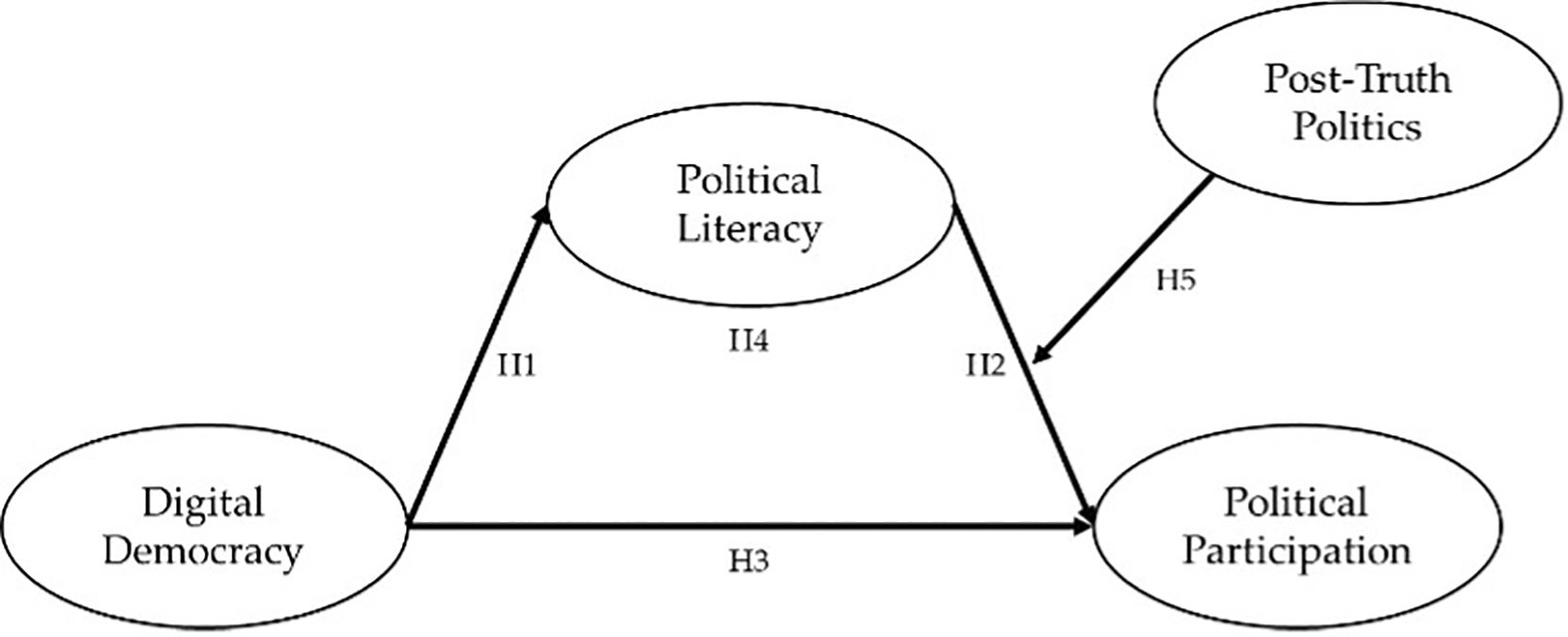
Source: Constructed by the authors (2025).