Просмотр новости
Найдите то, что Вас интересует
 Спутники
 РН
РН SpaceX
 Роскосмос
 NASA
NASA
СпутникиРНSpaceXРоскосмосNASAInfluencer marketing is widely used in social commerce, but the process through which influencer attributes translate into brand equity remains poorly explained. Drawing on source credibility theory, self-congruity theory, and parasocial interaction theory, this study tests whether brand awareness mediates the relationships between four influencer attributes, namely content quality, credibility, personal identity, and social interaction, and brand equity among social commerce consumers in Indonesia. Data were collected through a structured online questionnaire from 200 Indonesian social commerce consumers aged 18 years and above, recruited through purposive sampling. The hypothesised relationships were analysed using partial least squares structural equation modelling (PLS-SEM) with bootstrapping. All four influencer attributes had significant positive effects on brand awareness, with social interaction exerting the strongest effect. Brand awareness, in turn, had a strong positive effect on brand equity and fully mediated the effects of content quality, credibility, personal identity, and social interaction on brand equity. This indicates that influencer attributes do not improve brand equity directly; they matter because they build brand awareness among consumers. The study contributes to research on influencer marketing and social commerce by establishing brand awareness as the key link between influencer attributes and brand equity, and by showing that social interaction plays a greater role than content quality or credibility in building awareness. For practice, brands, especially small and emerging firms, should prioritise interactive influencer activities such as replies, live sessions, and community participation. The findings are relevant to SDG 8, particularly Target 8.3, which supports entrepreneurship, innovation, and the growth of small businesses through digital market participation.
The way brands reach consumers has changed considerably. On social commerce platforms, influencers have become the connective tissue between products and people, shaping how audiences perceive, recall, and ultimately choose brands.1 Scholars have responded with a growing body of research, but much of it stops short of explaining what actually matters for building long-term brand value. Studies tend to focus on likes, clicks, and purchase intentions, leaving the deeper question of how influencer behaviour generates durable brand equity largely unaddressed.1,2 This study sets out to fill that gap by asking not just whether influencers affect brand outcomes, but through what process they do so.
What makes an influencer effective is more nuanced than reach or follower count. Research consistently shows that it comes down to how consumers process the content they encounter. When influencers communicate with transparency, whether through honest disclosures, two-sided messaging, or visible personal conviction, audiences are more likely to engage meaningfully with branded content.3,4 Content that entertains while also informing reinforces this further, shaping consumer attitudes toward the brands being promoted.5 These are not passive effects; they point to active psychological processes at work. What the literature has been slower to address, however, is how these processes accumulate into something more lasting, specifically, whether they leave cognitive traces that eventually shape brand equity.
Brand awareness is a natural candidate for that missing link. At its core, it captures how readily a brand comes to mind, which is precisely what repeated, credible influencer exposure is likely to produce. Studies confirm that when influencers are seen as authentic and trustworthy, followers engage more deeply with brand messages and are more inclined toward co-creation behaviours.6,7 This suggests a plausible sequence: influencer attributes shape how audiences think about a brand, and those cognitions in turn build equity. Yet despite this intuition, no study to date has brought these pieces together into a formal mediated model. That is the theoretical gap this paper addresses.
Indonesia makes for a compelling setting in which to test these ideas. With 212 million internet users and 143 million active social media identities as of early 2025, a year-on-year rise of 2.9%, the country represents one of the most dynamic digital economies in Southeast Asia.8 Influencer-led commerce is not a niche activity here; it sits at the centre of how many Indonesians discover and buy products.1,2 At the same time, growing public and regulatory attention to sponsorship transparency means that the relationship between influencer behaviour and consumer perception is under greater scrutiny than ever, making it an important market to study rigorously.
The tension around sponsorship disclosure illustrates just how delicate the influencer–audience relationship can be. Being transparent about paid partnerships is necessary for trust, yet flagging a post as sponsored can undercut the very credibility that made the influencer compelling in the first place.4 When followers feel deceived, the consequences go beyond unfollowing; research documents avoidance behaviours and outright brand rejection when psychological expectations are violated.4,9 Interestingly, even studies focused on virtual influencers find that authenticity and ethical transparency are central to sustaining consumer trust across different cultural contexts.10 Taken together, these findings reinforce why understanding what drives brand awareness through influencer channels is not just a theoretical exercise, but a practical necessity.
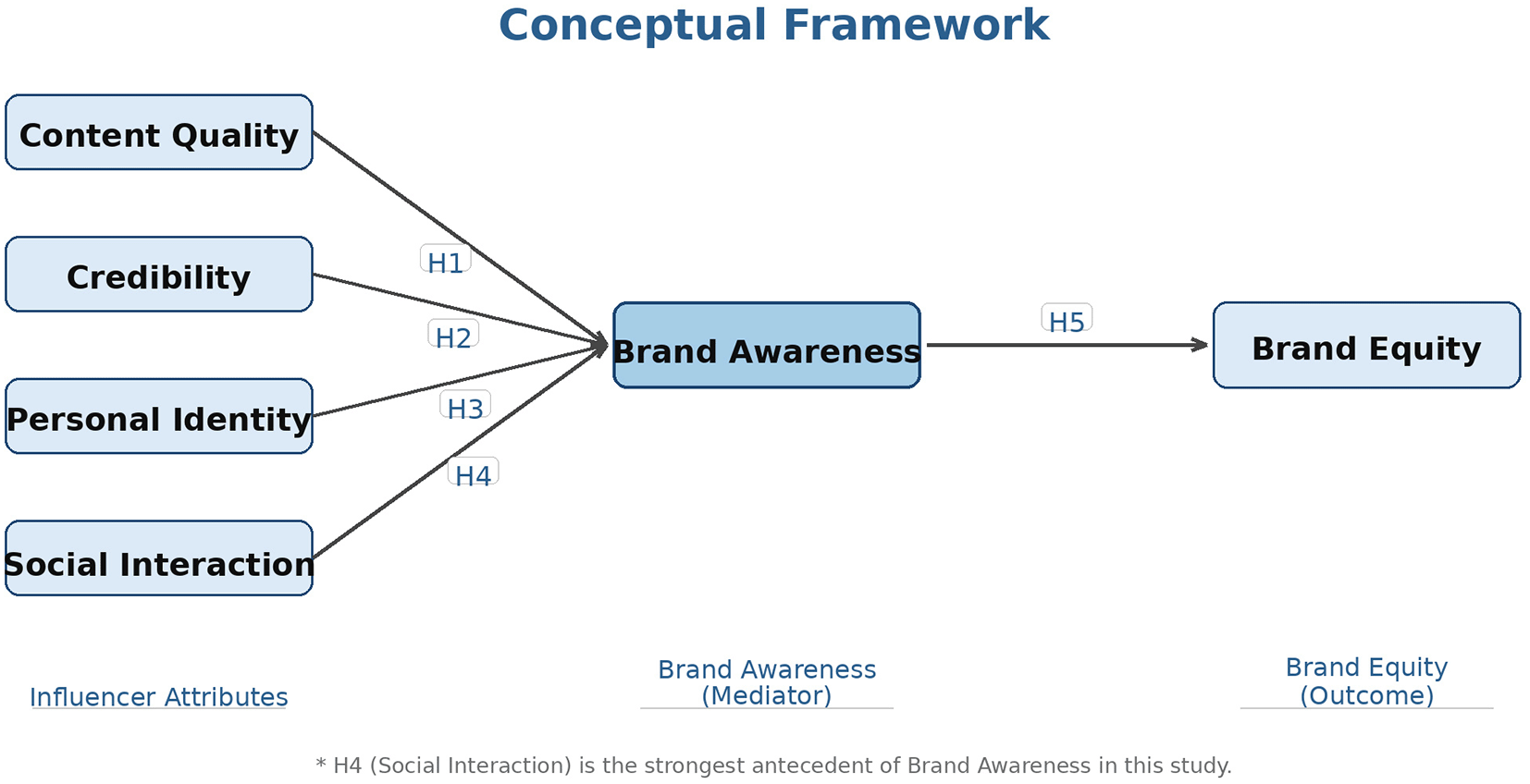
Four influencer attributes are central to this study. The first is content quality, which concerns how informative, entertaining, and genuinely useful followers find an influencer’s posts. When content resonates on both informational and hedonic levels, it strengthens perceived authenticity and shapes how audiences feel about promoted brands.5,9 The second attribute is credibility, built on the pillars of trustworthiness, expertise, and attractiveness as originally conceptualised by Ohanian.11 A credible influencer lends authority to brand messages; audiences are simply more receptive to recommendations they trust.4,12 The third is personal identity, which concerns how closely an influencer’s lifestyle and persona match a follower’s own self-concept. When that match is strong, followers do not just watch; they identify, and that identity-based connection makes brand endorsements feel personally relevant.13,14 The fourth attribute, and the one that turns out to matter most, is social interaction. Unlike the others, social interaction is bidirectional. When influencers reply to comments, host live sessions, and invite audiences into conversations, they cultivate a sense of genuine relationship. Parasocial interaction theory explains why this works: sustained back-and-forth, even in a digital context, generates intimacy and trust that make followers far more open to brand-related messages.15,16 All four attributes are proposed to build brand awareness, which in turn drives brand equity, as illustrated in Figure 1.
Against this backdrop, the study makes three contributions. It clarifies the mechanism through which influencer attributes build brand equity, something the literature has largely taken for granted. It brings content quality, credibility, personal identity, and social interaction together into a single unified model, rather than treating them in isolation as most prior work has done. And it does so in the context of Indonesian social commerce, extending a body of research that has been disproportionately shaped by Western and Chinese market data.
The research on influencer marketing has grown quickly, but it has grown unevenly.1,2 Most studies approach the subject one attribute at a time, asking whether credibility matters, or whether content quality drives engagement, without asking how these attributes work together or what they ultimately produce.13,17 The result is a literature rich in fragments but short on explanation. Brands are told that certain influencer traits correlate with positive consumer responses, but they are rarely told why, or through what process those responses accumulate into something as durable and commercially valuable as brand equity.1,2 That is the gap this study sets out to close.
Brand awareness sits at the heart of this missing explanation. It is the cognitive footprint that influencer exposure leaves behind, the point at which a brand name moves from unfamiliar to accessible, and from accessible to preferred. Yet in most influencer marketing studies, brand awareness is treated as just another outcome to be measured, rather than as the mechanism that connects influencer behaviour to brand equity.17,18 When it is removed from the picture, the pathway from what an influencer does to what a brand becomes in a consumer’s mind is left unexplained. Bringing these pieces together into a single unified model is precisely what the existing literature has not done, and precisely what this study does.13,19
The practical stakes are real. Brands that invest in influencer marketing without understanding which attributes drive lasting brand value are, in effect, navigating without a map. They may generate clicks and short-term engagement while failing to build the recognition and associations that make a brand worth choosing the next time a consumer opens a shopping app.12,20 This problem is especially acute in the Indonesian social commerce market, where the literature remains thin despite the country’s scale and strategic importance, and where findings from Western or Chinese contexts cannot simply be assumed to transfer.1,2 This study is designed to address that need directly.
Content quality refers to the degree to which influencer-generated posts are perceived as informative, entertaining, and genuinely valuable to followers.13,21 Within the framework of Source Credibility Theory, content quality functions as a signal of an influencer’s trustworthiness and expertise.11 When followers perceive an influencer’s content as informative and well-crafted, they are more likely to attribute expertise and reliability to the source, increasing acceptance of the brand message being communicated.7,22 This process of source-attributed credibility strengthens the cognitive encoding of brand information, producing improved brand recognition and recall, the core dimensions of brand awareness as defined by Keller.23
Research confirms that content quality serves as a cognitive bridge between influencer exposure and downstream brand value, with high-quality content shown to elevate brand salience and reinforce brand equity over time.5,17 In the Indonesian social commerce context, where consumers weigh informational and entertainment value heavily when evaluating influencer content, content quality is a decisive driver of brand awareness.13,14
Studies consistently find that higher content quality generates stronger cognitive engagement, with followers more likely to encode and recall brand information when content is informative and entertaining.14,17 Content quality also drives platform stickiness, compounding followers’ exposure to brand-related stimuli and reinforcing recognition-based brand awareness.5,13
However, when consumers detect commercial sponsorship, they may activate persuasion knowledge, processing brand messages sceptically regardless of content quality.4,7 High-quality content can be reinterpreted as polished advertising rather than genuine recommendation, weakening brand recall and suggesting that authenticity must accompany quality to reliably produce brand awareness.21
Influencer credibility refers to the extent to which an influencer is perceived as a trustworthy, expert, and attractive source of brand-related information, operationalised through the three dimensions of Source Credibility Theory.11 Trustworthiness reflects the perceived honesty and integrity of the influencer; expertise denotes the knowledge and competence attributed to them within their domain; and attractiveness encompasses both physical appeal and the perceived similarity between the influencer and their audience.7,24 Together, these dimensions determine the degree to which followers accept and internalise an influencer’s brand messages.
When an influencer is perceived as credible across all three dimensions, followers are more receptive to the information they present, making it more likely that brand-related content will be processed attentively, retained in memory, and ultimately contribute to brand recognition and recall.22,25 This cognitive pathway from credibility to brand awareness is particularly salient in social commerce environments, where consumers rely heavily on influencer cues to navigate brand choices in the absence of physical product interaction.12 In the Indonesian market, where consumer scepticism toward sponsored content remains a documented challenge, influencer credibility becomes especially critical in determining whether brand messages register with and are retained by audiences.4
Credible influencers generate stronger cognitive associations with endorsed brands, making them more retrievable in followers’ minds.12,25 When trustworthiness, expertise, and attractiveness align, a reinforcing halo elevates branded content memorability. In Indonesian social commerce, where audience attention is scarce, credibility determines whether brand messages form durable memory traces.22,24
However, consumers with high persuasion knowledge may discount credible recommendations, recognising commercial intent and suppressing brand associations.4,7 Over-endorsement further erodes credibility, reducing processing depth for individual brand messages.20 Credibility is therefore a dynamic asset whose effect on brand awareness can diminish under repeated commercial exposure.
Personal identity refers to the perceived congruence between an influencer’s lifestyle and persona and a follower’s own self-concept.13,26 Self-Congruity Theory holds that consumers are drawn to those who reflect their values and aspirations, and this principle applies directly to influencer marketing. When followers perceive a strong identity match with an influencer, branded content feels personally relevant rather than commercially driven, making brand messages more likely to be processed attentively, retained in memory, and ultimately encoded as brand awareness.14,21
Influencers who sustain a consistent, authentic identity across their content deepen this effect over time, converting audience identification into durable brand recognition and recall.13,19 In the Indonesian social commerce context, where cultural diversity and community values shape consumer responses to influencer content, identity alignment between influencer and audience plays a particularly decisive role in determining whether brand messages register and are retained.1,2
Followers who identify closely with an influencer’s values and lifestyle are more motivated to process associated brands, producing stronger recognition and recall.14,19 In the Indonesian context, where community belonging drives consumer behaviour, influencer-follower identity congruence is especially likely to strengthen brand information encoding.1,2
However, self-congruity effects are moderated by involvement: in low-involvement categories, identity alignment may not elevate processing depth enough for durable brand recall.13 When an influencer’s identity is aspirational rather than relatable, followers may admire the persona without internalising brand messages, weakening the awareness outcome.21
Social interaction refers to the reciprocal communicative exchanges between influencers and their followers, encompassing comment replies, live sessions, and community-driven engagement.15 Grounded in Parasocial Interaction Theory, these exchanges simulate the closeness of real interpersonal relationships, making followers more receptive to brand-related messages.27 When an influencer consistently engages with their audience rather than simply broadcasting content, followers develop a sense of relational intimacy that heightens attention to and retention of brand information, directly strengthening brand awareness.16
On platforms like TikTok, where interaction is embedded in the content experience, this effect is particularly pronounced.1,28 However, when social interaction becomes excessive or commercially driven, it risks eroding the authenticity that makes these exchanges effective in the first place, potentially diminishing their impact on brand awareness.2,20
Followers who develop relational bonds through bidirectional engagement become more receptive to embedded brand messages, generating deeper processing and stronger brand recall.15,16 On platforms like TikTok, where replies and live sessions are integral, followers who feel acknowledged show heightened attentiveness to brand-related content.1,28
However, when followers perceive engagement as commercially manufactured, parasocial authenticity is undermined, causing disengagement from associated brands.2,20 Over-endorsement compounds this, triggering persuasion resistance where followers mentally filter commercial content. The positive effect of social interaction on brand awareness, therefore, depends on sustained perceived relational authenticity.
Brand awareness refers to a consumer’s ability to recognise or recall a brand within a given product category. Within the Customer-Based Brand Equity (CBBE) framework, it represents the foundational layer upon which all other dimensions of brand equity are built.23 A brand that is readily accessible in memory is more likely to be associated with positive qualities, trusted as a credible option, and preferred when purchase decisions are made. This cognitive accessibility translates directly into the added value that defines brand equity.9,18
The pathway from brand awareness to brand equity is not automatic. Awareness must be accompanied by meaningful brand associations and consistent consumer experiences; without these, recognition alone may fail to generate the loyalty and perceived quality that underpin lasting equity.17 In the Indonesian social commerce context, where consumers are exposed to large volumes of influencer content, brands that achieve genuine recall, rather than mere fleeting exposure, are significantly better positioned to convert that awareness into durable brand equity.1,2
Within the CBBE framework, brand awareness is the foundational layer from which equity dimensions are built: a brand inaccessible in memory cannot generate positive associations or loyalty.9,23 Consumers with higher brand awareness are more likely to develop favourable attitudes and purchase intentions, core components of brand equity.17,18
However, high awareness does not guarantee equity gains when a brand lacks positive differentiation from competitors.1,2 In saturated social commerce markets, awareness without meaningful associations produces only superficial familiarity. Brand awareness is, therefore, a necessary but may not be a sufficient condition for building durable brand equity.
The framework illustrated in Figure 1 provides a conceptual model for analysing the relationships among different factors and their effects on brand equity. This model suggests that brand awareness acts as a mediator between several independent variables and brand equity.
This study adopts a positivist research philosophy, premised on the assumption that social phenomena can be measured objectively and that hypothesised relationships can be empirically tested and generalised.29 Consistent with this stance, a deductive research approach was employed, whereby the conceptual framework and five hypotheses were derived from established theoretical foundations before being submitted to empirical scrutiny. The study is quantitative in nature, with data collected through a structured online questionnaire composed of items adapted from validated prior scales. Online surveys are well-suited to this type of research given their capacity to reach large, geographically dispersed samples efficiently while maintaining standardisation of measurement.30
A cross-sectional research design was adopted, meaning all data were collected at a single point in time. This design is appropriate when the objective is to examine the current state of relationships between variables rather than track changes over time, and it is consistent with the time and resource constraints of the present study.29 The target population comprised Indonesian social commerce consumers aged 18 and above with prior experience with social commerce platforms. Purposive sampling was employed to ensure that only participants who met these eligibility criteria were included, which is well-suited to quantitative research requiring a specific respondent profile that cannot be guaranteed through random selection.31
The minimum sample size was determined using G*Power 3.1 software, applying a linear multiple regression framework with the following parameters: a medium effect size (f2 = 0.15), a significance level of α = 0.05, a statistical power of 1 − β = 0.95, and five predictors corresponding to the maximum number of paths entering any single dependent variable in the structural model, yielding a minimum required sample size of 138. Data were subsequently analysed using Partial Least Squares Structural Equation Modelling (PLS-SEM) with bootstrapping. PLS-SEM is particularly suited to this study given its ability to handle non-normal data distributions, test mediated structural models, and deliver reliable estimates with modest sample sizes.32 All ethical requirements were observed throughout the data collection process. Ethical approval was obtained from the Asia Pacific University Research Ethics Committee (Reference No: APU/FLT/EA/2026/012). Participation was voluntary, respondents were fully informed of the study’s purpose prior to completing the questionnaire, and anonymity was maintained throughout. Written informed consent for participation in the research was obtained electronically from all participants: the first page of the online questionnaire presented a participant information statement, and respondents were required to indicate their written consent by ticking a consent declaration before they could proceed to the survey items. Written (electronic) consent was chosen over verbal consent because the survey was self-administered online, allowing a verifiable record of each participant’s agreement to be retained. Only adults aged 18 years and above were eligible to participate; no minors were involved in the study, so parental consent and assent procedures were not required.
A total of 200 valid responses were collected and analysed in this study. The platform breakdown tells an interesting story about where Indonesian social commerce is actually happening: TikTok dominated, chosen by 53% of respondents, with Facebook accounting for 30% and Instagram for the remaining 17%. This concentration on TikTok is consistent with the study’s theoretical framing around social interaction and parasocial engagement, given that TikTok’s design makes bidirectional influencer-follower exchanges a central part of the content experience.
Engagement frequency was notably high. The largest share of respondents (40.5%) reported engaging with influencer content daily, followed by 34.5% who engage weekly, while 25% reported occasional engagement. Taken together, three-quarters of the sample engage with influencer content at least once a week, suggesting that exposure to influencer-driven brand messages is not incidental but forms a regular part of respondents’ digital media consumption. This level of exposure creates the conditions under which the brand awareness and brand equity effects hypothesised in this study are most likely to manifest.
Before testing the structural model, the measurement model was assessed for indicator reliability, internal consistency, and convergent validity. All factor loadings exceeded the recommended threshold of 0.70, confirming that each item adequately represented its corresponding construct.32 Cronbach’s alpha values ranged from 0.837 to 0.946, indicating good internal consistency across all constructs, and Average Variance Extracted (AVE) values ranged from 0.605 to 0.822, all exceeding the threshold of 0.50. These results confirm that the constructs captured a sufficient proportion of variance in their respective indicators and that the measurement model was suitable for structural analysis. The full measurement model results are presented in Table 1.
Discriminant validity was assessed using the Fornell-Larcker criterion, which requires the square root of each construct’s AVE to exceed its highest correlation with any other construct in the model.32 This condition was satisfied for all six constructs, confirming that each variable is empirically distinct from the others. The diagonal values in Table 2 represent the square root of each construct’s AVE, all of which exceed the off-diagonal correlations in their respective rows and columns, providing evidence of adequate discriminant validity.
Multicollinearity was assessed at the item level using the Variance Inflation Factor (VIF), with all values reported in Table 1. The majority of items fell below the threshold of 3.0 recommended for PLS-SEM models.32 A small number of items exceeded this threshold but remained below the critical level of 5.0, above which multicollinearity is considered problematic: COQ01 (4.941), COQ05 (4.814), PI04 (4.209), PI02 (4.078), PI05 (3.922), and PI03 (3.555) exhibited moderate collinearity. These values are acknowledged as elevated but fall within acceptable limits and are consistent with the high internal consistency observed for these constructs. The remaining 24 items all recorded VIF values below 3.0, confirming that multicollinearity does not pose a broader threat to the structural model estimates.
The model’s predictive power was evaluated using the coefficient of determination (R2). The four influencer attributes together explained 60.4% of the variance in brand awareness (R2 = 0.604), a result that reflects strong predictive power and is well above the 0.50 threshold widely regarded as acceptable in social science research.32 Brand awareness, in turn, explained 51.9% of the variance in brand equity (R2 = 0.519), further confirming the robustness of the mediated pathway at the heart of the model. Model fit was assessed through the SRMR and NFI indices; both fell within acceptable thresholds, with an SRMR below 0.08 and an NFI close to 1.0, indicating that the proposed structure adequately represents the observed data.32
The path coefficients tell a clear and consistent story. Every hypothesised path was supported. Among the four influencer attributes, social interaction emerged as the strongest driver of brand awareness, with a path coefficient of 0.458, reinforcing the theoretical centrality of parasocial engagement in the model. Content quality (β = 0.212), credibility (β = 0.172), and personal identity (β = 0.141) each contributed positively, though with progressively weaker effects. The path from brand awareness to brand equity was the strongest relationship in the entire model (β = 0.721), confirming brand awareness as both a meaningful outcome of influencer behaviour and a powerful antecedent of brand equity. The full structural model results are summarised in Table 3.32
Figure 2 presents the structural model with standardised path coefficients. The diagram makes the model’s hierarchical logic visually clear: all four influencer attributes feed into brand awareness, which then transmits their combined effect to brand equity. Social interaction stands out immediately; its path coefficient of β = 0.458 is markedly stronger than the others. The direct path from brand awareness to brand equity (β = 0.721) is the most prominent relationship in the model, underscoring the central argument of this study: that brand awareness is not simply an outcome of influencer engagement, but the mechanism through which that engagement becomes commercially meaningful. The R2 values of 0.604 for brand awareness and 0.519 for brand equity confirm that the model accounts for a substantial share of variance in both dependent variables.
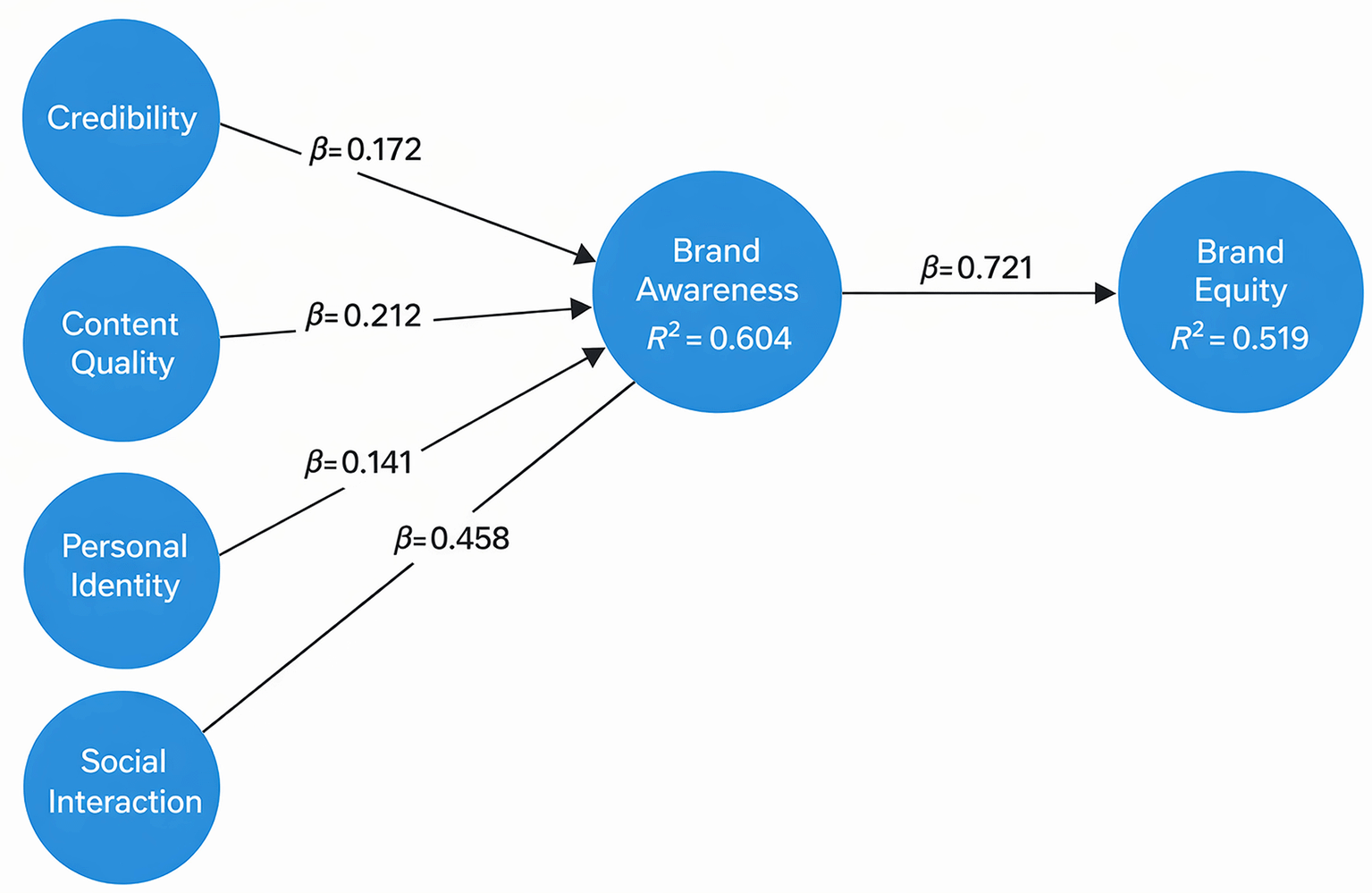
All paths are significant at p < 0.05; R2 = 0.604 for brand awareness and R2 = 0.519 for brand equity.
Hypothesis testing was conducted using bootstrapping with 5,000 resamples, a resampling procedure that generates empirical confidence intervals without requiring distributional assumptions.32 A hypothesis is accepted when the T-statistic exceeds 1.96 and the p-value falls below 0.05, the conventional threshold for a 5% significance level. All five hypotheses were accepted, as shown in Table 4.
H1 was accepted (β = 0.212, T = 3.465, p = 0.001), indicating that higher perceived content quality generates stronger brand awareness among Indonesian social commerce consumers. The moderate effect size suggests that while content quality is a meaningful driver, its influence operates alongside other attributes rather than in isolation. H2 was accepted (β = 0.172, T = 2.448, p = 0.015), confirming that influencer credibility contributes positively to brand awareness, though its relatively weaker path coefficient compared to content quality and social interaction suggests that credibility alone, without accompanying content value or relational engagement, produces more modest awareness effects.
H3 was accepted (β = 0.141, T = 2.561, p = 0.011), the weakest path among the four influencer attributes, suggesting that while identity congruence between influencer and follower does strengthen brand awareness, its effect is more contingent and likely moderated by product involvement and the degree of perceived relatability rather than aspiration. Taken together, H1 to H3 establish a consistent pattern: all three attributes matter, but none approaches the explanatory weight of social interaction.
H4 was accepted with the strongest result among the four influencer attributes (β = 0.458, T = 6.374, p = 0.000). The T-statistic of 6.374 is more than double that of the next strongest path, and the path coefficient of 0.458 represents a substantially larger effect than any of the remaining three attributes. This result confirms that social interaction is not merely one of several equivalent drivers of brand awareness, but its dominant antecedent in the Indonesian social commerce context. This is consistent with Parasocial Interaction Theory, which predicts that relational closeness between influencer and follower heightens attentiveness to and retention of brand-related content.15,16
H5 was accepted with the highest T-statistic in the entire model (β = 0.721, T = 12.821, p = 0.000), confirming that brand awareness is a powerful antecedent of brand equity. The magnitude of this path coefficient indicates a substantial relationship: consumers who hold a brand strongly in memory are considerably more likely to attribute positive associations, perceived quality, and loyalty to it.9,23
The acceptance of H1 (β = 0.212, T = 3.465, p = 0.001) confirms that content quality positively drives brand awareness among Indonesian social commerce consumers. Source Credibility Theory explains the mechanism that when followers perceive content as genuinely informative and well-crafted, they attribute expertise to the influencer and become more open to the brand messages within it, which strengthens recognition and recall.11,13,17 In Indonesia, where consumers are increasingly selective, quality signals authenticity in a way that reach alone cannot.21 Although sponsorship detection can activate scepticism and limit how deeply brand messages are processed, H1 confirms that content quality remains a distinct and meaningful contributor to brand awareness.4,7
The acceptance of H2 (β = 0.172, T = 2.448, p = 0.015) confirms that credibility positively influences brand awareness. Rooted in Source Credibility Theory, when an influencer is seen as trustworthy, expert, and genuinely engaging, followers are more receptive to the brands they promote and more likely to retain what they hear.11,22,24 This matters especially in Indonesia, where around 24% of consumers actively distrust sponsored content, making credibility one of the few attributes capable of cutting through that resistance.12 The coefficient of 0.172 reflects a real fragility: influencers who over-endorse too many brands dilute the very authenticity that makes them worth following.20,25
The acceptance of H3 (β = 0.141, T = 2.561, p = 0.011) confirms that personal identity positively influences brand awareness. Grounded in Self-Congruity Theory, when followers perceive an influencer’s lifestyle and values as a genuine reflection of their own self-concept.26 Branded content feels personally relevant rather than commercially imposed, making brand names and associations more likely to stick in memory.14,19 The smallest coefficient in the model reflects an important contingency: identity needs to feel relatable rather than aspirational to drive brand attention, since admiring a persona from a distance does not automatically extend to the brands associated with it.13,21
The acceptance of H4 (β = 0.458, T = 6.374, p = 0.000) is the most significant finding in this study. Parasocial Interaction Theory explains that when influencers engage directly through replies, live sessions, and challenges, they create the feeling of a genuine two-way relationship.27 Customers are naturally more receptive to brand recommendations from those they feel they know.15,16 TikTok’s dominance among respondents (53%) amplifies this further, as the platform makes interaction an intrinsic part of how content is consumed rather than an optional extra.1,28
The acceptance of H5 (β = 0.721, T = 12.821, p = 0.000) produced the strongest path in the model. Within the Customer-Based Brand Equity framework, brand awareness is the starting point from which associations, perceived quality, and loyalty are built.23 This result confirms that influencer-driven awareness translates into genuine and lasting brand value.9,17,18 An R2 of 0.519 for brand equity is a strong result for a five-construct model, and when read alongside H1 through H4, H5 validates the mediated logic at the centre of this study. Influencer attributes reach brand equity not directly but by first building awareness, which then converts into equity.
Taken together, these results tell a clear story. All four influencer attributes build brand awareness, but social interaction (β = 0.458) does so at a scale the others do not approach, suggesting that actively engaging with followers matters far more than simply producing credible or high-quality content. This challenges the long-standing assumption that credibility is the dominant attribute, pointing instead to TikTok’s interaction-first design as a structural amplifier of brand awareness effects.16,28 The strength of H5 confirms that this awareness then becomes equity, addressing the gap identified in Section 2: influencer attributes do build lasting brand value in Indonesian social commerce, and brand awareness is the pathway through which this happens.1,17
This study set out to answer a question the influencer marketing literature has largely sidestepped: how do influencer attributes actually build brand equity, and through what process does this happen? By testing a mediated structural model across 200 Indonesian social commerce consumers using PLS-SEM, the study demonstrates that brand awareness is the cognitive mechanism connecting influencer behaviour to brand equity.23 All four influencer attributes, namely content quality, credibility, personal identity, and social interaction positively and significantly predicted brand awareness (H1 to H4), which in turn drove brand equity (H5). The R2 values of 0.604 and 0.519 for brand awareness and brand equity, respectively, confirm that the model accounts for a substantial share of variance in both outcomes, lending strong support to the idea that brand awareness is the bridge between what influencers do and the brand value consumers eventually build.17
The most theoretically significant result is the dominance of social interaction (β = 0.458). This challenges the long-standing assumption in influencer marketing research that credibility is the primary driver of brand outcomes and instead points to parasocial engagement as the more powerful mechanism in high-interaction social commerce environments such as TikTok.16,28 The study also contributes by treating brand awareness as a mediating process rather than just another outcome, bringing Source Credibility Theory, Self-Congruity Theory, and Parasocial Interaction Theory together into a single testable model for the first time in a social commerce context.1,17
For practitioners, the findings offer clear and actionable direction. Brands operating in Indonesian social commerce should prioritise influencers who actively engage with their audiences through replies, live sessions, and community-driven content, since it is that relational quality, not reach or production value, that most reliably builds brand awareness and, ultimately, brand equity. Credibility remains a meaningful asset. Influencers who over-endorse multiple brands erode the trust that makes any single recommendation land.20 Content quality and personal identity each contribute distinct pathways to brand awareness and should not be overlooked, particularly when targeting audiences where authenticity and value alignment shape engagement.13,14
Several limitations should be acknowledged. The cross-sectional design captures associations at a single point in time and cannot establish causality. The sample was drawn from Indonesian social commerce consumers using purposive sampling, which, while appropriate for the research objectives, means the findings may not travel well beyond the Indonesian context. Relying on self-reported measures also introduces the possibility that respondents’ answers reflect how they think they behave rather than how they actually do.
Future research should address these limitations by adopting longitudinal designs to track brand awareness and equity development over time, replicating the model in other Southeast Asian markets to see how well the findings hold across different cultural settings, and incorporating bootstrapped indirect effect estimates to formally confirm the mediated pathways identified here. Including objective brand equity measures or examining how variables like product involvement and platform type shape these relationships would give future work a richer and more actionable picture.
Ethical approval for this study was obtained from the Asia Pacific University Research Ethics Committee (APU REC) (Reference No: APU/FLT/EA/2026/012). The study was conducted in accordance with institutional and international ethical guidelines for research involving human participants. Participation in the study was voluntary, and all respondents were informed about the purpose of the research, the anonymity and confidentiality of their responses, and their right to withdraw at any time without consequences. Only individuals aged 18 years and above were eligible to participate; no minors were involved in the study. Written informed consent was obtained electronically from all participants prior to completion of the questionnaire, with respondents required to tick a consent declaration on the first page of the online survey before proceeding.
The dataset supporting the findings of this study is openly available in the Figshare repository at: https://doi.org/10.6084/m9.figshare.32032878.v1.33
The repository contains the survey dataset and variable descriptions used to conduct the statistical analyses reported in this article. The dataset is shared under the Creative Commons Attribution 4.0 International (CC-BY 4.0) licence, which permits unrestricted use, distribution, and reproduction in any medium, provided the original work is properly cited.