Просмотр новости
Найдите то, что Вас интересует
 Спутники
 РН
РН SpaceX
 Роскосмос
 NASA
NASA
СпутникиРНSpaceXРоскосмосNASAIn ‘Abider,’ Melissa Crowe returns to the Maine of her upbringing.
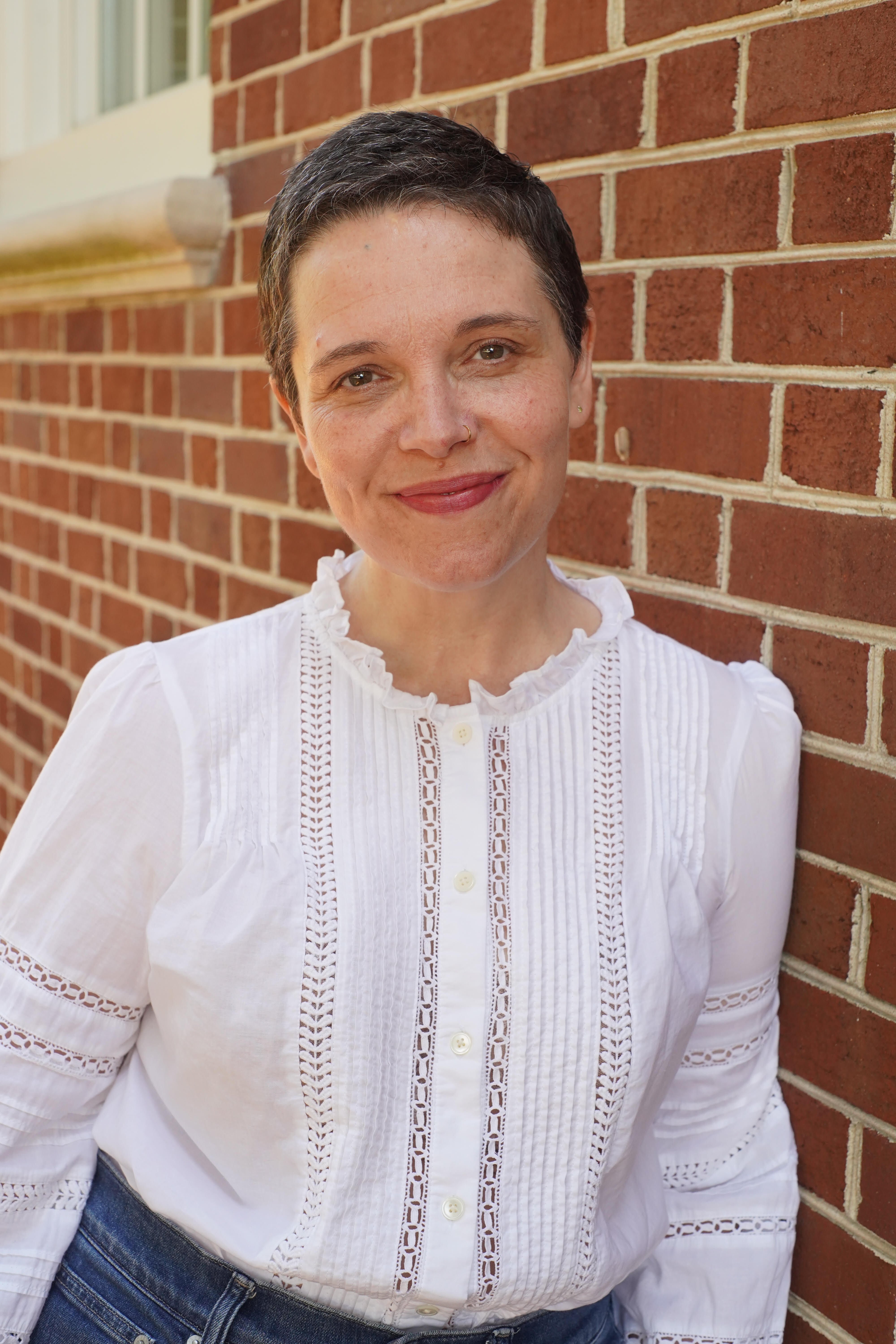 Melissa Crowe. (Photo by Daniel Crapanzano)
In her third book of poems, “Abider,” Presque Isle native Melissa Crowe explores the end of marriage and a queer coming-of-age simultaneously. The poems take on traditions, echoes and epigraphs from Sappho, Richard Siken, Linda Gregg, William Stafford and others into a new mythology for her speaker –- the eponymous abider — of her tale. Instead of the old abiding patterns, where grief once reigned, abundance begins to fill her — with pleasure, desire, rhyme and the selfhood that sometimes only comes from uncoupling.
Your book starts with an epigraph from Sappho: ‘I swear, against my will I leave you.’ How did you choose this fragment as the epigraph?I think what happens with the epigraph usually is that it helps me judge whether I really do have a book. I do remember quite clearly coming across that epigraph from Sappho, which is from the Anne Carson translation, and thinking, “Oh, that’s it. I understand.” The title, the epigraph and that first poem in the manuscript are now speaking really clearly to each other and speaking about the context against which I want everything to unfold.
This is a book in four sections. How did the sections come to be for you?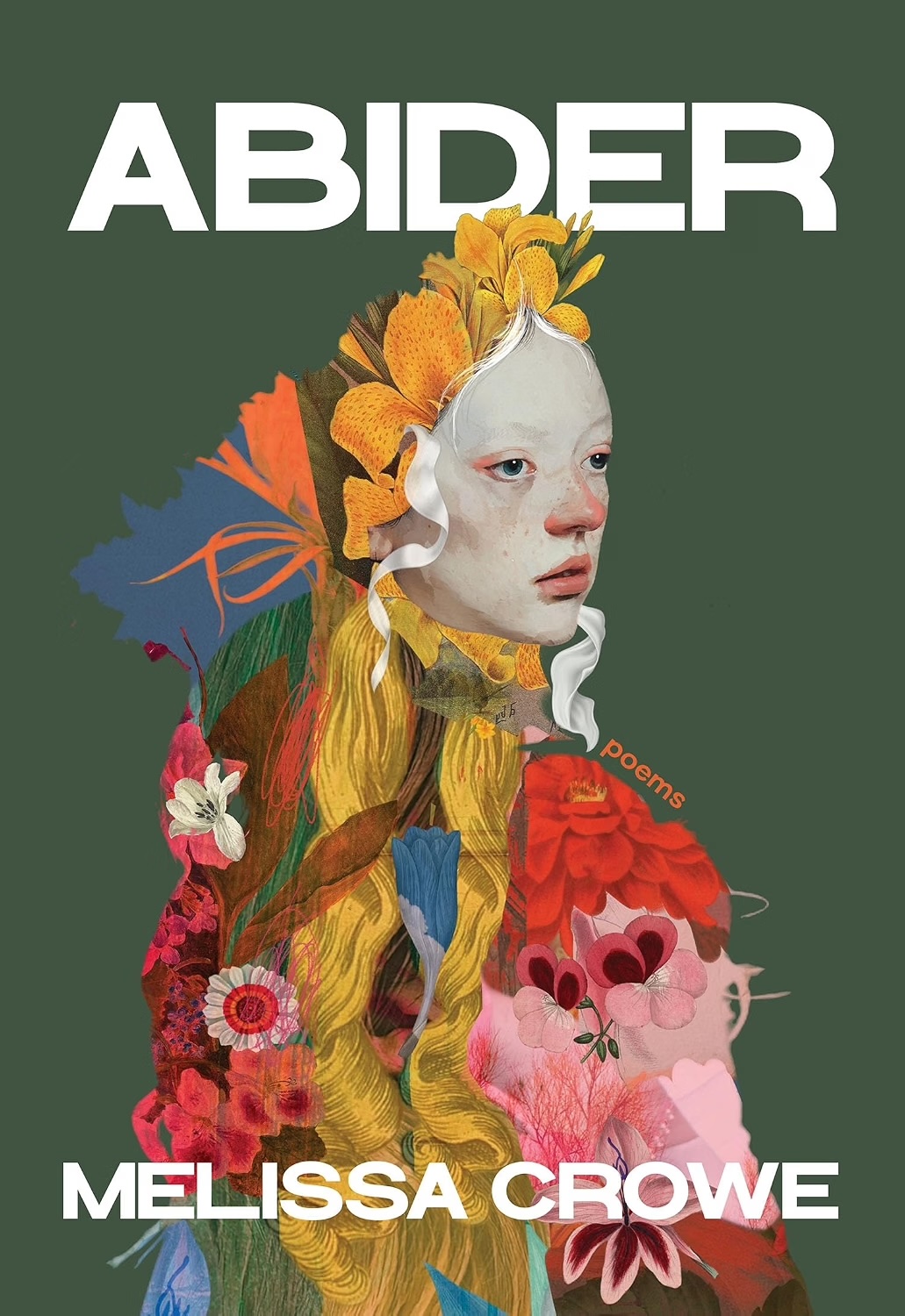
A little while back, I taught a craft class on the sequential poem or the manuscript. The beginning exercise was that I had them make mixtapes. First, you have to tell some of them what a mixtape is — they’re accustomed to playlists — but I wanted them to think of the old technology. When you were making a tape, you had decisions to make about how long the gaps were between songs, about what you’re speaking of. You have multiple starts and stops in a manuscript, and with a tape, you’re turning the tape over — you had two sections. Having them think about the mixtape as another technology that’s modular had them consider the parts, how they relate to each other and dictate the aesthetic experience and emotional experience of listening to that tape.
In your poem ‘So What If I Was Born Wanting Both,’ the speaker says, ‘Is this why lovers fear // we’ll leave? Not Helen ferried / to the far shore or Eve fed sweetness // by some other hand–but hers?’ What did you learn about gender and selfhood along the way for yourself and your speaker? How is gender an abiding force?Girls and women are trained to make themselves small, to ignore their own needs, to become disconnected from their own feelings, desires and anxieties in particularly gendered ways, in service of, sometimes individual men, but men as a part of a patriarchal structure. I think there’s a tendency among individual women to believe that they’ve, for example, married “one of the good ones,” and that means that the patriarchy can’t touch them inside that relationship. But when people experience distress, when they feel that the resources they rely upon in order to survive, either emotionally or literally, are threatened, they resort to the kinds of power and control that are available to them inside their culture. Those mechanisms are available because we were trained to respond to them before we were ever in the relationships where they seem to be playing out.
Part of my interest in these poems, in this manuscript is locating the points at which those buttons were installed, so they could be pressed later. I don’t think that kind of distress inside a marriage, for example, is a bug. I think it’s a feature. I spent a long time believing that my suffering was an unfortunate byproduct of an otherwise benevolent arrangement. I don’t believe that anymore.
One of the predominant engines in your book that tracks both to the past and to where this speaker is going in or out of their marriage is the couplet. What does it mean to think and hear in couplets?Nobody writes in a couplet without being aware that it’s married in a certain way to the sonnet, and that the sonnet produces the expectation of not just a love poem, but an argument about the nature of love. That was in my mind. You can’t write in the couplet without being aware of the baggage that it’s dragging in.
This book also is so interested in confession as a poetic act and the confessional mode. What do you make of the lies you tell or not in the book?I regard myself as an inheritor of lots of what came out of the confessional mode. I studied in my doctoral degree Sylvia Plath, Robert Lowell, Anne Sexton, W.D. Snodgrass, that whole crew, and was very much trained in that program to understand that the confessional is an effect, that it is the result of craft. It’s the result of deliberate craft choices that create the impression of an elision of the difference between the speaker and the poet on purpose, in order to create a particular impact on the reader — in order to disarm or engage the reader, or create a kind of intimacy. You have to do it on purpose.
One of the reasons why poems can accomplish what they can accomplish for the writer and then for the reader is because poetry doesn’t rely on the contract that either fiction or nonfiction relies on. By which I mean, when we write a short story, we are claiming that the thing is made up, whether or not it is. We are announcing, “I have invented this” and when we write an essay, we’re announcing “I have not invented this to the best of my recollection.” Poetry is my bread and butter because we don’t make either of those promises. We can operate in a liminal space where we can explore a kind of psychic or emotional reality without the pressure to say everything I’m saying is true or everything I’m saying is made up. That’s why it gets to be so revelatory.
One thing that I found so sapphic in the book arises later in the poem, ‘The Speaker’s Husband.’ At a party, the husband asks the speaker if she’s ‘going to be gay now.’Frankly, the other thing I would say about that moment is: if it’s that he did not know me, it was a deliberate not knowing because that question reveals that he did know me quite well. He understood who I was inside of our marriage. The question means, “Are you going to live a life where you get to tell the truth about that now?” You don’t ask that question if you don’t already know. I was gay inside my marriage. There’s no before. I haven’t become something different. I’m just talking about it in a different way.
How does place imbue either music or image for you — in your life and your writing life?I’m from Presque Isle. Aroostook County is the original home place. It’s the place my imagination is native to. It’s the place where most of my charged imagery arises from. My original understanding of the world, relationships and how things work arise from that place — and it feels lucky to me. A lot of bad things happen to me there, but I never have trouble feeling like I won the lottery in terms of where I was born and raised. When I reach for image or story, it’s that place that comes most quickly to mind. I haven’t lived in the County for a very long time, but that impulse to return there in my imagination doesn’t fade.
Lisa Hiton is a writer living in Brooklyn, N.Y. She is the author of the poetry collection “Afterfeast,” and her work has been featured or is forthcoming in the Kenyon Review, The Slowdown, NPR, New South and elsewhere.
| # | Наименование новости | Тональность | Информативность | Дата публикации |
|---|---|---|---|---|
| 1 | Maine Lit Fest returns with writers ‘responding to the moment’ | 0 | 38.28 | 23-09-2026 |
| 2 | Lois Lowry imagines the perils of a world without books in her new novel | 0 | 35.59 | 23-09-2026 |
| 3 | Playwright’s new work tells the story of Portland’s unhoused through one person’s eyes | 0 | 35.8 | 23-09-2026 |
| 4 | This former TV reporter is giving Maine humor a social media makeover | 0 | 35.77 | 12-09-2026 |
| 5 | E.B. White’s 98-year-old poem is now a children’s book | 0 | 38.53 | 26-08-2026 |
| 6 | Maine Lit Fest’s headliner Min Jin Lee’s new book explores immigration and what it means to be successful | 0 | 38.53 | 23-09-2026 |
| 7 | Read the poem ‘Oysters’ by Maya Critchfield | 0 | 49.39 | 23-09-2026 |
| 8 | Read the poem ‘Shaker Village’ by Bill Schulz | 0 | 48.83 | 16-09-2026 |
| 9 | For these Maine artists, creativity has no retirement age | 0 | 38.96 | 16-09-2026 |
| 10 | Brunswick gallery plays host to an imaginative, strange visionary exhibit | Column | 0 | 36.55 | 16-09-2026 |