Просмотр новости
Найдите то, что Вас интересует
 Спутники
 РН
РН SpaceX
 Роскосмос
 NASA
NASA
СпутникиРНSpaceXРоскосмосNASABackground Indigenous tuber-based food systems are unevenly documented across Indonesia and Southeast Asia. Ethnobotanical studies describe diverse species and processing practices, but their implications for food security are often inferred rather than measured. Evidence linking these systems to postharvest biology and food microbiology is even more fragmented. Methods This integrative review retained a documented core of 23 studies from an earlier Scopus search (66 records; search date 4 May 2026) and added a targeted complementary evidence stream from PubMed/MEDLINE, the Directory of Open Access Journals, GARUDA, and backward citation searching (last searched 02 July 2026). The core studies were synthesized by ecological setting and the four food-security pillars. Complementary sources were used only to interpret biological deterioration, detoxification, and fermentation mechanisms; they were not merged retrospectively into a PRISMA-compliant corpus. Results The core evidence is strongly Indonesia-centred and does not support a homogeneous regional account. Dryland Dioscorea systems, cassava-based diversification, wetland taro and sago systems, homegardens, and forest-foraged underground storage organs differ in their ecological constraints and food-security functions. Availability (13 studies) and stability (12) were mentioned more often than access (9), while utilization (10) was commonly described through processing knowledge. Complementary evidence shows that postharvest deterioration, cyanogenic compound removal, and mixed microbial consortia can shape shelf life and safe use, but these mechanisms have rarely been connected to household-level food-security outcomes. Conclusions Indigenous tubers may support food security through context-specific pathways, but the available evidence is mostly descriptive and localized. Postharvest biology and food microbiology clarify plausible mechanisms rather than proving regional food-security effects. The Spatio-Temporal Biocultural Framework is therefore retained as a research agenda, not a validated model. A future systematic update requires a prospectively registered protocol, duplicate screening, a recoverable exclusion log, design-appropriate appraisal, and comprehensive multilingual searching.
Review
[version 1; peer review: awaiting peer review]
https://orcid.org/0009-0001-3042-6112
1, Muh Akbar Idrishttps://orcid.org/0009-0000-2995-1975
2, Brayen Patandeanhttps://orcid.org/0009-0007-9522-9519
3, [...] Devi Andriani Lutahttps://orcid.org/0009-0005-1826-8739
3, Shinta Palupi4, Bernadetta Rina Hastilestari5, Wilhelmus Terang Arga Sanjayahttps://orcid.org/0000-0002-9978-9165
6, Della Meysari7, Fitriani Fitriani8, Lilis Habsari7, Tri Wahyunihttps://orcid.org/0009-0001-3648-6132
9, Antonius Buksalwembunhttps://orcid.org/0009-0001-1154-6792
10, Angeline Stefanny Sirami11, Putra Julixter Kute12, Friandov Meilano Damaryanan11https://orcid.org/0009-0001-3042-6112
1, Muh Akbar Idrishttps://orcid.org/0009-0000-2995-1975
2, [...] Brayen Patandeanhttps://orcid.org/0009-0007-9522-9519
3, Devi Andriani Lutahttps://orcid.org/0009-0005-1826-8739
3, Shinta Palupi4, Bernadetta Rina Hastilestari5, Wilhelmus Terang Arga Sanjayahttps://orcid.org/0000-0002-9978-9165
6, Della Meysari7, Fitriani Fitriani8, Lilis Habsari7, Tri Wahyunihttps://orcid.org/0009-0001-3648-6132
9, Antonius Buksalwembunhttps://orcid.org/0009-0001-1154-6792
10, Angeline Stefanny Sirami11, Putra Julixter Kute12, Friandov Meilano Damaryanan111 Postharvest Technology, Faculty of Engineering and Technology, IPB University, Bogor, 16680, Indonesia
2 Department of Statistics and Data Sciences, IPB University, Bogor, 16680, Indonesia
3 Department of Agronomy and Horticulture, Faculty of Agriculture, IPB University, Bogor, 16680, Indonesia
4 Smart Agriculture, Faculty of Agriculture, IPB University, Bogor, 16680, Indonesia
5 Research Center for Genetic Engineering, National Research and Innovation Agency, Bogor, 16911, Indonesia
6 Department of Soil Science and Land Resources, IPB Biotech Center, IPB University, Bogor, 16680, Indonesia
7 Microbiology, IPB University, Bogor, 16680, Indonesia
8 Biotechnology, Universitas Gadjah Mada, Yogyakarta, Indonesia
9 Department of Biology, Faculty of Biology, Universitas Gadjah Mada, Yogyakarta, Indonesia
10 Biotechnology, IPB University, Bogor, 16680, Indonesia
11 Master’s Program in Biology, Faculty of Biology, Universitas Gadjah Mada, Yogyakarta, Indonesia
12 Department of Environmental Engineering, Faculty of Civil, Planning, and Geo-Engineering, Institut Teknologi Sepuluh Nopember, Surabaya, Indonesia
Fadila Fadila
Roles: Methodology, Project Administration, Writing – Original Draft Preparation
Muh Akbar Idris
Roles: Data Curation, Formal Analysis, Validation, Writing – Review & Editing
Brayen Patandean
Roles: Investigation, Writing – Review & Editing
Devi Andriani Luta
Roles: Investigation, Resources
Shinta Palupi
Roles: Methodology, Writing – Review & Editing
Bernadetta Rina Hastilestari
Roles: Validation, Writing – Review & Editing
Wilhelmus Terang Arga Sanjaya
Roles: Investigation, Resources, Writing – Review & Editing
Della Meysari
Roles: Formal Analysis, Investigation
Fitriani Fitriani
Roles: Investigation, Resources
Lilis Habsari
Roles: Investigation, Validation
Tri Wahyuni
Roles: Conceptualization, Methodology
Antonius Buksalwembun
Roles: Formal Analysis, Resources
Angeline Stefanny Sirami
Roles: Investigation, Writing – Original Draft Preparation
Putra Julixter Kute
Roles: Formal Analysis, Software
Friandov Meilano Damaryanan
Roles: Data Curation, Investigation
OPEN PEER REVIEW
REVIEWER STATUS AWAITING PEER REVIEW
Corresponding authors: Fadila Fadila, Muh Akbar Idris Competing interests: No competing interests were disclosed.
Grant information: Indonesia Endowment Fund for Education (LPDP) financial support and IPB University for institutional support.
The funders had no role in study design, data collection and analysis, decision to publish, or preparation of the manuscript.
Copyright: © 2026 Fadila F et al. This is an open access article distributed under the terms of the Creative Commons Attribution License, which permits unrestricted use, distribution, and reproduction in any medium, provided the original work is properly cited. How to cite: Fadila F, Akbar Idris M, Patandean B et al. Indigenous Tuber-Based Food Systems in Indonesia and Southeast Asia: An Integrative Review of Food Security, Postharvest Biology, and Food Microbiology [version 1; peer review: awaiting peer review]. F1000Research 2026, 15:1383 (https://doi.org/10.12688/f1000research.187874.1) First published: 17 Aug 2026, 15:1383 (https://doi.org/10.12688/f1000research.187874.1) Latest published: 17 Aug 2026, 15:1383 (https://doi.org/10.12688/f1000research.187874.1)
Southeast Asia contains diverse starch-producing plant systems that are often obscured by rice-centred accounts of food security. Yams (Dioscorea spp.), taro (Colocasia spp.), cassava (Manihot esculenta), sweet potato, sago, and other underground storage organs occur in farming, homegarden, wetland, and forest-margin food systems. Their significance cannot be inferred from species presence alone; it depends on access, seasonality, processing knowledge, and the extent to which these foods are actually consumed.
Postharvest processes determine whether a harvested tuber remains edible, safe, and available. Cassava may deteriorate rapidly after harvest, while gadung and other bitter yams require careful removal of cyanogenic compounds. Drying, soaking, heating, starch extraction, and fermentation can extend use or reduce hazards, but their effectiveness varies with cultivar, environment, process control, and microbial community. These biological and microbiological dimensions are therefore part of food utilization and stability rather than merely technical stages after production.
The literature is also geographically uneven. Dryland Dioscorea cultivation, cassava-based farming, wetland taro and sago production, homegarden agrobiodiversity, and forest foraging operate under different ecological and tenure conditions. Treating these systems as a single Southeast Asian pattern would conceal the mechanisms that make a tuber accessible in one setting and marginal in another.
Previous work has usually examined ethnobotanical diversity, nutritional or processing characteristics, and food-security narratives in separate disciplinary literatures. This separation makes it difficult to judge where evidence is direct, where it is mechanistic, and where a food-security claim is only plausible. An integrative review is appropriate for mapping those connections while acknowledging that it cannot substitute for a prospectively designed systematic review.
This review therefore asks three questions: how are tuber-based food-security functions distributed across socio-ecological settings; what postharvest biological and microbiological mechanisms help explain safe use and storage; and which claims remain unsupported by direct household, spatial, or longitudinal evidence? The STBF is considered only as a specification for future field research.
The analysis uses two explicitly separated evidence streams Figure 1. The core food-security corpus comprises 23 studies retained from a Scopus search conducted on 4 May 2026. That search identified 66 English-language records, of which 43 were excluded during title and abstract screening. Because the original record-level exclusion file and duplicate screening records are unavailable, the flow is reported as historical documentation rather than as a claim of complete PRISMA 2020 compliance.30
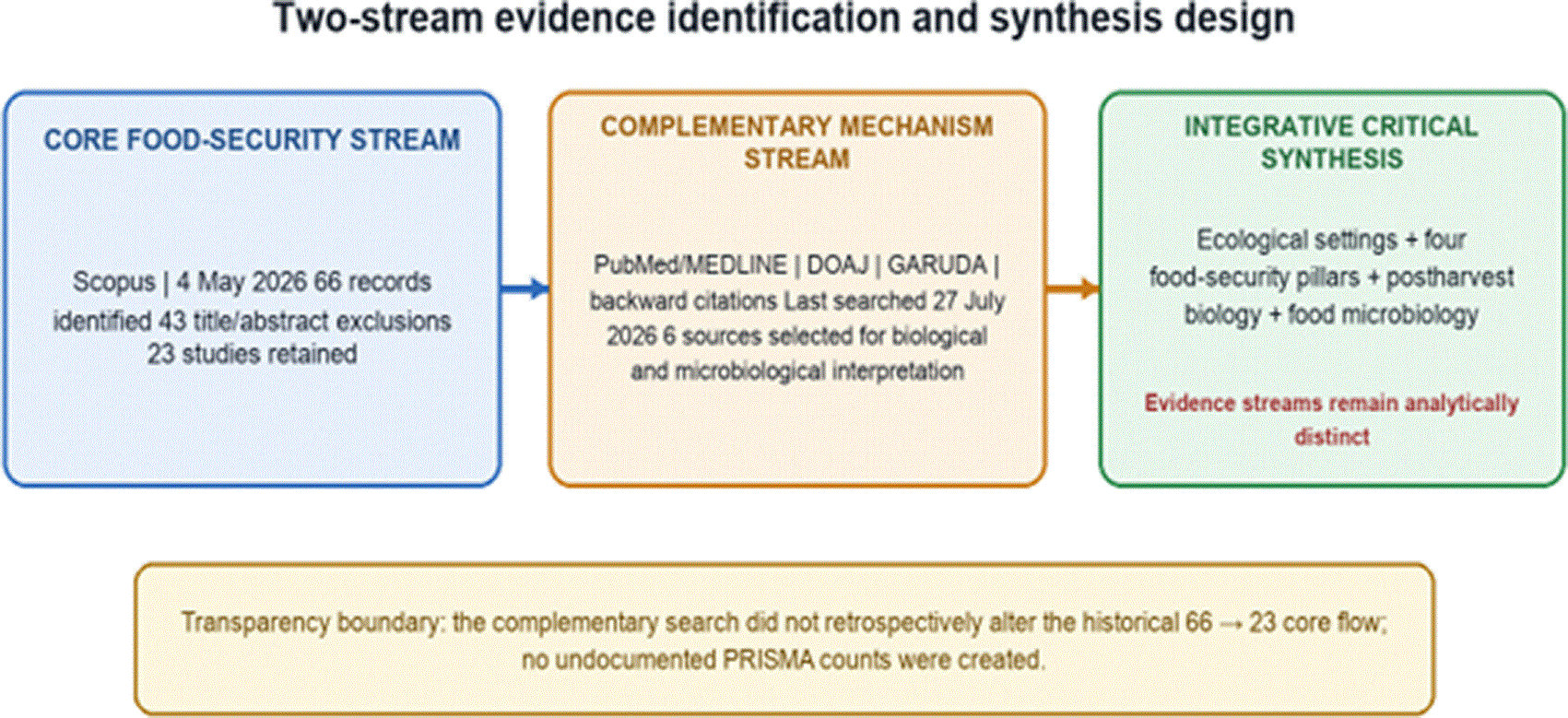
The historical Scopus core and targeted complementary mechanism searches remain analytically distinct; the latter did not alter the 66-to-23 core flow.
To reduce disciplinary and regional blind spots, targeted searches were conducted on 02 July 2026 in PubMed/MEDLINE, the Directory of Open Access Journals (DOAJ), and GARUDA, with backward citation searching. Search blocks combined tuber names with terms for fermentation, microbiome, bacteria, fungi, detoxification, and postharvest deterioration; Indonesian equivalents were used in GARUDA. These searches supplied complementary mechanistic evidence and were not used to recalculate the original 23-study flow. Full search strings and the distinct purpose of each source are reported in Table 1.
The core corpus included indigenous or locally embedded tuber, root, and starch systems when a study reported food use, nutrition, livelihood, resilience, agrobiodiversity, or a clearly interpretable food-security function. Cassava, taro, sago, and broader wild-edible-plant studies were retained only when tuber or starch evidence could be separated. Papers outside Southeast Asia were treated as contextual comparisons, not regional validation.
The complementary stream used narrower criteria: a source had to explain a biological or microbiological mechanism directly relevant to edible tubers, such as postharvest physiological deterioration, cyanogenic compound removal, fermentation, or microbial community structure. Industrial starch studies, breeding studies without a postharvest food-use connection, and purely pharmacological assays were not used. This two-stream design prevents mechanistic studies from being counted as direct evidence of household food security.
For the core studies, extracted fields included year, geography, design, focal taxa, ecological setting, food-security pillar, and reported processing practices. Evidence was compared on four dimensions: directness of the food-security outcome, transparency of the reported design, ecological relevance to Southeast Asia, and temporal or spatial resolution. Given the heterogeneous mix of ethnobotanical surveys, household studies, reviews, historical analyses, and program evaluations, no single numeric quality score was imposed. Statements supported only by species inventories or author interpretation were treated as indirect. Complementary studies were synthesized mechanistically. VOSviewer32 was retained only as exploratory bibliometric context.
The 23 core studies were published between 2017 and 2026. Ten focused on Indonesia, three on the Philippines, four on Malaysia, two on Thailand, and one on Timor-Leste; one had a global scope, and two studies from Ethiopia and Uganda were retained only as contextual comparisons. Thus, 10 of 20 geographically specific Southeast Asian studies were Indonesian. The corpus is informative about selected communities and ecosystems, but it is not a representative sample of Southeast Asia.
The studies covered wild and cultivated Dioscorea, cassava and sweet potato, taro and other aroids, sago, homegarden assemblages, and forest edible plants containing underground storage organs. These categories overlap and should not be read as mutually exclusive prevalence estimates. Table 3 records the focal plant group, food-security pillar, and method for each core study.
Figure 2 replaces the earlier keyword network with an evidence map that is more closely aligned with the review question. The map compares relative documentation across socio-ecological settings and analytic domains. Resource availability and processing knowledge are comparatively well described, whereas direct household outcomes, longitudinal buffering, spatial validation, and links between food-security evidence and laboratory mechanisms remain sparse. The categories are interpretive summaries, not effect sizes or certainty grades.
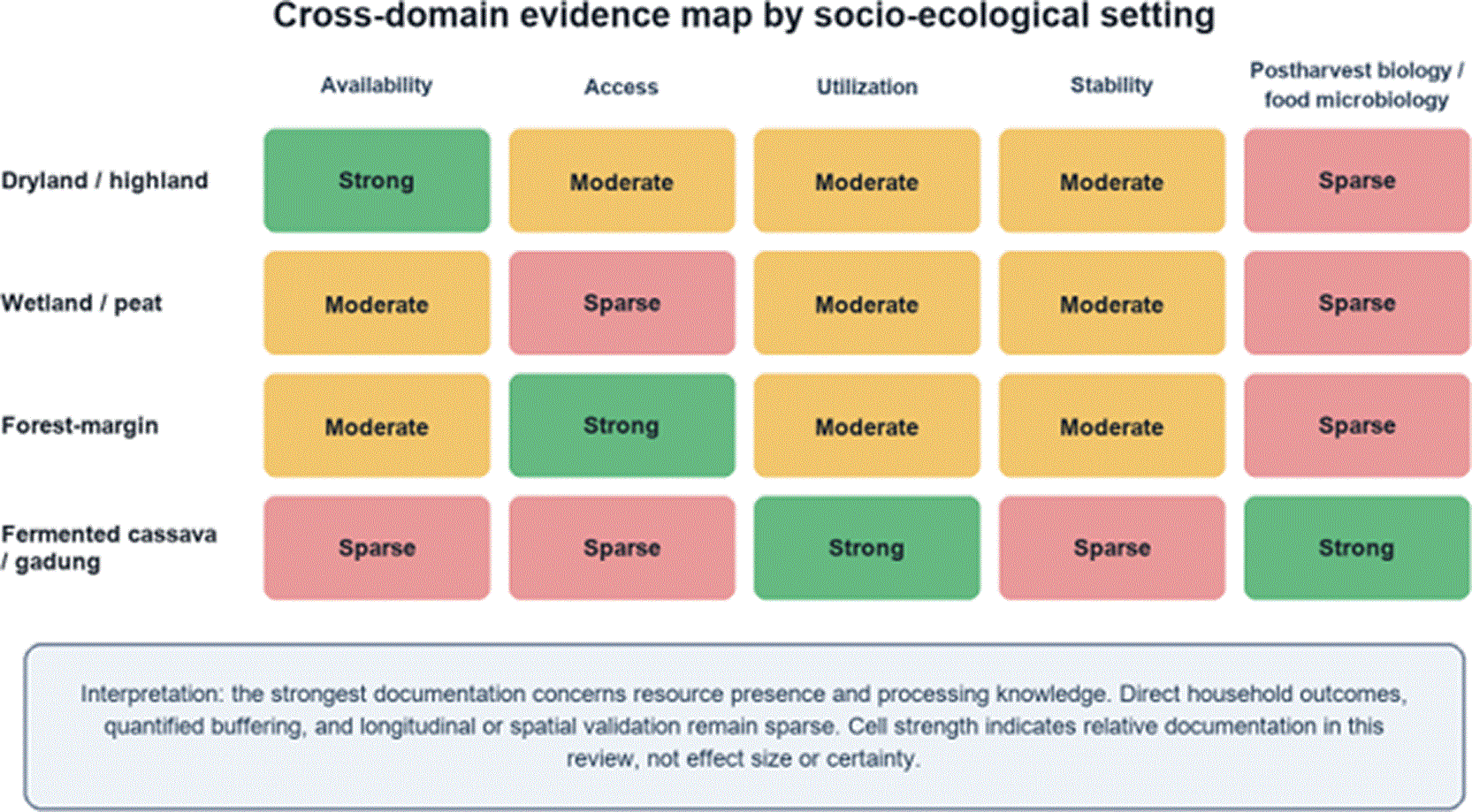
Cell strength indicates relative documentation within this review and should not be interpreted as an effect size or formal certainty rating.
The synthesis resolves into several socio-ecological configurations rather than a single regional mechanism. Differences in water regime, land tenure, market connection, mobility, and processing burden condition whether a tuber contributes to routine diets, seasonal buffering, or emergency use. This distinction also limits transfer of findings between sites.
Studies from Central and East Java and the northern Philippines document Dioscorea and sweet-potato diversity within dryland or highland systems.1–3 Diversity may buffer seasonal shortages, but the reviewed studies rarely measured harvest volume, dietary contribution, or multi-season performance. The evidence is therefore stronger for maintained agrobiodiversity than for a quantified resilience effect.
Taro in East Kalimantan and sago across Borneo and eastern Indonesia illustrate food systems adapted to humid environments.4,5 Their value depends on ecological suitability and laborious processing, not simply crop presence. Sago can provide a storable starch reserve, whereas taro requires attention to cultivar, acridity, and handling. Neither study establishes that these foods improve all four food-security pillars at household level.
For the Orang Asli Bateq and Suku Anak Dalam, wild tubers are embedded in forest access and mobility rather than conventional crop production.6,7 The relevant constraint is therefore not only biological availability but also legal and physical access to foraging landscapes. Evidence from these communities should not be generalized to sedentary farming systems.
The four FAO food-security pillars33 were coded as overlapping interpretive categories rather than independent outcomes. ( Table 4) A study could contribute to more than one pillar, so the counts below sum to more than 23. Most studies did not measure standardized household food-security indicators; the synthesis therefore distinguishes direct outcomes from proxies such as species presence, reported use, or processing knowledge.
Availability (13 studies): This was the most frequently coded pillar, usually through inventories, homegarden presence, or reported harvest. Such observations establish that a resource exists and is known locally, but they seldom quantify edible yield, energy supply, seasonal shortfall, or losses after harvest. Availability is therefore supported mainly at the resource level rather than the household-supply level.
Access (9 studies): Evidence concerned dependence on purchased staples, exchange, remoteness, and forest access. The strongest contradiction is that a tuber may reduce cash dependence while remaining inaccessible when land tenure, mobility, or intact habitat is lost. Few studies measured affordability, travel time, entitlement, or market participation directly.
Utilization (10 studies): Processing knowledge was repeatedly linked to edible use, especially for cassava and Dioscorea hispida. Soaking, heating, drying, fermentation, and repeated washing can reduce hazards and alter palatability, but ethnobotanical description alone does not establish nutritional adequacy or microbiological safety. Direct dietary, toxicological, and clinical outcomes were uncommon.
Stability (12 studies): Tubers were described as seasonal, emergency, or shock-buffering foods, including in historical and post-disaster settings. These accounts are plausible but largely retrospective. No core study followed households across enough seasons to estimate the magnitude or reliability of buffering, and few measured the postharvest losses that could erode it.
The review supports a restrained conclusion: tuber-based foods remain relevant in particular Southeast Asian communities, but their contribution is conditional. Agrobiodiversity, access to land and forest, processing knowledge, labor, storage behavior, and cultural preference interact. The literature is strongest at describing resources and practices and weakest at linking them to longitudinal food-security outcomes.
First, resilience and marginalization can coexist. A locally available tuber may buffer a temporary shortage, yet reliance on it may also reflect exclusion from land, markets, or public support. The reviewed studies do not permit a general claim that tubers create market independence; they instead show that the meaning of reliance changes with tenure, livelihood, and social position.
Second, knowledge and consumption are not equivalent. Ethnobotanical recognition, a remembered recipe, or occasional emergency use does not establish dietary centrality. Without weighed intake, dietary recall, purchase data, or repeated observation, the frequency and nutritional importance of tuber consumption remain uncertain.
Postharvest biology explains why biological presence does not guarantee food availability. Cassava storage roots can undergo rapid physiological deterioration after harvest through wound responses, oxidative signaling, phenolic metabolism, and related biochemical changes.8,9 These processes shorten the interval for consumption or sale and can convert a production advantage into loss. The core ethnobotanical studies rarely measured deterioration rate, cultivar differences, or shelf life.
The safety of bitter yam provides a second biological bridge. Traditional East Javanese processing combines slicing, alkaline ash, pressing, drying, soaking, and heating to promote cyanogenic-compound breakdown and removal.10 Controlled fermentation with Mucor racemosus has also reduced cyanide content in gadung chips under experimental conditions.11 These findings support the plausibility of traditional detoxification, but process performance cannot be assumed to be uniform across households.
A useful research design would therefore pair ethnographic documentation with measurements of initial toxin load, time-temperature history, water exchange, moisture, microbial counts, and final product safety. Such data would identify which steps are functionally necessary and where process variability creates risk. They would also allow postharvest loss and safe shelf life to be linked to food availability and stability.
Fermented cassava illustrates why microbiology matters. Culture-based work on Indonesian tape identified diverse amylase-producing Bacillus isolates, while recent metagenomic analysis found distinct bacterial and fungal communities in tape singkong and other fermented foods.12,13 These studies show functional potential and product-specific microbial structure, but they do not by themselves demonstrate probiotic effects, improved population nutrition, or longer household food security.
The microbiological evidence also complicates simple accounts of ‘traditional fermentation.’ Mixed starters and local process conditions may contribute desirable starch conversion and flavor, but variability can also affect acidification, alcohol formation, contamination risk, and shelf life. Future studies should report process controls and food-safety outcomes alongside community knowledge, rather than treating the presence of microbes as inherently beneficial.
Together, the biological and microbiological literature supplies mechanisms that the food-security corpus lacks. It should be used as triangulation, not as a substitute for direct evidence. Linking the streams will require co-designed field studies that measure household outcomes, postharvest performance, and microbial or biochemical processes while respecting local ownership of knowledge and samples.
The STBF is retained only to specify testable future work. Forest-margin cases involving the Suku Anak Dalam and Orang Asli Bateq illustrate the kinds of variables that would be required, but the published studies do not provide a common geospatial dataset for model validation.
A defensible application would begin with community-approved mapping of generalized foraging zones, seasonal availability, travel time, and habitat condition. Sensitive locations would be masked before analysis. Spatial clustering or accessibility models34 could then be tested against independently collected household food-access data, with uncertainty reported and maps returned to the community for validation. The analytical unit would be a consented zone or route, not an exposed coordinate for a culturally sensitive resource.
This specification is a hypothesis-generating protocol. The present review does not calculate density, fit a spatial model, test prediction, or establish that the proposed variables improve policy decisions. Instead, it provides a structured conceptual framework to guide future empirical studies integrating ethnobotanical, spatial, and postharvest evidence. Such studies are needed to evaluate the validity, applicability, and policy relevance of the proposed framework across different socio-ecological contexts.
The added PubMed/MEDLINE, DOAJ, and GARUDA searches broaden disciplinary coverage, but they are targeted supplementary searches rather than a complete rerun of the original review. Web of Science, CAB Abstracts, JSTOR, theses, books, and additional national repositories were not comprehensively searched. English-language and indexing biases therefore remain, especially for locally published ethnobotanical knowledge.
The original search was not prospectively registered, screening was not independently duplicated, and Cohen’s kappa31 cannot be reconstructed. The 43 title/abstract exclusions are known only as an aggregate because the record-level log was not retained. These omissions cannot be repaired by retrospective wording; they are the principal reason this article is presented as an integrative review rather than a fully compliant systematic review.
The appraisal emphasizes directness, design transparency, regional relevance, and spatial-temporal resolution, but it is not a formal risk-of-bias assessment. Heterogeneous evidence and limited full-text auditability prevent a defensible pooled certainty grade. Finally, the biological and microbiological studies explain mechanisms but often come from controlled or non-household settings, so their implications for food security remain indirect.
The STBF is a research agenda for translating consented ethnobotanical observations into spatial and temporal variables. It is not a result of this review.
Figure 3 separates evidence inputs, analytical choices, and safeguards. Consent, indigenous data sovereignty, spatial masking, and community validation are not optional ethical additions; they determine whether a mapping exercise is legitimate and interpretable.
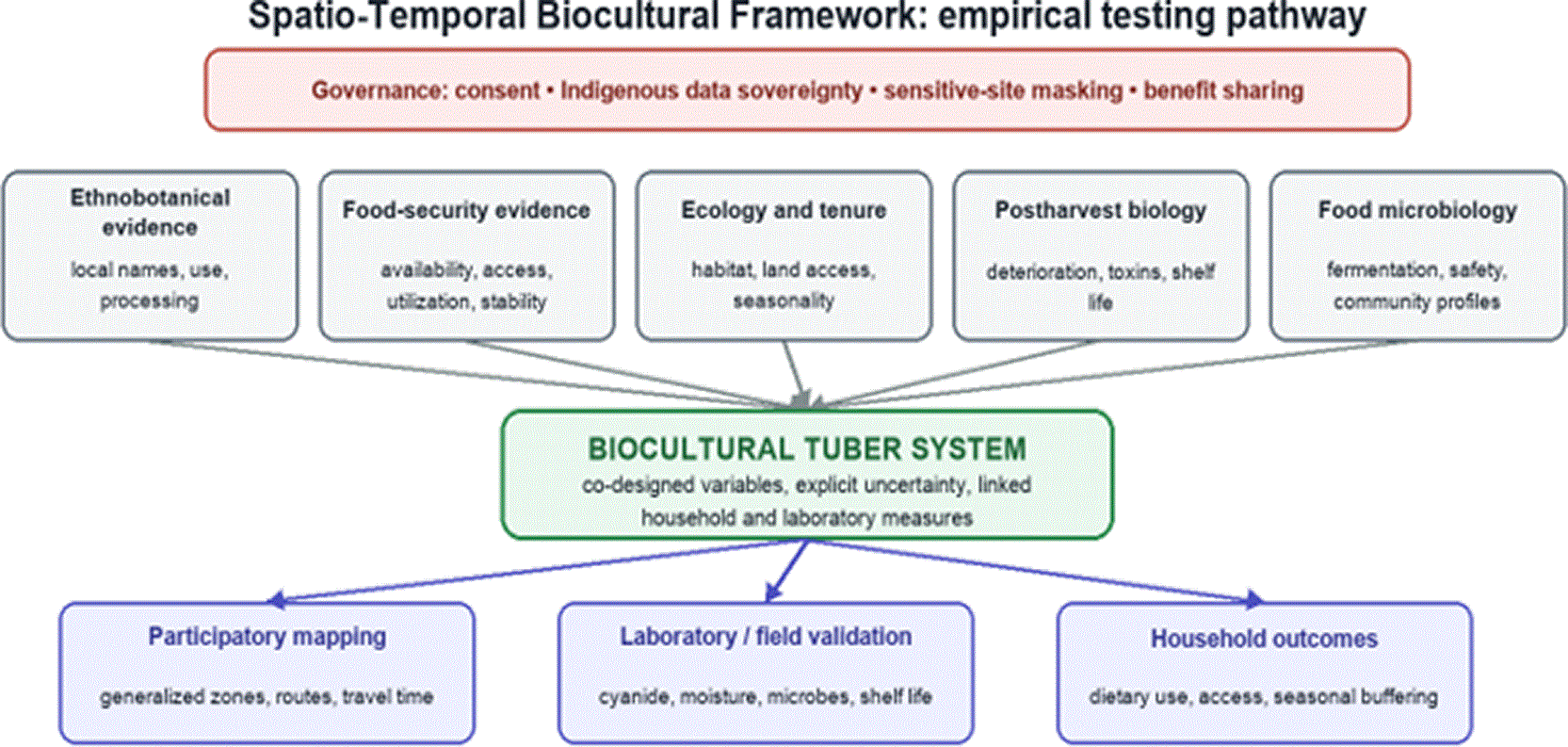
The framework now connects ethnobotanical, food-security, ecological, postharvest-biological, and food-microbiological evidence with participatory mapping, laboratory validation, and household outcomes.
Future testing should preregister the spatial unit, exposure and outcome definitions, masking procedure, uncertainty model, and validation rule. A useful test would examine whether generalized access and seasonality variables explain independently measured food-access or dietary outcomes better than non-spatial descriptions.
Table 5 summarizes the complementary biological and microbiological evidence used in this review. These studies help formulate measurable mechanisms for future work but are not evidence that the STBF itself performs well.
The 23-study core indicates that tuber-based food-security functions are context-specific. Availability and processing knowledge are well described, but access, dietary contribution, postharvest loss, and stability are rarely measured directly. Indonesia dominates the regional evidence, and findings from individual communities should not be generalized across Southeast Asia.
Complementary biological and microbiological evidence clarifies why safe processing and shelf life matter. Cassava deterioration can rapidly reduce usable supply; multi-step detoxification makes bitter yam edible; and mixed microbial communities shape fermented cassava. These mechanisms strengthen the rationale for interdisciplinary research, but they do not establish population-level food-security effects. The next advance should be a prospectively registered, multilingual systematic update with duplicate screening and formal appraisal, followed by co-designed field studies that connect food-security outcomes to postharvest and spatial measurements.
This review involved no recruitment of human participants or collection of primary biological samples. Formal human-subject approval was therefore not applicable. Nevertheless, interpretation and future mapping of Indigenous knowledge require attention to attribution, consent, data sovereignty, and the protection of sensitive locations.
Zenodo: Idris MA. Underlying Data and Figures for “Indigenous Tuber-Based Food Systems in Indonesia and Southeast Asia: An Integrative Review of Food Security, Postharvest Biology, and Food Microbiology” (Version 1.0) [Dataset]. Zenodo; 2026. https://doi.org/10.5281/zenodo.21643197.35
This project contains the study-level extraction matrix and the full search strategies supporting the review synthesis.
Data are available under the terms of the Creative Commons Attribution 4.0 International (CC BY 4.0) license.
No additional extended data are associated with this article. Tables and figures are included in the article and are not separately deposited. The historical record-level exclusion log for the original Scopus screening is unavailable and cannot be shared.
The authors gratefully acknowledge the Indonesia Endowment Fund for Education (LPDP) for financial support and IPB University for institutional support.
Indonesia Endowment Fund for Education (LPDP) financial support and IPB University for institutional support.
The funders had no role in study design, data collection and analysis, decision to publish, or preparation of the manuscript.
© 2026 Fadila F et al. This is an open access article distributed under the terms of the Creative Commons Attribution License, which permits unrestricted use, distribution, and reproduction in any medium, provided the original work is properly cited.
Current Reviewer Status:
AWAITING PEER REVIEW
AWAITING PEER REVIEW
?
Key to Reviewer Statuses VIEW HIDE
ApprovedThe paper is scientifically sound in its current form and only minor, if any, improvements are suggested
Approved with reservations A number of small changes, sometimes more significant revisions are required to address specific details and improve the papers academic merit.
Not approvedFundamental flaws in the paper seriously undermine the findings and conclusions