Просмотр новости
Найдите то, что Вас интересует
 Спутники
 РН
РН SpaceX
 Роскосмос
 NASA
NASA
СпутникиРНSpaceXРоскосмосNASABackground Communication collectives in Barranquilla, its metropolitan area, and several municipalities in the Department of Atlántico provide a situated context for examining contemporary expressions of alternative and participatory communication in the Colombian Caribbean and Latin America. Methods The study adopted a qualitative, document-based, and interpretive approach, combining the systematization of experiences with secondary analysis of academic materials produced between 2020 and 2025 within the framework of the course Communication for Social Development. The corpus consisted of academic directories, characterization records, and institutional and publicly accessible information. The units of analysis were the initiatives and their documentary records rather than individual participants. The materials were cleaned, compared, and organized into a matrix encompassing territorial, organizational, population-related, and communicative dimensions through inductive categories and reflexive thematic analysis. Results The findings identified 91 distinct communication initiatives characterized by organizational and communicative heterogeneity. The initiatives included community radio stations, digital media, cultural platforms, youth collectives, feminist and sexual-diversity organizations, Indigenous initiatives, social foundations, university groups, and institutionalized entities. Across the corpus, recurring features included connections between communication and territory, diverse forms of participation, rights-based practices, cultural and artistic production, education and memory, ethnic identity, environmental concerns, and digital platform appropriation. The initiatives differed in their organizational structures, levels of participation, institutional relationships, and sustainability conditions. Taken together, the findings show how communication practices intersect with territory and social action through the construction of social ties, production of memory, capacity building, and creation of situated representations. Conclusions The experiences analyzed constitute a plural socio communicative ecosystem that produces situated mediations, expressive capacities, and forms of citizenship. The study offers a situated account of the diversity of alternative and participatory communication practices documented in the Colombian Caribbean.
In Latin America, communication has historically been understood less as a technical field confined to media and information technologies than as a social, cultural, and political practice linked to the transformation of communities’ living conditions. This orientation stems from an intellectual tradition associated with critical sociology, popular cultures, and the contestation of power structures, from which the universalization of models developed in Western academic centers was called into question.1 Within this trajectory, communication collectives have gained relevance as actors in alternative and participatory communication by creating spaces of symbolic production from which meanings, narratives, and forms of representation are contested in relation to the hegemonic models that regulate whose voices enter public circulation.2
Foundational contributions to communication for development and social change placed dialogue, participation, and the democratization of public expression at the core of a critical response to diffusionist models, which were characterized by the top-down transmission of innovations and by the representation of communities as recipients of external interventions. The work of Luis Ramiro Beltrán occupies a central place in this shift, as his formulation of horizontal communication linked access, dialogue, and participation to the construction of more democratic communicative relations, while his critique of developmentalism helped reveal the geopolitical asymmetries embedded in dominant models. The continuing relevance of this legacy has been examined from contemporary perspectives that connect horizontal communication with decolonial thought,3 as well as development with cultural identity in Latin America and the Caribbean.4
From this perspective, communication is understood as a relationship grounded in interaction, recognition, and the collective construction of public expression, oriented toward strengthening citizenship, community autonomy, and the capacity of social groups to act upon the conditions of their own existence. This conception retains the critical imprint of Latin American thought while being rearticulated in contexts shaped by digital convergence, the proliferation of cultural producers, and emerging connections among communication, collective action, and territory.
Communication collectives constitute a concrete expression of this trajectory, insofar as their practices bring together information production, cultural creation, education, community organizing, and advocacy. Radio, audiovisual media, photography, theater, music, muralism, literature, and performative practices operate as languages through which memories, sensibilities, and positions toward the surrounding social environment are articulated. Contemporary developments in the theory of mediations have emphasized the relationship among language, praxis, and popular culture,5 while studies of artivism have demonstrated the capacity of aesthetic practices to intervene in struggles over visibility, memory, and social denunciation.6
Across different Latin American countries, these experiences have expanded opportunities for historically silenced populations to gain a public presence, including children, young people, women, ethnic communities, LGBTIQ+ populations, residents of working-class neighborhoods, and victims of armed conflict.7 Their relevance does not depend exclusively on their opposition to dominant media, as it is also connected to their forms of organization, their community ties, and their capacity to produce alternative interpretive frameworks for understanding the inequalities and conflicts that shape their territories.8
In Colombia, communication collectives have gained considerable prominence in processes of peacebuilding, human rights advocacy, the strengthening of cultural identities, and support for community-based initiatives. Radio stations and other forms of proximity communication bring together participation, social capital, and territorial ties, making their scope difficult to assess through indicators limited to audience size, economic profitability, or technical coverage. Their social value depends on their capacity to embrace diversity, sustain participation, and engage with the associative networks of local communities.9 In the Caribbean region, these dynamics take on a particular configuration, shaped by the centrality of art, oral traditions, music, neighborhood memory, and popular traditions as languages through which communities interpret their realities and establish a public presence. Memory practices developed by grassroots organizations further demonstrate that community interventions can transform everyday spaces into sites where the past is worked through politically, affectively, and symbolically.10
Barranquilla and its metropolitan area provide a relevant setting for examining these articulations, given the presence of community-based, youth, cultural, ethnic, feminist, and sexual-diversity initiatives. Their diversity reflects distinct ways of organizing participation, interpreting territories, engaging with communities, and turning local issues into matters of public deliberation.
This diversity can be observed in experiences such as Onda Juvenil, which brings together local journalism, radio, and educational activities through the participation of children and young people in Malambo, and Tejido Caribe, which connects communication, human rights, peacebuilding, and territorial advocacy. In the cultural sphere, Plataforma Caníbal combines artistic creation, research, and engagement with Barrio Abajo, while the Mokaná Indigenous Community of Galapa understands radio as a tool for ethnocommunication, the intergenerational transmission of knowledge, and the strengthening of cultural identity.11 In the latter case, the relationship among communication, spirituality, memory, and territory situates community-controlled media within broader processes of autonomy and re-existence, rather than treating them merely as instruments for disseminating cultural content.12
The coexistence of community media, cultural organizations, youth-led initiatives, rights-based collectives, and Indigenous experiences calls for avoiding a homogeneous definition of alternative communication,7 since participation, organizational independence, cultural creation, and public advocacy are combined in different ways depending on the trajectory, resources, and populations involved in each initiative.2 Against this backdrop of diversity, this article examines the role of communication collectives in Barranquilla as contemporary expressions of the Latin American tradition of alternative and participatory communication, focusing on the ways in which they bring together territory, symbolic production, cultural creation, and social participation in contexts shaped by inequality and exclusion.
The study adopts a situated perspective that recognizes within these experiences distinct forms of organization, education, citizenship formation, and territorial action. Their practices provide a basis for understanding some of the contemporary transformations of social communication in the Colombian Caribbean.
The research adopted a qualitative, document-based, and interpretive approach, articulated with the systematization of experiences as a strategy for reconstructing and analyzing information produced across different academic periods. The corpus consisted of academic directories, characterization records, documentary materials, and institutional or publicly accessible information compiled within the framework of the course Communication for Social Development, part of the Social Communication and Digital Media program at Universidad de la Costa, between 2020 and 2025. The units of analysis were the communication initiatives and the documentary records associated with them, rather than individual participants. Drawing on this corpus, a cumulative process of formative research was consolidated with the aim of identifying, characterizing, and understanding communication experiences in Barranquilla, its metropolitan area, and several municipalities in the Department of Atlántico.
Systematization was approached as an interpretive process through which records produced during different academic periods could be reconstructed, compared, and brought into relation with one another. This perspective made it possible to move beyond a merely descriptive organization of institutions and activities by examining their conditions of operation, forms of intervention, and territorial relationships. Such an orientation is consistent with approaches that recognize the systematization of experiences as a mode of qualitative inquiry capable of generating knowledge from practice13 and of strengthening the articulation among universities, social action, and collective reflection.14
The initial production of the materials took place as part of educational activities carried out by students from different cohorts of the course. Working in teams and under faculty guidance, the students conducted academic exercises involving documentary research, territorial familiarization, the identification of initiatives, and the preparation of characterization records on experiences of community-based, cultural, and alternative communication. These activities served the pedagogical objectives of the course and resulted in directories and other academic outputs that subsequently became part of the documentary corpus systematized for this research. Accordingly, the students were not considered participants in the study, nor were their personal experiences subject to analysis. This articulation between education and research is consistent with the principles of research-based learning, through which students develop competencies in information retrieval, analysis, methodological reflection, and the communication of findings.15
The initial identification of the initiatives was conducted primarily through a documentary review of institutional and publicly accessible information available on websites, social media platforms, organizational portals, community media, and other digital platforms associated with cultural, youth, environmental, ethnic, feminist, artistic, and rights-based initiatives. These sources made it possible to locate the initiatives, identify their public presence, reconstruct aspects of their trajectories, and establish their main areas of activity. This information was incorporated into the academic records produced during the course. Drawing on these materials, a preliminary map was developed of experiences distributed across Barranquilla, the municipalities within its metropolitan area, and other localities in the Department of Atlántico. At this stage, the information used consisted of documentary, institutional, or publicly accessible content rather than personal data generated through interviews, surveys, or other instruments administered to individuals.
When academic conditions and access possibilities allowed, some of the educational activities included forms of territorial familiarization conducted at organizational premises, community radio stations, cultural venues, and publicly accessible events. These activities served a pedagogical and contextual purpose, aimed at complementing the available documentary information and fostering an understanding of the spaces, activities, and forms of public presence associated with the initiatives. They were not conducted as systematic observations of participants, nor did they follow protocols designed to record individual behavior. The information subsequently incorporated into the article’s corpus consisted of the academic records produced on the basis of these activities, rather than observational notes concerning identifiable individuals.
Some of the academic exercises included occasional contact with members, representatives, or leaders of the initiatives for the purposes of basic verification and contextualization of the available information. These exchanges formed part of the pedagogical activities conducted during the course and were not designed as research interviews. They did not follow a common interview guide or standardized instrument, were not intended to elicit personal testimonies, did not generate a systematic corpus of recordings or transcripts, and were not analyzed as data obtained from human participants. In the present study, their role was limited to supporting or contextualizing information that was subsequently incorporated into the academic records, while the analysis itself was conducted on the consolidated documents rather than on any individual interactions that may have preceded their preparation.
Each cohort produced directories and academic records documenting the names of the initiatives, their locations, the populations they targeted or worked with, the media they used, their areas of activity, and their main communicative, cultural, or community-based actions. These documents, together with institutional and publicly accessible information used for cross-checking, constituted the documentary basis of the present study. The analysis focused on the consolidated content contained in these materials rather than on individual-level data concerning people associated with the organizations. The corpus included information on radio stations, digital media, youth collectives, cultural organizations, university groups, Indigenous initiatives, feminist platforms, foundations, and other entities in which communication occupied varying degrees of centrality.
The diversity of the material required the establishment of criteria to distinguish levels of formalization, organizational structures, and the functions performed by communication within each initiative. This decision prevented self-managed groups, legally constituted organizations, institutional media, and entities that used communication primarily as a supporting resource from being treated as equivalent units of analysis. Records located outside Barranquilla, its metropolitan area, and the Department of Atlántico were retained as contextual references but were not incorporated into the main body of the territorial characterization.
The data-cleaning process involved identifying duplicate records, integrating alternative names, comparing versions produced across different semesters, and removing duplications resulting from the same work being available in different formats. When an initiative appeared in more than one directory, its descriptions were compared in order to recover recurring characteristics and identify variations in leadership, platforms, activities, or areas of operation. This procedure made it possible to consolidate each initiative as a distinct analytical unit.
Once the material had been cleaned, the information was organized into a matrix encompassing territorial, organizational, population-related, and communicative dimensions. An iterative reading of the records made it possible to develop inductive categories related to radio and community communication, art and culture, youth, ethnic identity, human rights, gender and diversity, education, memory, the environment, citizen participation, and territory. The categorization emerged from the recurring patterns, differences, and connections identified across the documents through a procedure closely aligned with reflexive thematic analysis, in which categories are shaped by interpretive decisions that bring patterns, research questions, and empirical materials into relation.16 The overall methodological sequence, from the production of the original academic records to the consolidation and interpretive analysis of the documentary corpus, is summarized in Figure 1.
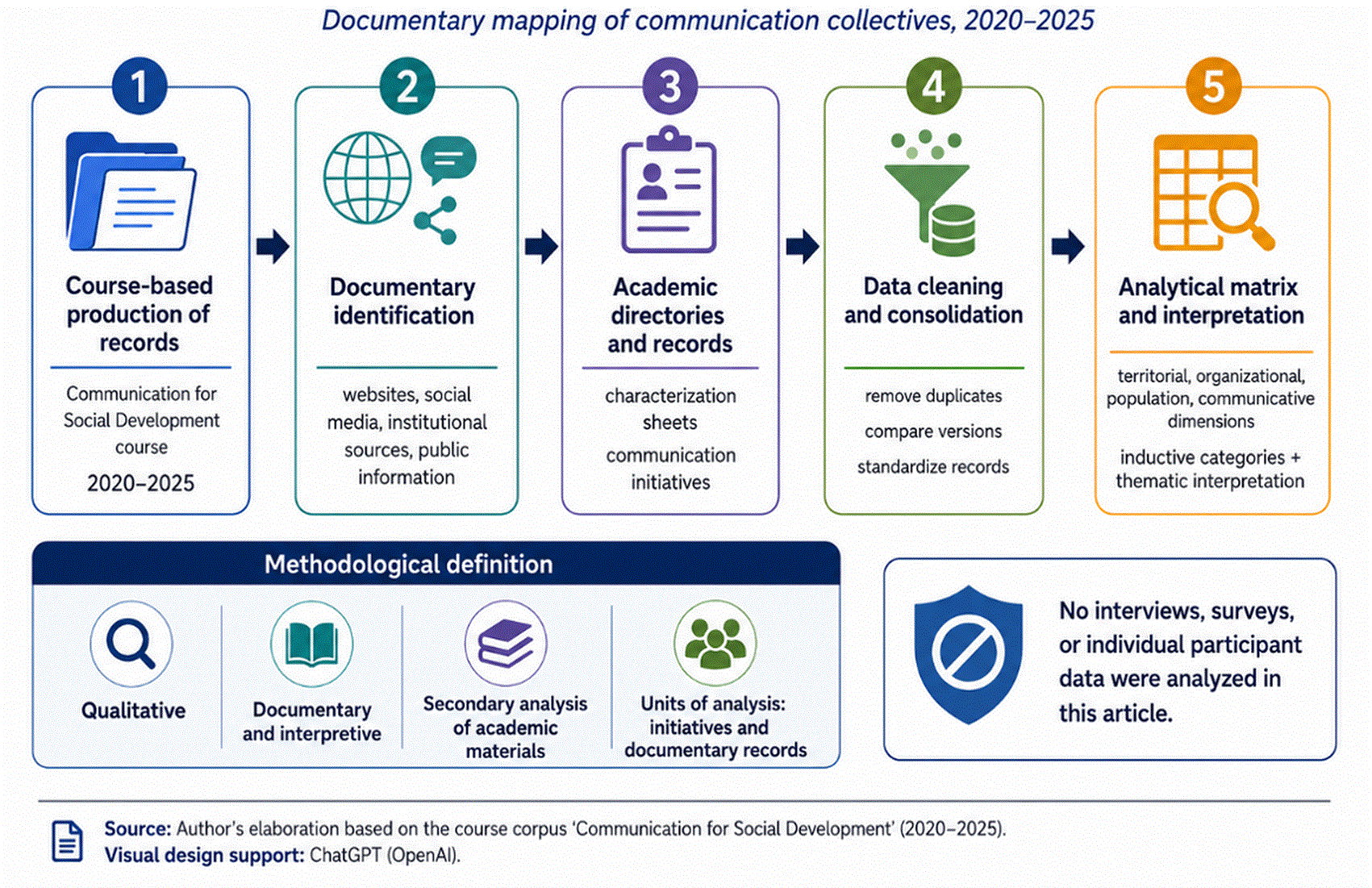
Documentary mapping of communication collectives, 2020–2025.
The analysis compared convergences and differences across the experiences. The former were associated with participation, dialogue, community-based content production, territorial appropriation, and the use of art and culture; the latter concerned institutional formalization, target publics, the media employed, continuity of activities, forms of funding, and relationships with public, private, or university-based institutions. This comparative movement made it possible to identify cross-cutting features without reducing the initiatives to a homogeneous definition of communication collectives.
In preparing the analytical corpus, any incidental personal information contained in the original academic materials was excluded, including identification numbers, private addresses, personal telephone numbers, individual email addresses, and other data that could directly identify individuals associated with the initiatives. When the original records contained contact information used during the educational activties to locate organizations or cross-check basic information, these data were not incorporated into the analytical matrix or used as evidence in the interpretation of the findings. The characterization focused exclusively on information concerning the initiatives, their organizational trajectories, communicative practices, the populations involved, the media employed, and their territorial relationships. Consequently, the corpus used for the present article contains neither identifiable personal data nor individual testimonies.
The study did not seek to construct an exhaustive census of existing initiatives, since their identification was conditioned by the accessibility of information, the public and digital presence of the organizations, and the academic circumstances under which the original records were produced. The result is therefore a situated and cumulative mapping of the documented experiences rather than a statistically comprehensive representation of the organizational landscape of the city and the Department of Atlántico. Methodologically, the article is based on the systematization and secondary analysis of previously produced academic materials, supplemented with institutional and publicly accessible information. Accordingly, the research was not structured around participant recruitment or the direct collection of interviews, surveys, focus groups, personal testimonies, or other individual-level data sources. Reorganizing these materials as a documentary corpus made it possible to integrate education, analysis, and territorial interpretation while generating locally grounded knowledge on community-based, alternative, and cultural communication.
The cleaning and consolidation of the academic directories produced between 2020 and 2025 made it possible to identify 91 distinct initiatives. Their distribution encompasses Barranquilla, the municipalities within its metropolitan area, and various localities in the Department of Atlántico, together with several external experiences retained as contextual references. Although the records vary in terms of depth and currency, the corpus reveals a broad sociocommunicative field comprising community radio stations, digital media, cultural platforms, youth collectives, feminist and sexual-diversity organizations, Indigenous initiatives, social foundations, university groups, and institutionalized entities in which communication occupies varying degrees of centrality. An overview of the territorial scope, documentary basis, and main thematic composition of the corpus is presented in Figure 2.
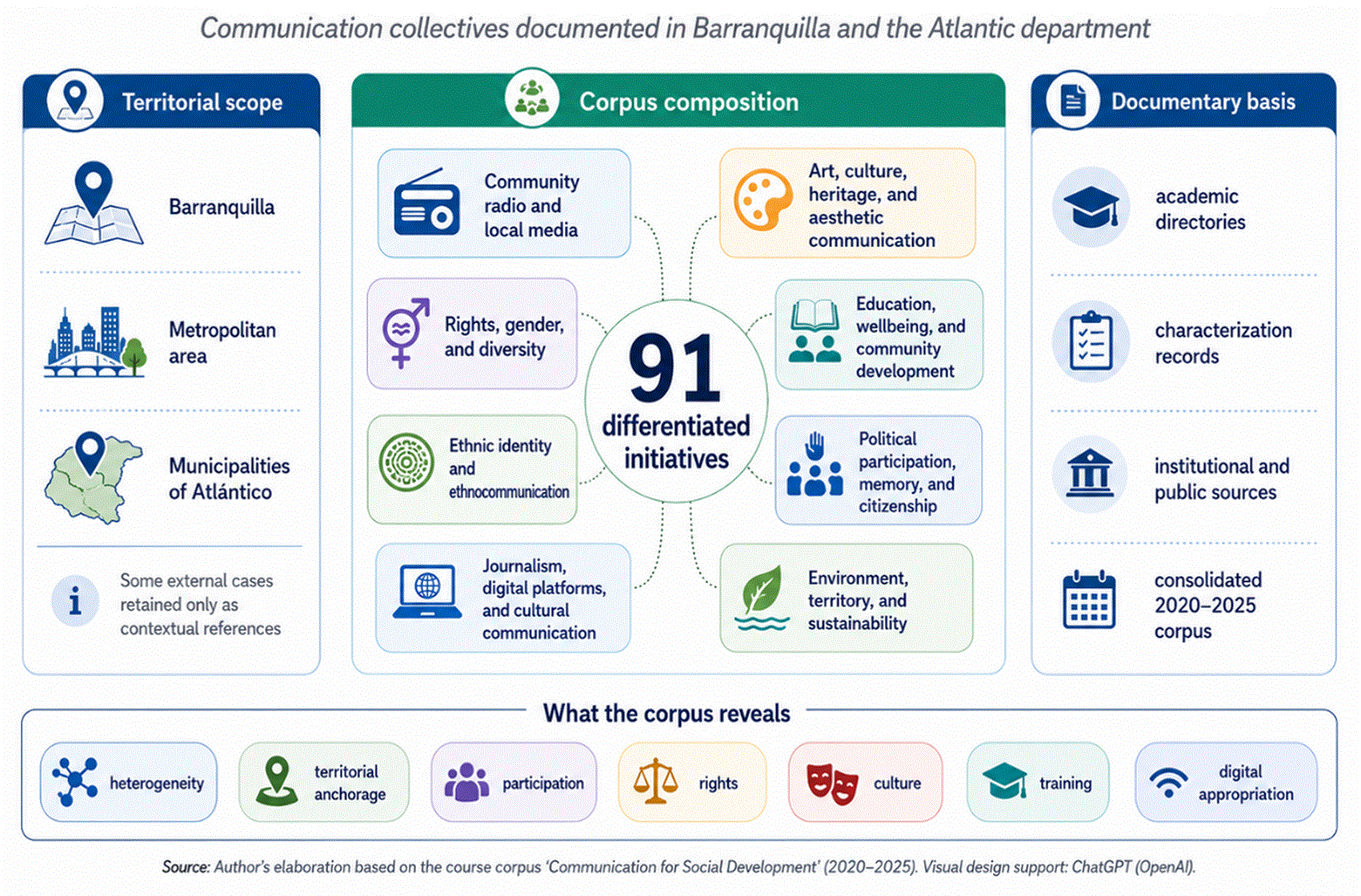
Communication collectives documented in Barranquilla and the Atlantic department.
Heterogeneity constitutes the first defining feature of the initiatives analyzed. The term “communication collectives” encompasses experiences that do not share the same legal status, administrative structure, or relationship with the market. Some operate as informal, self-managed groups, while others have legal personality, professional teams, or ties to universities, businesses, foundations, and cooperation agencies. This diversity makes it possible to distinguish among initiatives organized directly around communicative production, cultural organizations whose activities are grounded in media and artistic languages, and social organizations that use communication as a resource for education, public visibility, or mobilization.
The first group includes Vokaribe Radio, Onda Juvenil, Mokaná Estéreo, Voz Infantil–Hola Juventud, Fiesta Stereo, Popular Stereo, Cima Stereo, Impacto Stereo, Pimentón Rojo, and Periódico 24/7, whose activities are structured around radio, journalism, audiovisual production, and digital platforms. In these initiatives, communication constitutes the sphere through which content is produced, community ties are established, and narratives about the territories are developed. Within the cultural field, experiences such as Plataforma Caníbal, Lienzo Urbano, Casa Teatro Cofradía, Mira al Centro, Cine a la Calle, Mandragorart, Estación de los Sueños, and Fundación Nuevas Letras integrate creation, circulation, and education through visual, performing, literary, and audiovisual practices. This broader group also includes foundations, institutional programs, and social organizations that use campaigns, workshops, or media products within educational, environmental, sports-related, or social assistance projects.
Despite their differences, most of the initiatives maintain a recognizable connection with specific territories, populations, or social issues. Neighborhoods, municipalities, universities, Indigenous reserves, rural areas, and historic centers all shape the issues addressed, the publics involved, the languages employed, and the objectives pursued by these experiences.
Vokaribe clearly illustrates this territorial connection. Its activities are concentrated in southwestern Barranquilla and the city’s Metropolitan Locality, while its programming incorporates children’s voices, local music, the knowledge of older adults, and initiatives involving women as well as ethnically, culturally, and sexually diverse communities. The participation of local residents, radio practitioners, musicians, and social organizations turns the station into a space for dialogue closely connected to the everyday dynamics of the area and to the production of narratives that broaden the ways in which these communities are represented in the public sphere.
Onda Juvenil follows a similar orientation in Malambo. Its approach begins with research into the municipality’s history, culture, and social issues, which children and young people explore and develop through radio, print journalism, audiovisual production, and digital platforms. The Onda Kids and Cátedra Manuela Muñoz training groups bring together education, leadership, and communicative practice, so that the municipality becomes simultaneously an object of knowledge, a space of belonging, and a setting for citizen participation.
The relationship between communication and territory is also evident in initiatives that are not organized around radio. Barrio Arriba del Río conducts workshops, mobile libraries, and activities aimed at recovering local narratives in Rebolo and San Roque; Centro de Pensamiento Las Flores produces opinion-based content on local issues and cultural references associated with the Las Flores neighborhood; and De Tu Lado Tomasino uses digital platforms to disseminate the history of Santo Tomás and publicize community-based solidarity initiatives. In these experiences, communication entails intervening in representations of space and strengthening a sense of belonging through narratives produced from within the territories themselves.
Territoriality takes on an environmental orientation in Barranquilla +20, Red Nacional Jóvenes de Ambiente, and Colectivo Gente y Bosques. These initiatives bring together education, biodiversity, the recovery of public spaces, conservation, memory, and peacebuilding in both urban and rural contexts. Territory thus emerges as a public concern whose care requires communication, organization, and participation.
Participation constitutes another cross-cutting feature, although it takes different forms and varies in intensity. In grassroots community collectives, it may extend to content production, agenda-setting, and the creation of educational spaces. Vokaribe involves local residents and organizations in radio production; Onda Juvenil positions children and young people as researchers and content producers; Raras No Tan Raras organizes itself through deliberation and consensus; and Plataforma Caníbal develops residencies and laboratories involving artists, cultural practitioners, and communities.
In other experiences, participation takes shape through workshops, volunteer activities, campaigns, support groups, or public events. Fundación Proyectando Corazones organizes gatherings and broadcasts focused on mental health; Fundación Soy Corazón Grande mobilizes volunteer and donation networks; ManiBike combines cycling activities with environmental action; and Fiesta Stereo provides space for students, women, churches, artists, and local residents. The records therefore reveal a continuum ranging from decision-making participation and collaborative production to temporary involvement in activities coordinated by pre-existing teams.
This diversity makes clear that participation and horizontality are not equivalent. Some groups distribute decision-making capacity among their members, whereas licensed radio stations, foundations, and professionalized organizations tend to operate through more clearly defined roles, procedures, and hierarchies. Youth, feminist, and arts-based initiatives often adopt flexible structures, although they may also depend on identifiable forms of leadership.
A rights-based approach is particularly evident in feminist, LGBTIQ+, youth, ethnic, and community health initiatives. Caribe Afirmativo, Identidades Diversas, Red Somos Más, Uninorte Diverso, Raras No Tan Raras, Agenda Ciudad + Género, Transgarte Magazine, and Colectivo Género Betsabé Espinal bring together communication, education, support, and advocacy around populations exposed to discrimination, violence, or barriers to the exercise of their rights.
Caribe Afirmativo combines research, advocacy campaigns, audiovisual production, mobilization, and legal and community support. Identidades Diversas organizes prevention activities, provides guidance on available care pathways, and produces digital content aimed at LGBTIQ+ people, migrants, refugees, and people living with HIV, while Red Somos Más integrates community health services, leadership training, and advocacy. Within the university context, Uninorte Diverso and Colectivo Género Betsabé Espinal address issues related to inclusion, safety, and recognition through workshops, discussion forums, campaigns, and support activities.
Raras No Tan Raras and Transgarte incorporate digital formats, mapping practices, illustrations, podcasts, videos, and cultural interventions to make the experiences of women, trans people, and non-binary people more visible. In these cases, communicative production is linked to the construction of shared points of reference and to the possibility of contesting exclusionary representations.
Art and culture constitute another widely recurring pattern. In several initiatives, aesthetic creation structures communicative action and shapes the ways in which participants interpret their experiences. Plataforma Caníbal brings together residencies, laboratories, exhibitions, radio, and publications centered on contemporary art and territorial appropriation; Lienzo Urbano combines muralism, mobile libraries, festivals, and publications to intervene in public spaces; and Casa Teatro Cofradía uses the performing arts in educational projects and audience development processes.
Other experiences further expand this repertoire. Mandragorart uses theater, cabaret, and drag performance to challenge prejudice; Estación de los Sueños brings together mime, clowning, and forms of bodily expression rooted in the Caribbean; Fundación Nuevas Letras promotes poetry, music, and editorial support; Cine a la Calle organizes screenings and community-based audiovisual production processes; and Agencia Cultural 7–80 uses theater and cultural management in awareness-raising and prevention initiatives.
Mira al Centro offers a particularly clear example of the relationship among visual communication, memory, and heritage. Through workshops, exhibitions, urban routes, and photo marathons, photography becomes a means of documenting transformations in Barranquilla’s Historic Center, producing narratives about the city, and turning participants into observers and storytellers of their surroundings.
The cultural dimension is closely connected to the pedagogical orientation of many of these experiences. Workshops in radio and audiovisual production, arts-based schools, leadership training groups, environmental education processes, rights literacy, and political education show that learning to communicate forms part of the development of expressive, organizational, and civic capacities.
This function is clearly visible in Onda Juvenil, Voz Infantil–Hola Juventud, and Vokaribe, where journalistic and radio practices are integrated into learning processes. Fundación Bombardinos de Colombia uses musical ensembles, choirs, and introductory music training to strengthen social coexistence; Soñar No Es Delito combines popular education with theater, poetry, music, and film forums; and Jóvenes Líderes Transformadores de Galapa works through peer-to-peer communication. In these cases, education is not limited to the acquisition of media-related skills but is closely connected to participation in collective life.
Within ethnic initiatives, this pedagogical function takes on an intergenerational dimension. Mokaná Estéreo and the Mokaná Indigenous Community of Galapa understand radio as a means of preserving sonic memories, strengthening identity, and transmitting knowledge about practices, customs, spirituality, and forms of organization. The radio station connects different Indigenous reserves across the Department of Atlántico and brings together programming, cultural content, public activities, and digital platforms.
Colectivo Audiovisual Miní Chitiá Ku Suto Ri Pá, located outside the study’s core geographical area, provides a contextual reference for understanding the relationship among ethnic communication, memory, and peacebuilding. Its work brings together Afro-descendant organizations from Cesar and La Guajira around the interpretation and dissemination of the Truth Commission’s report, through practices associated with social dialogue, reparation, and non-repetition.
The appropriation of digital platforms constitutes another recurring pattern. Social media, websites, video channels, podcasts, live streams, and digital publications expand the circulation of content, sustain relationships with geographically dispersed publics, and enable organizations to document their activities. The pandemic accelerated this process in experiences such as Periódico 24/7, Plataforma Caníbal, and various community radio stations. Digitalization, however, did not uniformly replace territorially grounded practices. In youth, cultural, and rights-based collectives, digital platforms extend the reach of workshops, gatherings, marches, and radio programs, whereas in digital-native media they constitute the primary space for publication.
The records also reveal differences in sustainability conditions and institutional relationships. Formalized organizations may gain access to calls for proposals, agreements, cooperation funding, or corporate resources, whereas informal groups rely more frequently on volunteer work, donations, and self-management. These arrangements are complemented by partnerships with universities, public institutions, social organizations, educational institutions, businesses, and media outlets. Given the unevenness of the available information, it is not possible to assess uniformly how these resources affect the continuity, autonomy, or stability of each initiative.
Taken together, these experiences combine communication, territory, and social action in varying ways. Their main convergences lie in the construction of social ties, the production of memory, capacity building, and the creation of situated representations, while their differences reflect the languages they employ, the populations involved, their organizational structures, the resources available to them, and the scales at which they operate. The relationships between the analytical categories and the main cross-cutting patterns identified across the corpus are synthesized in Figure 3.
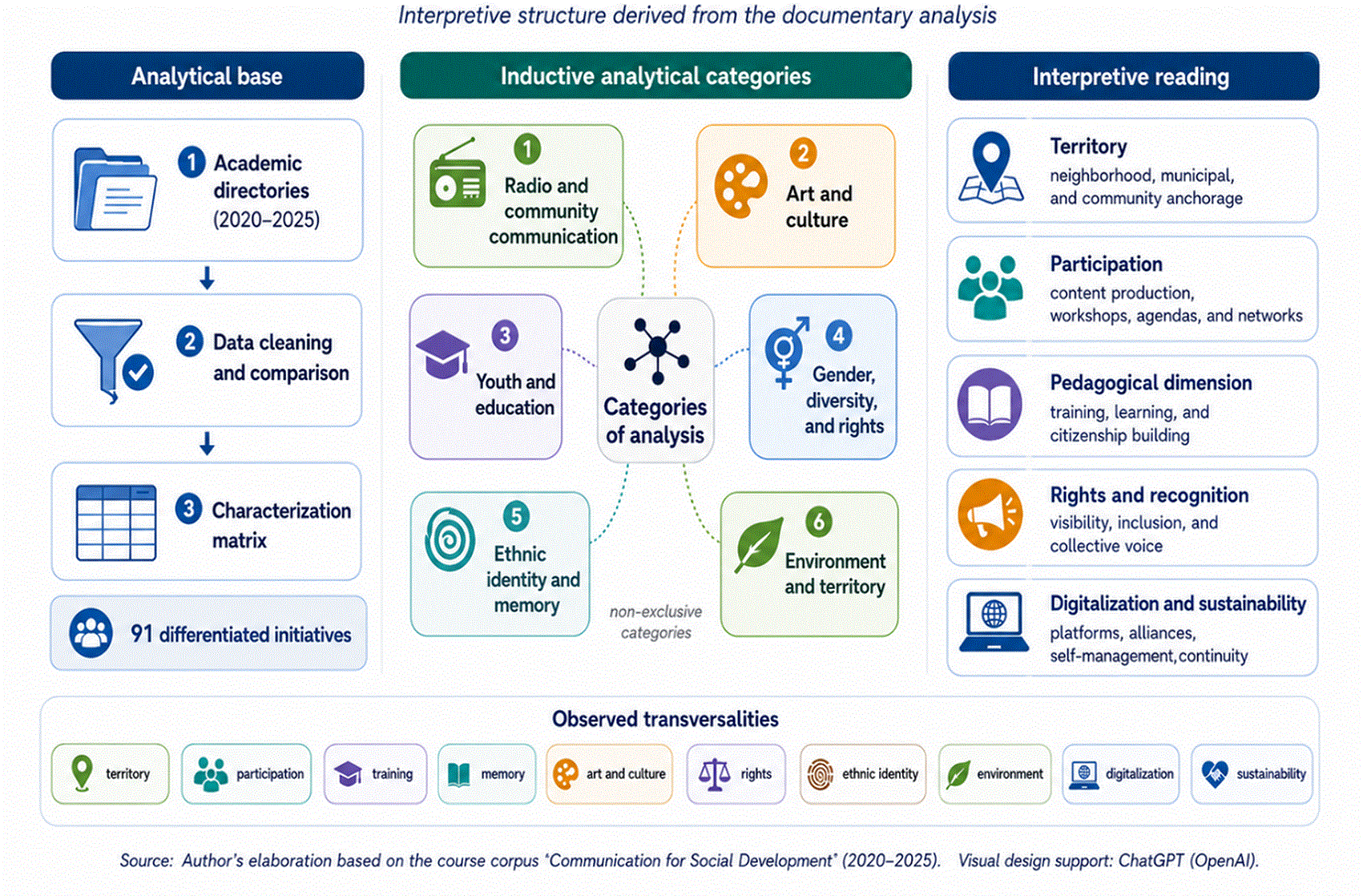
Interpretive structure derived from the documentary analysis.
The findings challenge an instrumental understanding of communication confined to the production and transmission of content. The documented practices show that communication can be embedded in processes of community organizing, education, aesthetic creation, memory-making, and territorial articulation. Their relevance does not depend solely on providing an informational alternative to commercial media, but also on the relationships they establish with communities and the interpretive frameworks they make available for experiences that remain underrepresented in the public sphere. This reading is consistent with recent studies that propose understanding Latin American alternative media through their organizational forms, territorial ties, and positions in relation to injustice,2 rather than through a binary opposition between dominant and counter-hegemonic media.7
The heterogeneity observed calls for a critical reconsideration of the category “communication collective.” The initiatives analyzed engage with communication to different degrees and perform different communicative functions, making it difficult to attribute to them a single counter-hegemonic rationale or an equivalent organizational structure. Their collective character does not derive from a particular legal form or media format, but from the articulations through which actors, communicative languages, social issues, and territories acquire a public presence. From this perspective, the field can be understood as a variable configuration of symbolic production, social organization, participation, and community engagement.
The findings resonate with the Latin American tradition of participatory communication and communication for social change, particularly where populations take part in content production, agenda-setting, and the interpretation of their territories. When those who are commonly conceived as sources, recipients, or beneficiaries become content creators, researchers of their own surroundings, and producers of narratives, communication takes on a relational character linked to the development of expressive capacities, collective ties, and forms of public presence.
This interpretation requires a distinction between participation and horizontality. The documented modalities form a continuum ranging from attendance at activities to content production, agenda-setting, and involvement in organizational decision-making. This gradation prevents the mere opening of a space from being equated with the effective democratization of its internal relations, while also allowing recognition that even less intensive forms of participation can generate learning and collaborative networks. Studies of community communication have shown that participation, social capital, programming diversity, and management conditions develop with varying degrees of intensity,9 while sustained involvement can contribute to the acquisition of skills and the development of personal and professional trajectories.17
Territory constitutes one of the study’s most consistent analytical contributions, as it does not appear as an interchangeable location but as a material, historical, and symbolic relationship that shapes the selection of issues, publics, languages, and forms of organization. Communicative practices recover memories, contest stigmatizing representations, resignify spaces, and turn local concerns into matters of public dialogue. In this way, communication collectives act as mediators between everyday experience and the arenas in which heritage, security, inequality, diversity, the environment, and the right to the city are debated.
This territorialization does not confine identities to bounded spaces. The initiatives connect neighborhood, municipal, regional, national, and digital scales through routes, alliances, memories, and forms of circulation. In Indigenous processes, communication and territory are linked to the transmission of knowledge, autonomy, and cultural re-existence; in urban contexts, this relationship may take shape through the reclamation of public space, the construction of neighborhood memory, and the production of alternative representations of the city. Research on Indigenous communication in Colombia has shown that community-controlled media form part of organizational networks oriented toward social re-existence, allowing the Mokaná experience to be interpreted through the articulation of identity, memory, autonomy, and territory rather than solely as the preservation of cultural content.12
A rights-based approach introduces another inflection into the tradition of communication for development. In feminist, LGBTIQ+, youth, ethnic, and conflict-memory initiatives, communication contributes to naming inequalities, documenting violence, producing shared points of reference, and contesting the conditions under which recognition is granted. Symbolic production thus acquires a political dimension because it intervenes in the categories through which populations are represented and through which they can represent themselves. These practices are closely aligned with forms of artivism that, in other contexts across the Global South, have brought together creative practice, digital media, and solidarity in response to historical inequalities.18
This orientation does not permeate all initiatives to the same extent. In some experiences, rights are addressed through awareness-raising, service provision, or responses to specific needs, without the available records providing sufficient evidence of an explicit structural critique. It is therefore necessary to distinguish among assistance-oriented communication, communication focused on access to services, and communication linked to processes of organization and advocacy. This distinction does not establish an automatic hierarchy, but it avoids attributing a uniform political intentionality to practices with different objectives and organizational structures.
The presence of art and culture broadens the understanding of what may be recognized as communicative action. Aesthetic languages do not function merely as resources used to support social projects; in several initiatives, they organize ways of knowing, remembering, and relating to territories. Through these languages, publics are addressed, sensory and affective experiences are produced, and narratives are constructed that extend beyond verbal argumentation.
The concept of artivism is useful for interpreting experiences that bring together political positioning, aesthetic forms, and media circulation,18 but it should not be applied indiscriminately to all forms of cultural production. Some initiatives challenge hierarchies and public representations, whereas others focus on heritage, arts education, memory, or community-based creation. The reception of these practices also depends on cultural contexts and on the conditions under which the works circulate.19 Art does not in itself guarantee social transformation, although it can broaden the narrative, sensory, and affective conditions through which particular issues come to acquire collective recognition.
The pedagogical dimension further strengthens the relationship among communication, culture, and capacity for action. Training groups, workshops, schools, laboratories, and media production processes turn many collectives into learning spaces that operate outside formal educational institutions or in conjunction with them. Training encompasses communicative techniques, but also leadership, territorial interpretation, knowledge of rights, organization, and collaboration. This practice partially blurs the distinction between producers and publics, since those who initially become involved as participants may go on to develop trajectories as content creators, educators, or reference figures for other members. In this way, work in community media can generate capacities and networks of belonging whose relevance extends beyond the technical quality of the content produced.17
The educational dimension from which part of the corpus originated also constitutes a relevant aspect of the research experience. The academic directories and records were produced by students from different cohorts through exercises in information searching, territorial familiarization, cross-checking, and documentation conducted within the framework of a university course. The present study, however, was not designed as participatory research with the documented organizations, since its purpose was to systematize and conduct a secondary analysis of these academic materials. Accordingly, the communication collectives did not participate systematically in formulating the analytical questions, developing the categories, or interpreting the final findings. This distinction makes it possible to differentiate pedagogical engagement with territories from community participation in research design, two dimensions that should not be treated as equivalent. Scholarship on university-community engagement has shown that relationships between academic knowledge production and social actors are shaped by tensions between expertise and collaboration,20 academic objectives and practical needs,21 as well as between knowledge production and community benefits.22 The contribution of this experience lies in having constructed a situated documentary mapping while strengthening student learning, whereas its scope opens the possibility for subsequent research incorporating processes of feedback, validation, and collaborative analysis with the organizations involved.23
Sustainability constitutes another relevant tension, although the unevenness of the records allows it to be addressed only in exploratory terms. The directories do not provide homogeneous data on budgets, remuneration, member turnover, or project duration, and therefore do not support causal claims about the relationships among funding, continuity, and advocacy. Sustainability, moreover, does not depend exclusively on economic stability. Management, participation, social capital, territorial articulation, infrastructure, and digital activity all contribute to a form of social value linked to the capacity to sustain relationships and provide communication services to communities.9 Self-management and volunteer work may express commitment and autonomy, but they can also generate overload and dependence on individual leaders; formalization and partnerships may expand access to resources, while at the same time introducing administrative demands and potential tensions with community agendas. Autonomy, professionalization, and sustainability therefore emerge as interdependent dimensions.
The appropriation of digital platforms reveals a similar ambivalence. Social media, podcasts, video channels, and live streams have expanded possibilities for circulation, documentation, and engagement with geographically dispersed publics, while also extending processes rooted in specific territories and connecting local issues with broader agendas. In this sense, platforms create opportunities for intervention beyond the constraints of traditional media circuits.7 This appropriation nevertheless remains conditioned by privately owned infrastructures, visibility metrics, standardized formats, and algorithmic mechanisms that communication collectives do not fully control. As a result, content must adapt to environments designed to capture attention.24 The relationship between the digital and the territorial should therefore be understood as an articulation across scales, since virtual environments remain connected to bodies, memories, conflicts, and material spaces.
Taken together, the collectives examined constitute a plural communicative ecology marked by differences in infrastructure, funding, technical capacity, institutional recognition, and access to decision-making spaces. The analytical value of these experiences lies in the contingent articulation of communication, territory, and social action rather than in the assumption of a homogeneous identity that is inherently horizontal or necessarily transformative. Their practices renew the Latin American tradition of participatory communication through artistic repertoires, rights-based approaches, processes of ethnocommunication, and forms of digital appropriation, while at the same time revealing tensions between autonomy and institutionalization, participation and leadership, visibility and platform dependence, and education and precarity. These tensions give expression to forms of community and cultural communication produced within concrete social relations, constrained by material conditions yet open to the creation of alternative ways of narrating, organizing, and inhabiting territories. These relationships can be interpreted as a system of situated mediations in which communication collectives connect territories, forms of participation, cultural creation, rights, learning, digital appropriation, and organizational sustainability ( Figure 4).
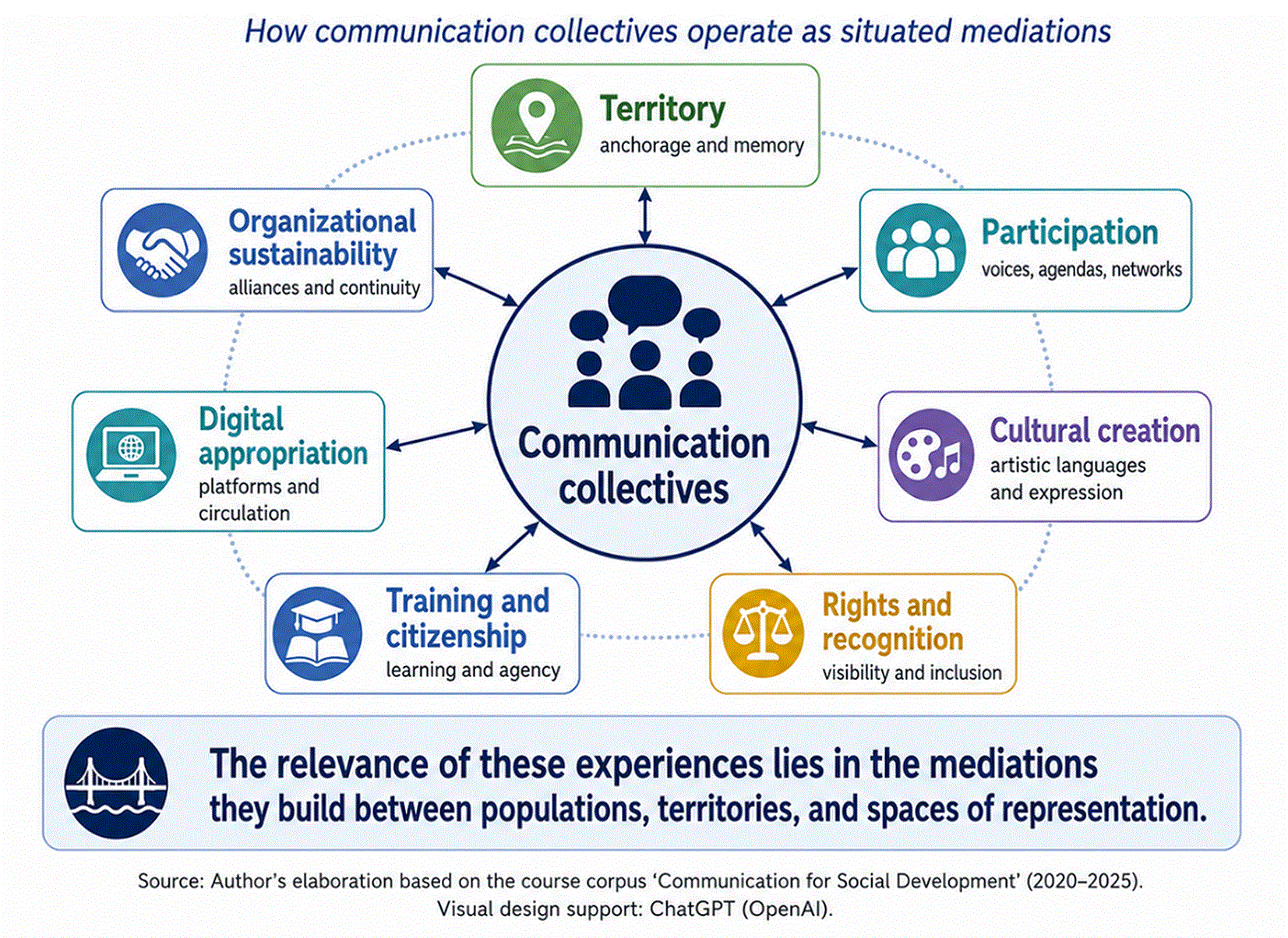
How communication collectives operate as situated mediations.
The analysis supports the conclusion that the initiatives documented in Barranquilla, its metropolitan area, and several municipalities in the Department of Atlántico constitute a heterogeneous sociocommunicative ecosystem whose diversity prevents the category “communication collective” from being reduced to a particular legal structure, media format, or uniform political orientation. The study’s main contribution lies in showing that these experiences articulate symbolic production, social organization, and territorial engagement in varying ways, according to their trajectories, resources, populations, and modes of action.
Territory constitutes one of the field’s main cross-cutting dimensions, as it shapes the issues addressed, the publics engaged, the memories produced, and the forms of representation that emerge. This relationship is linked to diverse modes of participation that do not distribute decision-making capacity equally, but nevertheless expand opportunities for expression and public presence among communities that remain underrepresented. Participation therefore emerges as a relevant dimension whose varying intensity prevents it from being automatically equated with horizontality.
Art, rights-based approaches, and education constitute interrelated dimensions of these practices. Cultural languages contribute to the production of memory, the resignification of spaces, and the construction of shared points of reference, while initiatives concerned with gender, diversity, ethnic identities, and conflict memory bring together communication, support, and advocacy to varying degrees. At the same time, educational processes turn many collectives into learning spaces in which communicative capacities are linked to leadership, organization, and the exercise of citizenship.
Digital appropriation expands the documentation and circulation of content and strengthens connections between local issues and broader publics, while also introducing dependencies on privately owned infrastructures and algorithmic logics of visibility. A similar tension runs through sustainability, which depends on the interplay among material resources, territorial legitimacy, organizational capacity, and team continuity. Self-management, formalization, and partnerships may strengthen the continuity of these experiences, but they can also generate overload, dependence, or tensions with community agendas.
From a methodological perspective, the research demonstrates the potential of university-based education to produce a situated and cumulative mapping of experiences that remain poorly documented. Its scope does not amount to an exhaustive census, given the uneven accessibility of information, the public and digital presence of the initiatives, and the academic circumstances under which the original records were produced. The study was based on the systematization and secondary analysis of previously produced documentary materials, and its findings should therefore be understood within the limitations inherent to this type of corpus. Future research could examine organizational trajectories, internal participation, sustainability, and the relationships between autonomy and institutionalization in greater depth through specific research designs incorporating comparable interviews, sustained observation, and collaborative processes of feedback and interpretation.
The resulting mapping provides insights for the design of communication, cultural, educational, and citizen participation policies that recognize the organizational and territorial diversity of the field. Strengthening these initiatives requires differentiated strategies for sustainability, capacity building, access to infrastructure, and institutional coordination that remain compatible with their autonomy. The collectives examined show that community and cultural communication in the Colombian Caribbean is shaped through concrete mediations among populations, social issues, and spaces of representation. It is through these mediations that they contribute to expanding public expression, producing memory, and generating situated forms of citizenship.
The dataset underlying this study does not contain identifiable personal data, private contact information, or individual testimonies. The data consist of documentary information concerning communication collectives and initiatives, compiled from academic records, institutional sources, and publicly accessible information.
Any incidental personal information contained in the original academic materials, including identification numbers, private addresses, personal telephone numbers, and individual email addresses, was excluded from the dataset prior to analysis and deposit. The dataset therefore does not contain information that could directly identify individuals associated with the documented initiatives.
The study was based on the systematization and secondary analysis of previously produced academic materials and publicly accessible documentary information. It did not involve systematic recruitment of human participants or the collection of interviews, surveys, focus groups, personal testimonies, or other individual-level data.
As the dataset contains no identifiable personal or sensitive information, no ethical or security-based restrictions on access to the deposited data are anticipated. The data will be made available through the designated repository under the applicable data-sharing and licensing conditions.
The dataset underlying this study is available in Zenodo: Documented communication collectives in Barranquilla, Atlántico and the Colombian Caribbean (2020–2025). https://doi.org/10.5281/zenodo.21865733.25
This project contains the following underlying data:
Dataset. Documented communication collectives in Barranquilla, Atlántico and the Colombian Caribbean (2020–2025). The dataset contains information on 91 communication initiatives identified through the systematization and secondary analysis of academic directories and records produced between 2020 and 2025. It includes documentary characterization, file provenance, and supplementary web verification of websites, social media profiles, and publicly available references.
SRQR checklist. Standards for Reporting Qualitative Research (SRQR) checklist for “Communication collectives in the Colombian Caribbean: A situated perspective from Barranquilla toward Latin America”.
Data are available under the terms of the Creative Commons Attribution 4.0 International (CC BY 4.0) license.
The authors acknowledge Universidad de la Costa and the Communication for Social Development course for providing the academic context in which the documentary materials analyzed in this study were originally produced.
Generative AI was used exclusively to support the creation of visual materials and images included in this article. ChatGPT (OpenAI) was used to generate and assist in developing visual resources for illustrative and communication purposes. The tool was used solely for the development of these visual materials and did not replace the authors’ responsibilities in the research design, data collection, analysis, interpretation of results, or preparation of the manuscript.