Просмотр новости
Найдите то, что Вас интересует
 Спутники
 РН
РН SpaceX
 Роскосмос
 NASA
NASA
СпутникиРНSpaceXРоскосмосNASABackground The conservation of leatherback turtles (Dermochelys coriacea) requires an approach that goes beyond ecological protection and incorporates communication strategies capable of effectively engaging local communities. In West Papua, the coastal area of Jeen Womom represents one of the most important nesting sites for leatherback turtles and is characterized by strong social and cultural values. However, the success of conservation efforts in this region is strongly influenced by the construction and interpretation of conservation messages by local communities. This study aims to analyze the construction of leatherback turtle conservation messages from the perspective of Kenneth Burke’s dramatistic pentad. Method: A qualitative research approach with a case study design was used. Data were collected through direct observation of conservation activities and analysis of communication media and conservation programs implemented by conservation organizations in the Jeen Womom Coastal Park, West Papua. Results The findings indicate that the scene and agent play a dominant role in shaping conservation communication. The socio-cultural context of coastal communities and the involvement of local leaders significantly influence the effectiveness of the message delivery. Communication media function as an agency that bridges conservation values with everyday community life, while the communication goals (purpose) extend beyond knowledge dissemination to fostering collective awareness and sustainable behavioral change. Conclusion This study highlights that conservation communication constitutes symbolic action shaped by cultural contexts and social relations. The dramatistic pentad approach is relevant for understanding the dynamics of community-based conservation communication and contributes to the development of environmental communication studies.
Research Article
[version 1; peer review: awaiting peer review]
https://orcid.org/0000-0001-9915-6627
1, David Blakesley2, Fitrya Pakiding3, [...] Putri Dwitasarihttps://orcid.org/0000-0002-4825-7433
1, Yosia Enggar Kurniawan1, Noviyanti Noviyanti3, Ellya Zulaikhahttps://orcid.org/0000-0002-8150-7772
1https://orcid.org/0000-0001-9915-6627
1, David Blakesley2, [...] Fitrya Pakiding3, Putri Dwitasarihttps://orcid.org/0000-0002-4825-7433
1, Yosia Enggar Kurniawan1, Noviyanti Noviyanti3, Ellya Zulaikhahttps://orcid.org/0000-0002-8150-7772
11 Department of Industrial Product Design, Institut Teknologi Sepuluh Nopember, Surabaya, East Java, 60111, Indonesia
2 Interdisciplinary Program, Clemson University, Clemson, South Carolina, 29631, USA
3 Universitas Papua, Manokwari, West Papua, Indonesia
Octaviyanti Dwi Wahyurini
Roles: Conceptualization, Data Curation, Formal Analysis, Funding Acquisition, Investigation, Methodology, Project Administration, Resources, Supervision, Validation, Writing – Original Draft Preparation, Writing – Review & Editing
David Blakesley
Roles: Conceptualization, Formal Analysis, Methodology, Validation, Writing – Original Draft Preparation, Writing – Review & Editing
Fitrya Pakiding
Roles: Conceptualization, Data Curation, Funding Acquisition, Investigation, Resources, Supervision, Writing – Original Draft Preparation
Putri Dwitasari
Roles: Data Curation, Project Administration, Visualization, Writing – Original Draft Preparation, Writing – Review & Editing
Yosia Enggar Kurniawan
Roles: Data Curation, Investigation, Project Administration, Resources, Writing – Original Draft Preparation
Noviyanti Noviyanti
Roles: Data Curation, Investigation, Project Administration, Resources, Supervision
Ellya Zulaikha
Roles: Conceptualization, Formal Analysis, Validation
OPEN PEER REVIEW
REVIEWER STATUS AWAITING PEER REVIEW
Corresponding author: Octaviyanti Dwi Wahyurini Competing interests: No competing interests were disclosed.
Grant information: The authors would like to express their deepest gratitude to the Indonesian Endowment Fund for Education (LPDP), under the Ministry of Higher Education, Science and Technology of the Republic of Indonesia, for the generous financial support provided through the EQUITY Program (Contract No. 4299/B3/DT.03.08/2025 and No. 3029/PKS/ITS/2025). Sincere appreciation is also extended to the Blue Abadi Fund (Contract No. 015/005/BAF/BG-5/II/2025) and the Whitley Fund for Nature for their invaluable support in making this research possible.
The funders had no role in study design, data collection and analysis, decision to publish, or preparation of the manuscript.
Copyright: © 2026 Wahyurini OD et al. This is an open access article distributed under the terms of the Creative Commons Attribution License, which permits unrestricted use, distribution, and reproduction in any medium, provided the original work is properly cited. How to cite: Wahyurini OD, Blakesley D, Pakiding F et al. How Conservation Messages Are Constructed: A Dramatistic Pentad Study of Leatherback Turtle Conservation in Papua, Indonesia [version 1; peer review: awaiting peer review]. F1000Research 2026, 15:1251 (https://doi.org/10.12688/f1000research.179085.1) First published: 29 Jul 2026, 15:1251 (https://doi.org/10.12688/f1000research.179085.1) Latest published: 29 Jul 2026, 15:1251 (https://doi.org/10.12688/f1000research.179085.1)
The leatherback turtle (Dermochelys coriacea) is one of the most endangered marine species worldwide (Wallace et al., 2025). Indonesia, particularly the West Papua region, plays a strategic role in the conservation of this species, as it serves as one of the main nesting areas for leatherback turtles in the western Pacific (Ng et al., 2024). The coastal area of Jeen Womom is recognized as an important habitat that supports the sustainability of the leatherback turtle population; however, it is also subject to various ecological and social pressures that threaten its sustainability (Fossette et al., 2014). Conservation efforts in this area have generally focused on habitat protection and biological monitoring. Although these approaches are essential, the success of conservation initiatives is not determined solely by ecological factors (Ruiz-Mallén & Corbera, 2013). Community involvement, cultural understanding, and effective communication play crucial roles in ensuring the sustainability of conservation programs, particularly in regions with strong social structures and customary values, such as West Papua (Pakiding et al., 2020). In the coastal communities of Jeen Womom, turtle conservation cannot be separated from belief systems, cultural practices, and long-standing social relations. Local communities do not merely function as recipients of conservation programs but also serve as key actors who significantly influence the success or failure of conservation efforts. Therefore, the ways in which conservation messages are constructed, communicated, and interpreted are critical aspects that require deeper examination (Estradivari et al., 2022).
Nevertheless, studies of turtle conservation in Indonesia remain largely dominated by ecological and technical perspectives only. Research that specifically addresses conservation communication, particularly from the standpoint of meaning-making, symbolism, and social relations, remains limited (Campbell, 2007). Conservation communication is not merely a process of information transmission but constitutes a form of symbolic action that reflects the values, interests, and objectives of the actors involved (Haddaway et al., 2017). In this context, the present study employs Kenneth Burke’s dramatistic pentad as an analytical framework to examine how conservation messages related to leatherback turtles are constructed within the coastal communities of West Papua. This approach enables an in-depth understanding of the relationships between conservation actions (act), social and cultural contexts (scene), involved actors (agent), communication media or strategies (agency), and the intended objectives (purpose) (Prus, 2017). This study aimed to analyze the construction of leatherback turtle conservation messages through community-based communication practices in the Jeen Womom Park. Specifically, it seeks to identify the dominant elements shaping conservation communication and explain how the interaction between social context, actors, and communication strategies influences community participation in turtle conservation efforts. The findings are expected to contribute theoretically to environmental communication studies and provide practical insights for designing more context-aware and sustainable conservation communication strategies.
Environmental communication is a field of study that positions communication as a key element in shaping public awareness, attitudes, and behavior toward environmental issues (Shin et al., 2019). In the context of conservation, communication functions not only as a means of information dissemination but also as a social process that constructs meaning, value, and collective action (Smith & Wishnie, 2000). Effective communication can enhance community participation and strengthen the sustainability of conservation programs (Sianipar et al., 2024). Community-based conservation emphasizes the importance of local community involvement as the primary actor in natural resource management (Sobhani et al., 2022). This approach is grounded in the understanding that local communities possess indigenous knowledge, value systems, and direct interests in their surrounding environment (David-Chavez & Gavin, 2018). Consequently, the success of conservation efforts largely depends on the extent to which communication strategies align with the community’s social, cultural, and economic contexts (Sele & Mukundi, 2024). Numerous studies have demonstrated that conservation programs involving active community participation are more sustainable than top-down approaches (Biggemann et al., 2014). Community involvement not only improves program effectiveness but also fosters a sense of ownership of conservation initiatives (Ohmer et al., 2009). In this context, communication serves as a bridge between scientific knowledge and local practices, enabling mutual understanding and collaboration. (Syuryansyah & Habibi, 2024).
The dramatistic theory developed by Kenneth Burke is an analytical framework used to understand how people and systems explain human motives (Zappen, 2009). Burke conceptualizes social life as a form of drama in which every action can be examined through five key terms: act (what happened), scene (the context or situation), agent (the actor), agency (the means or instruments), and purpose (the goal) (see Figure 1) (Overington, 1977). This approach emphasizes that the meaning of an action cannot be understood in isolation but rather through the relationships among these elements, referred to as the pentadic ratio (Viduani et al., 2021). Through these relationships, researchers can identify which terms are dominant and how actions are shaped by the social context, actors, and underlying intentions.
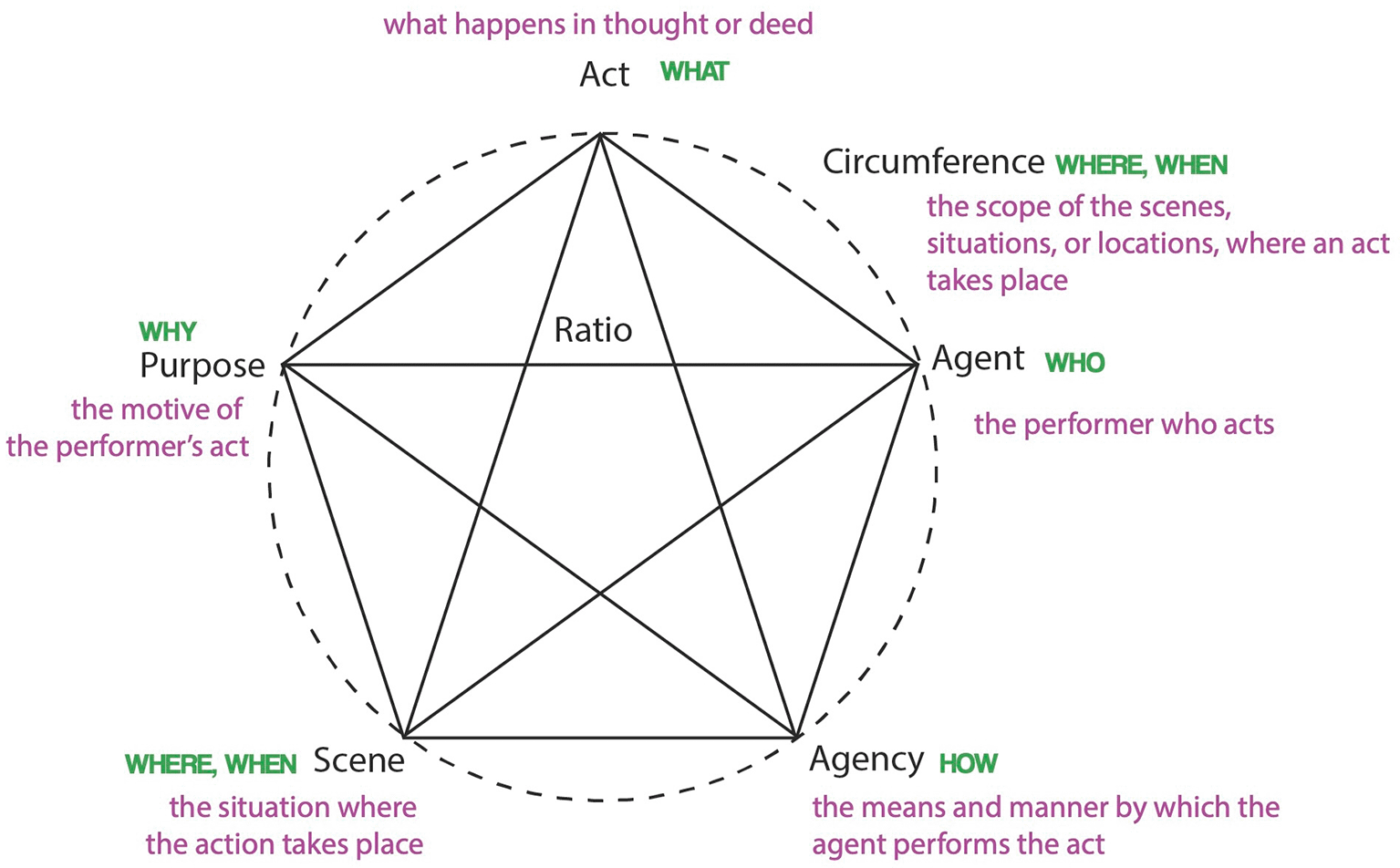
In communication studies, Burke’s pentad has been widely applied to analyze discourse, persuasive messages, social campaigns, and communication practices rich in symbolic meaning (Braca & Dondio, 2023). In computer science, dramatism assists the understanding of human motives in interacting with media and computer technology (Wahyurini, 2021). The framework enables researchers to examine how messages are constructed, who functions as the primary communicator, and which values or ideologies are conveyed to the audience (Bakir et al., 2018).
The application of dramatistic theory in environmental communication studies remains relatively limited, but it offers strong analytical potential (Salnikova et al., 2022). This approach allows for a deeper understanding of conservation communication as symbolic action influenced by social and cultural contexts. Within the context of conservation, scenes reflect the ecological, social, and cultural conditions in which conservation activities take place (Kunchamboo et al., 2021). Agents represent the actors involved, such as conservation organizations, traditional leaders, and local communities. Agency refers to the communication media and strategies employed, and act denotes the conservation activities themselves (Overington, 1977). Purpose relates to the intended outcomes, including awareness raising, behavioral change, and environmental sustainability (Tran et al., 2022). The dramatistic perspective highlights that conservation communication is not a neutral process but is instead embedded with values, interests, and power relations (Winkler-Schor et al., 2020). Through pentadic analysis, researchers can reveal how conservation messages are constructed, negotiated, and interpreted in specific social contexts.
The pentad may also be applied to very specific communicative acts to raise questions about future actions or strategic decision-making. For example, to raise awareness of impending hatching season of leatherback turtles, a conservation organization (the agent) might act by placing a brochure (the agency) on a boat (the scene) to raise awareness in the community (the purpose). The analysis does not stop there, of course. We can ask questions about the scene: is a commuter boat the proper scene for placement of a conservation brochure? Which particular boat? Is a brochure the best agency for delivering the message? If so, how should the information be conveyed? Words? Images? A combination? What are some alternatives? Might there be other places or times to raise awareness, such as community events or other gatherings? When and where (the scene) should the message be delivered? Just on a boat and during a particular period? Or year round? Should other agents convey the message besides the conservation organization, such as community members? Young people? The pentad helps communicators imagine alternatives that may provide better solutions.
Based on a literature review, this study conceptualizes conservation communication as a social practice shaped by the interaction between context, actors, media, and objectives. The dramatistic pentad framework was employed to systematically analyze these dynamics (Overington, 1977).
In this study:
• Act refers to leatherback turtle conservation activities.
• The scene encompasses the social, cultural, and geographical conditions of Jeen Womom.
• Agents include conservation organizations, traditional leaders, religious leaders, and local communities.
• Agency refers to communication media and message delivery strategies.
• Purpose relates to conservation goals and behavioral change among community members.
This framework was used to analyze how conservation messages are constructed and how communication processes shape community participation in leatherback turtle conservation efforts.
This study employed a qualitative research approach with a case study design. The qualitative approach was selected because the study aims to gain an in-depth understanding of the meaning-making processes involved in conservation communication rather than measuring relationships between variables quantitatively (Fischer et al., 2024). The case study design allows for an in-depth exploration of leatherback turtle conservation communication within a specific social and cultural context, namely, the Jeen Womom Coastal Protected Area in West Papua. This approach enables researchers to examine communication practices contextually, including how conservation messages are constructed, conveyed, and interpreted by actors involved in community-based conservation activities (Kolandai-Matchett & Armoudian, 2020) (Curtis et al., 2012).
The study was conducted in the Jeen Womom Coastal Protected Area in West Papua, which is recognized as one of the primary nesting sites for leatherback turtles in the western Pacific region. This area was selected because of its strong socio-cultural characteristics and its role as a site for various community-based conservation programs.
The research participants consisted of:
1. Conservation organizations involved in leatherback turtle protection programs.
2. Traditional leaders, religious leaders, and local community figures.
3. Coastal community members engaged in conservation activities.
4. Communication media and campaign materials used in conservation programs.
Data were collected through in-depth interviews, field observations, and communication media analysis. In-depth interviews were conducted with local community members, traditional leaders, religious leaders, conservation practitioners, and relevant stakeholders involved in leatherback turtle conservation in Jeen Womom. These interviews aimed to capture the participants’ perspectives on conservation practices, communication processes, and the meanings attached to conservation activities within the local sociocultural context.
Field observations were conducted to document conservation activities, community education programs, and communication practices implemented in the study area. This was complemented by an analysis of the communication media used in conservation campaigns, including posters, leaflets, educational materials, and other forms of visual communication. The use of multiple data sources enabled a more comprehensive understanding of conservation communication practices and enhanced the validity of the findings through triangulation.
The participants in this study were selected using a purposive sampling technique, which is appropriate for qualitative research aiming to obtain rich and relevant information from individuals who possess direct experience and knowledge related to the research context. The selection criteria focused on participants who are actively involved in or have significant influence on leatherback turtle conservation practices and communication processes within the Jeen Womom Coastal Protected Area. The participants included representatives from conservation organizations, traditional and religious leaders, local community figures, and coastal community members engaged in conservation activities. In addition, non-human data sources such as communication media (e.g., posters, leaflets, and educational materials) were also treated as analytical units to complement human perspectives. The inclusion of diverse participant groups enabled the study to capture multiple viewpoints and ensured a holistic understanding of conservation communication practices within the local socio-cultural setting.
The research procedure was conducted in several stages. First, pre-fieldwork preparation involved identifying key stakeholders, obtaining research permits, and establishing initial contact with local authorities and community leaders to ensure ethical and culturally appropriate engagement. Second, during the data collection phase, in-depth interviews and field observations were carried out iteratively. Interviews were conducted in a semi-structured manner, allowing flexibility to explore emerging themes while maintaining alignment with the research objectives. Observations were undertaken concurrently to document real-time conservation activities and communication practices. Third, the study employed an iterative and reflexive process, where preliminary findings from interviews and observations informed subsequent data collection. This allowed the researcher to refine questions, probe deeper into emerging issues, and ensure data saturation. Finally, all collected data were systematically organized, transcribed, and prepared for analysis.
Throughout the research process, ethical considerations were strictly maintained. Informed consent was obtained verbally from all participants prior to data collection. Verbal consent was deemed appropriate due to the socio-cultural context of the local community, where formal written agreements may not be commonly practiced and could potentially create discomfort or distrust among participants. Before obtaining consent, the researcher clearly explained the purpose of the study, the voluntary nature of participation, the participants’ right to withdraw at any time, and the measures taken to ensure confidentiality and anonymity. Participants’ agreement to take part in the study was documented by the researcher.
The study also received ethical approval from the Directorate of Research and Community Service (DRPM) of Institut Teknologi Sepuluh Nopember, with approval number 7632/IT2.IV.1/B/TU.00.09/IV/2026. All procedures were conducted in accordance with applicable ethical standards, while ensuring confidentiality and full respect for local cultural norms. This procedural rigor enhances the credibility and trustworthiness of the study findings.
Informed consent was obtained verbally from all participants prior to their involvement in this study. Verbal consent was considered appropriate due to the socio-cultural context of the local community, where formal written agreements are not commonly practiced and may create discomfort or distrust among participants. Before obtaining consent, the researcher clearly explained the purpose of the study, the procedures involved, the voluntary nature of participation, and the participants’ right to withdraw at any time without consequence. Participants were also assured of the confidentiality and anonymity of their responses.
Data analysis was conducted using Kenneth Burke’s dramatistic pentad approach, which consists of five key elements:
1. Act – conservation activities carried out
2. Scene: the social, cultural, and geographical context in which conservation takes place;
3. Agent: actors involved in conservation communication
4. Agency: Media, strategies, and modes of message delivery
5. Purpose: Goals or motives underlying conservation communication activities.
The data were analyzed by identifying each pentadic element and examining the relationships among them (pentadic ratios) to reveal the dominant motives in conservation communication. This approach was employed to understand how conservation messages are constructed and how meaning is produced in coastal community contexts.
To ensure data trustworthiness, source and method triangulation were applied. Data obtained from observations, documentation, and media analyses were cross-checked to ensure consistency. In addition, data interpretation was conducted reflexively by considering the local social and cultural contexts to ensure that the findings accurately reflect field realities.
To understand how leatherback turtle conservation messages are constructed and implemented within coastal communities, this study employs Kenneth Burke’s dramatistic pentad framework. This approach enables a systematic analysis of the relationships between conservation actions, social contexts, actors, communication media, and the intended objectives of conservation efforts. Based on the results of the analysis, the relationships among the elements of the pentad are summarized in Table 1. The table presents how each element—act, scene, agent, agency, and purpose—operates within the context of leatherback turtle conservation communication in the Jeen Womom Coastal Area.
Table 1 shows that conservation activities (act) in Jeen Womom are strongly influenced by the surrounding social and cultural contexts (scene). Limited accessibility, geographical conditions, and strong customary values shape conservation practices differently across regions. Conservation is not implemented as a purely technical or externally driven program but is practiced as an integral part of the community’s everyday life.
This act–scene relationship indicates that the effectiveness of conservation efforts largely depends on the ability of programs to adapt to the local context. Consequently, conservation communication cannot be separated from an understanding of the social structure and cultural values of these communities. Conservation strategies that do not consider these contextual factors are less likely to achieve long-term sustainability.
The analysis revealed that traditional leaders and local community members function as the primary agents of conservation communication. Their presence provides social legitimacy to the messages being conveyed. The conservation organization’s role is to strengthen the community’s capacity to lead and sustain conservation initiatives. The communication media (agencies) employed are generally simple and community-oriented, such as face-to-face communication, locally produced printed materials, and community-based activities. These forms of media have proven to be more effective than technology-intensive approaches because they align with local communication patterns and social interactions. The agent–agency relationship demonstrates that successful communication is not determined by the sophistication of media technologies but by the alignment between the communicator, message, and social context. Trust, cultural relevance, and accessibility are key factors in ensuring effective conservation communication.
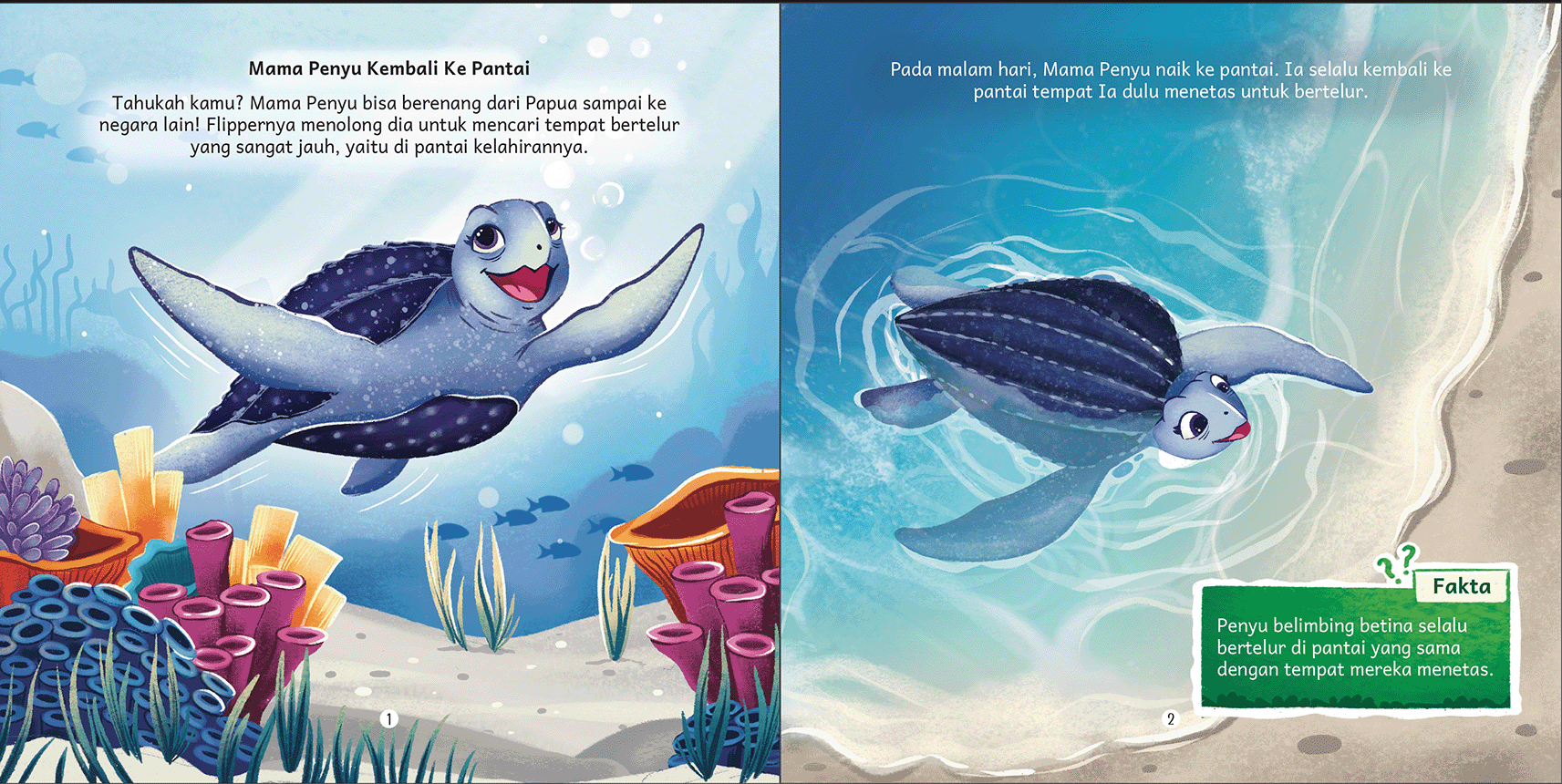
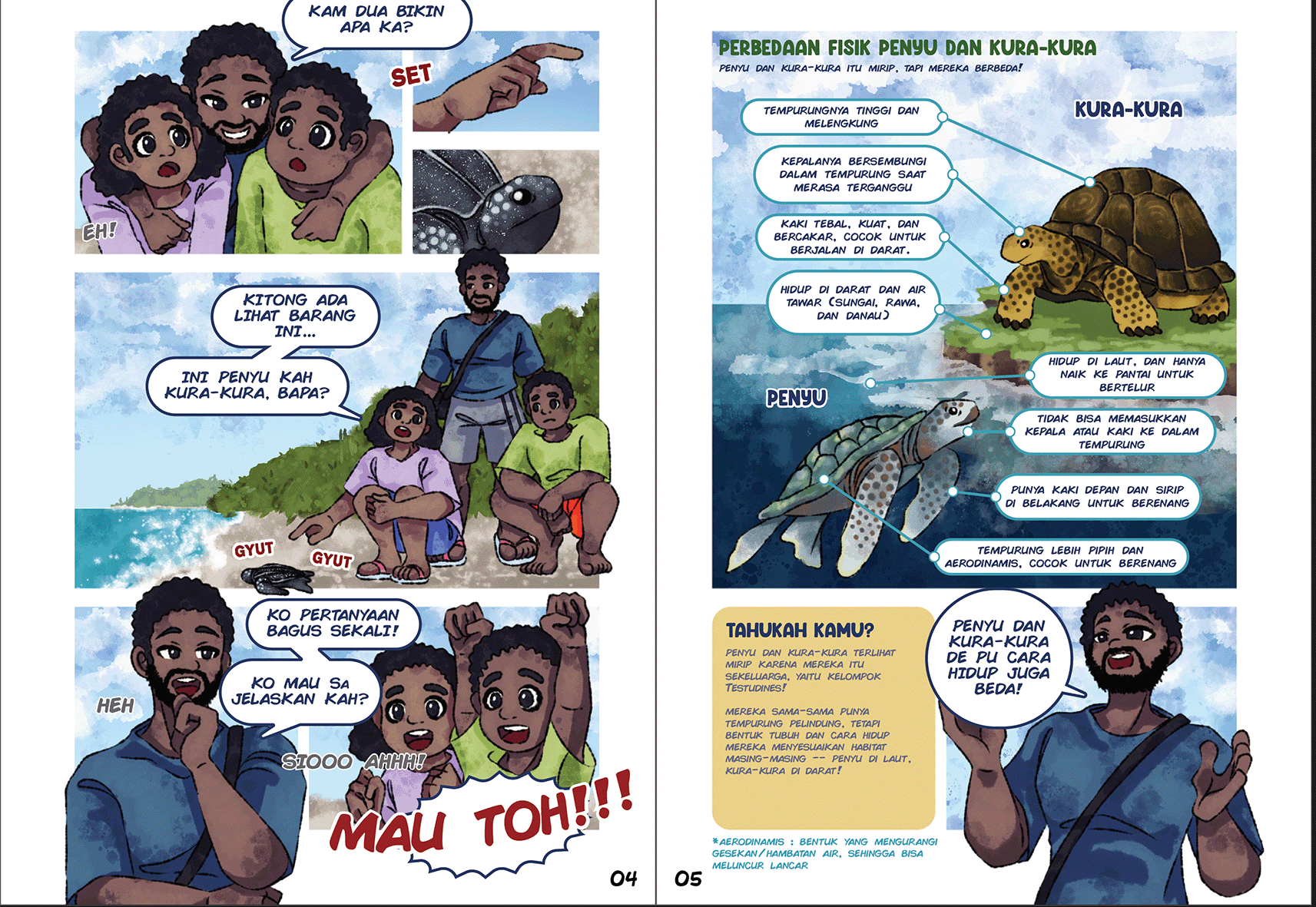
Educational materials, including a visual book and a comic, were adapted from a comprehensive leatherback turtle conservation handbook (see Figure 2 and Figure 3). The former utilizes a narrative approach—following the journey of a turtle named Penbi—to engage primary students (ages 7–12). From the perspective of Burke’s dramatism, this visual narrative emphasizes the scene (the community) and utilizes an agency-scene ratio to advocate for conservation as a primary purpose. Conversely, the comic book targets high school students through instructional content focused on biology and specific conservation strategies. This medium highlights collaborative conservation efforts by exploring complex Pentadic relationships, specifically agent-scene, agent-agency, and agency-scene ratios.
The purpose of conservation communication extends beyond increasing knowledge or ensuring compliance with conservation regulations. Conservation is understood as a moral responsibility and a symbolic expression of respect for nature that has been passed down through generations. From a dramatistic perspective, conservation functions as a symbolic action that represents the harmonious relationship between humans and the environment. This awareness is developed through continuous communication processes involving dialogue, social practices, and the internalization of cultural values. As such, conservation communication is a medium through which collective meaning and long-term behavioral change are constructed.
The findings indicate that leatherback turtle conservation communication in the Jeen Womom Coastal Park cannot be understood merely as a process of information dissemination but rather as a socially embedded practice rich in symbolic meaning. Through the application of the dramatistic pentad, this study demonstrates that the effectiveness of conservation communication is strongly shaped by the interaction between social context (scene), local actors (agent), and modes of communication (agency).
The dominance of scenes in the findings highlights the significant influence of socio-cultural contexts in shaping conservation meanings. Local values, social structures, and human–nature relationships do not merely serve as background conditions; they actively determine how conservation messages are interpreted and accepted. This supports Burke’s view that human actions are inherently shaped by the dramatic situations in which they occur, indicating that conservation practices cannot be separated from their social realities and genuine human situations. Furthermore, the role of agents, particularly traditional leaders, religious leaders, and local communities, emerges as a crucial factor in conservation communication. These actors possess social legitimacy that surpasses formal authority, enabling them to effectively translate conservation values into culturally meaningful messages for the public. In this context, communication is dialogical rather than dogmatic, fostering a sense of ownership and collective responsibility for conservation efforts.
From the perspective of agency, the use of simple, culturally grounded communication media demonstrates that effectiveness does not depend on technological sophistication. Instead, communication succeeds when it resonates with local patterns and everyday experiences. This finding reinforces the notion that environmental communication should be rooted in the social realities of its audience rather than being driven by technocratic assumptions. Finally, the analysis of purpose reveals that conservation communication aims not only at knowledge transfer or behavioral compliance but also at cultivating moral awareness and a collective consciousness. Within the dramatistic framework, this purpose emerges through sustained interaction among actions, actors, and social contexts, resulting in a deeper and more enduring conservation commitment.
Theoretically, this study extends the application of the dramatistic pentad in environmental communication research, an area where its use remains limited. Practically, the findings underscore the importance of designing conservation communication strategies that are participatory, culturally embedded and socially grounded. Programs that overlook these dimensions risk resistance and reduced effectiveness in the long term. In this regard, conservation communication should be understood as an ongoing dialogue rather than a one-way transmission of messages. The dramatistic approach offers a robust analytical framework for capturing this complexity and provides valuable insights into developing more humane, contextual, and sustainable conservation communication strategies.
This study demonstrates that leatherback turtle conservation communication in the Jeen Womom Coastal Park cannot be understood merely as a process of information dissemination but rather as a social practice embedded with symbolic meaning. Through the application of the dramatistic pentad, the study reveals that the construction of conservation messages is strongly influenced by the relationship between social context (scene), local actors (agent), communication media (agency), and conservation objectives (purpose).
The findings indicate that the socio-cultural context of coastal communities plays a dominant role in determining the effectiveness of conservation communication strategies. Customary values, social structures, and the community’s relationship with the natural environment shape the interpretation and acceptance of conservation messages. In this regard, traditional leaders and local community members emerge as key actors who possess social legitimacy in conveying and interpreting conservation messages to the community. The communication media employed also tend to be simple, contextual, and interaction-based, which are more effective than technocratic or top-down communication approaches. From a dramatistic perspective, this study highlights that conservation constitutes symbolic action representing the relationship between humans, culture, and nature. Conservation communication is therefore not solely directed toward increasing knowledge but also toward fostering collective awareness and long-term behavior change. Accordingly, the success of conservation initiatives depends largely on the ability of communication processes to construct shared meanings, rather than merely transmitting normative messages.
Theoretically, this study contributes to the expansion of dramatistic theory within the field of environmental communication, particularly in the context of community-based conservation. This demonstrates that the dramatistic approach is effective in revealing the symbolic, cultural, and relational dimensions of conservation communication, which have received limited attention in conventional studies. The findings have important implications for the design of conservation communication strategies. Conservation programs should be developed in a participatory manner, actively involving local actors as key communicators and aligning communication strategies with local socio-cultural contexts. Approaches that overlook these dimensions risk undermining the long-term sustainability of such efforts. As a limitation, this study focused on a single site and specific social contexts. Future research may adopt comparative approaches across different regions or integrate dramatic analysis with quantitative methods to further enrich our understanding of conservation communication effectiveness in diverse social settings.
Zenodo. Extended Data: Appendix Materials for ‘How Conservation Messages Are Constructed: A Dramatistic Pentad Study of Leatherback Turtle Conservation in Papua, Indonesia’. https://doi.org/10.5281/zenodo.21397685 (Wahyurini et al., 2026). This repository contains both underlying data and extended data supporting the findings reported in this study. The dataset is openly available under the Creative Commons Attribution 4.0 International (CC BY 4.0) license. This project contains the following extended data:
• Interview Guides – a comprehensive set of semi-structured interview protocols designed for multiple stakeholder groups, including local communities, tourists, conservation practitioners, and ferry crew members. These instruments were developed to explore perceptions, communication practices, and socio-cultural dimensions of leatherback turtle conservation.
• Anonymized qualitative interview transcripts from community members, tourists, ferry crew members, and conservation stakeholders
• Focus Group Discussion (FGD) raw transcripts
All datasets necessary to replicate the study’s findings are included in the repository.
The authors would like to express their deepest gratitude to the Indonesian Endowment Fund for Education (LPDP), under the Ministry of Higher Education, Science and Technology of the Republic of Indonesia, for the generous financial support provided through the EQUITY Program (Contract No. 4299/B3/DT.03.08/2025 and No. 3029/PKS/ITS/2025). Sincere appreciation is also extended to the Blue Abadi Fund (Contract No. 015/005/BAF/BG-5/II/2025) and the Whitley Fund for Nature for their invaluable support in making this research possible.
The funders had no role in study design, data collection and analysis, decision to publish, or preparation of the manuscript.
© 2026 Wahyurini OD et al. This is an open access article distributed under the terms of the Creative Commons Attribution License, which permits unrestricted use, distribution, and reproduction in any medium, provided the original work is properly cited.
Current Reviewer Status:
AWAITING PEER REVIEW
AWAITING PEER REVIEW
?
Key to Reviewer Statuses VIEW HIDE
ApprovedThe paper is scientifically sound in its current form and only minor, if any, improvements are suggested
Approved with reservations A number of small changes, sometimes more significant revisions are required to address specific details and improve the papers academic merit.
Not approvedFundamental flaws in the paper seriously undermine the findings and conclusions