Просмотр новости
Найдите то, что Вас интересует
 Спутники
 РН
РН SpaceX
 Роскосмос
 NASA
NASA
СпутникиРНSpaceXРоскосмосNASAIntroduction Teacher quality is widely recognized as a key determinant of educational quality and student learning outcomes. Consequently, improving teacher quality has become a central focus of education policies worldwide. However, evidence regarding the effectiveness of these policies and the challenges associated with their implementation remains fragmented. This study systematically reviews the development of research, policy types, effectiveness, and implementation challenges related to teacher quality improvement policies by addressing four research questions (RQ1–RQ4). Methods A Systematic Literature Review (SLR) was conducted following the PRISMA 2020 guidelines. Articles were retrieved from the Scopus database using predefined search terms. Of the 70 records initially identified, 25 studies met the inclusion criteria and were analyzed through thematic synthesis to address the research questions. Results Research on teacher quality improvement policies has expanded considerably, particularly during 2023–2026 (RQ1). The identified policies were categorized into four main areas: continuous professional development, collaborative practice-based approaches, digital competency enhancement, and academic supervision and quality management (RQ2). Most studies reported positive outcomes, especially for lesson study, professional development programs, and academic supervision initiatives. Nevertheless, the evidence is largely based on short-term studies, limiting conclusions regarding long-term effectiveness (RQ3). Major implementation challenges include the digital divide, inadequate infrastructure, limited institutional support, and unequal access to professional development opportunities, particularly in rural and developing-country contexts (RQ4). Conclusion Teacher quality improvement policies demonstrate considerable potential to enhance professional competence and instructional quality. However, stronger empirical evidence from longitudinal and controlled studies, together with more equitable implementation strategies, is needed to ensure sustainable and inclusive policy outcomes.
Teacher quality is consistently regarded as one of the primary determinants of educational quality, and this claim has been repeatedly affirmed by the literature across diverse geographical contexts and research paradigms. A number of studies identify improving teacher quality as the key to student learning outcomes,16,63,68 and teacher professional development has been shown to be directly linked to the self-efficacy that underpins teaching quality.8 The importance of this is further underscored by the endorsement of international bodies such as UNESCO and the Council of Europe, which position continuous professional development as the foundation of educational quality.52 Concerns regarding educational quality are not merely qualitative; results from international assessments, such as PISA, reveal learning outcomes that fall below average and drive the discourse on educational reform.27 The consistency of these claims across various countries and educational levels constitutes stronger academic evidence than a single report, positioning teacher quality not as a local issue but as a problem that transcends contextual boundaries.
The cross-border nature of this issue is evident in the diversity of policy responses across countries with vastly different backgrounds. The Chinese government has implemented massive teacher professional development programs,4 while integrated Islamic schools in Indonesia have developed institutional innovations to meet the demand for high-quality graduates.29 In resource-constrained contexts, teacher training institutions in rural Liberia strive to address the scarcity of qualified teachers,53 and teacher professional development agencies in Kyrgyzstan conduct institutionalized in-service training.64 Even in other Southeast Asian contexts, the teaching competencies of elementary school teachers are the focus of systematic assessment as part of quality assurance efforts.38 The diversity of responses emerging from such vastly different contexts underscores that improving teacher quality has become a shared policy agenda across nations.
Nevertheless, the true urgency lies not in the novelty of the issue but in the fact that the various programs implemented have yet to demonstrate consistent results. In Pakistan, numerous development programs have been implemented, yet the quality of teachers in public schools remains a concern,5 while routine professional development is deemed to offer no significant contribution to improvement.35 Even in the literature that emphasizes the centrality of teacher quality, the gap between policy calls and evidence of impact is openly acknowledged.16 It is this uncertainty—and not merely the importance of the issue—that makes a systematic review of the effectiveness of teacher quality improvement policies relevant.
In response to these issues, research on improving teacher quality has expanded significantly. A thematic review of trends and strategies in teacher professional development has been conducted in the context of STEM,4 while a competency-based model of continuous professional development has been developed for junior high school teachers.35 At the higher education level, the effectiveness of faculty development programs has been evaluated, highlighting the uneven distribution of formal training.13 A systematic review accompanied by a meta-analysis of faculty development programs in the health field has further enriched the development of review methodologies.67 These developments indicate that efforts to measure and manage teacher quality have been carried out in a structured manner across various levels of education.
In addition to these mainstream models, a variety of alternative approaches and innovations continue to emerge. The CDIO framework has been applied in the management of elementary school teacher training programs,31 a heutagogy-based professional development model has been piloted in Indonesia,46 and community-based academic supervision has been developed as a teacher development strategy.42 The Lesson Study methodology is used to build teacher competencies,68 while various hybrid professional development models are reviewed within a single framework.49 This diversity of approaches demonstrates that the field of teacher quality improvement research has matured, yet its development remains scattered across fragmented subdomains.
Behind this rapid development, a number of limitations and inconsistencies are still openly acknowledged by the existing literature. At the methodological level, there remains a striking gap in large-scale quantitative research,16 while the effectiveness of in-service training programs across various contexts has not been sufficiently studied.64 At the outcomes level, there is inconsistency between policy inputs and actual impacts: many professional development programs have been implemented, yet teacher quality remains problematic,5 and teacher quality management programs demonstrate inconsistent effectiveness across all competency levels.37 Such inconsistencies make it difficult to draw general conclusions about what is truly effective.
Another issue arises regarding the gap between policy design and implementation, as well as the lack of synthesis at a higher level. Supervision practices, for example, remain dominated by administrative functions and fail to support teachers’ professional development,42 while systemic barriers under resource constraints have not been effectively addressed.53 Even at the synthesis level, the literature is still considered to lack a comprehensive review of existing models.49 Thus, the problem lies not only in whether a program is effective, but also in the failure to weave scattered evidence into a coherent whole.
This gap becomes even more apparent when examining the scope of existing systematic reviews. The available reviews are generally narrow in scope and limited to a specific domain or context: some are limited to STEM,4 to socio-emotional competencies alone,61 or to higher education in the health sector, excluding primary and secondary levels.67 Several important contexts remain underrepresented, such as religion-based education,29 resource-constrained developing countries,53 and the effectiveness of programs at the institutional level.64 The absence of a comprehensive cross-contextual review is even explicitly acknowledged in the literature,49 meaning that the effectiveness of teacher quality improvement policies across educational contexts has never been systematically summarized.
To address this gap, this study conducts a systematic literature review on the effectiveness and implementation of teacher quality improvement policies. In this study, the term “teacher quality improvement policies” is broadly defined to encompass not only regulations and systemic reforms but also programs, training models, and institutional interventions intentionally designed to enhance teachers’ competencies and performance; this scope is adopted to align with the characteristics of the available literature. This study aims to synthesize scattered evidence to map the types of policies that have been implemented,42,35 assess evidence of their effectiveness,52,37 and identify challenges and gaps in their implementation.5 Its primary contribution is to provide a comprehensive, cross-contextual synthesis that has not previously been available,49 serving as a reference for policymakers, program managers, and future researchers. To achieve these objectives, this study is guided by the following four research questions: RQ1. What are the trends in publications, geographical distribution, and research methods in studies on teacher quality improvement policies? RQ2. What types of teacher quality improvement policies are implemented in various educational contexts? RQ3. What is the evidence of the effectiveness of teacher quality improvement policies? RQ4. What are the challenges and gaps in the implementation of teacher quality improvement policies?
This study employs a systematic literature review (SLR) using the PRISMA (Preferred Reporting Items for Systematic Reviews and Meta-Analyses) approach to analyze Effectiveness and Implementation of Teacher Quality Improvement Policies. The PRISMA method is widely recognized as a structured and transparent framework for identifying, screening, and selecting relevant studies, ensuring methodological rigor and minimizing bias in the review process.71
The literature search was conducted using the Scopus database, covering publications from 2020 to 2026 to ensure comprehensive coverage of relevant studies. This broad search strategy allows for capturing Effectiveness and Implementation of Teacher Quality Improvement Policies.
However, to maintain the relevance and timeliness of the findings, only studies published between 2020 and 2026 were included in the final analysis based on predefined inclusion and exclusion criteria. This two-stage selection process ensures both comprehensive coverage and a focus on the most recent developments in teacher quality improvement policy research.
A systematic literature review was conducted to answer research questions about Effectiveness and Implementation of Teacher Quality Improvement Policies. The research questions focused on:
RQ1. What are the trends in publications, geographical distribution, and research methods in studies on teacher quality improvement policies?
RQ2. What types of teacher quality improvement policies are implemented in various educational contexts?
RQ3. What is the evidence of the effectiveness of teacher quality improvement policies?
RQ4. What are the challenges and gaps in the implementation of teacher quality improvement policies?
This review employed a systematic search strategy using the Scopus database, as they are recognized as comprehensive sources of high-quality peer-reviewed literature. The search was conducted in January 2026 and covered publications from 2020 to 2026.
The initial database search yielded 420 records from Scopus. After removing 35 duplicate records, 385 studies remained for title and abstract screening. A total of 270 studies were excluded because they did not meet the inclusion criteria. Subsequently, 115 full-text articles were assessed for eligibility, resulting in the exclusion of 45 articles. Finally, 70 studies were included in the systematic review. To ensure the robustness of the findings, a quality assessment was conducted, and 25 high-quality studies were selected for in-depth synthesis regarding the effectiveness and implementation of teacher quality improvement policies. And explained at Table 1. Search Keywords and Boolean String. The search keywords and Boolean string used in this review are presented in Table 1.
Boolean string
("teacher quality" OR "teacher competence" OR
"teacher professionalism" OR "teacher effectiveness")
AND
("education policy" OR "teacher policy" OR
"teacher development policy")
AND
(implementation OR adoption OR execution)
AND
(effectiveness OR impact OR outcome)
The research questions were based on the keywords “teacher quality”, “teacher professional development”, “education policy”, “systematic literature review”, “PRISMA” with the criteria of English-language papers with complete text published between 2020 and 2026. The selection of papers that met these criteria used the inclusion and exclusion methods described in Table 2.
Through systematic database searches, a total of 420 articles were initially identified. These articles were then filtered based on publication year (2020–2026), language, and relevance to the research keywords, resulting in a refined selection for further screening. The PRISMA flow diagram illustrating the identification, screening, eligibility assessment, and inclusion process is shown in Figure 1.
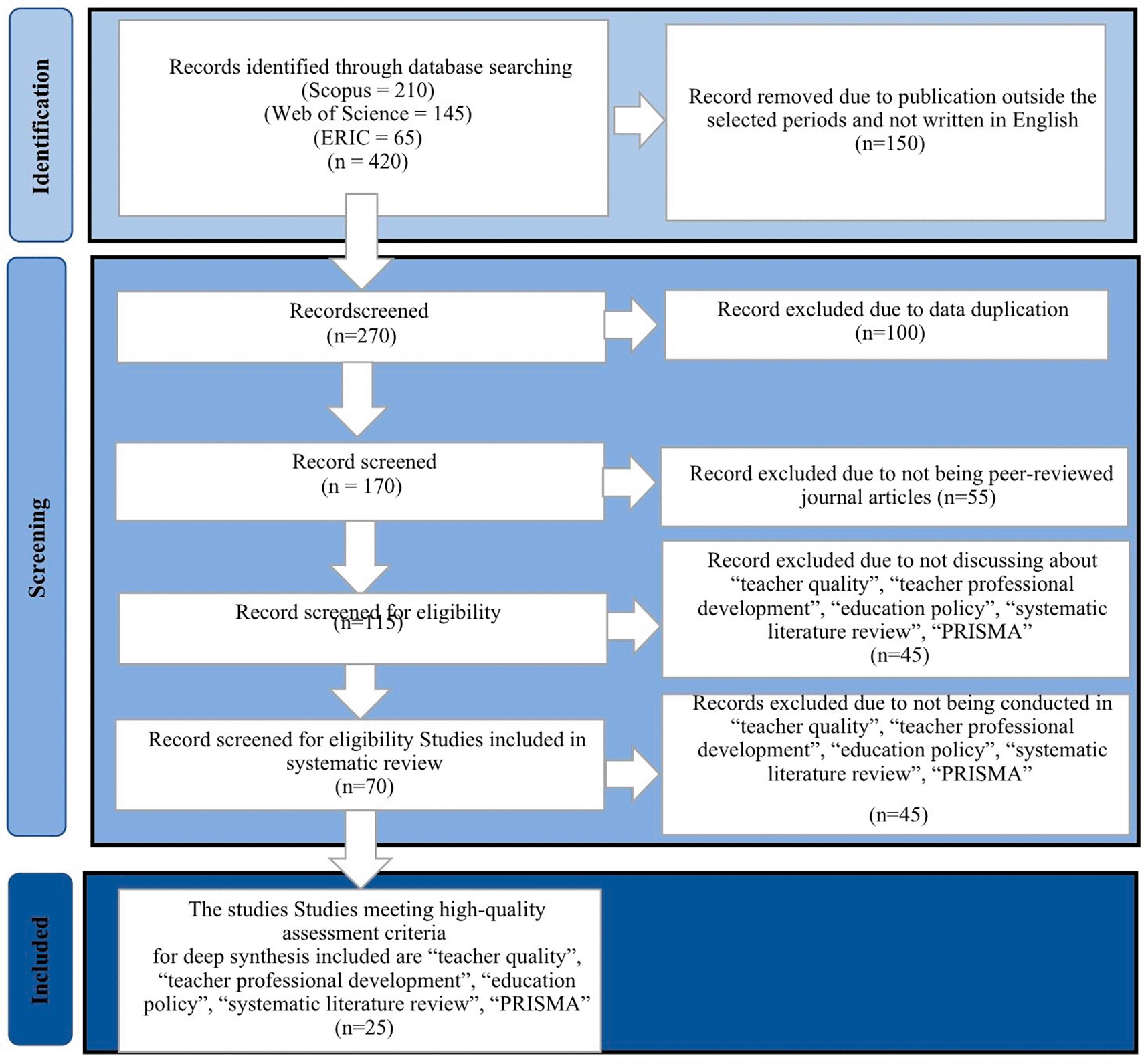
Figure 1 shows 25 selected articles on Effectiveness and Implementation of Teacher Quality Improvement Policies based on journal publication years from 2020 to 2026. The PRISMA flow diagram adopted in this study follows the framework presented by71 which illustrates the systematic process of article identification, screening, eligibility assessment, and final inclusion. The inclusion and exclusion criteria applied during study selection are summarized in Table 2.
Analyzing selected articles
The systematic search initially identified 420 articles published between 2020 and 2026 across selected databases. After removing duplicates and applying inclusion and exclusion criteria, 70 articles were screened.
Further screening based on relevance resulted in 385 articles being assessed for feasibility. Subsequently, 70 articles were evaluated for eligibility through full-text review. Finally, 25 articles were included in the analysis, ensuring that the selected studies were highly relevant and aligned with the research objectives. The distribution of the 25 included articles across each research question is summarized in Table 3. The detailed list of the 25 final inclusion articles is presented in Table 4.
This study has several limitations. First, the search utilized only one database (Scopus), so relevant articles from other databases (e.g., Web of Science, ERIC) may not have been identified. Second, the language and time-frame restrictions may introduce selection bias toward certain literature. Third, the synthesis is qualitative in nature and therefore does not produce combined effect estimates as a meta-analysis would. These limitations should be considered when interpreting the results.
To ensure the methodological rigor of the included studies, a quality assessment was conducted using the Mixed Methods Appraisal Tool (MMAT) 2018. The MMAT was selected because the reviewed studies employed diverse research designs, including qualitative, quantitative, and mixed-methods approaches.
Each study was assessed based on five methodological criteria relevant to its design. The quality assessment process was conducted independently by two reviewers. Any disagreements were resolved through discussion until consensus was reached.
Studies were classified into three quality categories High quality (80–100%), Moderate quality (60–79%), Low quality (<60%). No studies were excluded solely based on quality scores; however, the quality assessment results were considered during the interpretation of findings. The percentage of quality assessment explained at Table 10.
Publication bias was considered during the review process. To minimize reporting bias, comprehensive search terms were applied within the Scopus database, and both positive and negative findings were considered during data extraction and synthesis.
A formal certainty assessment such as GRADE was not conducted because the included studies employed heterogeneous methodologies and outcome measures that were not suitable for quantitative evidence grading.
This section synthesizes 70 articles identified through a systematic search of the Scopus database. Of these, 25 were selected as core studies most relevant to the research questions. The results are organized according to the four research questions (RQ1–RQ4) which are RQ1. What are the trends in publications, geographical distribution, and research methods in studies on teacher quality improvement policies? RQ2. What types of teacher quality improvement policies are implemented in various educational contexts? RQ3. What is the evidence of the effectiveness of teacher quality improvement policies? RQ4. What are the challenges and gaps in the implementation of teacher quality improvement policies?
A review of 70 articles shows a substantial increase in research on teacher-quality improvement policies from 2020 to 2026. The annual distribution of publications reveals a marked upward trend which 6 articles in 2020, 1 in 2021, 6 in 2022, 7 in 2023, 12 in 2024, 26 in 2025, and 12 in 2026, with some 2026 articles still in early publication status. The pronounced surge in 2024 and 2025 suggests that teacher quality improvement has become a focal point of academic inquiry, corresponding with the rapid digital transformation and heightened post-pandemic expectations for teacher professionalism. The annual publication trend from 2020 to 2026 is presented in Table 5, showing a substantial increase in publications, particularly in 2024 and 2025.
The focus of research has shifted from teachers social emotional competencies2,11,61 to contemporary topics such as the integration of digital skills and artificial intelligence in teacher professional development.4,23,65 Recent studies on STEM-based professional development4 and hybrid models of continuous professional development49 illustrate current directions that combine pedagogical content with technological advancements. The diversity of publication sources, including journals such as Humanities and Social Sciences Communications, Teaching and Teacher Education, and Computers and Education, demonstrates recognition of this topic across education, educational technology, and social science disciplines. The evolution of research focus in teacher quality improvement policy studies is summarized in Table 6, indicating a shift from social-emotional competencies toward digital skills, artificial intelligence integration, and hybrid professional development models. The key findings related to publication growth, shifts in research focus, digital transformation, interdisciplinary recognition, and emerging research directions are synthesized in Table 7.
The mapping results indicate that RQ2 encompasses the broadest scope and is addressed by the majority of the included articles. The identified policies and interventions can be categorized into several distinct groups.
3.2.1 Continuous Professional Development (CPD)
Several studies examine models of continuous professional development, such as structured programs,13 community-based CPD models,35 hybrid models that combine in-person and online components,49 and a heutagogical approach that emphasizes teachers’ self-directed learning.46 In-service training16 and faculty development programs67 are also prevalent policy forms in higher education contexts.
3.2.2 Collaborative Practice-Based Approaches
Lesson study is one of the most consistently examined approaches for improving teacher quality, in both mathematics teacher training3 and English language teacher training.24,68 The CDIO approach31 and the CIPO quality assurance model57 represent institutional and systemic policy frameworks.
3.2.3 Integration of Digital Competencies and Artificial Intelligence
An increasingly prominent category of policies focuses on strengthening teachers’ digital competencies. These include integrating digital skills into teaching,28,40 developing prospective teachers’ ICT competencies,33 integrating artificial intelligence in elementary education,10 utilizing cloud-based solutions in rural areas,50 and implementing the digital dual-teacher model.62 This trend demonstrates that digital transformation is now a central focus of contemporary teacher quality policies.
3.2.4 Academic Supervision and Quality Management
Another category of policies addresses supervision and quality management, including community-based academic supervision models,42 academic supervision models to improve teacher performance,52 reflective supervision,66 and quality improvement in teacher professional development.37 Studies examining barriers to educational supervision39 further indicate that supervision is regarded not only as a control mechanism but also as a means for professional development.
The reviewed studies reveal four major categories of policies and interventions aimed at improving teacher quality: (1) Continuous Professional Development (CPD), (2) Collaborative Practice-Based Approaches, (3) Digital Competencies and Artificial Intelligence Integration, and (4) Academic Supervision and Quality Management. Among these categories, digital competency development and AI integration have emerged as prominent contemporary trends, reflecting the growing importance of digital transformation in education. Meanwhile, CPD programs and lesson study remain the most widely implemented approaches due to their demonstrated effectiveness in fostering sustainable professional growth and improving teaching practices. The policies and interventions for improving teacher quality identified in the reviewed studies are summarized in Table 8, covering continuous professional development, collaborative practice-based approaches, digital competencies and artificial intelligence integration, and academic supervision and quality management.
The third research question investigates empirical evidence concerning the effectiveness of implemented policies. Overall, studies addressing RQ3 indicate positive impacts, although the strength of evidence varies.
Professional training and development are reported to enhance teachers’ self-efficacy and professional capacity.8,16 Visual literacy training22 and the integration of digital skills28 are associated with improved teaching performance and quality. Additionally, studies on digital teaching skills40 demonstrate a strong positive correlation with learning quality in higher education. The empirical evidence on the effectiveness of teacher quality policies and interventions is presented in Table 9, which shows that most interventions reported positive outcomes, although the strength of evidence varied across study designs and contexts.
The lesson study approach is consistently identified as effective in enhancing teacher competencies.3,24,68 Academic supervision models42,52 and quality improvement management37 also contribute to improved teacher performance. Targeted interventions, including psychological well-being training,17 pedagogical management programs,54 and simulation-based learning,36 further support the conclusion that structured interventions produce measurable outcomes. However, as most studies employ short-term designs and limited sample sizes, generalizations regarding effectiveness should be approached with caution.
The reviewed studies consistently report positive outcomes from teacher quality policies and interventions. Professional training and development programs contribute to increased teacher self-efficacy, professional capacity, and instructional effectiveness. Digital competency initiatives, including digital skills integration and digital teaching skills development, demonstrate particularly strong impacts on teaching and learning quality. Collaborative approaches, especially lesson study, are repeatedly identified as effective mechanisms for enhancing pedagogical competence and reflective practice. The quality assessment results of the included studies are presented in Table 10. Furthermore, academic supervision and quality management systems support improvements in teacher performance and professional growth. Targeted interventions, such as psychological well-being training, pedagogical management programs, and simulation-based learning, also produce measurable benefits. Nevertheless, the overall strength of evidence remains moderate because many studies rely on short-term research designs and relatively small sample sizes, limiting the generalizability of findings across educational contexts. A summary of the main findings related to policy effectiveness is provided in Table 11.
The fourth research question examines the challenges and gaps encountered in implementing teacher quality improvement policies. The findings demonstrate that these barriers are multidimensional. The most significant challenges pertain to the digital divide and infrastructure, especially in rural and developing country contexts. The implementation of artificial intelligence is constrained by teacher readiness and infrastructure limitations,10,65 while the digital divide in rural China restricts equitable access to professional development.50 Comparable challenges have been identified in rural teacher training institutions in Liberia53 and in the development of dual competencies in digital teaching.62
At the systemic and institutional levels, recurring obstacles include technical barriers in educational supervision,39 quality assurance challenges in Vietnam,57 and institutional issues within teacher professional development organizations.64 Additional contextual factors involve the prioritization of cultural aspects in education,45 implementation barriers among midwifery educators,25 and concerns related to functional health literacy and teacher resilience.14,15 Studies addressing the practical implementation of the CDIO approach31 and perceptions of the quality of open online courses60 further underscore the gap between policy design and its practical implementation.
Research gaps: A synthesis across research questions reveals three primary gaps. First, the predominance of small-scale, short-term studies limits the available evidence on longitudinal effectiveness. Second, equitable access across regions, particularly in rural areas, remains insufficiently addressed by current policies. Third, the integration of technology, including artificial intelligence and digital tools, is advancing more rapidly than policy readiness and teacher capacity, creating an implementation gap that warrants further investigation.
From 70 identified articles, 25 were designated as core inclusions for their alignment with the inclusion criteria and strong relevance to the research questions on the implementation and effectiveness of teacher quality improvement policies. The implementation challenges and related research gaps are summarized in Table 12.
The findings reveal that challenges in implementing teacher quality improvement policies are multidimensional, encompassing digital, institutional, contextual, and implementation-related barriers. The most prominent challenges concern the digital divide, infrastructure limitations, and insufficient readiness for emerging technologies such as artificial intelligence. Furthermore, systemic issues related to supervision, quality assurance, and institutional capacity continue to hinder effective policy implementation. The synthesis also identifies three major research gaps: the lack of longitudinal evidence, persistent inequities in access to teacher development opportunities, and a growing mismatch between technological advancement and policy readiness. These gaps suggest important directions for future research and policy development.
The quality assessment indicated that most included studies demonstrated satisfactory methodological quality. Eighteen studies were classified as high quality, while seven studies were classified as moderate quality. No studies were categorized as low quality. Common methodological limitations included small sample sizes, short intervention periods, and reliance on self-reported measures.
The possibility of publication bias should be acknowledged. Studies reporting positive intervention outcomes are generally more likely to be published than studies reporting null or negative findings. Consequently, the overall effectiveness reported in this review may be somewhat overestimated.
Although the findings consistently indicate positive effects of teacher quality improvement policies, the overall certainty of evidence should be interpreted with caution due to methodological heterogeneity across studies. The major research gaps identified from the synthesis are presented in Table 13, including the lack of longitudinal evidence, equity and regional disparities, and the technology–policy readiness gap.
4.1.1 Theoretical implications
Regarding RQ1, the findings indicate that research on teacher quality improvement policies is a nascent and fragmented interdisciplinary field. Theoretically, this suggests the absence of an integrated conceptual framework linking policy types, mechanisms of effectiveness, and implementation conditions. This study contributes by providing an initial typology of policies (RQ2) that can serve as a basis for developing a more cohesive theoretical framework.
Regarding RQ2 and RQ3, the findings reinforce the idea that teacher professional development is most meaningful when embedded in practice (job-embedded), as seen in the consistency of lesson study and collaborative CPD models. However, since the evidence of effectiveness is still preliminary, this theoretical contribution should be presented as a refinement of hypotheses, not as a confirmation of the theory.
4.1.2 Practical implications
Building on the theoretical implications, for practitioners and educational institutions, the findings of RQ2 and RQ3 suggest that interventions based on collaborative practice (lesson study, reflective supervision) and continuous professional development should be prioritized, as they are most consistently associated with improvements in teacher competence. However, given the limitations of the underlying study design, implementation should be accompanied by internal evaluation mechanisms to verify effectiveness within each local context, rather than assuming it based on the results of other studies.
Furthermore, the findings of RQ4 imply that the success of digital competency enhancement programs depends heavily on prerequisite readiness infrastructure, access, and teacher capacity. Institutions are advised not to adopt technology-based interventions without first ensuring the supporting ecosystem is ready, particularly in rural schools or 3 T regions.
4.1.3 Policy implications
Turning to policy, for policymakers, the synthesis of RQ2–RQ4 highlights a mismatch between policy ambitions (particularly digitalization) and on-the-ground implementation readiness. The implication is that policies to improve teacher quality must incorporate assessments of implementation readiness and strategies for equitable access as integral components, not afterthoughts. Policies that focus solely on providing programs without ensuring the implementation conditions are met risk widening quality gaps between regions.
Moreover, since evidence of effectiveness remains limited (RQ3), large-scale policies should be preceded by controlled pilot tests with adequate evaluation before national adoption, so that resource allocation is evidence-based rather than based on assumptions.
4.2.1 Methodological limitations
Exclusive reliance on Scopus as a database may have led to the omission of relevant articles indexed in other sources, such as Web of Science or ERIC. Restrictions related to language and the selected time frame may have introduced bias toward specific types of literature. The qualitative and thematic approach employed in this review does not yield aggregated effect estimates, as a meta-analysis would.
4.2.2 Limitations of the findings
Regarding RQ1, the limited number of articles addressing trends, regions, and methods renders the overview of developments suggestive rather than comprehensive. For RQ3, most evidence of effectiveness is derived from short-term studies, small sample sizes, and self-reported data. The consistent pattern of positive results may also reflect publication bias; therefore, the findings related to effectiveness should not be broadly generalized. For RQ2 and RQ4, the predominance of studies conducted in developing countries limits the generalizability of these findings to other educational contexts.
Future research directions emerging from the identified gaps across the four research questions are summarized in Table 14.
For RQ1, broader bibliometric studies and methodological mapping that include multiple databases, as well as analyses of regional distribution and research methods, are necessary to provide a more comprehensive understanding of the field’s development.
For RQ2, future research should investigate the alignment between specific policy types and particular contexts, rather than assuming policies function as universal solutions. This approach may clarify why identical interventions yield varying impacts across different settings.
For RQ3, there is an urgent need for longitudinal studies and experimental or quasi-experimental designs with adequate sample sizes and objective outcome measures, rather than relying solely on self-reports. Additionally, meta-analyses should be conducted once a sufficient number of comparable studies are available.
For RQ4, implementation research should focus on rural contexts and the digital divide to identify prerequisites for success and develop strategies that promote equitable access.
This study systematically examines the effectiveness and implementation of teacher quality improvement policies by reviewing 25 included articles that passed all stages of the PRISMA screening process. Based on the four research questions, the following conclusions can be drawn.
First (RQ1), research on teacher quality improvement policies is a relatively young and rapidly developing field, with publications concentrated in the recent period. This indicates a high level of academic attention, while also suggesting that the accumulation of long-term evidence remains limited.
Second (RQ2), the implemented policies are highly diverse and can be grouped into four main categories: continuous professional development, collaborative practices, strengthening digital competencies, and supervision and quality management. This diversity underscores that teacher quality improvement is not a single policy but a collection of strategies whose effectiveness depends on their alignment with the context.
Third (RQ3), the evidence of effectiveness is generally positive, particularly regarding practice-based approaches; however, the strength of the evidence remains limited due to the prevalence of short-term designs, small sample sizes, and self-report measures. Therefore, the effectiveness of these policies is better interpreted as promising early indications rather than established conclusions.
Fourth (RQ4), implementation challenges are multidimensional, with the digital divide, infrastructure limitations, and institutional barriers being the most prominent obstacles. These challenges are most pronounced in technology-based policy categories and in contexts with limited resources.
This study reveals a mismatch between the ambition of policy designs and the readiness to implement them. Strengthening this area requires not only policy innovation but also more methodologically robust evidence of effectiveness and strategies for equitable access that ensure successful implementation across contexts. The theoretical, practical, and policy implications of these findings, along with the limitations and directions for future research, have been outlined in the previous chapter.
This systematic review was not registered.
No formal review protocol was published.
Figshare: Effectiveness and Implementation of Teacher Quality Improvement Policies: A Systematic Literature Review. DOI: https://doi.org/10.6084/m9.figshare.32599110.72
This project contains the underlying data supporting the findings of this systematic literature review, including the search strategy and Boolean string, screening records, PRISMA flow data, list of included studies, data extraction matrix, quality assessment results, thematic synthesis table, summary findings, identified research gaps, and source data used to support the tables and figure reported in the article.