Просмотр новости
Найдите то, что Вас интересует
 Спутники
 РН
РН SpaceX
 Роскосмос
 NASA
NASA
СпутникиРНSpaceXРоскосмосNASAResearch background In recent decades, venture capital (VC) has increasingly incorporated sustainability principles, reflecting the global shift toward environmentally and socially responsible investment. The alignment of VC with sustainability goals responds to the climate crisis, technological transformation, and social expectations for ethical finance. However, research on the VC–sustainability nexus remains fragmented across disciplines, requiring systematic mapping to clarify key trends and research gaps. This study aims to map the global evolution of VC research within the context of sustainability. It identifies publication trends, collaboration patterns, main thematic clusters, and emerging research areas to provide an integrated understanding of this growing field. Methods A mixed-methods bibliometric analysis was conducted using data retrieved from the Scopus database for the period 2002–2025. Analytical tools including RStudio and VOSviewer were applied to examine publication dynamics, co-authorship networks, and conceptual structures. The SPAR-4-SLR protocol was adopted to ensure methodological transparency and rigor. Discussion Results show that international collaboration—particularly among China, the United States, and the United Kingdom—drives sustainable innovation in the VC ecosystem. Three main clusters were identified: the theoretical evolution of VC, long-term policy and economic frameworks, and VC’s role in green entrepreneurship and sustainable technology. Research on emerging themes such as decentralized finance (DeFi), machine learning, and risk modeling remains limited. This study adds value by offering a systematic overview of the intellectual landscape and highlighting future research directions to strengthen VC’s contribution to global sustainability.

Kurniawati HD, Saefudin S, Parera FJ et al. Mapping the Global Landscape of Sustainable Venture Capital: A Bibliometric Analysis of Research Evolution and Collaboration Networks [version 2; peer review: 1 approved with reservations]. F1000Research 2026, 15:951 (https://doi.org/10.12688/f1000research.180535.2)
Systematic Review
Revised
[version 2; peer review: 1 approved with reservations]
Hasni Dyah Kurniawati1, Saefudin Saefudin
https://orcid.org/0000-0001-6196-9753
1,2, Fernando J Parerahttps://orcid.org/0009-0008-9902-1317
2, [...] Nurlyana Puspitasari3, Florentina Ika Krisna Puspitasari3, Nurul Fatha Rani3, Dhiny Diyah Pradipta3Hasni Dyah Kurniawati1, Saefudin Saefudin
https://orcid.org/0000-0001-6196-9753
1,2, [...] Fernando J Parerahttps://orcid.org/0009-0008-9902-1317
2, Nurlyana Puspitasari3, Florentina Ika Krisna Puspitasari3, Nurul Fatha Rani3, Dhiny Diyah Pradipta31 Program Studi, Bisnis Digital, Universitas Muhammadiyah Karanganyar, Karanganyar, Indonesia, 57716, Indonesia
2 Departemen Manajemen, Universitas Gadjah Mada, Yogyakarta, Indonesia, 55281, Indonesia
3 Master of Business Administration, Universitas Gadjah Mada, Yogyakarta, Indonesia, 55281, Indonesia
Hasni Dyah Kurniawati
Roles: Supervision, Visualization, Writing – Original Draft Preparation, Writing – Review & Editing
Saefudin Saefudin
Roles: Conceptualization, Formal Analysis, Methodology
Fernando J Parera
Roles: Data Curation, Formal Analysis, Project Administration, Visualization
Nurlyana Puspitasari
Roles: Data Curation, Formal Analysis, Visualization
Florentina Ika Krisna Puspitasari
Roles: Software, Writing – Original Draft Preparation
Nurul Fatha Rani
Roles: Methodology, Visualization
Dhiny Diyah Pradipta
Roles: Formal Analysis, Methodology, Writing – Review & Editing
OPEN PEER REVIEW
REVIEWER STATUS
In recent decades, venture capital (VC) has increasingly incorporated sustainability principles, reflecting the global shift toward environmentally and socially responsible investment. The alignment of VC with sustainability goals responds to the climate crisis, technological transformation, and social expectations for ethical finance. However, research on the VC–sustainability nexus remains fragmented across disciplines, requiring systematic mapping to clarify key trends and research gaps. This study aims to map the global evolution of VC research within the context of sustainability. It identifies publication trends, collaboration patterns, main thematic clusters, and emerging research areas to provide an integrated understanding of this growing field.
MethodsA mixed-methods bibliometric analysis was conducted using data retrieved from the Scopus database for the period 2002–2025. Analytical tools including RStudio and VOSviewer were applied to examine publication dynamics, co-authorship networks, and conceptual structures. The SPAR-4-SLR protocol was adopted to ensure methodological transparency and rigor.
DiscussionResults show that international collaboration—particularly among China, the United States, and the United Kingdom—drives sustainable innovation in the VC ecosystem. Three main clusters were identified: the theoretical evolution of VC, long-term policy and economic frameworks, and VC’s role in green entrepreneurship and sustainable technology. Research on emerging themes such as decentralized finance (DeFi), machine learning, and risk modeling remains limited. This study adds value by offering a systematic overview of the intellectual landscape and highlighting future research directions to strengthen VC’s contribution to global sustainability.
Venture capital, Investment, Sustainability, Bibliometric analysis.
Corresponding author: Hasni Dyah Kurniawati Competing interests: No competing interests were disclosed.
Grant information: The authors would like to express their sincere gratitude to the Indonesia Endowment Fund for Education (Lembaga Pengelola Dana Pendidikan, LPDP) under the Ministry of Finance of the Republic of Indonesia for supporting their master's and doctoral studies.
The funders had no role in study design, data collection and analysis, decision to publish, or preparation of the manuscript.
Copyright: © 2026 Kurniawati HD et al. This is an open access article distributed under the terms of the Creative Commons Attribution License, which permits unrestricted use, distribution, and reproduction in any medium, provided the original work is properly cited. The author(s) is/are employees of the US Government and therefore domestic copyright protection in USA does not apply to this work. The work may be protected under the copyright laws of other jurisdictions when used in those jurisdictions. How to cite: Kurniawati HD, Saefudin S, Parera FJ et al. Mapping the Global Landscape of Sustainable Venture Capital: A Bibliometric Analysis of Research Evolution and Collaboration Networks [version 2; peer review: 1 approved with reservations]. F1000Research 2026, 15:951 (https://doi.org/10.12688/f1000research.180535.2) First published: 16 Jun 2026, 15:951 (https://doi.org/10.12688/f1000research.180535.1) Latest published: 19 Aug 2026, 15:951 (https://doi.org/10.12688/f1000research.180535.2)
In this revised version, the quality and resolution of all figures have been improved in accordance with the latest publication guidelines. Specifically, the figures have been reformatted and optimized to a resolution of 300 dpi and provided in TIFF format to ensure greater visual clarity, readability, and consistency with the required technical standards. These revisions are limited to improvements in figure quality and formatting and do not affect the scientific content, analysis, results, interpretations, or conclusions presented in the previously published version.
To read any peer review reports and author responses for this article, follow the "read" links in the Open Peer Review table.
Sustainability has become a key focus in global investment, including venture capital (VC), driven by climate concerns, technological progress, and social pressure. VC offers advantages such as flexibility, access to technology, and strategic support, making it important for funding sustainability-oriented startups (Kato & Chiloane-Tsoka, 2024). As a result, VC investors increasingly adopt ESG principles, directing capital toward renewable energy and socially responsible ventures (Liu et al., 2024), which can improve both financial performance and long-term stakeholder value (Egurla et al., 2022).
This trend is also evident in Corporate Venture Capital (CVC), where many firms use CVC to support sustainability initiatives, leading to improved environmental and social performance (Battisti et al., 2022). Beyond large firms, VC also strengthens SME sustainability by promoting growth, innovation, and resilience. Empirical studies show that VC funding enhances ESG performance and ratings, particularly for firms already engaged in sustainable practices (Kato, 2024) Empirical studies show that VC funding enhances ESG performance and ratings, particularly for firms already engaged in sustainable practices (Cao et al., 2024; Drobetz et al., 2024). However, challenges persist due to the lack of standardized frameworks and limited resources for implementation (Lange & Banadaki, 2024).
The growing role of VC in supporting sustainability-oriented enterprises contributes directly to achieving the Sustainable Development Goals (SDGs), particularly those related to inclusive and sustainable economic growth (Gucciardi, 2024). Despite this progress, the literature on VC and sustainability remains fragmented across multiple disciplines such as business, management, development economics, and environmental studies (Cumming et al., 2023). This fragmentation hinders a comprehensive understanding of the strategic role of VC in advancing global sustainability. Therefore, a systematic analytical approach is needed to map research development, identify publication trends, and reveal conceptual linkages between VC and sustainability.
A bibliometric approach is particularly relevant in this context, as it offers a quantitative and systematic overview of the research field (Sachan et al., 2025; Ellili, 2024). Bibliometric analysis allows the identification of key topics, publication trends, citation structures, productive contributors, and international collaborations (Ali et al., 2025). It provides a robust foundation for scholars and practitioners to gain a more objective and comprehensive understanding of research dynamics and investment directions aligned with sustainability goals (Kumar et al., 2024).
Previous bibliometric studies on VC have mainly focused on general or thematic aspects—such as government VC (Ariffin & Muhammad, 2023), private equity (Cumming et al., 2023), green innovation, and ESG issues (De Silva et al., 2024)—without addressing sustainability as a comprehensive construct. In contrast, VC and sustainability represent a broader and more strategic intersection that integrates the three ESG pillars. VC functions not only as a financing mechanism for green innovation but also as a catalyst for systemic transformation encompassing business ethics, social inclusion, and corporate accountability (Gucciardi, 2024).
Based on these considerations, this study aims to map the development of venture capital literature in the context of sustainability using a bibliometric approach. The analysis identifies publication trends, collaboration networks, key research themes, and research gaps. Specifically, this study addresses the following research questions:
RQ1: What are the publication and citation growth trends related to Venture Capital and sustainability?
RQ2: Which countries and journals contribute the most to academic publications on Venture Capital and sustainability?
RQ3: Who are the most productive and influential authors in this field based on the number of publications and citations?
RQ4: What are the patterns of international collaboration among countries in research on Venture Capital and sustainability?
RQ5: What are the main research themes and emerging topics in the literature on Venture Capital and sustainability based on keyword analysis and bibliometric visualizations?
The remainder of this paper is structured as follows. Section 2 presents the research methods. Section 3 discusses the bibliometric results and analysis, including publication trends, collaboration networks, and thematic evolution. Section 4 concludes the paper by summarizing key findings and providing recommendations for future research and policy development.
The study employs a mixed-methods bibliometric analysis, a hybrid research methodology that combines quantitative and qualitative techniques to provide an in-depth perspective on the research landscape for any given topic (Donthu et al., 2021). Software such as VOSviewer and RStudio has been used during this research to emphasize certain trends. The information for the current report was collected through using the Scopus database from January 1, 2002, until May 4, 2025. Scopus was selected because it is the largest abstract and indexing citation database, offering broader global and regional coverage. The quality of the data is ensured through careful content selection, regular review by an independent board, and an ongoing system for quality assurance (Baas et al., 2020).
The main keywords in this research are “Venture Capital” and “Sustainability”. The selection of the keyword “Venture Capital” refers to the study by Bosio et al. (2024); Cumming et al. (2023) to ensure the suitability and relevance of the topic, which was then combined with the keyword “Sustainability” as recommended by De Silva et al. (2024). Article searches were conducted using the “Scientific Procedures and Rationales for Systematic Literature Reviews” (SPAR-4-SLR) approach adopted from Paul et al. (2021). SPAR-4-SLR offers rigorous and comprehensive systematic guidance in literature review, covering the “what,” “why,” “when,” “where,” “who,” and “how” aspects, and aids structured and accountable decision making with generally higher compliance rates compared to the PRISMA approach (Innocenti et al., 2022; Paul et al., 2021).
The initial screening process yielded 176 documents. Subsequently, the dataset was refined based on subject areas, including Business, Management and Accounting; Economics, Econometrics and Finance; Social Sciences; Environmental Science; Engineering; Computer Science; and Energy, resulting in 162 documents. Further selection based on document type, focusing on articles and conference papers, reduced the sample to 113 documents. After limiting the language to English, 110 papers remained. Finally, restricting the dataset to publications in journals and conference proceedings resulted in a final sample of 105 documents. This screening and selection procedure adopts the SPAR-4 SLR framework and utilizes Scopus raw data as outlined in (Kurniawati et al., 2026).
The results of the bibliometric analysis on the topic of VC and Sustainability revealed a growing research trend from 2002 to 2025. From a total of 176 documents identified, 105 were selected as the main sample. Table 1 reports that publications in this area show a high annual growth rate of 10.99%, reflecting increased attention to the role of VC in supporting the sustainability agenda. The analyzed documents were relatively recent, with an average age of 4.9 years, and exhibited a promising citation rate of 18.4 citations per document. Academic participation was also broad, with a total of 292 authors involved, indicating intensified global collaboration in driving the transition to a sustainable economy through innovative finance.
As part of the bibliometric analysis, annual publication trends were analyzed to see the development of academic interest in the topics of VC and Sustainability. Figure 1 displays the dynamics of publications on these topics during 2002–2025. Generally, the publication trend has shown a consistent increase, particularly over the last five years. Although the number of articles was still minimal at the beginning of the decade, with some years having no publications at all, the trend shifted dramatically after 2020. A significant spike occurred in 2023 with 15 publications, and peaked in 2024 with 23 articles published, reflecting the increasing academic attention to the role of VCs in the global sustainability agenda.
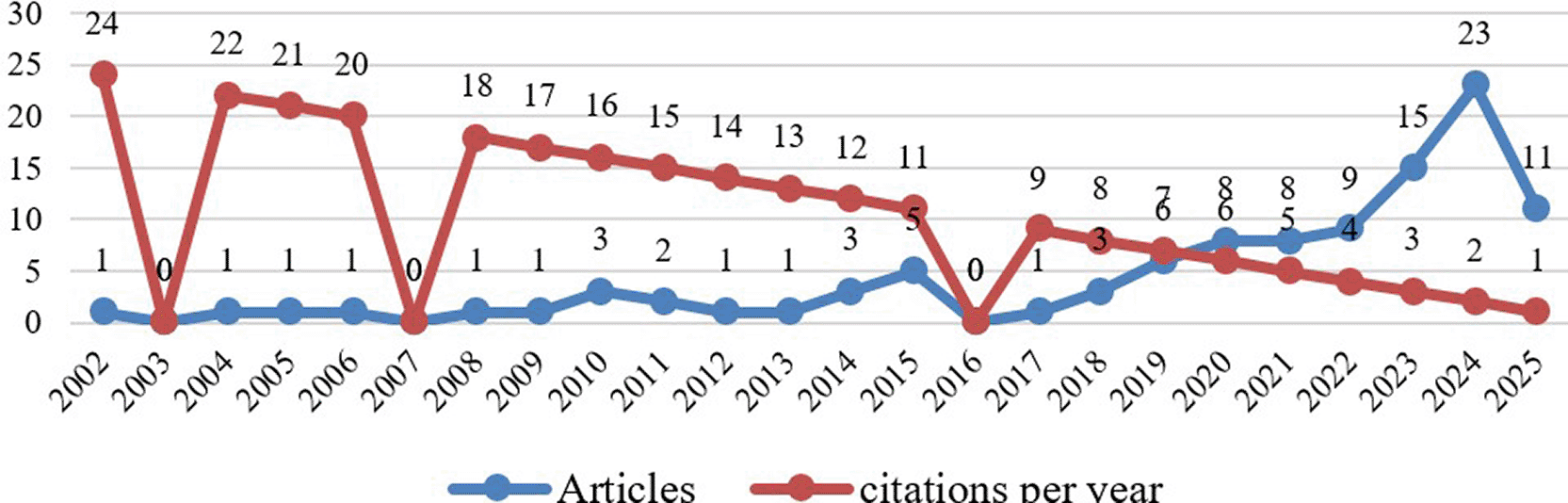
The data indicate that publication productivity is increasing sharply, but citation trends reveal a different and reversed pattern. Early articles, such as those published in 2002 and 2004, recorded high average citations per year (24 and 22 citations), indicating a strong influence on the development of the literature. In contrast, more recent publications tend to be less cited, with an average of only 2 to 3 citations per year in 2023 and 2024. This is to be expected, given the relatively short time required for citation accumulation. This finding confirms that, despite growing interest in research, accumulating citations for new publications takes time and prior study to achieve the same scientific impact as previous works.
The geographical distribution of research on VC and Sustainability reflects a dynamic and increasingly inclusive global scientific landscape. Based on Table 2, it is evident that developed countries continue to dominate the publication landscape on this topic, with the United Kingdom leading the way. The government not only produced the highest number of publications (19 documents) but also achieved a high scientific impact, as indicated by an average of 64.00 citations per document, the highest among all countries analyzed. The United Kingdom’s active role is also reflected in the intensity of its international collaboration, as evidenced by the Multiple Country Publications (MCP), which include four cross-country publications. This reinforces its position as a key node in the global research network.
The United States ranks second in VC–sustainability research output and impact, with strong citation performance and international collaborations. Asian countries such as China, India, and Hong Kong are increasingly contributing, though their citation impact remains lower, indicating strong growth potential. European countries maintain stable scientific relevance. Overall, research in this field is still dominated by developed nations, particularly the United Kingdom and the United States, but rising contributions from Asia signal a shift toward a more diverse global research landscape. International collaboration plays a crucial role in enhancing research quality and citation impact, offering opportunities for emerging countries to grow (Thelwall et al., 2024).
Publications on VC and sustainability are concentrated in high-impact, multidisciplinary journals, as shown in Table 3. Sustainability (Switzerland) leads in output, followed by the Journal of Cleaner Production and Business Strategy and the Environment, which highlight sustainable business and environmental practices. Other journals, such as Energy Economics and Research Policy, provide important economic and policy perspectives, while Frontiers in Sustainable Food Systems and Journal of Business Venturing Insights focus on sector-specific and entrepreneurial issues. The dominance of European and North American journals reflects their role as key centers for advancing interdisciplinary research on VC and sustainability.
Cross-country collaboration plays a crucial role in advancing sustainable innovation in the VC sector, as illustrated in Table 4 and Figure 2. China and the United States emerge as the most active collaborators, followed by the United Kingdom, highlighting their strategic positions in global research networks on sustainable VC. These countries engage in extensive partnerships with both developed and developing nations, reflecting efforts to integrate sustainability principles into venture investment practices. Other countries, including France, India, Australia, and Germany, also contribute through regional and international collaborations, expanding the diversity of research perspectives.
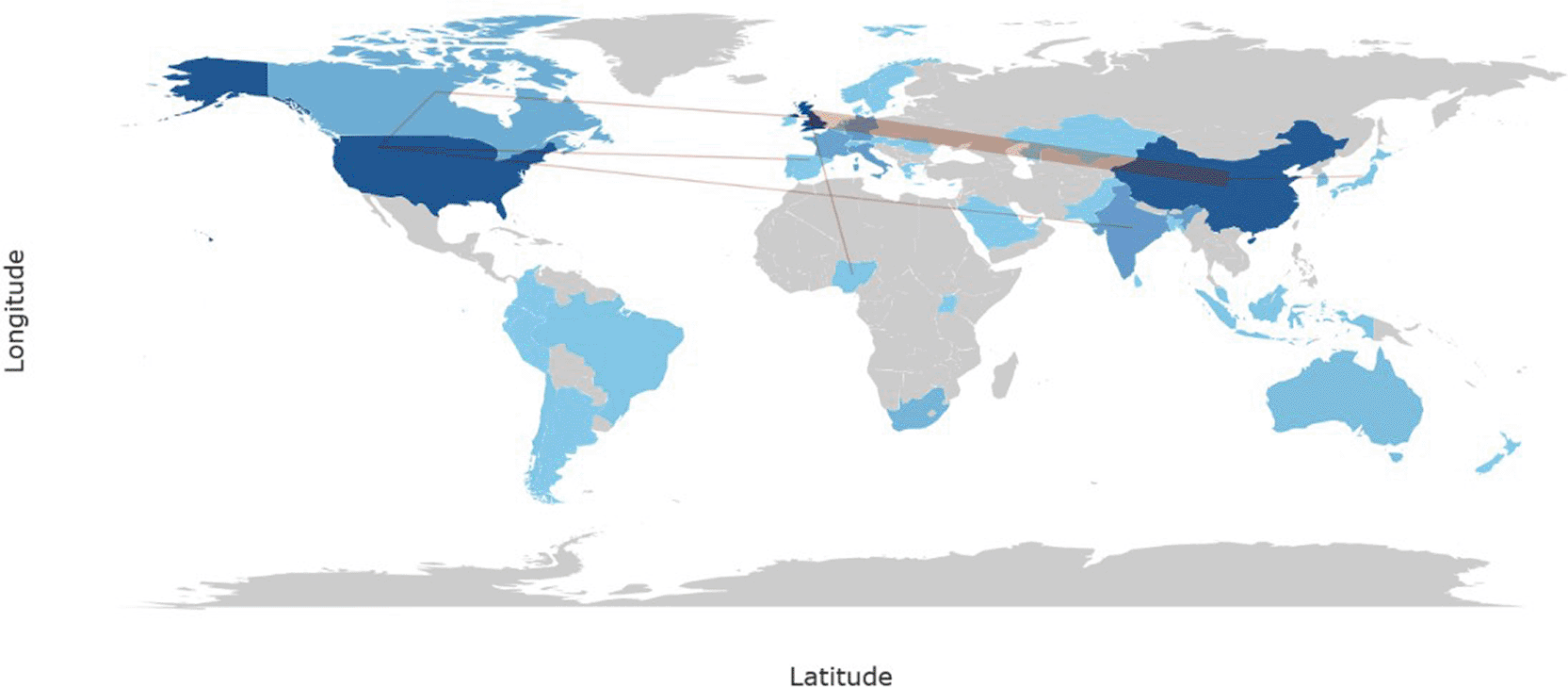
Although some collaborations are smaller in scale, they remain important in broadening geographical representation and knowledge exchange. Empirical evidence shows that international collaboration enhances research quality and citation impact by combining diverse expertise and perspectives Duarte et al., 2025; Wang et al., 2024); Thelwall et al., 2024; Alamah et al., 2023). In the VC context, such collaborations strengthen global knowledge networks and support the development of more innovative, inclusive, and sustainable investment practices.
The research landscape on VC and sustainability has undergone a significant transformation, along with the increasing global need for technological innovation and sustainable development. Through keyword co-occurrence-based bibliometric analysis using VOSviewer (Donthu et al., 2021). Figure 3 reports the identification of three main clusters that map the evolutionary trajectory of academic discourse in this field. These clusters reflect a significant shift in the global financial landscape from traditional funding approaches toward the adoption of disruptive technologies and sustainable finance principles as integral components of investment decision-making.
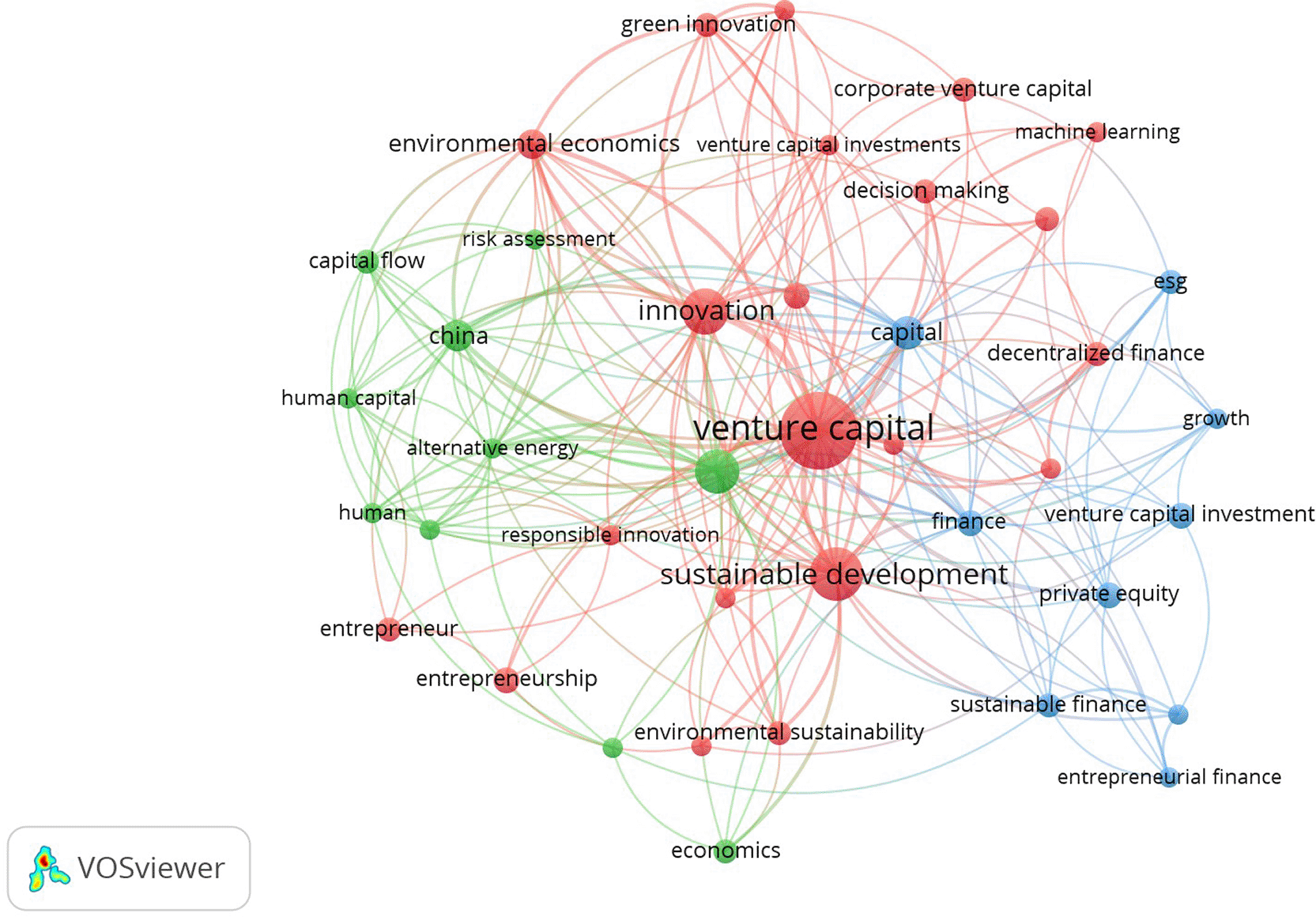
Innovations such as decentralized finance (DeFi) and machine learning are transforming the financial sector by improving transparency, reducing costs, and enhancing risk assessment, fraud detection, and decision-making. At the same time, the rise of sustainable finance encourages the integration of ESG considerations into investment decisions, aligning financial goals with social and environmental impact and supporting the transition toward a more sustainable future.
The second cluster highlights the role of structural foundations—such as risk assessment, capital flows, and human capital—in supporting sustainable development, particularly in emerging economies like China. It emphasizes that effective risk management, capital mobilization, and human capital quality are crucial for achieving inclusive and resilient green growth, alongside a strong focus on alternative energy and low-carbon transitions (Bartenev & Mendagaziev, 2024; Rashid et al., 2024; Li et al., 2024; Du et al., 2024a; Du et al., 2024b; Lin & Xie, 2024). The third cluster focuses on the role of venture capital in promoting green entrepreneurship and sustainable innovation, particularly through investments in clean-tech startups and CVC initiatives. These investments accelerate energy transitions and expand the adoption of sustainability-driven solutions, positioning VC as a key instrument in building a resilient and sustainable economy (Wang et al., 2024; Hegeman & Sørheim, 2021).
The overlay visualization in Figure 4 shows the evolution of VC and sustainability research over time. Early studies (dark blue) focus on foundational concepts such as VC, investment, and sustainability, highlighting the role of VC in driving innovation and sustainable firm performance (Liu et al., 2022). In the intermediate phase (green), the focus shifts to contextual issues such as startups, China, alternative energy, and human capital, emphasizing the importance of policy supSport, market dynamics, and ecosystem development in fostering green innovation (Yang, 2022; (Ren et al., 2020).
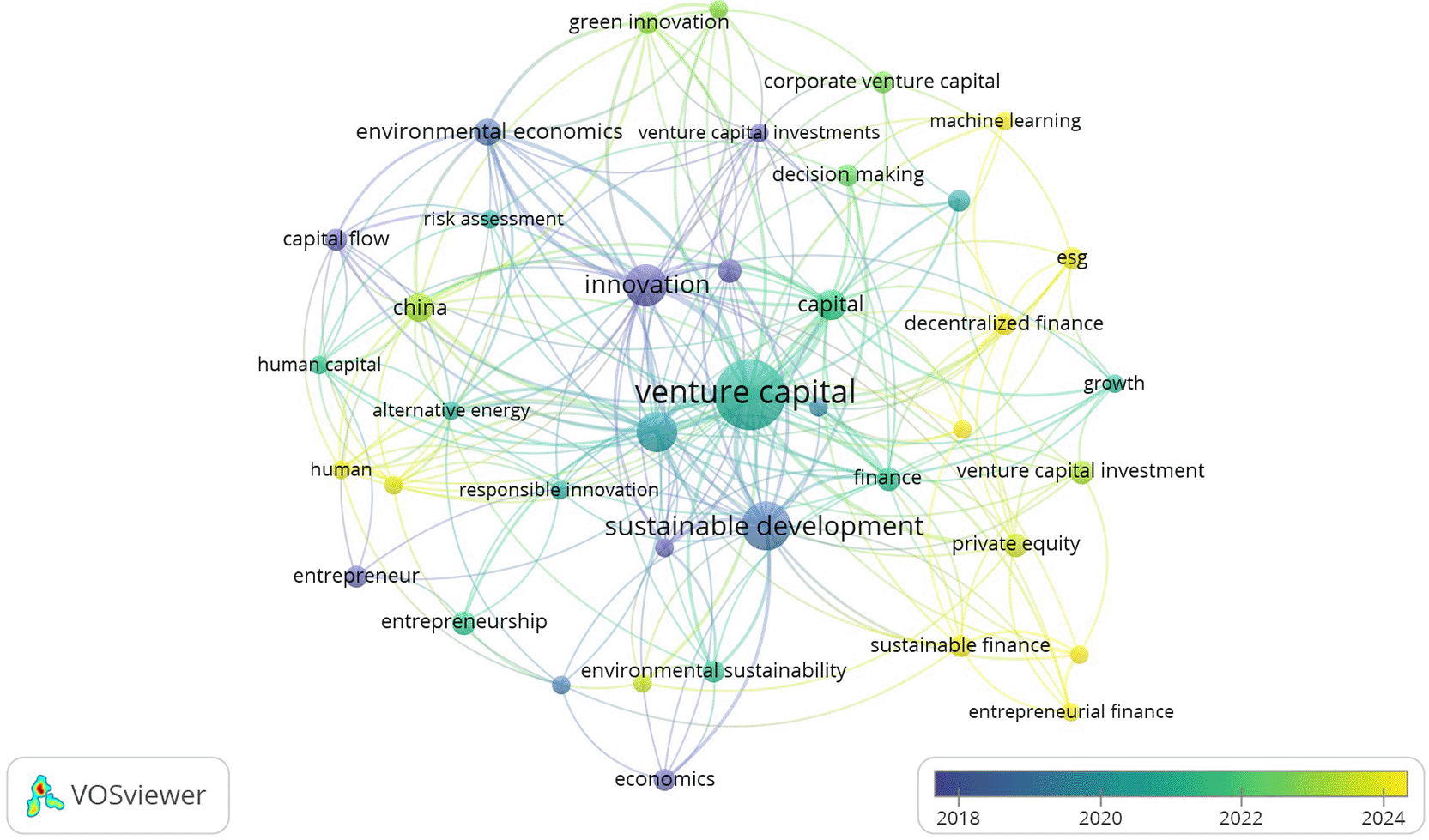
In more recent research (yellow), attention turns to technological and forward-looking themes, including machine learning, decentralized finance (DeFi), green innovation, and sustainable finance. These developments enhance investment decision-making, improve transparency, and support the transition toward a green economy (Zhang et al., 2025) Lei et al., 2025; Dong et al., 2024; Chang & Wang, 2023; Macchiavello, 2022; (Ross et al., 2021). VC is evolving from a traditional funding mechanism into a data-driven and strategic driver of sustainable innovation.
This study offers new insights into how venture capital contributes to sustainable finance transitions by providing a comprehensive mapping of the global research landscape through a mixed-methods bibliometric approach. The findings reveal that international collaboration particularly among China, the United States, and the United Kingdom acts as a crucial driver of sustainable innovation and knowledge diffusion within the venture capital ecosystem. Three main thematic clusters were identified, reflecting the intellectual evolution of this field: the theoretical development of venture capital and investment behavior, the formulation of long-term economic and policy frameworks that support sustainable finance, and the role of venture capital in advancing green entrepreneurship and sustainable technological innovation. Collectively, these clusters demonstrate how venture capital aligns financial objectives with environmental and social goals, contributing to the broader sustainability transition.
The results have important implications for both policy and practice. Policymakers are encouraged to integrate the findings into global sustainability frameworks, such as the UN Sustainable Development Goals and the European Green Deal, by designing fiscal and regulatory instruments that foster ESG-oriented venture financing and cross-border green innovation. Venture capital firms should adopt transparent sustainability metrics and data-driven evaluation systems to improve accountability and investment impact. Investors may leverage insights from bibliometric trends to identify emerging markets and technologies with strong sustainability potential. Research institutions, in turn, can promote interdisciplinary collaboration between finance, environmental science, and digital technologies to support innovation-based sustainable growth.
Although this study focuses exclusively on Scopus-indexed publications, this controlled scope ensures data consistency, comparability, and analytical reliability across countries. The mixed-methods bibliometric approach combining quantitative mapping with qualitative thematic interpretation offers both breadth and depth of analysis, yet it is inherently limited by its reliance on secondary data and bibliographic metadata. While such parameters may not fully capture contextual or institutional nuances, they enhance methodological transparency, replicability, and cross-disciplinary relevance, providing a robust foundation for future empirical validation.
Future research could build on these findings by incorporating advanced analytical methods such as text mining, machine learning, or semantic network analysis to capture deeper thematic dynamics within the intersection of venture capital and sustainability. Further investigation of links between sustainable venture capital and emerging domains such as decentralized finance, artificial intelligence, impact measurement, and digital risk assessment would generate richer insights into innovation-driven sustainability. Comparative regional studies and longitudinal analyses may also illuminate how institutional frameworks and technological ecosystems influence sustainable venture capital practices. Such extensions would strengthen the integration of digital transformation and sustainable finance research, contributing to a more resilient, inclusive, and sustainability-oriented global economic system.
The dataset supporting the findings of this study, titled “Mapping The Global Landscape Of Sustainable Venture Capital: A Bibliometric Analysis Of Research Evolution And Collaboration Networks”, is openly available in the OSF repository at: https://doi.org/10.17605/OSF.IO/JU7CG (Kurniawati et al., 2026). This repository includes the bibliometric dataset, search queries, screening process documentation, PRISMA checklist, PRISMA flow diagram, and supplementary materials used in the analysis. All data are provided under the Creative Commons Attribution 4.0 International (CC0 1.0) license, which permits unrestricted use, distribution, and reproduction in any medium, provided the original work is properly cited.
OSF: STROBE checklist for ‘Mapping The Global Landscape Of Sustainable Venture Capital: A Bibliometric Analysis Of Research Evolution And Collaboration Networks’. https://doi.org/10.17605/OSF.IO/JU7CG (Kurniawati et al., 2026).
Data are available under the terms of the Creative Commons Zero “No rights reserved” data waiver (CC0 1.0 Public domain dedication).
The authors would like to express their sincere gratitude to the Indonesia Endowment Fund for Education (Lembaga Pengelola Dana Pendidikan, LPDP) under the Ministry of Finance of the Republic of Indonesia for supporting their master's and doctoral studies.
The funders had no role in study design, data collection and analysis, decision to publish, or preparation of the manuscript.
© 2026 Kurniawati HD et al. This is an open access article distributed under the terms of the Creative Commons Attribution License, which permits unrestricted use, distribution, and reproduction in any medium, provided the original work is properly cited. The author(s) is/are employees of the US Government and therefore domestic copyright protection in USA does not apply to this work. The work may be protected under the copyright laws of other jurisdictions when used in those jurisdictions.
Current Reviewer Status: ?
Key to Reviewer Statuses VIEW HIDE
ApprovedThe paper is scientifically sound in its current form and only minor, if any, improvements are suggested
Approved with reservations A number of small changes, sometimes more significant revisions are required to address specific details and improve the papers academic merit.
Not approvedFundamental flaws in the paper seriously undermine the findings and conclusions
Version 1
VERSION 1
PUBLISHED 16 Jun 2026
Reviewer Report 13 Aug 2026
Micaela Ines Castillo Ulloa, Federal University Technology (UTFPR), Ponta Grossa, Brazil
Approved with Reservations
VIEWS 0
Are the rationale for, and objectives of, the Systematic Review clearly stated?
Yes
Are sufficient details of the methods and analysis provided to allow replication by others?
Partly
Is the statistical analysis and its interpretation appropriate?
Partly
Are the conclusions drawn adequately supported by the results presented in the review?
Partly
If this is a Living Systematic Review, is the ‘living’ method appropriate and is the search schedule clearly defined and justified? (‘Living Systematic Review’ or a variation of this term should be included in the title.)
Not applicable
Competing Interests: No competing interests were disclosed.
Reviewer Expertise: My areas of expertise include bibliometric and scientometric analysis, sustainability and innovation, supply chain management and green logistics, and quantitative methods applied to production engineering. I have experience with tools such as VOSviewer, Bibliometrix (R), and scientific collaboration network analysis. I can confidently evaluate the methodological aspects, the interpretation of bibliometric data, and the practical implications for corporate sustainability.
CloseOpen Peer Review
Alongside their report, reviewers assign a status to the article:
| Invited Reviewers | |
|---|---|
| 1 | |
| Version 2 (revision) 19 Aug 26 | |
| Version 1 16 Jun 26 | read |
Sign up for content alerts
Alongside their report, reviewers assign a status to the article:
Approved - the paper is scientifically sound in its current form and only minor, if any, improvements are suggested
Approved with reservations - A number of small changes, sometimes more significant revisions are required to address specific details and improve the papers academic merit.
Not approved - fundamental flaws in the paper seriously undermine the findings and conclusions