Просмотр новости
Найдите то, что Вас интересует
 Спутники
 РН
РН SpaceX
 Роскосмос
 NASA
NASA
СпутникиРНSpaceXРоскосмосNASAA decade after IBM put its five-qubit quantum processor into the cloud – and by doing so, making the IBM Quantum Experience accessible to the public – the quantum computing industry finds itself solidly in the Noisy Intermediate-Scale Quantum era. Multiple systems are available in the cloud – we wrote last month about plans for QuEra’s upcoming Libra system to make its debut on Amazon’s Braket fully managed cloud service in 2028 – but right now, they are still highly sensitive and prone to errors.
Strides are being made to solve the critical challenge of error correction as the industry pushes toward the next stage, Fault-Tolerant Quantum Computing (FTQC), which will come with advanced and robust architectures that will include hundreds of thousands to millions of physical qubits that will create logical qubits and deliver the redundancy needed for error correction. There are myriad quantum companies marching toward this goal with their ideas of how to put the pieces together for FTQC.
The executives and scientists behind QuiX Quantum recently laid out their plan for a fault-tolerant photonics quantum system that not only stresses the capabilities that will be needed – error correction, fault tolerance, qubit performance, and the like – but also an architecture built to fit and work seamlessly in traditional datacenters with supercomputers, HPC systems, and enterprise hardware, creating the much-heralded hybrid quantum-classical computing environments.
“Quantum computing is entering a new phase, in which the central challenge is no longer only to demonstrate high-performing qubits, but to build systems that can be deployed, scaled, manufactured, and integrated within real computing environments,” researchers with the seven-year-old Dutch company wrote in a white paper detailing its new Dedalo architecture. “A universal quantum computer will only achieve broad adoption if it is both scientifically capable and operationally practical. The system must be deployable, manufacturable, serviceable, and economically scalable within the infrastructures where future workloads will run.”
That means not only will quantum systems need high-performance and error-corrected qubits, but also architectural designs that are easy to deploy, compatible with existing environments, and don’t bring with them infrastructure or overhead pain. They need to be resource- and energy-efficient, scale not only in operations but also production, modular in design, and be able to work in hybrid datacenters.
The announcement of the Dedalo architecture comes a year after QuiX received about $17 million from a number of investment firms to develop Europe’s first photonic quantum computer by this year. Dedalo builds on what the vendor has done over the past four years, including selling both 8- and 64-qubit photonic quantum computers to the German Aerospace Center in 2022 and two years later offering access to its quantum technology through its Bia Quantum Cloud Computing Service, which is powered by its Alquor Quantum Photonic Processor.
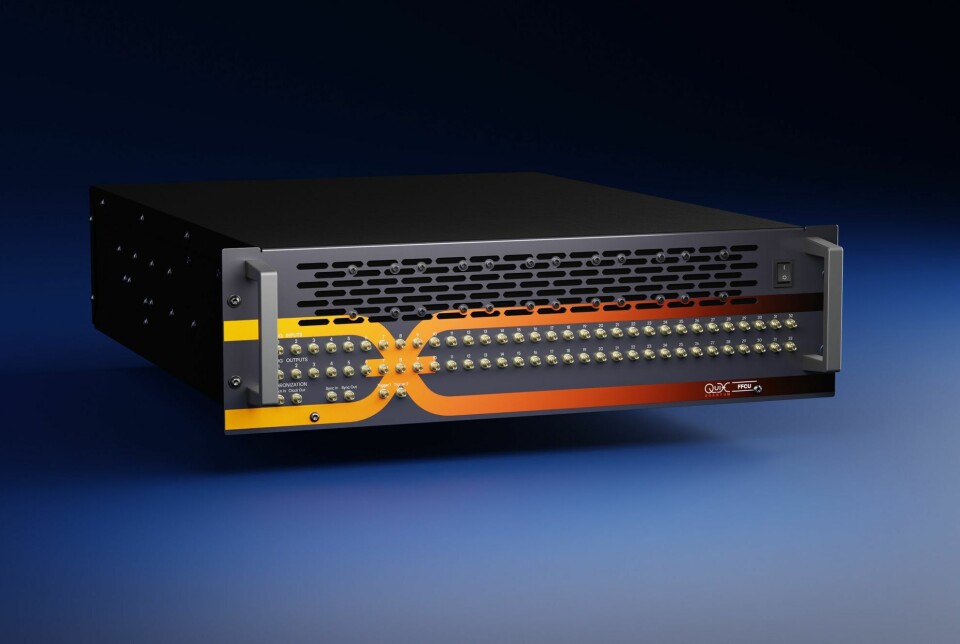
More recently, earlier last month QuiX Quantum rolled out its Feed-Forward Control Unit (FFCU, below), hardware component that helps its system respond to quantum measurements in real time.
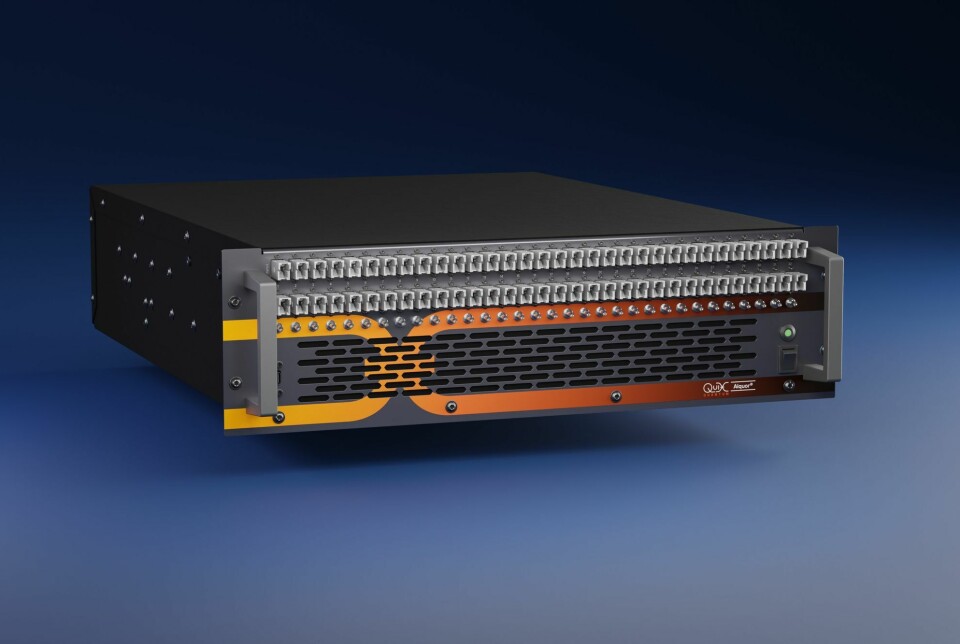
That came two weeks after the company unveiled its PACU (photonic assembly control unit, below), a control layer for its quantum systems. In April, it said it demonstrated “below threshold” error mitigation, a first for a photonic quantum system.
QuiX Quantum executives point to catalyst simulations, molecular dynamics, machine learning, and data analysis as use cases for their technology. The next-generation system is due in 2027. The European Union last year said it wanted the bloc to be a global leader in quantum by 2030.
There are a number of ways to create qubits, such as with atoms or ions. Superconducting qubits are built from electrical circuits on microchips. QuiX Quantum builds qubits using photons, encoding information directly onto particles of light. It’s not alone in this, with PsiQuantum, Photonic Inc., Quantum Computing Inc., and, as we wrote, Quantum Pulse, among other photonic quantum computing vendors.
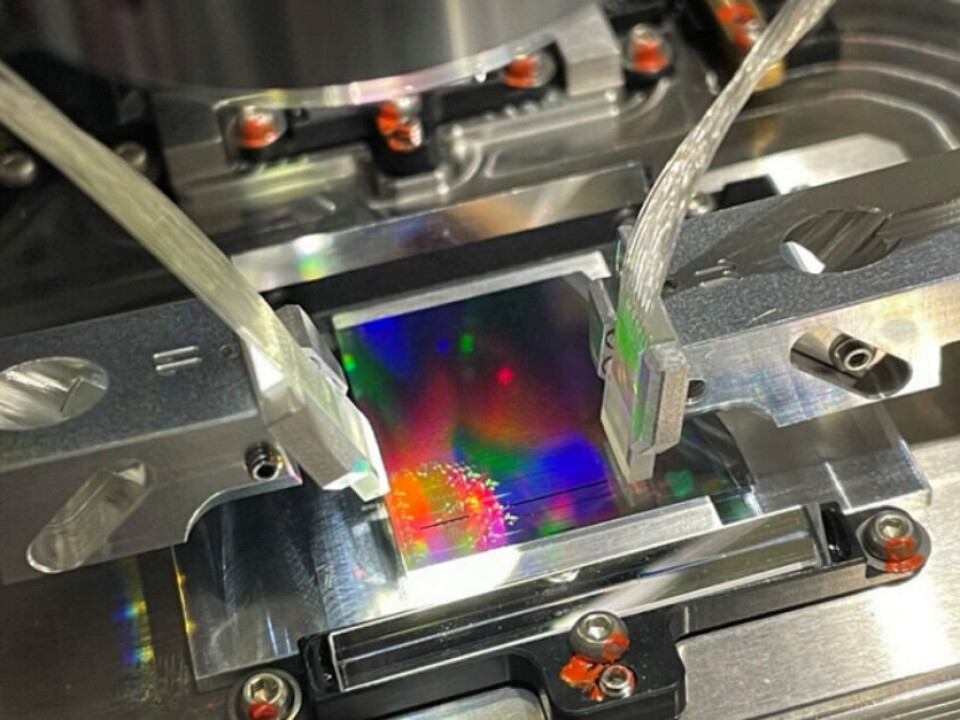
The key challenge in photonics quantum computing is photonics loss. To protect against this, QuiX is turning to logical qubits, a common pathway to error correction in other modalities in which error-corrected logical qubits compromise multiple physical ones to create fault tolerance.
“Dedalo is the world’s first logical-qubit-based photonic quantum computer to be delivered as first-generation system, where logical qubits will be demonstrated by overcoming long-standing challenges in photonic quantum computing such as resource-state generation, feed-forward and loss-error detection and correction,” the paper’s authors wrote. “It is a pivotal step towards fault-tolerant universal quantum computing as it allows a practical path towards scalable photonic quantum computers.”
Photonic qubits differ from other gate-based modalities in a number of ways. With photons, entangling gates in dual-rail encoding is probabilistic because when a two-bit gate is implemented, it only succeeds occasionally. In addition, photons can’t be stored, so they need to be used immediately. They’re then destroyed.
“This creates a conundrum,” the authors wrote. “How do you create large entanglement if your gates only succeed probabilistically, and how do you pass on information if the carrier of the information itself gets destroyed?”
Dedalo uses the Measurement-Based Quantum Computing (MBQC) framework, in which computations are executed by making a sequence of measurements on a highly entangled multi-qubit state. Photons on their own don’t naturally interact with each other, so measurements are used to create entanglement and steer computation. Specific single-qubit measurements are performed on an entangled grid of qubits. A sequence of measurements are run across the grid.
The authors noted that “measurement-based and gate-based quantum computing are computationally similar; specific compilation algorithms can translate gate-based circuits into MBQC operations and vice versa.”
Dedalo’s architecture is based on what QuiX Quantum calls three “principal system blocks,” which you can see here:
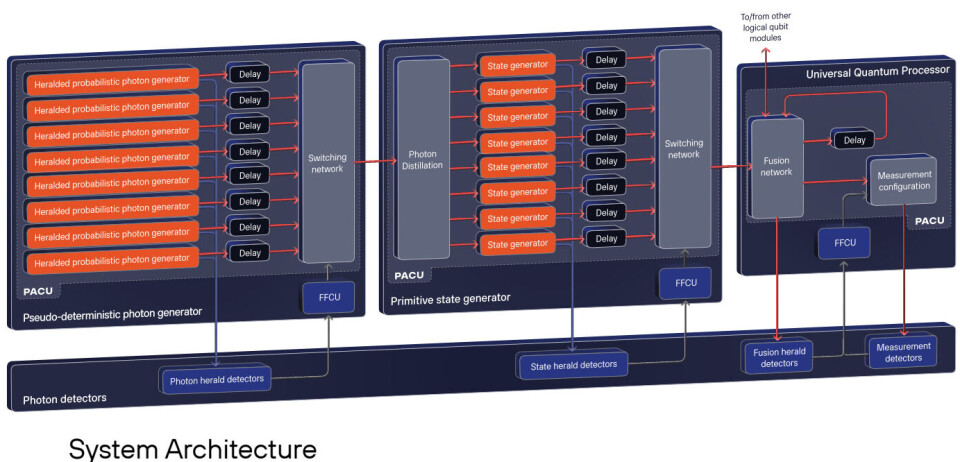
There is the pseudo-deterministic photon generator, an on-chip micro-ring resonator that creates a pair of photons – a single and idler – via spontaneous four-wave mixing (SFWM). The pairs are split, and when idler photons of each pair are detected, the feed-forward control unit (FFCU) ensures the corresponding signal and idler photons are moved to the computational primitive state generator layer at the same time.
In that layer, the photons are run through state generator to create small, entangled states, which are then run through the FFCU and the detection results are provided to the switching network, which in turn selects the primitives that were successfully created and transmits them to the universal quantum processor. The processor fuses the primitive states to create a loss-tolerant logical qubit, entangles them on other modules, and measures the logical qubit in different bases.
The work on creating fault tolerant photonic quantum computing through logical qubits that are protected against photon loss is a key part of creating an environment for the other part of QuiX Quantum’s push, which is creating systems that can be easily coexist with supercomputers and enterprise systems in datacenters.
“This is especially important because quantum computing is not expected to replace classical computing, but to operate alongside it,” the authors wrote. “The long-term model is hybrid quantum-classical computing, in which quantum processing units work together with classical IT and HPC systems. As a result, low infrastructure burden, ease of deployment, compatibility with existing environments, and manageable operating overhead become architectural requirements rather than secondary considerations.”
Dedalo’s architecture is aimed at that. It includes hardware that is built on CMOS-compatible, silicon-nitride photonic integrated circuits (PICs), which means it can be manufactured through established semiconductor fabrication processes and facilities. This makes scaling the quantum hardware practical and reliable, according to the vendor.
In addition, the system – as is normal with photonic quantum computing – can run at room temperature, negating the need and extra costs for high-powered cooling units that other modalities like superconducting can require and allowing for greater modularity in its design. It’s also more power efficient.
Dedalo is also compatible with existing telecommunications architectures.
“Operating at wavelengths and using components standard in fiber-optic networks, QuiX's photonic quantum systems can seamlessly integrate with current data center and long-distance communication networks,” they wrote. “This alignment allows photonic quantum computers to benefit from the availability, cost-effectiveness, and reliability of commercial telecom hardware.”
This also means that it’s more feasible to deploy, scale, and maintain large photonic quantum systems, making them practical and compatible in current datacenter environments.
| # | Наименование новости | Тональность | Информативность | Дата публикации |
|---|---|---|---|---|
| 1 | With The Carina System, QuiX Pushes Photonic Quantum Computing Forward | 0 | 10 | 29-07-2026 |
| 2 | The Aspirations Of HPE And Dell In The Quantum-Classical HPC Datacenter | 0 | 16.53 | 13-07-2026 |
| 3 | Quantum Pulse Does Industrial Light Magic To Deliver Massive Boost In Qubits | 0 | 10 | 17-06-2026 |
| 4 | How HPC And AI Digital Twins Accelerate Quantum Error Correction | 0 | 10 | 17-04-2026 |
| 5 | 量子HPC連携プラットフォーム向け新スーパーコンピュータ「ROQUO(ろっこう)」運用開始 | 0 | 10 | 18-06-2026 |
| 6 | Oak Ridge Starts Weaving Together A Quantum, Classical HPC, And AI System Stack | 0 | 10 | 21-05-2026 |
| 7 | Tecnología cuántica de Telefónica entre los data centers de la Policía | 0 | 8.26 | 01-07-2026 |
| 8 | Tecnología cuántica de Telefónica entre los data centers de la Policía | 0 | 8.26 | 01-07-2026 |
| 9 | IBM: Three Demonstrations Prove Quantum Advantage Has Been Reached | 0 | 10 | 31-07-2026 |
| 10 | Cisco, Qunnect claim quantum first with datacentre connectivity | 0 | 6.88 | 19-02-2026 |