Просмотр новости
Найдите то, что Вас интересует
 Спутники
 РН
РН SpaceX
 Роскосмос
 NASA
NASA
СпутникиРНSpaceXРоскосмосNASAThe integration of digital technology and local culture has emerged as a relevant approach to creating meaningful and contextual learning experiences in higher education. However, empirical evidence regarding the effectiveness of culture-based digital learning materials in enhancing students’ competencies and strengthening local cultural values remains limited. This study aimed to examine the effects of a Riau Malay Culture-Based Educational Communication E-Module on students’ communication skills, problem-solving abilities, self-directed learning, and internalization of Malay cultural values. The study employed an explanatory sequential mixed-methods design. The quantitative phase involved 80 students from a university in Pekanbaru, Indonesia, using a one-group pretest-posttest design. Data were analyzed using paired-sample t-tests and Cohen’s d effect size. The qualitative phase consisted of semi-structured interviews with 12 purposively selected students to provide deeper explanations of the quantitative findings. The results revealed significant improvements across all measured variables following the implementation of the e-module (p
Although digital transformation has become a key characteristic of 21st-century education (Moghadam et al., 2023; Saleem et al., 2024), several challenges still emerge in its implementation in higher education. One of the main challenges is the suboptimal development of students’ communication skills, problem-solving abilities, self-directed learning, and the internalization of cultural values within technology-based learning environments. In many cases, digital technology is still used merely as a medium for delivering information rather than as a tool to promote active, reflective, and competency-oriented learning.
This condition has resulted in suboptimal student engagement in the learning process. Students tend to passively receive information with limited opportunities to develop critical thinking skills, communicate effectively, solve problems systematically, and learn independently. This indicates that digital transformation has not yet fully brought substantive improvements to the quality of higher education learning.
In line with this development, the use of digital technology in education continues to increase through Learning Management Systems (LMS), e-learning, mobile learning, virtual learning environments, and various other digital learning resources that enable students to learn more flexibly and independently (Afikah et al., 2022; Samy et al., 2025; Kaptan & Cakir, 2024; Atmojo et al., 2025b). However, the availability of such technologies does not automatically lead to improvements in students’ communication skills, problem-solving abilities, and self-directed learning if it is not supported by appropriate instructional design.
One of the widely developed forms of digital learning innovation is the e-module. An e-module is a systematically designed digital teaching material that supports independent learning through the integration of text, images, audio, video, animation, and interactive activities (Hakim et al., 2021; Alim et al., 2025). Compared to conventional teaching materials, e-modules offer advantages in terms of flexibility, accessibility, and their ability to enhance student engagement in the learning process (Syahrial et al., 2021; Situmorang et al., 2020). Various studies have shown that e-modules can improve learning outcomes, learning motivation, digital literacy, student engagement, and self-directed learning across different educational contexts (Faidah et al., 2025; Delita et al., 2022; Jannah et al., 2025). In higher education contexts, e-modules also have the potential to support the development of communication skills and problem-solving abilities through more interactive and student-centered learning. However, the effectiveness of e-modules is highly dependent on instructional design quality and their relevance to the learners’ social and cultural context (Dafit et al., 2024).
In addition to challenges in learning technology, another prominent issue is the low integration of cultural values in the learning process. Students often struggle to connect academic concepts with their surrounding social and cultural contexts. As a result, learning becomes less meaningful and less effective in strengthening students’ cultural identity.
In fact, the integration of local culture in learning has been recognized as an approach that creates more contextual, meaningful, and relevant learning experiences (Atmojo et al., 2025a). Local culture does not only serve as a source of knowledge but also as a bridge that connects academic concepts with students’ real-life experiences (Parmiti et al., 2021; Purhonen et al., 2023; Lavrenteva & Orland-Barak, 2023; Pradhan & Sharma, 2021). Through this approach, students can understand learning materials more deeply because the concepts studied are directly linked to their surrounding social and cultural environment (Tesfamicael & G, 2021).
Moreover, the integration of local culture also plays an important role in strengthening cultural identity amid globalization and rapid digital technological development. Various studies have shown that culture-based learning can enhance student engagement, strengthen cultural identity, and help students understand social values within society (Guslinda et al., 2023; Asrial et al., 2021; Hidayat & Yatminiwati, 2023; Yasir et al., 2022). Therefore, the development of digital teaching materials that integrate technology and local culture is an important strategy for improving learning quality while preserving cultural values.
One local culture with strong potential to be integrated into learning is Riau Malay culture. This culture contains educational values such as deliberation, mutual cooperation, social responsibility, politeness in communication, respect for others, and care for the social environment (Noviana et al., 2023). These values are reflected in pantun (traditional poetry), customary advice, folktales, oral traditions, and the daily practices of Malay society (Noviana et al., 2023; Zarnelly & Deswanto, 2018), making them highly relevant for application in higher education, particularly in educational communication courses.
However, preliminary observations indicate that the utilization of Riau Malay culture in higher education remains limited. Learning materials are still dominated by theoretical concepts and have not optimally linked content to local cultural contexts. This condition makes it difficult for students to connect academic content with their social and cultural realities, which ultimately affects their communication skills, problem-solving abilities, self-directed learning, and internalization of cultural values.
This situation highlights the need to develop learning materials that are not only technology-based but also systematically and contextually integrate local cultural values. In this regard, the Riau Malay Culture-Based Educational Communication E-Module is considered a potential solution because it combines the advantages of digital technology with local cultural values in a unified and meaningful learning system.
Although research on e-modules and culture-based learning has developed globally, several research gaps still exist. First, most previous studies have focused on learning outcomes, motivation, and technology acceptance, while studies on communication skills, problem-solving abilities, self-directed learning, and cultural value internalization remain limited (Khaldi et al., 2023; Prabowo, 2024). Second, research has been conducted more frequently at the primary and secondary education levels than in higher education (Edgar & Ziebell, 2024). Third, studies on local culture integration in digital learning materials are still dominated by international cultural contexts such as Maori in New Zealand, Aboriginal in Australia, Indigenous Education in Canada, and Native American Education in the United States, while research on Malay culture, particularly Riau Malay culture, remains very limited in international publications (Edgar & Ziebell, 2024; Atmojo et al., 2025a). Fourth, relatively few studies have used a mixed-methods approach to provide a more comprehensive understanding of culture-based digital learning impacts (Mccrone & Kingsbury, 2023).
These gaps indicate the need for more in-depth research on the effectiveness of culture-based e-modules in higher education. This is particularly important because students in Elementary School Teacher Education programs are expected to possess strong communication skills, robust problem-solving abilities, high levels of self-directed learning, and an appreciation of local cultural values as part of their professional competencies.
Based on these considerations, this study aims to analyze the effectiveness of the Riau Malay Culture-Based Educational Communication E-Module on students’ communication skills, problem-solving abilities, self-directed learning, and Malay cultural value internalization among prospective elementary school teachers using a mixed-methods approach to obtain a comprehensive understanding of both learning outcomes and student experiences.
This study employed an explanatory sequential mixed-methods design, in which quantitative data were collected and analyzed in the first phase, followed by qualitative data collection and analysis to provide a deeper explanation of the quantitative findings. This design was selected because it allows researchers to obtain comprehensive insights into both the measurable effects of the intervention and the participants’ learning experiences during the implementation process.
The quantitative phase aimed to test the effectiveness of the Riau Malay Culture-Based Educational Communication E-Module on students’ communication skills, problem-solving abilities, independent learning, and internalization of cultural values. The qualitative phase was then conducted through semi-structured interviews to explore students’ perceptions and experiences in using the e-module.
The research procedures included: (1) e-module development and preparation; (2) pretest; (3) e-module implementation; (4) posttest; (5) quantitative data analysis; (6) interview participant selection; (7) qualitative data collection; (8) qualitative data analysis; and (9) integration and interpretation of research results.
The study was conducted in the Elementary School Teacher Education Program within a Faculty of Teacher Training and Education at a private university in Pekanbaru, Indonesia. The participants consisted of 80 first-year students enrolled in the Educational Communication course during the 2024/2025 academic year. A total sampling technique was employed, as all students enrolled in the course participated in the implementation of the e-module.
Of the 80 participants, 6 were male and 74 were female. All participants completed the learning activities using the Riau Malay Culture-Based Educational Communication E-Module.
For the qualitative phase, 12 students were purposively selected based on the quantitative results. The participants represented high, moderate, and low improvement categories to capture diverse perspectives regarding the implementation and perceived effectiveness of the e-module.
Quantitative instruments
Four quantitative instruments were employed to assess the effectiveness of the e-module.
Communication Skills Test
Communication skills were measured using a performance-based assessment consisting of indicators related to idea presentation, argumentation, participation in discussions, and communication effectiveness. Scores ranged from 0 to 100, with higher scores indicating better communication skills.
Problem-Solving Ability Test
Problem-solving ability was assessed through case-based questions requiring students to identify problems, analyze situations, evaluate alternatives, and formulate appropriate solutions. Scores ranged from 0 to 100.
Learning Independence Questionnaire
Learning independence was measured using a Likert-scale questionnaire consisting of indicators related to self-regulated learning, responsibility, learning initiative, and independent learning behavior. Responses were scored on a five-point scale ranging from 1 (strongly disagree) to 5 (strongly agree).
Malay Cultural Value Internalization Questionnaire
The internalization of Malay cultural values was measured using a Likert-scale questionnaire consisting of indicators related to musyawarah (deliberation), gotong royong (mutual cooperation), politeness in communication, social responsibility, and respect for others. Responses were scored using a five-point scale ranging from 1 to 5.
The qualitative instrument used in this study was a semi-structured interview guide designed to explore students’ experiences during the implementation of the Riau Malay Culture-Based Educational Communication E-Module. The interviews were conducted to obtain in-depth insights into students’ perceptions, experiences, and perceived benefits of using the e-module throughout the learning process. The interview questions focused on four main aspects: the development of communication skills, students’ experiences in solving problems during learning activities, the enhancement of learning independence, and the understanding and internalization of Malay cultural values. The qualitative data obtained from the interviews were used to explain and enrich the quantitative findings, providing a more comprehensive understanding of the effectiveness of the e-module in fostering students’ competencies and cultural awareness.
Prior to implementation, the instruments were evaluated by four experts in educational technology, educational communication, elementary education, and Malay culture. Content validity was assessed using the Content Validity Index (CVI). The average Scale-Level Content Validity Index (S-CVI/Ave) was 0.96, indicating excellent content validity. Instrument reliability was assessed using Cronbach’s Alpha coefficient. The reliability coefficients for all instruments exceeded 0.80, indicating high internal consistency and acceptable reliability for research purposes.
The study was conducted in four stages.
Stage 1: Pretest Administration
Students completed pretest assessments measuring communication skills, problem-solving ability, learning independence, and Malay cultural value internalization before using the e-module.
Stage 2: E-Module Implementation
During the Educational Communication course, students participated in learning activities using the Riau Malay Culture-Based Educational Communication E-Module. The e-module was designed by integrating educational communication concepts with various elements of Malay culture, including Pantun Melayu (Malay traditional poetry), Malay proverbs, local wisdom, traditional communication practices, and the social values of the Malay community. Through this integration, students were encouraged to understand communication concepts within culturally relevant contexts. The learning activities incorporated in the e-module included independent study, case analysis, reflective tasks, group discussions, and contextual assignments, allowing students to actively engage with both the academic content and the cultural values embedded in the learning materials.
Stage 3: Posttest Administration
After completing the learning activities, students completed posttest assessments using the same instruments administered during the pretest phase.
Stage 4: Qualitative Data Collection
Following quantitative analysis, selected students participated in semi-structured interviews. Each interview lasted approximately 20–30 minutes and was audio-recorded with participants’ consent.
Quantitative data analysis
Quantitative data were analyzed using IBM SPSS Statistics. Descriptive statistical analyses, including means and standard deviations, were calculated for all variables to provide an overview of students’ performance before and after the implementation of the e-module.
The effectiveness of the intervention was examined using paired-sample t-tests to compare students’ pretest and posttest scores on communication skills, problem-solving ability, learning independence, and Malay cultural value internalization. This analysis was conducted to determine whether there were statistically significant differences between students’ scores before and after the intervention.
To determine the magnitude of the intervention effect, Cohen’s d effect size was calculated. The effect size was interpreted according to the following criteria: d = 0.20 indicating a small effect, d = 0.50 indicating a medium effect, and d ≥ 0.80 indicating a large effect. Statistical significance for all analyses was established at the 0.05 level (α = 0.05).
Qualitative data analysis
Qualitative data were analyzed using thematic analysis to identify and interpret patterns emerging from the interview data. The analysis followed six systematic stages: data familiarization, initial coding, searching for themes, reviewing themes, defining and naming themes, and report writing. This process enabled the researchers to develop a comprehensive understanding of students’ experiences and perceptions regarding the implementation of the Riau Malay Culture-Based Educational Communication E-Module.
The thematic analysis resulted in four major themes that reflected the impact of the e-module on students’ learning experiences. These themes included improvements in communication skills, enhancement of problem-solving ability, increased learning independence, and the strengthening of Malay cultural value internalization. The identified themes were subsequently used to explain and enrich the quantitative findings, providing deeper insights into how the e-module contributed to students’ academic and cultural development.
The effectiveness of the Riau Malay Culture-Based Educational Communication E-Module was analyzed using a one-group pretest–posttest design involving 80 students. The analysis was conducted using a paired-sample t-test to identify differences between pretest and posttest scores, while effect size was calculated using Cohen’s d to determine the magnitude of the e-module’s impact on students’ competencies.
The results showed that all variables improved after the implementation of the e-module. The differences between pretest and posttest scores across all variables were statistically significant (p < 0.001). In addition, all Cohen’s d values were above 0.80, indicating a large effect size. Therefore, it can be concluded that the use of the e-module had a strong impact on improving students’ competencies. A summary of the analysis results is presented in Tables 1 and 2.
Based on Table 1, the use of the e-module had a significant effect on improving students’ communication skills. The mean score increased from 73.25 at the pretest to 84.90 at the posttest, with a gain score of 11.65 points. The results of the paired-sample t-test indicated a significant difference between the two measurements (t(79) = 9.21; p < 0.001), with an effect size of d = 1.03, which falls into the large category. These findings indicate that the e-module effectively facilitates students in developing their ability to express ideas, present arguments, participate in academic discussions, and communicate concepts of educational communication in a more systematic and effective manner.
A significant improvement was also found in problem-solving ability. The students’ mean score increased from 70.45 to 82.60, with a gain score of 12.15 points. The analysis showed a value of t(79) = 8.37 with p < 0.001 and an effect size of d = 0.94. These findings indicate that the use of the e-module not only enhances students’ conceptual understanding but also strengthens their ability to identify problems, analyze alternative solutions, and make appropriate decisions based on the contextual issues presented in the learning materials.
To obtain a more comprehensive overview of the impact of the e-module, further analysis was also conducted on students’ self-directed learning and the integration of Malay cultural values. The results of the pretest and posttest comparisons for these two variables are presented in Table 2.
As shown in Table 2, the use of the e-module also had a significant effect on improving students’ self-directed learning. The mean score increased from 3.72 to 4.38, with a gain score of 0.66 points. The statistical test results showed a value of t(79) = 7.84 with p < 0.001 and an effect size of d = 0.88. These findings indicate that students became more capable of managing their learning process independently, organizing their study time, and utilizing various learning resources available in the e-module.
In terms of the integration of Malay cultural values, the students’ mean score increased from 3.95 to 4.63, with a gain score of 0.68 points. The analysis showed a value of t(79) = 8.77 with p < 0.001 and an effect size of d = 0.98. These results indicate that the integration of Malay culture in the e-module successfully enhanced students’ understanding of local cultural values such as deliberation, mutual cooperation, politeness in communication, social responsibility, and appreciation of the sociocultural environment of Malay society.
The analysis results in Tables 1 and 2 indicate that all variables improved after the implementation of the e-module. To provide a clearer illustration of the magnitude of improvement across variables, the comparison of pretest and posttest scores is presented in Figure 1.
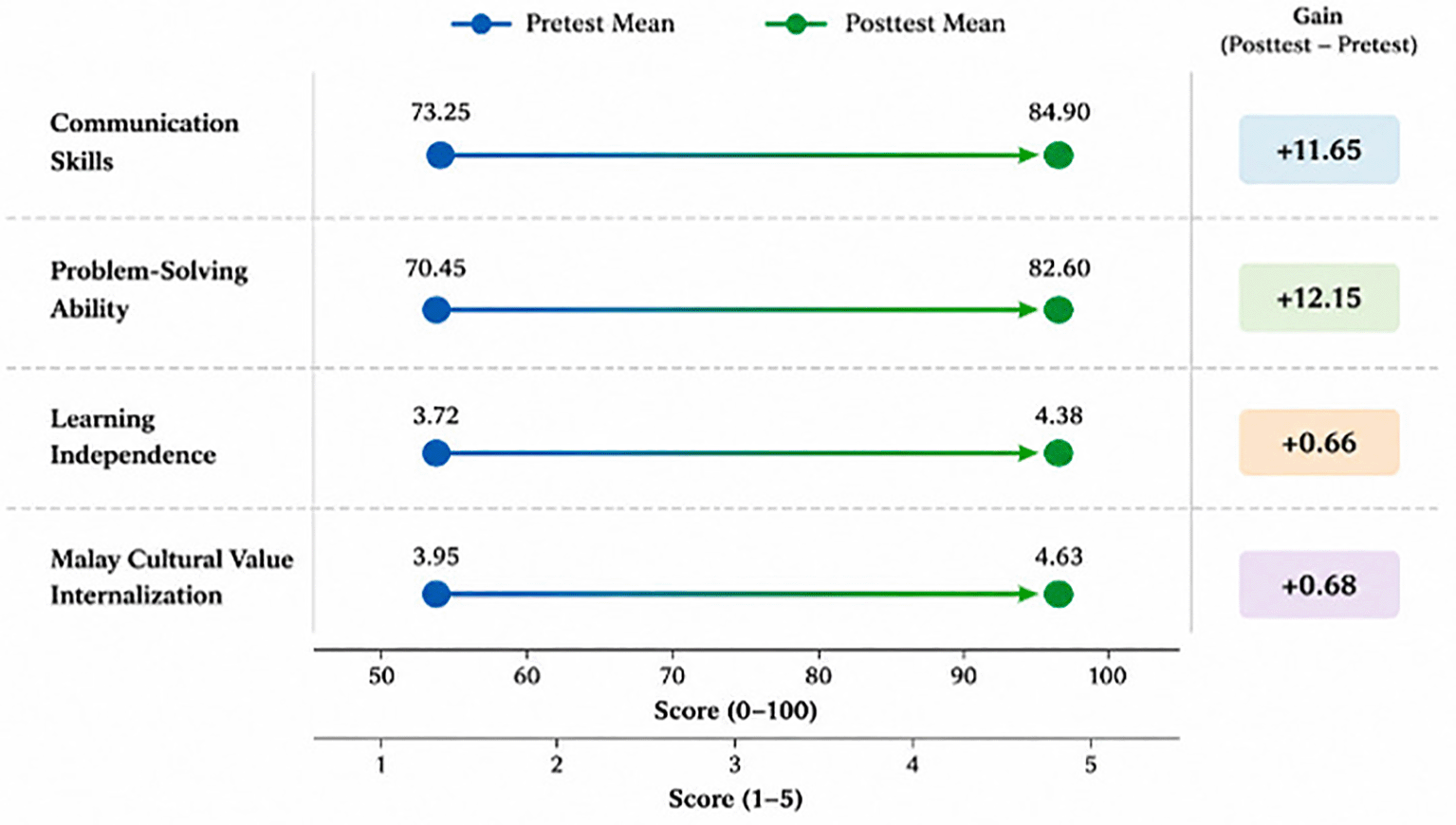
The comparison of pretest and posttest scores shows an improvement across all examined variables. The highest increase was observed in problem-solving ability, with a gain score of 12.15 points, followed by communication skills with a gain score of 11.65 points. Meanwhile, for the variables measured using a Likert scale, integration of Malay cultural values increased by 0.68 points, and self-directed learning increased by 0.66 points.
In addition to showing score improvements across all variables, it is important to identify the magnitude of the e-module’s effect on students’ competencies. Therefore, an effect size analysis was conducted using Cohen’s d index. The results of the effect size calculation for each variable are presented in Figure 2.
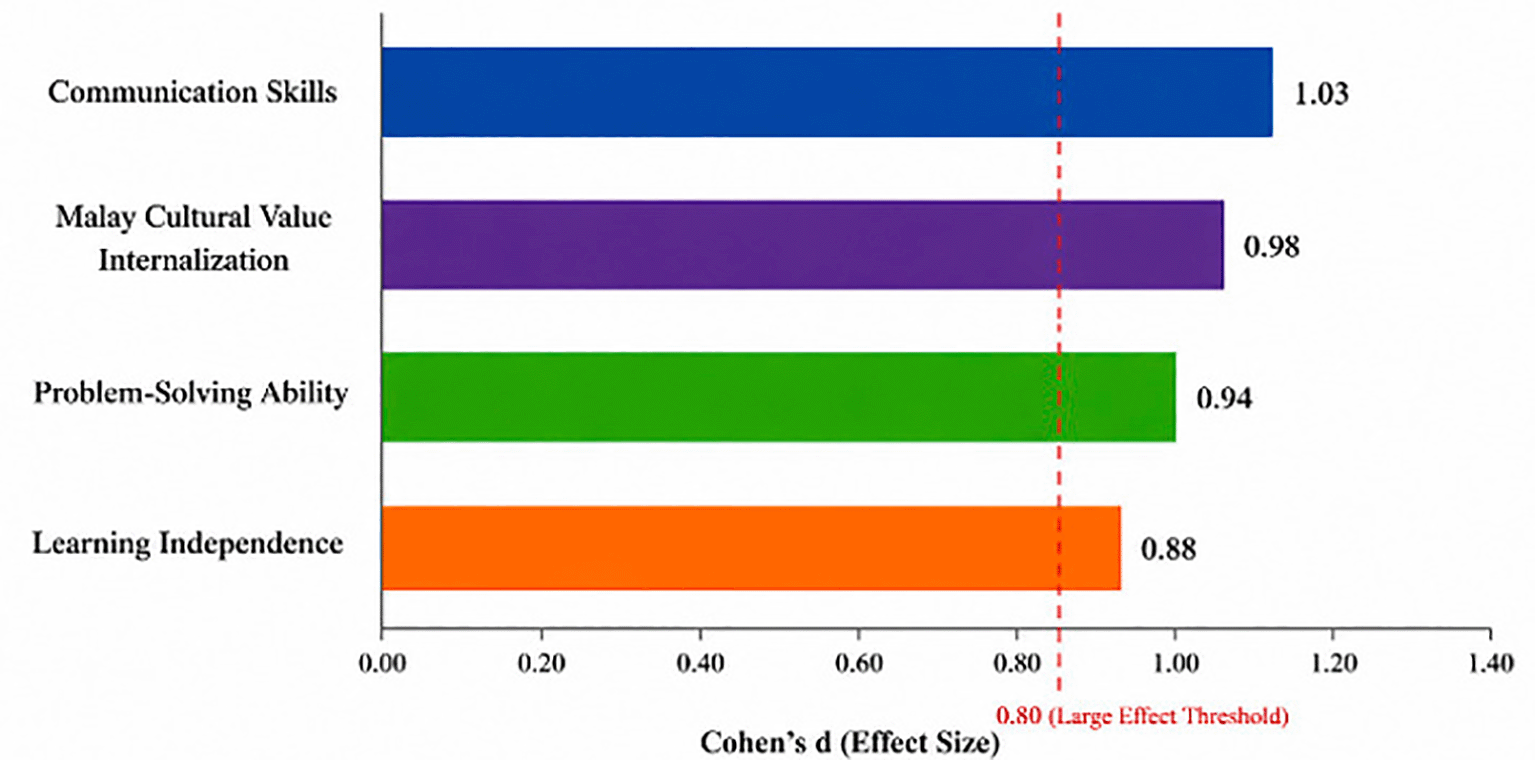
Figure 2 shows that all variables obtained Cohen’s d values above 0.80, indicating a large effect size category. The largest effect was found in communication skills (d = 1.03), followed by integration of Malay cultural values (d = 0.98), problem-solving ability (d = 0.94), and self-directed learning (d = 0.88). These findings indicate that the Riau Malay Culture-Based Educational Communication E-Module not only produced statistically significant differences but also had a substantial educational impact on students’ competency development.
Overall, the results of the study demonstrate that the Riau Malay Culture-Based Educational Communication E-Module is effective in improving students’ communication skills, problem-solving abilities, self-directed learning, and integration of Malay cultural values. The magnitude of the effect sizes across all variables indicates that the integration of digital technology with local cultural context can create a more contextual, meaningful, and relevant learning experience for higher education students.
The qualitative phase was conducted to obtain a deeper understanding of students’ experiences in using the Riau Malay Culture-Based Educational Communication E-Module. Data were collected through semi-structured interviews with 12 students selected based on variations in their quantitative improvement results, namely students with high, moderate, and low levels of improvement.
The analysis was conducted using a thematic analysis approach, which involved data reduction, open coding, categorization, theme identification, and interpretation of meaning. The analysis resulted in four main themes that explain how the e-module influenced the development of students’ competencies.
Theme 1. Improvement of communication skills
The first theme emerging from the interview results was the improvement of students’ communication skills during learning using the e-module. Most respondents explained that the materials, discussion activities, case studies, and reflective assignments included in the e-module provided greater opportunities to express their opinions and practice presenting ideas in a systematic manner.
Students also stated that the examples of educational communication related to Malay community life made it easier for them to understand how effective communication is applied in real contexts.
One respondent stated:
“The materials presented in the e-module made me more confident in expressing my opinions. Previously, I often felt hesitant when speaking in front of my classmates, but after participating in several discussion activities, I became more confident.” (R03)
Another respondent explained:
“The examples provided are close to everyday life, so they are easier to understand and easier to explain to others.” (R08)
The interview results indicate that the use of the e-module not only improved students’ conceptual understanding of educational communication but also enhanced their ability to express ideas clearly, systematically, and persuasively.
These findings are consistent with the quantitative results, which showed a significant improvement in communication skills with the largest effect size among all variables (d = 1.03).
Theme 2. Enhancement of problem-solving ability
The second dominant theme was the development of students’ problem-solving ability. Nearly all respondents stated that the e-module encouraged them to think more deeply when dealing with various educational communication cases presented in the learning materials.
Students explained that they were not only required to understand theoretical concepts, but also to analyze problems, identify causes, consider alternative solutions, and determine the most appropriate decisions.
One respondent stated:
“In each topic, there are cases that need to be analyzed. I have become accustomed to identifying the cause of a problem before determining a solution.” (R06)
Another respondent explained:
“I feel more critical because I have to consider various possibilities before answering the questions provided.” (R11)
Based on the interview results, problem-solving ability developed because students were given opportunities to engage in higher-order thinking activities that require analysis, evaluation, and decision-making.
These findings reinforce the quantitative results, which showed an improvement in problem-solving ability with a large effect size (d = 0.94).
Theme 3. Improvement of self-directed learning
The third emerging theme was the improvement of students’ self-directed learning. The majority of respondents stated that the e-module enabled them to learn more flexibly without fully depending on the lecturer.
Students were able to access learning materials at any time, review sections they had not yet understood, and complete learning activities according to their own learning pace.
One respondent stated:
“I can review the learning materials at any time without waiting for the lecturer’s explanation. This makes me more independent in understanding the material.” (R02)
Another respondent explained:
“When there is material that I do not understand, I can directly reopen the e-module and independently search for additional information.” (R07)
In addition to improving learning accessibility, the e-module also encouraged students to develop responsibility for their own learning process.
These findings are consistent with the quantitative results, which showed a significant improvement in self-directed learning with a large effect size (d = 0.88).
Theme 4. Internalization of Malay Cultural Values in Learning
The fourth theme was the most frequently emerging theme in the student interviews. Nearly all respondents stated that the integration of Malay culture was one of the main strengths of the e-module.
Students explained that the incorporation of Malay cultural values into the learning materials made the learning experience feel closer to their daily lives. Values such as deliberation, mutual cooperation, politeness in communication, respect for others, and social responsibility became easier to understand because they were contextualized within the learning content.
One respondent stated:
“Usually, communication materials only contain theories. In this e-module, I learned how Malay cultural values are applied in everyday communication.” (R05)
Another respondent explained:
“I have come to better understand the importance of deliberation and respecting others’ opinions because these values frequently appear in the materials.” (R09)
Students also perceived that the integration of Malay culture provided a strong local identity in the learning process and helped them understand the relevance of the material to their surrounding social environment.
These findings are consistent with the quantitative results, which showed an improvement in the integration of Malay cultural values with a large effect size (d = 0.98).
The results of the study indicate that the use of the Riau Malay Culture-Based Educational Communication E-Module has a significant effect on students’ communication skills, problem-solving abilities, self-directed learning, and the internalization of Malay cultural values. These findings strengthen the view that contextually designed digital learning does not merely function as a medium for delivering information, but is also capable of creating more meaningful and relevant learning experiences for students (Setyadi et al., 2025; Živković, 2021; Xie et al., 2023). The integration of local cultural elements into the e-module provides opportunities for students to connect academic concepts with the socio-cultural realities they encounter in their daily lives, making the learning process more relatable, authentic, and easier to understand (Sukarismanti & Samsudin, 2021).
The findings of the study indicate that communication skills showed the highest improvement compared to other variables, with an effect size of d = 1.03. This result suggests that the Riau Malay culture-based e-module is effective in helping students develop their ability to express ideas, present opinions, construct arguments, and participate in academic discussions.
This improvement can be explained by the characteristics of the e-module, which enables students to engage in various interactive learning activities such as case analysis, reflection, group discussions, and problem-solving tasks. These activities provide students with opportunities to actively construct their understanding while simultaneously practicing communication skills in an academic context. These findings are consistent with previous studies stating that interactive digital learning materials can enhance student participation and strengthen communication skills during the learning process (Setiawan et al., 2017; Lavrenteva & Orland-Barak, 2023).
In addition, the integration of Malay cultural values into educational communication materials also contributes to the improvement of students’ communication skills. Malay cultural values, which emphasize politeness in language use, respect for interlocutors, and deliberation in decision-making, provide a relevant context for understanding educational communication concepts more deeply. Thus, students not only understand communication theory but also are able to relate it to communication practices that exist in real societal contexts.
The qualitative findings support these results. Most students reported that they became more confident in expressing their opinions and more actively participated in discussions after using the e-module. This indicates that culturally based digital learning can serve as an effective means of developing communication competencies required in both academic and professional environments.
The results of the study indicate that the use of the e-module also has a significant effect on students’ problem-solving ability, with an effect size of d = 0.94. This finding suggests that students became more capable of identifying problems, analyzing causes, considering various alternative solutions, and making appropriate decisions based on the context they encountered.
The improvement in problem-solving ability may be attributed to the design of the e-module, which incorporates various case-based activities requiring students to think analytically and reflectively. In this process, students do not merely receive information passively but are actively involved in evaluation and decision-making processes (Jemberie, 2021). This condition aligns with constructivist theory, which emphasizes the importance of active learner engagement in constructing knowledge through meaningful learning experiences (Živković, 2021; Do et al., 2023; Oanh & Nhung, 2022).
These findings support previous studies showing that the use of problem-based digital learning media can enhance students’ analytical thinking and problem-solving skills (Fitriyadi & Wuryandani, 2021; Sa’adaniyah et al., 2024; Phungsuk et al., 2017). In addition, the use of Malay cultural contexts in various case studies enables students to understand problems more concretely, as they are directly related to familiar socio-cultural environments.
The interview results show that students felt more accustomed to analyzing various educational communication problems after using the e-module. They stated that the case studies presented in the materials helped them view problems from multiple perspectives before determining the most appropriate solution. These findings indicate that the e-module is capable of fostering higher-order thinking skills required in higher education.
Self-directed learning also showed a significant improvement, with an effect size of d = 0.88. This finding indicates that the e-module successfully encouraged students to take greater responsibility for their own learning process.
The improvement in self-directed learning can be explained by the flexibility offered by the e-module. Students can access learning materials at any time, review sections they do not fully understand, and adjust their learning pace according to their individual needs. This flexibility enables students to take a more active role in managing their own learning process.
This finding is consistent with various studies stating that digital learning materials can enhance self-regulated learning and students’ learning independence by providing opportunities for autonomous and continuous learning (Guslinda et al., 2024; Dogan & Gogus, 2025; Miftah et al., 2024). In higher education contexts, self-directed learning is a crucial competency because students are expected to continuously develop their knowledge beyond formal classroom instruction.
The qualitative findings show that students found it easier to manage their study schedules, review materials, and seek additional learning resources after using the e-module. This indicates that the e-module not only functions as a learning resource but also as a medium that supports the development of students’ self-directed learning abilities.
One of the important findings of this study is the significant improvement in the integration of Malay cultural values, with an effect size of d = 0.98. This result indicates that the use of the e-module not only affects academic aspects but also contributes to strengthening students’ understanding of local cultural values.
The integration of Malay culture in the e-module is implemented through the use of pantun, traditional advice (petuah adat), folktales, cultural illustrations, and various communication examples derived from Malay community life. This approach enables students to understand educational communication concepts within a cultural context that is close to their everyday lives.
These findings support the concept of culturally responsive teaching, which emphasizes the importance of connecting learning materials with students’ cultural backgrounds so that learning becomes more relevant and meaningful (Parmiti et al., 2021; Afrian et al., 2020; Mahrinasari et al., 2024). When students perceive the connection between academic content and their own cultural context, they tend to understand the material more easily and demonstrate higher levels of learning engagement (Sakti et al., 2024; Noor & Sugito, 2019).
The interview results show that students gained a better understanding of values such as deliberation, mutual cooperation, politeness in communication, and social responsibility after using the e-module. These findings indicate that digital learning does not necessarily eliminate local cultural identity; instead, it can serve as an effective medium for strengthening cultural preservation in the midst of rapid technological development.
This study contributes theoretically by extending the literature on the integration of local culture in digital learning within higher education. The findings indicate that the Malay culture-based e-module not only functions as a digital learning medium but also as a tool to enhance student competencies while strengthening the internalization of local cultural values.
Practically, the findings have implications for lecturers, instructional material developers, and education policymakers. The development of digital learning materials should not only focus on technological aspects but also consider students’ socio-cultural contexts. The integration of local culture into digital learning can improve material relevance, student engagement, and overall learning effectiveness.
This study has several limitations. First, it was conducted in a single study program at one university, thus limiting the generalizability of the findings. Second, it used a one-group pretest-posttest design without a control group, meaning that external factors could not be fully controlled. Third, the study focused on the Riau Malay cultural context, so the effectiveness of the same model in other cultural contexts still needs further investigation. Future research is recommended to employ experimental designs involving control groups, include larger sample sizes, and test the implementation of culture-based e-modules across different educational levels and cultural settings. Additionally, future studies may explore the effects of culture-based e-modules on other variables such as learning engagement, digital literacy, critical thinking skills, and the professional competencies of preservice teachers.
The results of the study indicate that the use of the e-module has a positive and significant effect on students’ communication skills, problem-solving abilities, self-directed learning, and the integration of Malay cultural values. The quantitative findings show significant improvements across all variables, with effect sizes classified as large, indicating that the e-module is an effective learning medium for supporting the teaching and learning process in higher education.
The qualitative findings reinforce these results by showing that students experienced more interactive, contextual, and meaningful learning through the use of the e-module. Students reported increased confidence in communication, improved ability to analyze problems, greater independence in managing their learning process, and a deeper understanding of Malay cultural values integrated into the learning materials. The integration of local cultural context within the e-module also helped students connect academic concepts with the socio-cultural realities they encounter in their daily lives.
Overall, the findings suggest that integrating Malay culture into digital learning materials not only supports the achievement of academic learning outcomes but also contributes to strengthening students’ local cultural identity. This indicates that the development of culturally contextualized digital learning resources can be an effective strategy for improving the quality of higher education learning.
However, these findings should be interpreted in light of certain limitations, particularly the use of a one-group pretest-posttest design and the limited sample drawn from a single study program. Therefore, future research is recommended to include control groups, larger sample sizes, and more diverse cultural contexts in order to obtain a more comprehensive understanding of the effectiveness of culture-based digital learning materials in higher education.
Ethical approval for this study was obtained from the Ethical Review Body of the Faculty of Teacher Training and Education, Universitas Riau, Indonesia (Approval No. 2355/UN19.5.1.1.5/TD.06/2024; approved on 29 July 2024). Participation was voluntary. Prior to completing the questionnaires and interviews, all participants were informed about the purpose of the study, the research procedures, the measures taken to ensure confidentiality, and their right to withdraw from the study at any time without penalty. Written informed consent was obtained from all participants before data collection, and all data were handled in strict confidence.
The data supporting the findings of this study are not publicly available due to ethical restrictions imposed by the Ethical Review Body of the Faculty of Teacher Training and Education, Universitas Riau, Indonesia, to protect the privacy, confidentiality, and personal information of the participating students. The dataset comprises student assessment records, questionnaire responses, and semi-structured interview transcripts. Although all research data have been anonymized, the potential for participant identification through contextual information remains.
Readers or reviewers who require access to the research data for verification or further analysis purposes may submit a request to the research team via email at: [email protected]
The conditions for granting data access include:
1. Signing a Non-Disclosure Agreement (NDA).
2. Use of the data is strictly limited to academic purposes and the verification of the results of this study.
3. A guarantee not to redistribute or share the data with any third parties.
The authors would like to express their sincere gratitude to the Ministry of Education, Culture, Research, and Technology of the Republic of Indonesia for their support. We also extend our appreciation to Universitas Riau for providing institutional support for this study, as well as to the educators who generously shared their insights regarding Riau Malay cultural values. Finally, we thank the anonymous reviewers for their constructive feedback, which contributed to improving the quality of this manuscript.