Просмотр новости
Найдите то, что Вас интересует
 Спутники
 РН
РН SpaceX
 Роскосмос
 NASA
NASA
СпутникиРНSpaceXРоскосмосNASABackground Bilingual education is increasingly understood as a socio-educational system shaped by learner, instructional, and institutional conditions. In multilingual contexts such as Vietnam, the effectiveness of Khmer-Vietnamese bilingual education (KhVBE) depends not only on linguistic competence but also on broader instructional and institutional processes. Purpose This study develops and empirically examines an ecosystem-informed framework to assess how learner-level, instructional, and contextual factors are associated with implementation-level perceptions of Khmer-Vietnamese bilingual education effectiveness. Methods Using a cross-sectional survey design, data were collected from 269 administrators and teachers across three Mekong Delta provinces. Partial Least Squares Structural Equation Modeling (PLS-SEM) was employed to examine a multi-layered model incorporating learner-related, instructional, and contextual determinants of KhVBE effectiveness. Findings Results indicate that information channels emerged as the strongest predictor of implementation-level KhVBE effectiveness, while Khmer language ability and professional development showed smaller but significant positive associations. By contrast, internal learner factors, Vietnamese language ability, contextual-institutional conditions, community factors, and family factors did not show significant direct effects within the tested model. Implications The study contributes to bilingual education scholarship by proposing an ecosystem-informed perspective on KhVBE implementation and provides policy-relevant insights for strengthening instructional coordination, heritage-language integration, and institutional communication systems in minority education contexts.
Bilingual education is increasingly conceptualized as a multidimensional socio-educational system shaped by cognitive, pedagogical, and sociocultural processes rather than merely a language-focused instructional model (Baker, 2011; Cummins, 2000; May, 2012). Contemporary multilingual education scholarship further emphasizes that language learning is embedded within socially situated and multilingual environments where identity, power relations, and contextual conditions influence educational participation and learning processes (Cenoz, 2013; García & Wei, 2014; Norton, 2013). Consequently, bilingual education effectiveness should be understood through a systemic perspective integrating learner characteristics, instructional practices, and broader contextual ecosystems.
Recent scholarship has increasingly adopted ecological and sociocultural perspectives that conceptualize bilingual education as a dynamic system shaped through interactions among learners, teachers, institutions, and communities (Bronfenbrenner, 1979; García & Wei, 2014; Hornberger, 2009). Within this perspective, bilingual education effectiveness emerges through the alignment of micro-level learner characteristics, meso-level instructional processes, and macro-level contextual conditions (García, 2009; Thomas & Collier, 2002).
Vietnam provides an important multilingual context for examining bilingual education implementation. As a multiethnic nation with 54 officially recognized ethnic groups, the country is characterized by substantial linguistic and cultural diversity (General Statistics Office of Vietnam, 2019). Although Vietnamese functions as the national language and primary medium of instruction, ethnic minority communities maintain distinct linguistic systems closely associated with cultural identity and heritage preservation. Persistent disparities in educational access and outcomes among ethnic minority students remain evident, particularly in relation to language barriers, unequal educational resources, and uneven implementation quality (Nguyen & Hamid, 2018; DeJaeghere et al., 2021). Among these communities, Khmer students in the Mekong Delta continue to face challenges associated with limited Vietnamese proficiency, insufficient Khmer-language instructional resources, inadequate teacher preparation, and uneven institutional coordination across regions (Ho, 2019; Bui, 2022; Tran et al., 2023; Nguyen et al., 2025).
Despite growing scholarship on bilingual education, existing studies remain theoretically fragmented. Prior research has often examined learner-related, instructional, or contextual dimensions separately, while limited attention has been devoted to their interdependence within broader socio-educational ecosystems. Existing frameworks also tend to emphasize learner-centered explanations while underestimating institutional and communication mechanisms shaping bilingual education implementation, particularly in minority-language contexts (Nguyen & Hamid, 2018; DeJaeghere et al., 2021). Consequently, integrative ecosystem-informed frameworks capable of capturing interactions among learner, instructional, and contextual dimensions remain underdeveloped (García & Wei, 2014; Hornberger, 2009).
To address this gap, the present study develops an ecosystem-informed analytical framework to examine how learner-related, instructional, and contextual determinants are associated with the perceived effectiveness of Khmer-Vietnamese bilingual education (KhVBE). By integrating micro-level learner variables, meso-level instructional mechanisms, and macro-level contextual conditions within a unified direct-effects model, the study advances a context-sensitive understanding of bilingual education implementation in multilingual and resource-constrained settings. Rather than assuming that bilingual education effectiveness is primarily determined by individual linguistic competence alone, the study examines whether instructional and institutional mechanisms provide stronger explanatory power in shaping implementation-level perceptions of KhVBE effectiveness within multilingual educational settings.
Foundational bilingual education scholarship conceptualizes bilingualism as a cognitive and educational resource rather than a deficit-oriented condition (Cummins, 2000). More recent translanguaging perspectives further frame bilingualism as a dynamic and socially situated process through which learners mobilize their full linguistic repertoires to construct meaning (García, 2009; García & Wei, 2014; Wei, 2018). These developments align with the broader multilingual turn in applied linguistics, which emphasizes the fluid and socially embedded nature of multilingual practices (Cenoz, 2013; Conteh & Meier, 2014).
Despite these advances, a substantial proportion of the bilingual education literature continues to prioritize linguistic outcomes, often overlooking the broader sociocultural and institutional contexts within which learning occurs. In response, recent scholarship has increasingly adopted ecological and sociocultural frameworks that conceptualize education as a system of interrelated components operating across multiple layers of influence. This perspective is theoretically grounded in the ecological systems theory of Bronfenbrenner (1979) and further extended in bilingual education research by Hornberger (Hornberger, 2009). Within this framework, bilingual education is understood not merely as language instruction but as a complex socio-educational process shaped by dynamic interactions among learners, teachers, institutions, and communities.
The ecological orientation is particularly salient in multilingual and minority-language contexts, where language use is deeply embedded in social structures and power relations. As Hornberger (2009) argues, the sustainability of minority languages depends not only on their inclusion in formal education systems but also on their legitimacy within broader sociocultural environments. Consequently, the effectiveness of bilingual education programs must be evaluated in terms of their capacity to align linguistic, pedagogical, and contextual dimensions. This perspective provides a robust conceptual foundation for examining bilingual education through an ecosystem-informed lens, in which implementation-level effectiveness is associated with factors operating across micro, meso, and macro levels. This positioning reframes bilingual education effectiveness as an emergent, system-level outcome rather than a function of isolated linguistic variables. This multi-layer framework further offers policy-relevant insights by identifying strategic leverage points across systemic, instructional, and learner dimensions.
At the micro level, a substantial body of research has consistently emphasized the critical role of learner-related factors in shaping bilingual education outcomes. Internal learner characteristics, including motivation, attitudes, cognitive capacities, and sociocultural integration, are widely recognized as proximal determinants of both language acquisition and academic performance (Dörnyei, 2009; Norton, 2013; Pavia et al., 2019). Learners who exhibit strong intrinsic motivation and maintain positive orientations toward both their heritage and majority languages are more likely to develop balanced bilingualism and achieve sustained academic success. This perspective aligns with the theoretical arguments advanced by Cummins (2000) and further elaborated in translanguaging frameworks proposed by García and Wei (2014), which conceptualize bilingual competence as a dynamic and integrative process.
Language proficiency also plays a central role in bilingual education outcomes. Majority-language proficiency facilitates access to curricular content and academic participation (Thomas & Collier, 2002), while heritage-language competence contributes to cultural continuity, identity formation, and cognitive flexibility (Bialystok, 2011; Fishman, 1991). However, emerging research suggests that the influence of micro-level factors is neither uniform nor deterministic. Rather, their effects are contingent upon and often mediated by broader instructional and institutional conditions. For instance, while learner motivation and language ability are foundational, their impact can be amplified or attenuated by pedagogical practices, access to instructional resources, and the quality of institutional support (Norton, 2013). This perspective underscores the importance of situating learner-level variables within a broader ecosystem framework, where educational outcomes are understood as the result of dynamic interactions across micro, meso, and macro levels rather than isolated individual attributes. Collectively, the literature suggests that micro-level learner factors function as proximal but ecosystem-dependent predictors of bilingual education effectiveness, whose influence is shaped by broader instructional and institutional conditions.
At the meso level, instructional processes and institutional mechanisms play a pivotal role in translating policy objectives into observable educational outcomes. Within bilingual education, teacher-related factors, particularly teacher competence and engagement in professional development, have been consistently identified as central to effective program implementation (Echevarría et al., 2006; Babinski et al., 2018). Teachers who demonstrate both linguistic proficiency and pedagogical expertise are better positioned to design and deliver instruction that integrates language and content, incorporates culturally responsive practices, and accommodates diverse learner needs. In this regard, teacher competence functions not merely as an individual attribute but as a key institutional resource that shapes the quality and consistency of bilingual instruction.
Beyond teacher-related dimensions, recent scholarship has increasingly highlighted the importance of instructional mediation mechanisms, particularly information channels, as critical components of the bilingual education ecosystem. Information channels include formal and informal communication systems such as classroom interaction, digital learning platforms, extracurricular activities, and institutional communication structures. These mechanisms facilitate knowledge dissemination, instructional coordination, and learner engagement across multilingual educational environments (Bahari, 2022; Müller-Spitzer et al., 2018).
Conceptually, these instructional mechanisms function as intermediating structures that link macro-level policy and institutional conditions with micro-level learner processes. For example, digital tools and experiential learning activities can support the integration of linguistic and cultural knowledge, while structured communication systems extend learning beyond the classroom and promote continuity across learning environments. In this sense, meso-level mechanisms serve a translational function, converting institutional intentions into actionable pedagogical practices and learner experiences. This perspective aligns with research emphasizing that language education policies are often negotiated and operationalized through school-level actors and classroom practices rather than implemented uniformly from policy directives alone (Menken & García, 2010).
However, the effectiveness of these mechanisms is contingent upon their alignment with local contexts, institutional capacities, and learner needs. In practice, professional development programs often fail to adequately prepare teachers for the specific pedagogical and sociolinguistic challenges associated with bilingual education, resulting in implementation gaps between policy design and classroom enactment (Tran et al., 2023). This highlights the necessity of context-sensitive approaches to teacher training and instructional design, in which professional development and instructional systems are tailored to the sociocultural and linguistic realities of specific educational settings. Taken together, the literature suggests that meso-level instructional mechanisms, particularly information channels and professional development, function as the operational core through which broader systemic conditions are translated into learner-level bilingual education practices and outcomes.
At the macro level, bilingual education is shaped by a broad constellation of contextual and structural factors, including policy frameworks, resource allocation, community engagement, and sociocultural norms. These macro-level conditions define the institutional and environmental landscape within which bilingual programs are designed, implemented, and sustained. Contextual and institutional conditions, including school support structures, educator coordination, and community engagement, have been identified as important contributors to the implementation quality of bilingual education programs serving linguistically minoritized students (Hornberger, 2009; Hopkins et al., 2023, Hult, 2010). This interpretation is also consistent with Hornberger’s (2009) argument that multilingual education policies operate through layered institutional and sociocultural processes rather than through isolated instructional interventions. In particular, the availability of material and human resources, together with the clarity and consistency of policy directives, plays a decisive role in ensuring the fidelity and continuity of bilingual education implementation.
Beyond institutional conditions, community-level influences represent a vital dimension of the macro context, particularly in settings where formal education systems are closely embedded within local sociocultural structures. In the Mekong Delta, for instance, Khmer pagodas and community-based organizations function as key sites for language use, cultural transmission, and informal learning, thereby complementing formal schooling processes (Tran et al., 2023). Community engagement not only enhances the sociocultural relevance and legitimacy of bilingual education programs but also fosters positive learner attitudes and expands opportunities for authentic language practice. In this sense, community factors serve as a bridging mechanism between institutional policies and lived cultural experiences. Such complexities further reinforce the sociopolitical nature of bilingual education policy and implementation in multilingual societies (Epstein, 2011; Tollefson, 2006). In contrast, family factors may influence bilingual education indirectly through learner motivation, educational engagement, and access to learning resources. However, their effects are often conditioned by broader socioeconomic and institutional constraints (Davis-Kean, 2005).
From this perspective, bilingual education policies cannot be separated from the institutional and sociolinguistic environments in which language practices are regulated and reproduced (Spolsky, 2004). Taken together, these macro-level dynamics underscore that bilingual education effectiveness cannot be attributed to any single structural or contextual variable. Rather, outcomes emerge from the interaction of multiple influences operating across interconnected levels. This reinforces the necessity of adopting a systemic and multi-layer analytical approach, in which macro-level conditions are understood as enabling or constraining forces that shape, and are mediated by, meso-level mechanisms and micro-level learner processes within the broader bilingual education ecosystem. Accordingly, macro-level conditions are conceptualized as distal ecosystem factors that may influence bilingual education effectiveness through meso-level instructional and institutional processes, although these indirect pathways are not directly tested in the present study.
Despite the growing recognition of bilingual education as a multifaceted and context-sensitive phenomenon, the existing body of research remains notably fragmented. Much of the literature has tended to examine isolated variables or focus on single levels of analysis, thereby limiting the development of comprehensive theoretical models and constraining the generation of actionable policy insights. This fragmentation is particularly problematic in multilingual and resource-constrained contexts such as Vietnam, where bilingual education systems operate within complex socio-institutional environments. Crucially, there remains a lack of empirical studies that systematically integrate learner-level, instructional-level, and contextual-level factors within a unified analytical framework. As a result, the mechanisms through which these dimensions interact to shape educational effectiveness remain insufficiently understood.
To address these limitations, the present study adopts a multi-layer ecosystem perspective and proposes an integrated analytical model that captures the interrelationships among key determinants of bilingual education effectiveness. This approach is theoretically grounded in ecological and socio-educational system perspectives, which conceptualize educational processes as nested and interdependent systems operating across multiple layers of influence. By structuring the analysis across macro, meso, and micro levels, the study not only enhances theoretical coherence but also provides a more robust foundation for policy-relevant insights. This multi-layered perspective also reflects language policy scholarship emphasizing that educational language practices are shaped through interactions across multiple institutional scales (Hult, 2010).
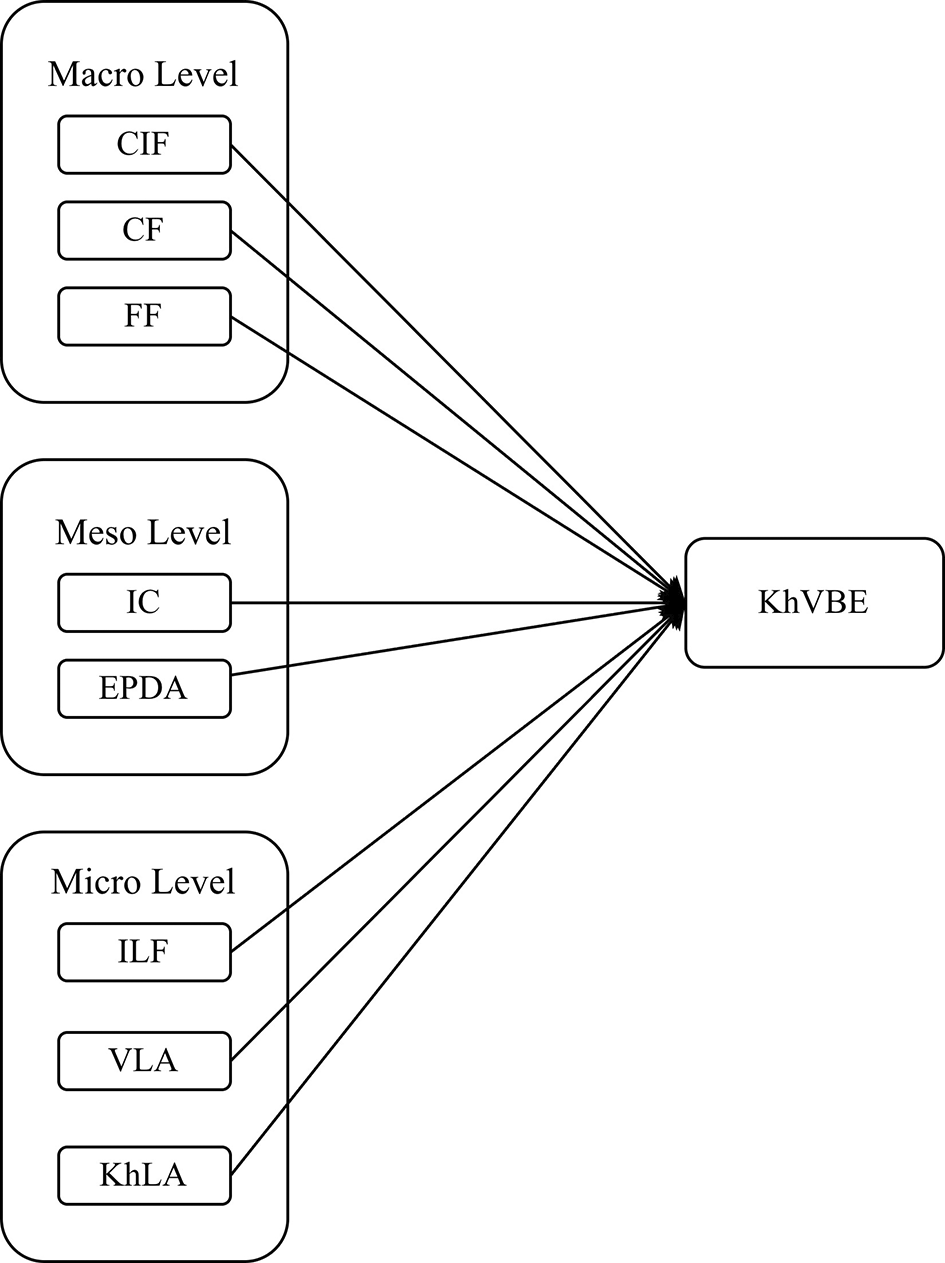
At the macro level, the model encompasses structural, institutional, and sociocultural conditions that define the broader environment in which bilingual education is implemented. This conceptualization is rooted in Bronfenbrenner’s ecological systems theory, which posits that distal environmental systems, including policy frameworks, institutional arrangements, and community structures, exert foundational influences on human development (Bronfenbrenner, 1979). In bilingual education contexts, macro-level factors such as policy coherence, resource allocation, and community engagement establish enabling or constraining conditions for program implementation (Hornberger, 2009). Accordingly, constructs such as contextual and institutional factors (CIF), community factors (CF), and family factors (FF) are situated at this level, as they represent systemic forces external to immediate instructional processes yet critically shaping their effectiveness. Contextual and institutional factors (CIF) refer to the broader structural, organizational, and policy-related conditions that facilitate or constrain the implementation of bilingual education programs, including institutional support, infrastructural capacity, technological readiness, and policy coherence. These conditions collectively shape the institutional environment within which bilingual education practices are operationalized and sustained.
At the meso level, the framework captures the mediating mechanisms through which macro-level conditions are translated into pedagogical practices. This level corresponds to what ecological theory conceptualizes as the interactional space where institutional structures are enacted in practice. Within bilingual education, instructional mechanisms, particularly information channels (IC) and engagement in professional development activities (EPDA), function as key intermediaries that operationalize policy directives and institutional resources into classroom-level practices (Echevarría et al., 2006). These mechanisms facilitate knowledge exchange, pedagogical innovation, and communication among stakeholders, thereby serving as a critical translational layer linking systemic conditions with learning processes.
At the micro level, the model focuses on individual learner characteristics and cognitive-linguistic capacities that directly influence educational outcomes. This classification aligns with foundational theories in bilingual education and applied linguistics, particularly the interdependence hypothesis proposed by Cummins (Cummins, 2000), which emphasizes the role of language proficiency and cognitive factors in academic development. Constructs such as internal learner factors (ILF), Vietnamese language ability (VLA), and Khmer language ability (KhLA) are conceptualized as proximal determinants of learning outcomes. However, consistent with socio-cultural theory advanced by Vygotsky (Vygotsky, 1978), these individual processes are inherently embedded within broader social and instructional contexts, reinforcing the necessity of situating micro-level variables within a multi-layer analytical framework.
Importantly, the macro-meso-micro classification provides an analytically coherent framework for examining bilingual education as an interconnected socio-educational ecosystem. Rather than attributing effectiveness to isolated learner variables, this perspective recognizes that bilingual education outcomes emerge through interactions among learner-related, instructional, and institutional processes operating across multiple levels (García & Wei, 2014; Hornberger, 2009; van Lier, 2004). Although the proposed framework conceptually recognizes possible indirect relationships among ecosystem factors, the present study focuses primarily on direct structural associations as an initial empirical step toward examining the broader organizational dynamics of bilingual education. Future research may further extend the framework by investigating mediation and moderation mechanisms among instructional, contextual, and learner-related factors.
Building on the socio-educational ecosystem perspective articulated in the preceding sections, this study conceptualizes Khmer-Vietnamese bilingual education effectiveness (KhVBE) as an emergent outcome arising from the interaction of three interrelated levels of influence: the micro level of learner-related factors, the meso level of instructional mechanisms, and the macro level of contextual and community conditions. Within this framework, KhVBE effectiveness is not attributed to isolated determinants but is understood as the result of the combined and interdependent influence of multi-layer components.
At the micro level (H1-H3), learner-related characteristics represent proximal determinants of bilingual education outcomes. ILF including motivation, cognitive readiness, and sociocultural integration, have been widely identified as key predictors of language acquisition and academic performance (Norton, 2013). Learners who demonstrate higher levels of readiness and engagement are better positioned to navigate the cognitive and linguistic demands of bilingual learning environments. In addition, language proficiency constitutes a central mechanism through which learner characteristics influence educational outcomes. In the Vietnamese context, VLA is particularly critical, as it functions as the dominant medium of instruction and assessment, enabling access to curricular content (Thomas & Collier, 2002). Accordingly, both ILF and VLA are expected to exert positive effects on KhVBE effectiveness. By contrast, KhLA, while essential for identity formation and cultural continuity, may exhibit a more context-dependent relationship with academic outcomes. Due to structural asymmetries in language use within formal education systems, its direct impact on measurable academic performance may be less pronounced, although it remains a meaningful contributor within culturally responsive bilingual education frameworks.
At the meso level (H4-H5), instructional mechanisms function as a translational layer linking institutional conditions with learner outcomes. Information channels (IC), encompassing classroom communication, digital platforms, extracurricular activities, and school-wide communication systems, facilitate the dissemination of linguistic and academic knowledge. Prior research indicates that diverse and well-integrated communication channels enhance learner engagement, comprehension, and knowledge retention (Müller-Spitzer et al., 2018). In parallel, EPDA strengthens teachers’ pedagogical capacity to design and implement effective bilingual instruction, particularly in linguistically and culturally diverse classrooms (Echevarría et al., 2006). Accordingly, both IC and EPDA are expected to positively influence KhVBE effectiveness because instructional communication systems and pedagogically oriented professional learning structures facilitate the operationalization of bilingual education practices across classroom and institutional contexts.
At the macro level (H6-H8), broader contextual and sociocultural conditions provide the structural environment within which bilingual education is implemented. Contextual and institutional factors (CIF), including institutional support, policy coherence, resource availability, and technological infrastructure, play a critical role in ensuring program consistency and sustainability. Community factors (CF) further contribute by reinforcing the sociocultural relevance and legitimacy of bilingual education, particularly in minority-language contexts where community institutions support language use and cultural transmission (Tran et al., 2023). In contrast, FF, while generally associated with positive educational outcomes, may exert more indirect and context-dependent effects, especially in socioeconomically constrained settings where families have limited resources to support bilingual learning.
Drawing on these theoretical and empirical insights, the study proposes eight construct-level hypotheses corresponding to the micro-, meso-, and macro-level determinants of KhVBE effectiveness (see Figure 1).
ILF positively influences KhVBE effectiveness.
VLA positively influences KhVBE effectiveness.
KhLA positively influences KhVBE effectiveness.
IC positively influences KhVBE effectiveness.
EPDA positively influences KhVBE effectiveness.
CIF positively influences KhVBE effectiveness.
CF positively influences KhVBE effectiveness.
FF positively influences KhVBE effectiveness.
This study employed a cross-sectional survey design to examine the determinants of KhVBE in the Mekong Delta, Vietnam. A purposive sampling strategy was adopted to recruit participants who possessed relevant professional expertise and were directly involved in the implementation of bilingual education programs, thereby ensuring the substantive relevance of the data to the research objectives (Hair et al., 2019). Prior to completing the survey, all participants were required to review and provide written informed consent through a statement presented at the beginning of the electronic questionnaire. The consent form clearly explained the objectives of the study, emphasized the voluntary nature of participation, and outlined key ethical considerations, including the confidentiality and anonymity of responses, as well as participants’ right to withdraw from the study at any time without penalty or adverse consequences. Only individuals who provided informed consent were permitted to proceed with the survey. Ethical clearance for the study was obtained from the Ethics Review Board of the University of Social Sciences and Humanities, Vietnam National University Ho Chi Minh City, ensuring that all procedures adhered to established standards for research involving human participants.
The final sample consisted of 269 respondents, including educational administrators and primary school teachers from three provinces, An Giang, Soc Trang, and Tra Vinh, where Khmer-Vietnamese bilingual education programs are actively implemented. In terms of gender distribution, male participants accounted for 36.4% of the sample, while females represented 63.6%, reflecting the demographic composition commonly observed in primary education contexts. Regarding professional roles, teachers comprised the majority of respondents (53.2%), with educational administrators accounting for 46.8%. The sample was overwhelmingly composed of bachelor’s degree holders (95.2%), with only a small proportion holding master’s degrees (0.7%), and the remainder reporting other qualifications. The majority of respondents (88.1%) had more than 10 years of professional experience, reflecting a highly experienced sample.
All participants were directly engaged in instructional delivery, student assessment, and/or program management, thereby constituting an appropriate unit of analysis for examining implementation-level dynamics of bilingual education effectiveness. Given the study’s focus on institutional and instructional processes, the use of practitioner-based respondents aligns with an implementation-oriented analytical perspective rather than a learner-outcome design. While the purposive sampling approach may limit the statistical generalizability of the findings, it enhances contextual relevance and interpretive validity, particularly in specialized educational settings where domain-specific expertise is required (Echevarría et al., 2006; Tran et al., 2023). Because the respondents were administrators and teachers rather than students, the study captures implementation-level perceptions of bilingual education effectiveness rather than direct learner outcomes. This distinction is important when interpreting learner-related constructs, which reflect practitioner assessments of learner conditions rather than students’ self-reported experiences or measured academic performance.
Data were collected using a structured questionnaire developed with reference to established theoretical frameworks in bilingual education and sociocultural learning (Cummins, 2000; García & Wei, 2014). All constructs were operationalized as reflective multi-item measures and assessed using a five-point Likert scale ranging from 1 (strongly disagree) to 5 (strongly agree). The dependent variable, KhVBE, was conceptualized with measurement indicators capturing multiple implementation-related aspects, including educational objectives, curriculum content, teaching approaches, and assessment practices. Independent variables were organized according to a multi-layer ecosystem framework, including micro-level factors (ILF, VLA, and KhLA), meso-level mechanisms (IC and EPDA), and macro-level conditions (CIF, CF, FF).
Data were analyzed using Partial Least Squares Structural Equation Modeling (PLS-SEM). PLS-SEM was considered appropriate for three reasons. First, the study is prediction-oriented and seeks to explain variance in implementation-level KhVBE effectiveness rather than reproduce a covariance matrix for confirmatory theory testing. Second, the model includes multiple latent constructs and a relatively complex set of structural paths, making variance-based SEM suitable for estimating direct associations among ecosystem-informed determinants (Hair et al., 2019). The analytical procedure followed a two-stage approach. In the first stage, the measurement model was evaluated to assess the reliability and validity of the constructs. In the second stage, the structural model was examined to test the hypothesized relationships among constructs. Statistical significance was determined using a bootstrapping procedure, which is widely recommended for PLS-SEM analysis.
Convergent validity was assessed through the examination of standardized factor loadings, Cronbach’s alpha, rho_A, Composite Reliability (CR), and Average Variance Extracted (AVE). In accordance with the PLS-SEM guidelines, factor loadings and Cronbach’s alpha values above 0.60, together with rho_A and CR values exceeding 0.70 and AVE values greater than 0.50, were considered indicative of satisfactory convergent validity (Hair et al., 2019). Discriminant validity was evaluated using the Fornell-Larcker criterion, whereby the square root of the AVE for each construct was required to exceed its correlations with other constructs, thereby confirming that each construct represented a distinct conceptual domain (Fornell & Larcker, 1981).
The structural model was evaluated based on three principal criteria: explanatory power (R2), effect size (f2), and predictive relevance (Q2) (Cohen, 1988; Hair et al., 2019). Predictive relevance (Q2) was examined using the blindfolding procedure, whereby values greater than zero indicate that the model possesses adequate predictive capability. To minimize the potential influence of common method bias, the full collinearity diagnostics were conducted. The collinearity values (VIF) must be evaluated to ensure no multicollinearity issues among predictors.
Reliability of the measurement model was evaluated using Cronbach’s alpha coefficients, rho_A, Composite Reliability (CR), and standardized factor loadings. The findings demonstrated a high level of internal consistency across all constructs. Specifically, the Cronbach’s alpha coefficients were 0.961 for KhVBE, 0.983 for ILF, 0.974 for VLA, 0.980 for KhLA, 0.963 for IC, 0.930 for EPDA, 0.979 for CIF, 0.979 for CF, and 0.972 for FF. Furthermore, all constructs reported Cronbach’s alpha, rho_A, and Composite Reliability values exceeding the recommended threshold of 0.70, indicating satisfactory levels of internal reliability and construct stability. In addition, all standardized factor loadings were above the acceptable cut-off value of 0.60, confirming that the indicators adequately represented their corresponding latent constructs. Collectively, these results provide strong evidence for the reliability, stability, and consistency of the measurement scales used in the study.
Convergent validity was assessed through the examination of Average Variance Extracted (AVE) values. As presented in Table 1, all constructs achieved AVE values ranging from 0.579 to 0.925, thereby exceeding the recommended threshold of 0.50 recommended in partial least squares structural equation modeling research. These AVE values indicate that a substantial proportion of variance in the observed indicators is explained by their corresponding latent constructs. Collectively, the results provide strong evidence that the measurement items adequately capture the intended theoretical constructs, thereby confirming satisfactory convergent validity of the measurement model.
Discriminant validity was evaluated using the Fornell-Larcker criterion. The results revealed that the square root of the AVE for each construct exceeded its correlations with all other constructs, suggesting that each construct shared greater variance with its own indicators than with indicators associated with other constructs. This finding confirms that the constructs are empirically distinct and adequately represent unique theoretical domains within the proposed bilingual education ecosystem framework. As shown Table 2, each construct shares greater variance with its own observed indicators than with any other construct in the model. In addition, all the VIF values were below the threshold of 5.0, suggesting that severe multicollinearity was not present. However, several predictors approached this threshold, indicating that the interpretation of non-significant effects should be made with appropriate caution (as shown in Table 3). Collectively, these findings substantiate the model’s robust discriminant validity and establish a solid foundation for confidently proceeding with the evaluation of the structural model.
The significance of the hypothesized direct relationships was examined using the bootstrapping procedure with 5,000 resamples. As presented in Table 4, the structural model results reveal a differentiated pattern of relationships among micro-level, meso-level, and macro-level determinants of Khmer-Vietnamese bilingual education effectiveness (KhVBE), indicating that the proposed multi-layer ecosystem framework received partial empirical support rather than uniform confirmation. The figure 2 illustrates the structural model of the current study.
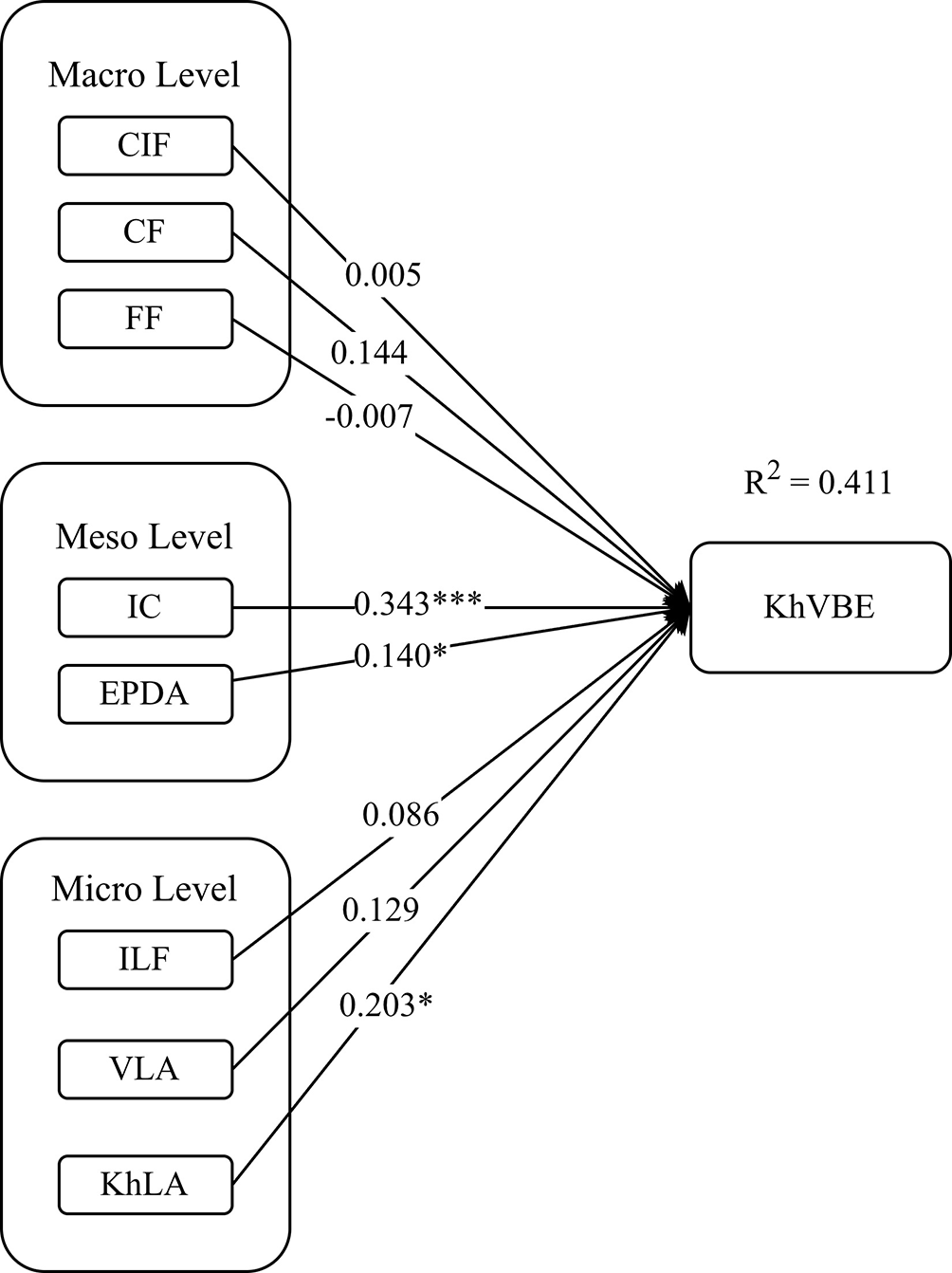
At the micro level, ILF did not demonstrate a statistically significant effect on KhVBE (β = 0.086, t = 1.233, p = 0.218). Similarly, VLA showed a positive but non-significant relationship with KhVBE (β = 0.129, t = 1.231, p = 0.219). These findings suggest that learner-related conditions, although theoretically relevant, may not directly explain variations in bilingual education effectiveness when broader institutional and instructional factors are simultaneously considered in the model. In contrast, KhLA exerted a statistically significant positive effect on KhVBE (β = 0.203, t = 2.369, p = 0.018), indicating that Khmer language competence plays a meaningful role in strengthening perceptions of bilingual education effectiveness, particularly within minority-language educational settings where heritage language maintenance remains a core pedagogical objective.
At the meso level, IC emerged as the strongest predictor in the model. IC demonstrated a statistically significant positive effect on KhVBE (β = 0.343, t = 6.109, p < 0.001), highlighting the central role of information channels, communication systems, school-based knowledge exchange, and instructional coordination mechanisms in enhancing the effectiveness of Khmer-Vietnamese bilingual education. The magnitude of this coefficient suggests that IC functions as a key implementation mechanism within the ecosystem framework. EPDA also demonstrated a statistically significant positive effect on KhVBE (β = 0.140, t = 2.026, p = 0.043), although the effect size was comparatively smaller. This finding indicates that engagement in professional development activities contributes positively to bilingual education implementation, particularly through strengthening pedagogical practices, instructional alignment, and teacher preparedness.
At the macro level, CIF did not exert a statistically significant direct effect on KhVBE (β = 0.005, t = 0.051, p = 0.959). Similarly, CF demonstrated a positive but non-significant relationship with KhVBE (β = 0.144, t = 1.229, p = 0.220), while FF also failed to demonstrate a statistically significant effect (β = −0.007, t = 0.068, p = 0.946). These findings suggest that broader contextual, institutional, community, and family-related conditions may not directly shape implementation-level perceptions of Khmer-Vietnamese bilingual education effectiveness within the present model. Instead, their influence may potentially operate indirectly through meso-level instructional systems, communication infrastructures, or teacher-related implementation mechanisms, although such indirect relationships were not examined in the current study.
The explanatory power of the model was assessed using the coefficient of determination (R2). The R2 value for KhVBE was 0.411, while the adjusted R2 value was 0.392. These results indicate that the proposed model explains approximately 41.1% of the variance in Khmer-Vietnamese bilingual education effectiveness, representing a moderate level of explanatory power according to commonly accepted PLS-SEM benchmarks. This suggests that the proposed ecosystem model demonstrates satisfactory capability in accounting for variations in bilingual education effectiveness within the Mekong Delta context. Effect size (f2) values were further examined to assess the relative contribution of each predictor to KhVBE. The results indicate that IC demonstrated the largest effect size (f2 = 0.156), representing a moderate effect and confirming its role as the most influential predictor in the structural model. EPDA (f2 = 0.021), KhLA (f2 = 0.028), FF (f2 = 0.008), and CIF (f2 = 0.005) exhibited relatively small effects, while ILF (f2 = 0.000) and CF (f2 = 0.000) showed negligible contributions to the explained variance of KhVBE. Overall, these findings reinforce the dominant role of instructional communication mechanisms relative to other contextual and learner-related predictors. Predictive relevance was evaluated using the Stone-Geisser Q2 statistic obtained through the blindfolding procedure. The Q2 value for KhVBE was 0.220, which is substantially above zero, indicating satisfactory predictive relevance and confirming that the model possesses acceptable out-of-sample predictive capability.
Taken together, the findings indicate that KhVBE effectiveness is not uniformly shaped by all proposed predictors. Instead, the results reveal a selective and layered pattern of influence across the ecosystem model. IC functions as the strongest meso-level mechanism influencing KhVBE effectiveness, while KhLA provides meaningful micro-level support through heritage language competence. EPDA contributes positively, though to a lesser extent, reflecting the importance of professional learning and instructional capacity building. In contrast, ILF, VLA, CF, and FF do not demonstrate statistically significant direct effects within the present model. These findings suggest that the effectiveness of Khmer-Vietnamese bilingual education is shaped primarily by instructional communication systems, Khmer language competence, and targeted professional development mechanisms rather than by broad contextual or family-related conditions alone. This pattern further reinforces the importance of conceptualizing bilingual education as a multi-layer ecosystem in which different determinants operate with varying degrees of direct influence on implementation effectiveness.
The present study contributes to bilingual education scholarship by reconceptualizing Khmer-Vietnamese bilingual education (KhVBE) as a structurally embedded socio-educational ecosystem shaped by interactions among instructional, linguistic, institutional, and contextual mechanisms. This perspective aligns with ecological and sociocultural approaches to bilingual education, which emphasize that language learning and educational participation are situated within broader institutional and sociocultural systems rather than isolated classroom processes (Bronfenbrenner, 1979; García & Wei, 2014; Hornberger, 2009). The findings further demonstrate that the proposed ecosystem framework received partial empirical support, indicating that different levels of the educational ecosystem contribute unevenly to KhVBE effectiveness.
A central contribution of the study lies in demonstrating the dominant role of meso-level instructional coordination mechanisms, particularly information channels (IC), in shaping bilingual education effectiveness. Among all predictors in the model, IC emerged as the strongest determinant of KhVBE effectiveness, exhibiting the largest path coefficient and effect size. This finding suggests that institutional knowledge circulation, communication systems, and pedagogical coordination mechanisms function as the operational foundation of bilingual education implementation. The result extends previous bilingual education research, which has traditionally emphasized learner language proficiency or teacher competence as primary determinants of educational success (Cummins, 2000; Fullan, 2007; Thomas & Collier, 2002). Instead, the present findings indicate that bilingual education effectiveness depends substantially on the extent to which educational systems can coordinate, circulate, and operationalize instructional knowledge across institutional and classroom contexts.
This interpretation is consistent with recent scholarship emphasizing the importance of instructional ecosystems, communication infrastructures, and digitally mediated coordination processes in supporting pedagogical coherence and multilingual learning environments (Bahari, 2022; Müller-Spitzer et al., 2018). Within the context of KhVBE, information channels appear to operate as a system-wide implementation mechanism linking curriculum objectives, instructional practices, bilingual resources, and school-community communication structures. Collectively, these findings position bilingual education not merely as a classroom-level pedagogical model but as an organizational and communicative process embedded within broader institutional dynamics.
The significant positive effect of Khmer language ability (KhLA) also carries important theoretical implications. The findings support developmental bilingual education perspectives that conceptualize heritage-language competence as a cognitive, cultural, and educational resource rather than a transitional mechanism subordinate to majority-language acquisition (Baker, 2011; Cummins, 2000). Although Vietnamese language ability did not demonstrate a statistically significant direct effect, Khmer language competence remained positively associated with KhVBE effectiveness, suggesting that minority-language proficiency retains structural relevance within bilingual education systems. Importantly, Khmer language ability appears to contribute not only to cultural preservation but also to the legitimacy and sustainability of bilingual education within local educational contexts. This finding aligns with Hornberger’s (2009) argument that minority-language maintenance depends on the extent to which local languages are institutionally legitimized within educational systems. The findings therefore challenge deficit-oriented assumptions suggesting that minority-language use may hinder educational development and instead reinforce additive bilingual perspectives that recognize multilingualism as an educational asset (García & Wei, 2014; Lambert, 1975). In the context of Khmer communities in the Mekong Delta, Khmer language competence may strengthen both educational engagement and the sociocultural relevance of bilingual schooling.
The significant but comparatively smaller influence of engagement in professional development activities (EPDA) further highlights the contextual and operational nature of bilingual education implementation. The findings suggest that teacher professional learning contributes positively to KhVBE effectiveness, particularly through strengthening instructional adaptation, pedagogical alignment, and classroom-level bilingual teaching practices. This interpretation is consistent with prior research demonstrating that professional development is most effective when closely connected to instructional innovation, culturally responsive pedagogy, and contextualized classroom practices (Babinski et al., 2018; Darling-Hammond et al., 2017; Echevarría et al., 2006). However, the relatively modest effect size associated with EPDA also suggests that teacher training alone may be insufficient to substantially transform bilingual education systems in the absence of supportive communication and institutional infrastructures. This finding reflects broader implementation challenges frequently identified in bilingual education research, particularly the gap between policy aspirations and classroom realities (Tran et al., 2023). Consequently, professional development may strengthen instructional competence without necessarily altering broader structural conditions shaping bilingual education effectiveness.
The non-significant effects associated with internal learner factors (ILF) and Vietnamese language ability (VLA) require careful interpretation. Although prior bilingual education studies often identify learner motivation, cognitive readiness, and majority-language proficiency as important predictors of educational achievement, the present study focuses on administrator and teacher perceptions of implementation effectiveness rather than direct student learning outcomes. Therefore, the weaker salience of learner-related variables may partly reflect the implementation-oriented unit of analysis adopted in the current research. Within this perspective, learner capacities may become consequential only when supported by coherent instructional systems, institutional coordination mechanisms, and pedagogical support structures. These findings do not diminish the importance of learner characteristics but instead suggest that their influence may operate indirectly through school-level communication systems, instructional practices, and institutional mediation processes (García & Wei, 2014; Fullan, 2001).
Similarly, the non-significant direct effects of contextual factors (CF) and family factors (FF) suggest that macro-level conditions may not directly shape implementation-level perceptions of KhVBE effectiveness within the present model. One possible explanation is that distal contextual influences are translated into educational practice through meso-level mechanisms such as instructional communication systems, teacher professional learning, and school-based pedagogical coordination (Menken & García, 2010). Another possibility is that broader contextual and family influences require longitudinal or multilevel analytical approaches to be adequately captured within ecosystem-oriented educational research (Bronfenbrenner, 1979). Therefore, these findings should not be interpreted as evidence of theoretical irrelevance, but rather as an indication that macro-level influences may operate indirectly, cumulatively, or contingently through institutional mediation processes within multilingual educational environments (Hornberger, 2009; Spolsky, 2004).
The model demonstrated moderate explanatory power and satisfactory predictive relevance, supporting the usefulness of the ecosystem-informed framework for explaining implementation-level KhVBE effectiveness. Overall, the findings suggest that bilingual education effectiveness in minority-language settings is shaped primarily through instructional communication systems, pedagogical coordination, and culturally grounded language resources rather than isolated learner-related conditions alone (García & Wei, 2014; Hornberger, 2009; van Lier, 2004).
From a policy perspective, the findings imply that efforts to strengthen bilingual education effectiveness should prioritize the development of instructional communication systems, pedagogical coordination infrastructures, and culturally responsive language support mechanisms. Policies focusing exclusively on learner language proficiency or generalized contextual reforms may be insufficient unless accompanied by investments in institutional mediation systems capable of translating educational goals into coherent instructional practices. In this sense, the study highlights that sustainable bilingual education development requires not only linguistic inclusion but also systemic alignment across instructional, institutional, and sociocultural dimensions. Overall, the findings suggest that bilingual education effectiveness in minority-language contexts is shaped less by isolated learner characteristics or broad contextual conditions than by the institutional capacity to coordinate instructional communication systems, sustain pedagogical alignment, and integrate culturally grounded language resources across educational settings.
This study reconceptualizes Khmer-Vietnamese bilingual education (KhVBE) through a multi-layer socio-educational ecosystem perspective, demonstrating that bilingual education effectiveness is associated not only with linguistic competence but also with instructional communication systems, professional learning mechanisms, and broader institutional processes. The findings indicate that the proposed model possesses moderate explanatory power (R2 = 0.411) and satisfactory predictive relevance (Q2 = 0.220), thereby supporting the usefulness of an ecosystem-informed framework for explaining implementation-level perceptions of KhVBE effectiveness. Among the examined predictors, information channels emerged as the strongest determinant of KhVBE effectiveness, while Khmer language ability demonstrated a smaller but statistically significant contribution. Engagement in professional development activities also contributed positively to KhVBE effectiveness, although with a comparatively limited effect size. In contrast, internal learner factors, Vietnamese language ability, contextual factors, and family factors did not demonstrate statistically significant direct relationships within the present model. Collectively, these findings suggest that bilingual education effectiveness is shaped less by isolated learner characteristics or dominant-language competence alone than by the broader institutional and instructional capacity to coordinate communication systems, pedagogical practices, and culturally grounded language resources within multilingual educational environments.
The study contributes theoretically by advancing an ecosystem-informed perspective that conceptualizes bilingual education as an interconnected socio-educational process shaped by interactions among instructional, institutional, and linguistic dimensions (Bronfenbrenner, 1979; García & Wei, 2014; Hornberger, 2009). Methodologically, the use of PLS-SEM provides evidence for the explanatory and predictive relevance of the proposed framework within minority-language educational contexts.
Practically, the findings underscore the importance of strengthening instructional communication infrastructures, enhancing school-level pedagogical coordination, and supporting culturally responsive Khmer-language integration within bilingual education systems. The study further suggests that professional development initiatives may be more effective when directly linked to classroom implementation, bilingual instructional adaptation, and context-sensitive pedagogical practices rather than generalized training approaches. Overall, the study provides an ecosystem-informed framework for supporting more inclusive, contextually responsive, and sustainable bilingual education development in minority-language settings.
Despite these contributions, several limitations should be acknowledged. First, the cross-sectional design limits the ability to establish causal relationships among the examined constructs. Accordingly, the findings should be interpreted as associative and predictive relationships rather than definitive causal effects. Future longitudinal, mixed-method, or multilevel studies would provide deeper insights into how bilingual education implementation evolves across different institutional and sociolinguistic contexts over time.
Second, the study relies exclusively on the perceptions of administrators and teachers directly involved in Khmer-Vietnamese bilingual education, which may limit the generalizability of the findings to other stakeholder groups such as students, parents, and community actors. In addition, KhVBE effectiveness was operationalized through implementation-level practitioner perceptions rather than direct student performance indicators. Therefore, the findings should be interpreted primarily as evaluations of bilingual education implementation effectiveness rather than direct measures of student academic achievement. Future research incorporating student-level learning outcomes, classroom observations, and multi-stakeholder perspectives would strengthen the explanatory scope and practical applicability of the proposed framework.
Third, although statistical procedures were conducted to assess common method bias, the use of self-reported survey measures may still increase the risk of perceptual inflation among variables. In addition, although all constructs demonstrated strong internal consistency, several reliability coefficients were very high, suggesting potential item redundancy. Future research should therefore refine and shorten the measurement scales while preserving their theoretical coverage. Future studies may also benefit from integrating objective educational indicators, qualitative inquiry, and triangulated data collection approaches to enhance methodological robustness and contextual interpretation.
Finally, although the study adopts a multi-layer ecosystem perspective, the empirical model estimates only direct relationships among constructs and does not formally examine mediation, moderation, or multilevel interactions across ecosystem layers. The non-significant effects associated with contextual and family-related factors suggest that these influences may operate indirectly through institutional communication systems, pedagogical coordination, or professional learning mechanisms. Future research should therefore investigate indirect pathways and cross-level dynamics to more fully capture the ecosystem processes underlying bilingual education implementation. Comparative studies across different minority-language communities and multilingual educational settings would also help evaluate the broader contextual applicability and theoretical transferability of the proposed ecosystem-informed framework.
This study was conducted in accordance with the ethical principles and guidelines for research involving human participants. Ethical approval for the project, Khmer-Vietnamese bilingual education activities for primary school students of ethnic minority in the Mekong Delta, was granted by the Ethics Review Board (ERB) of the University of Social Sciences and Humanities, Vietnam National University Ho Chi Minh City (USSH, VNU-HCM) (ERB Application No. 10–2025; approved on 29 April 2025).
Informed consent was obtained from all individual participants involved in the study.
The dataset supporting the findings of this study is available in Figshare: Determinants of Khmer-Vietnamese Bilingual Education Effectiveness, https://doi.org/10.6084/m9.figshare.32402682 (Vu Thanh Tam Nguyen, 2026).
The project contains the following underlying data:
• Determinants of Khmer-Vietnamese Bilingual Education Effectiveness dataset (.sav), containing anonymized survey responses collected from participants involved in Khmer–Vietnamese bilingual education programs in Vietnam’s Mekong Delta.
Data are available under the terms of the Creative Commons Attribution 4.0 International License (CC BY 4.0).
The authors would like to express their sincere gratitude to the anonymous reviewers and editors for their valuable comments and suggestions, which substantially improved the quality of this manuscript. This research is funded by Vietnam National University Ho Chi Minh City under grand number B2024-18b-03.