Просмотр новости
Найдите то, что Вас интересует
 Спутники
 РН
РН SpaceX
 Роскосмос
 NASA
NASA
СпутникиРНSpaceXРоскосмосNASABackground This study aims to analyze the effect of CEO characteristics on sustainability reports and tax avoidance, as well as to examine the effect of sustainability reports as a mediating variable. The focus of this study is on companies with relatively homogeneous sustainability commitments in order to gain an understanding of the effect of CEO characteristics on company policy. Methods The study uses panel data from the sustainability reports and annual reports of 25 companies listed on the SRI KEHATI Index during the period 2018–2024, with a total of 172 observations. Sustainability reports are proxied using the Global Reporting Initiative (GRI) Index, CEO characteristics are measured through education, age, and tenure, while tax avoidance is measured using the effective tax rate. The analysis was conducted using panel data regression with Eviews 13, incorporating company control variables. Results The results show that CEO education has a significant effect on sustainability report disclosure, while CEO age and tenure do not have a significant effect. In addition, CEO age and tenure are proven to affect the level of corporate tax avoidance. However, sustainability reports do not act as a mediating variable in the relationship between CEO characteristics and tax avoidance. Conclusions These findings indicate that CEO characteristics have different influences on corporate sustainability and taxation policies. CEO education can influence corporate strategic decisions related to sustainability disclosure, while CEO age and tenure are more closely related to tax avoidance strategies. However, sustainability report disclosure has not been proven to be a mediating mechanism between CEO characteristics and tax avoidance practices.
The increasing public attention to sustainable business practices has encouraged companies to no longer focus solely on financial performance, but also on the social and environmental impacts of their operational activities. Pressure from investors, regulators, and the public demands transparency and non-financial information, shifting the paradigm of corporate reporting towards more comprehensive reporting (Fernández et al., 2014).
In response to these demands, sustainability reports have evolved as a strategic instrument for communicating companies’ commitment to sustainability while building trust among stakeholders (Barker, 2025). However, on the other hand, companies are still faced with aggressive tax management practices through tax avoidance. Although legal, tax avoidance is often perceived as contrary to the spirit of sustainability because it has the potential to reduce companies’ contributions to state revenue (Nasih et al., 2025). A number of studies even show a contradiction between sustainability disclosure and companies’ tendency to engage in tax avoidance (Mitroulia, 2025).
This contradiction confirms that sustainability reporting and tax avoidance policies are greatly influenced by the strategic decisions of top management, particularly the Chief Executive Officer (CEO). Based on Upper Echelons Theory, the characteristics of top leaders reflect the values, risk preferences, and perspectives that influence the direction of company policy (Hambrick & Mason, 1984). In line with Agency Theory and Stakeholder Theory, CEO decisions are not only influenced by shareholder interests, but also by personal interests and the demands of broader stakeholders (Freeman et al., 2020). However, whether sustainability reporting actually translates into more responsible tax behavior remains an open empirical question. Firms may disclose sustainability information extensively while adopting tax strategies that are driven by different economic and managerial considerations.
Previous studies have shown inconsistent results regarding the influence of CEO characteristics on sustainability reports and tax avoidance. CEO education is generally found to have a positive effect on sustainability reports (Malik et al., 2020; Saha et al., 2023; Ghardallou, 2022), but CEO age and tenure show mixed results. Similar inconsistencies are also found in studies of tax avoidance (Huang & Zhang, 2019; James, 2020; Souguir et al., 2023). In addition, most studies still examine sustainability reports and tax avoidance separately. Consequently, limited evidence exists on whether sustainability reporting functions as a mechanism linking managerial characteristics to tax-related decisions. Furthermore, the relationship between sustainability disclosure and corporate tax behavior remains inconclusive in the literature.
Based on these gaps, this study aims to examine the influence of CEO characteristics, including CEO education, age, and tenure, on sustainability reporting and tax avoidance. More importantly, this study investigates whether sustainability reporting serves as a mechanism linking CEO characteristics to corporate tax behavior. While sustainability reporting is commonly viewed as an indicator of corporate responsibility, it remains unclear whether firms with stronger sustainability disclosure also demonstrate more responsible tax practices. This issue is particularly relevant in the context of SRI-KEHATI Index companies, which are recognized for their sustainability commitment and ESG orientation. Therefore, this study contributes not only by examining the role of CEO characteristics but also by providing evidence on whether sustainability disclosure and tax-related decisions are aligned or operate independently within sustainability-oriented firms.
Based on the Upper Echelons Theory according to Hambrick & Mason (1984), CEO characteristics influence corporate strategic decisions, including sustainability report disclosure. CEOs with higher levels of education tend to have a better understanding of sustainability issues and stakeholder demands, thereby encouraging broader sustainability report disclosure (Saha et al., 2023). In addition, CEO age is related to risk preferences, where more senior CEOs tend to be more cautious and oriented towards compliance and corporate legitimacy (Malik et al., 2020). Meanwhile, CEOs with longer tenures have greater influence and experience within the organization, which can encourage consistency in sustainability reporting practices (Al-Duais et al., 2021). Based on these arguments, the hypothesis proposed are:
CEO education has a positive effect on sustainability reports.
CEO age has a positive effect on sustainability reports.
CEO tenure has a positive effect on sustainability reports.
CEO characteristics also influence risk preferences and attitudes toward tax compliance. Based on Upper Echelons Theory (Hambrick & Mason, 1984), corporate strategic decisions, including tax policy, reflect the values, experiences, and risk preferences of top management. CEOs with higher levels of education tend to consider the legal and reputational risks of tax avoidance practices, thereby potentially reducing the level of tax avoidance (Huang & Zhang, 2019). CEO age reflects differences in risk tolerance, with younger CEOs tending to be more aggressive in their decision-making, including in tax strategy (James, 2020). In addition, CEOs with longer tenure have a better understanding of the company’s internal systems and tax planning opportunities, which can increase the tendency for tax avoidance (Neifar & Huesing, 2023). Thus, the research hypothesis is formulated as follows:
CEO education has a negative effect on tax avoidance.
CEO age has a negative effect on tax avoidance.
CEO tenure has a positive effect on tax avoidance.
Sustainability reports serve as a mechanism that reflects a company’s ethical orientation and legitimacy in responding to stakeholder pressures. Sustainability report disclosure policies are the result of strategic decisions made by top management, which are influenced by CEO characteristics, as explained in Upper Echelons Theory (Hambrick & Mason, 1984). Furthermore, the level of disclosure in sustainability reports shapes the boundaries of reputation and public scrutiny that influence corporate behavior in tax management, thereby potentially curbing aggressive tax avoidance practices (Rini et al., 2023). Based on these arguments, the research hypothesis is formulated as follows:
Sustainability Reports mediate the relationship between CEO characteristics and tax avoidance.
The data was analyzed using panel data regression with the help of Eviews 13 software. The panel data regression method was chosen because it is able to combine cross-section and time-series dimensions, thereby capturing variations between companies and the dynamics of change between observation periods. The selection of the panel data regression model was carried out through several stages of testing, namely the Chow test to determine the selection between the Common Effect Model (CEM) and the Fixed Effect Model (FEM), the Hausman test to choose between the Fixed Effect Model (FEM) and Random Effect Model (REM), and the Lagrange Multiplier (LM) test to determine the choice between the Common Effect Model (CEM) and Random Effect Model (REM). The best model was selected based on the results of these tests (Gujarati & Porter, 2009; Wooldridge, 2013). In addition, to examine the mediating role of sustainability reporting in the relationship between CEO characteristics and tax avoidance, a Sobel test was conducted to assess the statistical significance of the indirect effect. Although the Sobel test was originally developed for conventional regression settings, it has been widely employed in accounting, finance, and corporate governance research as an initial approach for testing mediation effects. In this study, the Sobel test was applied after estimating the panel regression models and was used solely to evaluate the significance of the indirect effect based on the estimated path coefficients. The primary model estimation remained based on panel data regression techniques that accounted for firm-specific heterogeneity through the appropriate model selection procedures (Chow, Hausman, and Lagrange Multiplier tests). Therefore, the mediation analysis should be interpreted as supplementary evidence regarding the indirect relationship among variables.
The data in this study were obtained from the sustainability reports and annual reports of companies listed on the SRI KEHATI Index during the period of 2018–2024. The research sample consisted of 25 companies, selected based on the availability of sustainability reports and annual report data during the observation period. Based on these criteria, 172 panel data observations were obtained, of which 24 companies had complete data for seven years, while PT Avia Avian Tbk (AVIA) was only available for the 2021–2024 period. The SRI-KEHATI Index was selected because it represents companies with relatively strong ESG commitments and sustainability-oriented business practices in Indonesia, making it relevant to the objectives of this study. Focusing on SRI-KEHATI companies also allows the study to examine whether CEO characteristics still influence sustainability reporting and tax avoidance even among firms with established sustainability reputations. However, because the sample consists only of companies within the SRI-KEHATI Index, the observations tend to be relatively homogeneous in terms of sustainability orientation. This condition may limit data variation and reduce the generalizability of the findings to companies outside the index.
The indicators used in this study were carefully selected to ensure comprehensive measurement of the research variables, which included CEO characteristics, sustainability reports, tax avoidance, and control variables. The selection of indicators was based on previous literature and considerations of their relevance to the context of companies listed on the SRI KEHATI Index. Each variable was measured using a set of indicators that represented theoretical aspects while also reflecting the empirical conditions of the company. Control variables were included to minimize potential bias and isolate the influence of the main variables on tax avoidance. Details of the indicators and measurements of each variable are presented systematically in Table 1.
- CEO without an MBA background: 0
- CEO with an MBA background: 1
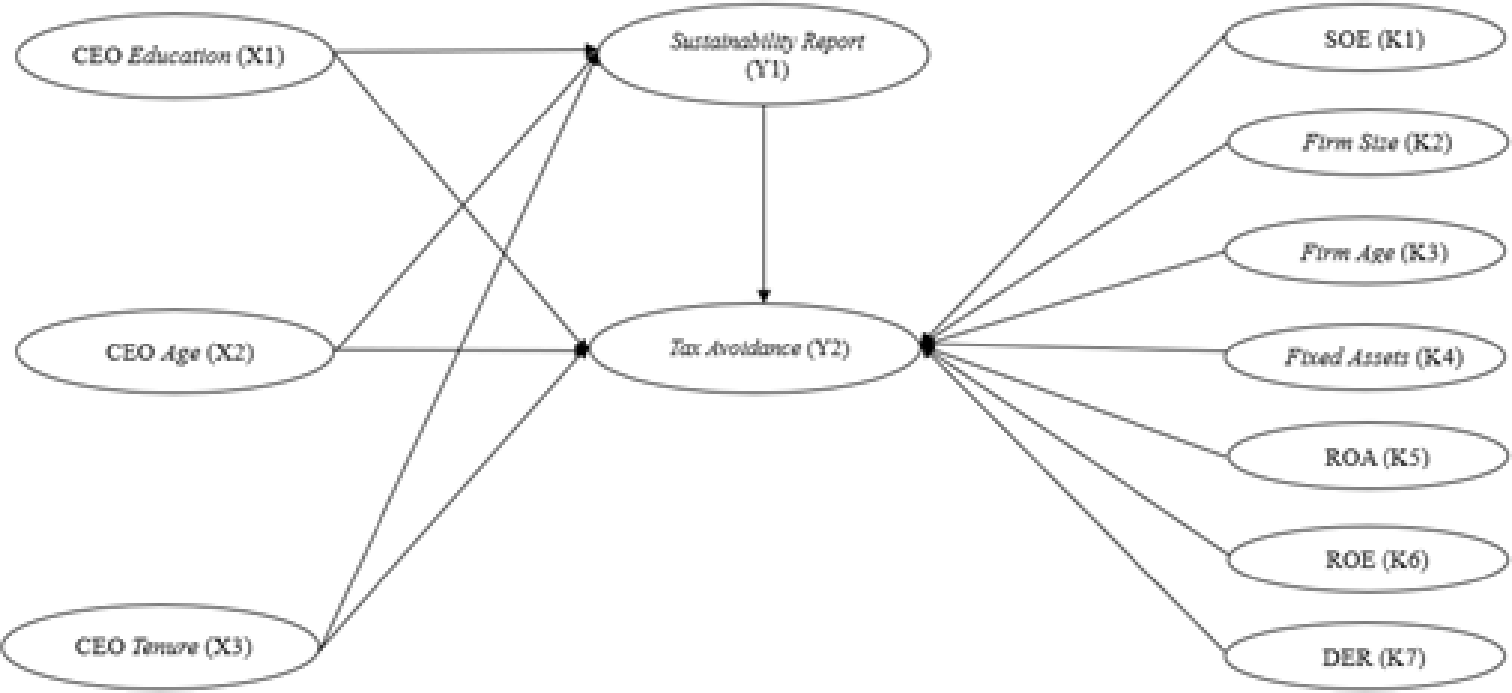
Based on the variable indicators described above, this study develops a conceptual framework to illustrate the relationships among the research variables. The framework explains how CEO characteristics influence corporate strategic decisions, particularly in relation to sustainability reporting and tax avoidance practices. In addition, sustainability reporting is proposed as a mediating variable that potentially links CEO characteristics with corporate tax avoidance. Control variables are also included in the framework to account for other factors that may influence corporate tax behavior. The conceptual framework of this research is presented in Figure 1.
This section presents the results of hypothesis testing based on the regression analysis. The detailed statistical outputs are presented in Tables 2–4, followed by a summary of hypothesis testing results in Table 5.
CEO education has a positive effect on sustainability reports.
According to Table 5, CEO education (H1) has a coefficient of –10.827 with a p-value of 0.039 in its influence on sustainability reports, indicating a negative and significant relationship. In addition, the 95% confidence interval ranges from –21.041 to –0.614, with all values below zero. This confirms that the effect of CEO education on sustainability reports is consistently negative and statistically significant. Therefore, H1 is not supported, because the empirical results show a direction opposite to the proposed hypothesis.
CEO age has a positive effect on sustainability reports.
Table 5 shows that CEO age (H2) has a coefficient of 0.733 with a p-value of 0.094 in its effect on sustainability reports. These results indicate a positive but insignificant relationship at a 5 percent significance level. This finding is reinforced by the 95% confidence interval ranging from −0.119 to 1.585, which still includes zero, indicating that the effect of CEO age on sustainability report disclosure cannot be statistically confirmed. Thus, hypothesis 2 is not supported.
CEO tenure has a positive effect on sustainability reports.
CEO tenure (H3) has a coefficient of −0.558 with a p-value of 0.205, as reported in Table 5. This result shows a negative and insignificant relationship. This is reinforced by the 95% confidence interval ranging from −1.417 to 0.301, which includes zero, indicating that CEO tenure has not been empirically proven to affect the level of sustainability report disclosure. Thus, hypothesis 3 is not supported.
CEO education has a negative effect on tax avoidance.
CEO education (H4) has a coefficient of 0.018 with a p-value of 0.407 in its effect on tax avoidance. This result shows a positive and insignificant relationship, as shown in Table 5. This result indicates a positive but insignificant relationship. Since ETR is used as a proxy for tax avoidance, a higher ETR reflects lower tax avoidance, while a lower ETR reflects higher tax avoidance. However, because the relationship is statistically insignificant, the effect of CEO education on tax avoidance cannot be empirically confirmed. This finding is also supported by the 95% confidence interval ranging from −0.025 to 0.061, which includes zero. Thus, hypothesis 4 is not supported.
CEO age has a negative effect on tax avoidance.
According to Table 5, CEO age (H5) has a coefficient of 0.007 with a p-value of 0.000 in its effect on the effective tax rate (ETR). This result indicates a positive and significant relationship. Since ETR is inversely related to tax avoidance, the positive effect on ETR implies that higher CEO age is associated with lower tax avoidance. In other words, older CEOs tend to engage less in tax avoidance practices. This finding is reinforced by the 95% confidence interval ranging from 0.004 to 0.010, which is entirely above zero, confirming the significance and consistency of the direction of influence. Thus, hypothesis 5 is supported.
CEO tenure has a positive effect on tax avoidance.
CEO tenure (H6) has a coefficient of −0.008 with a p-value of 0.000 as reported in Table 5 in its effect on the effective tax rate (ETR). This result indicates a negative and significant relationship. Since ETR is inversely related to tax avoidance, the negative effect on ETR implies that longer CEO tenure is associated with higher tax avoidance. In other words, CEOs with longer tenure tend to engage more in tax avoidance practices. This finding is reinforced by the 95% confidence interval ranging from −0.011 to −0.004, which is entirely below zero. This confirms that the negative effect of CEO tenure on ETR is consistent and statistically significant. Thus, hypothesis 6 is supported.
The Sustainability Report mediates the relationship between CEO Characteristics and Tax Avoidance.
The Sustainability Report (H7) has a mediation coefficient of −0.0004 with a p-value of 0.284 in mediating the relationship between CEO characteristics and tax avoidance, as shown in Table 5. These results indicate that the Sustainability Report does not significantly mediate the effect of CEO characteristics on tax avoidance. This finding is reinforced by the 95% confidence interval ranging from −0.00114 to 0.00033, which includes zero, indicating that the mediating effect of the Sustainability Report cannot be empirically proven. Thus, hypothesis 7 is not supported.
The first hypothesis in this study states that CEO education influences sustainability reports. CEO education characteristics were chosen because education reflects cognitive capacity, analytical skills, and CEO understanding of long-term strategic issues, including sustainability and corporate social responsibility issues. Based on the results presented in Table 2, CEO education has a coefficient of −10.827 with a p-value of 0.039, indicating a negative and statistically significant relationship with sustainability reports at the 5 percent significance level. These findings indicate that although the proposed hypothesis expected a positive relationship, the empirical results show the opposite direction. Therefore, hypothesis H1 is not supported.
The findings of this study can be explained through the concept of strategic decoupling (Meyer & Rowan, 1977), which suggests that companies may symbolically adopt sustainability practices to maintain legitimacy without fully integrating sustainability into substantive business strategies. In this context, the role of CEO education becomes important because educational background shapes how CEOs interpret stakeholder demands, assess disclosure costs, and prioritize corporate objectives. Based on Upper Echelons Theory, organizational outcomes reflect the cognitive characteristics, experiences, and values of top executives. CEOs with higher educational backgrounds, particularly those with MBA or finance-oriented education, generally possess stronger analytical capabilities, financial literacy, and strategic decision-making skills. However, these capabilities do not necessarily lead to broader sustainability disclosure. Instead, highly educated CEOs may evaluate sustainability reporting from a more rational-economic perspective, where disclosure decisions are assessed based on efficiency, financial consequences, and direct value creation for shareholders.
This condition indicates that in the context of developing countries such as Indonesia, the cognitive orientation explained by Upper Echelons Theory may be more strongly driven by Agency Theory considerations than by Stakeholder Theory motivations. From an Agency Theory perspective, highly educated CEOs may prioritize efficiency and shareholder interests by limiting disclosures perceived as costly or lacking immediate economic benefits. Sustainability reporting may be viewed as increasing compliance, monitoring, and reputational management costs without necessarily contributing directly to financial performance. As a result, CEOs with strong financial and managerial education backgrounds may adopt more selective sustainability disclosure strategies.
At the same time, although Stakeholder Theory suggests that companies disclose sustainability information to meet stakeholder expectations and maintain legitimacy, the findings imply that legitimacy can still be maintained through symbolic or limited disclosure practices. This reflects the idea of strategic decoupling, where companies attempt to balance external legitimacy pressures with internal efficiency objectives. In firms included in the SRI-KEHATI Index, sustainability legitimacy may already be relatively established, causing CEOs to perceive that extensive sustainability disclosure is not strategically necessary to maintain stakeholder trust. Therefore, the negative relationship between CEO education and sustainability reports suggests that highly educated CEOs may not reject sustainability itself, but rather adopt a more strategic and efficiency-oriented approach toward sustainability disclosure. Instead of maximizing disclosure quantity, they may prefer disclosure practices that are considered sufficient to maintain legitimacy while minimizing unnecessary reporting burdens.
The findings of this study are not in line with the studies conducted by Malik et al. (2020), Saha et al. (2023), and Ghardallou (2022), which found a positive relationship between CEO education and sustainability report disclosure. These differences may be influenced by variations in institutional settings, industry characteristics, and methodological approaches. Malik et al. (2020) used logistic regression analysis focusing on the probability of sustainability disclosure rather than the extent or intensity of disclosure, which may produce different sensitivities toward CEO characteristics. Meanwhile, Saha et al. (2023) examined the banking sector in Bangladesh, which operates under stricter regulatory pressure regarding sustainability disclosure. Similarly, Ghardallou (2022) focused on companies in Saudi Arabia during a period of increasing ESG institutionalization, where stakeholder and regulatory pressures may strengthen the positive influence of CEO education on sustainability reporting practices.
The second hypothesis in this study states that CEO age affects sustainability reports. The CEO age variable was chosen because age reflects the level of experience, risk preferences, and long-term decision-making orientation. Age differences are believed to influence how CEOs respond to sustainability demands and corporate social legitimacy. As shown in Table 2, CEO age has a coefficient of 0.733 with a p-value of 0.094, indicating a positive but statistically insignificant relationship with sustainability reports at the 5 percent significance level.
Based on Upper Echelons Theory, CEO age reflects managerial values, cognitive orientation, and risk preferences that influence corporate strategic decisions, including sustainability disclosure policies. More senior CEOs generally tend to be more cautious, risk-averse, and oriented toward long-term organizational stability. In the context of sustainability reporting, this orientation may encourage CEOs to maintain corporate legitimacy and reputation through broader sustainability disclosure practices. This tendency also aligns with Agency Theory, where older CEOs are generally more concerned with avoiding legal and reputational risks arising from low transparency and stakeholder distrust. At the same time, from the perspective of Stakeholder Theory, senior CEOs are likely to possess greater awareness of stakeholder expectations due to their extensive managerial and business experience. Consequently, sustainability reports may be viewed not only as disclosure instruments, but also as strategic tools to maintain investor confidence, public legitimacy, and long-term relationships with stakeholders.
The results show that CEO age has a positive effect on sustainability reports, but the relationship is not statistically significant. These findings indicate that the direction of the relationship is consistent with several previous studies, but the empirical evidence is not yet strong enough to fully support the hypothesis. These results are not in line with the studies by Malik et al. (2020) and Oh et al. (2016), which found that more senior CEOs have a significant influence in supporting sustainability practices.
This difference is due to the fact that Malik et al. (2020) used a larger sample of companies listed on the Pakistan Stock Exchange, while Oh et al. (2016) studied manufacturing companies based in the United States during the period 2004−2009, which is a very different context from the companies in the Kehati SRI Index that were the subject of this study.
The third hypothesis in this study states that CEO tenure affects sustainability reports. CEO tenure was chosen as one of the main characteristics because it reflects the level of control over the organization, the power of influence in strategic decision-making, and the CEO’s ability to direct the company’s long-term policies. As shown in Table 2, CEO tenure has a coefficient of −0.558 with a p-value of 0.205, indicating a negative but statistically insignificant relationship with sustainability reports at the 5 percent significance level. These results suggest that the length of a CEO’s tenure does not significantly influence sustainability report disclosure.
Based on Upper Echelons Theory, CEO tenure reflects the extent of managerial experience, organizational control, and strategic influence accumulated over time within the company. CEOs with longer tenures generally possess deeper knowledge of the company’s internal processes, organizational culture, and long-term business strategies, which may influence how they respond to sustainability-related issues. In this context, longer-tenured CEOs may theoretically encourage broader sustainability disclosure as part of maintaining organizational stability, legitimacy, and long-term corporate reputation. This tendency is also associated with Agency Theory, where CEOs with greater managerial authority may utilize sustainability reporting as a mechanism to reduce information asymmetry and strengthen stakeholder trust. At the same time, from the perspective of Stakeholder Theory, CEOs who have maintained long-term relationships with investors, regulators, and the public are likely to be more aware of the importance of transparency and accountability in sustaining corporate legitimacy. However, the empirical results of this study indicate that CEO tenure does not have a statistically significant influence on sustainability report disclosure, suggesting that the length of a CEO’s tenure alone is insufficient to consistently determine the extent of sustainability reporting practices.
However, empirical research results show that CEO tenure has a negative and insignificant coefficient on sustainability reports. This finding indicates that CEO tenure does not directly increase the level of sustainability disclosure, so hypothesis H3 is not supported. These results contradict the findings of Saha et al. (2023) and Ghardallou (2022), who found a positive effect of CEO tenure on sustainability reports.
This difference in findings may be due to the characteristics of the sample and control variables used. Saha et al. (2023) used a sample of all banks listed on the Dhaka Stock Exchange, so the industry context was very specific and in a relatively strict regulatory environment. In addition, Saha et al. (2023) included control variables such as bank capital, growth, and net interest income (NII), which differ from this study. These differences in industry context and model structure have the potential to influence the direction of the CEO tenure coefficient, so it is reasonable that the two studies produced findings that are not entirely consistent.
Ghardallou’s (2022) research found that CEO tenure has a positive effect on the effectiveness of CSR practices. Using a sample of public companies in Saudi Arabia from 2015 to 2020 and including control variables such as sales growth, the study found that the longer a CEO serves, the stronger their commitment to integrating sustainability principles into corporate strategy.
The fourth hypothesis in this study states that CEO education influences tax avoidance. The CEO education variable was chosen because education reflects cognitive capacity, analytical skills, and an understanding of the legal and reputational risks inherent in corporate strategic decisions, including taxation policy. As shown in Table 3, CEO education has a coefficient of 0.018 with a p-value of 0.407, indicating a positive but statistically insignificant relationship with tax avoidance at the 5 percent significance level. The results of this study indicate that CEO education has a positive coefficient on the effective tax rate (ETR), which implies a negative effect on tax avoidance. However, the relationship is statistically insignificant, indicating that CEO education does not significantly influence tax avoidance practices. Therefore, hypothesis H4 is not supported.
Based on Upper Echelons Theory, CEO education reflects cognitive capacity, analytical ability, and managerial perspectives that influence strategic corporate decisions, including taxation policies. CEOs with higher educational backgrounds are generally expected to possess greater awareness of legal, reputational, and regulatory risks associated with aggressive tax avoidance practices. Consequently, highly educated CEOs may tend to adopt more cautious tax strategies to maintain corporate legitimacy and long-term organizational stability. This tendency is also consistent with Agency Theory, which suggests that highly educated CEOs may be more capable of balancing the interests of shareholders, regulators, and other stakeholders by reducing potential agency costs arising from excessive tax avoidance practices, such as regulatory scrutiny, tax penalties, and reputational damage.
These results are not in line with the findings of Huang and Zhang (2019), who found that CEOs with higher levels of education tend to reduce the level of tax avoidance. This difference in results may be due to differences in institutional context and sample characteristics. Huang and Zhang (2019) used a sample of Standard and Poor’s (S&P) 1500 companies from 1993 to 2013 and excluded companies in the financial industry, whereas in the context of companies included in the SRI KEHATI Index, tax policies are likely to be more influenced by corporate governance structures, audit committees, and external tax consultants than by the individual characteristics of CEOs.
In addition, tax avoidance practices are technical and collective decisions involving the tax and finance departments, so that the discretion of highly educated CEOs in determining tax strategies is relatively limited. This condition may explain why CEO education does not show a significant influence on tax avoidance in this study.
The fifth hypothesis in this study states that CEO age affects tax avoidance. The CEO age variable was chosen because age reflects the level of experience, maturity of decision-making, and risk preferences of top leaders in determining company strategic policies, including taxation policies. As shown in Table 3, CEO age has a coefficient of 0.007 with a p-value of 0.000, indicating a positive and statistically significant relationship with tax avoidance at the 5 percent significance level. The p-value of 0.000 indicates a very strong level of statistical significance (p < 0.001), meaning that the probability of this relationship occurring by chance is extremely small. Since this study uses ETR as a proxy for tax avoidance the positive coefficient on ETR indicates a negative effect on tax avoidance. Therefore, the results indicate that older CEOs tend to reduce tax avoidance practices, and thus hypothesis H5 is supported.
Based on Upper Echelons Theory, CEO age reflects managerial experience, cognitive orientation, and risk preferences that influence corporate strategic decisions, including taxation policies. Older CEOs generally tend to be more cautious, conservative, and risk-averse in decision-making because they prioritize organizational stability, long-term sustainability, and reputation preservation over short-term financial gains. In the context of taxation, this cautious orientation may encourage CEOs to avoid aggressive tax avoidance strategies due to the potential legal, regulatory, and reputational risks involved. This tendency is also consistent with Agency Theory, which suggests that older CEOs are more concerned with maintaining their professional reputation and minimizing agency costs arising from risky managerial decisions. Consequently, senior CEOs may prefer more compliant taxation strategies to avoid regulatory scrutiny, tax penalties, and reputational damage that could negatively affect both the company and their managerial legacy.
The results of this study are in line with the findings of James (2020) and Neifar and Huesing (2023), which show that more senior CEOs tend to avoid aggressive tax avoidance practices. The similarity of these results may be due, in part, to the method used, which is the same panel data regression method. However, these findings differ from those of Souguir et al. (2023), who found a positive effect of CEO age on tax avoidance. This difference in results may be due to differences in methods and sample characteristics. The method used by Souguir et al. (2023) is Ordinary Least Squares (OLS) Regression, and the sample includes companies listed in France from 2009 to 2021.
The sixth hypothesis in this study states that CEO tenure affects tax avoidance. CEO tenure was chosen as a research variable because it reflects the CEO’s level of control over the company’s internal structure, decision-making processes, and understanding of regulatory loopholes that can be exploited in tax planning. As shown in Table 3, CEO tenure has a coefficient of −0.008 with a p-value of 0.000, indicating a negative and statistically significant relationship with tax avoidance at the 5 percent significance level. The p-value of 0.000 indicates a very strong level of statistical significance (p < 0.001), meaning that the probability of this relationship occurring by chance is extremely small. Since this study uses ETR as a proxy for tax avoidance, the negative coefficient on ETR indicates a positive effect on tax avoidance. This means that the longer the CEO’s tenure, the higher the level of tax avoidance. Therefore, hypothesis H6 is supported.
Based on Upper Echelons Theory, CEO tenure reflects the accumulation of managerial experience, organizational knowledge, and strategic influence within the company. CEOs with longer tenures generally possess a deeper understanding of internal processes, corporate structures, and regulatory flexibility, enabling them to formulate more sophisticated strategic policies, including taxation strategies. In the context of taxation, long-tenured CEOs may become more familiar with opportunities for efficient tax planning and the potential gaps within taxation regulations that can be utilized without explicitly violating tax laws. This tendency is also consistent with Agency Theory, which suggests that CEOs with long tenures tend to accumulate greater managerial power and discretion within the organization. As managerial influence increases, monitoring from boards and governance mechanisms may become less effective, potentially increasing the likelihood of opportunistic behavior, including aggressive tax planning aimed at improving financial performance or achieving corporate targets.
This finding is in line with research by Neifar and Huesing (2023), which shows that CEOs with longer tenures tend to be more inclined to pursue aggressive tax planning strategies. James (2020) also confirms that the influence of CEO tenure on tax avoidance is highly dependent on the effectiveness of corporate governance and oversight mechanisms. This may be due, in part, to the similarity of the methods used, namely panel data regression.
In the context of companies included in the SRI KEHATI Index, even though companies have a strong sustainability orientation, CEOs with long tenures still have the opportunity to engage in more aggressive tax planning technically, as long as these practices remain within legal limits and do not directly conflict with stated sustainability policies. This indicates a potential disconnect between sustainability commitments and corporate tax policies, which is influenced by the characteristics of top management.
The seventh hypothesis of this study tests the role of sustainability reports as a mediating variable in the relationship between CEO characteristics and tax avoidance. Conceptually, this mediation test is based on the assumption that CEO characteristics not only directly influence tax policy, but also indirectly through corporate sustainability disclosure policies. Based on Upper Echelons Theory, CEO characteristics shape the values, ethical orientation, and risk preferences reflected in the company’s strategic policies, including sustainability report disclosure. Furthermore, from the perspective of Stakeholder Theory, sustainability reports are seen as a mechanism for companies to respond to pressure from stakeholders, including the government and the public, which can indirectly limit tax avoidance practices.
However, based on the test results presented in Table 4, none of the CEO characteristic variables (education, age, and tenure) show a p-value below 0.05, either in the one-tailed or two-tailed tests. This indicates that the sustainability report (SUSR) does not act as a significant intervening variable in the relationship between CEO characteristics and tax avoidance. Although the mediation coefficients (path A and path B) indicate certain directions of influence, the effects are statistically insignificant. These results suggest that although CEO characteristics may influence sustainability reports and tax avoidance directly, the two policies are not connected through a strong mediation mechanism. Thus, hypothesis H7 is not supported.
These findings represent one of the main contributions of this study because they indicate the existence of a decoupling phenomenon between sustainability disclosure practices and corporate fiscal behavior (Meyer & Rowa, 1977). In this context, sustainability reports tend to function more as instruments of external communication, symbolic legitimacy, and reputation management rather than as direct reflections of corporate tax policy. Companies included in the SRI-KEHATI Index may actively disclose sustainability information to meet stakeholder expectations and strengthen public legitimacy, while simultaneously continuing to implement aggressive tax planning strategies for financial efficiency purposes. This condition reflects the coexistence of Stakeholder Theory and Agency Theory within corporate strategic behavior. From the Stakeholder Theory perspective, sustainability reports are used to satisfy public expectations, ESG-oriented investors, regulators, and broader social demands. However, from the Agency Theory perspective, tax avoidance decisions remain strongly driven by economic incentives, managerial discretion, and shareholder-oriented financial efficiency objectives. Consequently, sustainability disclosure and tax policy may operate independently despite both being influenced by CEO characteristics.
The insignificant mediation effect also indicates that sustainability reports have not yet become an effective governance mechanism capable of constraining aggressive tax avoidance practices. In other words, firms that actively disclose sustainability information are not necessarily more compliant or transparent in their tax behavior. This finding challenges the common assumption that companies with strong sustainability disclosure practices automatically demonstrate higher ethical standards in taxation policies. From the perspective of mediation logic, the insignificant relationship between sustainability reports and tax avoidance (path B) confirms that no indirect effect can be transmitted from CEO characteristics to tax avoidance through sustainability reporting. Therefore, the absence of a mediation effect reflects the empirical structure of the relationships among variables rather than merely a limitation of the mediation testing method employed. Overall, the findings imply that CEO characteristics affect sustainability disclosure policies and tax avoidance decisions separately, not through an integrated sustainability-governance mechanism. This result highlights the complexity of the relationship between top management characteristics, sustainability disclosure, and corporate taxation, particularly in sustainability-oriented companies within developing country contexts such as Indonesia.
This study examines how CEO education, age, and tenure, influence sustainability report disclosure and tax avoidance practices in companies listed on the SRI KEHATI Index in Indonesia. Empirical results show that CEO education has a significant effect on sustainability report disclosure, while CEO age and tenure have a significant effect on tax avoidance as measured using the effective tax rate (ETR). These findings indicate that differences in the background and experience of top management are reflected in risk preferences and the use of managerial discretion in strategic decision-making. The coefficient of determination (R2) of 0.137 indicates that approximately 13.7% of the variation in sustainability report disclosure can be explained by the CEO characteristics included in the model, while the remaining 86.3% is influenced by other factors not captured in this study. Similarly, the R2 value of 0.137 in the tax avoidance model indicates that 13.7% of the variation in tax avoidance can be explained by the independent variables, while the remaining 86.3% is affected by other determinants outside the scope of this research.
From a theoretical perspective, the findings of this study support Upper Echelons Theory, which asserts that the characteristics of individual CEOs influence the direction of company policy. At the same time, the results of this study also reinforce Agency Theory, particularly in the context of tax avoidance decisions that are more influenced by economic support and managerial discretion rather than by expressed sustainability commitments. However, Stakeholder Theory only received partial support, as sustainability reports were not proven to be an effective mechanism for suppressing tax avoidance practices.
Furthermore, this study found that sustainability reports do not mediate the relationship between CEO characteristics and tax avoidance. This finding indicates a separation between sustainability disclosure policies and corporate tax strategies. In other words, companies can improve the quality of their sustainability report disclosures without having to substantially reduce their level of tax avoidance, as long as such practices remain within legal limits. This reflects that sustainability reports tend to function as a tool for legitimacy and reputation, while tax decisions remain technical and oriented towards financial efficiency.
In practical terms, the results of this study have important implications for companies and regulators. For companies, especially those that are sustainability-oriented, these findings emphasize the need for stronger alignment between sustainability commitments and tax policies to ensure that they are consistent in substance, not just symbolically. For policymakers and capital market authorities, the results of this study indicate that improvements in the quality of sustainability reports need to be accompanied by more effective oversight and governance mechanisms to ensure that sustainability practices are aligned with tax compliance and contributions to state revenue.
This study has several limitations that need to be considered. First, this study uses a sample of companies listed on the SRI KEHATI Index, which are relatively homogeneous in terms of their commitment to sustainability and compliance with ESG principles because they have undergone a continuous selection and evaluation process. Although the companies in this index come from various industrial sectors, the relatively uniform level of regulatory discipline and sustainability standards has the potential to limit the variation in sustainability report disclosures and tax policies, so that the results of the study cannot always be generalized to companies outside the SRI KEHATI Index. Therefore, further research is recommended to expand the sample coverage or compare companies that are included and not included in the sustainability index, in order to obtain a wider variety of characteristics and increase the generalizability of the research findings.
Second, this study only focuses on three CEO characteristics, namely education, age, and tenure, while previous literature shows that CEO characteristics are multidimensional and also include other aspects such as gender and nationality. In addition, the differences in results with several previous studies, particularly regarding the influence of CEO education on sustainability reports, indicate that the relationship between variables can be contextual and sensitive to methodological approaches. Therefore, further research is recommended to expand the characteristics of CEOs studied and use alternative methodological approaches, such as ordinary least squares (OLS) regression conducted by Al-Duais et al. (2021) and Souguir et al. (2023), to retest the consistency and robustness of the research findings.
Another limitation relates to the mediation testing procedure. This study employed the Sobel test to evaluate the indirect effect of CEO characteristics on tax avoidance through sustainability reporting. While the Sobel test remains widely used in mediation research, its application in panel-data settings may be subject to methodological limitations because repeated observations within the same firm may violate the assumption of independent observations. Consequently, the mediation results should be interpreted with caution. Future studies are encouraged to employ more advanced approaches, such as bootstrapped indirect effects or panel-based structural equation modeling (SEM), to provide more robust evidence regarding mediation relationships in longitudinal data settings.