Просмотр новости
Найдите то, что Вас интересует
 Спутники
 РН
РН SpaceX
 Роскосмос
 NASA
NASA
СпутникиРНSpaceXРоскосмосNASABackground This study examined the relationships linking metacognitive strategies with academic engagement and analyzed the mediating role of critical thinking disposition in university students, framed within the Job Demands-Resources model that conceptualizes critical disposition as a personal resource. Methods A quantitative, cross-sectional, associative-explanatory instrumental design was applied to a sample of 1,195 university students from Trujillo, Peru, selected through two-stage probabilistic sampling (cluster plus stratified by academic cycle and gender) during the 2024-I academic period. The Metacognitive Strategies Inventory (12 items), the Critical Thinking Disposition Scale (11 items), and the Utrecht Student Engagement Scale (17 items) were administered. Given multivariate non-normality (Mardia coefficient = 239.67), confirmatory factor analysis, canonical correlation analysis, and structural equation modeling with the Unweighted Least Squares estimator were applied, and mediation was tested using bootstrapping with 5,000 resamples. Results The measurement model showed adequate reliability (omega coefficient = .86–.92; composite reliability = .884–.932) and convergent validity (average variance extracted = .521–.614). Metacognitive strategies predicted critical thinking disposition (β = .76, p < .001) and academic engagement (β = .51, p < .001), while critical thinking disposition predicted engagement (β = .21, p = .001). The indirect effect was significant (β = .16; 95% confidence interval [.10, .22]; p = .001), confirming partial mediation. The model showed excellent fit (goodness-of-fit index = .987; standardized root mean square residual = .047) and explained 47.0% of engagement variance and 65.1% of critical thinking disposition variance. Conclusions Critical thinking disposition partially mediates the link between metacognitive strategies and academic engagement, extending the Job Demands-Resources model in higher education and showing that learning quality depends on transforming cognitive technique into a willingness to learn with meaning and purpose.
Today, simply being present in a classroom no longer ensures that students learn authentically. This is not just a simple impression, as UNESCO (2023) has been warning about a worrying contradiction. While university classrooms receive more and more students, the real commitment and depth of what they learn seem to be in decline. Against this backdrop, and in line with SDG 4, developing the ability to “learn to learn” is no longer optional, but has become a fundamental tool for facing academic challenges. In Peru, guidelines already include this priority through policies that seek to leave behind the old school of memorization and promote students who are masters of their own training process, searching, inquiring, discovering, questioning and actively building knowledge (Ministerio de Educación del Perú, 2016). Recent research confirms that metacognition has become a fundamental priority in Peruvian university education, emphasizing the need to move beyond rote learning and foster students who actively construct their own knowledge (Oblitas-Silva, 2025). As Rodríguez & Salas (2024) state, today the challenge is no longer to accumulate information, but to have the ability to process it with a critical eye, especially in academic contexts where cognitive demands are high, and the available information is overwhelming.
A high grade doesn’t always say much about what a student is actually experiencing in the classroom, and that is precisely where academic engagement begins to take on greater importance. According to the JD-R model by Wilmar Schaufeli and Arnold Bakker, this commitment manifests when students maintain an interest in what they are learning, put effort into their activities, and manage to truly engage with their studies. It is precisely these elements that help explain why some students manage to stay more connected to their academic education. Along the same lines, Dong et al. (2024) found that academic engagement is linked to well-being and personal satisfaction. Wei et al. (2025) in China and Jang and An (2022) in South Korea reached similar conclusions, highlighting that this behavior also occurs across different cultural contexts. However, academic engagement does not remain constant throughout the college years. As noted by Bakker and Albrecht (2023) and Bakker and Demerouti (2017), it can vary depending on how students cope with academic pressures and the demands of their environment, making it difficult to sustain over time.
Efklides and Schwartz (2024) note that metacognitive strategies help each student discover how they learn best and apply that knowledge wherever life requires it. However, in university classrooms, this does not always lead to engagement in the true sense of the word. As Ossa (2023) and Rivas (2022) note, many students are familiar with study techniques and can organize their activities, yet they may still remain disengaged from their educational process. When students lack interest or fail to find meaning in what they are doing, that engagement gradually weakens. Likewise, Li (2024) asserts that metacognition is one of the main factors that foster the development of critical thinking, enabling students to take on a more active role in their learning. Thus, students move beyond merely accumulating information and begin to process what they learn until they make sense of it for themselves. Teng and Yue (2023) and Greene et al. (2017) are clear that outcomes vary more than models tend to assume. The difficulty only grows in virtual learning environments (Pereles et al., 2024) or in contexts where technology changes faster than students can adapt (Rodríguez and Salas, 2024), where the conditions under which metacognition operates are harder to pin down.
At the international level, scientific discussion has been oriented towards the analysis of structural models that explore the tension between cognitive awareness and the capacity to adapt to complex environments. According to recent research, such as that of Li et al. (2024) it is not enough to be metacognitively skilled. The learner may be very aware of how he/she studies, but if he/she does not have a genuine motivation to analyze information in depth, he/she runs the risk of remaining at a superficial level. Several authors (Akcaoğlu et al., 2023; Dunlosky & Metcalfe, 2023; Saiz & Rivas, 2023) agree that self-regulation is necessary, but today it is not enough. What is needed is a disposition that drives the student to go beyond the obvious. However, the evidence that simultaneously integrates these cognitive and dispositional resources within the same explanatory model of academic engagement in higher education is still limited.
Access to technological resources is not enough if students do not know how to use them (Anthonysamy et al., 2020). What several meta-analyses show is that knowledge alone is not enough if they rarely stop to ask whether what they are doing makes sense (Koçoğlu and Kanadlı, 2025; Tiruneh et al., 2017; Ossa et al., 2023). This combination of elements helps students put what they learn into practice, even when situations are not entirely clear. Metacognitive strategies relate to the student’s ability to realize how they are thinking and to correct their course. Much the same applies to critical thinking and academic engagement: critical thinking has to do with how students question the information they receive, and academic engagement with how they feel about what they learn.
In Peruvian universities, there is still a clear disconnect between classroom discourse and students’ actual ability to apply those concepts in practice. Although Oblitas-Silva (2025) has emphasized that metacognition should be the backbone of science education, everyday reality shows that the habit of memorizing information continues to prioritize rote learning over critical thinking. Knowing the techniques does not guarantee that students will use them when they really need them. Techniques alone do not take students very far if they do not know what they are for (Gutiérrez-Pingo et al., 2023). This reality becomes especially visible in demanding faculties, such as medicine or engineering, where organizing ideas is not always easy and self-regulation does not always become true intellectual autonomy (Guamanga et al., 2024). The gap deepened after confinement: maintaining academic commitment today depends less on external stimuli and more on the capacity of each student to strengthen him/herself internally in the face of what the environment demands (Estrada Araoz and Paricahua Peralta, 2023).
This pedagogical gap only confirms that the disposition to critical thinking is, in fact, the gravitational axis that sustains meaningful learning. More than a secondary skill, we propose that it plays a mediating role, since it allows metacognitive strategies to become a significant academic commitment on the part of the student. Under this logic, although metacognition offers resources to plan, monitor and evaluate one’s own cognitive process, it acts as the support that makes it possible to become aware of and regulate one’s own thinking, it is the critical disposition, understood as an honest attitude of intellectual probity, which provides the necessary impulse to sustain the effort when complexity increases (Rivas et al., 2022; Ossa et al., 2023). In this sense, when personal capabilities are directed towards highly complex phenomena (Tasgin & Dilek, 2023), it is no longer just a matter of applying procedures or mastering techniques. What really comes into play is the way in which the student positions him/herself in front of knowledge, assuming it with responsibility and ethical sense. From this perspective, Koçoğlu and Kanadlı (2025) note that reflection should not be understood as an isolated act, but rather as an ongoing process that develops progressively through an ethical commitment to the knowledge acquired.
The motivation for this study was precisely that most research analyzes these factors one by one, without examining what happens when they are considered together. Sometimes academic engagement declines not because the student does not know how to study, but because something is amiss in the way they connect what they know with what they want to achieve. This study examines the predisposition toward critical thinking following the logic of the JD-R model, understanding it as a personal resource that the student builds and that acts as a mediating agent between metacognition and academic engagement. What is not yet well understood is what causes metacognitive skills to lead or not lead to greater academic engagement. That is precisely the question guiding this study: how metacognitive strategies influence academic engagement and what role predisposition to critical thinking plays in that relationship.
In discussions of educational quality, it is sometimes thought that it is enough to apply different study techniques correctly. However, classroom experience shows that real learning involves something much deeper. What truly marks a before and after is that self-regulation and critical thinking are able to operate together; it is on this interaction that the consolidation of an authentic intellectual autonomy, with the capacity to transcend the classroom walls, depends to a great extent. From this perspective, the present study aims to offer empirical evidence that allows us to better understand the place of critical thinking as the link between metacognition and academic engagement. We consider as a starting point that knowing learning strategies is of little use if there is no critical disposition that mobilizes them and converts them into true academic engagement. By incorporating this variable, we intend to broaden the scope of the JD-R model, helping to better understand the internal processes that influence academic engagement in the university student.
1.1.1. General hypotheses:
Critical thinking disposition mediates the relationship between metacognitive strategies and academic engagement.
Metacognitive strategies are positively associated with critical thinking disposition in university students.
Critical thinking disposition is positively associated with academic engagement.
Metacognitive strategies are positively associated with academic engagement.
Methodologically, the study followed an associative-explanatory instrumental design, with an observational and cross-sectional approach (Ato et al., 2013). Data were collected from universities in northern Peru during the 2024-I academic cycle. Thanks to this design, it was possible to analyze cognitive and motivational variables together in their usual context, which allowed for the modeling of self-regulated learning processes without the need to deliberately intervene or manipulate the participants’ conditions.
It should be noted that, although the structural model proposes theoretically grounded directional trajectories, the cross-sectional nature of the data limits inferences of causality to the strictly statistical realm. Therefore, the identified associations are interpreted as evidence of a structural relationship between the constructs, consistent with current theoretical frameworks on self-regulation and academic engagement (Vallejos et al., 2012; Kline, 2023). It is therefore assumed that this methodological delimitation conditions the establishment of cause-effect links on the time axis (Wang & Cheng, 2020).
The 1,195 members of the sample were selected using a two-stage probabilistic sampling design, intended to ensure that the sample accurately represented university students and allowed for the drawing of conclusions about them. In the first stage, 12 academic-professional schools were randomly selected using cluster sampling. In the second phase, the sample was stratified proportionally according to the academic cycle and gender of the participants. The teachers themselves administered the instruments in each sampling unit, taking care that administration conditions were the same across classrooms. Protocols with more than 5% of omissions or clearly irregular responses were eliminated. With the remaining cases, the multivariate analysis could be run without issues (Hair et al., 2022; Marsh et al., 2020).
This sample size was more than sufficient to carry out the SEM analysis with greater confidence. The model estimated 81 parameters and 699 degrees of freedom, with a ratio of approximately 15 participants per parameter, which exceeds the recommendation of Hair et al. (2022). Furthermore, Fritz and MacKinnon (2007) indicate that when sample size exceeds one thousand cases, adequate statistical power is generally achieved (above.95) to detect indirect effects such as those found in this study.
The scales chosen had already worked well in Latin American contexts similar to this one:
Metacognitive strategies. The Metacognitive Strategies Inventory (MSI) was used to measure these. Vallejos et al. (2012) adapted it for use in Peru based on the model by O’Neil and Abedi. The 12 items explore whether the student knows how they think, whether they track their own progress, and whether they notice when something isn’t working for them. Oblitas-Silva (2025) found that metacognition carries particular weight for scientific competencies in Peruvian students, which justifies this choice.
Academic engagement. We used the Utrecht Student Engagement Scale (UWES-S) in its full 17-item version. The scale has three dimensions: vigor, which relates to the energy the student invests; dedication, which relates to how much they care about what they are learning; and absorption, which relates to how focused they become. Using the full version makes sense because it is the one most commonly used in the international literature on academic engagement (Schaufeli et al., 2006; Jang and An, 2022; Wei et al., 2025).
Predisposition to critical thinking. To measure this, the Critical Thinking Disposition Scale (CTDS) by Sosu (2013) was used. With 11 items, the scale measures two aspects: how open the student is to other ideas and how much they question what they receive, dimensions that Sosu called critical openness and reflective skepticism. This is not the first time it has been used in educational contexts; Meregildo-Gómez et al. (2025) validated it with Peruvian university students, which justifies its use in this study.
Descriptive statistics such as the mean, skewness, and kurtosis were examined for all indicators. The data did not meet multivariate normality according to the Mardia coefficient, so maximum likelihood was ruled out and robust estimators were used (Flora & Flake, 2017; Bentler, 2006; Li, 2021; Ruiz et al., 2010).
Internal consistency was calculated using McDonald’s omega coefficient, which is considered a robust indicator for assessing the reliability of a test. Subsequently, a canonical correlation analysis (CCA) was conducted to explore the relationship between cognitive-dispositional factors and academic engagement. Next, the shared variance between these two sets of variables was estimated by calculating redundancy indices (Hair et al., 2022; Thompson, 1991). The CCA technique was applied prior to SEM modeling to verify the stability of these constructs (Tabachnick et al., 2019; Hair et al., 2022) and to avoid establishing directional relationships without prior empirical evidence (Shi et al., 2019).
The results of the CCA led to the use of SEM. CB-SEM was chosen over PLS-SEM because the objectives are confirmatory and the sample is sufficiently large (Hair et al., 2017). With ordinal data and no multivariate normality, ULS is a better option than maximum likelihood, especially in large samples such as this one (Sarstedt et al., 2020; Forero et al., 2009; Li, 2016). Bootstrapping was used for indirect effects because it does not require assumptions about the sample distribution and the confidence intervals it produces are more reliable (Preacher & Hayes, 2008; Kline, 2023; Sathyanarayana & Mohanasundaram, 2025). For model fit, global, incremental, and parsimony indices were examined (GFI, AGFI, NFI, RFI, and PNFI); the SRMR fell within the recommended limits (Hu & Bentler, 1999; Kline, 2023).
The measurement model was evaluated using AFC. ω and CR were used to estimate internal reliability. AVE was used for convergent validity; for discriminant validity, the Fornell and Larcker criterion was used (Hair et al., 2022).
Canonical correlation was compared by academic cycle; factor invariance was analyzed by gender. What was checked was whether measurement, structural, and residual weights behave the same across both groups, based on changes in fit indices (Δ) (Putnick & Bornstein, 2016). Mediation was tested using bootstrapping (5,000 resamples), and R2 estimated the model’s overall explanatory power. In studies where all data come from the same source, common method bias is quite likely to occur. To verify whether the results would be affected by this bias, Harman’s single-factor test was applied, which indicated that the first factor explained only 37.4% of the variance, a percentage below the 50% established as the maximum admissible value (Podsakoff et al., 2003). Therefore, according to this indicator, the results obtained and the way the data are interpreted would not be affected by common method bias. Analyses were conducted in IBM SPSS 27 and using the lavaan package in R.
Data for this study were collected during the 2024-I academic period. The research was conducted at the National University of Trujillo under institutional authorization and in accordance with the principles of the Declaration of Helsinki and with Peru’s current regulatory framework, specifically Law No. 29733 on the Protection of Personal Data. Ethical safeguards were defined at the design stage and applied throughout data collection. All participants were adults aged 18 years or older. Each student was first informed about the purpose of the research and was free to decline participation; written informed consent was obtained before any data were collected. Participation was voluntary, and participants were told they could withdraw at any time without consequences. No data that could identify individual students were used: no names were requested and no traceable codes were assigned, consistent with the principles of proportionality and purpose. Sensitive data were stored securely, with access restricted to those directly involved in the study (Ministerio de Justicia y Derechos Humanos, 2014). The study documentation, including the informed-consent form used during the research (deposited as Extended data), was subsequently reviewed by the Institutional Research Ethics Committee (Comité Institucional de Ética en Investigación) of the National University of Trujillo, through its Office of Research and Ethics (Dirección de Investigación y Ética, Vicerrectorado de Investigación). The committee verified compliance with the ethical principles applicable to research involving human participants and with current institutional regulations, and issued a favorable opinion in Technical Report No. 007–2026/CIEI-DINE (Ethics Approval No. 001–2026), dated June 30, 2026. This ethics approval was therefore granted retrospectively: the formal certificate was issued after data collection had been concluded, whereas the ethical safeguards described above were in place before and during fieldwork. We state this sequence explicitly in the interest of full transparency.
To begin the analysis, we examined how the indicator data were distributed within the structural model. The recorded means suggest medium-high levels of central tendency in the three latent variables. To ensure the validity of the inferences, multivariate normality was examined. The results are presented in Table 1.
When examining the distributional properties of the indicators presented in Table 1, a tendency of the scores towards medium-high levels is observed in the three latent variables. In a first univariate inspection, both skewness and kurtosis remain at tolerable thresholds, which a priori could suggest a relative symmetry in the individual behavior of the dimensions. However, Mardia’s coefficient (239.67) confirms a definite break with the assumption of multivariate normality. In the field of SEM, such a finding forces to rethink the estimation strategy, since the use of traditional maximum likelihood would lead to biased standard errors and unreliable conclusions (Bentler, 2006; Kline, 2023). For this reason, it was decided to proceed with the Unweighted Least Squares (ULS) estimator, based on its ability to provide robust and accurate parameters in the absence of normality, ensuring the integrity of the estimates (Forero et al., 2009; Kyriazos & Poga, 2023; Zulkifli et al., 2023).
The overall systemic association between the cognitive-dispositional block and academic engagement was evaluated. This procedure made it possible to identify the structure of the multidimensional association prior to modeling structural trajectories, following the recommendations for the analysis of complex latent variables (Hair et al., 2022). The results of the canonical function are presented in Table 2.
Likewise, the main indicators of the canonical function are presented in Table 3.
The results show that there is a significant association between the sets of variables. This effect is concentrated in the first canonical function (ρ = 0.672; p < 0.01), which explains the highest percentage of variance shared between the constructs. Examination of the canonical loadings (rs) reported in Table 2 confirms that the first canonical function forms the basis of the analysis and contributes to the achievement of the overall objective.
When examining the canonical structural loadings (rs) presented in Table 2, it can be seen that Evaluation (−0.91) and Self-regulation (−0.86) have the highest structural loadings of the association in Set 1. In Set 2, this configuration is mainly associated with Vigor (−0.959) and Absorption (−0.954), suggesting that metacognitive maturity and critical openness not only strengthen critical thinking (Pereles et al., 2024), but may also favor states of activation and academic engagement, conceptualized as vigor and absorption (Schaufeli & Bakker, 2004).
It is relevant that the redundancy of Set 2 is 38.3%, as presented in Table 3, indicating that strategies and critical disposition possess substantial predictive value on academic engagement, justifying the transition to a structural equation model (Thompson, 1991).
After confirming the measurement structure, the structural model was tested. While CCA confirmed the symmetrical association between blocks, the use of SEM allowed us to unravel the internal mechanism of influence where critical thinking operates as a mediator (Hayes, 2022). The structural model fit indicators are presented in Table 4.
The global indices exceeded the reference values in all cases. GFI = .987 and AGFI = .985, values that indicate the model fits the observed data well (Kline, 2023). The incremental indices also exceeded the criteria: NFI = .984 and RFI = .983. The SRMR was.047, below the threshold of .05, indicating that the standardized residuals are small (Hair et al., 2022; Hu & Bentler, 1999). With a PNFI of.926, the model achieves a good fit without using more parameters than necessary.
The structure of the identified relationships and their respective standardized coefficients are presented graphically in Figure 1.
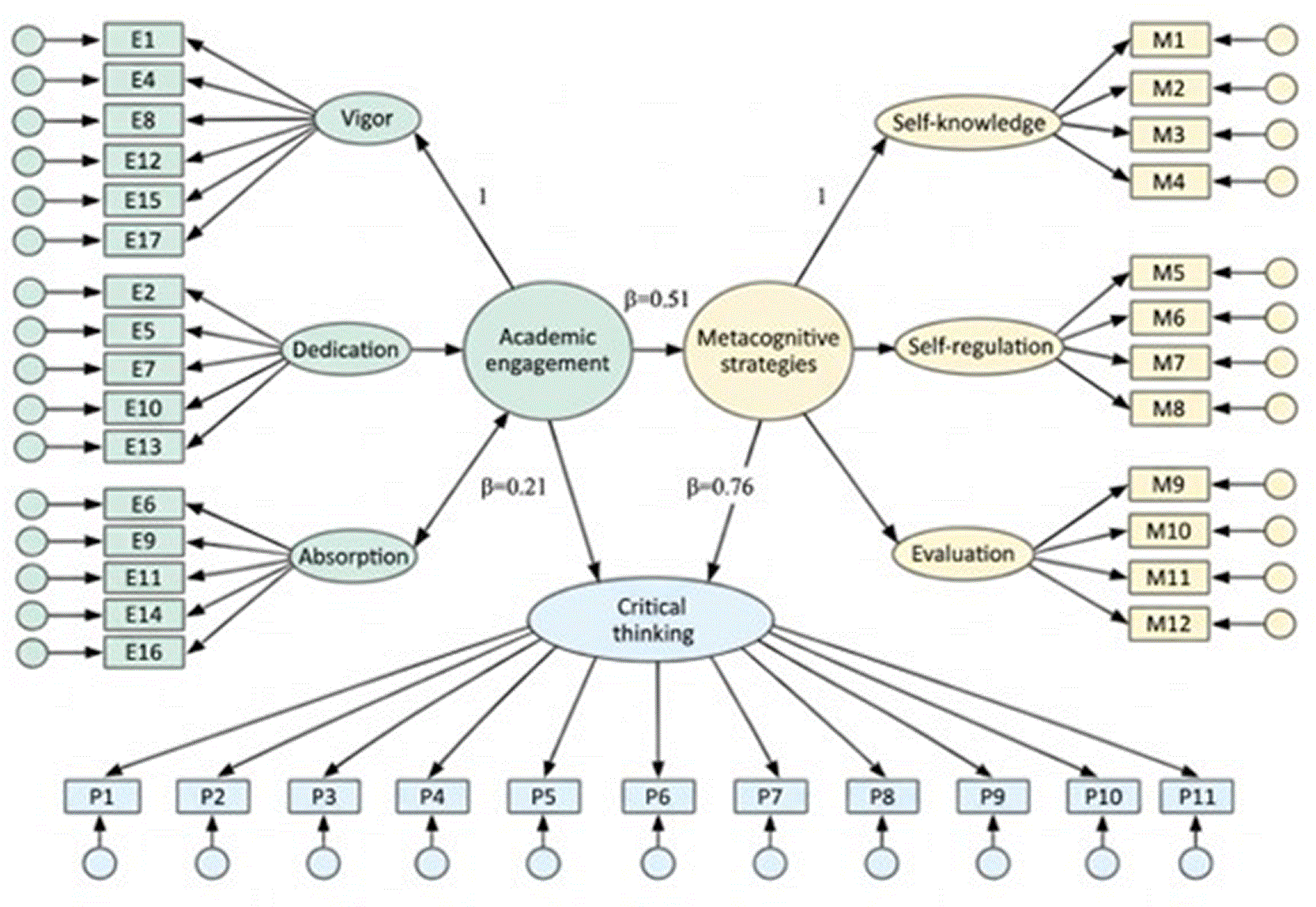
Note. Standardized coefficients (β) significant at p < .001.
Examination of the path model presented in Table 5 reveals that metacognitive strategies show a direct and large magnitude association with critical thinking disposition (β = .76; p < .01). This link is fundamental, since the disposition to critical thinking depends on operative metacognitive mechanisms to regulate judgment and decision making (Rivas et al., 2022; Ossa et al., 2023). Likewise, both metacognition (β = .51) and disposition to critical thinking (β = .21) significantly predict engagement. Finally, a partial mediation of critical thinking disposition is ratified with an indirect effect of.16 (p = .001), consolidating its role as a facilitator of engagement (Akcaoğlu et al., 2023; Bakker & Albrecht, 2023).
A Confirmatory Factor Analysis (CFA) was performed to validate the internal structure of the instruments in the sample of students from Trujillo. The results of reliability and convergent validity are presented in Table 6.
The AFC showed that the instruments measure what they are intended to measure. ω ranged from.86 to.92, with 95% confidence intervals indicating consistency in the estimates ( Table 6). All CR values were above .70; the highest was.932 for academic engagement. In all three cases, the AVE was above.50, indicating that each construct explains more variance than is absorbed by error (Hair et al., 2022).
3.4.1. Discriminant validity analysis
Convergence confirmed, the question then was whether the three constructs were actually distinct from one another. To answer that, the Fornell-Larcker criterion was used (Bakker and Demerouti, 2017; Hair et al., 2022), and the results are presented in Table 7.
1. Metacognitive Strategies
2. Critical Thinking Disposition
3. Academic Engagement
An examination of the data in Table 7 reveals that the values on the diagonal consistently exceed the correlation coefficients off the diagonal. The Fornell-Larcker criterion is met, which indicates that each construct is empirically distinct from the others.
Before moving forward with structural equation modeling (SEM), we explored how critical thinking disposition and academic engagement connect in a multivariate sense. This work rested on the idea that metacognition, which is supported by self-awareness, self-regulation and evaluation, needs a critical attitude to act as a driving force for activating student engagement, whether through energy (vigor), dedication, or level of immersion in the task (absorption). Table 8 presents these associations and compares their structures by academic cycle, using canonical structural loadings (rs) to characterize the strength of these relationships.
The results in Table 8 confirm a close relationship between cognitive variables and student engagement (p < .001). Metacognition stands out as the variable carrying the most weight in both groups, with the highest loadings (rs > .85). The same does not hold for critical thinking disposition, which functions as a cross-cutting factor, with values that remain consistently between .78 and .83.
When comparing engagement based on academic progress, a variation in the importance of its dimensions was observed throughout the university years. In the early years (I–IV), immersion stood out as the main component (rs = −0.958), which could be related to an interest in discovery and the novelty of the discipline. However, in the later years (V–X), the trend shifts slightly, and the primary component is energy and resilience (vigor), possibly linked to the motivation to successfully complete the university degree.
While the strength of the relationship decreases slightly in the upper group, this responds to the complexity inherent in the final stretch of the degree, where additional external factors come into play. Finally, although grouping by cycles is useful for this analysis, treating academic progress as a continuous variable would allow for a more detailed observation of this process of change.
A multi-group factorial invariance analysis was conducted to test the stability of the structure across men and women. This procedure allows us to verify that the identified relationships do not depend on the participants’ gender, thereby avoiding potential biases in the interpretation of the model (Svetina et al., 2020). These results are presented in Table 9.
When comparing the model with measurement weights to the unrestricted model, it was observed that the incremental fit indices showed minimal variations, close to.002 (as shown in Table 9). Given that these changes are below the critical threshold of.01, metric invariance is confirmed. This stable behaviour was maintained when evaluating the structural weights, as well as the structural and measurement residuals, confirming the existence of strong factorial invariance, consistent with previous findings in higher education (Vallejos et al., 2012).
The results showed that the indirect effect of metacognitive strategies on academic engagement, mediated by critical thinking disposition, has a confidence interval that does not include zero (95% CI [0.10, 0.22]; p = .001). Likewise, R2, calculated from the squared multiple correlations, indicates how much variance the model explains. Critical thinking disposition accounts for 65.1% of its variance, and academic engagement accounts for 47.0%. It should be noted that R2 is not equivalent to the total standardized effect (β) because it also includes indirect effects.
One of the challenges facing university teachers today is getting students, through appropriate strategies, to genuinely engage with their academic work, not just memorize content and pass examinations (UNESCO, 2021; OECD, 2019). It was this situation that motivated the present study, carried out with a sample of 1,195 university students from Trujillo, with the aim of establishing whether metacognitive strategies are decisive in that engagement, or whether other factors such as critical thinking disposition, academic support, or others also play some role in this process and may be influencing the way students relate to their own learning (Assunção et al., 2020).
Structural modeling succeeded in identifying how the study variables behave and interact with one another. Metacognitive strategies proved to be predictors of critical thinking disposition, with a high structural coefficient (β = .76), which leads us to conclude that monitoring one’s own learning is a prior step for students to think critically about what they learn. Likewise, both metacognition (β = .51) and critical thinking disposition (β = .21) showed some capacity to predict academic engagement, each from its own angle within the model. The observed relationship is consistent with the findings of Li et al. (2024) regarding the impact of self-regulation on analytical reasoning, a process in which other cognitive abilities also play a role. In this regard, the research by Rivas et al. (2022) establishes that students’ difficulties in organizing and evaluating their own academic performance reduce their effectiveness in analyzing information. Consequently, a lack of control over their own studies acts as an obstacle that limits the development of critical thinking.
In the present study, after conducting a total of 5,000 resamples, it was found that metacognition is directly and significantly associated with academic engagement (β = .51). Likewise, students’ critical thinking disposition acts as a partial mediator in this relationship, accounting for a significant portion of this effect (β = .16; 95% CI [0.10, 0.22]; p = .001). It is therefore important for students to adopt a critical attitude so that knowledge becomes internalized and enduring. In educational settings, it is difficult to foster student engagement through academic pressure alone. This engagement is achieved when the disposition toward critical analysis is awakened, expressed through curiosity about discovery and the habit of asking questions. According to Koçoğlu and Kanadlı (2025), this disposition helps students put their ideas into practice, a finding that Tasgin and Dilek (2023) also identified in more challenging situations. Hayes (2022) offers a clear explanatory framework for how these internal variables combine to foster academic engagement.
The model’s explanatory power also merits attention. The model achieved a 65.1% explanatory power for critical thinking readiness and a 47.0% explanatory power for academic engagement. More than the percentages themselves, the results paint a fairly clear picture. Students tend to be more engaged when they are able to organize their learning and, furthermore, reflect on what they study. Each of these processes is important in its own right, but together they seem to carry much greater weight within the college experience.
During their college years, students’ academic commitment remains strong, although it varies somewhat depending on their level of study. At the beginning of their degree program, enthusiasm for this new phase leads students to focus more intently and makes it easier for them to absorb new knowledge (absorption, rs = −.958). However, in the upper cycles, students display a more mature attitude and greater effort focused on completing their studies. Although the academic workload is heavier and more demanding at advanced levels, commitment prevails thanks to metacognitive mechanisms that help students strategically leverage their personal abilities (Bakker and Albrecht, 2023). In this regard, the increase in the canonical correlation with vigor (rs = −.984) would indicate that academic maturity acts as a protective factor against the greater complexity of upper-level courses, leading to greater effort on the part of students, motivated primarily by the desire to successfully complete their university degree.
With regard to the gender variable, the data revealed similar model performance among men and women, as evidenced by the presence of strong factorial invariance, indicating that the model structure remains stable across both genders; therefore, no differentiated teaching strategies are required for each group. These results are consistent with those obtained by Meregildo-Gómez et al. (2025), who found no significant differences between men and women in terms of critical thinking readiness among university students in northern Peru. Both studies demonstrate that gender is not a factor that interferes with the development of critical skills or the intensity of academic engagement.
On the other hand, it is difficult to discuss student retention without taking mental health into account. Dong et al. (2024) note that well-being and personal satisfaction directly influence interest in learning, especially as academic demands increase. In this context, psychological support ceases to be an institutional add-on and becomes an essential part of university life. Recognizing this situation allows for a deeper understanding of how students experience their time at university. At the same time, it becomes important to promote more sensitive, humane, and sustainable educational environments where student well-being is prioritized.
A significant methodological challenge arises when working with cross-sectional data, which requires a cautious approach before establishing causal relationships. Although we were able to model a path between the variables, this does not imply that one is the cause of the other; as explained by Ato et al. (2013) and Kline (2023), the model’s structure should not be confused with definitive proof of cause and effect. In the diagram, the arrows go from metacognition toward critical thinking and from there to academic engagement, but those trajectories are explanatory and do not imply real causality. In fact, Sathyanarayana and Mohanasundaram (2025) have already pointed out how risky it is to interpret directions in a SEM model outside a controlled experimental setting. These restrictions define the scope of what was found and open up the motivation to investigate whether a longitudinal design could provide answers with greater certainty in the future. Equally important is noting that the sample comes specifically from university students in Trujillo, in northern Peru, so it would be a mistake to generalize these results to other settings without first testing whether the model remains stable in different contexts. In the academic context, despite the theoretical grounding of the directions proposed in the model, bidirectional pathways cannot be ruled out. By way of illustration, higher academic engagement could itself reinforce students’ metacognitive awareness over time.
Finally, the very nature of the data collection instruments used may also influence the interpretation of the results, because evaluating what goes on in the student’s mind through this type of survey carries a burden of subjectivity that is impossible to ignore, which is why it would be ideal for future studies to cross these data with behavioral records or direct observation. Recognizing these limitations does not invalidate the results obtained; it simply and honestly indicates where the conclusions end, and the inferences begin. Being explicit on this point prevents readers from attributing more to the study than it can actually support and provides those who continue this line of research with a clearer foundation for refining their tools and gaining a more precise understanding of what happens inside the classroom. Having each teacher collect data independently in their own classroom helped reduce common-method variance, though giving all instruments at once to the same students is a limitation that comes with cross-sectional designs (Podsakoff et al., 2003). Collecting data at different time points or using peer-report measures would help reduce this bias in future studies.
The results of this study allow us to affirm that academic engagement is based on complex cognitive processes associated with the self-regulation of learning, beyond purely affective explanations. Metacognitive strategies aimed at planning, monitoring and evaluating one’s own performance show a positive correlation with student engagement, both directly and indirectly, with the disposition to critical thinking being the variable that plays a mediating role in this relationship. In other words, when students not only regulate their learning, but also question, analyze and argue the contents, the effect of metacognition on engagement is significantly enhanced.
This study has succeeded in identifying that academic engagement among university students does not depend solely on their capacity to organize and direct their own learning, but also on their capacity to reflect on and even question what they learn. In that sense, it is clear that a disposition toward critical thinking not only associates directly with academic engagement, but also functions as the bridge connecting awareness of one’s own learning process (metacognition) and engagement, as evidenced by the significant indirect effect found, which confirms partial mediation. It follows that these metacognitive strategies, while essential, are not sufficient on their own to produce truly engaged students; it is critical thinking that plays a fundamental role in helping students make sense of what they learn, become more actively involved, and participate in their education with greater interest and dedication. Our universities need less memorization and more reflection, so that students can take a responsible role in their own learning.
The findings show that academic engagement does not depend on isolated efforts. When students are able to regulate their learning and develop a critical attitude toward what they learn, the effect is greater than when these two processes are considered separately. In other words, metacognitive strategies and a disposition toward critical thinking are interrelated and ultimately promote students’ engagement with their learning.
Academic engagement undergoes certain changes throughout one’s university career. The first two years are dominated by the absorption phase, linked to the interest and novelty of the degree program, while later the vigor phase becomes more evident as academic effort intensifies, making students more resilient. The results show that metacognition and critical thinking help maintain commitment when external motivation is insufficient.
In terms of gender, the results show that there are no significant differences in the way metacognition and critical thinking work together to strengthen engagement. The fact that these connections remain similar in men and women suggests that the model is equally applicable in both groups. This evidence is very important as it allows us to interpret the findings with greater confidence, since the identified links would not be affected by the gender of the participants, but rather show processes that are constantly present in the formative experience of the students.
Finally, these findings invite us to rethink the design of teaching strategies in higher education. Fostering academic engagement does not depend only on skills training. True learning occurs when students find spaces where they can develop metacognitive strategies for self-regulation and strengthen their disposition for critical thinking: doubting, questioning, debating and constructing their own ideas, to the point of making these processes the central focus of classroom work, and taking advantage of these moments of reflection and dialogue to achieve learning transformation. A multilevel approach would also allow future studies to examine how institutional and contextual factors shape the relationships identified here. Only when we open up these opportunities to explore, make mistakes and learn critically can we train professionals who are not limited to fulfilling tasks, but who know how to respond with their own criteria and responsibility to the real situations they will face in their professional practice.
Figshare: Metacognition and Academic Engagement: The Mediating Role of Critical Thinking Disposition in University Students. https://doi.org/10.6084/m9.figshare.32670012 (Yglesias-Alva et al., 2026).
This project contains the following underlying data:
• Database.xlsx: anonymized item-level dataset of 1,195 university students from Trujillo, Peru. The file contains responses to the 12 items of the Metacognitive Strategies Inventory (M1–M12, organized into the self-awareness, self-regulation, and evaluation dimensions), the 11 items of the Critical Thinking Disposition Scale (P1–P11, organized into the critical openness and reflective skepticism dimensions), the 17 items of the Utrecht Student Engagement Scale (E1–E17, organized into the vigor, dedication, and absorption dimensions), the computed totals per dimension and per construct, and the sociodemographic variables of gender and academic-professional school.
• Figure 1_SEM_Model.jpg: structural model of the path relationships between metacognitive strategies, critical thinking disposition, and academic engagement, with the standardized coefficients reported in Tables 4 and 5 of the manuscript (β = .76 from metacognitive strategies to critical thinking disposition; β = .21 from critical thinking disposition to academic engagement; β = .51 direct effect from metacognitive strategies to academic engagement).
Data are available under the terms of the Creative Commons Attribution 4.0 International license (CC-BY 4.0).
Figshare: Metacognition and Academic Engagement: The Mediating Role of Critical Thinking Disposition in University Students. https://doi.org/10.6084/m9.figshare.32670012 (Yglesias-Alva et al., 2026).
This project contains the following extended data:
• Participant_Information_Sheet.pdf: information sheet provided to students prior to participation (bilingual Spanish–English).
• Informed_Consent_Form.pdf: model of the informed consent form used (bilingual Spanish–English).
• Supplementary_Material_S1.docx: AMOS output for the structural equation model, including standardized direct and indirect effects, model fit indices, and standardized regression weights.
The three instruments used in this study are previously published, validated scales and were administered without modification. They are not reproduced here owing to the copyright of the original authors; the items can be obtained from the original sources: the Metacognitive Strategies Inventory (Vallejos et al., 2012), the Critical Thinking Disposition Scale (Sosu, 2013), and the Utrecht Work Engagement Scale – Student version (Schaufeli et al., 2006).
Data are available under the terms of the Creative Commons Attribution 4.0 International license (CC-BY 4.0).