Просмотр новости
Найдите то, что Вас интересует
 Спутники
 РН
РН SpaceX
 Роскосмос
 NASA
NASA
СпутникиРНSpaceXРоскосмосNASABackground This study aims to explore the effect of financial stability on boosting confidence in the Iraqi banking sector during the digital transformation process over the period (2004-2022). Specifically, it examines the relationship between inflation rate, exchange rate stability, and bank liquidity as independent variables, and the volume of bank deposits as the dependent variable and an indicator of banking confidence. Methods The study employs the Autoregressive Distributed Lag (ARDL) model to analyze the impact of financial stability indicators on banking confidence. Annual time-series data for the study period were used to estimate the relationship between the selected variables and bank deposits. Results The empirical findings reveal that inflation exerts a significant negative effect on bank deposits by reducing real purchasing power and increasing economic uncertainty. In contrast, exchange rate stability enhances depositor confidence and contributes to higher deposit inflows. Bank liquidity demonstrates a dual impact, as adequate liquidity strengthens banks’ ability to meet obligations and increases depositor confidence, whereas liquidity constraints reduce confidence and lead to lower deposit levels. The results confirm that achieving financial stability is essential for strengthening banking confidence and increasing deposit volumes. Conclusions The study concludes that maintaining financial stability is a key requirement for enhancing confidence in the banking sector. It recommends the implementation of effective monetary policy measures aimed at controlling inflation, improving exchange rate stability, and strengthening liquidity conditions. Furthermore, integrating digital transformation initiatives with financial stability policies can support sustainable banking confidence and contribute to the long-term development of the banking system.
We are witnessing rapid economic and technological transformations in the modern discourse of the world that threaten to upset the financial stability and the trust placed in banking organizations, especially due to such significant progress in digital technology. Iraq is not an exception to the pack of countries that endeavor to digitalize its financial and banking systems in line with the demands of digital transformation. This said, in the light of the unrelenting economic, political and security vagaries that have plagued the country, building trust in the banking system will still be subject to achieving a regime of sound financial stability. Financial stability is a key concern that has to be raised to promote the belief in the banking system, especially over the last few years that the rest of the world has witnessed the demise of several institutions globally. Being the foundation of confidence in the financial industry, financial stability raises a critical question of whether the digital transformation can boost or hinder this process in the particular case of Iraq, A question of financial stability has received increased attention in the wake of the wave of financial liberalization that has spread to the whole world. This has drawn the attention of many scholars especially following the global financial crisis of 2008. In this respect, there is an urgent need to explore the character of the correlation between financial stability and its combatant impacts in strengthening confidence in the Iraqi banking system.
The main research problem is based on the following question: how far the financial stability will be applied in terms of improving sound confidence in the banking system? Moreover, what is the way to use digital transformation as an equally helpful and supportive means of bridging this gap and establishing trust between citizens and banking institutions in Iraq? To solve the given issue, it is necessary to examine the reasons that affect the confidence and the role of financial stability and digital transformation in addressing these issues.
The focus of this investigation is on the key role of financial stability and digitalization, both of which have an overwhelming effect on the confidence consolidation in the Iraqi banking system. The resilience of financial institutions and the assimilative nature of digital technologies can become driving forces in strengthening the trust and confidence of the stakeholders. The confidence of investors in the banking institutions is directly guided by financial stability. The more the level of financial stability portrayed by a nation, the greater the ability of individuals and businesses to trust the banking system. This increased trust in turn generates growth in deposits, investment flows and amount of financial transactions. Financial stability serves as a safeguard for protecting depositors’ and investors’ funds in the event of banking sector risks. Moreover, the adoption of digital technologies in the banking sector enhances transparency in banking operations, thereby reducing opportunities for corruption.
This research is based on the hypothesis that there is a positive relationship between financial stability and the level of confidence in the banking system, and that digital transformation contributes to enhancing transparency within the Iraqi banking system, thereby fostering greater trust among stakeholders.
This study aims to achieve a set of objectives as follows:
• To define and clarify the concept of financial stability and its importance.
• To explain the reciprocal relationship between financial stability and confidence in the banking system, and to analyze the interconnection among the three concepts: stability, confidence, and digital transformation.
The research adopts a multidimensional methodological approach that combines descriptive, analytical, and inductive methods. The descriptive-analytical method focuses on the conceptual aspects related to financial stability, digital transformation, and banking confidence. Meanwhile, the quantitative measurement approach relies on time-series data covering the period from 2004 to 2022.
• Temporal Boundaries: 2004–2022.
• Spatial Boundaries: The Iraqi economy.
addresses the conceptual and theoretical framework of financial stability and the banking system, as well as the relationship between them. The second section analyzes financial stability indicators and their role in strengthening confidence in the Iraqi banking system. The third section measures the impact of financial stability on enhancing confidence in the banking system amid digital transformation in Iraq during the period 2004–2022.
The banking system is considered one of the most essential components of any country’s financial system. The stability of the financial system positively reflects on banking stability and, consequently, on the national economy as a whole. Financial stability enhances public and investor confidence in the banking system; when the banking system is stable, it becomes capable of absorbing economic shocks and crises, providing services efficiently, safeguarding deposits, and supplying credit to the economy.
Financial stability is regarded as the most important factor in building confidence in the banking system. The existence of a stable and resilient financial system capable of withstanding shocks reassures clients of the safety of their deposits and the banks’ ability to meet their obligations.
1. The concept of financial stability
There are numerous definitions of financial stability, most of which agree that financial stability refers to the absence of financial crises within the financial system. Financial stability can be defined as the condition that enables the financial system in general and the banking system in particular to confront risks or any adverse effects on the current and future state of national economic growth and development (Central Bank of Iraq, 2010, 11).
Financial stability expresses the efficiency and sound performance of the financial system, which effectively performs its main economic functions such as resource allocation, risk distribution, payment settlement, and the absorption of sudden shocks to the financial system caused by financial crises (Ali, 2018, 4).
It can also be said that financial stability refers to the stability of the financial system’s components and related activities, which helps prevent crises from occurring ( Al-Shakriji, 2013, 12). Moreover, it is defined as a state in which financial institutions enjoy a high degree of confidence in their ability to continue performing their functions without the need for external assistance ( Al-Tai, 2017, 48).
Based on the above, the concept of financial stability is a comprehensive one that encompasses various aspects of finance, the financial system, infrastructure, institutions, markets, and all market participants, as well as the vital components of financial infrastructure.
2. The importance of financial stability
The importance of financial stability can be understood through the following points ( Al-Arabi &Waqdi, 2016, 8–9):
• Addressing financial crises: Financial stability helps mitigate the likelihood of crises that negatively impact economic growth. The more severe and prolonged financial crises become, the lower the rates of economic growth.
• Enhancing investor confidence: Financial stability encourages both domestic and foreign investment within a secure banking environment and protects depositors’ funds by ensuring that banks are capable of meeting their financial obligations to clients. Therefore, financial stability is essential for maintaining confidence in the economy.
• A prerequisite for price stability and sound economic development: The financial stability is not only a pre-condition of price stability, but also an underlying factor of sustainable economic development. Financial instability on the other hand incurs high costs to the economy which increases the instability in prices in the global markets, hinders economic growth and reduces efficiency in resource allocation.
• A core objective of any economic system: Stability in finances is among the most fundamental goals of an economic structure because it creates sustainable expansion, minimizes systemic risks, and creates stability in capital markets. It captures the integrity of the financial system, which in its turn contributes to the confidence that is inevitably needed to strengthen in all the economic system.
• Maintaining liquidity: Financial stability in essence ensures that financial institutions have sufficient supply of liquidity which in turn will ensure that their operating processes are not disrupted in any way.
• Protecting consumers: It offers consumer protection in terms of stability of prices and safety and reliability in the carrying out of financial services.
The banking sector is one of the most crucial sectors for achieving economic development. The success of economic development in any country depends on having an advanced banking system capable of mobilizing the capital required to finance various types of investments, thereby contributing to higher growth rates, reduced unemployment, and improved living standards.
The banking system refers to the group of banks engaged in credit activities. A bank functions as the beating heart that supplies entrepreneurs with money, which serves as the main instrument of exchange. Moreover, digital technologies represent one of the foundational pillars enabling digital transformation in the banking system by providing multiple advantages such as cost reduction, operational efficiency, and enhanced service quality.
1. The Concept of the banking system
There are various definitions of the banking system. Some define it as the banking institutions, laws, and regulations that govern the operation of these institutions ( Hisham, 2008, 5). It has also been defined as the collection of banks operating within a country, encompassing different types and activities whether commercial, industrial, agricultural, or otherwise subject to supervision and regulation by the central bank ( Amari, 2021, 2).
Others have defined it as a system composed of a group of financial intermediaries through which liquid funds and savings flow toward loans and investments, forming the foundation of credit in the economy. It operates within a framework of policies and directives set by the central bank ( Abd Al-Mutalib, 2007, 19–20).
Accordingly, the structure of the banking system differs from one country to another depending on its economic system. In general, it consists of a group of banking institutions, regulations, and laws under which these institutions operate. Its main function is to provide credit under the supervision and control of the central bank.
2. The Importance of the banking system
The importance of the banking system can be summarized as follows ( Amari, 2021, 5):
• A central role in the global economic system: The banking system plays a pivotal role within the modern global economy based on market mechanisms, serving as the beating heart of any contemporary economy through its core function of providing financial intermediation between surplus and deficit units.
• A reflection of the economic system: The banking system acts as a mirror of the economy, financing development and facilitating banking operations. It serves as one of the key channels for mobilizing local savings and converting them into credit and investment instruments, which are then directed toward the most efficient and productive economic sectors.
• Enhancing the temporal utility of financial resources: The banking system optimizes the use of available financial resources by mediating between those with surplus funds and those in need of them.
• Providing liquidity and regulating its flow: Through its various mechanisms, the banking system plays a crucial role in supplying liquidity and controlling its distribution across different sectors of the economy by offering credit to institutions and individuals in need.
• Reducing risk exposure for savers: The banking system reduces the risks to the depositors to minimum level by setting up deposit guarantee institutions which insure the depositor’s finances.
The correlation between the financial stability and trust to the banking system is a two-sided affair, since both factors affect each other directly and indirectly in the context of digital transformation. Financial stability is the key building block towards confidence. The presence of a stable and sound financial system that is in a position to withstand shocks boosts the confidence of the people in the banking system. Stability in the financial sector will offer a good condition to the smooth operation of the financial system.
Banking confidence is described as the feeling of the security and guarantee to the clients be it individuals or companies on the performance and reliability of the banking institutions that clients engage with. This confidence is not just the simple conviction that they are safe leaving their money in the banks, but rather the belief that these banks are good at managing risks, provide dependable and quality services and maintain transparency and integrity in their operations.
The capacity of banks to defend the information of their customers against cyberattacks, as well as fraud, is taking on an essential role in the digital transformation age since any security breakage can lead to a serious loss of trust. Further, the quality of banking services and financial literacy in the society play a big role in creating confidence in the banking system.
Digital transformation is a determining factor to boost confidence and enhance financial inclusion. Banks can access new markets that were formerly inaccessible to prior through digital banking tools including electronic wallets and mobile banking apps at reduced costs and offer more convenient services as long as these services are safe and dependable.
The confidence in the banking system in the conditions of digital transformation can be empowered by financial stability to a considerable extent. In its turn, digital transformation takes an arbitral and decisive part in the correlation between financial stability and the trust in banks and serves as a potent driver of stability improvement and trust development. This position is exemplified by the following ( Lee, 2020, 10):
1. Enhancing operational efficiency: It is possible that digital transformation will help to make the banks more efficient in their operations, make banking operations cheaper, and enhance the quality of services offered, which reflect positively on the confidence of clients.
2. Improving risk management: The new digital technologies like big data analytics and artificial intelligence are offering a superior tool that lets banks gauge and manage the risks more precisely and effectively. This will minimize chances of financial crisis, build financial stability and subsequently improve confidence in the system.
3. Strengthening confidence in the banking system: The financial stability provides security to depositors and investors with regards to the security and stability of the banking institutions. It also mitigates the chances of crises and financial shocks which would cause bank crashes and loss of trust in the banking system.
4. Promoting financial inclusion: Digital transformation enables banks to reach broader segments of society, including individuals in remote areas or those without traditional bank accounts. When more people can access financial services easily and securely, financial inclusion is enhanced, public interaction with the banking system increases, and widespread trust is built.
5. Building confidence through security, speed, and transparency: Digital transformation provides tools and technologies that enhance the security of banking transactions (e.g., encryption), increase their speed (e.g., instant transfers), and improve their transparency (e.g., digital transaction records). These elements directly contribute to building trust in the banking system. When customers perceive their transactions as secure, fast, and transparent, they are more likely to adopt and rely on digital banking services.
The banking system can also influence financial stability amid digital transformation through several key mechanisms (Americo, 2020: 755–771; Younis, 2019: 22):
1. Mobilizing savings and channeling investments: Banks collect savings from individuals and companies and direct them toward various investments, thereby promoting economic growth and contributing to financial stability. Through digital banking technologies, a stable banking system fosters confidence in the economy, which in turn encourages saving and investment.
2. Enhancing security and compliance: Advanced digital technologies can strengthen cybersecurity measures and simplify compliance procedures with financial regulations, thereby supporting financial stability and mitigating systemic risks.
3. Market disruptions: The introduction of big banking technologies has the potential to introduce market upheavals that can compromise the financial well-being of the conventional financial institutions. This can also cause the concentration of the market in the hands of the few major firms leaving no competition and this may be harmful to the consumers.
4. Providing liquidity and extending credit: Banks maintain a required liquidity level in the economy making sure that the financial transactions are not interrupted. In addition, digital transformation helps in the ease of accessing credit that makes people and businesses finance their businesses and consumption activities and therefore economic growth and financial stability.
5. Supporting Monetary Policy: Banks are very crucial in executing monetary policy by the central banks whose goal is to bring financial stability and prevent inflation.
To sum it up, the banking system is one of the pillars of financial stability as it helps in carrying out financial and banking transactions; mobilizing savings, and promoting monetary policy. So the stability of the banking system is vital in ensuring that there is a stable economy overall.
Financial stability in Iraq under digital transformation refers to the state of the financial system characterized by its ability to absorb shocks and maintain its core functions, supported by technological advancement in the financial sector. This encompasses the stability of financial institutions, financial markets, and financial infrastructure. In this context, the analysis and measurement of financial stability indicators amid digital transformation in Iraq will be discussed, including the analysis of the inflation rate index, the effectiveness of bank credit in light of the liquidity indicator and its ratio to total deposits, as well as the analysis of the exchange rate of the Iraqi dinar as independent variables. On the other hand, the analysis of the structure of bank deposits will be examined as a dependent variable from two perspectives: the volume of bank deposits and their ratio to the gross domestic product (GDP) in Iraq, and the volume of bank deposits and their ratio to the broad money supply (M2).
Inflation represents one of the factors affecting the volume of deposits, albeit indirectly. An increase in inflation leads to a decrease in the purchasing power of the currency, which creates an incentive for individuals to increase consumption and weakens their general motivation to save. This, in turn, is reflected in the decline of savings deposits, and vice versa. This can be observed from the data in Table 1, where the inflation rate increased from (27.0%) in 2004 to (53.2%) in 2006. This rise is attributed to several factors (Al-Ziyara & Al-Dabbagh, 2018: 36):
1. The disruption of many economic facilities, especially after 2004.
2. The rise in petroleum derivative prices as a result of reduced government subsidies.
3. The unstable security situation and the increase in unemployment rates.
4. The rise in wages and salaries of state employees.
5. The growing degree of economic openness to the external world and the increase in imports to meet domestic demand.
6. The rise in the exchange rate and the depreciation of the national currency.
The rise in inflation caused the local currency to lose its real value, leading individuals to obtain goods and services at much lower real purchasing power than previously due to inflationary processes. Consequently, people tended to avoid holding savings in cash balances and leaned toward consumption. The inflation rate reached 53.2% in 2006, up from 27.0% in 2004. However, after 2006, as a result of several converging factors primarily the availability of petroleum derivatives at lower prices, measures taken by the Central Bank to strengthen the Iraqi dinar against the U.S. dollar during 2007–2009, the absence of customs duties affecting imported goods, relative improvements in the security situation, and continued government subsidies for subsidized food items, electricity services, and strategic agricultural crop prices ( Central Bank of Iraq, 2014, 7) inflation rates began to decline gradually.
Inflation fell to 30.8% in 2007 and continued to decrease, reaching its lowest level of 0.2% in 2015. The decline in inflation gradually increased the value of the local currency relative to the exchange rate, leading to lower prices for goods and services. This encouraged individuals to save more and reduce consumption, resulting in an increase in the volume of deposits, which reached 64,344 billion dinars in 2015, as shown in Table 1.
Financial and monetary authorities, particularly the Central Bank of Iraq, continued to monitor developments in the general price level to achieve their objectives of price stability and rising oil revenues. Inflation further declined to 0.4% in 2018, supporting an increase in deposits to approximately 76,894 billion dinars in 2018. Deposits continued to grow, reaching around 129,083 billion dinars by 2022.
This contributed to achieving financial stability, enhancing confidence in the banking system, and improving the overall economic situation amid digital transformation, which can affect inflation in various ways. Digital transformation contributes to increased efficiency and reduced costs, which may lead to lower prices and reduced inflation. However, it can also increase demand for certain goods and services, especially those relying on new technologies, potentially causing price increases. Furthermore, digital transformation may exacerbate inequality, which could also impact inflation.
Banking credit holds significant importance across various economic sectors, as it provides individuals and businesses with the necessary funds to achieve high economic growth rates. There is a positive relationship between banking credit and economic growth, as well as a correlation between banking credit and inflation. Banking credit facilitates the settlement of exchanges and the clearance of financial obligations, as banks create deposits and other credit instruments from securities to facilitate and expand transactions. The money supply increases as borrowers obtain banking credit, and banking credit plays a key role in controlling money supply ( Al-Douri & Al-Samurai, 2016, 76–77).
Iraq has witnessed an increasing digital transformation in the banking sector, affecting the banking liquidity indicator. This transformation aims to digitize traditional banking operations, allowing clients to manage their accounts and transactions through digital channels. Determining an appropriate level of liquidity is one of the most important challenges facing banks in meeting their financial obligations. Banks act as intermediaries between depositors and investors by providing loans and banking facilities. The ratio of banking credit to total deposits serves as a financial measure for granting loans, calculated by dividing total banking credit by total deposits. Liquidity, in this context, refers to a bank’s capacity to meet its financial obligations. The lower this ratio, the greater the loss of confidence among bank clients, potentially leading to banking problems ( Batal, 2010, 38).
The Central Bank has established this ratio with an upper limit of 75% and a lower limit of 30% ( Lafta, 2019, 37). According to the data in Table 2, the volume of banking credit increased over the study period, reaching 825 billion dinars in 2004, contributing 9.6% of total bank deposits. The increase continued, reaching 49,818 billion dinars in 2020, with a contribution of 58.7%. The COVID-19 pandemic caused a temporary slowdown, but by 2022, banking credit reached 60,576 billion dinars, contributing 47% of total deposits.
Amid digital transformation, the relationship between banking credit and total deposits is affected in several ways. With the emergence of digital currencies and digital payments, individuals may choose to store more of their funds in digital wallets or investment accounts, potentially reducing the share of deposits in traditional banks. In this scenario, banks act primarily as intermediaries for digital transactions rather than as the main repositories of deposits.
Digital transformation also facilitates the rise of digital currencies, as a significant portion of financial transactions is conducted through these currencies instead of traditional paper money and bank deposits. Furthermore, the use of artificial intelligence in the banking sector can improve credit efficiency and mitigate risks, which may influence the volume of available credit ( Central Bank of Iraq, 2017, 13–14).
The exchange rate forms a fundamental basis for commercial and financial transactions in countries, as maintaining exchange rate stability is a key concern within monetary policy and reflects the effectiveness of such policy. The exchange rate represents the relative price of the local currency measured against a foreign currency.
The development of the Iraqi dinar exchange rate during the study period (2004–2022) can be observed in Table 3, which shows the dinar’s exchange rate against the U.S. dollar. The data indicate that the exchange rate experienced noticeable fluctuations over the period. It was approximately 1,453 dinars per dollar in 2004, rising slightly to 1,472 dinars per dollar in 2005, and then to 1,475 dinars per dollar in 2006. Subsequently, it decreased to 1,267 dinars per dollar in 2007 due to the Central Bank of Iraq’s policies to support the dinar. The exchange rate continued to fluctuate, reaching around 1,196 dinars per dollar in 2019, then increasing to 1,234 dinars per dollar in 2020 due to the COVID-19 pandemic and the global financial crisis. In 2021, it rose to 1,450 dinars per dollar due to the combined effects of the pandemic and the global financial crisis, and by 2022, it jumped to 1,512 dinars per dollar for the same reasons.
From this, it can be inferred that digital transformation indicators in Iraq remain weak, affecting the adoption and development of financial technology indicators in the country. The exchange rate can also influence bank deposits. A decrease in the value of the Iraqi dinar may lead to a reduction in bank deposits, as individuals and companies may convert their balances into more stable currencies, such as the U.S. dollar, especially during periods of economic instability. Conversely, an increase in the value of the Iraqi dinar can strengthen confidence in the local currency, potentially attracting more deposits to the banking system.
An increase in the value of the local currency raises the purchasing power of deposits, encouraging individuals to deposit their funds in banks. Conversely, a decrease in the value of the local currency reduces the purchasing power of deposits, leading individuals to refrain from depositing ( Al-Shalabi, 2021, 235).
Therefore, reliance on digital payment tools has contributed to reducing cash circulation in U.S. dollars. Additionally, the expansion of electronic transactions has helped curb speculation and artificial demand for dollars. Iraq resorts to electronic payments to control the U.S. dollar exchange rate. Bank liquidity can also be affected by exchange rate fluctuations, as banks may need to adjust their foreign currency reserves to meet obligations or manage risks.
The Iraqi banking system plays an important role in influencing economic activity and the money supply, as it is one of the most critical economic institutions for mobilizing funds and savings, stimulating trade, and supporting investments. Undoubtedly, the soundness and stability of the banking system depend on the stability of its resources (deposits), as deposits represent one of the most important components required to support this stability, being liabilities of the banks that must be repaid ( Al-Musbih, 2019, 13). Deposits include three main types: current deposits, fixed deposits, and savings deposits. Various indicators are used to assess the effectiveness of bank deposit performance, but this study will focus on two indicators:
1. The ratio of total bank deposits to GDP.
2. The ratio of total bank deposits to broad money supply (M2).
1. Total deposits to GDP ratio:
This indicator is one of the most important metrics on the liabilities side of a bank’s balance sheet, representing the largest portion of its resources. Deposit growth reflects the development of the banking system’s capacity to mobilize deposits ( Zayer & Al-Obaidi, 2015, 10). This indicator, also referred to as the average propensity to deposit, is calculated as the ratio of total bank deposits (including current, fixed, and savings deposits) to GDP. It reflects the ability of commercial banks to attract deposits, as higher deposits indicate greater financial awareness among individuals and their reliance on depositing funds in banks. This increase is a sign of the banking system’s effectiveness ( Saada et al., 2017, 279).
Furthermore, understanding the share of deposits relative to GDP provides insight into the effectiveness of deposits in supporting economic activity. According to Table 4, bank deposit balances in Iraq fluctuated significantly over the study period. In 2004, total deposits amounted to 8,620 billion dinars, contributing 8.9% to GDP. In 2005, deposits rose to 16,928 billion dinars, representing 15.4% of GDP. The total deposits continued to increase, reaching 74,073 billion dinars in 2014, with a contribution of 42.2%. During the same period, GDP increased from 101,843.9 billion dinars in 2004 to 173,335.4 billion dinars in 2014.
Subsequently, total deposits declined to 64,844 billion dinars in 2015, with a negative growth rate of −13.1% and a contribution of 35% to GDP. This decline was due to lower oil prices, the austerity policies implemented by the Iraqi government, reduced public spending, salary and pension deductions, deteriorating security conditions, and the reduction of banks following branch mergers and closures due to terrorist threats (Central Statistical Organization, 2017; 76). These factors led to decreased deposit volumes and increased withdrawals.
Total deposits later increased steadily, reaching 129,083 billion dinars in 2022, with a growth rate of 7.8% and a GDP contribution of 60.2%, while GDP grew to 214,123.7 billion dinars. This caused instability in the total deposits-to-GDP ratio due to fluctuations in the growth rates of both deposits and GDP.
2 – Total Bank Deposits to Broad Money Supply (M2) Ratio: This indicator reflects the public’s willingness to engage with banks due to their operations and attractive offers that draw the public to deposit funds. Bank deposits represent one of the most important financial resources for banks, as they are invested in various banking activities. The level of public trust in operating banks directly affects this indicator. Under relatively stable economic conditions, an increase in this indicator occurs, indicating growth in total deposits within operating banks. This indicator is measured by dividing total bank deposits by the broad money supply (M2) (Statistical Center for the Gulf Cooperation Council Countries, 2019: 13).
A higher value of this indicator reflects greater trust of individuals and companies in banks, and vice versa. From Table 5, it can be observed that the ratio of total bank deposits to M2 fluctuated during the study period, reaching 74.9% in 2004 and decreasing to 73.4% in 2005. The ratio continued to fluctuate until it stabilized at 70.8% in 2022. Meanwhile, M2 experienced growth, rising from 11,498 billion dinars in 2004 to 90,728 billion dinars in 2014, with a positive growth rate of 3.4% and a contribution ratio of 78.5% in 2014, primarily due to an increase in other deposits.
Subsequently, M2 continued to fluctuate until it stabilized at 168,291 billion dinars in 2022, with a growth rate of 20.3%. This increase in M2 was driven by pressures on the local currency’s value against foreign currencies, such as the US dollar, which led to higher prices for imported goods in the local market ( Iraq Economic Outlook Report, Chapter Two, 11:2020).
Digital transformation, through changes in payment methods and systems, also affected M2 by reducing the use of cash and increasing electronic payments, such as credit cards, online transfers, and mobile banking, thereby reducing reliance on traditional cash (Abu Bakr,2020: 501). With the growing importance of modern banking technologies, financial institutions face new risks from electronic threats and cyberattacks. The existence of digital banks represents a significant transformation of banking infrastructure, heavily reliant on modern technologies. Despite Iraq’s adoption of digital payment methods and replacement of cash with digital payment cards, considerable progress is still required.
This includes the variables used in the standard approach, their types, and symbols. Table 6 presents the independent and dependent variables, which can be detailed as follows:
Based on the theoretical framework of the study, it is assumed to test the following functional relationship:
BD=B0+B1INF+B2OER+B3BCL+Et
Results of Stationarity Tests: To test the stationarity of the study variables, the Phillips-Perron (PP) test was employed for the three equations: with an intercept, with an intercept and trend, and without intercept or trend, as shown in Table 7.
Table 7 shows the stationarity test for the study variables. As evident, all the study variables are not stable at their original level. However, at the first difference, it can be observed that the variables become more stable at a significance level of less than 1%, according to the Phillips-Perron test.
Table 8 presents the preliminary ARDL (Autoregressive Distributed Lag) model. The coefficient of determination (R2) reached 0.975644, indicating that the independent variables (BCL, OER, INF) explain 97% of the variations occurring in the dependent variable (BD). The Fisher statistic significance is 0.0000, indicating that the model is acceptable for measuring the relationship among the study variables at the overall significance level. Additionally, the Durbin-Watson value is 1.418603, which is higher than the coefficient of determination, indicating that the model is free from the problem of spurious regression.
Table 9 shows that the Fisher statistic reached 18.80599, which is greater than both the upper and lower bounds at the 1% significance level. This indicates the existence of a long-run relationship between the independent and dependent variables, enabling the application of the Error Correction Model (ECM) and the determination of the error correction mechanism along with the short-term and long-term coefficients.
Table 10 presents the estimation results for the short-run and long-run relationship between the dependent variable (BD) and the independent variables (BCL, OER, INF). The results indicate a negative and significant error correction term, which is less than one, satisfying the condition and requirements of the short-run error correction mechanism.
The long-run relationship between the study variables shows a significant negative relationship between the annual inflation rate (INF) and total bank deposits (BD), a negative but insignificant relationship between the official exchange rate (OER) and total bank deposits (BD), and a significant positive relationship between bank credit (BCL) and total bank deposits (BD).
There are several tests to ensure the quality of the ARDL model:
1. Test of Homoscedasticity of Random Errors: Table 11 shows that the probability value (Prob) reached (0.8905), which indicates the rejection of the alternative hypothesis stating that the errors of the estimated model are heteroscedastic, and the acceptance of the null hypothesis stating that the errors of the estimated model are homoscedastic. This confirms that there is no problem of heteroscedasticity in the estimated model, as the value exceeds the significance level of 5%.
2. Results of the Ramsey-RESET Functional Form Accuracy Test:
Table 12 shows the results of the test for the functional form accuracy of the model under study. The calculated F-value reached (2.304352) with a probability level of (0.1351), while the T-value was (1.518009) with a probability level of (0.1351). Both probability values are higher than the 5% significance level, indicating acceptance of the null hypothesis, which states that the functional form used in the estimated standard model is correct, and rejection of the alternative hypothesis.
3. Seventh: Structural Stability Test of the Model Coefficients:
After estimating the Autoregressive Distributed Lag (ARDL) model, in addition to conducting the Bounds Test to verify the presence or absence of cointegration, as well as estimating the Error Correction Model and performing diagnostic quality tests, the results illustrated in Figures 1 and 2 indicate that the critical bounds are at the 5% significance level. The jagged blue line represents the cumulative sum of the model’s residuals, which demonstrates the stability of the research model according to the test.
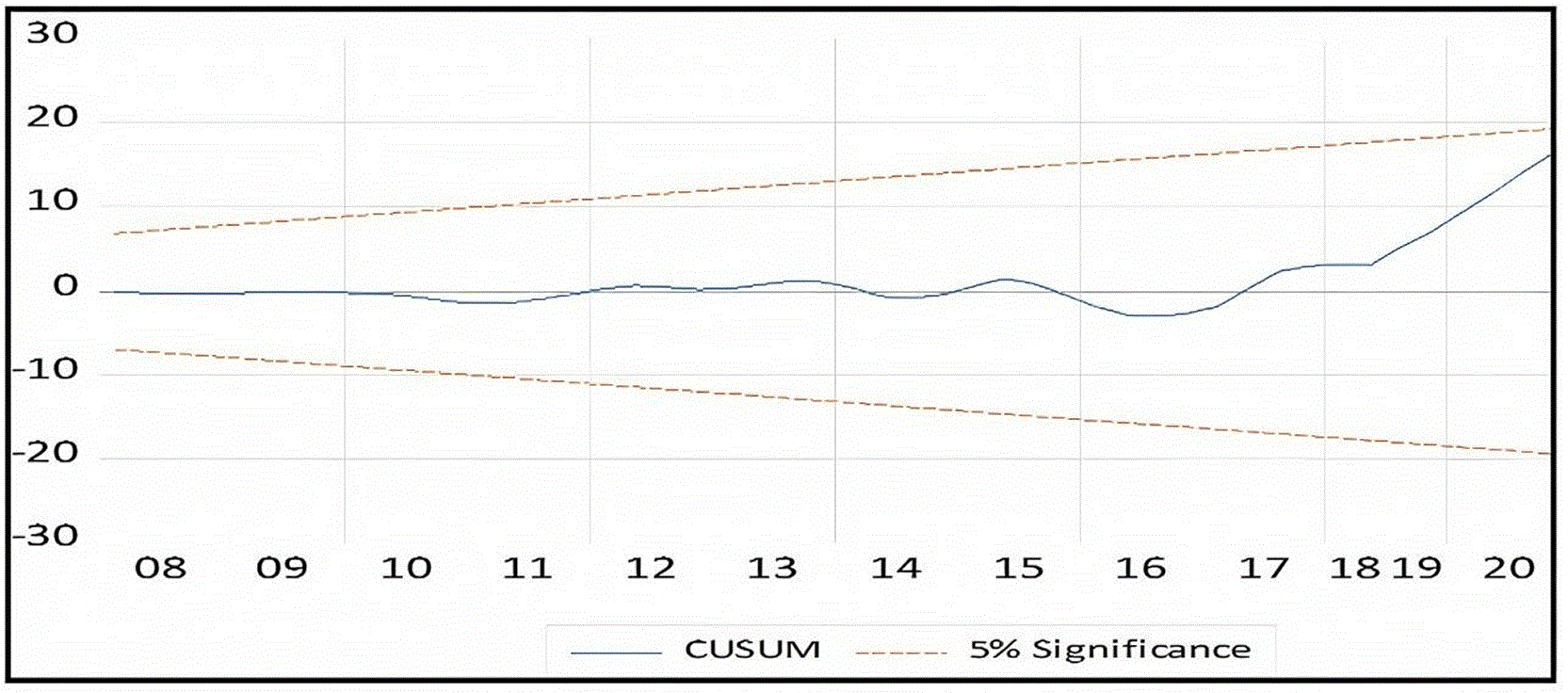
Source: Prepared by the researcher based on outputs from EViews 12.
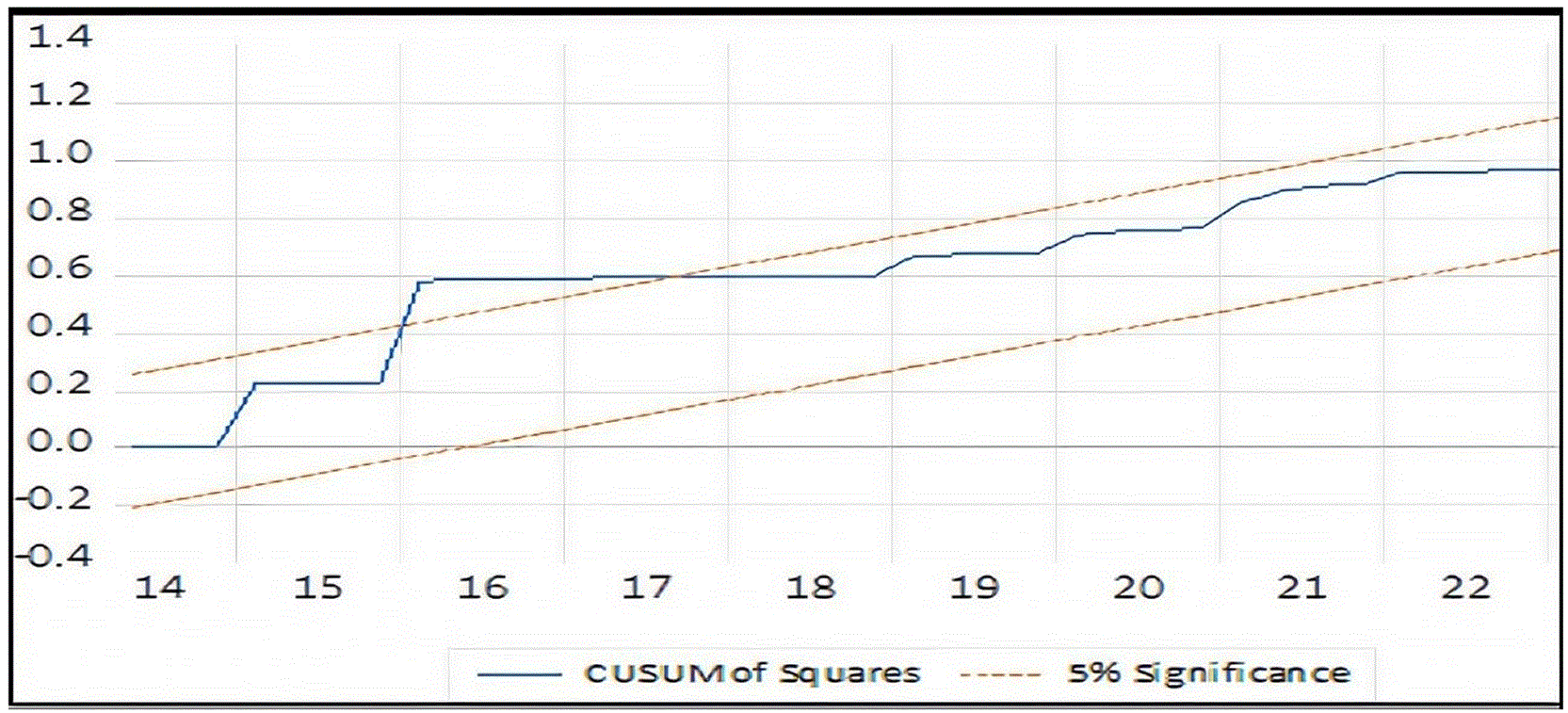
Source: Prepared by the researcher based on outputs from EViews 12.
Figure 2 illustrates the red lines representing the critical bounds at the 5% significance level, while the blue lines and the continuous series represent the cumulative sum of the model’s residuals. Stability is observed because the series follows a path parallel to the red stability threshold. Consequently, it is evident that the model in Figure 2 remained consistent throughout the study period, except for the period 2015 Q2 to 2016 Q4 (period 15–17), during which the residual series fell outside the critical bounds.
The study reached a set of conclusions, the most important of which are:
1. The research showed that financial stability contributes to enhancing the banking system’s ability to perform its functions and duties, including providing liquidity, extending credit, and other banking services. This enables the banking sector to absorb shocks that may threaten its stability.
2. This research found out that there is a close interdependence of financial stability, digital transformation and banking trust with each other. It is impossible to build trust through digital transformation in the case of financial instability or security issues.
3. The study established that digital transformation of the banking industry in Iraq is yet to be fully realized and embraced by all segments of the society despite the efforts made because of the lack of strong infrastructure and poor digital awareness.
4. The paper has pointed out the poor performance of the Iraqi banks, which can be attributed to ineffective supervisory and regulatory controls of the Central Bank of Iraq and a low application of modern technology, which led to the deterioration of the bank performance and their inability to attract deposits.
5. As noted, the ratio between the total bank credit and the total deposits did not surpass the limit imposed by the Central Bank that is 75. The maximum point was 59.5 percent in 2016, which means that, according to this indicator, commercial banks adhere to the stable policy of providing credit and properly use customer credits without the threat of being subjected to the risks of sudden withdrawals.
6. The study showed that financial stability in Iraq is closely linked to fluctuations in global oil prices. The direct impact of oil prices sometimes positively affects the economy and increases financial gains for institutions and individuals, leading to higher bank deposits.
7. The results indicated a significant negative relationship between the inflation rate (INF) and total bank deposits (BD), a non-significant inverse relationship between the official exchange rate (OER) and total bank deposits (BD), and a significant positive relationship between bank credit (BCL) and total bank deposits.
Based on the conclusions of the study, the following recommendations are proposed:
1. Develop and improve the performance of Iraqi banks and identify effective methods to expand their activities in financing productive and investment projects, while adopting modern banking and technological methods in dealing with clients, which supports the growth of banking stability indicators.
2. Address inflation through exchange rate policies adopted by the Central Bank to target inflation and achieve a unified framework for financial stability, while expanding its role to prevent price bubbles that may harm the banking sector and enhance the system’s ability to withstand crisis repercussions.
3. Launch intensive public awareness campaigns on the benefits of digital banking services, how to use them, and the procedures banks follow to protect customers’ data and funds, which helps alleviate fears and build trust.
4. Increase financial and digital literacy among individuals, as accessing a stable and reliable digital banking system in Iraq requires coordinated efforts from the government, the Central Bank, banks, and society at large, ensuring consumer financial protection through awareness and education about their rights and responsibilities.
5. Direct bank credit toward productive economic sectors and mobilize local savings, deepening the role of financial intermediation between investors and savers based on scientific foundations, which contributes to raising the level of bank credit and expanding the productive base.
6. Enhance transparency as a core principle of consumer financial protection, which supports trust in the banking system, expands the client base across all societal segments, and enables individuals and institutions to make sound financial decisions based on accurate information.
7. Adopt a comprehensive strategy by the Iraqi government aimed at relying on digital payments and financial technology as a primary tool to strengthen financial stability and transition toward a cashless economy, particularly by modernizing the financial system infrastructure in rural areas.
This study did not require ethical approval as it relied on secondary and publicly available data.