Просмотр новости
Найдите то, что Вас интересует
 Спутники
 РН
РН SpaceX
 Роскосмос
 NASA
NASA
СпутникиРНSpaceXРоскосмосNASABackground The digitalization of the banking sector has led to the development of electronic customer relationship management (e-CRM) from a mere transaction portal to a more interactive and conversation-based ecosystem. However, there is a significant gap between algorithm efficiency and maintaining long-term customer engagement. Based on AI-based e-CRM, Sociotechnical Systems theory, Relationship Marketing theory, and Service-Dominant logic, this study examines the structural impact of AI Conversational Interactivity (a hallmark of e-CRM technology capability) on customer engagement, adoption resilience, and continuance intention. Methods This study specifically explores how the interactive front-end of e-CRM triggers consumer resource utilization and uses DART parameters to initiate dual-path trust processing as a human factor in e-CRM. This model is empirically tested using Partial Least Squares Structural Equation Modeling (PLS-SEM) on 400 active users of digital banking services. Results The results indicate that conversational interactivity plays a significant role in building cognitive and affective trust, enabling cognitive economy and providing emotional buffers, respectively. These trust pathways play a crucial role in mediating the relationship between interactive front-end and customer behavioral engagement. The findings further indicate that, Switch Point Optimization Efficacy, which demonstrates the competency of hybrid organizations in managing the transition from AI to human advisors, emerges as a key service recovery tool that moderates the path from trust to adoption, thereby protecting relational equity and preventing value destruction at algorithmic failure points. Conclusions This research presents a strategic guide for e-CRM implementation in financial institutions. The analysis finds that sustainable competitive advantage in maintaining customer engagement lies not in automation, but rather in the proper governance of affective trust toward AI in e-CRM.
The development of Electronic Customer Relationship Management (e-CRM) in the banking sector is linked to the emergence of intelligent conversational ecosystems that provide opportunities for active, rather than reactive, customer engagement. As explained by Libai et al. (2020), the development of AI Customer Relationship Management (AI-CRM) is characterized by a shift from transaction-centric digital interfaces to dynamic systems capable of learning, interacting, and engaging in dialogue like humans. In practice, this trend is changing the nature of customer relationships through the automation of cognitive tasks, while companies place greater emphasis on retention, service quality, and relationship building. This shift demands the development of systems capable of reflecting consumers’ social expectations for financial transactions, transforming self-service into a more immersive and relationally oriented digital experience (Maskur et al., 2025; Royo-Vela et al., 2024).
This structural change in digital architecture is enabled by the combination of technical accessibility and information richness of these systems, which ensure their flexibility, responsiveness, and relational value (Chintalapudi et al., 2025; Graham et al., 2025; Urbani et al., 2024). Structural changes in banking are also characterized by a shift from static transactional portals to two-way value creation in mobile applications by leveraging customer resources, including connectivity, creativity, and knowledge (Peña-García et al., 2021). Financial institutions leverage the interactive capabilities of such systems to meet a wide range of customer needs, from basic balance inquiries to more advanced financial consultations (Bajaba et al., 2026; Huseynov, 2023; Nicolescu & Tudorache, 2022). Thus, personalized system support can be scaled more effectively while still building relationship equity and digital competitiveness.
A persistent contradiction exists between the need for operational efficiency and efforts to maintain the psychological contract between banks and customers. Automated environments create interaction spaces where relational friction is more common, particularly in transactions related to financial security. Institutions’ overreliance on automated decision-making and AI conversational scripts ignores the complexity of human emotions, leading to communication breakdowns that undermine trust and undermine customer well-being (Budiyanto et al., 2025; Devlin et al., 2025; Novebri et al., 2026). In the context of relationship marketing, misinterpreting context or a lack of empathy exacerbates the decline in perceived humanity, brand reputation, and financial trust (Baliga et al., 2021; Gani et al., 2024; Royo-Vela et al., 2024). Furthermore, the absence of a service recovery system capable of maintaining trust hinders the formation of sustainable relationships with customers (Hidayat & Idrus, 2023). Failure to improve communication within the banking environment, leading to customer dissatisfaction, leads to customers abandoning digital channels. This process is nearly irreversible, resulting in a direct impact on decreasing customer lifetime value and long-term retention (Ajouz et al., 2025; Saviano et al., 2025; Sheehan et al., 2020).
Strategic differentiation in the banking industry is not achieved through full automation, but rather through empirically evidence-based governance of the human-machine interface. To achieve a sustainable competitive advantage in the banking industry, organizations need to develop service architectures that optimize both operational efficiency and customer experience (Akter et al., 2025). This can only be achieved by developing a framework that enables the precise identification of the limits of computational emotional awareness in financial services. Otherwise, the consequences of achieving operational efficiency in banking are relationship breakdown, loss of customer satisfaction, and reduced customer relationship longevity (Afzal, 2026; Ajouz et al., 2025). Optimizing efficiency without sacrificing customer engagement and trust can be achieved by identifying the right moment to switch between algorithmic and human intelligence, known as the Switch Point (SP). It is important to remember that the Switch Point (SP) is a key restorative mechanism that enables the coordination of human and machine capabilities (Gu et al., 2024; Saviano et al., 2025). Thus, switch points become the primary service recovery method that prevents value destruction in the event of a serious service failure. This mechanism can be optimized through a Human-in-the-Loop decision architecture, which allows users to remain in a cognitively economical state without entering a state of hypervigilance or skepticism about automated system outcomes (Afzal, 2026; Sassenberg et al., 2026; Saviano et al., 2025).
Despite numerous academic classifications of technology acceptance and adoption models, the socio-cognitive dynamics required to restore and maintain financial trust after an interaction disruption remain understudied. Most existing paradigms neglect the post-failure stage, during which bank customers’ expectations should be recalibrated through interactive e-CRM and human-in-the-loop decision support systems (Afzal, 2026; Ajouz et al., 2025). There is currently no unified classification of the structural relationship between conversational interactivity and customer trust processing that considers the state of online customer experience, cognitive absorption, and automation bias during digital financial transactions (Maskur et al., 2025; Romeo & Conti, 2026). This conceptual gap is further exacerbated by the lack of attention to how these transition dynamics impact long-term customer engagement and brand equity, particularly when users encounter a gap between their expectations and platform performance (Budiyanto et al., 2025; Devlin et al., 2025). Understanding the pathway from interactivity to relationship retention requires a specific examination of the transition mechanisms as part of a broader marketing recovery strategy (Sassenberg et al., 2026; Saviano et al., 2025).
Thus, the algorithmic part of digital banking should be understood not as a mere automated actor, but as an interactive component within a broader multi-actor e-CRM service architecture system (Leong et al., 2026). Competitive advantage in today’s digital age is maximized through careful tuning of the affective-algorithmic boundary, co-creation of relationship value, and mitigation of AI-induced anxiety (Kim et al., 2025; Petrescu & Krishen, 2023; Royo-Vela et al., 2024). Relationship success is achieved when organizations demonstrate reliability by maintaining high levels of customer engagement through efficient service responses, clear communication, and Human-in-the-Loop decision-making governance (Afzal, 2026; Bajaba et al., 2026; Devlin et al., 2025).
This study uses PLS-SEM to examine the mediating effect of multiple trust mechanisms, namely cognitive and affective, as well as the moderating effect of Switching Point Optimization Efficacy (SPOE) on the relationship between trust and adoption resilience. Through this study, a paradigm of human-machine interdependence for e-CRM is built, where organizational readiness and FinTech capabilities align with technological potential and enable the achievement of customer engagement and sustainable marketing goals (Ajouz et al., 2025; Saviano et al., 2023).
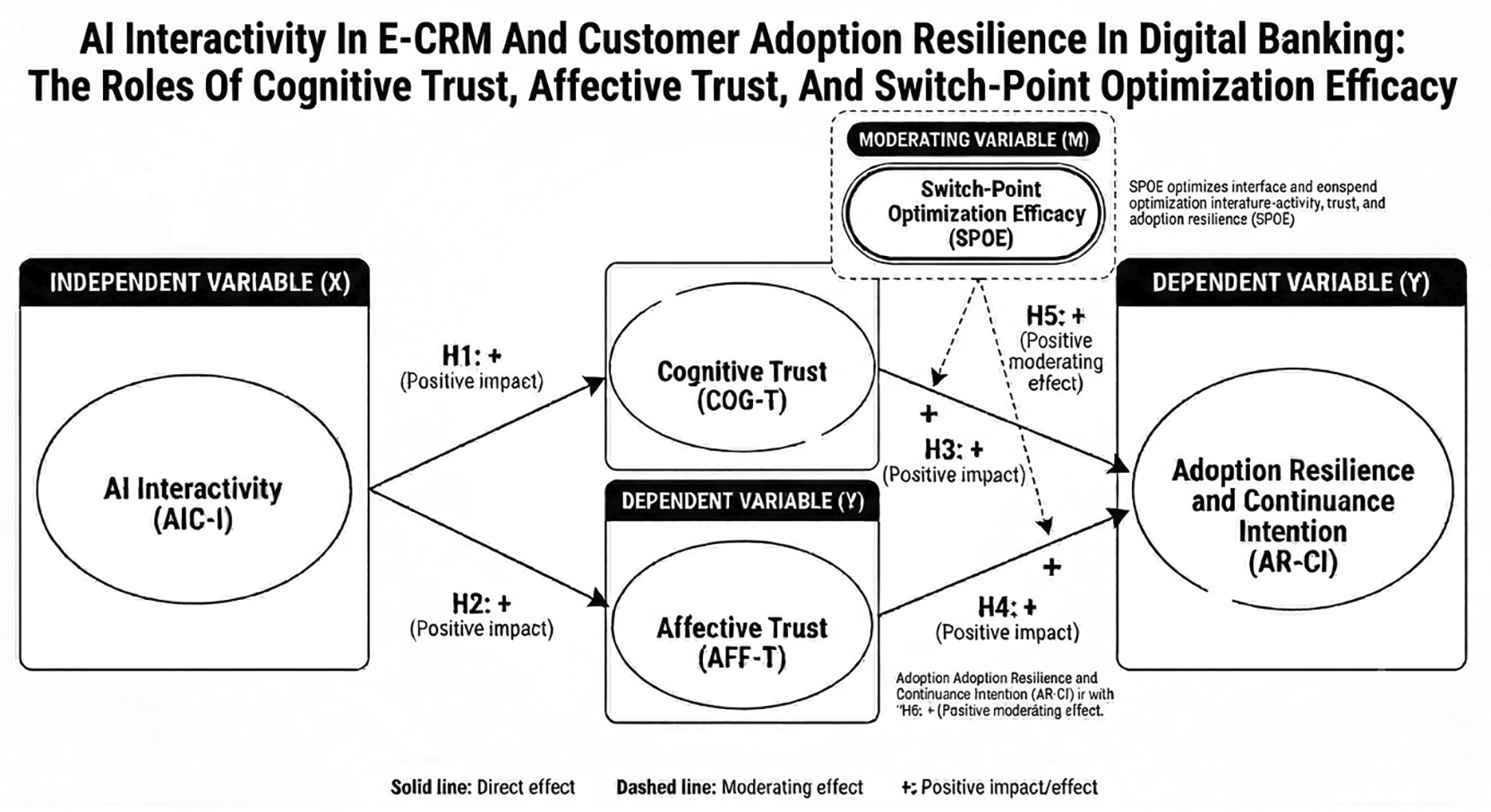
The integration of AI technology into banking e-CRM systems, alongside customer interaction experiences, has the potential to influence trust and future service usage choices. Figure 1 below illustrates the relationship between the variables covered in this study.
The application of artificial intelligence in the financial sector cannot be viewed simply as a technological update to existing processes. This process must be seen as a socio-technical redesign of the bank’s e-CRM environment. While Romano & Fjermestad (2003) defined e-CRM as an internet-based marketing approach designed to coordinate customer touchpoints, Libai et al. (2020) expanded this definition to AI-CRM by adding algorithms capable of autonomously learning, interacting, and managing the customer lifecycle. This development from the concept of digital coordination to intelligent automation demonstrates the high relevance of Sociotechnical Systems Theory (STS), which states that organizational performance is the result of the simultaneous optimization of technical and human subsystems. In the context of today’s digital banking, this means optimizing automated and data-driven capabilities while still considering relational needs and sensitivity to human trust (Akter et al., 2025; Leong et al., 2026). The implementation of conversational touchpoints in financial institutions creates interactive e-CRM capabilities tasked with building, maintaining, and developing customer relationships. Value is co-created with customers, who integrate their own resources such as connectivity, creativity, and knowledge, as well as the bank’s digital infrastructure, according to SD Logic principles (Leong et al., 2026; Peña-García et al., 2021).
For these technical capabilities to develop into sustainable relationship equity, SD Logic needs to be integrated with Relational Marketing Theory (RMT). According to RMT, the ultimate goal of any customer service process is not transaction efficiency per se, but rather the maintenance of the psychological contract necessary to build long-term customer commitment and retention (Hidayat & Idrus, 2023). In digital e-CRM platforms, trust is the primary social lubricant that allows customers to securely delegate cognitive verification processes to the system. Without it, the cognitive friction associated with such verification will result in relational resistance and channel switching due to a disrupted customer experience (Maskur et al., 2025; Royo-Vela et al., 2024). Thus, the structure of banking relationships becomes dependent on a decision-making architecture that must appropriately manage the boundary between machine-oriented e-CRM and human-oriented service recovery processes (Afzal, 2026; Ajouz et al., 2025).
Developing robust digital relationships in banking must be based on touchpoints that emulate the conditions and responsiveness of financial consultations. In an optimal e-CRM model, AI Conversational Interactivity (AI-I) is understood as an interface capability encompassing dialogue, information access, and transparency (Royo-Vela et al., 2024). High levels of interactivity reduce the psychological distance between consumers and digital platforms, making transactions more socially interactive (Bajaba et al., 2026). Dialogue is a crucial foundation for trust because it demonstrates the system’s responsiveness and engagement in meeting user needs. In relation to RMT, these interactive signals trigger two pathways of trust-building mechanisms: the cognitive and affective dimensions (Devlin et al., 2025).
First, Cognitive Trust (COG-T) refers to the rational element of the relational contract as it focuses on consumers’ perceptions of the competence, reliability, and quality of an automated e-CRM system (Devlin et al., 2025; Maskur et al., 2025). Providing accurate and clear information during interactions ensures that users’ expectations are met and builds platform credibility (Ajouz et al., 2025; Budiyanto et al., 2025). Second, Affective Trust (AFF-T) focuses on the emotional element of the process and encompasses perceptions such as benevolence, caring, and shared values (Devlin et al., 2025). To generate customers’ affective trust, automated e-CRM systems need to go beyond rule-based performance and demonstrate a caring attitude that can reduce users’ anxiety levels (Bajaba et al., 2026; Budiyanto et al., 2025). Therefore, interactive dialogue on e-CRM platforms meets both rational and emotional needs of consumers (Royo-Vela et al., 2024). Based on this, the following hypothesis can be formulated:
• H1: AI Interactivity (AIC-I) has a positive impact on Cognitive Trust (COG-T)
• H2: AI Interactivity (AIC-I) has a positive impact on Affective Trust (AFF-T)
Maintaining active consumer engagement in digital banking requires customers to transition from initial technology adoption to long-term relationship commitment. In this study, Adoption and Continuation Intention (AR-CI) is conceptualized as a behavioral manifestation of deep consumer engagement in a bank’s e-CRM ecosystem (Bajaba et al., 2026). Continuation intention is not simply a measure of basic utility; it signals a customer’s willingness to maintain the relationship and remain resilient to minor service disruptions or competitive offerings (Choi et al., 2025; Hidayat & Idrus, 2023; Ngo et al., 2025). Based on Social Exchange Theory (SET), this behavioral engagement is a reciprocal response to the relational value and psychological safety experienced by customers (Bajaba et al., 2026). Trust serves as a key mediating pathway that transforms front-end e-CRM interactivity into this long-term commitment.
Two trust processing pathways stabilize and secure this engagement through complementary mechanisms. Cognitive trust reduces users’ mental burden by establishing functional predictability, creating a state of cognitive economy where users can confidently delegate financial transactions to digital platforms (Sassenberg et al., 2026). This cognitive understanding allows consumers to suspend their skeptical thinking, allowing users to experience a smooth and frictionless digital life (Budiyanto et al., 2025). At the same time, affective trust serves as an emotional buffer. In the context of a high-value financial environment, consumers are particularly vulnerable to suspicion. Affective trust builds a psychological safety net for customers and creates a climate of trust that fosters relationship commitment and a willingness to forgive brands in the event of failures at automated touchpoints (Ajouz et al., 2025; Bajaba et al., 2026). The combination of cognitive competence and affective benevolence creates a relationship between satisfaction from initial interactions and behavioral engagement (Ajouz et al., 2025; Hidayat & Idrus, 2023). Based on this description, the following hypothesis is proposed:
• H3: Cognitive Trust (COG-T) has a positive impact on Adoption Resilience and Continuance Intention (AR-CI)
• H4: Effective Trust (AFF-T) has a positive impact on Adoption Resilience and Continuance Intention (AR-CI)
One of the strategic limitations of fully automated e-CRM systems is their inability to handle highly complex, emotionally charged, or critical service failures, which can lead to the destruction of shared value and the rapid erosion of trust between an organization and its customers. To maintain relationship equity, companies need to introduce a hybrid decision architecture driven by a Human-in-the-Loop (HITL) approach (Afzal, 2026). The point in time when a problematic interaction must be switched from technology to a human consultant can be referred to as a Switch Point (SP) (Saviano et al., 2023). The concept of Switch Point Optimization Efficacy (SPOE) is used to demonstrate a banking organization’s core capability to execute this handoff effectively and at the right time when technological limitations arise (Afzal, 2026; Saviano et al., 2025).
The theoretical role of SPOE can be explained through Expectancy-Disconfirmation Theory (EDT) and Expectancy-Confirmation Theory (ECT). When an automated process fails, it creates a situation where customer expectations are not met, and relational vulnerabilities emerge (Ajouz et al., 2025). When banking organizations lack a recovery strategy for their e-CRM systems, this negative disconfirmation seriously undermines previously established trust and ends customer engagement (Ajouz et al., 2025; Hidayat & Idrus, 2023). However, when SPOE is well-optimized, the prompt and empathetic intervention of a human consultant results in restorative justice (Afzal, 2026; Leong et al., 2026). As a result of this process, customers receive confirmation of their expectations regarding the bank’s competence and benevolence as an institution as a whole. Thus, the role of SPOE can be defined as a protective moderator. This means that SPOE protects the rational commitment (cognitive trust) and emotional bond (affective trust) built by the e-CRM platform from being disrupted due to technical limitations (Ajouz et al., 2025; Hidayat & Idrus, 2023; Saviano et al., 2025). Therefore, the following hypothesis can be formulated:
• H5: Switch-Point Optimization Efficacy (SPOE) positively moderates the relationship between Cognitive Trust (COG-T) and Adoption Resilience and Continuance Intention (AR-CI)
• H6: Switch-Point Optimization Efficacy (SPOE) positively moderates the relationship between Affective Trust (AFF-T) and Adoption Resilience and Continuance Intention (AR-CI)
To assess the studied structural model in the real-world context of digital banking e-CRM, this study employed a cross-sectional quantitative design. Data collection involved a target population of 400 digital banking users who interacted with a financial services chatbot or virtual banking assistant within the six months prior to the survey. This criterion ensured sufficient recall of experiences related to interaction quality and financial trust (Choi et al., 2025; Ngo et al., 2025). The sample included only users of retail banking, wealth management, and mobile banking apps, as these categories provide insights into high-value financial decisions made by customers (Bajaba et al., 2026; Malhotra et al., 2024). The sample distribution is depicted in Table 1 below:
Participation in this study was voluntary, and participant responses were collected using an online questionnaire. Incidental non-probability sampling was used as a data collection method in theory-testing research focused on identifying structural relationships (Urbani et al., 2024). Screening questions excluded all participants who had only interacted with a simple automated FAQ chatbot. Thus, rigorous screening ensured that all respondents experienced a genuine dialogue about financial accounts. Such screening is crucial in the context of marketing research to ensure that the nuances of highly interactive dialogues typical of the banking industry are fully accounted for (Abikari, 2024; Graham et al., 2025).
Measurement scales were developed based on the literature to ensure content validity. AI Conversational Interactivity (AIC-I) was measured using a four-item scale assessing response dependability and conversational naturalness (Chintalapudi et al., 2025; Haugeland et al., 2022). Cognitive trust and affective trust were measured using scales that differentiate competence from benevolence to allow for more granular trust processing (Prakash et al., 2023). Adoption Durability and Continuance Intention (AR-CI) were measured using items related to loyalty and suspension of skepticism after errors (Ngo et al., 2025; Sassenberg et al., 2026).
Finally, Switch Point Optimization Efficacy (SPOE) was measured using a four-item scale specifically related to the timeliness, smoothness, and professionalism of the transition process from AI to humans (Saviano et al., 2023, 2025). All measures used a five-point Likert scale (1 = strongly disagree, 5 = strongly agree). Prior to the main experiment, a pilot test involving 30 banking users improved the clarity of the instrument’s language. Statistical tests demonstrated high reliability across all constructs, ensuring the instrument’s relevance to the banking industry.
The analysis was conducted using Partial Least Squares Structural Equation Modeling (PLS-SEM). This variance-based technique is best suited for predictive modeling and mediation path analysis in corporate finance and marketing systems (Choi et al., 2025; Hair et al., 2021, 2024). This approach is robust in dealing with variable non-normality, small sample sizes, and high explained variance (Choi et al., 2025; Hair et al., 2021, 2024). To ensure the absence of common method bias (CMB), a Harman’s single-factor test was conducted, and the results showed that the first factor explained only 32% of the variance. Furthermore, a full collinearity VIF check was performed. All values were below 3.3, confirming the absence of significant CMB.
Effect size (f2) and predictive relevance (Q2) are evaluated in the structural model assessment. Effect size measures the contribution of each independent variable to the R2 of the endogenous construct, with an effect considered small if its value is 0.02, medium if 0.15, and large if 0.35. Predictive relevance is established through a blindfolding technique, where a Q2 value greater than zero indicates the model’s predictive validity for the endogenous construct. This multi-layered approach ensures that the research results are both statistically significant and managerially meaningful (Choowan & Daovisan, 2025; Leon, 2025).
The measurement model evaluation confirmed that all latent constructs met the required reliability and validity criteria (see Table 2). The loading values for all indicators remained well above the 0.70 criterion, indicating high reliability for each indicator within the banking construct. Furthermore, internal consistency was evident from the Cronbach’s Alpha and Composite Reliability (CR) values, which were all above 0.85 for all variables, thus confirming the measurement model’s high reliability in fintech research (Hair et al., 2024; W.-J. Lee, 2024). Specifically, the Adoption Resilience construct demonstrated very high reliability with CR = 0.941 and Alpha = 0.922. Convergent validity was evident as the Average Variance Extracted (AVE) values for all constructs were comfortably above 0.50. The values ranged between AVE = 0.688 for Affective Trust and AVE = 0.802 for Adoption Resilience. Thus, more than half of the variance of each indicator is explained by the corresponding latent variable.
Meanwhile, discriminant validity is demonstrated in Table 3 through the Heterotrait-Monotrait (HTMT) ratio, where the correlation between constructs remains below 0.85. This validation result demonstrates the uniqueness of each construct in the model related to banking governance and marketing architecture (Choowan & Daovisan, 2025; Leon, 2025).
The structural model evaluation provides strong support for the proposed path between AI Conversational Interactivity (AIC-I), Cognitive Trust (COG-T), Affective Trust (AFF-T) and Adoption Resilience and Continuance Intention (AR-CI) as seen in Table 4 and Figure 2. The path coefficients indicate a positive influence of AI Conversational Interactivity on the cognitive and affective trust dimensions. Based on statistics, the relationship between AIC-I and COG-T is classified as very strong, because the coefficient is 0.452 with a T statistic of 10.231. The same thing also applies to the influence of AIC-I on AFF-T, with a coefficient of 0.384 and a T statistic of 8.945. Thus, hypotheses H1 and H2 are accepted.
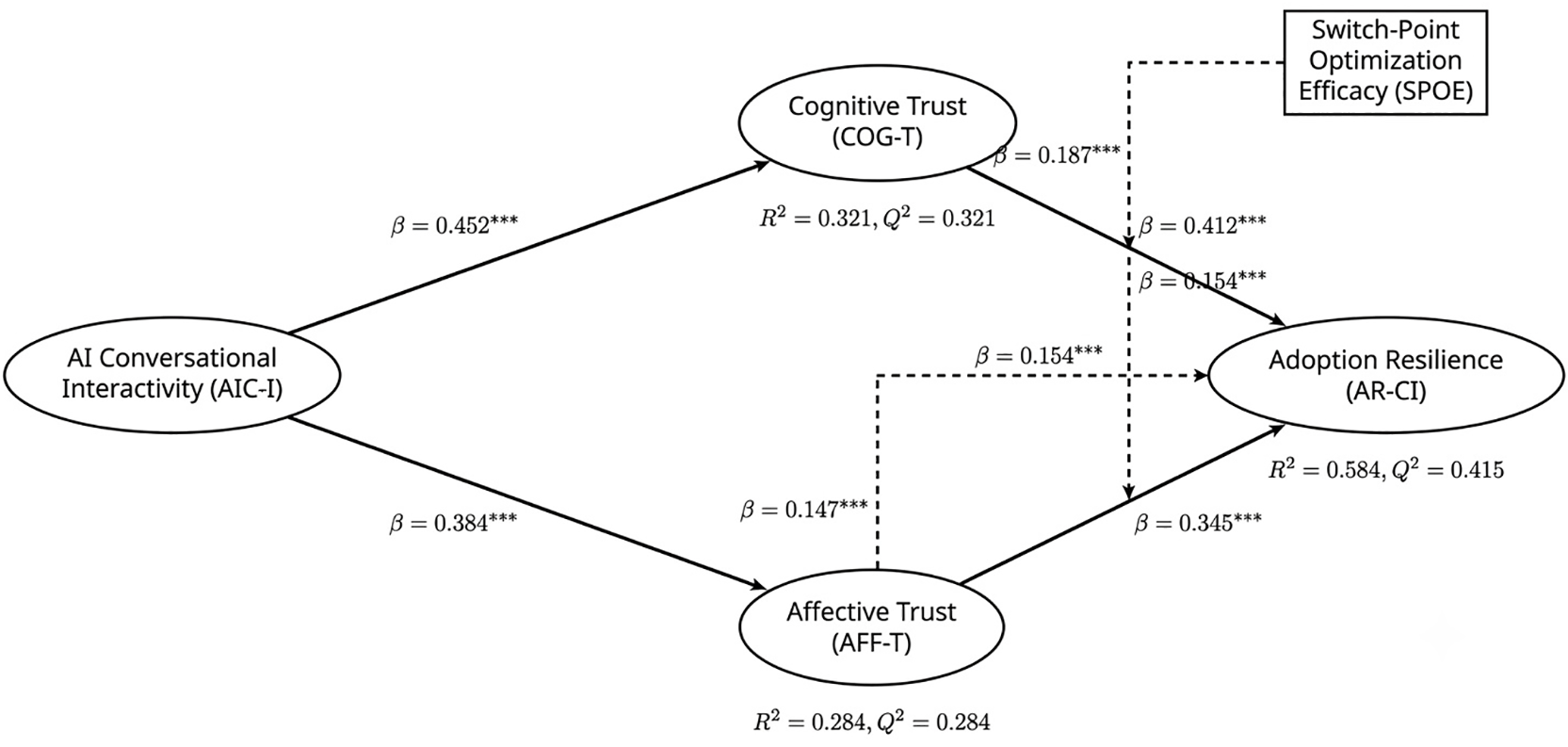
The influence of socio-cognitive trust on behavioral outcomes through variance-based modeling was also proven. Cognitive trust positively influenced adoption resilience with a coefficient of 0.412 and a T-statistic of 9.564, thus confirming H3. Affective trust also became a predictor of adoption resilience with a coefficient of 0.345 and a T-statistic of 7.821. Thus, H4 was also confirmed. Overall, the variance explanation of adoption resilience by the proposed model was significant and reached 0.584 (see Figure 2). This level of predictive ability indicates that the two-way trust mechanism is a key factor in building customer loyalty and commitment in the digital banking e-CRM environment (Bajaba et al., 2026; Mgiba & Ndlazi, 2026).
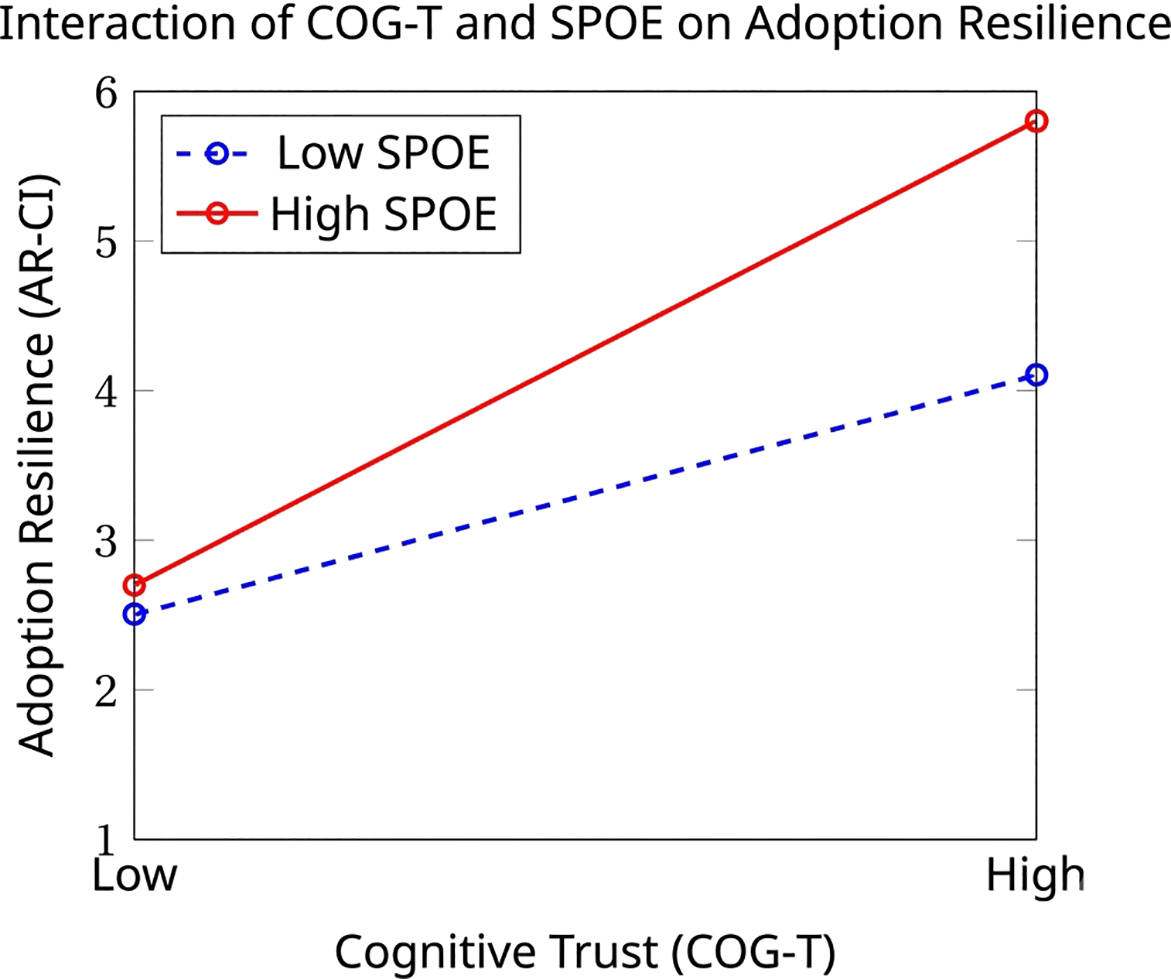
The third phase of the research focused on the moderating role of Switch-Point Optimization Efficacy (SPOE). The results in Table 5 indicate that an organization’s ability to optimize the transition process from AI to humans has a positive effect on the stability of user relationships. Specifically, the interaction between SPOE and COG-T shows a significant coefficient of 0.187 with a T-value of 4.321, supporting H5. Thus, the influence of cognitive trust on adoption resilience is stronger if the organization successfully optimizes the switch-point. Furthermore, the interaction effect of SPOE and AFF-T produces a coefficient of 0.154 and a T-value of 3.845, thus supporting H6.
In addition to path significance, this model also has predictive validity. The Q2 values for Cognitive Trust (0.321), Affective Trust (0.284), and Adoption Durability (0.415) are all well above 0, indicating the model’s predictive validity. Effect size (f2) analysis shows that the influence of AI interactivity on trust formation is large, while the moderating effect of SPOE on adoption durability is moderate. Simple slope analysis visually demonstrates how high organizational response efficacy buffers the path from trust to adoption at critical moments in financial services consumption (see Figure 3).
Empirical confirmation of this structural model demonstrates that human-machine interface management remains a key determinant of the longevity of adoption and consumer engagement in today’s banking e-CRM systems. Rather than viewing conversational AI as merely an add-on tool for cost optimization, this study demonstrates that AI conversational interactivity (AIC-I) is a crucial and dynamic CRM front-end capability that initiates the consumer engagement flow. The high path coefficient in H1 (β = 0.452) and H2 (β = 0.384) indicates that interactive and conditional dialogue acts as a major driver of two-way trust processing.
However, this interactive dialogue cannot simply occur without context. Within the DART framework, such dialogue helps build dialogue, information access, and transparency (Royo-Vela et al., 2024), while simultaneously activating consumers’ own capabilities, namely connectivity, creativity, and knowledge (Peña-García et al., 2021). Thus, by empowering users to create their own services through intelligent, two-way conversations, interactive e-CRM environments transform passive transactions into collaborative, social experiences, laying the foundation for strong relationships with consumers.
However, it is important to emphasize that this study positions cognitive and affective trust as the primary mediating pathways that transform front-end e-CRM capabilities into behavioral AR-CI, with an explained variance of 58.4%. Validation of H3 (β = 0.412) and H4 (β = 0.345) provides strong support for the distinctive role of socio-cognitive trust processes as described in the multidisciplinary trust framework proposed by Devlin et al. (2025). When customers interact with IT-based artifacts that lack moral agency, they need to shift the focus of their dependence from relational properties, such as human empathy, to functional and systemic aspects (Devlin et al., 2025).
Cognitive trust (COG-T) directly builds the transactional reliability and functional credibility of the platform. Thus, customers experience a cognitive economy of trust and absorption (Sassenberg et al., 2026), allowing them to take a break from constant algorithmic surveillance and delegate decision-making to the digital environment, thereby saving mental resources and minimizing transaction costs. At the same time, affective trust (AFF-T) addresses the sociological and psychological aspects of institutional care. This trust serves as an emotional shield in the context of a high-risk financial environment, where customer vulnerability is greater than usual, thus supporting relationship continuity and adoption resilience (AR-CI) and making customers willing to continue the relationship even during times of market volatility and technical disruptions (Budiyanto et al., 2025; Hidayat & Idrus, 2023).
H5 (β = 0.187) and H6 (β = 0.154) confirms the Switch Point theory as one of the most important tools in boundary governance in e-CRM systems. When algorithms encounter complex or highly emotional questions, or fail completely, the customer’s expectation baseline collapses and the customer experiences a very strong relational vulnerability, leading to value co-destruction (Ajouz et al., 2025). Switch Point Optimization Efficacy (SPOE) emerges as a key customer retention tool. By effectively handing off to human experts, SPOE signifies high levels of interactional and restorative justice (Afzal, 2026). Such strategic organizational readiness (Saviano et al., 2025) will help maintain the cognitive credibility and affective connections built by front-end AI in e-CRM, thereby avoiding algorithmic limitations.
This research builds on the existing literature in the areas of relationship marketing, fintech adoption, and human-AI collaboration to a significant extent. First, the empirical findings of this study align with those of Hidayat & Idrus (2023) in their study on the impact of relationship marketing efforts in banking branches with high-value customers. Hidayat & Idrus (2023) concluded that relationship marketing activities do not directly influence customer retention, but work indirectly through trust and satisfaction. Similarly, in the context of digital e-CRM, there is no direct contribution from front-end conversational interactivity to adoption resilience and continuance intention. Its contribution emerges sequentially through a two-way mediation via trust. Therefore, in digital e-CRM, relying solely on the novelty of a technological artifact to achieve successful adoption is not sufficient; the technology must be explicitly geared towards building trust.
Second, this study contributes to the moderating mechanisms identified in digital retail banking. In a study of customers in the structurally constrained Palestinian market, Ajouz et al. (2025) demonstrated that FinTech adoption can serve as a strong positive moderator, enhancing the influence of customer satisfaction on their retention behavior. This study adds a further paradigm shift by introducing another moderating variable in a highly automated banking environment: the organization’s ability to appropriately transition from automation at the right time (Turnover Point Optimization Efficacy). This suggests that the primary competitive advantage of AI-based banking e-CRM platforms lies in their ability to transition from full automation, rather than merely achieving it. This capability represents the organization’s governance capacity to terminate an interaction process when the limits of an IT artifact’s capabilities are reached (Saviano et al., 2025).
Third, this study contributes to the definition of consumer well-being in the fintech context. While Budiyanto et al. (2025) shifted the focus of technology adoption analysis from customer loyalty to consumer well-being (CWB), demonstrating that trust is a key predictor of adoption and improved quality of life, the structural model in this study presents a precise and functional mechanism for how a trust-oriented e-CRM design translates into CWB and engagement (Sassenberg et al., 2026). Finally, while Leong et al. (2026) examined two forms of multi-actor co-creation in the digital space, this study suggests that Switching Point Optimization Efficacy (SPOE) is an organizational capability necessary to manage the continuity between them. In enterprise-led e-CRM architectures, switching points are used as recovery assets; however, as banking evolves toward API-based open finance, SPOE will become a crucial cross-platform governance indicator to safeguard consumer trust across a digital lifecycle involving multiple organizations (Leong et al., 2026).
This research makes a significant contribution to the academic literature on corporate governance, information systems, and strategic marketing by going beyond the simple replacement paradigm for AI applications in financial services. The identification and validation of Switching Points (SPs) as a crucial boundary governance construct results in a successful theoretical integration between Sociotechnical Systems Theory (STS) and Service-Dominant (SD) Logic. Unlike approaches that view intelligent systems as stand-alone actors, this article views AI applications as collaborative subsystems within a more complex, multi-actor e-CRM architecture (Leong et al., 2026). This study provides empirical evidence on the relationship between handoff governance (SPOE) and long-term customer engagement (AR-CI), thus demonstrating that strategic value in digital banking relies on the optimized performance of both human and machine subsystems simultaneously.
Furthermore, this study enhances the knowledge on digital trust by defining and measuring the cognitive economics of trust and absorption (Sassenberg et al., 2026) and mapping them to the trust taxonomy outlined by Devlin et al. (2025). Empirical evidence on dual trust pathways provides a detailed explanation of how financial customers interact with IT artifacts lacking moral agency. The results show that cognitive trust acts as a stabilizing element for rational use heuristics, while affective trust acts as a crucial relational buffer. The dual trust process, moderated by the restorative nature of switching points (Saviano et al., 2025), provides a new theoretical framework for understanding human-machine interdependence and interactional fairness in highly regulated industries.
From the perspective of banking executives and strategic marketers, this study demonstrates that pursuing total automation for maximum speed is a flawed e-CRM approach, negatively impacting customer lifetime value and brand equity. To create robust customer engagement in banking, financial institutions should first employ Artificial Emotional Awareness (AEA) as an e-CRM guardian. Rather than focusing on the speed of automation processes, banks should employ intelligent conversational platforms capable of sentiment analysis, semantic friction detection, and interaction velocity monitoring (Saviano et al., 2025). Rather than waiting for a complete customer service failure, these systems would detect the risk of relationship deterioration and trigger a Turning Point (SP) before cognitive and affective trust is destroyed.
Furthermore, the fundamental principles of mobile banking applications need to shift from transactional, self-service portals to collaborative platforms, where customer assets are leveraged as a means of service delivery. By integrating customer knowledge, connectivity, and creativity into the UI/UX interface (Peña-García et al., 2021), financial platforms can provide highly transparent and customizable planning and simulation dashboards. This way, users have the opportunity to design their own solutions to their problems. This results in higher cognitive absorption and lower anxiety around digital transactions and interactions, ultimately creating a stronger emotional attachment to the brand.
Finally, the implementation of a Human-in-the-Loop (HITL) governance framework is crucial to ensure institutional accountability and regulatory compliance (Leon, 2025; Loang, 2025). In the era of automated banking, operational excellence criteria should be evaluated based on the quality of collaboration between artificial and human subsystems, rather than the speed of individual transactions (Afzal, 2026). The implementation of standardized audit procedures will enable banks to view Switching Point Optimization Efficacy (SPOE) as a key organizational performance indicator, while providing staff with appropriate training to handle algorithmic transitions.
While providing a robust theoretical model, this study has several limitations that could serve as a springboard for further research. First, the research design limits the opportunity to capture the longitudinal development of trust recovery over time across multiple service failures. Future research should employ a longitudinal or experimental diary approach to examine the impact of repeated transitions between humans and AI on consumer loyalty and forgiveness. Second, the current theoretical model does not consider individual-level moderating variables such as digital financial literacy, AI anxiety, or intrinsic dispositional trust, which may moderate initial acceptance and sensitivity to algorithmic errors (Devlin et al., 2025; Kim et al., 2025; J.-C. Lee & Zhou, 2026). Incorporating these personal variables into the e-CRM conceptual framework would enrich the overall picture of consumer behavior. Finally, with digital banking increasingly shifting from traditional platforms towards decentralized autonomous systems in Open Finance (Leong et al., 2026), future research needs to consider how Switch Points are coordinated and managed in situations where customer data and financial-related services are provided by multiple fintech companies.
This study validates the significance of human-machine interdependence in the context of digital banking e-CRM. Through the use of a structural model, it is demonstrated that consumer engagement and adoption resilience are facilitated by socio-cognitive processes, where two-way trust mechanisms act as the primary relational channel. By optimizing the transition from algorithmic interaction to human communication at the Transition Point, financial organizations can find a balance between efficiency and relationship warmth, thereby avoiding the destruction of shared value and service failures. In other words, sustainable competitive advantage in the digital banking era depends on the proper management of the affective-algorithmic boundary, demonstrating that digital innovation is fundamentally human-centric.
The Research Ethics Committee of the Universitas Taruna Bakti granted permission for this study before data collection (Approval Number: 067/UTB-KET/UN8000/VII/2026). This study was conducted in accordance with the research guidelines of the ethics body and international ethical standards for research involving humans.
All respondents received an explanation of the study’s purpose, implementation methods, benefits, and their rights as participants before data collection. Respondents were free to refuse or discontinue participation in the study at any time without facing any consequences. Furthermore, the authors promised that all information provided would be kept confidential, checked anonymously, and used only for scientific research. Before respondents completed the study questionnaire, electronic informed consent was obtained.
The dataset supporting the findings of this study is available in the Zenodo repository. The data consist of coded questionnaire responses, summary descriptive statistics (including number of observations, mean, standard deviation, minimum, and maximum values), and demographic distribution of respondents by age and gender. This dataset forms the basis for the statistical analyzes reported in this study.
The dataset can be accessed at:
Chandra, H. (2026). AI Interactivity in e-CRM and Customer Adoption Resilience in Digital Banking: The Roles of Cognitive Trust, Affective Trust, and Switch-Point Optimization Efficacy [Data set]. Zenodo. https://doi.org/10.5281/zenodo.20897243
Data are available under the terms of the Creative Commons Attribution 4.0 International license (CC-BY 4.0).
The authors would like to thank all respondents who voluntarily participated in this study. We also extend our gratitude to everyone who assisted in the research and writing of this article for their advice, support, and assistance.
The author(s) declared that no grants were involved in supporting this work.
© 2026 Hendriyani C et al. This is an open access article distributed under the terms of the Creative Commons Attribution License, which permits unrestricted use, distribution, and reproduction in any medium, provided the original work is properly cited.
Current Reviewer Status:
AWAITING PEER REVIEW
AWAITING PEER REVIEW
?
Key to Reviewer Statuses VIEW HIDE
ApprovedThe paper is scientifically sound in its current form and only minor, if any, improvements are suggested
Approved with reservations A number of small changes, sometimes more significant revisions are required to address specific details and improve the papers academic merit.
Not approvedFundamental flaws in the paper seriously undermine the findings and conclusions