Просмотр новости
Найдите то, что Вас интересует
 Спутники
 РН
РН SpaceX
 Роскосмос
 NASA
NASA
СпутникиРНSpaceXРоскосмосNASABackground Studies of administrative expertise based on principal-agent theory have traditionally conceptualized bureaucrats as agents charged with realizing politician’s preferences. More recently, scholars of policy agenda setting have examined the early stage of the policy process and have redefined the role of bureaucratic expertise. Situated within the literature that draws on bounded rationality as an analytical framework, this study how examines the expertise of PhD-holding officials influences policy agenda setting and provides insights into the future utilization of PhD holders in government. Methods We conducted a questionnaire survey of government officials responsible for science and technology policy at the Ministry of Education, Culture, Sports, Science and Technology. The questionnaire focused on comprehensive coordination, policymaking, and other general administrative duties. We analyzed descriptive statistics based on the perceptual data collected through the survey and tested hypotheses derived from prior studies on administrative expertise using a negative binomial regression model with robust standard errors. Results The survey revealed no significant differences between PhD-holding officials and others in their perceptions of coordination tasks or the importance of evidence; however, regarding policymaking, PhD-holding officials showed a notable tendency to find greater fulfillment in formulating new policies. Furthermore, negative binomial regression analysis using the number of new policy proposals as the dependent variable indicated that PhD status was positively associated with the policy proposal rate, even after adjusting for years of service. Conclusions This study suggests that the administrative expertise of PhD-holding officials is associated with a higher rate of new policy proposals, indicating that doctoral degree holders may influence policy agenda setting. The findings imply that utilizing PhD-holding officials in public institutions may contribute to policy innovation, as they possess not only specialized scientific knowledge but also analytical and implementation capacities.
In the revised manuscript, we introduced a theoretical framework for deriving our hypothesis and refined the models used in the quantitative analysis.
First, we developed the theoretical framework by defining administrative expertise and introducing bounded rationality, which focuses on information processing, as the analytical framework for examining the utilization of such expertise. The manuscript defines capacity as comprising a stock of information, including knowledge, and the skills needed to utilize that information effectively. It then reviews previous studies on policy capacity and bureaucratic expertise and defines administrative expertise as consisting of four dimensions: analytical capacity, managerial capacity, political capacity, and implementation capacity.
PhD-holding officials are expected to possess not only strong analytical capacity but also front-line knowledge of research practice acquired through their extended research experience during doctoral training. In the context of science and technology policy, such front-line knowledge is related to implementation capacity. From the perspective of bounded rationality, bureaucratic expertise is understood to influence policy agenda setting at the early stages of the policy process, particularly through problem identification and issue definition. On this basis, we proposed the hypothesis that PhD-holding officials make a larger number of new policy proposals than officials with bachelor’s or master’s degrees.
Second, to refine the quantitative analysis, we estimated three additional models that account for the count-data nature of the dependent variable: a Poisson regression model, a negative binomial regression model, and a negative binomial regression model with years of service included as an exposure variable and robust standard errors. Across all four models, including the OLS model, PhD status was positively and statistically significantly associated with the number of new policy proposals.
These results suggest that capacities related to the administrative expertise characteristic of doctoral degree holders may influence policy agenda setting.
Within the principal-agent (PA) framework, bureaucratic expertise has been regarded as an object of political control in the relationship between delegation and accountability. As a result, policy effectiveness and democratic control have often been understood as being in tension. By contrast, studies focusing on the early stages of the policy process have shown that bureaucratic expertise influences how governments search for, identify, and redefine problems, thereby affecting policy agenda setting (Workman, 2015; Baumgartner and Jones, 2015; Baekgaard, 2018). This study operationalizes administrative expertise through the possession of a doctoral degree, focuses on the role played by such expertise in the policy process, and examines its association with policy agenda setting.
The human resource management system in the Japanese central government has been described as a closed career-based system, in which bureaucrats recruited through the Comprehensive Service Examination rotate every two to three years and acquire the competencies required for their roles through on-the-job training. By examining the role played by the expertise of PhD-holding officials in the policy process within the Japanese central government, this study demonstrates the role of bureaucratic expertise in policy agenda setting. These findings address practical concerns regarding the future management and utilization of human resources in government. As noted above, the present analysis focuses on the Ministry of Education, Culture, Sports, Science and Technology (MEXT), which employs a larger number of PhD-holding officials than other ministries. Within MEXT, cooperation was secured from officials in the Science and Technology policy Bureau, the Research Promotion Bureau, and the Research and Development Bureau, hereafter referred to as the three STI-related bureaus.
The structure of this paper is as follows. Section 1 provides an overview of the human resource management system in the Japanese central government and explains the characteristics of the stuffing and career-management practices in the three STI-related bureaus of MEXT. In addition, it examines findings from existing surveys concerning the capacities of PhD-holding officials. Section 2 reviews previous studies on administrative expertise and specialized knowledge, and derives hypotheses from a theoretical framework of policy agenda setting in which expertise is understood to exert influence. Section 3 describes the data and research design. Section 4 presents the empirical results and concludes with a brief discussion.
In Japan, the recruitment examination categories for new graduates and master’s or doctoral degree holders are divided into three types: the Examination for Comprehensive Service, the Examination for General Service, and the Examination for Specialists. Bureaucrats recruited through the Examination for Comprehensive Service are regarded as candidate for high-ranking positions in the central government. Applicants undergo multiple interview sessions conducted by the ministry or agency they wish to join, after passing two written recruitment examinations administered by the National Personnel Authority (NPA). The 2024 Spring Examination for Comprehensive Service included 11 examination categories, which were broadly divided into two groups: humanities and social sciences, including political science, legal studies, and economics; and natural sciences, including chemistry, physics, engineering, digital sciences, and pharmaceutical sciences. Bureaucrats who passed the written examinations in the field of Natural Sciences and joined the ministry or agency are classified as technical officials, whereas those who passed the written examinations in the humanities and social sciences are administrative officials. The NPA is responsible for conducting recruitment examinations and managing the appointment process, while each ministry or agency determines its planned recruitment numbers for each natural sciences examination category and is responsible for managing the placement and promotion of personnel after recruitment. Depending on the historical context, the number of recruits in the natural sciences examination categories within the Examination for Comprehensive Service varies considerably across ministries. Moreover, the duties assigned after recruitment, patterns of personnel transfer, and personnel systems also differ across ministries (Fujita, 2008).
This study focuses on the technical officials responsible for science and technology policymaking and comprehensive coordination at MEXT. A distinctive personnel practice in the three STI-related bureaus is that officials perform the same duties regardless of whether, at the time of recruitment, they entered through the humanities and social sciences or the natural sciences examination categories of the Examination for Comprehensive Service. Specifically, the same duties are assigned to officials irrespective of whether they were recruited as administrative officials after completing an undergraduate degree, as technical officials after obtaining a master’s degree, or as technical officials after obtaining a doctoral degree. Within the three STI-related bureaus, duties are allocated according to research field, with sections responsible for areas such as life sciences and quantum technology. However, officials are generally not assigned to posts on the basis of field-specific expertise acquired through their degree studies. In these bureaus, there are no posts responsible for establishing regulatory standards or conducting regulatory reviews, such as those found in pharmaceutical administration. Once recruited through the Examination for Comprehensive Service, all officials, whether administrative or technical, are engaged in policy planning and formulation.
This section examines, on the basis of two existing surveys, the capacities acquired by PhD-holding officials in Japan.
First, we draw on data from Japan Doctoral Human Resource Profiling (JD-Pro) [1], conducted by the National Institute of Science and Technology Policy. This longitudinal survey is conducted every five years and enables the employment status of PhD holders after completion of doctoral programs to be examined over time. According to the 2020 survey, slightly more than half of PhD holders were employed at universities and related institutions (51.7%), followed by private companies (27.2%), while public sector institutions and non-profit organizations together accounted for 15.7%. With regard to the capacities of PhD holders, the survey included a question asking, “What skill and/or capability that you obtained in doctoral course has contributed to your current work?” Respondents were asked to select up to three responses from the options provided. The most frequently selected response was “logical reasoning and critical thinking skills” (69.6%), followed by “data handling and application skills” (30.9%), “skills in identifying and defining problems” (24.2%), and “skills in hypothesis construction and testing” (20.8%). This item focuses on skills acquired during enrolment in doctoral programs and does not provide response options concerning the contribution of specialized knowledge, information, or both from respondents’ doctoral fields to their current work. It therefore does not offer a comprehensive account of the capacities of PhD holders. Nevertheless, the results indicate that PhD holders acquire highly transferable capacities during their doctoral training.
Next, we focus on the Survey Results on the Utilization of Doctoral Human Resources in Ministries and Agencies [2], conducted jointly by the Cabinet Secretariat, the Cabinet Office, and MEXT, which covered 25 government ministries, agencies, and authorities. Conducted in 2022, this survey examines how PhD holders, regarded as representative of bureaucratic expertise, are evaluated within their respective ministries and agencies. Among the ministries and agencies surveyed, the following discussion focuses on the responses provided by the 20 ministries and agencies that employed PhD holders. First, with respect to the capacities valued in PhD holders, five ministries and agencies answered “none in particular”. The remaining 15 ministries and agencies therefore indicated that they valued some form of capacity. The most frequently selected response was “specialized expertise”, selected by 14 ministries and agencies, followed by “research and analytical capacity” (11 ministries and agencies) and “logical reasoning capacity” (7 ministries and agencies). In addition, “capacity to conduct research” and “capacity to identify and define problems” were each valued by 6 ministries and agencies. Consistent with JD-Pro, the aforementioned longitudinal survey of PhD holders, which includes respondents employed in private companies, this survey indicates that PhD-holding officials are valued not only for field-specific expertise related to the area in which they obtained their PhD, but also for transferable capacities such as research and analytical capacity and the capacity to identify problems.
This section has outlined the human resource management system of the central government of Japan and how PhD-holding officials are evaluated under that system. The following section organizes the literature on administrative expertise, reviews previous studies of policy agenda setting, and derives hypotheses for examining the role played by PhD-holding officials in the policy process.
First, this section examines the components of administrative expertise. It then derives hypotheses by drawing on previous studies concerning the factors that condition the utilization of such capacities and those concerning the effects of these capacities on policy.
The question of bureaucratic expertise has long been a central theme in public administration. Yet bureaucratic personnel systems differ across countries, and the roles expected of bureaucrats vary accordingly. It is therefore difficult, on the basis of previous studies, to derive a single institutionally independent answer to the question of what constitutes bureaucratic expertise. In this study, we examine the capacities associated with administrative expertise by drawing on previous studies of policy capacity (Wu et al., 2015, 2018; Craft et al., 2024) and the literature concerning expertise in the Japanese central government (Fujita, 2008, 2012; Ito, 2012). Policy capacity refers to the skills and resources, or competences and capabilities, required to perform policy functions (Gleeson et al., 2009, 2011; Wu et al., 2015, 2018). Following Wu et al. (2015, 2018), it may be understood as comprising analytical, operational, and political competences, each of which operates at the individual, organizational, and systemic levels. Analytical capacity concerns the technical soundness of policy actions, in the sense that such actions, if implemented, can contribute to the achievement of policy goals. Operational capacity concerns all stages of the policy process, including policy implementation, and enables the management and coordination of resources through functions such as staffing, budgeting, and performance management. Political capacity contributes to obtaining and sustaining the political support necessary for policy action through an understanding of stakeholders and their positions, and through communication with key policymakers. The conceptual framework proposed by Wu et al. (2018) also takes into account the social context surrounding administrative organizations and offers a basis for understanding the essential components required when social problems are addressed through public policy. A similar analytical framework is also found in the literature on administrative expertise in the Japanese central government. Fujita (2008) and Ito (2012) identify frontier scientific knowledge, specialist literacy, and administrative management capacity as the three components of administrative expertise. Frontier scientific knowledge is defined as academic knowledge produced primarily in academia. Specialist literacy is defined as the capacity required to enable scientific knowledge to inform policymaking. Administrative management capacity refers to the ability to manage the policy process and bring public policy into effect, including the coordination of stakeholders. A distinctive feature of these categories is that they focus on the knowledge required to carry out administrative actions.
When these previous studies are considered together, the operational capacity and political capacity identified by Wu et al. (2018), as discussed above, may be understood as being subsumed under administrative management capacity in Fujita (2008) and Ito (2012). By contrast, the analytical capacity identified by Wu et al. (2018) is differentiated in Fujita (2008) and Ito (2012) into advanced scientific knowledge and specialist literacy, according to differences in the information, including knowledge, utilized. In Wu et al. (2018), the contents of analytical, political, and operational capacities at the individual, organizational, and systemic levels are presented as components of policy capacity within a conceptual model whose scope extends beyond bureaucratic organizations to society as a whole. For instance, at the individual level, operational capacity is described as expertise in human resource management, budgeting, and coordination, whereas individual-level analytical capacity is defined as the knowledge and skills required for policy analysis and evaluation. In Fujita (2008), knowledge, skills or a combination of knowledge and skills required for administrative activities constitute the basic elements of each category. Accordingly, this paper focuses on the concepts of knowledge and skills, which constitute elements of the classifications discussed above, and defines capacity as comprising a stock of information, including knowledge, and the skills needed to utilize that information effectively. On this basis, the capacities examined in the previous studies discussed thus far are organized according to two criteria: the type of information on which they draw and the stage of the policy process at which that information is required. The following four dimensions are then identified as constituting administrative expertise.
The first dimension is analytical capacity. This refers to the capacity to identify problems and formulate effective and efficient policies by drawing on advanced scientific knowledge, as well as front-line knowledge fed back from street-level implementation. It also includes knowledge and skills related to quantitative reasoning. This capacity is required in order to integrate advanced scientific knowledge held by experts into administrative practice and to formulate evidence-based policies. Information concerning the target of policy is often obtained through work related to the relevant administrative duties, while capacity may also be developed through participation in training programs conducted by external lecturers. In the policy process, analytical capacity is required at an early stage.
The second dimension is managerial capacity. This refers to the capacity to manage policy formulation, realization, and implementation by drawing on experiential knowledge concerning management, including human resource development within the organization and budget management, such as procurement. It is generally developed through on-the-job training in administrative practice and is required throughout the policy process, from the early stages to the final stage.
The third dimension is political capacity. This refers to the capacity required to bring public policy into effect by drawing on knowledge of key actors outside the organization, including other ministries and agencies and other stakeholders, as well as experiential knowledge needed to secure support for the policy concerned. It is also generally developed through on-the-job training in administrative practice and is required at the final stage of the policy process, when policy decisions are made.
The fourth dimension is implementation capacity. This refers to the capacity required to interpret and implement policies that have been adopted but remain ambiguous, drawing on front-line knowledge concerning policy recipients. When public policy is implemented, information obtained from the demand side can be fed back into policy analysis, thereby contributing to improvements in policy content. The autonomy of street-level bureaucrats is shaped by institutional arrangements, and this capacity is developed primarily through on-the-job training in administrative practice.
Although advanced scientific knowledge, as described in Fujita (2008), is one form of knowledge utilized within bureaucratic organizations, its utilization within such organizations differs from that in academia. Its purpose is not the advancement of science itself, but the formulation of public policy. Therefore, from the perspective of administrative expertise, this study positions advanced scientific knowledge as one type of information required for analytical capacity.
In Wu et al. (2018), operational capacity encompasses both the capacities required for internal organizational management and those concerning policy implementation. However, the implementation of public policy requires not only organizational management capacity, but also knowledge of policy recipients and front-line knowledge generated through implementation. Although it is not common for technical officials recruited through the Comprehensive Service Examination to be directly responsible for policy implementation, the possibility that they may be assigned as officials responsible for managing implementation cannot be ruled out. Since proximity to the front line is considered to affect the understanding of problems, this study positions implementation capacity as one of the capacities constituting administrative expertise.
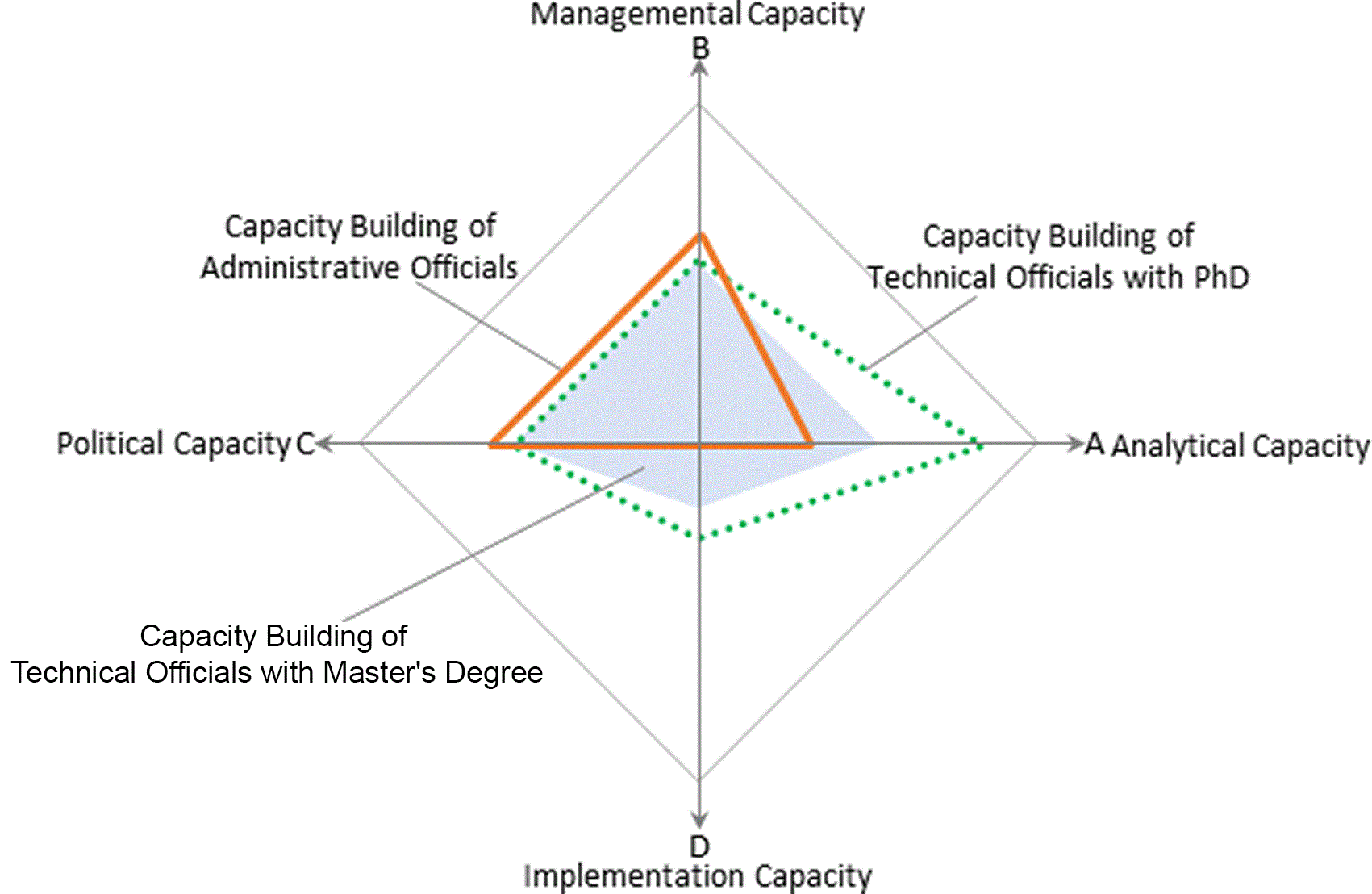
Figure 1 presents a conceptual model of the four dimensions of administrative expertise and the formation of bureaucratic capacity. The capacities developed in each dimension are expected to differ according to the recruitment category and the academic degree held by officials. In addition, since each capacity consists of the stock of information, including knowledge, and the skills needed to make effective use of that information, the manner in which these capacities are developed is also expected to vary according to the duties assigned after entry into the ministry and the workplace environment. Figure 1 presents, by way of example, the capacity at the time of entry into the ministry for first-track officials in the three STI-related bureaus, who are the focus of the analysis in this study.
Thus far, this paper has examined the categories of capacities that constitute administrative expertise. Previous studies addressing these capacities can be broadly divided into two strands. The first strand is concerned with the factors that condition the utilization of bureaucratic capacities, while the second is concerned with the effects of bureaucratic capacities on public policy. The following section reviews these two strands of previous research.
With regard to the factors that condition the utilization of bureaucratic capacities, previous studies have developed theories concerning how institutional arrangements affect bureaucratic autonomy, drawing on the analytical framework of principal-agent (PA) theory (Moe, 1989; Epstein and O’Halloran, 1999; Huber and Shipan, 2002). Other studies have examined these factors by focusing on bureaucratic incentives and ideas. In PA theory, the central concern is the extent to which politicians can control bureaucrats possessing specialized knowledge in order to realize their own policy preferences. In the Japanese case, it has been argued that stronger political control, particularly through the strengthening of the functions of the Cabinet, has reduced bureaucratic autonomy and, as a result, hindered the utilization of expertise (Kitamura, 2022; Iio, 2007).
Next, previous studies focusing on bureaucratic organizations have shown that the expansion of organizational resources and the realization of agency philosophy serve as incentives for bureaucratic behaviour. With regard to resource expansion, bureaucrats are assumed to seek budget maximization by proposing new programs and attempting to continue existing ones (Mabuchi, 2012; Niskanen, 1971; Soga, 2022). Agency philosophy is understood as a set of attitudes characteristic of a particular agency (Self, 1974), and is used to explain bureaucratic behaviour.
With regard to the effect of bureaucratic expertise on public policy, previous studies have traditionally been concerned mainly with policy implementation and have focused largely on street-level bureaucrats. In recent years, however, bureaucratic agenda setting at the early stages of the policy process has been examined within an analytical framework based on bounded rationality and information processing (Jones and Baumgartner, 2005; Workman, 2015; Baumgartner and Jones, 2015; Baekgaard et al., 2018). These studies adopt an analytical framework that incorporates the limits of actors’ information-processing capacity.
First, within an analytical framework that incorporates bounded rationality into principal-agent theory, legislatures are understood to face limits in their ability to sustain attention to particular policy issues. By contrast, bureaucratic organizations are able to continue monitoring these issues and thereby accumulate information. Workman (2015) shows that bureaucrats use such information to set policy agendas and engage with legislatures, thereby influencing the policy process. Which issues are prioritized for legislative attention depends on the information provided by bureaucrats who possess front-line knowledge and specialized knowledge. In addition, a time-series analysis of 98 Danish municipalities has demonstrated that a higher proportion of administrative professionals within the bureaucracy increases the diversity of policy agendas (Baekgaard, 2018). The study of Baekgaard (2018) shows that a higher proportion of administrative professionals who hold university degrees in law, political science, or economics, and who are recruited as generalists rather than as specialists in particular fields, leads to greater diversity in policy agendas and to a more even distribution of attention across those agendas. In terms of the four dimensions of administrative expertise presented in Figure 1, this finding may be understood as demonstrating how managerial capacity, represented by Axis B, and political capacity, represented by Axis C, influence policy formulation.
These analyses indicate that bureaucracy should be understood not only in terms of the conventional theory that bureaucratic autonomy is conditioned by institutional arrangements and that specialized knowledge is utilized under such autonomy, but also as a provider of information to politicians. They further suggest that the information provided by bureaucrats shapes public policy. These studies also suggest that the characteristics of bureaucracy, operationalized by field of study and academic degree, generate differences in policy agendas. When the radar chart presented in Figure 1 is applied to bureaucratic organizations, this implies that the organizational characteristics indicated by the proportion of officials along each axis shape policies aimed at problem-solving.
As the preceding discussion has shown, focusing on the flow of information at the early stage of the policy process can provide new insights into the role played by administrative expertise in that process. This paper is situated within this body of research and is concerned with the influence of PhD-holding officials on the policy process. How, then, should PhD-holding officials in the natural sciences who are responsible for science and technology policy be understood under a closed-career system?
First, previous studies suggest that bureaucrats utilize specialized knowledge under the influence of agency philosophy, with the expansion of organizational budgets serving as an incentive. The three STI-related bureaus examined in this paper originated in the former Science and Technology Agency, and previous research has shown that, from the period of that agency to the present, the promotion of basic research has been upheld as an agency philosophy (Shiroyama et al., 2002). It may therefore be expected that officials in these bureaus seek to maximize budgets related to basic research by proposing new programs and attempting to continue existing ones. Second, this paper examines the capacities of PhD-holding officials from the viewpoint of administrative expertise. As mentioned above, PhD-holding officials are valued not only for specialized knowledge related to the field in which they obtained their doctoral degree, but also for “research and analytical capacity” and “logical reasoning capacity”. These evaluations position PhD-holding officials as personnel with strong analytical capacity, as shown in Figure 1, and suggest that they possess a high level of information-processing capacity, which is essential for problem-solving (Baumgartner and Jones, 2015). In addition, PhD-holding officials in the natural sciences possess front-line knowledge related to implementation capacity, represented by Axis D in the radar chart shown in Figure 1. This is because the long period of research experience during doctoral training is expected to provide richer front-line knowledge of research practice than that possessed by officials with master’s degrees. The three STI-related bureaus are responsible for research and development support policies targeting universities and other research institutions, and such proximity to implementation is expected to contribute to problem identification and policy agenda setting. Therefore, as shown in Figure 1, PhD-holding officials in the three STI-related bureaus are expected to have higher levels of the capacities indicated by Axes A and D than officials with bachelor’s or master’s degrees.
We therefore propose the following hypothesis:
Among technical officials responsible for science and technology policymaking and comprehensive coordination in MEXT, PhD-holding officials propose a larger number of new policy proposals than officials who hold only a bachelor’s or master’s degree.
The process of policy formulation is internal to each ministry, and Japan publishes no official records on the policymaking process within each department (Miyamoto, 2006). Existing studies have therefore been conducted by scholars with prior experience in the bureaucracy (Inoue, 1981; Tamaru, 2000), or have employed interviews (Shiroyama et al., 1999, 2002) and questionnaires targeting government officials (Kitamura, 2022; Aoki et al., 2019). To test our hypothesis, we surveyed technical officials responsible for science and technology policy in April 2024.
The survey was conducted online with the cooperation of the Personnel Division of MEXT. Survey items were based on previous studies and approved by the Personnel Division. The survey form was included in an email, to which a request letter from the author was attached, and was distributed to the participants via the Personnel Division. All responses were anonymous.
Therefore, all PhD-holding officials were included in the survey, and responses were obtained from all 32 technical officials who had joined MEXT between fiscal years 1998 and 2023. The mean age of the PhD-holding officials was 38.72 years, with a standard deviation of 7.78. For officials with bachelor’s or master’s degrees, 80 officials were selected by stratified random sampling from among 230 officials whose year of entry into the ministry and recruitment category matched those of the PhD-holding officials, with allocation proportional to the number of officials in each entry-year cohort. The response rate among officials with bachelor’s or master’s degrees was 57.5%, and their mean age was 38.02 years, with a standard deviation of 7.43. The total number of responses from PhD-holding officials and officials with bachelor’s or master’s degrees was 78.
The survey items were categorized into five sections: (1) the extent to which each stakeholder is important in the processes of comprehensive coordination, (2) the perceived importance of evidence, (3) the importance of stakeholders’ support to achieve policy goals, (4) perspectives on policymaking, and (5) perceptions of the quantity and quality of work. Responses were requested either in actual numbers or on a four-point scale.
Before conducting analyses to test our hypotheses, we analyzed the data using descriptive statistics to confirm the difference between PhD-holding officials and other officials. Because the intervals between ranks on a four-point scale were not guaranteed to be equal, in addition to the t-test, we used a non-parametric Wilcoxon rank–sum test to identify differences in statistical values. Table 1 shows the methods used to calculate each statistic. We provide a comprehensive trend of PhDs and then display the regression estimates. The quantitative analysis was conducted using StataBE 18.
The results of the survey are presented in five categories. Responses were recorded using a four-point Likert-type scale: 4 points were assigned to “Strongly agree,” 3 points to “Agree,” 2 points to “Disagree,” 1 point to “Strongly disagree.”
We asked about the importance of coordination with the following stakeholders in carrying out tasks: the Ministry of Finance, other ministries and agencies, departments within MEXT, politicians, and related organizations. No questions revealed differences between officials with and without PhDs.
Two questions concerned the importance of evidence; the first inquired about the significance of conducting an investigation and analysis of issues and offering ideas for the execution of tasks; the second concerned the importance of expertise in research and analysis. Neither question revealed differences between officials with and without PhDs.
We asked about the importance of obtaining support to realize policies in a timely and effective manner. The stakeholder categories included the Office of the Prime Minister, Secretariat of the Cabinet, Cabinet Office; the Ministry of Finance; other ministries and agencies; local governments; public corporations, public agencies, and independent administrative agencies; industry associations, NPOs, private companies; the mass media; and experts/academics from universities.
The test for homogeneity of variance between officials with PhDs (0.64) and other officials (0.34) was statistically significant at the 5% level regarding the importance of obtaining support from experts and university academics, as well as from public corporations, public agencies, and independent administrative agencies. The mean response score was 2.84 for the officials with PhDs and 3.15 for other officials. The non-parametric Wilcoxon rank-sum test revealed a significant difference at the 5% level.
For the questionnaire item “I feel more fulfilled in formulating new policies than in implementing existing ones,” the mean response was 3.44 for officials with PhDs and 2.85 for other officials. The non-parametric Wilcoxon rank-sum test revealed a significant difference at the 5% level. In addition, for the questionnaire item “I think that most of policies that I played a central role in formulating have been realized,” the test for homogeneity of variance between officials with PhDs (1.43) and other officials (0.63) was statistically significant at the 5% level.
The survey included the questionnaire items “I think MEXT adequately manages increased workloads” and “I think I am capable of coping with increased workloads.” Regarding the organizational approach to managing increased workloads, the mean was 1.50 for officials with PhDs and 1.80 for other officials; the t-test revealed a significant difference at the 5% level. In terms of individual coping, the homogeneity of variance test between officials with PhDs (0.82) and other officials (0.40) was statistically significant at the 5% level.
For the questionnaire item “I think I am adequately capable of managing the growing complexity and specialization of operations,” the mean was 2.66 for officials with PhDs and 2.30 for other officials. The non-parametric Wilcoxon rank-sum test revealed a significant difference at the 5% level. Regarding the questionnaire item “I think I am adequately capable of duties requiring foreign language expertise,” the sum of the “Strongly agree” and “Agree” responses was 46.9% among officials with PhDs, whereas it was 23.9% among other officials. A z-test for the two proportions revealed a significant difference at the 5% level.
Before discussing the hypothesis that PhD-holding officials propose a larger number of new policy proposals than other officials responsible for science and technology policy planning and coordination in MEXT, Table 2 presents the descriptive statistics for our dependent and independent variables.
Previous studies focusing on policy agenda setting have operationalized the concept by using indicators such as the number of agenda items proposed by the administration to legislatures (Baekgaard et al., 2018) or the number of regulations (Workman, 2015). By contrast, we use the actual response values to the questionnaire item, “Please provide the approximate number of new policy proposals which you played a central role in formulating” as our dependent variable in this paper. Thus, the dependent variable is not an objective indicator measuring the number of instances of agenda setting itself, but rather the number of proposed new policies based on officials’ self-reported perceptions. However, previous studies of agenda setting that treat information processing as a key concept have focused on the point that expertise enables actors to perceive problems differently from conventional understandings and to identify new problems (Baumgartner and Jones, 2015). Such redefinition of problems is also required when formulating new policies. Therefore, although we do not equate the proposal of new policies itself with agenda setting, we position it as an indicator of the identification and redefinition of problems required for agenda setting. Our independent variable captures whether the officials held PhDs; we assigned a value of 1 to officials with PhDs.
Regarding potential confounders, first, we controlled for years of service and official rank, because director general and deputy director general level, director and head of office level, and deputy director level have been discussed as important factors that may affect administrative management skills. By contrast, the deputy directors in the Japanese government are mainly responsible for planning and drafting policies, whereas senior and middle management bureaucrats are in charge of comprehensive coordination, including obtaining support from politicians. Officials and chiefs constituted the base category for dummy variables. Second, we controlled for academic experience abroad in Law, Policy, or Economic studies, since not only knowledge gained through on-the-job training but also such academic background may contribute to policymaking. Third, we controlled for potential confounders related to the prevailing office atmosphere. In response to the questionnaire item “I think that my direct supervisor helps me work comfortably and efficiently,” a score of 4 was assigned to the response “Strongly agree,” 3 to “Agree,” 2 to “Disagree” and 1 to “Strongly disagree.” To operationalize workplace climate, we used the response to the item “I think that my colleagues will cooperate when new tasks arise or when improvements to existing tasks are needed.”
Table 3 displays a summary of the results. First, to facilitate intuitive interpretation, we estimated an ordinary least squares (OLS) model (Model 1). Second, because the dependent variable is count data, we estimated a Poisson regression model (Model 2). However, the goodness-of-fit (GOF) statistic for Model 2 indicated overdispersion. We therefore adopted a negative binomial regression model in Model 3. Furthermore, to take into account differences in years of service across respondents, we estimated a negative binomial regression model with years of service included as an exposure variable in Model 4. In addition, we used robust standard errors to address the small sample size and heteroskedasticity. In all four models, we find a positive and statistically significant association between PhD status and the number of proposed new policies. In Model 4, we take into account differences in years of service across respondents by including years of service as an exposure variable. In addition, we use robust standard errors to account for heteroskedasticity in the error variance across variables. The incidence rate ratios (IRRs) reported in Model 4 indicate the ratio of the rate of policy proposals, standardized by years of service, relative to the reference group. As shown in Table 3, even after adjusting for years of service, PhD-holding officials had a policy proposal rate approximately 1.54 times as high as that of officials with bachelor’s or master’s degrees.
To clarify how administrative expertise influences policy agenda setting, we focused on technical officials responsible for science and technology policy in the three STI-related bureaus of MEXT. Using a negative binomial regression model with years of service included as an exposure variable and robust standard errors, we found that PhD-holding officials had a higher policy proposal rate than officials with bachelor’s or master’s degrees. A distinctive feature of this analysis is that it focuses not merely on the cumulative number of policy proposals, but on the policy proposal rate adjusted for years of service. The results suggest that capacities related to administrative expertise associated with PhD attainment may contribute to information search and problem identification.
Before discussing the implications of our findings, it is crucial to note that this study has three limitations. First, our analysis relied on cognitive data and not all terms on the survey form were explicitly defined, although some terms such as “skill” and “information.” Hence, the definition of “evidence” and/or “making new policy” may differ depending on the respondent; for instance, respondents may differ in whether they regard evidence as including conclusions derived from academic analysis as well as statistical data. Second, our data did not contain information about the posts to which these officials were assigned. While administrative officials and technical officials responsible for science and technology policy at MEXT are in charge of policy formulation and comprehensive coordination, the ease with which they can propose policies depends partly on their position. In addition, the career paths of the technical officials examined in this study include assignments to overseas embassies and executive offices of national universities in Japan. We were therefore unable to account for the possible effects of extended periods spent in posts that do not involve the proposal of new policies. Third, according to our results, the features of officials with PhDs may be attributable not only to the expertise required to obtain a PhD, but also to their inherent endowments and temperament. Under the current circumstances in Japan, many doctoral degree holders take positions in academia, and those who aspire to careers as government officials remain relatively rare. Such career aspirations may therefore reflect particular personality traits or background characteristics, which this study cannot fully account for.
Despite these limitations, this study makes an original contribution by providing evidence on how the distinctive capacities of PhD-holding officials influence policy formation. It also contributes to the development of knowledge on policy agenda setting. In addition to the conventional understanding of bureaucracy based on principal-agent theory, the introduction of an analytical framework based on bounded rationality has offered a new interpretation of bureaucratic expertise (Workman, 2015; Baumgartner and Jones, 2015; Baekgaard, 2018). We situate this study within this body of research, which focuses on the flow of information in the policy process, and show that capacities associated with PhD attainment, within the four-dimensional structure of administrative expertise presented in Figure 1, are associated with a higher rate of new policy proposals.
In summary, the descriptive analysis indicated three distinctive features of government officials holding PhDs. First, concerning the necessity of stakeholder support in policy implementation, PhD-holding officials tended to place relatively lower importance on obtaining consensus from experts and specialists than officials educated at the bachelor’s or master’s level. This may be due either to PhD-holding officials’ lower concern with consensus-building or to their greater ability to secure academic and professional agreement in a comprehensive debate. Likely due to differences in previous assignments, PhD-holding officials’ recognition of the importance of gaining support from public corporations, public agencies, and independent administrative institutions also varied significantly. Second, with regard to attitudes toward policy formation, we found that PhD-holding officials tended to feel a greater sense of reward in the planning and formulation of new policies than other officials. At the same time, perceptions of whether the policies they proposed would ultimately be realized varied across individuals. With regard to the number of instances of policy agenda setting, we cannot determine whether it is the higher motivation of PhD-holding officials toward policy formation or the higher level of capacities related to administrative expertise associated with PhD attainment that increases agenda setting. Nor can we clarify the relationship between motivation and capacity. These issues require further examination in future research. The third point concerns the distinctive features of work quality and quantity. From the viewpoint of managing the growing complexity and specialization of operations, there was no statistically significant difference in the perception of whether MEXT was able to respond. However, officials educated at the bachelor’s or master’s level tended to think that the organization could manage their jobs’ growing demands, whereas PhD-holding officials tended to think that they were individually able to cope. The degree to which they felt able to cope with growing demands also showed more notable variation among PhD-holding officials. Their expertise is likely to affect the quality of their work, but further exploration is required to determine whether variations among PhD-holding officials in perception of their individual capacity to adapt to a growing workload arise from differences in competencies or from the nature of their assigned duties. The questionnaire items on work quality also asked about the ability to use English. Officials with PhDs who are capable of conducting work in English are expected not only to handle international communication effortlessly, but also to have strengths in conducting research and analysis in other countries; therefore, they play a crucial role in new policymaking.
Next, we summarize the results of the negative binomial regression model. The results indicate that, among bureaucrats in the three STI-related bureaus, PhD status was associated with the number of new policy proposals. This association remained statistically significant even after controlling for the effects of study abroad experience and official rank. These findings are consistent with previous studies that have shown the influence of bureaucratic expertise on problem identification and policy agenda setting (Workman, 2015; Baumgartner and Jones, 2015). Whereas Baekgaard et al. (2018) showed that the proportion of administrative officials with bachelor’s degrees in law, political science, or economics within an organization shapes the diversity of agenda setting and the even distribution of attention across different policy areas, our analysis focuses on technical officials who perform the same duties as administrative officials and examines the influence of PhD-holding officials on policy formation. Therefore, whether managerial capacity or analytical capacity within administrative expertise has a greater influence on policy agenda setting at the early stages of the policy process remains an issue for future research. Furthermore, we do not directly measure the effect of PhD attainment itself or the analytical capacity of PhD-holding officials. The causal mechanisms linking the capacities of PhD-holding officials to agenda setting therefore remain to be examined in future research.
Finally, our findings also have implications for the practical concern, currently observed in Japan, of promoting the appointment of doctoral degree holders to administrative positions that do not necessarily require expertise in a specific field but do require contributions as generalists. We can therefore conclude that PhD-holding officials responsible for science and technology policy planning and comprehensive coordination in MEXT are associated with a higher rate of new policy proposals than officials who hold only bachelor’s or master’s degrees. They may therefore constitute personnel who can contribute immediately to policy proposals. The utilization in the public sector of personnel with transferable skills and scientific literacy acquired through doctoral programs is expected to contribute to the promotion of policy innovation.
This study did not involve patients, nor did it use any biospecimens or clinical data.
The Research Integrity Division at Kyoto University confirmed that this study was not subject to the Japanese “Ethical Guidelines for Medical and Biological Research Involving Human Subjects” and did not require review by the ethical review committee.
In addition, the Personnel Division at MEXT approved the questionnaire surveys for this study.
This study was conducted in accordance with the Japanese “Act on the Protection of Personal Information”. The design of the online response form is such that if respondents do not agree to the participation in the questionnaire surveys, respondents cannot move on to the questions, so all respondents via the online response form are deemed to have agreed to the participation.
OpenAI’s ChatGPT (GPT-5.5 Thinking) was used to translate portions of the manuscript from Japanese into English, improve the grammar, clarity, and readability of the English text, check the consistency of terminology, and assist with citation style and reference formatting during revision. The author independently checked all citations and references, reviewed and revised all AI-assisted outputs, and takes full responsibility for the final manuscript.
The data used in this research cannot be sufficiently de-identified by redaction for uploading to a general data repository, due to the sample size and the questionnaire items in the survey. Thus, the data are not available to share for ethical and privacy considerations, as well as the guarantee given to the respondents that anonymity will be preserved. A reader or reviewer may apply for access to the datasets by contacting the author ([email protected]) directly. The raw datasets are in Japanese.
I would like to express the deepest gratitude to Ms. Kanako Ando (Researcher, Graduate School of Medicine and Public Health, Kyoto University) and to the government officials affiliated with MEXT who contributed to the design and implementation of the survey. Further, I thank all survey respondents.