Просмотр новости
Найдите то, что Вас интересует
 Спутники
 РН
РН SpaceX
 Роскосмос
 NASA
NASA
СпутникиРНSpaceXРоскосмосNASAIntroduction Police-recorded crime statistics are widely used to describe public safety conditions and territorial patterns of criminal activity, yet they primarily reflect administrative processes and offense composition rather than underlying criminal behavior. This study aimed to analyze the explanatory contribution of major offense categories to the total number of police-recorded crime reports across Peruvian departments. Methodology the study adopts a cross-sectional design and applies descriptive statistics and multiple linear regression models to assess the statistical associations between major offense categories and the total volume of police-recorded crimes across Peruvian departments. The analysis draws on records corresponding to the first quarter of 2024 and focuses on aggregated departmental-level data. Result The results indicate that crimes against property constitute the dominant component of police-recorded crime nationwide and are significantly associated with total recorded crime volumes, while other offense categories display weaker or non-significant associations. Conclusion interdepartmental variation in police-recorded crime in Peru is primarily shaped by the internal composition of offense categories embedded in administrative data, reflecting structural and institutional regularities rather than causal determinants or individual reporting behavior.
Police-recorded crime complaints are routinely used to monitor public safety and to guide operational decisions, yet they represent institutional outputs rather than direct measures of underlying criminality (Shvets et al., 2025; Stefanovska, 2019). This distinction matters because recorded complaints reflect the interaction between victimization, the decision to report, and administrative processing capacity (DeLiema, 2018; Xie & Baumer, 2019). In criminological research, the spatial patterning of recorded incidents has been examined alongside demographic and socioeconomic dynamics, which frequently co-vary with urbanization, inequality, and mobility. Baumer and Lauritsen (2010) and Desmond et al. (2020) frame crime reporting and recorded crime as phenomena embedded in social structure and local context.
Likewise, evidence associates crime concentration with material deprivation and labor market stressors, although the mechanisms tend to operate through place-based opportunity structures rather than a single determinant (Anser et al., 2020). Urban form and institutional weakness also shape how insecurity becomes visible in official systems, particularly in settings where service coverage and state presence vary sharply within and between territories (Pinazo-Dallenbach & Castelló-Sirvent, 2023). Within Peru, persistent territorial disparities and episodes of institutional fragility have been discussed as conditions that affect governance and the delivery of public services, which can indirectly influence how citizens interact with state institutions. Romero-Carazas (2025) highlights the relevance of institutional dynamics and uneven access to services for understanding contemporary territorial problems.
An ecological approach is appropriate when the research focus lies on territorial variation in recorded complaints, not on individual behavior or causal inference about reporting propensity (Siegel & Dee, 2025). This study therefore examines the territorial distribution of police-recorded crime complaints across departments, emphasizing concentration patterns and interdepartmental heterogeneity that emerge in administrative records. Official datasets can illuminate where complaints cluster, which is useful for planning patrol allocation, investigative workload, and intergovernmental coordination, even when the underlying processes behind reporting remain unobserved. At the same time, official registers must be interpreted cautiously because reporting incentives, institutional accessibility, and case processing practices may differ across jurisdictions. Hannah-Moffat (2019) argues that official crime records should be treated as the outcome of social and administrative dynamics that mediate the registration of events.
In parallel, governance research in Peru has noted challenges related to institutional performance and citizen trust, which can condition interactions with public institutions and the functioning of administrative systems. Cruz-Oxsa (2025) discusses institutional weaknesses and resource constraints as persistent obstacles to effective public administration. Building on this framing, the present ecological analysis uses SIDPOL administrative records to document territorial concentration and inequality in recorded complaints across departments, providing a structured baseline for interpreting geographic disparities in the police-recorded burden of crime.
Within this framework, the following research question is posed ¿To what extent do different categories of police-recorded offenses explain variations in the total volume of crime reports across Peruvian departments? Accordingly, the study establishes the following hypotheses, designed to test the predictive relationships among crime categories and their influence on the total volume of reports at the national level:
Crimes against property are positively and significantly associated with the total number of recorded crimes at the departmental level.
Crimes against life, body, and health are significantly and inversely associated with the total number of recorded crimes.
Crimes against freedom and crimes against public administration do not show a statistically significant association with the total number of recorded crimes.
Crimes against public safety and other crimes do not make a significant contribution to the total number of recorded crimes.
To address this research question, the study proposes to analyze the explanatory contribution of major offense categories to the total number of police-recorded crime reports across Peruvian departments, using a multiple regression approach based on administrative data.
Criminological literature has consistently shown that crimes against property exhibit higher reporting rates compared with other types of crime, particularly those associated with interpersonal violence. This phenomenon cannot be explained solely by differences in crime prevalence; rather, it reflects differentiated decision-making processes on the part of victims, as well as institutional and contextual incentives that influence the willingness to report. In this sense, official crime records should be interpreted as the outcome of the interaction between the occurrence of crime and the social and administrative dynamics that mediate reporting behavior (Kabiraj, 2022).
From a theoretical perspective, rational choice theory provides a robust analytical framework for understanding why property crimes tend to be reported more frequently. This approach posits that individual decisions are grounded in rational evaluations of costs and benefits, both in criminal behavior and in victims’ subsequent actions. In the case of property crimes, the presence of tangible economic losses, the need to activate insurance or administrative procedures, and expectations of restitution increase the perceived benefits of reporting incidents to the authorities, thereby favoring formal reporting (Piza et al., 2019).
Empirical evidence supports this perspective by showing that crime reporting largely follows an instrumental logic. Studies focused on fraud and other property-related offenses indicate that the magnitude of economic harm and the expected utility of reporting are more decisive in the decision to report than victims’ sociodemographic characteristics. By contrast, violent crimes tend to display higher levels of underreporting due to fear of retaliation, emotional impact, and distrust in institutional effectiveness, which diminishes the perceived benefits associated with reporting (Kemp, 2022).
Complementarily, approaches from environmental criminology and research on crime prediction have demonstrated that property crimes display relatively stable and highly concentrated spatial patterns, facilitating their detection, recording, and systematic analysis. This spatial and temporal predictability contributes to their prioritization by law enforcement institutions and reinforces the perception that reporting may lead to effective responses, thereby increasing the propensity to report such offenses (Bennett Moses & Chan, 2018; Rosser et al., 2017).
Likewise, more integrative theoretical approaches, such as situational action theory, allow crime reporting to be understood as the result of the interaction between individual motivations, moral norms, and specific institutional contexts. From this perspective, the decision to report emerges when situational conditions render such action viable and socially acceptable, a circumstance that occurs more frequently in property crimes than in those associated with interpersonal violence (Wikström, 2019).
The study employed a quantitative, descriptive, and correlational design with a non-experimental and ecological orientation, focused on examining patterns and statistical associations within police-recorded crime data in Peru. The analysis was cross-sectional, as it relied on information corresponding to a single temporal window, specifically the first quarter of 2024. This design enabled the examination of how different categories of recorded offenses are associated with variations in the total volume of crimes across territorial units, without seeking to infer causal relationships or individual reporting behavior. Accordingly, the study is classified as applied research, as it provides empirical evidence to support the descriptive assessment of officially recorded crime patterns relevant to public security analysis.
The empirical material was obtained from administrative records of the Police Reporting System (SIDPOL), administered by the Ministry of the Interior and the National Police of Peru. The dataset includes official counts of crimes against property, life, body and health, public safety, freedom, public administration, and other offenses, aggregated at the departmental level. The records cover the twenty-four departments of the country, the Constitutional Province of Callao, and Metropolitan Lima. All variables were operationalized as absolute counts of reported crimes, consistent with the scope of the administrative data. Descriptive statistics and multiple linear regression models were applied to assess the associations between offense categories and the total number of police-recorded crimes, with diagnostic tests used to evaluate model fit and residual behavior. The methodological approach was explicitly limited to a descriptive interpretation of aggregated crime patterns, acknowledging the constraints inherent in police-recorded data and avoiding causal or predictive claims beyond what the data can substantively support.
The analysis incorporated basic sociodemographic information that characterizes the national context and allows for a better understanding of the variations observed among the departments. Table 1 summarizes these descriptive indicators, derived from the same database used for crime categorization.
Table 1 shows a clear concentration of crime reports in the Metropolitan Region of Lima, with 37,299 cases, a figure that far exceeds those of the other departments. This concentration is associated with the high population density and intense economic activity of the capital area, where urbanization and social inequality operate as structural factors that increase the likelihood of victimization. In contrast, the departments of Madre de Dios and Moquegua record the lowest levels of reported crimes, both below 500 cases, which may be linked to their smaller populations, less diversified economic structures, and limited institutional coverage. Likewise, the predominance of property crimes, with a national average of 65.82%, demonstrates that economic dynamics and urban concentration are determining elements in the spatial distribution of criminality. Regions such as Tumbes, Piura, and Callao display particularly high proportions of this type of crime, consistent with their urban-commercial nature and their intense flows of population and goods. On the other hand, in the Amazonian departments, such as Loreto and Madre de Dios, higher rates of crimes against public safety are observed, possibly related to illicit activities characteristic of extractive and frontier economies.
Statistical processing was carried out using descriptive and inferential techniques to quantify the relationships between independent and dependent variables. Multiple regression analysis was applied to assess the degree of influence of each category of crime on the total number of reported cases. The analysis demonstrated that crimes against property were the most relevant predictor of total crime reports, explaining 37.3% of the observed variability across departments. All analytical operations were performed using Microsoft Excel 365 for data organization and IBM SPSS Statistics version 29.0 for statistical modeling. These tools ensured precision, methodological consistency, and reliability of results. The data utilized were obtained from the Police Reporting System (SIDPOL), officially managed by the Ministry of the Interior and the National Police of Peru, guaranteeing accuracy, consistency, and the absence of personal identifiers.
The data analyzed in this study were obtained from the Police Reporting System (SIDPOL), an official crime registration platform administered by the Ministry of the Interior of Peru and the National Police of Peru. Access to the information was obtained through the National Observatory of Citizen Security, a governmental initiative responsible for disseminating official crime statistics and administrative records to support transparency, public policy development, and scientific research. The database used in this investigation is publicly accessible through the Ministry of the Interior’s official website at: https://observatorio.mininter.gob.pe/proyectos/base-de-datos-hechos-delictivos-basados-en-denuncias-en-el-sidpol.
The dataset contains aggregated records of police-reported crimes classified by offense category and territorial jurisdiction. All information is reported at the departmental level and does not include names, identification numbers, addresses, contact information, biometric data, or any other element capable of directly or indirectly identifying individuals. Consequently, the dataset constitutes anonymized administrative information intended for public consultation and statistical analysis.
Because the information is publicly available through an official governmental repository, no special authorization, institutional agreement, data-sharing contract, or restricted-access approval was required to obtain the dataset. The research team accessed the records directly from the aforementioned public repository and subsequently organized the information for statistical analysis. Therefore, access to the data complied fully with the transparency and open-information policies established by the Ministry of the Interior of Peru.
The study relied exclusively on secondary administrative data and did not involve the recruitment of participants, direct interaction with human subjects, collection of personal information, intervention procedures, or access to confidential records. For this reason, informed consent was not applicable, and additional ethical approval for data access was not required. The investigation was conducted in accordance with the provisions of Law No. 29733 – Personal Data Protection Law of Peru and its corresponding regulatory framework, which establishes standards for the protection and processing of personal information while permitting the use of anonymized and publicly available statistical data for academic and scientific purposes.
The results presented in this section reflect a detailed analysis of the factors that influence crime reporting in Peru, using a multiple regression model. This approach identified significant relationships between crime categories and selected predictor variables, providing a comprehensive understanding of the crime phenomenon in diverse regional contexts.
The results of Table 2 are presented below, which summarizes the distribution of reported crimes across Peru’s departments, broken down by specific categories. This analysis seeks to interpret the figures to identify patterns and compare them with the findings of previous studies on crime.
As presented in Table 2, the national distribution of crime complaints reveals pronounced territorial asymmetries, with Metropolitan Lima standing out as the department with the highest number of recorded cases (37,299). This concentration confirms the structural influence of population density and economic activity on crime incidence, consistent with previous research emphasizing the link between urban growth, socioeconomic inequality, and criminal behavior (Algahtany et al., 2018; Tavares & Costa, 2021). The capital’s predominance underscores the role of metropolitan dynamics as a determinant of both the frequency and typology of reported crimes. In contrast, peripheral regions such as Madre de Dios and Moquegua display the lowest numbers of complaints, both below 500 cases. These results suggest the combined effect of demographic dispersion, limited institutional capacity, and localized economic activities, which reduce the probability of formal crime reporting. The disparity between Lima and these departments reflects structural inequalities in territorial development and state presence, which are essential factors in understanding the spatial distribution of criminal phenomena.
Property crimes represent the most recurrent category nationwide, averaging 65.82% of total complaints. The highest proportions are concentrated in Metropolitan Lima (75.70%), Tumbes (71.70%), and Piura (71.60%), areas characterized by intensive commercial flows and urbanization. This pattern supports Breetzke (2018) proposition that property crimes tend to cluster in economically active urban centers marked by significant income disparities. Such findings reaffirm the importance of incorporating economic geography into criminological modeling, as urban expansion and commercial concentration increase both opportunity structures for crime and the visibility of criminal events.
Conversely, crimes against public safety exhibit lower average frequencies but reach elevated levels in Amazonian regions such as Loreto (15.40%) and Madre de Dios (16.10%). These figures may correspond to specific territorial conditions such as illicit trafficking, informal extraction, and environmental offenses closely associated with extractive and frontier economies. Froese et al. (2022) note that such contexts often foster social ecological conflicts that exacerbate insecurity and complicate institutional enforcement.
Below are the descriptive results of reported crimes in the departments of Peru, according to the different crime categories analyzed. Table 3 provides a statistical summary, including the mean, standard deviation, minimum and maximum values, and the total number of reported reports.
As shown in Table 3, the results indicate that property crimes exhibit the highest mean proportion (65.82%) across all categories, underscoring their dominance within the Peruvian crime structure. This predominance highlights the influence of socioeconomic inequality, urban density, and population concentration on the opportunity structures for property-related offenses. The finding aligns with the theoretical perspectives of Méndez and Otero (2018), who argue that rapid urbanization, informal economic growth, and social stratification foster conditions conducive to property crime.
The considerable variability in the data, as reflected by a high standard deviation (7,095.36) in the total number of complaints, reveals pronounced interdepartmental disparities. Metropolitan Lima, with a maximum of 37,299 recorded complaints, represents the epicenter of criminal reporting in the country. This figure illustrates the direct relationship between urban concentration, economic dynamism, and the incidence of crime, a pattern similarly identified by Battin and Crowl (2017), Hoch (1974), and Sun et al. (2022). Conversely, departments with lower population density such as Madre de Dios and Moquegua report substantially fewer cases, suggesting that geographic isolation, limited law enforcement capacity, and lower institutional accessibility contribute to underreporting and reduced detection of criminal events.
Furthermore, the categories “against public administration” and “others” show low average proportions (4.11% and 2.56%, respectively). Although these crimes occur less frequently, their implications extend beyond quantitative analysis, as they reflect aspects of institutional integrity, governance efficiency, and citizen trust. According to Okafor et al. (2020), crimes involving corruption or administrative misconduct have a disproportionately negative impact on public confidence and state legitimacy, even when their incidence is statistically minor.
Below are the results of the correlations between the different categories of reported crimes, evaluated using the coefficient of determination. R2 and the significance values (p). Table 4 summarizes these relationships, highlighting significant interactions and theoretical implications for understanding crime dynamics in the Peruvian context.
As observed in Table 4, the correlation analysis demonstrates a significant and positive association between property crimes and the total number of reported offenses (R2 = 0.489, p = 0.011). This result confirms that property crimes are the primary component driving the overall volume of crime in Peru, emphasizing their structural centrality in the national criminal landscape. Such an association supports the perspectives of Krahn et al. (1986), Malaker and Meng (2024), and Whittle and Diaz-Artiles (2020), who posit that urbanization, socioeconomic disparities, and concentrated economic activity intensify exposure to property-related crime opportunities.
Negative and statistically significant correlations between property crimes and other categories particularly crimes against life, body, and health (R2 = −0.467, p = 0.016) suggest an inverse spatial or social pattern of criminal activity. This inverse relationship indicates that areas exhibiting higher rates of property offenses tend to experience lower incidences of violent crime, reflecting differential criminogenic environments and behavioral motivations. Similar findings have been reported in Latin American contexts, where property-related crimes dominate in urbanized regions, while interpersonal violence prevails in marginalized or rural territories (Ashby, 2020; Chamberlain & Hipp, 2015; Groff et al., 2010).
Furthermore, the positive and significant correlation between crimes against public administration and crimes against freedom (R2 = 0.576, p = 0.002) suggests an interdependence between institutional fragility, corruption, and the erosion of civil rights. This association aligns with Nguyen et al. (2017), who contend that weak governance structures create permissive conditions for administrative misconduct and less visible forms of criminal behavior.
Finally, the lack of statistically significant relationships for some categories such as “other crimes” reveals the complexity and heterogeneity of the crime phenomenon. This absence of correlation underscores the necessity of more granular analyses addressing contextual, cultural, and institutional variables shaping regional crime patterns (De Nadai et al., 2020; Scarborough et al., 2010; Sreetheran & van den Bosch, 2014).
The multiple regression model used to analyze the predictors of crime reporting in Peru is presented below. Table 5 summarizes the model’s main indicators, allowing for an interpretation of the explanatory power of the selected independent variables and a discussion of their implications in the context of crime.
As shown in Table 5, the regression models exhibit a moderate yet substantively relevant level of explanatory capacity, with the set of offense categories accounting for slightly more than one third of the observed variation in the total number of police-recorded crimes across Peruvian departments. This result indicates that offenses against property, public safety, life, body and health, public administration, freedom, and the residual group of other crimes jointly contribute to shaping aggregate crime levels. Such evidence reinforces the understanding of criminal behavior as a multifactorial phenomenon, influenced by the interaction of structural conditions, institutional arrangements, and territorial dynamics. Prior empirical research has consistently highlighted that crime patterns emerge from the convergence of economic opportunity structures, urban concentration, and social regulation mechanisms, rather than from isolated factors, a perspective that aligns with the findings reported in this study (Abdullah et al., 2014; Miethe & McDowall, 1993; Ward & Fortune, 2016). Nevertheless, the reduction in explanatory strength once model complexity is considered suggests that crime typologies alone are insufficient to fully capture the determinants of reported criminal activity, pointing to the relevance of broader contextual influences.
From a diagnostic and interpretative standpoint, the dispersion observed around the fitted values reveals substantial heterogeneity among departments, reflecting marked interregional differences in demographic composition, institutional presence, and levels of socioeconomic development. This variability is consistent with evidence indicating that predictive accuracy tends to decline in territorially diverse settings, where structural inequalities and uneven state capacity amplify unexplained variance in crime models (Brooks et al., 2005). At the same time, the absence of systematic dependence in the residuals confirms that the estimates are not distorted by temporal or spatial autocorrelation, thereby strengthening the internal validity of the model. This diagnostic outcome is particularly relevant in criminological analyses based on cross-sectional administrative data, as it supports the reliability of inferential conclusions derived from aggregated units of analysis. Similar conclusions have been reported in studies emphasizing the importance of validating independence assumptions to ensure robust interpretation of crime patterns across space (Hu et al., 2023; Malleson & Andresen, 2015; Ratcliffe, 2010).
As presented in Table 6, the results of the regression analysis summarize the statistical associations between crime categories and the total number of police-recorded crimes at the departmental level. The table also reports standardized coefficients, significance levels, confidence intervals, and diagnostic indicators related to model stability and collinearity. These results allow for the assessment of the relative contribution of each crime category within the aggregate structure of recorded crime, without implying causal effects or individual reporting behavior.
As shown in Table 6, the regression results indicate that only a limited subset of crime categories exhibits statistically significant associations with the total number of police-recorded crimes at the departmental level. Crimes against property display a positive and statistically significant association, confirming their dominant role in structuring overall crime volumes within official police statistics. This finding is consistent with prior research showing that high-frequency offenses, particularly property-related crimes, tend to shape the general patterns observed in administrative crime records, often overshadowing other offense types in territorial comparisons (Ariel & Bland, 2019; Comer et al., 2023). By contrast, crimes against life, physical integrity, and health show a significant inverse association with total recorded crime, suggesting that departments in which these offenses account for a larger proportion of recorded incidents tend to report lower overall crime volumes. Similar compositional effects have been documented in studies emphasizing that serious but less frequent crimes contribute differently to overall crime variation than high-volume, lower-harm offenses.
The absence of statistically significant associations for crimes against public safety, crimes against public administration, and other crimes further underscores the descriptive nature of the model and the inherent limitations of police-recorded crime data. Previous research has repeatedly highlighted that official crime statistics reflect not only criminal events but also recording practices, institutional routines, and offense-specific visibility, all of which vary across contexts and jurisdictions (Buil-Gil et al., 2022; Gaines et al., 2017). Accordingly, empirical analyses based on police data have cautioned against interpreting such associations as indicators of underlying criminal behavior or reporting propensity, particularly in the absence of independent socioeconomic or demographic covariates (Tung et al., 2018). From this perspective, the results presented here support an ecological interpretation of recorded crime patterns in Peru, in which interdepartmental variation in total crime is driven primarily by the internal composition of offense categories within police records rather than by identifiable causal mechanisms or behavioral determinants.
Table 7 presents the residual and goodness-of-fit metrics for the linear regression models estimated for each offense category. The reported indicators allow for a comparative assessment of model performance in terms of prediction error and explanatory capacity, highlighting differences in how each category relates to the total volume of police-recorded crimes at the departmental level.
As shown in Table 7, the residual and goodness-of-fit metrics provide a structured comparison of linear regression behavior across offense categories within police-recorded crime data at the departmental level. The use of indicators such as mean squared error, root mean squared error, mean absolute error, and mean absolute percentage error is consistent with prior applications of regression-based and hybrid analytical frameworks in crime research, where these measures are employed to assess model fit and internal consistency rather than forecasting performance. Studies combining regression with machine learning or composite indices emphasize that such metrics are particularly informative for evaluating how different crime categories align with aggregated outcomes, especially when the analytical unit is territorial and the data source is administrative in nature (Aziz et al., 2022). Within this framework, the observed variation in error magnitudes across offense categories reflects differences in scale, frequency, and internal heterogeneity embedded in official crime records.
Furthermore, the heterogeneity observed in goodness-of-fit indicators across models is consistent with evidence showing that the structure and composition of crime data substantially influence regression diagnostics. Research focused on the construction and validation of multidimensional crime indices highlights that high-volume offense categories tend to yield more stable residual patterns, while less frequent or more diverse categories often display higher dispersion and lower explanatory alignment (Saravag & Kumar, 2024). Complementary work in sustainability-oriented and spatial crime analysis also underscores that regression diagnostics must be interpreted within the constraints imposed by data aggregation and measurement practices, particularly when independent socioeconomic covariates are not incorporated (H. Sun et al., 2023). In addition, methodological discussions of crime analytics caution that official crime statistics primarily capture recorded incidents shaped by institutional processes, which limits their suitability for causal inference (Na & Paternoster, 2019).
Figure 1 illustrates the relationship between crimes against property and the total number of police-recorded crimes at the departmental level. The scatterplot highlights the distribution of departments according to the volume of recorded offenses and depicts the fitted linear trend, providing a visual summary of the association observed in the regression analysis. This representation allows for an intuitive assessment of how variation in property-related offenses aligns with differences in aggregate crime levels across territorial units.
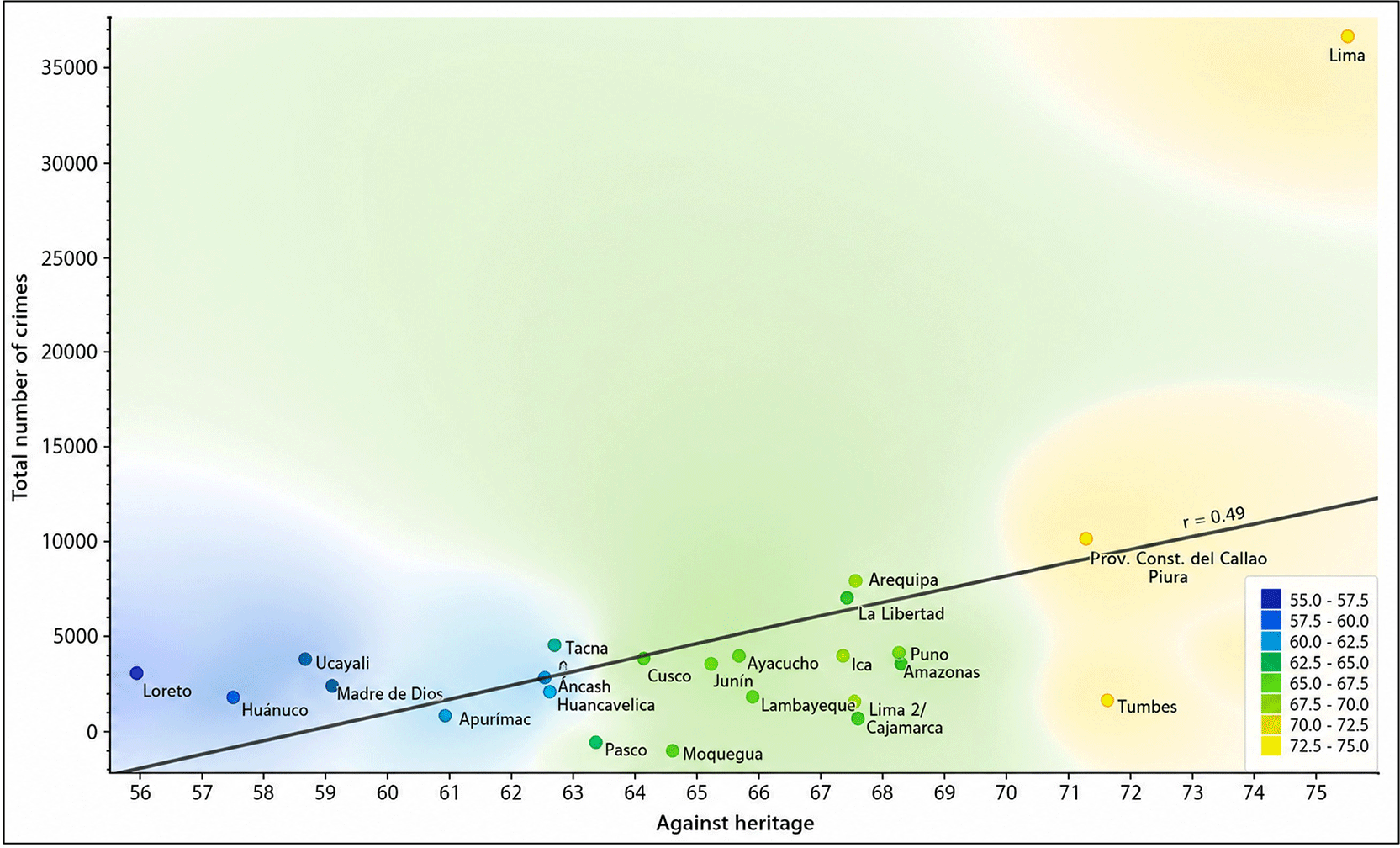
Note: Each point represents one Peruvian department. The horizontal axis indicates the percentage of police-recorded crimes classified as crimes against property, whereas the vertical axis represents the total number of police-recorded crime reports. The solid line shows the fitted linear relationship, and r denotes Pearson’s correlation coefficient. Data were obtained from the Police Reporting System (SIDPOL), administered by the Ministry of the Interior of Peru (2024). The association is descriptive and does not imply causality.
Figure 1 illustrates the association between the proportion of crimes against property and the total number of police-recorded crimes across Peruvian departments, offering a descriptive visualization of how offense composition relates to aggregate crime volumes in administrative records. The upward trend observed in the fitted linear line reflects a structural regularity frequently reported in studies based on official crime data, where high-frequency property offenses tend to dominate aggregate crime counts at territorial scales. This pattern is consistent with comparative evidence showing that police-recorded crime is spatially concentrated and unevenly distributed, often reflecting urban structure, population density, and enforcement visibility rather than homogeneous criminal behavior across regions (Trajtenberg et al., 2024). From this perspective, the figure summarizes how internal composition within police statistics corresponds to interdepartmental variation in total crime levels, serving as an ecological representation of recorded crime structures rather than an indicator of individual offending or reporting behavior.
At the same time, the dispersion of departmental observations around the fitted line highlights the heterogeneity inherent in police administrative data. Departments with similar shares of property crime exhibit markedly different total crime volumes, suggesting that recorded crime levels are shaped by contextual and institutional conditions that vary across territories. Prior research emphasizes that official crime statistics are influenced by policing practices, organizational routines, and offense-specific visibility, which condition what becomes registered as crime within administrative systems (Nivette et al., 2021). Methodological discussions further caution that regression-based associations derived from aggregated police data should be interpreted as descriptive relationships, since such data capture institutional processes alongside criminal events and do not directly measure underlying crime risks or reporting propensities (Huamantingo et al., 2025; Na & Paternoster, 2019).
Figure 2 presents a multivariate visualization of the relationships among major offense categories and the total number of police-recorded crimes at the departmental level. The figure displays the relative positioning of departments within a reduced-dimensional space, allowing for a descriptive examination of how different crime categories cluster and relate to aggregate crime levels. This graphical representation facilitates the identification of structural proximities and contrasts among offense types, complementing the regression results by highlighting patterns of association within administrative crime data rather than individual-level dynamics.
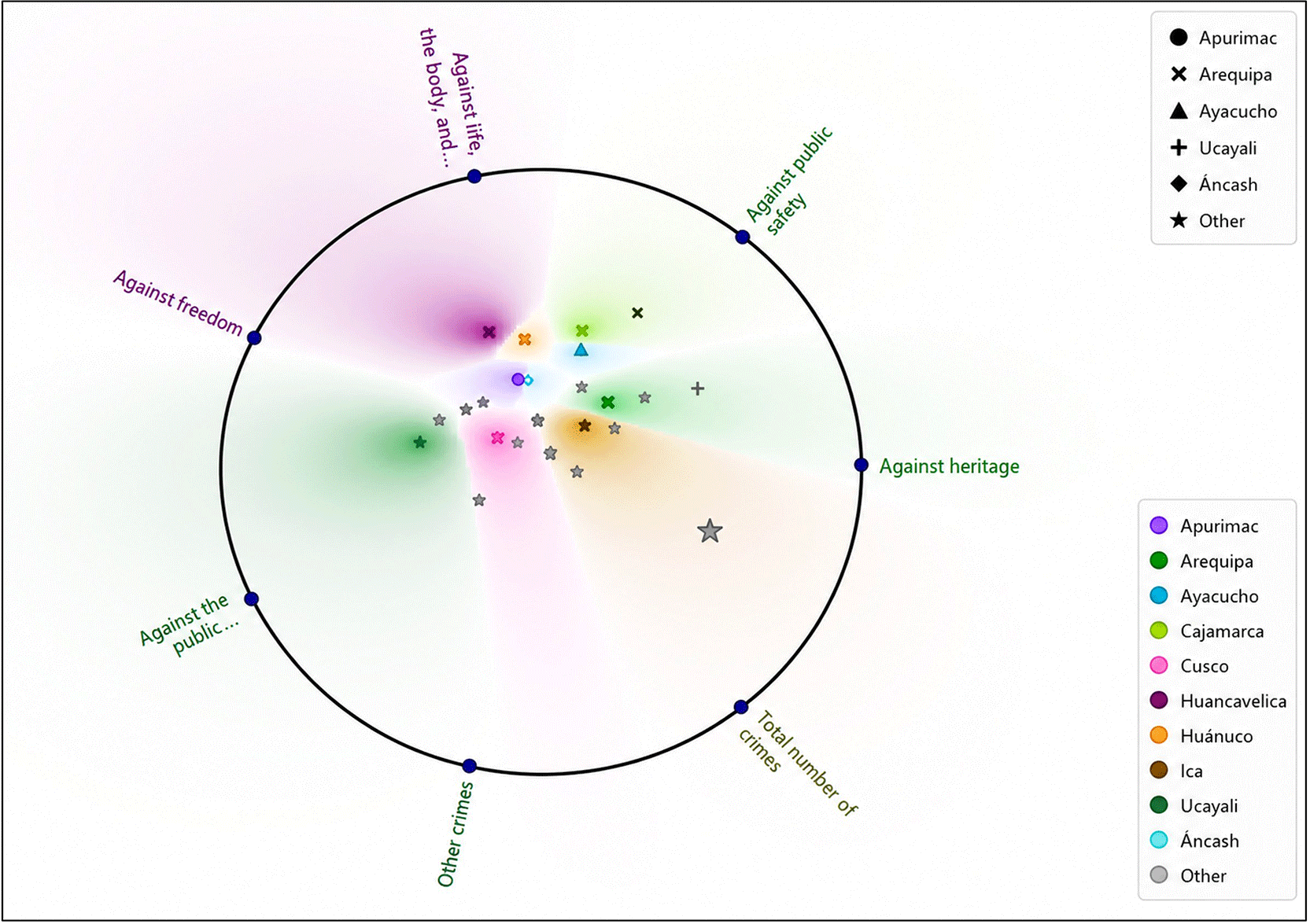
Note. Data derived from the Police Reporting System (SIDPOL), Ministry of the Interior of Peru (2024). Each point represents a Peruvian department. The spatial configuration reflects associations among offense categories and total recorded crime based on aggregated administrative data.
Figure 2 illustrates the multivariate configuration of the main offense categories and the total volume of police-recorded crimes at the departmental level, providing a synthetic representation of the internal structure of administrative crime records. The spatial proximity observed between crimes against property and the total number of recorded crimes reinforces evidence that high-frequency offense categories tend to organize aggregate crime variation across broad territorial scales. This pattern has been documented in comparative studies highlighting how official records reflect spatial concentrations and structural regularities rather than homogeneous distributions of criminal behavior, particularly in urban and metropolitan contexts where institutional visibility and population density amplify certain types of offenses (Nivette et al., 2021; Trajtenberg et al., 2024). From this perspective, the composition of recorded offenses is observed to align consistently with the total crime volume, without implying individual dynamics of victimization or reporting behavior.
At the same time, the dispersion of departments within the multivariate space reveals the heterogeneity inherent in aggregated police data. Departments with similar configurations of offense categories occupy differentiated positions relative to the total number of recorded crimes, suggesting that the observed patterns are conditioned by administrative practices, institutional routines, and territory-specific recording processes. Methodological literature has cautioned that this type of representation should be interpreted as a descriptive approximation of data structure, useful for identifying internal regularities but limited in its capacity to infer underlying mechanisms or behavioral determinants (Aziz et al., 2022; Na & Paternoster, 2019).
This study examined the territorial structure of police-recorded crime in Peru using an ecological and descriptive analytical framework based on administrative data. The results show that interdepartmental variation in total recorded crime is strongly shaped by the internal composition of offense categories, rather than by identifiable causal mechanisms or individual reporting behavior. In particular, crimes against property emerge as the dominant component of official crime records, accounting for a substantial share of total complaints across departments and structuring aggregate crime volumes at the national level. This finding reinforces evidence from comparative criminological research indicating that high-frequency offenses tend to organize the spatial distribution of recorded crime, especially in urbanized and economically active territories.
The empirical analysis demonstrates that offense categories collectively explain a moderate proportion of the variation observed in total police-recorded crime across Peruvian departments. However, this explanatory capacity reflects compositional regularities within administrative records rather than determinants of criminal behavior or reporting propensity. Categories such as crimes against life, body, and health, as well as offenses against public administration and freedom, show limited or inconsistent associations with aggregate crime totals, highlighting their distinct statistical behavior within police data. These results are consistent with prior research emphasizing that official crime statistics primarily capture institutional visibility, recording practices, and offense frequency, which vary across territories and offense types.
From an interpretative standpoint, the dispersion observed across departments underscores the heterogeneity inherent in police-recorded crime data. Departments with similar offense compositions display markedly different total crime volumes, suggesting that recorded crime levels are mediated by contextual factors such as population concentration, administrative capacity, and policing routines. As a result, the findings support an ecological reading of crime patterns in Peru, where variation in recorded crime reflects structural and institutional arrangements embedded in territorial contexts rather than uniform distributions of criminal activity.
Several limitations should be acknowledged. The cross-sectional design restricts the analysis to a single temporal snapshot and precludes examination of dynamic trends or temporal shifts in crime patterns. In addition, the absence of independent socioeconomic, demographic, or institutional covariates limits the scope of interpretation and reinforces the descriptive nature of the findings. Future research would benefit from integrating longitudinal data, multilevel modeling strategies, and complementary indicators related to governance, inequality, and institutional trust. Such extensions would allow for a more nuanced understanding of how administrative crime patterns evolve over time and across regions, while preserving the necessary caution when interpreting official crime statistics as reflections of underlying social processes.