Просмотр новости
Найдите то, что Вас интересует
 Спутники
 РН
РН SpaceX
 Роскосмос
 NASA
NASA
СпутникиРНSpaceXРоскосмосNASAIn 2017, a Los Angeles Fire Department Leonardo AW139 experienced a sudden loss of control, a collision with trees, and an emergency landing during a water-drop mission.
The post Smoke and yaw: Lessons from the 2017 LAFD AW139 firefighting accident appeared first on Vertical Mag.
Helicopter firefighting operations combine a lot of threats: high temperatures, heavy weights, turbulent air, smoke, and operations close to terrain.
In 2017, a Los Angeles Fire Department Leonardo AW139 experienced a sudden loss of control, a collision with trees, and an emergency landing during a water-drop mission.
The accident did not result in injuries, but it offers several valuable lessons that we can learn from.
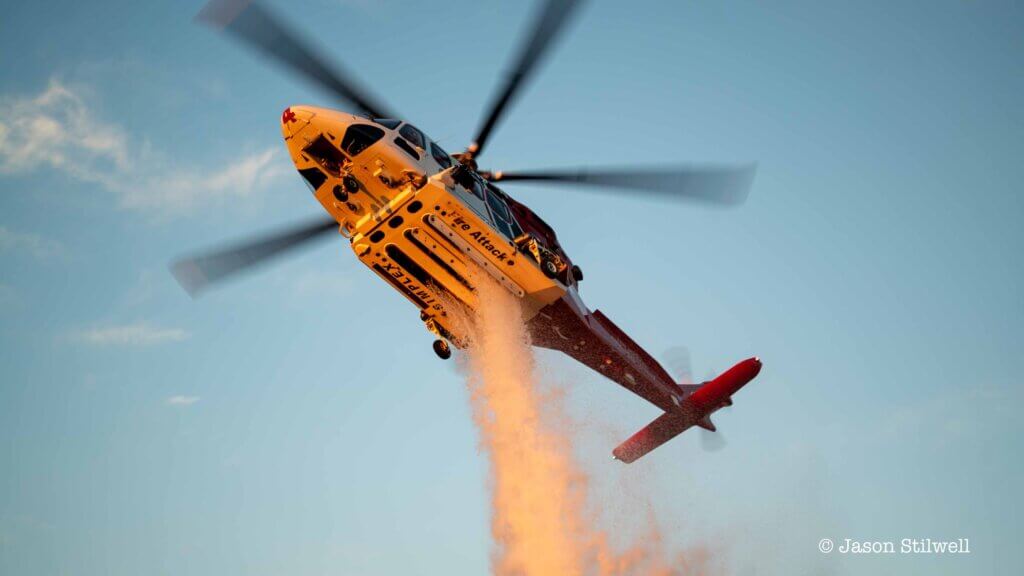 Jason Stilwell Photo
Accident overview
Jason Stilwell Photo
Accident overview
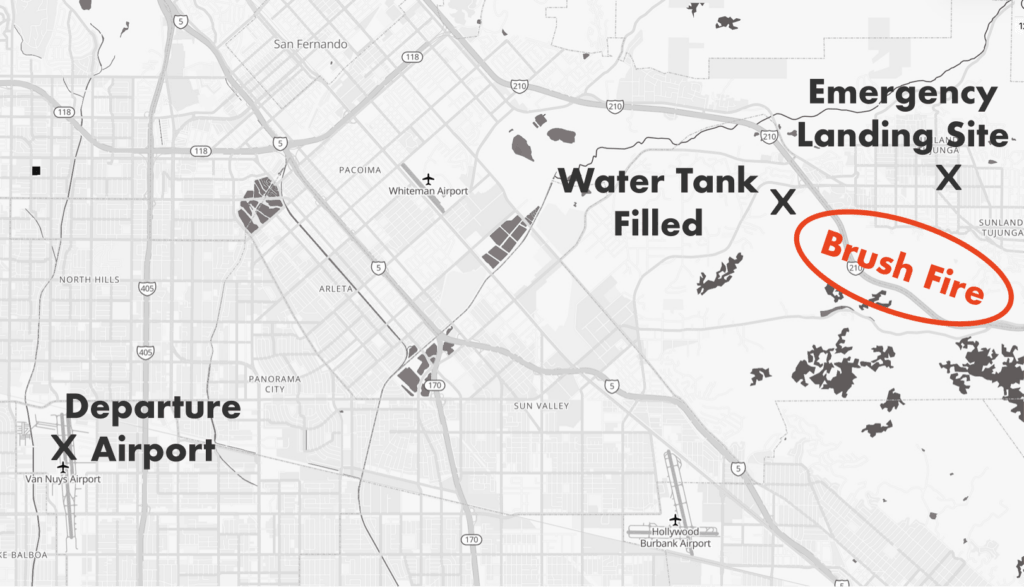
On Sept. 2, 2017, an AW139 was supporting firefighting operations in La Tuna Canyon near Tujunga, California.
The helicopter had departed Van Nuys Airport earlier that morning and had already completed several water drops on the brush fire. The crew was providing structure protection for a residential complex located along a ridgeline.
Before beginning the drop, the pilot performed a recce and set up for the approach. He planned a south-to-north water drop, flying between two large smoke columns surrounding the fire area.
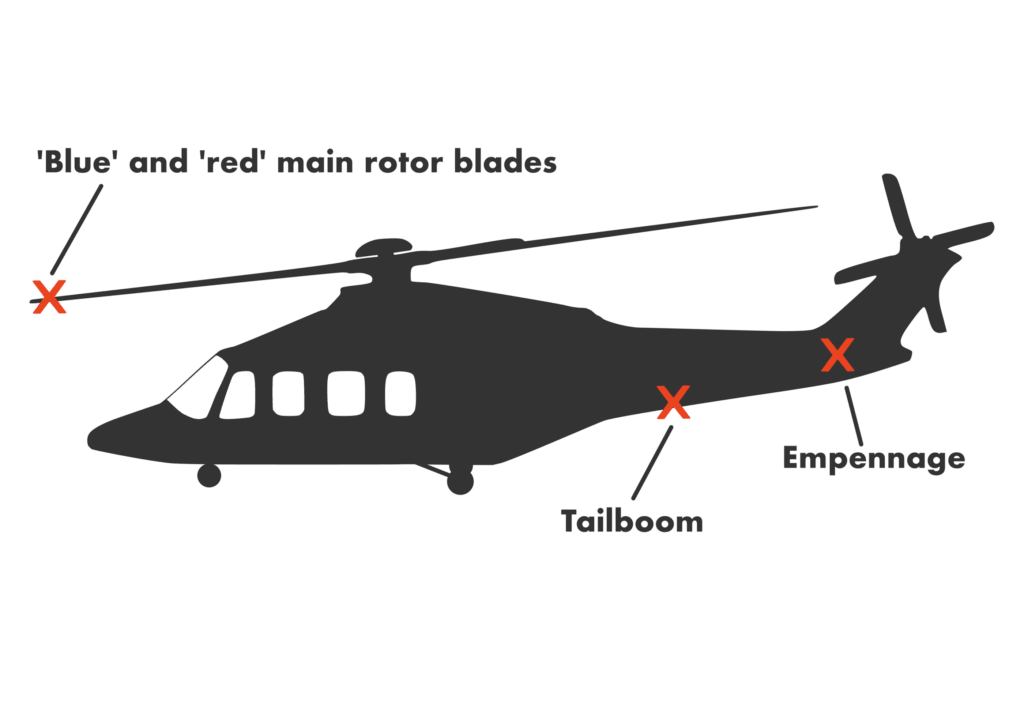
During the approach to the drop point, the helicopter slowed to approximately 20 knots (37 kilometers per hour), about 100 feet (30 meters) above the trees. At this point, the helicopter suddenly experienced an uncommanded yaw to the right and began descending rapidly.
The pilot released the water load, but the yaw and descent continued. Moments later, the helicopter struck trees, but avoided contact with the ground. The aircraft sustained substantial damage.
Despite the impact with the trees, the pilot managed to regain control, climb away, declare a mayday, and perform an emergency landing at a nearby athletic field. Both occupants escaped without injury.
Investigation findingsA few conditions were present during the water-drop phase of the flight that contributed to the event.
• Reduced airspeed: The helicopter slowed to around 20 kts (37 km/h) during the approach. For the AW139, typical water-drop airspeeds are 30 to 40 kts (56 to 74 km/h). Lower airspeed increases power demand, which in turn requires more tail rotor thrust.
• A tailwind component: At the time of the event, the helicopter had a tailwind component. The helicopter was flying on a northerly track, with the wind coming from 120 degrees. In the AW139 Rotorcraft Flight Manual, Leonardo states that a wind component from 90 to 135 degrees and from 225 to 270 degrees (with the helicopter facing 0 degrees) is a critical azimuth for tail rotor effectiveness.
• The effects of smoke and heat: The helicopter was operating close to active smoke columns, which can create strong updrafts and air that is significantly hotter than the surrounding environment. This hot air can significantly increase density altitude, reducing aircraft performance and power margins.
• High gross weight: The helicopter was carrying water in the firefighting tank, increasing its gross weight and therefore, the power required to maintain flight. At lower airspeeds, this higher power demand becomes more critical, as the aircraft is already operating closer to its performance limits. In this case, the additional power required to sustain the approach likely reduced the available power margin.
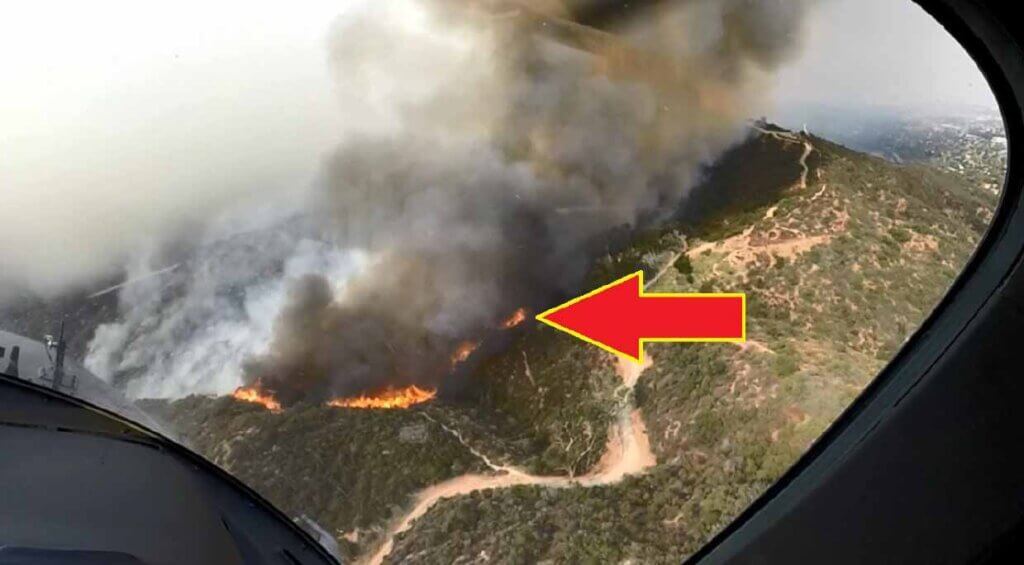 Aerial view looking west from fire 2 just prior to the accident during aerial firefighting operations. The residential complex is marked with the red arrow. LAFD Photo
NTSB conclusion
Aerial view looking west from fire 2 just prior to the accident during aerial firefighting operations. The residential complex is marked with the red arrow. LAFD Photo
NTSB conclusion
The NTSB concluded that the probable causes of the accident were “a yaw excursion and uncontrolled descent due to loss of tail rotor effectiveness,” as well as “the pilot’s failure to maintain sufficient airspeed, coupled with a quartering tailwind during aerial firefighting operations.”
The NTSB also cited “the operator’s lack of guidance to the hazards associated with aerial firefighting operations near and around smoke columns.”
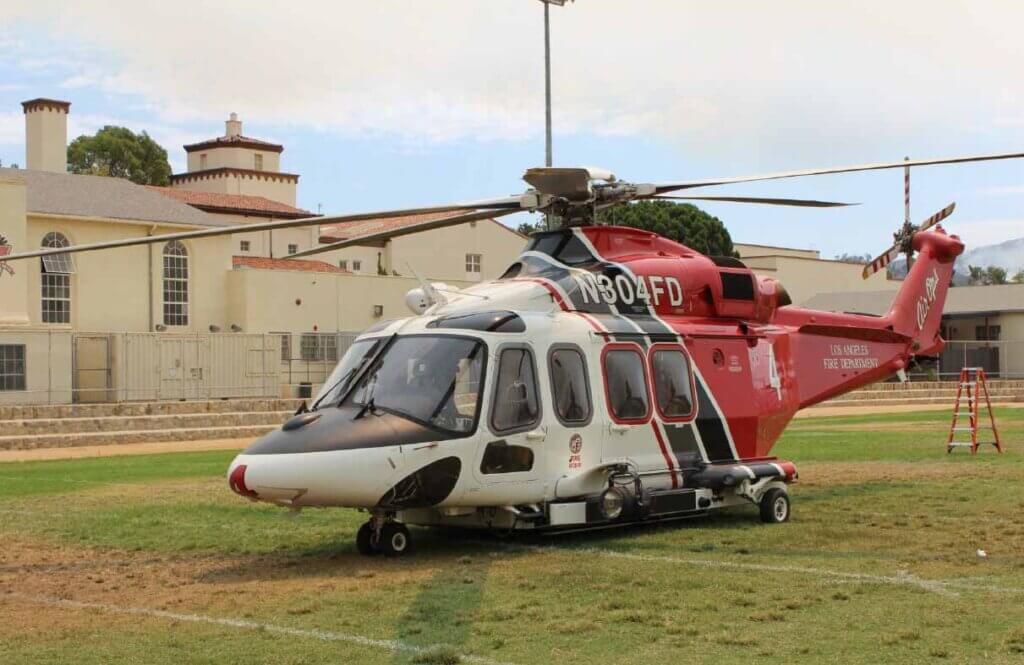 LAFD Photo
What can we learn from this?
LAFD Photo
What can we learn from this?
There are five main takeaways from this accident.
• Tight performance margins make complex environments even more challenging: When you’re operating close to the limits of available performance, a complex environment becomes a much greater threat. What you thought was margin can vanish very quickly.
• The threats of smoke can be unpredictable: It’s not just reduced visibility — smoke columns bring heat, updrafts, and unpredictable airflow that can significantly degrade performance.
• Airspeed acts as a safety buffer: When operating at the top of the power curve (very high or very low airspeeds), any change in what you require from the helicopter can cause problems much earlier than in more forgiving airspeed ranges.
• Wind awareness helps manage performance: While changing winds are simply a challenging part of flying helicopters, a second opinion or cross-check of your intentions can help avoid tailwind components (if other options are available).
• Escape plans give you options: The pilot here had an escape plan, and this was likely a major contributor to being able to land safely after the event occurred. Having options available gives you breathing room for errors or mistakes. Once you lose them, it may be time to reassess.
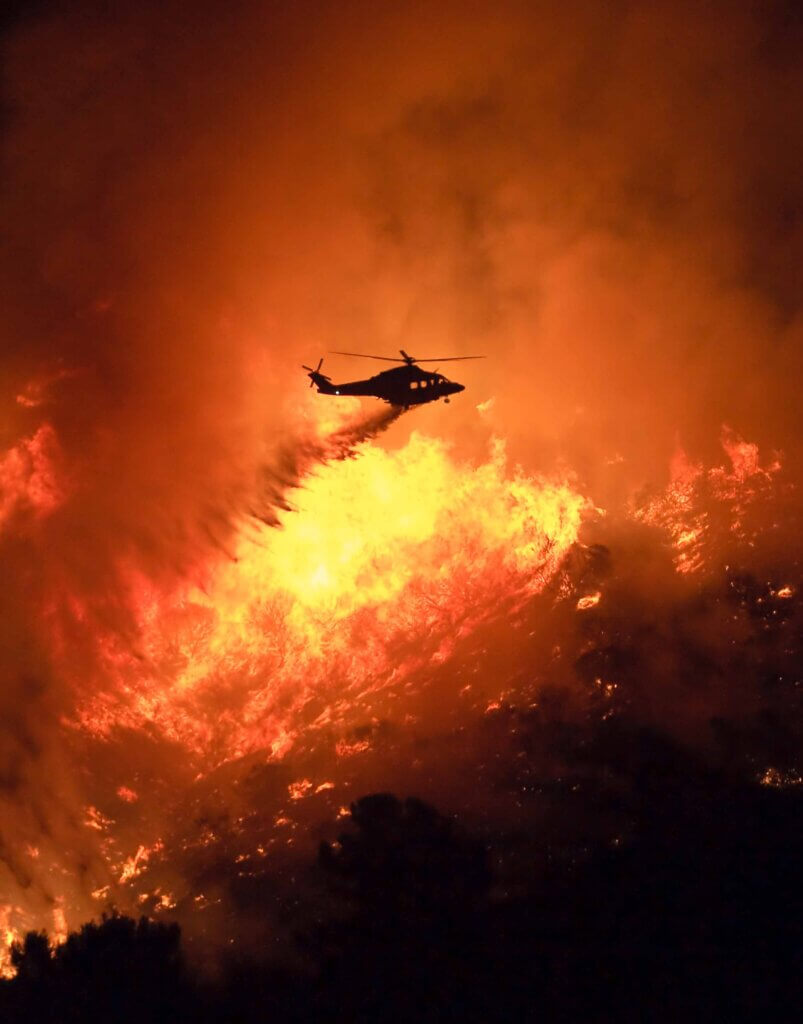 Michael Gilbert Photo
Conclusion
Michael Gilbert Photo
Conclusion
Even in familiar terrain, fire and smoke can completely change operating conditions. Ongoing threat assessment and maintaining options for yourself are key to making it home safely.
| # | Наименование новости | Тональность | Информативность | Дата публикации |
|---|---|---|---|---|
| 1 | Inside LAFD air operations: The AW139 crews battling California’s biggest wildfires | 0 | 10.7 | 28-07-2026 |
| 2 | Night vision: Welcome to the dark side of aerial firefighting | 0 | 7.5 | 09-07-2026 |
| 3 | Modern wildfire response depends on layered aerial firefighting | 0 | 7.44 | 13-07-2026 |
| 4 | How longer fire seasons are reshaping helicopter maintenance | 0 | 7.92 | 01-07-2026 |
| 5 | Smarter suppression: How helicopter tech aids the fight against wildfires | 0 | 9.18 | 07-07-2026 |
| 6 | Pilots Who Ask Why? 56 seconds to live | 0 | 11.24 | 08-06-2026 |
| 7 | Sikorsky Black Hawk: Born for battle, built for fire | 0 | 6.75 | 06-07-2026 |
| 8 | Pilots Who Ask Why?: Fatal mistakes on a helicopter mission | 0 | 6.35 | 26-05-2026 |
| 9 | Virginia State Police Aviation Division is a lifeline from above | 0 | 5.43 | 29-07-2026 |
| 10 | Inside Florida’s hurricane air operations strategy | 0 | 9.07 | 27-07-2026 |