Просмотр новости
Найдите то, что Вас интересует
 Спутники
 РН
РН SpaceX
 Роскосмос
 NASA
NASA
СпутникиРНSpaceXРоскосмосNASAThe Virginia State Police Aviation Division blends medevac, rescue, and law enforcement into a statewide public safety resource.
The post Virginia State Police Aviation Division is a lifeline from above appeared first on Vertical Mag.
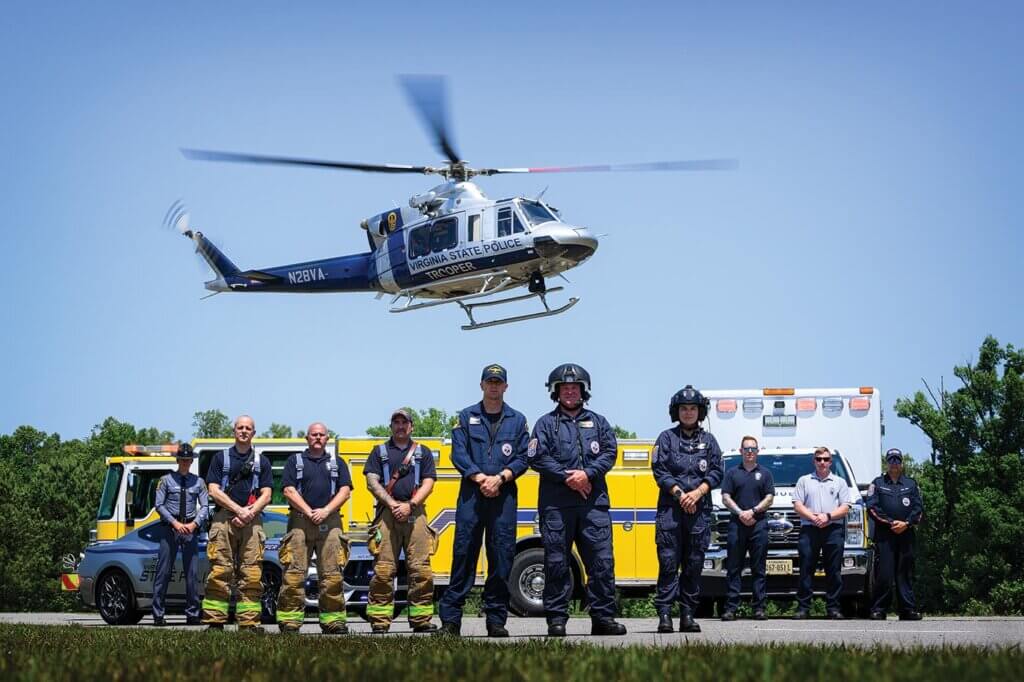
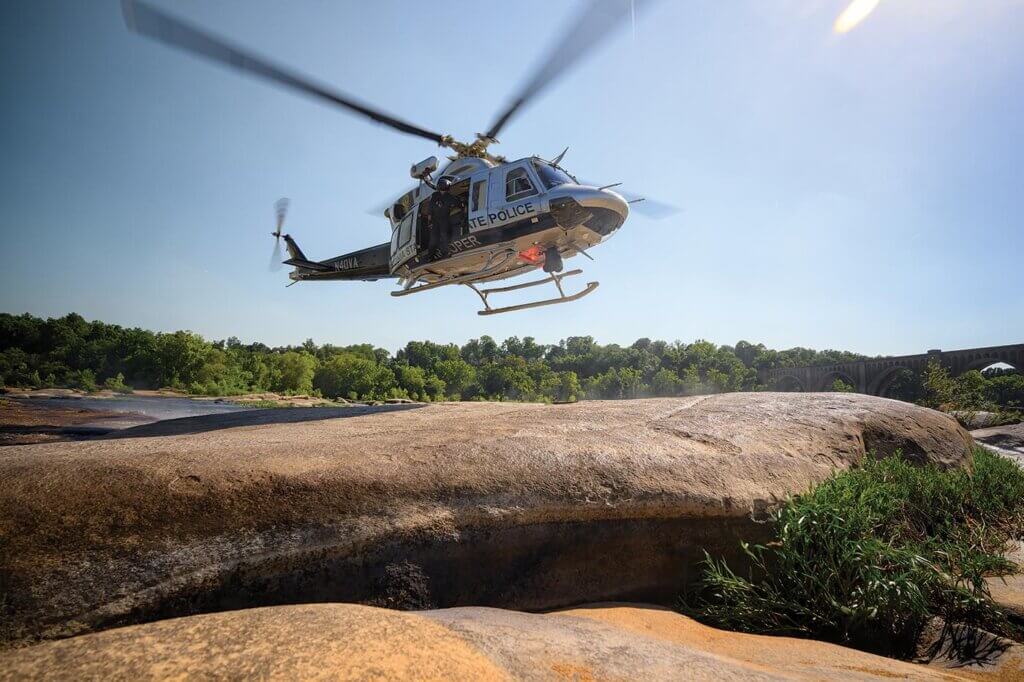
When a hunter suffers a cardiac emergency deep in the mountains of Southwest Virginia, when a hiker falls along the Appalachian Trail, when a child needs rapid transport from a rural emergency room to a Level I trauma center, or when floodwaters isolate an entire community, there is a good chance the aircraft lifting into the sky in response carries the markings of the Virginia State Police (VSP) Aviation Division.
For more than four decades, the Med-Flight program has quietly served as one of the Commonwealth’s most important public safety assets. It is a multi-mission aviation operation that blends aeromedical transport, search-and-rescue, hoist extraction, and law enforcement support into a single statewide capability. Unlike nearly every private air ambulance operator flying in the region, VSP Med-Flight provides these services without billing patients.
Building a statewide safety netThe roots of airborne law enforcement in Virginia stretch back well before the creation of Med-Flight. VSP aircraft had already been supporting ground troops since the 1950s, flying everything from Piper Cubs to Hiller helicopters before the state formally launched its Aviation Division in 1984. The catalyst came when Virginia officials identified a growing need for a statewide medical evacuation network, particularly in rural areas where trauma centers and specialty care were often hours away by ground.
According to Lt. Greg Jones, chief flight paramedic for Med-Flight 1 and a 38-year veteran of Chesterfield County Fire and EMS, the original vision centered on creating a safety net for the Commonwealth. “At the time, Virginia recognized there was a need to establish a coordinated medevac system across the state,” Jones explained. “The Virginia State Police already had the aviation resources and the pilots to help make that happen.”
Susan McHenry, then director of Virginia’s Office of EMS, worked with state agencies and health programs to build a network of helicopter EMS services across Virginia. Unlike the hospital-based Part 135 operators being established elsewhere, Med-Flight was designed differently from the outset. It would operate as a public-use, comprehensive aviation framework under VSP.
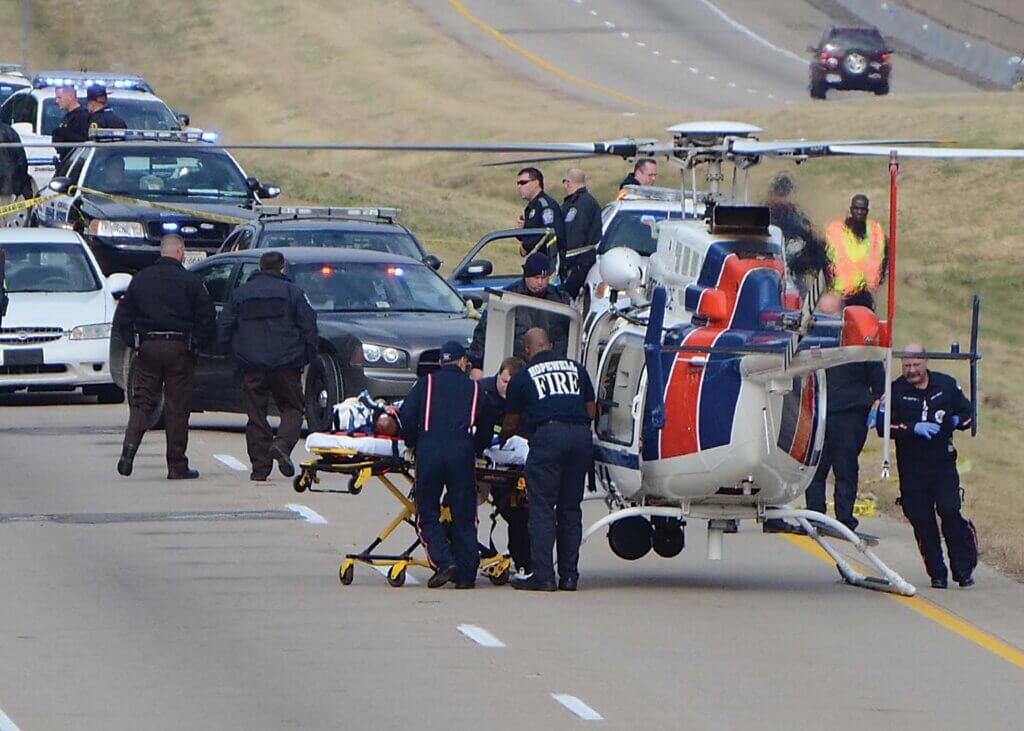
The initial Med-Flight partnership brought together VSP, Chesterfield County Fire and EMS, Virginia’s Office of EMS, and the Department of Emergency Management. The state police provided the helicopters and pilots, while Chesterfield County supplied the clinical staffing. Fire Station 14 in Chesterfield County served as the initial base, using a Bell JetRanger.
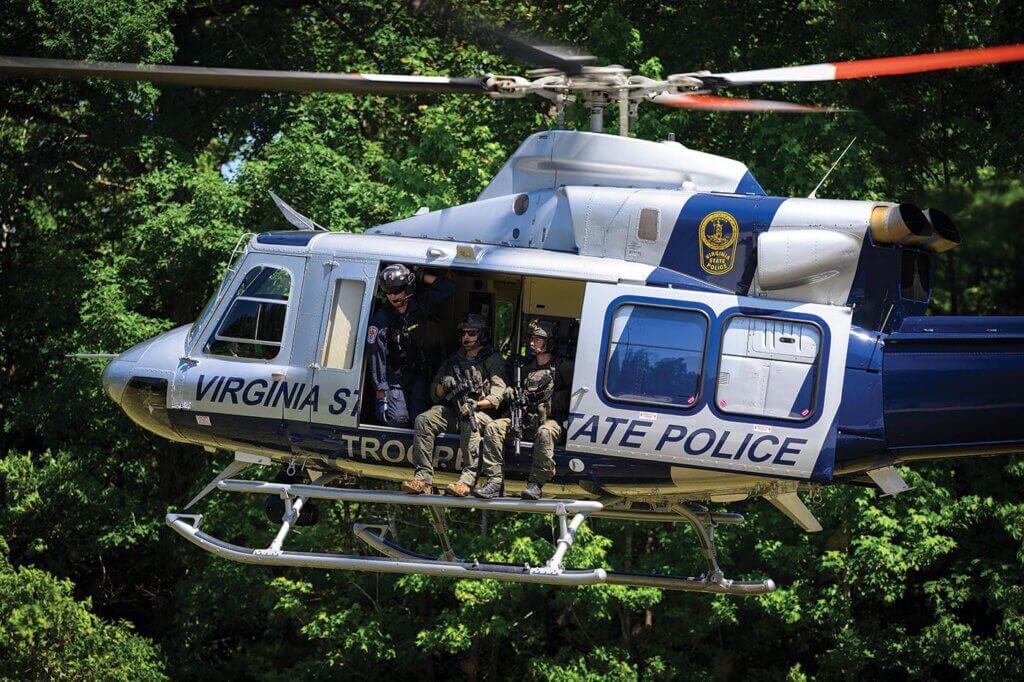
Jones said the arrangement created something unique. “We are the only multi-mission medevac program in the state of Virginia,” he said. “We do medevac work, search-and-rescue, hoisting, as well as law enforcement.”
That role still defines the organization today. While most helicopter EMS providers operate solely as medical transport services, VSP aircraft seamlessly transition between a variety of missions.
 Brent Bundy Photo
One division, many missions
Brent Bundy Photo
One division, many missions
Today, the Aviation Division operates from three bases across the Commonwealth: Richmond/Chesterfield, Abingdon, and Lynchburg. Med-Flight currently maintains dedicated aeromedical deployments in Chesterfield and Abingdon, while Lynchburg focuses primarily on law enforcement and rescue support.
The scale of the workload is substantial. Since its inception more than 40 years ago, the unit has flown more than 100,000 hours. Since 2021 alone, the Aviation Division has accumulated more than 9,250 flight hours statewide. In 2025, it logged 1,715 flight hours across approximately 2,390 missions, including 1,511 medevac requests, 713 completed patient transports, 74 missing-person searches, 62 criminal searches, 20 vehicle-pursuit support responses, multiple rescue and hoist operations, and 388 dedicated training evolutions. Med-Flight serves 43 hospitals across 59 counties and 34 cities in Virginia, and during 2025 recorded 1,002 scene-flight requests, 484 emergency room transfers, and 25 interfacility hospital transfers.
The medevac component remains especially important in Virginia’s rural regions. Statistics from 2025 show that Richmond/Chesterfield handled mostly direct scene responses, while the Abingdon base split its workload between scene calls and hospital transfers, reflecting the realities of healthcare access in Southwest Virginia and the Appalachian region. For many patients in those remote areas, helicopter transport is not a luxury; it is often the only realistic option for timely access to trauma care or specialty medicine.
 Brent Bundy Photo
Staffing for the future
Brent Bundy Photo
Staffing for the future
Andrew Baity, the Aviation Division’s safety officer and a former U.S. Marine Corps Bell AH-1Z pilot, described the organization as a statewide aviation resource that serves far more than a single agency or discipline. “The strength of the program is its versatility,” Baity said. “We can adapt quickly to whatever mission the Commonwealth needs.”
Baity, a Virginia native, joined VSP in 2021 after years of Marine Corps aviation experience that included deployments and instructor duty. He represents part of the growing mix of sworn trooper pilots and professional civilian aviators. Today, the Aviation Division includes 18 pilots — 12 sworn trooper pilots and six non-sworn professional pilots — along with six maintenance technicians and administrative staff.
The current staffing model is the result of significant organizational changes over the last several years. Historically, the unit relied almost solely on sworn trooper pilots, but staffing shortages and increasing service demands led the agency to expand its use of experienced civilian aviators, many with military backgrounds.
Following a 2022 incident in Abingdon, the National Transportation Safety Board identified pilot fatigue as a contributing factor and recommended strategic changes. The bureau subsequently moved away from 24-hour pilot shifts and adopted a 12-hour schedule that required a substantial increase in staffing.
Baity said the combination of civilian and sworn personnel ultimately strengthens the organization. “I came in with a lot of aviation experience from my time in the military,” he explained. “The troopers bring local knowledge and law enforcement experience. Together, you get the best of both worlds.”
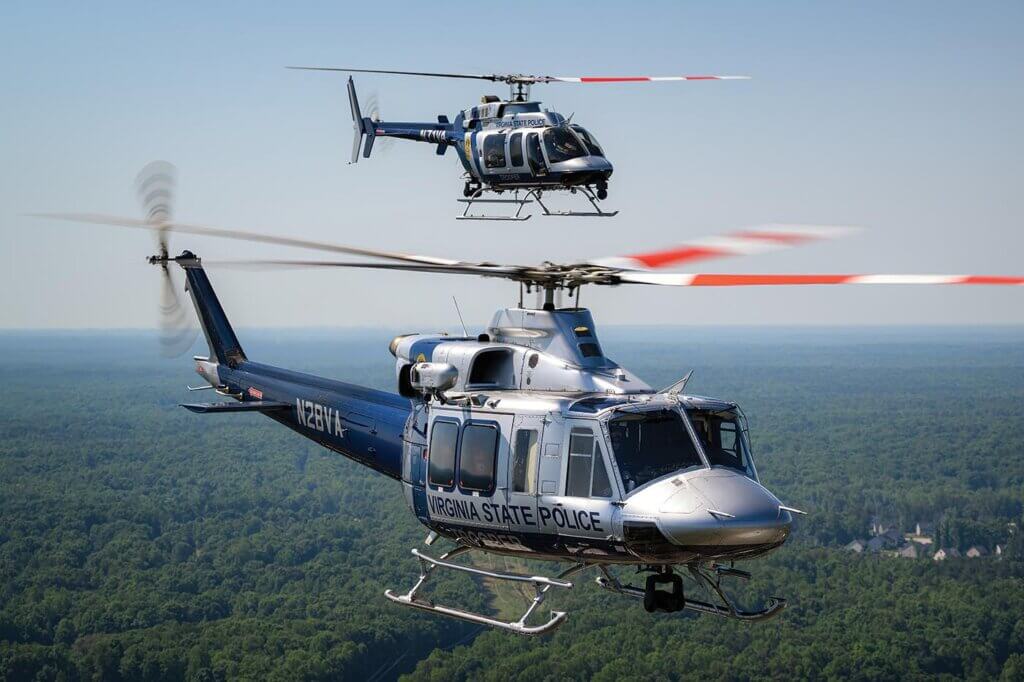
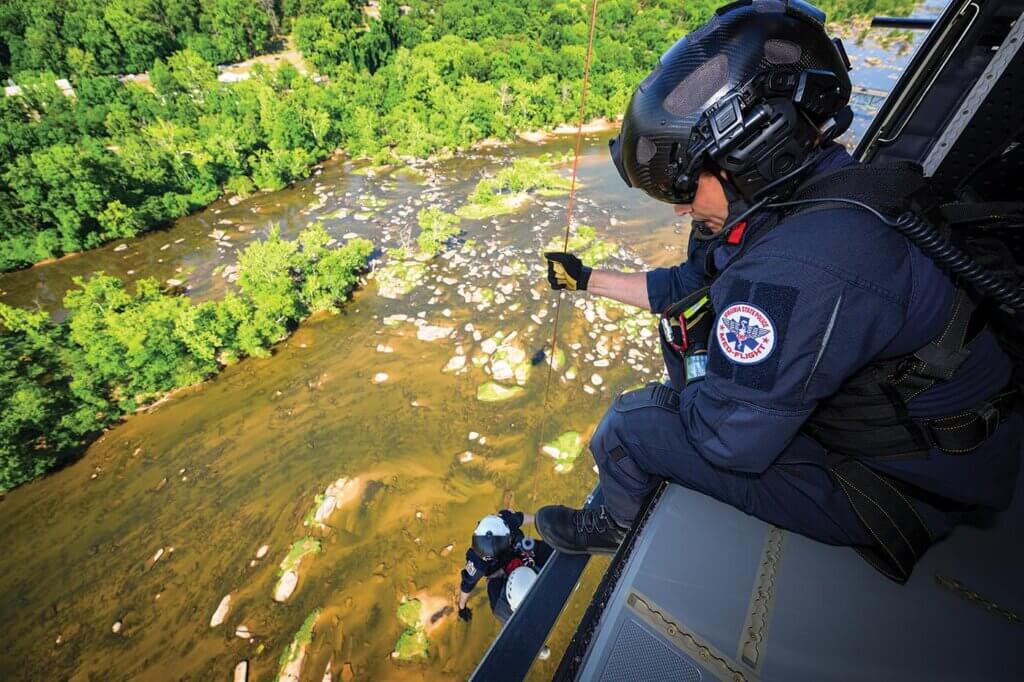
Medevac and moreThat hybrid structure also reflects the agency’s increasingly diverse objectives. One of the most important capabilities enhanced in recent years has been helicopter hoist rescue. The Bell 412EPI and 412EPX helicopters now provide Virginia with a dedicated overland hoist capability that previously existed only through the military.
“The Richmond/Chesterfield base, in particular, has really carved out a role in this mission set,” Baity explained. “Outside of the Virginia National Guard, there are very few hoist-capable aviation assets in the Commonwealth. If an overland hoist rescue is needed, there’s a good chance we’ll be the first agency contacted.”
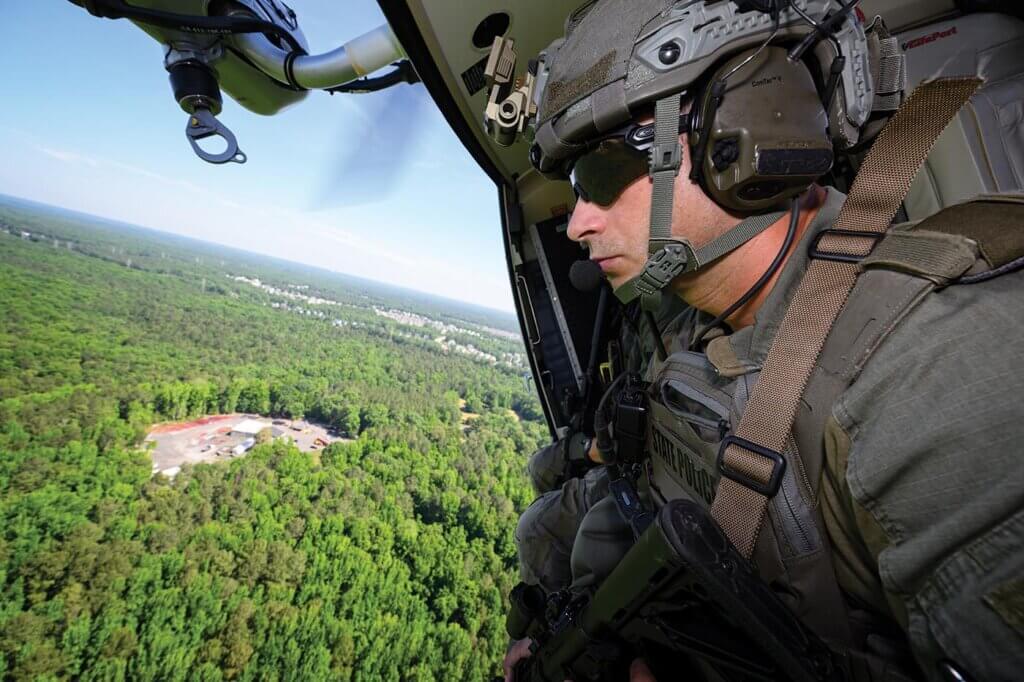
That asset has become especially important in mountainous terrain and along the Appalachian Trail, where conventional ground access can be difficult or impossible. VSP also works closely with the National Park Service and U.S. Park Police to support rescues in places such as Shenandoah National Park.
Jones said the program’s flexible structure allows crews to adapt instantly to changing circumstances. “A medical call can very quickly turn into a law enforcement call,” he said. “And vice versa.”
That adaptability can be critical in real-world operations. A helicopter supporting a police pursuit may suddenly become a medevac aircraft after a crash. A search for a missing person may turn into a technical rescue requiring a hoist extraction from rugged terrain. Unlike traditional hospital-based EMS aircraft, VSP crews are trained and equipped to transition between those tasks.
They also regularly support large-scale public events, criminal surveillance, marijuana eradication, and disaster response. During floods, severe storms, and other emergencies, Aviation Division aircraft often serve as some of the first airborne assessment assets available to state authorities.
 Brent Bundy Photo
A modern fleet for modern demands
Brent Bundy Photo
A modern fleet for modern demands
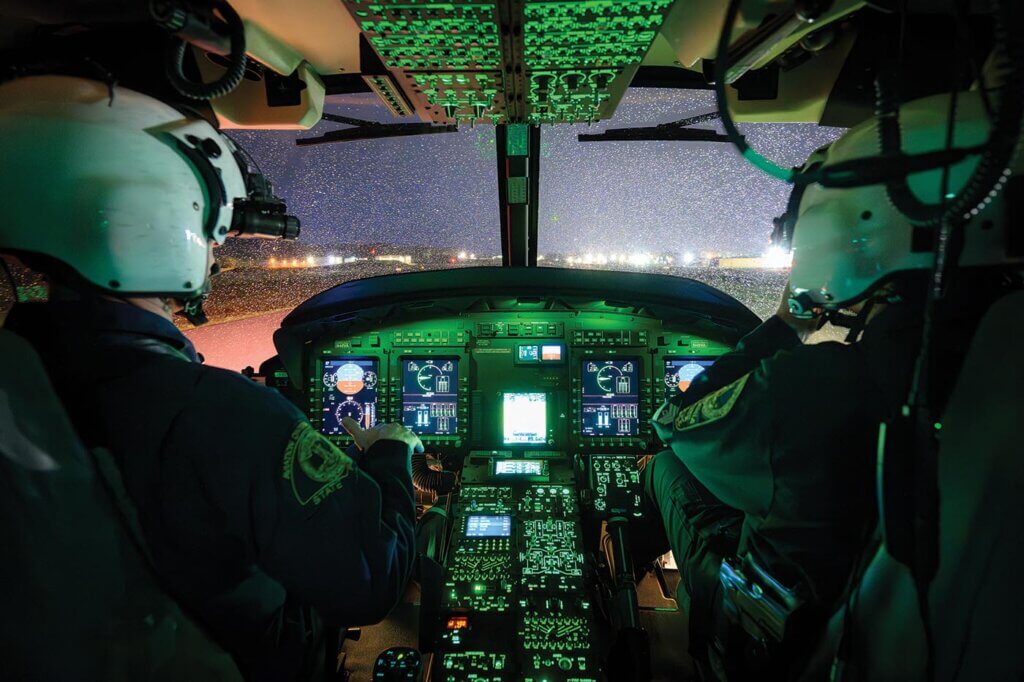
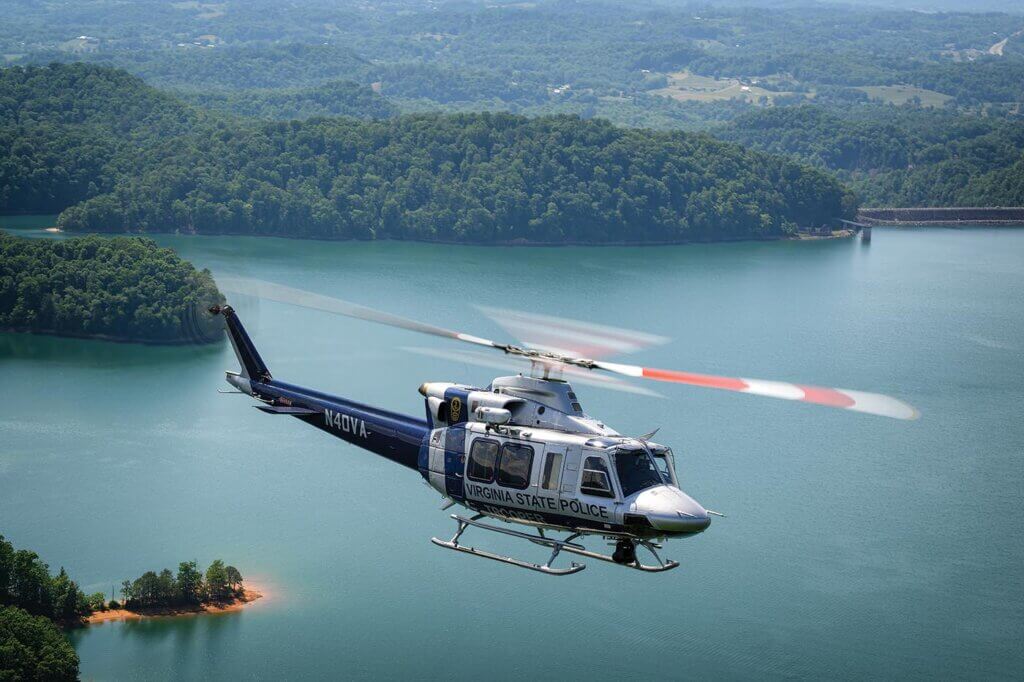
The fleet reflects that broad operational profile. VSP currently operates an all-Bell rotary-wing fleet consisting of one 412EPX, one 412EPI, two 407GXis, and three legacy 407s. On the fixed-wing side, the division also operates three Daher Kodiak 100s.
Both Bell 412 twin-engine medium-lift helicopters are configured with advanced rescue and EMS equipment. The newest addition, the 412EPX, includes a United Rotorcraft EMS interior, an external Onboard Systems rescue hoist, a DART Aerospace Heli-Rappel dual-side rappel platform, Trakka Systems TrakkaBeam TLXc searchlights with infrared technology, and Technisonic TDFM-9300 multiband radios. The aircraft also feature health and usage monitoring systems (HUMS) to support maintenance and fleet management.
The two helicopters represent a major leap forward for the SAR mission. With increased cabin space, improved performance, and advanced rescue hardware, the 412s significantly expand the ability to conduct hoisting operations and transport patients or rescue personnel in demanding environments.
 Brent Bundy Photo
The Bell 407GXi fleet similarly blends medical, rescue, and law enforcement technologies. Equipment includes Trakka Systems’ Total Mission Solution, incorporating the TrakkaBeam TLX searchlight, TrakkaCam TC-300 imaging camera, and TrakkaMaps TM-100 map and video management system. Also onboard are Macro-Blue night vision goggle (NVG)-compatible displays, a Silvus downlink, LifePort EMS interiors, and a 300-pound (136-kilogram) Breeze-Eastern hoist.
The older Bell 407s remain active as well, configured with various combinations of FLIR cameras, moving maps, searchlights, and downlink technology to support the division’s law enforcement and rescue responsibilities, while also serving in a training role for VSP.
The medical side of the unit has also evolved significantly in recent years. In July 2023, Med-Flight began carrying low-titer O-positive whole blood onboard its aircraft. Since then, crews have administered 78 units of lifesaving blood products in the field. Prior to that, the aircraft carried packed red blood cells and administered 131 units between 2019 and 2023. The capability allows crews to begin advanced trauma treatment long before patients arrive at a hospital — a major advantage in rural regions where evacuation times can be extended.
Med-Flight 1, based in Richmond/Chesterfield, has itself completed more than 21,700 sorties since operations began in 1984.
Expanding capability with the Kodiak
Although rotorcraft missions remain at the heart of the operation, VSP has also significantly expanded its fixed-wing component in recent years with the addition of Daher Kodiak 100 aircraft in 2025.
First Sgt. Andrew Goss, commander of the Lynchburg Aviation Base, said the Kodiaks have transformed the division’s ability to conduct extended law enforcement and disaster response missions. A state trooper and former tactical team member, Goss joined the Aviation Division in 2017 after pursuing flight training on his own time and at his own expense. “That was the goal,” Goss said of becoming a pilot. “That’s the reason I came to the state police.”
 Brent Bundy Photo
The Kodiaks provide longer endurance, increased speed, and enhanced surveillance capability compared to the previous fixed-wing fleet. The aircraft are equipped with Garmin G1000 avionics, a Teledyne FLIR 380X camera mounted on Fargo Jet Center retractable gimbal mounts, Shotover ARS-750 mapping, Technisonic tactical radios, Cradlepoint R1900 networking systems, and dedicated workstations capable of real-time information sharing via Macro-Blue touchscreen displays and Silvus downlink platforms.
“We’ve learned a lot in the year that we’ve flown it,” Goss said. “I love that aircraft.”
Although the fixed-wing component occupies a smaller role than the helicopter fleet, the Kodiaks have quickly become valuable tools for surveillance, disaster assessment, criminal apprehension support, and major-event security.
 Brent Bundy Photo
A public resource under pressure
Brent Bundy Photo
A public resource under pressure
Still, despite the technology and expanded capabilities, the future of Med-Flight faces growing pressure from the increasing presence of private air ambulance operators throughout Virginia.
Both Jones and Baity expressed concern that many Virginians simply are not aware the state police provides its services free of charge. “We’ve been around for 42 years,” Baity said. “A lot of people still don’t realize that patients are never billed for Virginia State Police aviation services, whether it’s a medevac flight or a mountain rescue.”
 Brent Bundy Photo
Baity noted that the cost of air medical transport can otherwise be significant for patients and families. “For example, a flight from Community Memorial Hospital in South Hill to VCU Medical Center in Richmond can cost tens of thousands of dollars through a traditional air medical provider,” he explained. “We flew that exact mission 46 times last year, and those patients were transported at no cost.”
That distinction has become increasingly important as private operators expand into markets historically served by public safety aviation. In some regions, hospital-affiliated Part 135 operators have already reduced Med-Flight’s call volume by positioning aircraft closer to major trauma centers and population hubs.
The Lynchburg Med-Flight base ultimately closed after a private operator entered the market, illustrating the challenge public programs can face when competing against commercial healthcare systems. Yet VSP leaders argue that evaluating Med-Flight solely on transport numbers overlooks the broader value the organization provides to Virginia.
Jones believes the distinction in what his team offers is significant. “Everybody wants to compare themselves to Med-Flight and make it seem like we all do the same thing,” he said. “We just don’t. They cannot and do not perform the same function set that we offer.”
 Brent Bundy Photo
A mission worth saving
Brent Bundy Photo
A mission worth saving
For the citizens of Virginia, that difference may ultimately prove critical. At a time when healthcare transport is increasingly driven by corporate economics and market share, the Virginia State Police Aviation Division remains something increasingly rare: a statewide public safety aviation resource designed first around service, not profit.
Whether the request involves rescuing a stranded hiker from the mountains, flying blood products to a trauma patient, searching for a missing child, or supporting troopers on the ground during a criminal pursuit, the crews of the VSP Aviation Division continue to embody the same directive that launched the program: serving the Commonwealth wherever and whenever they are needed.
The value of Med-Flight cannot be overstated. In much of Virginia, especially in rural communities where mountains, distance, and geography can quickly turn emergencies deadly, that mission remains every bit as vital today as it was in 1984.
 Brent Bundy Photo
| # | Наименование новости | Тональность | Информативность | Дата публикации |
|---|---|---|---|---|
| 1 | Inside Florida’s effort to bring public safety aviation together before disaster strikes | 0 | 6.03 | 17-06-2026 |
| 2 | Answering the call: How Tim Brennan built a career saving lives from the sky | 0 | 4.77 | 02-06-2026 |
| 3 | How volunteer search-and-rescue teams around the world are looking to the future | 0 | 9.7 | 22-06-2026 |
| 4 | Night vision: Welcome to the dark side of aerial firefighting | 0 | 7.5 | 09-07-2026 |
| 5 | Modern wildfire response depends on layered aerial firefighting | 0 | 7.44 | 13-07-2026 |
| 6 | Pilots Who Ask Why? 56 seconds to live | 0 | 11.24 | 08-06-2026 |
| 7 | Coast Guard Air Station Borinquen: On Maritime watch | 0 | 6.28 | 01-06-2026 |
| 8 | Inside LAFD air operations: The AW139 crews battling California’s biggest wildfires | 0 | 10.7 | 28-07-2026 |
| 9 | Pilots Who Ask Why? Hidden Wire Threat | 0 | 8.31 | 03-06-2026 |
| 10 | Sikorsky Black Hawk: Born for battle, built for fire | 0 | 6.75 | 06-07-2026 |