Просмотр новости
Найдите то, что Вас интересует
 Спутники
 РН
РН SpaceX
 Роскосмос
 NASA
NASA
СпутникиРНSpaceXРоскосмосNASAVertical spoke with sector leaders to learn more.
The post How volunteer search-and-rescue teams around the world are looking to the future appeared first on Vertical Mag.
Volunteer search-and-rescue (SAR) teams make a crucial contribution to lifesaving operations, working closely with coastguards and other helicopter crews to deliver their service. What role do they perform, what challenges do they face, and what drives them to invest their time? Vertical spoke with sector leaders to learn more.
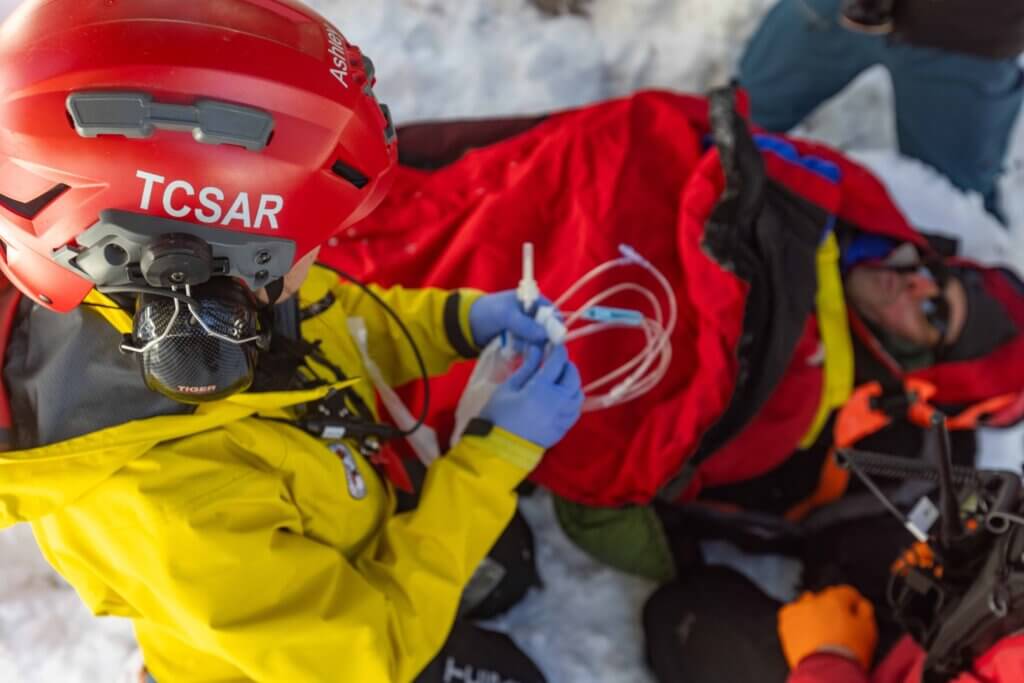
Volunteers work in SAR through a wide variety of organizations across the U.S. and around the world. One example is Teton County SAR (TCSAR) in northwest Wyoming, which works under the jurisdiction of the Teton County Sheriff’s Office.
Since October 2023, TCSAR has operated its own helicopter, an Airbus H125 that was customized into a rescue platform by EuroTec in Kansas. The helicopter was delivered through more than $7 million in private donations raised through a campaign led by the TCSAR Foundation, the nonprofit that supports the organization.
Anthony Stevens has been chief advisor in TCSAR since January, having served as a volunteer since 2015, working as a check spotter/short hauler for the team. He said that as of April 2026, TCSAR has a team of 42 volunteers from all walks of life.
“We have doctors, we have paramedics, we have nurses, we have EMTs [emergency medical technicians], but we also have accountants, construction workers, teachers: we just have such a myriad of folks on our team,” he said.
Stevens is owner/operator of Wounded Bear Medicine and was previously a field instructor for the National Outdoor Leadership School (NOLS), among other roles. He says most volunteers for TCSAR have an extensive background in wilderness activities like mountaineering, climbing, skiing and whitewater paddling.
“We can train skills, but if you don’t have an interest in the outdoors, it doesn’t really lend you to mountain rescue,” he said.
 Anthony Pecchi Photo
Preparing for missions
Anthony Pecchi Photo
Preparing for missions
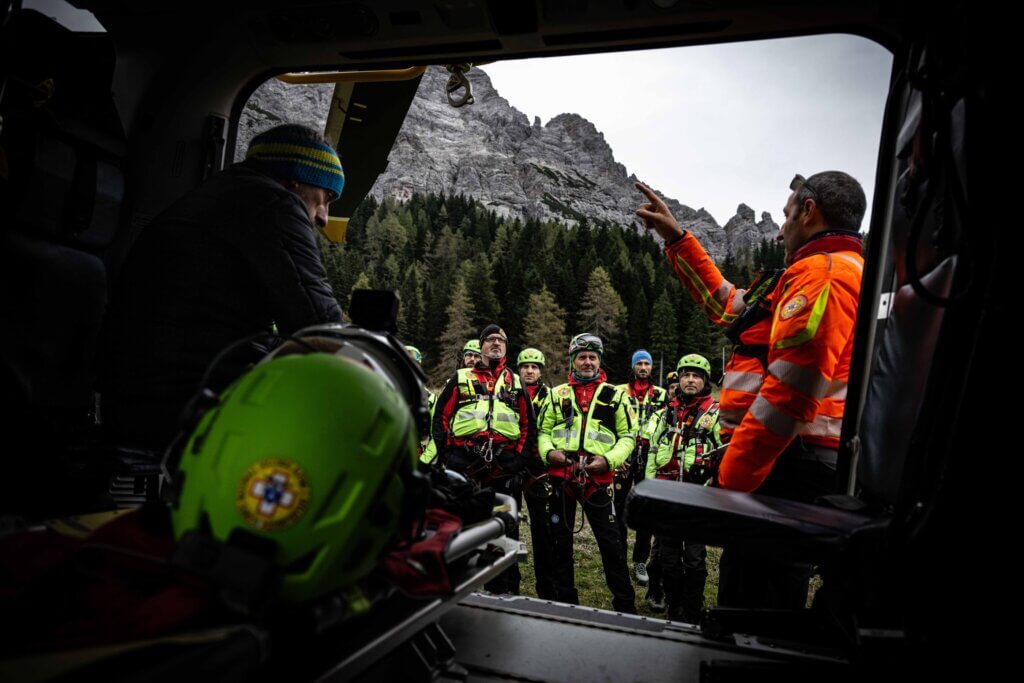
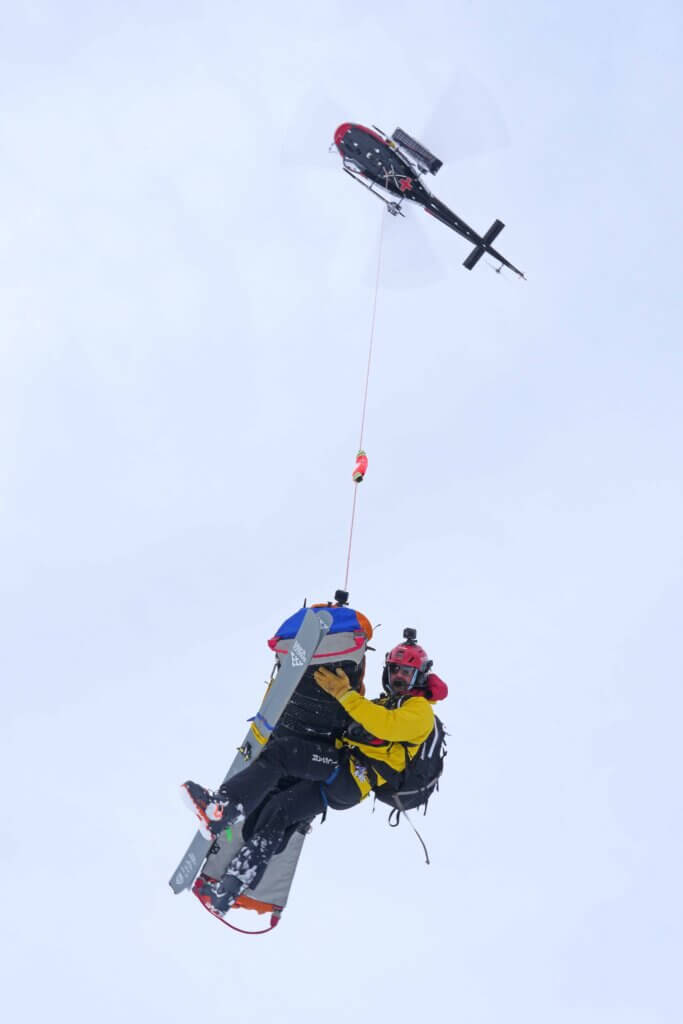
The entire TCSAR team receives helicopter crew management training to work with the H125, he said. About 20 are short-haul or longline qualified, which requires additional training. Other volunteers occasionally fly, but they tend to work more as support staff, he said.
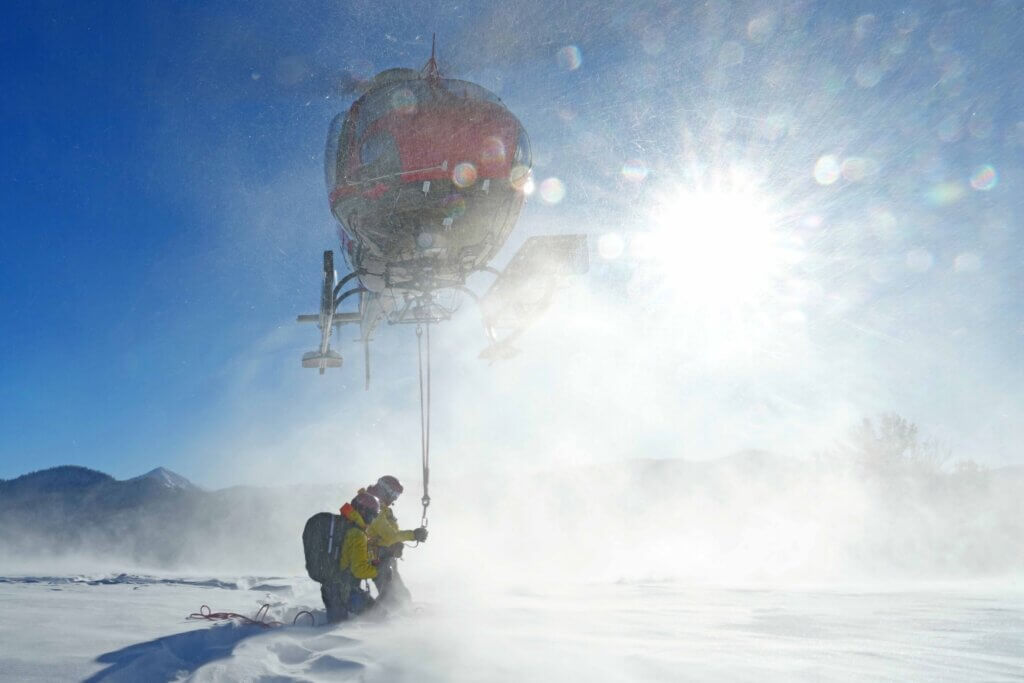
There are three different levels to the short-haul program. The first is short-haulers, who are on the end of the line. Then there are spotters, who oversee the operation in the field and ensure short-haulers are safe. “To be a spotter, you have to have been a short-hauler first,” explained Stevens.
Finally, there are check spotters at the most senior levels, who are responsible for managing the entire short-haul team.
Missions are arranged through a paging system. This begins with a 911 call, which will link to the Sheriff’s Office’s dispatch center. When they determine that the call requires a SAR mission, they page the operational board at TCSAR, which consists of Stevens as the chief advisor, alongside the planning advisor, the logistics advisor, the medical advisor and the training advisor.
“We make the decision on whether it needs a SAR mission and what kind of response is required,” said Stevens. For instance, a specially trained swift water team will be sent if it is a river mission.
The operational board then sends a page that goes to all volunteers. If they are in a position to join the mission, they come to the hangar. If it is a helicopter-specific mission, a crew is selected based on the terrain involved.
For instance, he said helicopter missions at higher altitudes could see three people being sent with the pilot in the helicopter: a spotter and two short haulers.
 Anthony Pecchi Photo
Coastguard partnerships
Anthony Pecchi Photo
Coastguard partnerships
Nigel Harling is the helicopter officer for Mountain Rescue England and Wales, the umbrella organization that represents and supports 48 volunteer mountain rescue teams across eight geographical areas, including the Lake District, the Peak District, and North and South Wales.
Harling spent much of his professional career working for the police, but his involvement in mountain rescue spans before, during and after that period. “I’ve always had an interest in the mountains and a general desire to help and serve,” he said.
He represents Mountain Rescue England and Wales at the International Commission for Alpine Rescue (ICAR), where he serves as vice president of the air commission. “We look at how helicopter interaction works around the world and how we can adopt best practice from different countries,” he explained.
Volunteer SAR teams in the U.K. work with helicopters through three main avenues, Harling said. The first involves police helicopters. While volunteer SAR personnel generally do not operate directly with police aircrews, these aircraft can provide valuable situational awareness and reconnaissance.
 Anthony Pecchi Photo
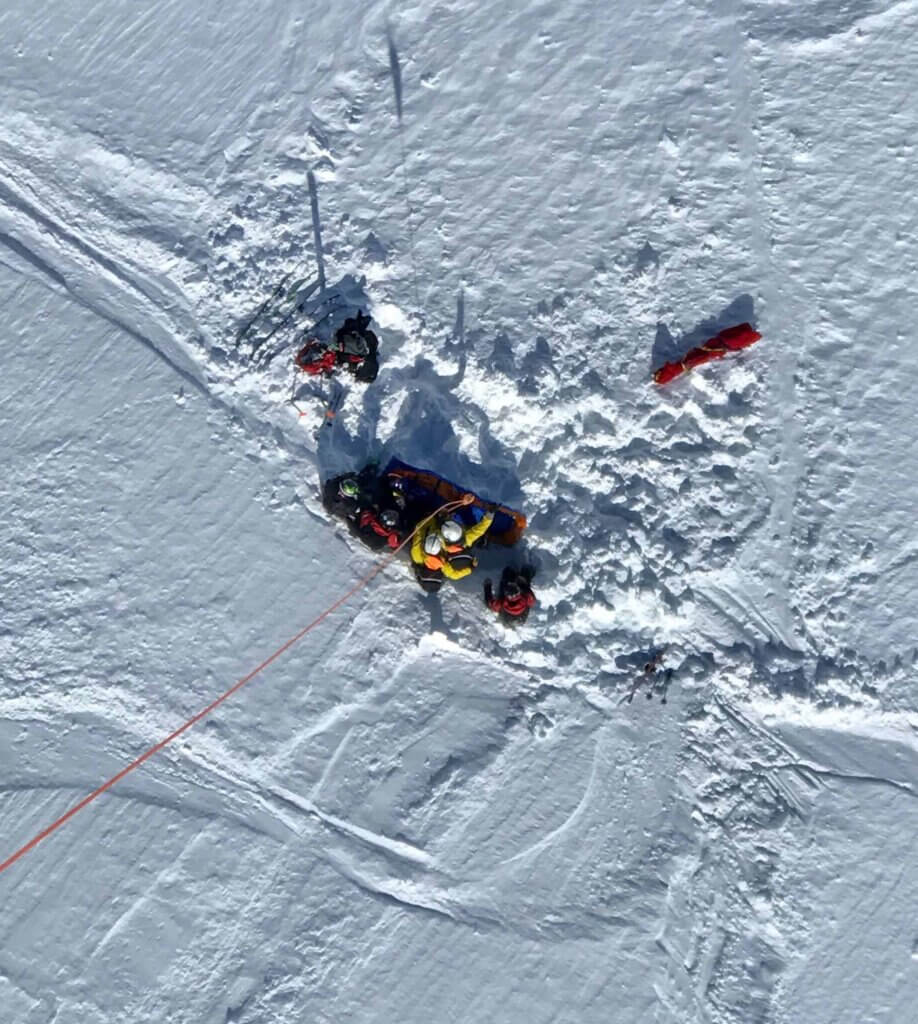
The second avenue is air ambulances, which represent a closer operational partnership. Emergency medical service (EMS) helicopters will often carry SAR personnel when required, allowing for direct collaboration during missions.
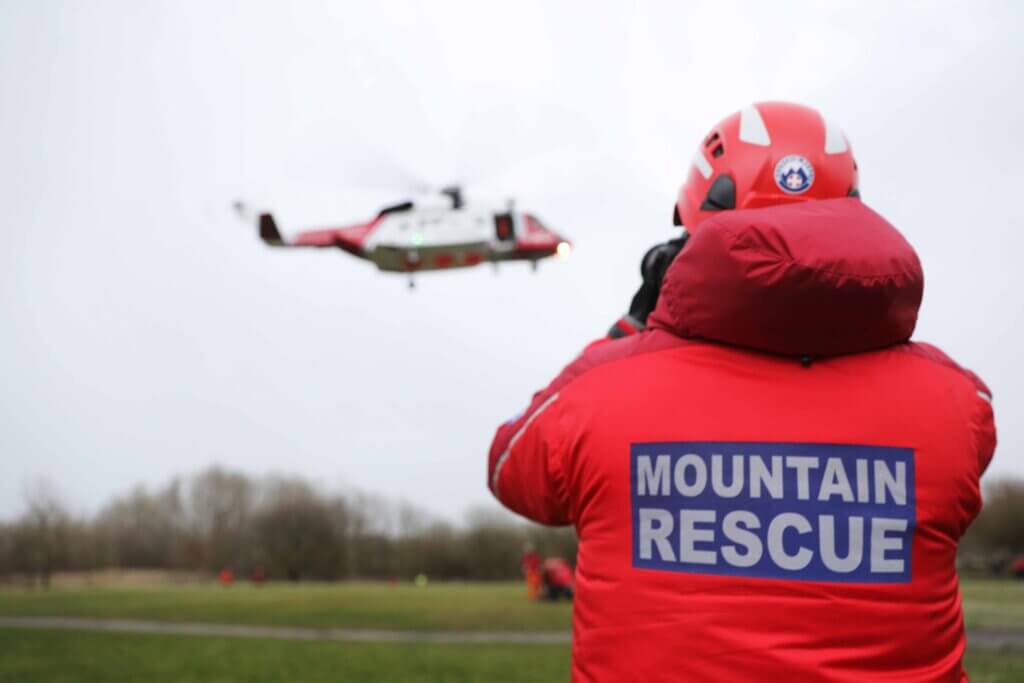
The most significant partnership, however, is with the Coastguard, which forms a major focus of training for volunteer SAR teams. Coastguard-related training covers the fundamentals of helicopter operations, including hoisting techniques, the use of strops and high lines, and specific landing requirements, such as wind conditions and suitable terrain.
The scope of mountain rescue work is broad, Harling noted. This includes “everything from medical emergencies and injuries to lost walkers, searches for overdue mountaineers, and incidents in remote locations, often in poor weather, where other blue-light services simply cannot reach.”
To meet these demands, rescuers typically train in casualty care, search techniques, ropework, navigation, helicopter operations, swift water rescue, and specialist driving skills. The latter includes off-road driving as well as emergency vehicle – or “blue light” – driving. Helicopter training is delivered in conjunction with the Coastguard.
Training requirements vary significantly depending on geography. Teams based in areas such as Scotland or North Wales, for example, must prepare for rescues on large crags and complex mountain terrain. Other teams may not train in swift water rescue if they do not operate near significant waterways.
 Joey Sackett Photo
Service backgrounds
Joey Sackett Photo
Service backgrounds
Christopher Mosley is founder and CEO of Guardian Search and Rescue, a new SAR organization in Melbourne, Florida, which is based on volunteer personnel.
“Helicopters significantly expand the speed, range, and effectiveness of rescue operations. While there are many vessels on the water, there are relatively few aviation assets capable of extended offshore response,” Mosley told Vertical.
Guardian has one Bell 412 now airworthy and a Sikorsky S-76 arriving shortly, he said.
Its operational goal is to reach distances of up to 50 miles (80 kilometers) offshore, he said — potentially further with refuelling support.
“This allows us to respond faster than surface vessels and position rescue personnel with greater precision. For example, we can deploy a rescue swimmer directly onto a target and recover them quickly, dramatically reducing response time compared to traditional methods.”
 James Turner/Mountain Rescue England and Wales Photo
The organization is currently in the build-out phase, Mosley explained, and is developing a diverse network of volunteers including first responders, medical professionals such as nurses, and individuals interested in pursuing careers in aviation. “We also see value in mentoring the next generation, giving younger participants exposure to aviation and rescue operations in a structured and safe environment,” he added.
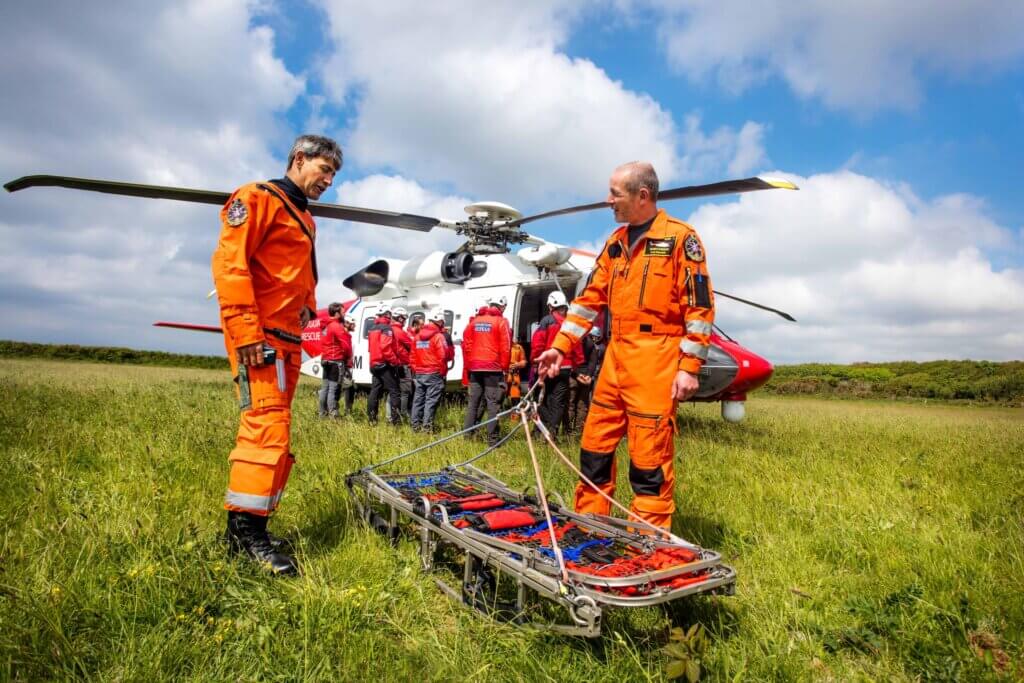
Many volunteer rescuers come from prior service backgrounds; about 95% of the individuals supporting and interacting with Guardian as of April 2026 are veterans, said Mosley.
“A large percentage [of the volunteers] have experience as first responders, military personnel, law enforcement, or in emergency medical services. Others bring specialized skill sets such as aviation, maritime operations, or technical rescue disciplines.
 Greg Caygill Photo
Training is tailored to the individual’s experience and intended role, noted Mosley. Volunteers with advanced backgrounds may progress towards flight crew responsibilities, while others contribute in critical support roles, such as coordination, communications and resource activation.
Those pursuing operational flight roles — such as hoist or long-line operations — require formal crew chief level training. This includes day and night flight training, operations with and without night vision goggles (NVGs), and land-based and over-water scenarios. There is repetitive and recurrent training until proficiency is demonstrated, as well as formal sign-offs at each stage.
Additionally, all flight volunteers must complete a foundational helicopter operations course that Guardian has developed internally. Mosley said safety and standardization are central priorities, with no one participating in operational missions without proper qualification and certification.
Guardian’s model emphasizes structured progression, he explained:
“Not every volunteer starts in the aircraft; many begin in ground support roles, helping coordinate with medical teams, law enforcement, and partner agencies. This ensures that every participant is operating within their competency while still contributing meaningfully to the mission.”
 Anthony Pecchi Photo
High expectations
Anthony Pecchi Photo
High expectations
At TCSAR, Stevens said the organization can run anything between 120 and 180 calls a year. Recruitment occurs every three to five years or so: in its last class, it received about 200 applications, which led to 160 interviews, from which just 10 volunteers were selected. The only set requirement is that they have some kind of wilderness background and skill — such as skiing or snowboarding, for example.
“The biggest thing that we recruit for is: Are you a good teammate? Are you humble? Are you going to fit in well?” said Stevens. “Because we will train you in every other discipline you need to know.”
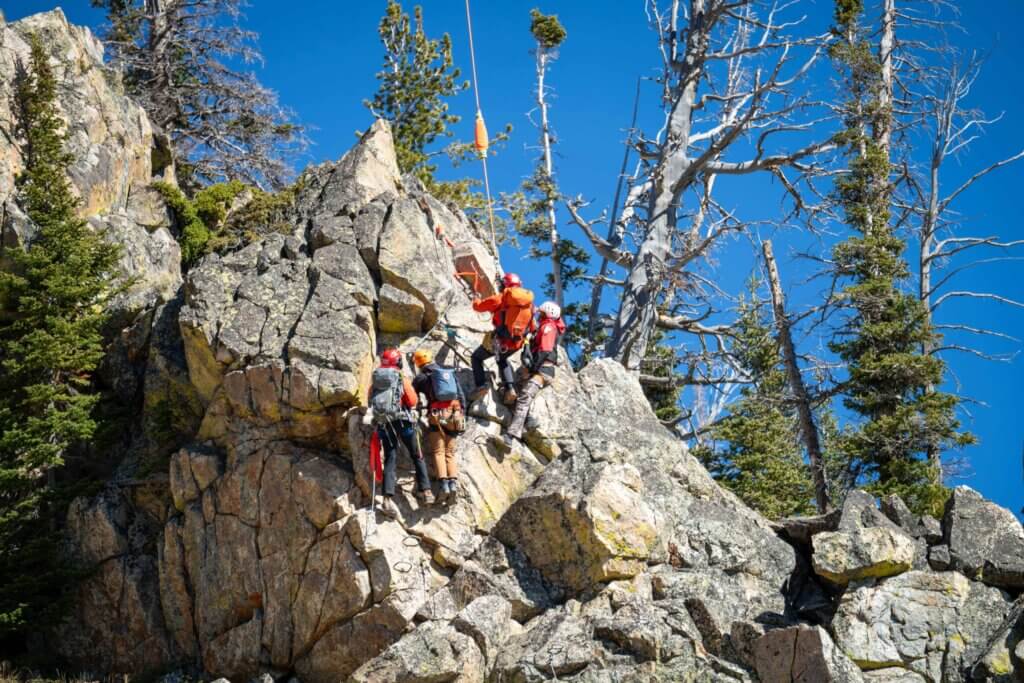
In their first year, recruits will go through helicopter orientation training, he said. They receive Incident Command System (ICS) training and a Wilderness First Responder (WFR) certification. Other qualifications focus on areas like swift water rescue and communications.
 Griffin Kerwin Photo
Through the first six months or so, they will complete new member training, before spending the next six months embedded with the team and working on operations to see how they blend with the group. After the first year, they will be offered operational status, though recurring training is held throughout their volunteer SAR employment.
“We have a pretty high expectation level,” said Stevens. “When we recruit folks, we make it very clear in their introductory meeting that if you’re going to sign up for that first year, it feels like a full-time job. And so, if you can’t commit to that, maybe it’s not the right time.”
 Mike Reyno Photo
A passion to serve
Mike Reyno Photo
A passion to serve
What motivates people to dedicate their time to volunteer SAR work? Stevens said it is “truly a passion – they’re excited to help their community.” He noted that TCSAR works in a major tourist area, which includes Grand Teton National Park, Jackson Hole and Yellowstone National Park. “[These] are some of the crown jewels of the U.S., so we have a lot of people who come here for recreation,” he said. “It’s an opportunity for folks in our area to give back to the community and the people who stay here.”
 Greg Caygill Photo
He believes the volunteer model is here to stay, noting that it plays a vital role for Sheriff’s offices in the U.S. west and that it is increasingly recognized by some states, providing retirement and insurance benefits. “It used to be everything was out of pocket, but now there’s much greater support, so I don’t see it changing anytime soon.”
Harling said volunteers are primarily motivated by a desire “to serve and help others, especially fellow mountaineers,” and he emphasized the strong sense of camaraderie that develops within teams.
“Some of it is simply about being together,” he said. “The training, the shared experiences, the social side of it is what I think really attracts people.”
| # | Наименование новости | Тональность | Информативность | Дата публикации |
|---|---|---|---|---|
| 1 | Virginia State Police Aviation Division is a lifeline from above | 0 | 5.43 | 29-07-2026 |
| 2 | How longer fire seasons are reshaping helicopter maintenance | 0 | 7.92 | 01-07-2026 |
| 3 | Answering the call: How Tim Brennan built a career saving lives from the sky | 0 | 4.77 | 02-06-2026 |
| 4 | Modern wildfire response depends on layered aerial firefighting | 0 | 7.44 | 13-07-2026 |
| 5 | Inside Florida’s effort to bring public safety aviation together before disaster strikes | 0 | 6.03 | 17-06-2026 |
| 6 | Smarter suppression: How helicopter tech aids the fight against wildfires | 0 | 9.18 | 07-07-2026 |
| 7 | Pilots Who Ask Why? 56 seconds to live | 0 | 11.24 | 08-06-2026 |
| 8 | Night vision: Welcome to the dark side of aerial firefighting | 0 | 7.5 | 09-07-2026 |
| 9 | Eyes above the world stage: How helicopters protect crowds at the 2026 FIFA World Cup | 0 | 7.9 | 03-07-2026 |
| 10 | Sikorsky Black Hawk: Born for battle, built for fire | 0 | 6.75 | 06-07-2026 |