Просмотр новости
Найдите то, что Вас интересует
 Спутники
 РН
РН SpaceX
 Роскосмос
 NASA
NASA
СпутникиРНSpaceXРоскосмосNASABackground Kansei Engineering (KE) has increasingly been applied beyond product design into service contexts, responding to the growing importance of emotional satisfaction, experiential quality, and human-centered service design. Despite its expanding use, a comprehensive understanding of how KE has evolved methodologically, theoretically, and contextually within service research remains limited. This study aims to critically review KE applications in services over the last decade to identify key trends, contributions, and research gaps. Methods A semi-systematic literature review was conducted using a two-phase Define–Refine protocol. A structured search was performed using the Scopus database covering publications from 2010 to 2023. The review followed PRISMA-guided screening and refinement procedures, resulting in the selection of 28 peer-reviewed journal articles. The selected studies were analysed through iterative thematic synthesis, methodological comparison, and cross-industry analysis. Results The findings reveal four major thematic clusters of KE applications in services: (1) KE for service quality enhancement, (2) data-driven and analytics-based KE, (3) KE in digital and smart service systems, and (4) behavioral and psychophysiological KE. The review demonstrates a significant methodological shift from traditional attribute–response models toward more data-driven and computational approaches, including text mining, machine learning, sentiment analysis, and advanced statistical modelling. In addition, KE increasingly serves as an integrative framework, combining service quality models, decision-support systems, and intelligent service technologies. A cross-sector comparison further reveals varying levels of methodological maturity across logistics, hospitality, transportation, healthcare, and digital services. Conclusions This study provides both theoretical and practical insights into the evolving role of KE in service research and development. By mapping the methodological evolution and thematic diversification of KE applications, the review highlights the growing importance of emotionally informed, data-driven, and human-centered approaches in contemporary service design. The findings also identify emerging opportunities for integrating KE with artificial intelligence, adaptive systems, and culturally sensitive service innovation. The study is limited by its reliance on a single database and the interpretive nature of the semi-systematic review approach.
Table 1 summarises the 28 selected studies on KE applications in services, including their research contexts, methodological approaches, and key findings.
Based on the synthesis of the 28 selected studies ( Table 1), a thematic analysis was conducted to identify recurring patterns in research objectives, methodological approaches, and application contexts of KE in service-related domains. We adopt a pattern-based clustering approach to reveal dominant directions and underlying structures within the literature.
The thematic clusters were derived through iterative comparison across studies, focusing on how KE is operationalised, integrated with other methods, and applied across different service and product–service contexts. This process resulted in four major thematic clusters: (1) KE for service quality enhancement (46%), (2) data-driven and analytics-based KE (25%), (3) KE in digital and smart service systems (18%), and (4) behavioral and psychophysiological KE (7%).
The largest proportion of the reviewed studies positions KE within the domain of service quality enhancement and prioritisation. In this cluster, KE is frequently integrated with established service quality and decision-support frameworks, such as SERVQUAL, the Kano model, Quality Function Deployment (QFD), and the Theory of Inventive Problem Solving (TRIZ).11,22,23,37
These integrations enable the systematic translation of customers’ emotional responses (Kansei) into structured service attributes and design parameters. Rather than treating emotions as abstract or subjective inputs, KE in this cluster functions as a bridging mechanism that connects affective perceptions with measurable service characteristics.18,24 This allows practitioners to identify which service attributes should be prioritised based on their impact on customer satisfaction, loyalty, and perceived quality.19,30
A consistent pattern across these studies is the emphasis on prioritisation under constraints, where KE is used to guide decision-making in environments with limited resources, such as logistics services, hospitality, and airline industries. However, many of these approaches tend to treat Kansei responses as relatively static, often relying on cross-sectional data without capturing the dynamic and evolving nature of customer emotions over time.
In addition, many studies extend this approach by linking Kansei responses to broader outcome variables, such as customer satisfaction, trust, loyalty, and behavioural intention.19,27,30 This indicates a shift from descriptive emotional analysis toward more performance-oriented models, where emotional satisfaction is treated as a key mediator between service attributes and customer behaviour. As a result, KE becomes embedded within broader service evaluation frameworks, reinforcing its role as a decision-support tool rather than a purely exploratory method.
The second thematic cluster reflects a significant shift toward data-driven and analytics-based approaches in KE. In contrast to traditional survey-based methods, these studies employ advanced analytical techniques such as text mining, sentiment analysis, decision trees, Partial Least Squares (PLS), and big data analytics to extract and model customer emotional responses from large-scale datasets.21,39,28
A defining characteristic of this cluster is the utilisation of user-generated data, particularly online reviews, as a primary source for capturing Kansei. Instead of relying solely on predefined semantic scales, these approaches analyse naturally occurring language data to identify emotional expressions and service attributes directly from customer experiences.25,39 This enables a more scalable and dynamic understanding of customer perception, especially in rapidly evolving service environments such as e-commerce, logistics, and digital platforms.
Furthermore, several studies extend this approach by integrating KE with machine learning and data mining techniques, such as self-organising maps (SOM), aspect-based sentiment analysis, and decision tree models, to uncover complex relationships between service attributes and emotional responses.25,24,28 These methods allow for the identification of hidden patterns and clusters of affective experiences, supporting more nuanced segmentation of customer preferences and enabling data-driven service design decisions.
Another important development within this cluster is the incorporation of big data and online content analytics to enhance the robustness and validity of KE models. By analysing large volumes of real-time customer feedback, these studies aim to overcome limitations associated with small sample sizes and static survey instruments, providing more comprehensive insights into customer needs and expectations.21,26 This aligns with broader trends in design and service research, where data-driven approaches are increasingly used to support continuous improvement and adaptive service systems.
However, despite these advancements, several limitations remain. While data-driven KE approaches offer scalability and efficiency, they often rely on simplified representations of emotional responses, reducing complex affective experiences into categorical or polarity-based classifications. This may lead to a loss of contextual depth and overlook cultural, situational, and experiential nuances embedded in customer perceptions. Additionally, the reliance on digital trace data introduces challenges related to data quality, bias, and interpretability, particularly when dealing with multilingual or informal user-generated content.28
The third thematic cluster highlights the application of KE within digital and smart service environments, reflecting the increasing convergence between affective design and intelligent systems. In this cluster, KE is not only used to analyse customer emotions but is increasingly embedded within digital platforms, automated systems, and intelligent service infrastructures to support adaptive and personalised service design.26,38
A key characteristic of this theme is the integration of KE with advanced computational technologies, including machine learning algorithms, neural networks, knowledge graphs, and recommendation systems. These approaches enable the development of intelligent systems that can dynamically interpret customer emotions and translate them into design solutions or service configurations in real time.33,34 For example, KE has been applied in AI-driven product and service design systems, where emotional preferences are linked to design parameters through deep learning models, allowing for automated generation of user-centred solutions.33
In addition, several studies demonstrate the application of KE within smart product–service systems (Smart PSS), where both functional and affective requirements are considered simultaneously in system configuration and personalisation processes.38 In such contexts, KE contributes to bridging the gap between user perception and system-level decision-making, enabling services to be continuously adjusted based on evolving user needs. Similarly, KE has been utilised in recommendation systems and digital platforms to enhance user experience by aligning service offerings with individual emotional preferences.34
The fourth thematic cluster focuses on behavioral and psychophysiological approaches to KE, representing a smaller yet conceptually significant direction within the literature. In contrast to the dominant reliance on self-reported data in KE studies, this cluster explores alternative methods for capturing emotional responses through objective measurements and behavioral modelling, aiming to reduce subjectivity and enhance the validity of Kansei evaluation.17,29
A key characteristic of this theme is the incorporation of physiological indicators, such as pupil size, as proxies for emotional arousal and affective response. These approaches attempt to capture unconscious or implicit emotional reactions that may not be fully expressed through questionnaires or interviews.17 By measuring physiological responses during interaction with products or services, these studies provide an additional layer of insight into user experience, complementing traditional semantic and survey-based methods.
In parallel, several studies adopt behavioral modelling approaches to better understand the relationship between service attributes, emotional responses, and decision-making processes. For instance, probabilistic models, regression techniques, and frameworks incorporating behavioral theories (such as Prospect Theory) are used to address the uncertainty and nonlinearity inherent in customer emotions.29 These approaches recognise that emotional responses are not always stable or rational, and attempt to model the variability, asymmetry, and bias present in human perception and evaluation.
This cluster therefore represents an effort to move beyond descriptive and static representations of Kansei toward a more dynamic and theoretically grounded understanding of affective experience. However, these approaches remain limited in scope and application. Many studies rely on controlled experimental settings with relatively small sample sizes, which may restrict their generalisability to real-world service environments. In addition, physiological measurements often require specialised equipment and controlled conditions, making them less practical for large-scale or industry-based applications. As a result, the integration of psychophysiological methods into mainstream KE practice remains at an early stage.
One common finding among the studies is the use of KE to understand and measure emotional reactions and convert them into useful information for increasing customer happiness and loyalty. The main research domain in the literature review is KE, applied to service design for customer experience enhancement (see Figure 2). KE is often integrated with other methods and tools like the Kano Model, SERVQUAL, TRIZ, and data mining techniques to measure how customers feel about products and services in both numbers and descriptions. Inherently, this area of study is quite relevant in diverse industries, including logistics, hospitality, online services, retail, and healthcare. It is to emphasize how KE can adjust services to meet customer Kansei. In addition, this domain increasingly incorporates technologies such as sentiment analysis, text mining, and big data. For sure, it would be used to analyze user-generated content and gain real-time insights. This technological integration emphasizes an evolving trend within the KE domain toward more data-driven and automated approaches in digging for customer feedback and sentiment.
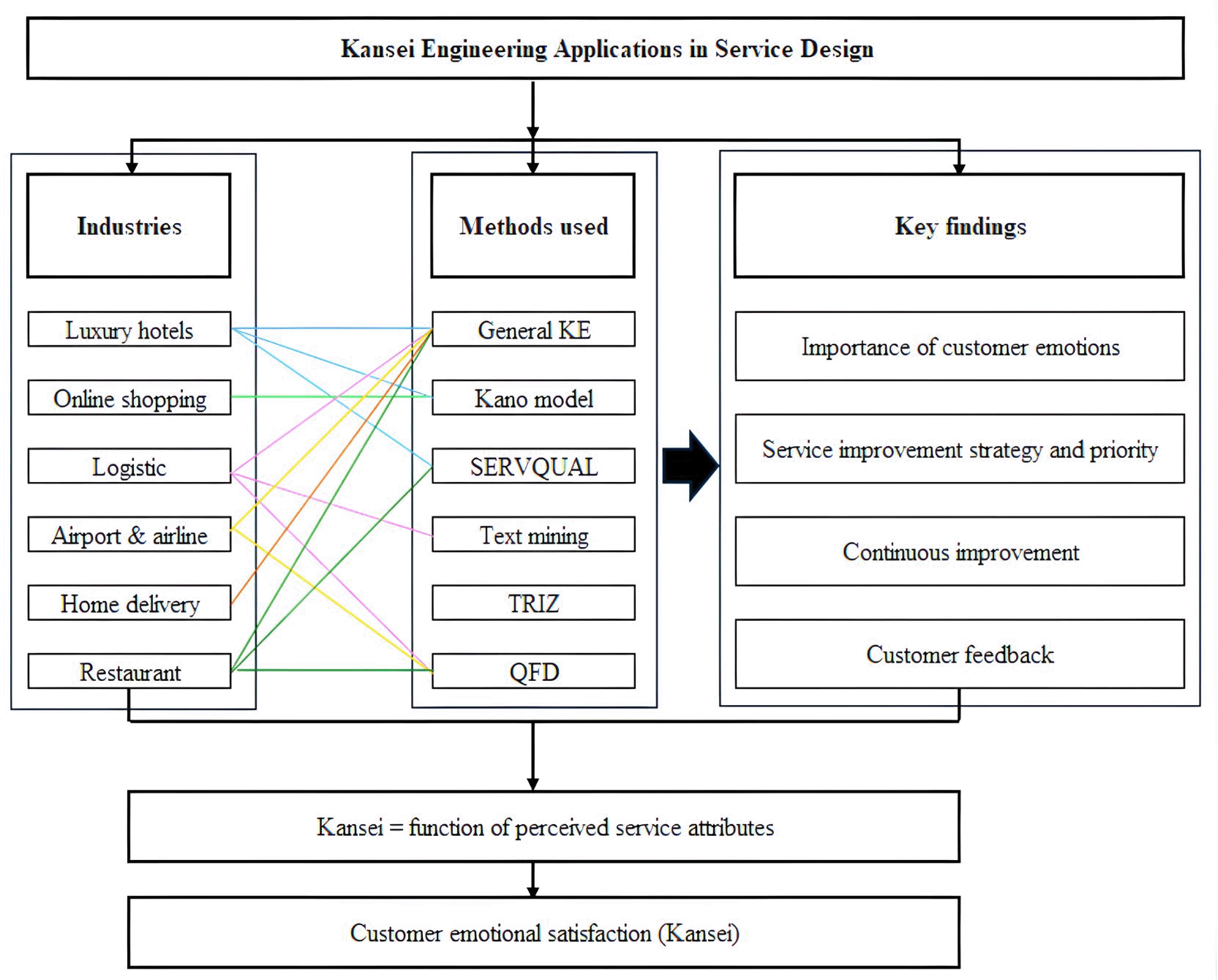
The framework illustrates the relationships between service industries, applied KE-related methods (General KE, Kano model, SERVQUAL, text mining, TRIZ, and QFD), and key findings. Colored connectors indicate the distribution of methodological applications across different service sectors. The framework highlights how Kansei Engineering functions as a mediator between perceived service attributes and customer emotional satisfaction (Kansei), informing service improvement strategies, prioritization, and continuous improvement.
In terms of methodological divergence and reliability, a clear methodological gap emerges across the literature. At the higher end, research employing approaches such as PLS-SEM, logistic regression, and machine learning demonstrates stronger analytical rigor and validation. Mid-level studies often utilise integrated frameworks (e.g., KE–Kano–TRIZ), offering structured but partially subjective analysis. In contrast, descriptive KE studies frequently lack validation, triangulation, and cross-checking, limiting their reliability and comparability. This heterogeneity complicates the consolidation of findings and highlights the need for more consistent methodological standards in KE research.
Inherently, there are two major groups of reviewed publications of KE above, as follows. The first group is about KE application in the service industries. KE has been extensively applied in service industries, including logistics, hospitality, and retail, emphasizing its relevance in capturing customer experiences that are related to the fulfilment of their affective needs. The second one is the use of advanced analytical techniques and methods. Several research employ advanced data analysis methods and approaches such as partial least squares (PLS), text mining, and decision tree mining to analyze large datasets, especially from user-generated content like online reviews.
In terms of cross-industry insights, cross-industry evidence shows that KE delivers varying levels of effectiveness depending on sectoral characteristics. In hospitality and retail/e-commerce, KE performs strongly, revealing emotional touchpoints and capturing nuanced customer sentiments, though findings often depend heavily on Asian cultural contexts or online review data. Logistics and aviation display moderate to high effectiveness, as KE enhances perceptions of efficiency, trust, and service blueprinting, but these applications tend to underemphasize hedonic factors or lack longitudinal validation. Digital and robotic service contexts exhibit promising potential, yet empirical studies remain sparse. Recent healthcare research also highlights KE’s capacity to strengthen patient empathy and comfort, although the field was largely underexplored before 2023.
KE's research above differs in three key aspects. Based on diverse contexts and industries, some studies focus on traditional service industries (such as hotels, logistics, and higher education); others apply KE to more specific or emerging contexts, such as airport lounges, social robots, and in-flight services. This potential dynamic shows how flexible KE is. In addition, the KE research highlights that the findings might not always be applied to various industries directly. Some adjustments are needed. Theoretically, researchers who investigated KE have drawn on a variety of statistical techniques, including but not limited to knowledge graph techniques, sentiment analysis, structural equation modelling, fuzzy logic modelling, neural networks, and Bayesian network models. The technique selection may be influenced by the context of the study as well as the characteristics of the service settings under investigation. These methodological variations demonstrate how KE has progressively evolved, changed, and been modified over time to address various research issues and real-world applications. Regional and cultural focus factors have already been taken into consideration in service design by researchers studying logistics in East Asia or hospitality in Indonesia. These regional differences imply that cultural contexts and backgrounds may influence how people feel about certain aspects of services.
In terms of KE conceptual framework development, the proposed conceptual framework operates through a three-layer logic supported by a dynamic feedback loop. The input layer combines customers’ emotional needs expressed through Kansei words with contextual service attributes. These inputs flow into the processing layer, where insights are generated through traditional KE modeling, AI-enhanced KE techniques, or hybrid KE–quality approaches. The resulting outputs form the outcome layer, encompassing emotional satisfaction, behavioral intentions, loyalty, and differentiated service innovations. A feedback loop, powered by real-time analytics such as text mining, IoT data, and AI-based sensing, continuously updates the system to refine emotional alignment and enhance service performance over time.
There are potential future research directions for KE in service design. KE has promising potential to evolve alongside today’s prospective trends and technologies. New technologies like blockchain, artificial intelligence (AI), and the Internet of Things (IoT) might be considered for KE future research. It would create systems that are more reliable, responsive, adaptable, and transparent, including sustainable environments and autonomous service robots. Ways to measure sustainability in KE, making sure that service design is in line with eco-friendly practices, focusing on people, and cost-effectiveness will be highly promoted. Applying KE in more personalized services, utilizing AI-driven insights and big data to adjust services to individual Kansei in real time, can be regarded as an urgent call. Some human-based care industries, such as retail, healthcare, and hospitality, may gain advantages from such insights. Given the global services context, future research could investigate how KE frameworks will be applied to considering different cultural contexts. These results would bring benefits in the development of cross-culturally applicable universal KE guidance. Automated KE analysis systems that continuously process and interpret vast amounts of online reviews as user-generated content increases would be potentially offered to industries. Through this strategy, industries and practices could dynamically stay abreast of changing customer preferences, especially their Kansei. Future KE research with the long-term orientation, considering changes in customer loyalty and brand perception, could offer clues about how Kansei could be translated into sustained business success over time.
KE will face greater challenges in dynamic, data-driven, and culturally diverse contexts, contributing to the development of emotionally satisfying and sustainable services. One of the prominent future KE explorations is about healthcare services [39]. It is especially important to engage digital platforms in healthcare services. This category includes telemedicine platforms, mental health apps, wearable health monitors, and patient-centric online portals. Schütte et al. [10] have addressed similar topics. Their study addresses a comprehensive understanding of Kansei, a methodology using KE for healthcare services. Past relevant literature and industrial experience have been reviewed, providing the breadth of Kansei and its applications. The paper also includes a thematic mapping of the state-of-the-art and outlook, derived from interviews with 35 distinguished researchers. We find Kansei unique in its consideration of emotion in product design. The context of increasing information technology, digitalization, and possible integration with modern technologies like virtual reality (VR), artificial intelligence (AI), blockchains, and big data analytics has been discussed.
Nowadays, understanding and fulfilling the Kansei of patients, including the caregivers, is increasingly critical as hospital and healthcare services have become more patient-centered and more humanized. KE can contribute to the design of digital healthcare experiences that are not only functional but also emotionally appealing, making healthcare interactions more humane and impressive, especially in virtual settings where the lack of in-person interaction can feel impersonal. A comprehensive framework for designing digital health experiences, emphasizing the importance of addressing both functional and emotional aspects to enhance patient engagement, has been investigated [40]. Patients utilizing digital healthcare services often experience a wide range of emotions, including anxiety, trust, and hope. It leads to user adoption and continuation of use [41]. It is highly important how human-centered design principles are applied in e-mental health interventions, highlighting the role of empathy and user involvement in creating emotionally supportive digital health tools [42]. Here, KE can play its role to capture and translate patients’ Kansei into design parameters. Then, it leads to enhanced aspects like user interface comfort, reassuring communication, and intuitive interaction, which can importantly improve patient satisfaction and adherence to health interventions.
Wearable equipment, innovations in AI, and data-driven health platforms have been rapidly expanded in the digital healthcare sector. KE may play an important part in humanizing these technologies. Through IoT-based equipment such as wearable technology devices and real-time data collection, gathering prompt feedback on users’ Kansei can be distinctive. Practically, KE can utilize this data to continuously adapt services in real-time, creating a responsive healthcare environment adapted to individual emotional needs and preferences. The COVID-19 pandemic, for instance, has accelerated the adoption of digital healthcare, making telehealth a permanent fixture in healthcare delivery. Since telemedicine is becoming mainstream; as a matter of fact, KE can help address the unique Kansei associated with remote care, including creating feelings of trust and connection in a virtual setting.
The critical need to address patients’ Kansei, coupled with the growing potential for real-time data integration, makes digital hospital and healthcare service a promising field for KE studies. This context offers opportunities to strengthen KE methodologies by integrating the technological capabilities of modern healthcare platforms with empathy-driven cues. Considering Schutte et al.’s work [10], such advancements are particularly valuable in healthcare services, where patient comfort and Kansei are essential dimensions of service quality. For example, KE equipped with VR and AI could enable medical professionals to create more personalized and comforting environments for digital health services, such as telemedicine and virtual consultation platforms. These technologies can further maximize the Kansei experience during remote medical interactions by dynamically adapting to patients’ physiological and psychological data in real time.
In addition, the utilization of sentiment analysis and text mining on patient feedback, such as online reviews in customer-focused KE applications and healthcare services, can continuously refine digital platforms to address the patients’ emotional needs. More patient-centered, potentially leading to better health outcomes by encouraging positive impressions of treatment modes, will be a focus of such an approach in digital healthcare services. Future KE studies could promote VR and AI to monitor real-time users’ Kansei in digital healthcare, enabling proactive adjustments that instantly satisfy their emotional needs. In the digital age, this kind of application leads to more responsive and personalized service designs, indicating that KE has significant implications on shaping caring, high-quality digital healthcare services.
In terms of methodological divergence and reliability, a clear methodological gap emerges across the literature. At the high end, studies employing PLS-SEM, logistic regression, and machine-learning–based KE demonstrate strong analytical rigor and robust validation. Mid-level rigor appears in integrated KE–Kano–TRIZ frameworks, which offer structured analysis but rely on more qualitative or hybrid judgment. At the low end, descriptive KE studies often lack validation, triangulation, or cross-checking, limiting their reliability. This methodological heterogeneity weakens overall consistency and complicates meaningful comparison of findings across different industries and research contexts.
Inherently, there are two major groups of reviewed publications of KE above, as follows. The first group is about KE application in the service industries. KE has been extensively applied in service industries, including logistics, hospitality, and retail, emphasizing its relevance in capturing customer experiences that are related to the fulfilment of their affective needs. The second one is the use of advanced analytical techniques and methods. Several research employ advanced data analysis methods and approaches such as partial least squares (PLS), text mining, and decision tree mining to analyze large datasets, especially from user-generated content like online reviews.
In terms of cross-industry insights, cross-industry evidence shows that KE delivers varying levels of effectiveness depending on sectoral characteristics. In hospitality and retail/e-commerce, KE performs strongly, revealing emotional touchpoints and capturing nuanced customer sentiments, though findings often depend heavily on Asian cultural contexts or online review data. Logistics and aviation display moderate to high effectiveness, as KE enhances perceptions of efficiency, trust, and service blueprinting, but these applications tend to underemphasize hedonic factors or lack longitudinal validation. Digital and robotic service contexts exhibit promising potential, yet empirical studies remain sparse. Recent healthcare research also highlights KE’s capacity to strengthen patient empathy and comfort, although the field was largely underexplored before 2023.
KE's research above differs in three key aspects. Based on diverse contexts and industries, some studies focus on traditional service industries (such as hotels, logistics, and higher education); others apply KE to more specific or emerging contexts, such as airport lounges, social robots, and in-flight services. This potential dynamic shows how flexible KE is. In addition, the KE research highlights that the findings might not always be applied to various industries directly. Some adjustments are needed. Theoretically, researchers who investigated KE have drawn on a variety of statistical techniques, including but not limited to knowledge graph techniques, sentiment analysis, structural equation modelling, fuzzy logic modelling, neural networks, and Bayesian network models. The technique selection may be influenced by the context of the study as well as the characteristics of the service settings under investigation. These methodological variations demonstrate how KE has progressively evolved, changed, and been modified over time to address various research issues and real-world applications. Regional and cultural focus factors have already been taken into consideration in service design by researchers studying logistics in East Asia or hospitality in Indonesia. These regional differences imply that cultural contexts and backgrounds may influence how people feel about certain aspects of services.
In terms of KE conceptual framework development, the proposed conceptual framework operates through a three-layer logic supported by a dynamic feedback loop. The input layer combines customers’ emotional needs expressed through Kansei words with contextual service attributes. These inputs flow into the processing layer, where insights are generated through traditional KE modeling, AI-enhanced KE techniques, or hybrid KE–quality approaches. The resulting outputs form the outcome layer, encompassing emotional satisfaction, behavioral intentions, loyalty, and differentiated service innovations. A feedback loop, powered by real-time analytics such as text mining, IoT data, and AI-based sensing, continuously updates the system to refine emotional alignment and enhance service performance over time.
There are potential future research directions for KE in service design. KE has promising potential to evolve alongside today’s prospective trends and technologies. New technologies like blockchain, artificial intelligence (AI), and the Internet of Things (IoT) might be considered for KE future research. It would create systems that are more reliable, responsive, adaptable, and transparent, including sustainable environments and autonomous service robots. Ways to measure sustainability in KE, making sure that service design is in line with eco-friendly practices, focusing on people, and cost-effectiveness will be highly promoted. Applying KE in more personalized services, utilizing AI-driven insights and big data to adjust services to individual Kansei in real time, can be regarded as an urgent call. Some human-based care industries, such as retail, healthcare, and hospitality, may gain advantages from such insights. Given the global services context, future research could investigate how KE frameworks will be applied to considering different cultural contexts. These results would bring benefits in the development of cross-culturally applicable universal KE guidance. Automated KE analysis systems that continuously process and interpret vast amounts of online reviews as user-generated content increases would be potentially offered to industries. Through this strategy, industries and practices could dynamically stay abreast of changing customer preferences, especially their Kansei. Future KE research with the long-term orientation, considering changes in customer loyalty and brand perception, could offer clues about how Kansei could be translated into sustained business success over time.
KE will face greater challenges in dynamic, data-driven, and culturally diverse contexts, contributing to the development of emotionally satisfying and sustainable services. One of the prominent future KE explorations is about healthcare services.39 It is especially important to engage digital platforms in healthcare services. This category includes telemedicine platforms, mental health apps, wearable health monitors, and patient-centric online portals. Schütte et al.10 have addressed similar topics. Their study addresses a comprehensive understanding of Kansei, a methodology using KE for healthcare services. Past relevant literature and industrial experience have been reviewed, providing the breadth of Kansei and its applications. The paper also includes a thematic mapping of the state-of-the-art and outlook, derived from interviews with 35 distinguished researchers. We find Kansei unique in its consideration of emotion in product design. The context of increasing information technology, digitalization, and possible integration with modern technologies like virtual reality (VR), artificial intelligence (AI), blockchains, and big data analytics has been discussed.
Nowadays, understanding and fulfilling the Kansei of patients, including the caregivers, is increasingly critical as hospital and healthcare services have become more patient-centered and more humanized. KE can contribute to the design of digital healthcare experiences that are not only functional but also emotionally appealing, making healthcare interactions more humane and impressive, especially in virtual settings where the lack of in-person interaction can feel impersonal. A comprehensive framework for designing digital health experiences, emphasizing the importance of addressing both functional and emotional aspects to enhance patient engagement, has been investigated.40 Patients utilizing digital healthcare services often experience a wide range of emotions, including anxiety, trust, and hope. It leads to user adoption and continuation of use.41 It is highly important how human-centered design principles are applied in e-mental health interventions, highlighting the role of empathy and user involvement in creating emotionally supportive digital health tools.42 Here, KE can play its role to capture and translate patients’ Kansei into design parameters. Then, it leads to enhanced aspects like user interface comfort, reassuring communication, and intuitive interaction, which can importantly improve patient satisfaction and adherence to health interventions.
Wearable equipment, innovations in AI, and data-driven health platforms have been rapidly expanded in the digital healthcare sector. KE may play an important part in humanizing these technologies. Through IoT-based equipment such as wearable technology devices and real-time data collection, gathering prompt feedback on users’ Kansei can be distinctive. Practically, KE can utilize this data to continuously adapt services in real-time, creating a responsive healthcare environment adapted to individual emotional needs and preferences. The COVID-19 pandemic, for instance, has accelerated the adoption of digital healthcare, making telehealth a permanent fixture in healthcare delivery. Since telemedicine is becoming mainstream; as a matter of fact, KE can help address the unique Kansei associated with remote care, including creating feelings of trust and connection in a virtual setting.
The critical need to address patients’ Kansei, coupled with the growing potential for real-time data integration, makes digital hospital and healthcare service a promising field for KE studies. This context offers opportunities to strengthen KE methodologies by integrating the technological capabilities of modern healthcare platforms with empathy-driven cues. Considering Schutte et al.’s work,10 such advancements are particularly valuable in healthcare services, where patient comfort and Kansei are essential dimensions of service quality. For example, KE equipped with VR and AI could enable medical professionals to create more personalized and comforting environments for digital health services, such as telemedicine and virtual consultation platforms. These technologies can further maximize the Kansei experience during remote medical interactions by dynamically adapting to patients’ physiological and psychological data in real time.
In addition, the utilization of sentiment analysis and text mining on patient feedback, such as online reviews in customer-focused KE applications and healthcare services, can continuously refine digital platforms to address the patients’ emotional needs. More patient-centered, potentially leading to better health outcomes by encouraging positive impressions of treatment modes, will be a focus of such an approach in digital healthcare services. Future KE studies could promote VR and AI to monitor real-time users’ Kansei in digital healthcare, enabling proactive adjustments that instantly satisfy their emotional needs. In the digital age, this kind of application leads to more responsive and personalized service designs, indicating that KE has significant implications on shaping caring, high-quality digital healthcare services.