Просмотр новости
Найдите то, что Вас интересует
 Спутники
 РН
РН SpaceX
 Роскосмос
 NASA
NASA
СпутникиРНSpaceXРоскосмосNASAThe best container security tools in 2026 include Portainer, Trivy, Falco, Aqua Security, and Snyk, each covering a distinct layer of container security.
Container security issues usually show up when you’re trying to cover too many layers (image scanning, runtime detection, access control, compliance) with too few solutions.
Each layer has its own tooling, its own configuration, and its own blind spots, so getting the stack wrong means vulnerabilities compound before anyone catches them.
According to Sysdig’s Cloud-Native Security & Usage Report, 87% of container images running in production contain high or critical vulnerabilities. And with Gartner projecting that over 95% of organizations will run containerized applications in production by 2029, the attack surface continues to grow.
This article breaks down five of the best container security tools in 2026, each covering a distinct layer of the security stack: image scanning, runtime threat detection, governance and access control, full-platform protection, and developer-first CI/CD scanning.
We’ll also walk through how to choose the right container security tool based on your environment and team needs.
| Name | Key Features | Best For | Pricing | G2 Rating |
|---|---|---|---|---|
| Trivy | Multi-target scanning, auto-vulnerability DB updates (every 6 hrs), CI/CD integration | DevOps/platform teams needing reliable container scanning without licensing costs | Free | - |
| Falco | eBPF-based kernel monitoring, customizable detection rules (MITRE, PCI DSS, HIPAA), flexible alert routing | Security/platform teams running Kubernetes needing real-time runtime threat detection | Free | - |
| Portainer | Granular RBAC, identity provider integration (SSO/LDAP), OPA Gatekeeper policy enforcement, SIEM export | Enterprise IT/platform teams needing centralized access control and audit logging | Custom pricing | 4.8/5 (296 reviews) |
| Aqua Security | Image scanning, policy enforcement, runtime protection with drift prevention, compliance reporting | Enterprise security teams needing end-to-end workload protection | Custom pricing | 4.2/5 (57 reviews) |
| Snyk | Base image recommendations, IDE/Git/CI/CD integration, K8s manifest scanning | Development teams wanting container scanning embedded directly into workflows | Free tier; paid starts at $25/mo | 4.5/5 (132 reviews) |
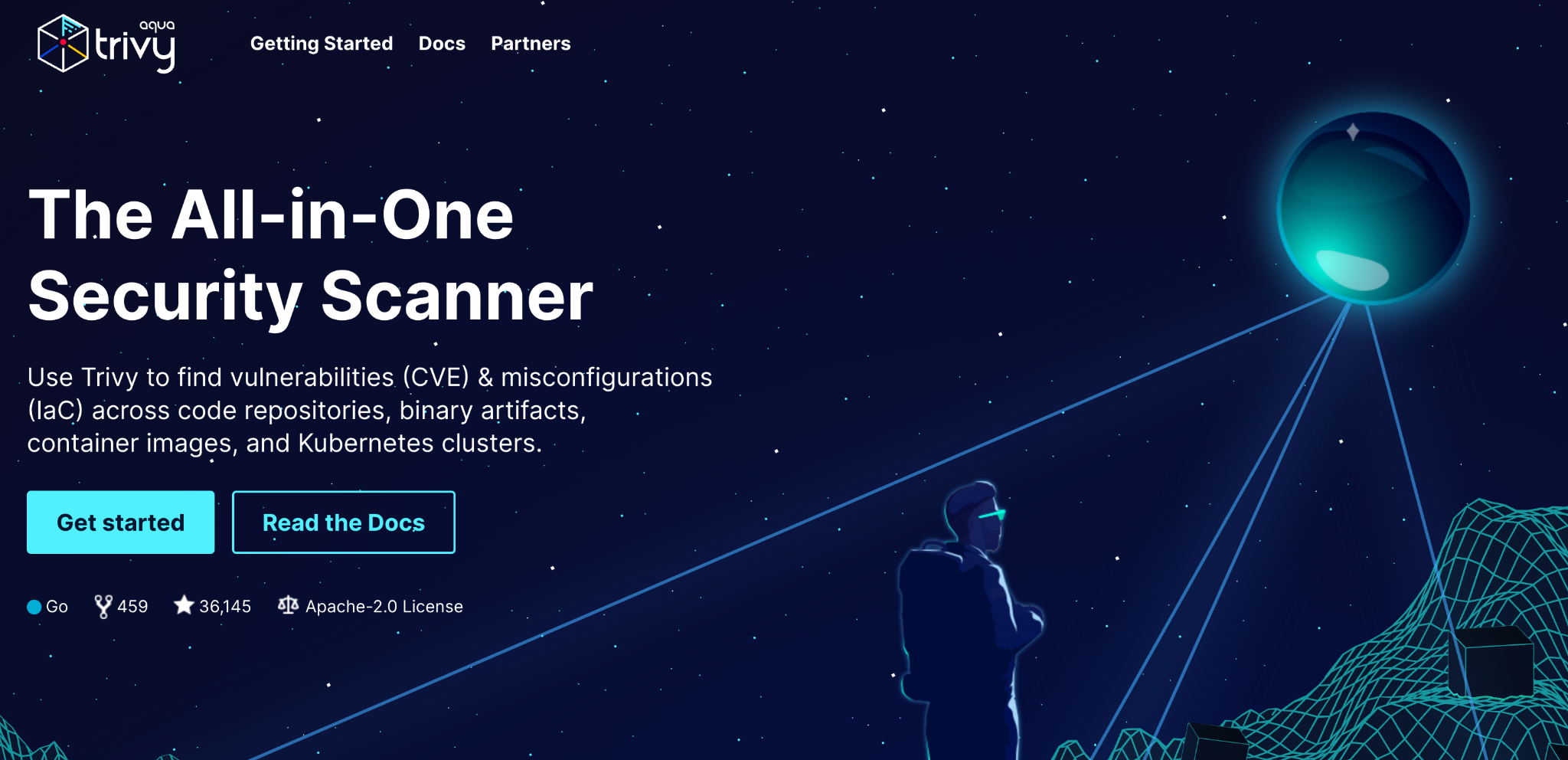
Trivy is an open-source security scanner maintained by Aqua Security. It scans container images, filesystems, Git repositories, and Kubernetes clusters for vulnerabilities, misconfigurations, and exposed secrets from a single binary.
Key FeaturesTrivy is completely free under the Apache 2.0 license.
Where Trivy Shines“I appreciate Trivy for being open-source and not requiring any payment,” shares Dmitrey K.
“Trivy generates many false positives, flagging non-existent vulnerabilities. Improvements could include better contextual analysis or granular filtering,” says Utsav S.
Who Trivy Is Best For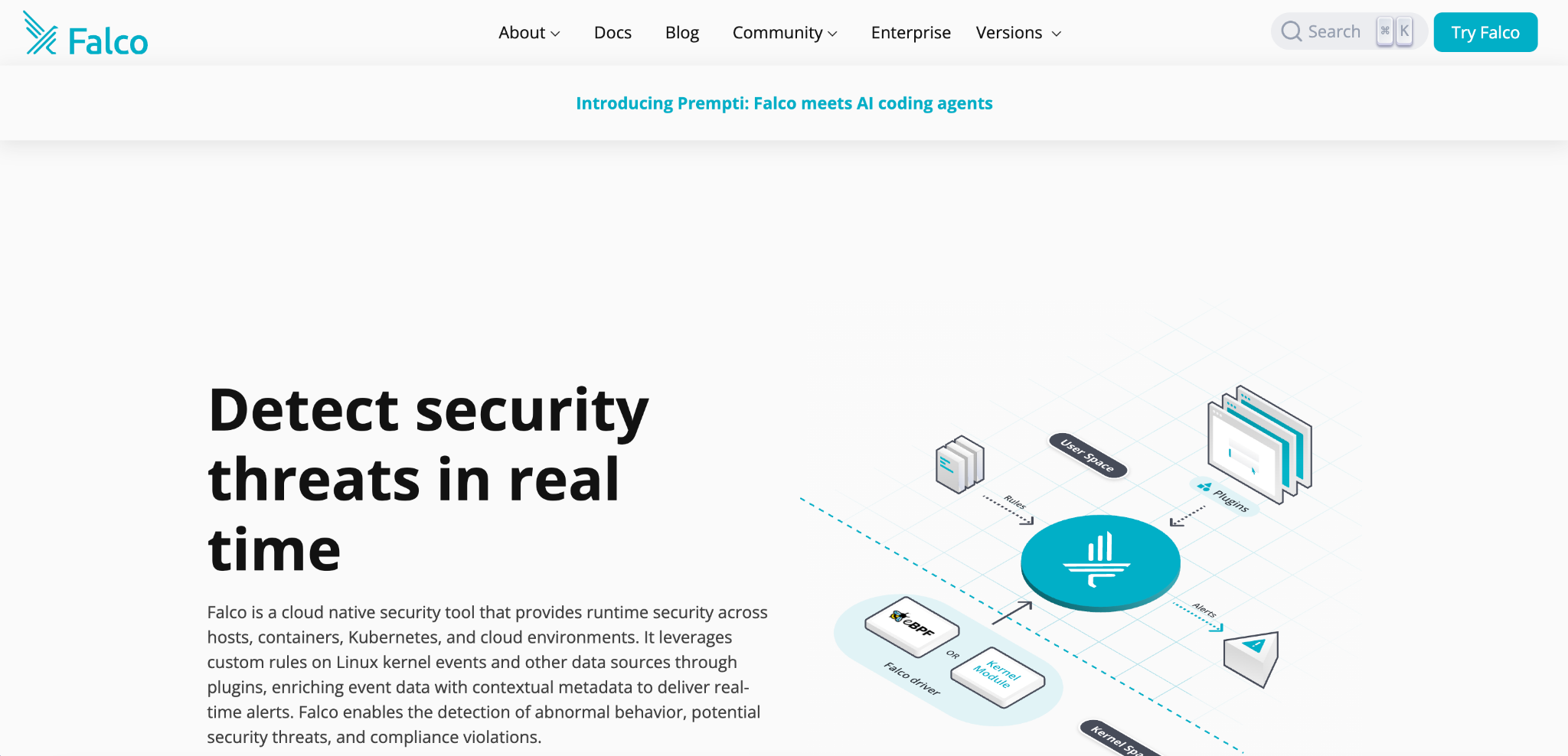
Next on our list of the best container security tools is Falco. It’s an open-source runtime security tool originally created by Sysdig and now a CNCF-graduated project.
It monitors kernel-level system calls using eBPF to detect suspicious behavior in containers, Kubernetes clusters, hosts, and cloud environments in real time.
Key FeaturesFalco is completely free under the Apache 2.0 license.
Where Falco Shines“It is really good for Linux systems and is a cloud native security tool so it is quite good at the scalability front,” says Anussha H.
“Falcon sometimes releases unnecessary alerts due to its default settings. Also, people with little knowledge in security field will find it hard to operate,” shares Mansi S.
Who Falco Is Best For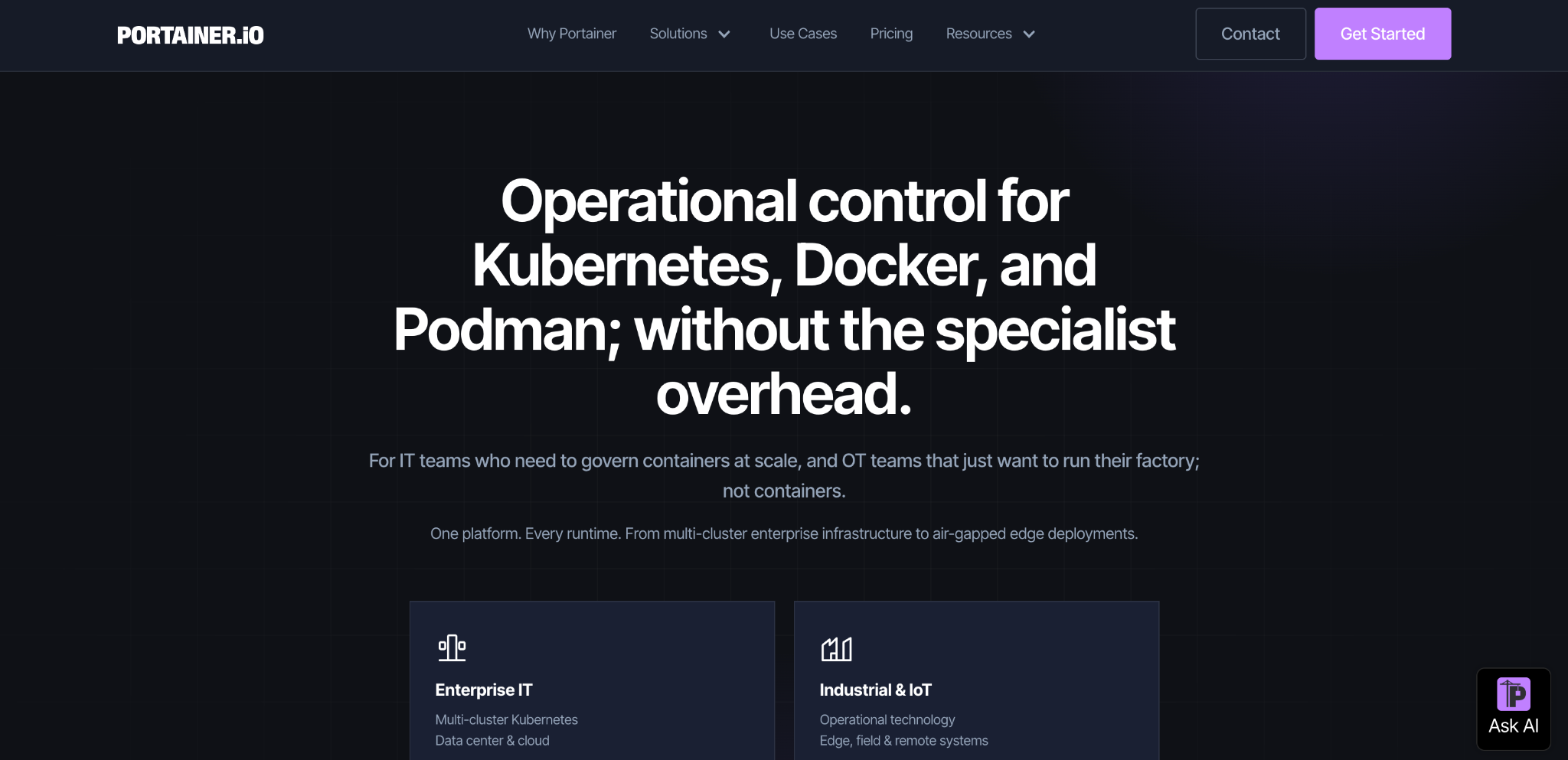
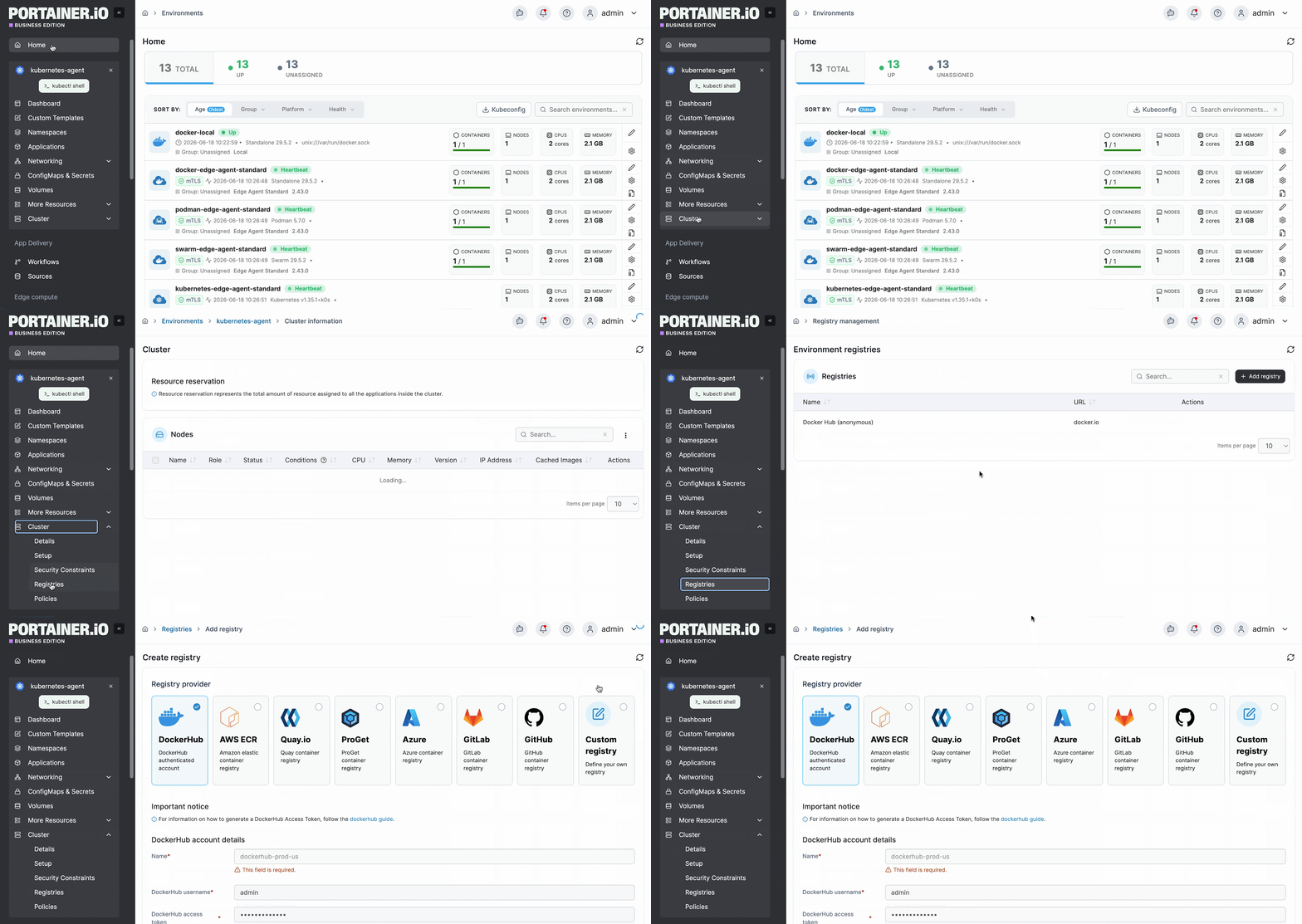
Image scanning and runtime detection solve part of the container security problem, but they don’t answer a more fundamental question: who has access to your environments, what are they allowed to do, and is there an audit trail when something changes?
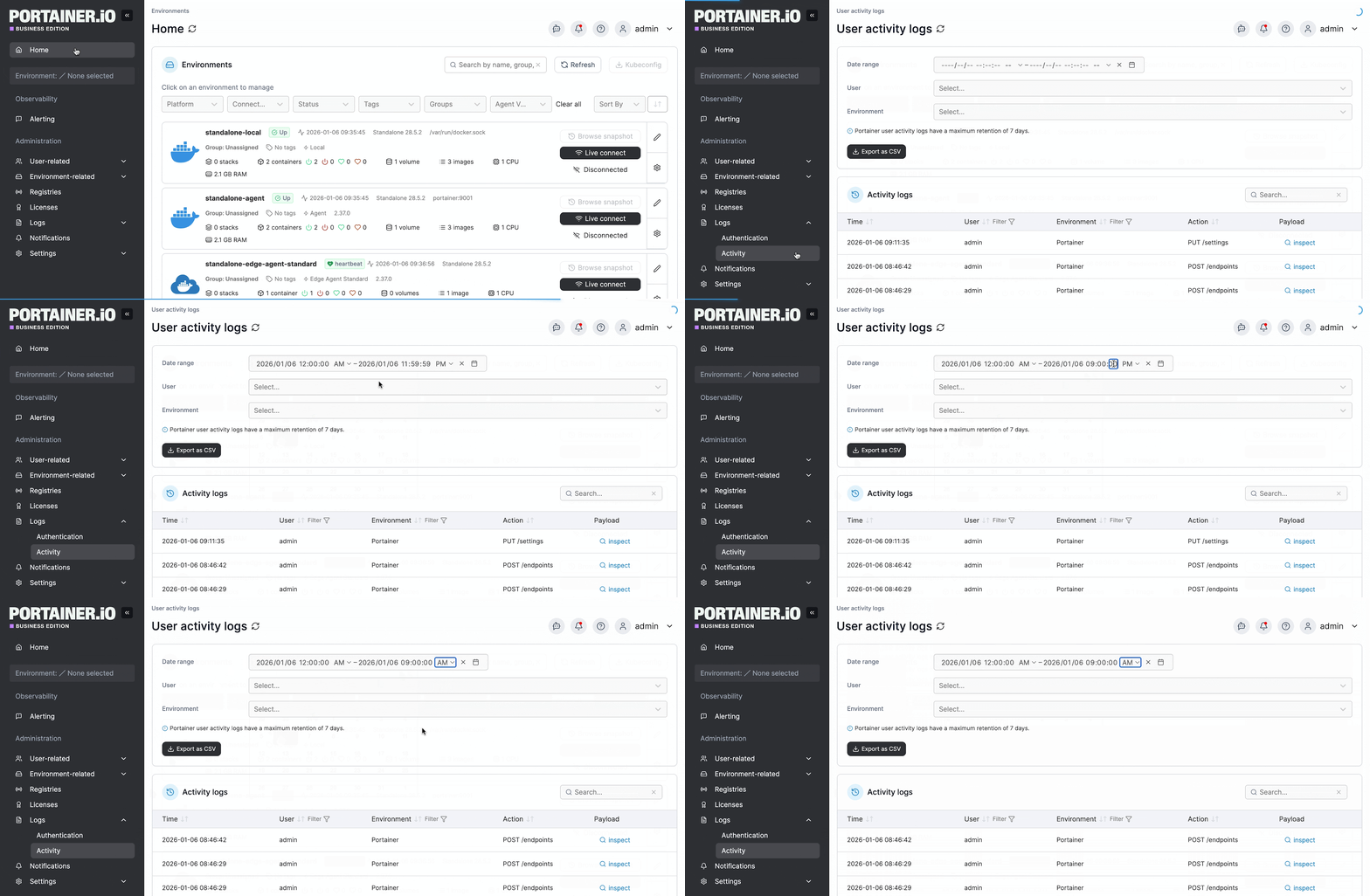
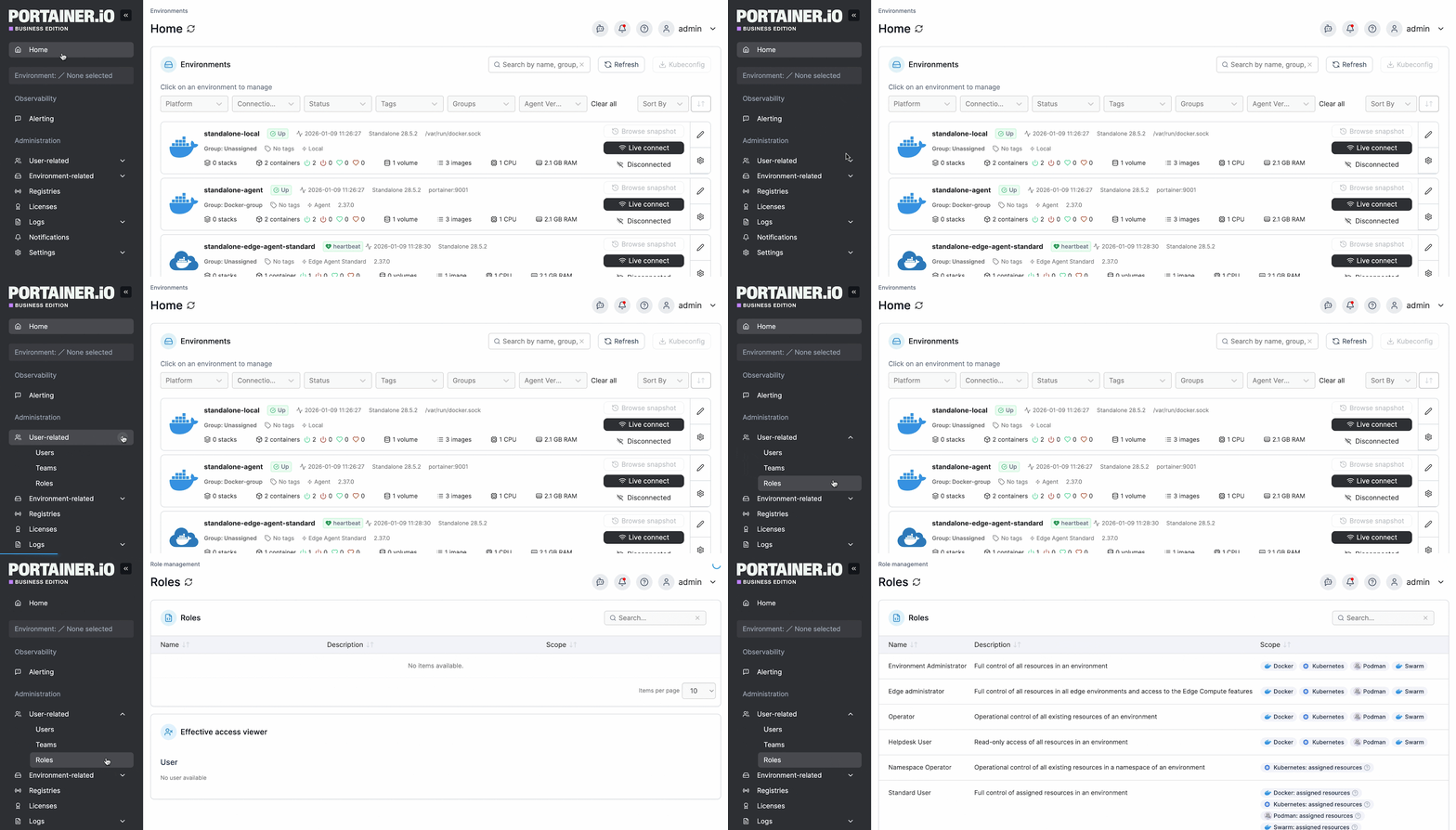
That’s the layer Portainer covers. It’s a self-hosted container management platform with built-in security governance that centralizes RBAC, identity management, policy enforcement, and audit logging across Docker, Kubernetes, and edge environments from a single control plane.
Key Features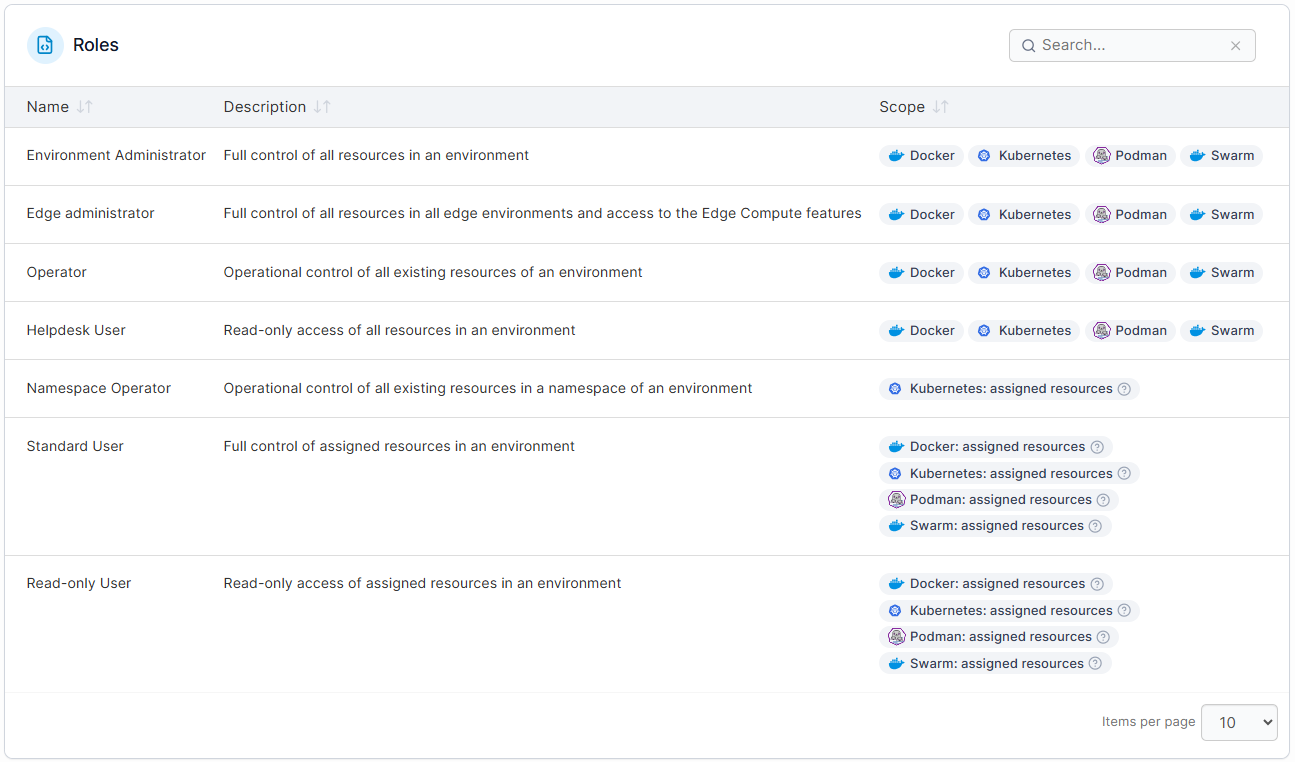
| Plan | Cost |
|---|---|
| Enterprise IT | Enterprise pricing: Speak to sales |
| Edge / IIoT | Enterprise pricing: Speak to sales |
For complete plan details and volume-based options, visit Portainer’s Enterprise Pricing page.
{{article-cta}}
Where Portainer Shines“I use Portainer for hosting over 20 containerized applications and it provides a simple yet intuitive user interface for managing these applications easily. I like how easy it lets me manage every aspect of my containerized applications, including managing their lifecycle, their images, networks, and storage,” says a user in consulting.
“Portainer makes monitoring and managing docker containers and docker compose stacks MUCH easier. Re-creating docker containers with small modifications from the original, without having to remember the exact command that started it in the first place, is a big productivity win,” shares Rudolf B.
{{article-cta}}
Who Portainer Is Best For
Aqua Security is a cloud-native application protection platform (CNAPP) that covers the entire container security lifecycle, from image scanning through runtime protection, in a single commercial product.
Key Features| Plan | Cost |
|---|---|
| Enterprise | Custom pricing based on protected workloads, deployment type, and features |
“The breadth and depth of features along with the research provided by their world class research org has helped me tremendously in securing the products I support both internally and in external production,” shares a user in the computer software.
“Currently the hardest part is understanding the different modules in the UI. Many people have trouble navigating it to find the data the need if they don't have the needed experience,” says Mitchell M.
Who Aqua Security Is Best For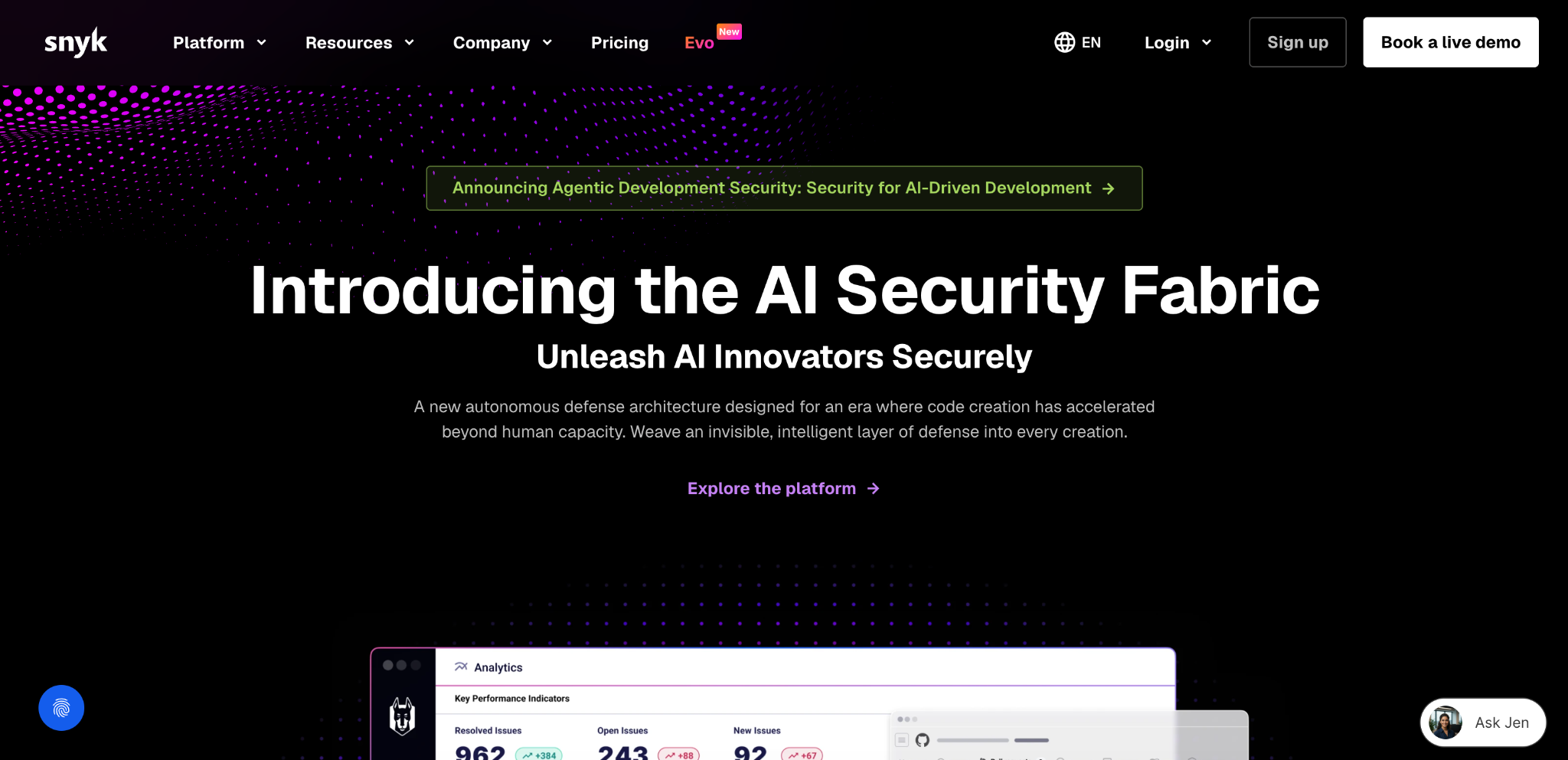
Snyk Container is the container security product within Snyk’s broader developer security platform. It scans container images for OS-level and application-level vulnerabilities and recommends specific base image upgrades to resolve them.
Where other tools on this list are built for security or platform teams, Snyk is designed to surface findings directly inside developer workflows: IDEs, pull requests, and CI/CD pipelines.
Key Features| Plan | Cost |
|---|---|
| Free | $0 |
| Team | $25/month/contributing developer |
| Ignite | $1,260/year/contributing developer |
| Enterprise | Contact sales |
“I like that Snyk easily runs scans and even provides the versions in which vulnerabilities are fixed. This feature is valuable because it helps me identify security risks or bad implementations in my code changes without having to test and update my code and dependencies manually,” shares Manseerat K.
“After some months of project being imported, scanned, and tested, snyk starts providing false-positives issues as well,” says a user in IT and services.
Who Snyk Is Best ForPicking the right container security tool depends less on which one has the longest feature list and more on how it fits your environment, your team, and your operational requirements.
Here are four key considerations to help narrow it down.
1. What layers of the security stack do you need to cover?Container security covers several distinct problems: image scanning, runtime detection, access control, policy enforcement, compliance reporting, and secrets management.
Some teams need a tool that handles one layer well, while others need coverage across multiple layers.
If your primary concern is catching vulnerabilities before deployment, an image scanner like Trivy or Snyk will cover that. If you need runtime threat detection, Falco is purpose-built for it. If you need full lifecycle coverage from a single vendor, a platform like Aqua Security handles scanning, runtime, and compliance.
But you also can’t overlook governance: who can access your environments, what they’re allowed to deploy, and whether there’s a record of every action taken.
Tools like Portainer are built specifically for this, providing centralized RBAC, policy enforcement, and audit logging across all your environments.
A team running a single Kubernetes cluster in one cloud provider has a very different security tooling need than an organization managing dozens of clusters across cloud, on-prem, and edge.
Single-cluster environments can often get by with lighter tooling: an open-source scanner, a runtime detection agent, and basic Kubernetes RBAC configured manually.
But as environments scale across multiple clusters, regions, or infrastructure types, managing security policies and access controls individually per cluster becomes unsustainable.
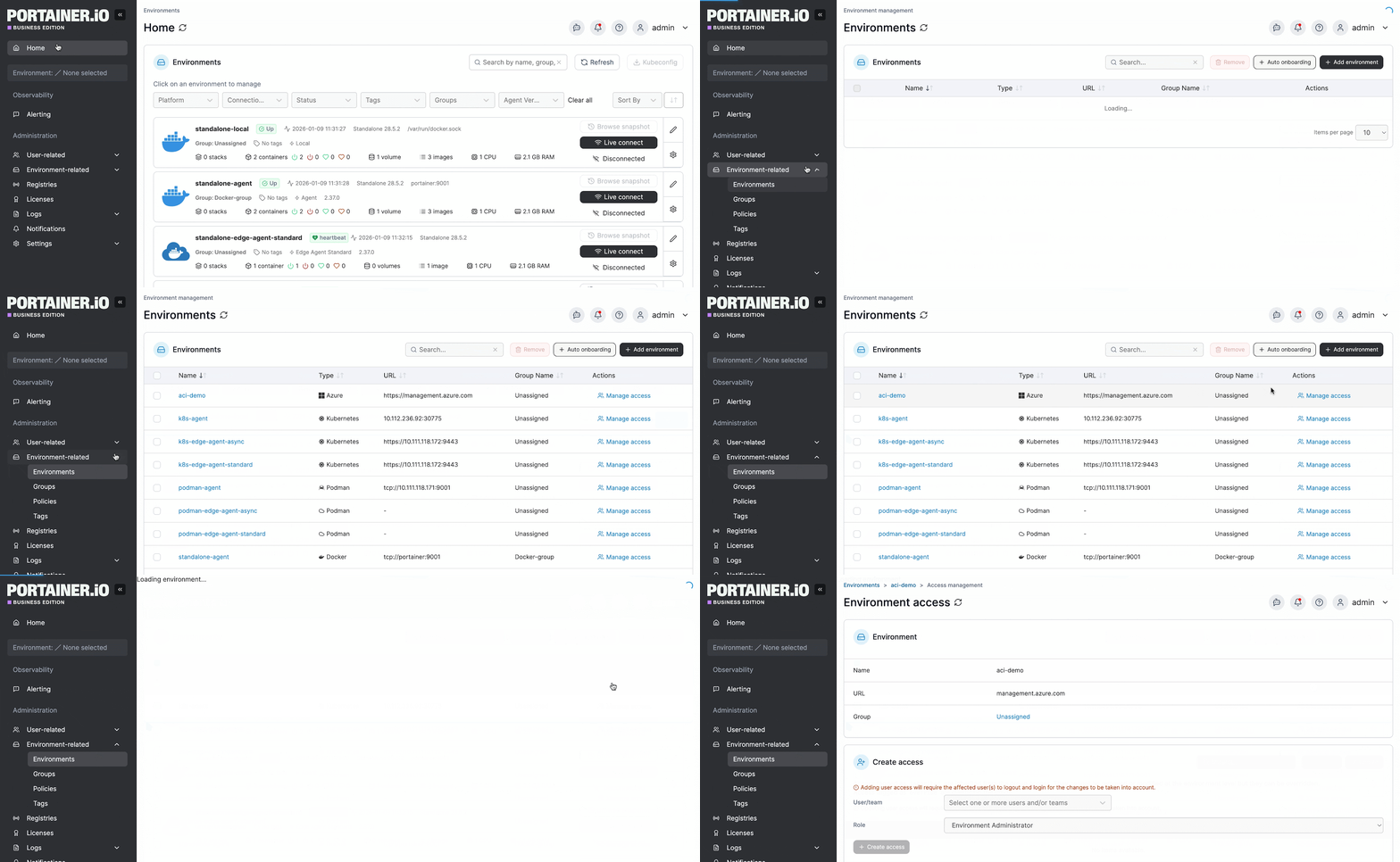
This is where a tool that unifies management across different infrastructure types matters. Portainer, for example, provides a single control plane for Docker, Kubernetes, Podman, and edge environments from one interface.
Teams managing mixed infrastructure don’t need to switch between separate tools or dashboards per platform. And since Docker doesn’t natively support RBAC at all, Portainer gives teams the same level of access control and governance across their Docker environments that Kubernetes provides natively, without managing it separately.
Trivy and Falco are fully open-source, and Aqua Security and Snyk are commercial platforms. The choice between them is more than just the price tag.
Open-source tools give you transparency, flexibility, and zero licensing fees, but your team owns the maintenance: building dashboards, tuning rules, and troubleshooting without vendor support.
Commercial platforms reduce that burden with managed UIs, pre-built compliance reports, and dedicated support, at the trade-off of higher cost and, in some cases, vendor lock-in.
There’s also a middle ground that doesn’t force you into either extreme.
Portainer is a lightweight management platform with enterprise security governance built in, where a single instance can manage thousands of clusters while consuming as little as one vCPU and 2GB of RAM.
And because it’s vendor-agnostic, it avoids the lock-in trade-off entirely. You can swap underlying infrastructure or pair it with any scanning and detection tools without re-architecting your governance layer.
For organizations that want structured access control, identity integration, and compliance tooling without the operational weight of a full CNAPP platform, it sits between the DIY open-source approach and the all-in-one vendor commitment.
Ensure Container Security With PortainerContainer security is rarely solved by a single tool. You need a stack that covers scanning, detection, enforcement, and governance, with each layer doing its job well.
The tools discussed in this article address different parts of that stack, from catching vulnerabilities before deployment to monitoring threats at runtime to embedding security directly into developer workflows. But scanning and detection only go so far without governance underneath.
That’s the layer Portainer occupies. It gives enterprise IT and platform teams centralized RBAC, policy enforcement, identity integration, and audit logging across Docker, Kubernetes, and edge environments from a single control plane. You get enterprise-grade governance without the overhead or specialist headcount that security platforms typically demand.
If your organization is looking to bring structure and security governance to your container operations, get started with Portainer.
FAQs1. What is container security?Container security is the set of practices and tools used to protect containerized applications and their supporting infrastructure from vulnerabilities, misconfigurations, and unauthorized access.
2. What are the main types of container security tools?Container security tools generally fall into a few categories: image vulnerability scanners (like Trivy and Snyk) that check for known CVEs before deployment, runtime detection tools (like Falco) that monitor containers for suspicious behavior in production, full-platform security solutions (like Aqua Security) that cover multiple layers in a single product, and governance and access control platforms (like Portainer) that manage RBAC, policy enforcement, and audit logging across environments.
3. Are open-source container security tools enough for enterprise use?It depends on the layer. Open-source tools like Trivy and Falco provide enterprise-grade scanning and runtime detection at no cost. However, they lack built-in dashboards, vendor support, and centralized governance features. Enterprise teams typically pair open-source scanning and detection tools with a management platform that handles RBAC, identity integration, compliance logging, and policy enforcement across multiple clusters and environments.
4. How does container security differ from Kubernetes security?Kubernetes security focuses specifically on securing the Kubernetes control plane, API server, etcd, and cluster configuration. Container security, on the other hand, is broader. It covers the full lifecycle of containerized workloads regardless of the orchestrator, including image scanning, registry controls, runtime protection, access governance, and compliance. Organizations running Kubernetes still need container security practices that extend beyond what the cluster itself provides.
5. What is the most common container security risk?Vulnerable base images are the most common container security risk. Many of these come from outdated or unpatched base images that teams pull from public registries without scanning. Regular image scanning, registry controls, and base image update policies are the first line of defense. For AWS environments specifically, AWS container security practices around ECR scanning and IAM controls are worth reviewing alongside these fundamentals.
| # | Наименование новости | Тональность | Информативность | Дата публикации |
|---|---|---|---|---|
| 1 | 5 Best Kubernetes Security Tools in 2026: Full Breakdown | 0 | 5 | 06-05-2026 |
| 2 | 10 Container Security Best Practices for Enterprises in 2026 | 5 | 8 | 05-01-2026 |
| 3 | 6 Best Container Management Software & Platforms (2026 Reviewed) | 5 | 7 | 06-03-2026 |
| 4 | AWS Container Security: Best Practices & Solutions in 2026 | 0 | 7 | 23-06-2026 |
| 5 | Top 9 Container Orchestration Platforms In 2026 (Expert Picks) | 0 | 5 | 06-03-2026 |
| 6 | 7 Best Kubernetes Management Tools Tested & Ranked for 2026 | 0 | 5 | 06-05-2026 |
| 7 | 4 Best Docker Desktop Alternatives for 2026 | 0 | 5 | 03-03-2026 |
| 8 | 2026 Enterprise Container Management: Solutions & Expert Tips | 0 | 7 | 26-05-2026 |
| 9 | 5 Best kubectl Alternatives for Kubernetes Management | 0 | 5 | 30-06-2026 |
| 10 | 5 Best Industrial IoT Platforms for Secure Operations in 2026 | 0 | 5 | 06-03-2026 |