Просмотр новости
Найдите то, что Вас интересует
 Спутники
 РН
РН SpaceX
 Роскосмос
 NASA
NASA
СпутникиРНSpaceXРоскосмосNASABackground Asthma may influence respiratory mechanics, physical activity and trunk muscle function, which could plausibly affect posture or postural control. Individual studies in younger populations have reported inconsistent results. This review evaluated whether posture or postural balance differs between people aged 6–39 years with asthma and non-asthmatic controls and described the measurement methods used. Methods PubMed, MEDLINE, CINAHL and Web of Science were searched from inception to 18 March 2024. PubMed and citation searches were updated to 3 July 2026. Comparative observational studies were eligible when participants aged 6–39 years had asthma, a non-asthmatic comparator was included, and posture or postural balance was quantitatively assessed. Risk of bias was evaluated using the revised JBI tool for analytical cross-sectional studies. Owing to clinical and methodological heterogeneity, findings were synthesized narratively. Results Six cross-sectional studies involving 495 participants were included, comprising 253 participants with asthma and 242 controls. Posture was assessed using photogrammetry, goniometry, inclinometers, plumb-line methods, scoliometry or three-dimensional surface topography. Balance was assessed using force platforms or a dynamic balance system. Some small studies reported differences in forward head position, thoracic alignment, shoulder position or selected center-of-pressure variables. However, one study identified a different postural-control strategy without overt balance impairment, and the largest recent study found no between-group difference in dynamic balance and no consistent difference in most postural variables. Risk-of-bias concerns included small or selected samples, inconsistent asthma ascertainment, limited control of confounding, multiple comparisons and incomplete reliability reporting. Conclusions Evidence regarding posture and postural balance in younger people with asthma is sparse, heterogeneous and inconsistent. Current evidence does not establish clinically important postural or balance impairment attributable to asthma. Better-powered longitudinal studies using confirmed asthma diagnoses, standardized measures and appropriate confounder adjustment are required.
Systematic Review
[version 1; peer review: awaiting peer review]
Prubjeet Kaur Hundle1, Gopala Krishna Alaparthi1, Arthur de Sá Ferreira
https://orcid.org/0000-0001-7014-2002
2, Sampath Kumar Amaravadihttps://orcid.org/0000-0002-4744-0180
3Prubjeet Kaur Hundle1, Gopala Krishna Alaparthi1, Arthur de Sá Ferreira
https://orcid.org/0000-0001-7014-2002
2, Sampath Kumar Amaravadihttps://orcid.org/0000-0002-4744-0180
31 Department of Health Professions, Faculty of Health and Education, Manchester Metropolitan University, Manchester, England, UK
2 Postgraduate Program in Rehabilitation Sciences,, Centro Universitario Augusto Motta, Rio de Janeiro, State of Rio de Janeiro, 21032-060, Brazil
3 School of Sport, Exercise and Rehabilitation Sciences, University of Birmingham, Birmingham, England, B15 2TT, UK
Prubjeet Kaur Hundle
Roles: Conceptualization, Data Curation, Formal Analysis, Methodology, Writing – Original Draft Preparation
Gopala Krishna Alaparthi
Roles: Formal Analysis, Investigation, Methodology, Project Administration, Supervision, Validation, Writing – Review & Editing
Arthur de Sá Ferreira
Roles: Formal Analysis, Methodology, Supervision, Validation, Writing – Review & Editing
Sampath Kumar Amaravadi
Roles: Formal Analysis, Methodology, Validation, Writing – Original Draft Preparation, Writing – Review & Editing
OPEN PEER REVIEW
REVIEWER STATUS AWAITING PEER REVIEW
asthma; posture; postural balance; postural control; children; adolescents; young adults; systematic review
Corresponding author: Gopala Krishna Alaparthi Competing interests: No competing interests were disclosed.
Grant information: The author(s) declared that no grants were involved in supporting this work.
Copyright: © 2026 Hundle PK et al. This is an open access article distributed under the terms of the Creative Commons Attribution License, which permits unrestricted use, distribution, and reproduction in any medium, provided the original work is properly cited. How to cite: Hundle PK, Alaparthi GK, Ferreira AdS and Amaravadi SK. Posture and postural balance in people aged 6-39 years with asthma: a systematic review [version 1; peer review: awaiting peer review]. F1000Research 2026, 15:1361 (https://doi.org/10.12688/f1000research.186575.1) First published: 12 Aug 2026, 15:1361 (https://doi.org/10.12688/f1000research.186575.1) Latest published: 12 Aug 2026, 15:1361 (https://doi.org/10.12688/f1000research.186575.1)
Asthma is a heterogeneous chronic respiratory disease characterized by variable symptoms and variable expiratory airflow limitation. It frequently begins in childhood and may affect exercise participation, sleep, education and quality of life, particularly when symptoms are poorly controlled.1–3 Although asthma is primarily an airway disorder, altered ventilatory mechanics, respiratory muscle recruitment, physical inactivity and psychosocial factors may influence musculoskeletal function.
Posture refers to the alignment and orientation of body segments in relation to one another and to the environment. Postural balance or postural control refers to the ability to maintain, achieve or restore equilibrium during a posture or activity.4,5 These constructs are related but not interchangeable. A measured difference in spinal or head alignment does not necessarily constitute impairment, and a difference in center-of-pressure behaviour may reflect an alternative control strategy rather than reduced balance.
Several mechanisms have been proposed to link asthma with postural or balance-related outcomes. Airflow obstruction and hyperinflation may alter diaphragmatic mechanics and increase accessory respiratory muscle activity. Respiratory movements also interact with anticipatory and reactive trunk control.6 Reduced activity or fear of symptom provocation may contribute to deconditioning. Anxiety and increased attention to respiratory sensations may further modify postural-control behaviour. These mechanisms are plausible, but the predominantly cross-sectional evidence cannot establish causality.
Posture has been assessed using visual examination, goniometry, inclinometers, plumb lines, photogrammetry and three-dimensional surface topography. Postural control has commonly been quantified through center-of-pressure displacement, velocity or temporal regularity recorded by force platforms, or by stability indices generated by dynamic balance systems. Reliability and interpretation vary according to the construct, instrument, anatomical landmarks and testing protocol.7–11
A previous systematic review examined postural assessment across obstructive respiratory conditions and included participants with asthma, chronic obstructive pulmonary disease and cystic fibrosis across broad age ranges.7 Evidence specific to younger people with asthma was limited. The dissertation on which the present review was based identified five comparative studies up to March 2024. A subsequently published study of 124 young adults with childhood-onset asthma used three-dimensional surface topography and dynamic balance testing, providing an important update to the evidence base.12
The primary objective was to determine whether posture or postural balance differs between people aged 6–39 years with asthma and non-asthmatic controls. Secondary objectives were to describe the measurement instruments and protocols used, evaluate risk of bias, and identify implications for clinical practice and future research.
This systematic review was reported in accordance with the Preferred Reporting Items for Systematic Reviews and Meta-Analyses 2020 statement and the PRISMA-S extension for literature searches.13,14 The review protocol was retrospectively registered with the Open Science Framework (OSF) Registry [https://doi.org/10.17605/OSF.IO/M7GWU].
Eligibility was structured using a population, exposure, comparator, outcome and study-design framework. The criteria are presented in Table 1.
The original search covered PubMed, MEDLINE, CINAHL and Web of Science from database inception to 18 March 2024. The main concepts were asthma, posture or postural balance, and children or younger adults. Controlled vocabulary was combined with free-text terms where supported by the database. The core free-text strategy was: (asthma* OR “bronchial asthma”) AND (balance OR postur* OR “body posture” OR “postural balance” OR “postural control” OR “posture assess*” OR “posture align*” OR “posture measure*” OR “postural stability”) AND (child* OR adolescen* OR youth OR teen* OR “young adult*”). The original full database strategies are intended for deposition as extended data.
To update the review for publication, PubMed was searched again and forward and backward citation searches were undertaken for all included studies and the earlier review by Lee et al.,7 with the final search conducted on 3 July 2026. The update identified one additional eligible study published in 2025.12 A 2025 study of thoracic mobility in children with asthma was considered related but was excluded because it measured chest wall excursion rather than posture or postural balance.15
Search results were imported into EndNote and duplicates were removed electronically and manually. One reviewer (PKH) screened titles and abstracts and assessed potentially eligible full-text reports. Uncertain eligibility decisions were discussed with the other author (GKA). Reasons for full-text exclusion were recorded. The final inclusion set was checked against the eligibility criteria during manuscript preparation.
Data were extracted into a structured spreadsheet. Variables included country, setting, design, recruitment method, sample size, participant age and sex, asthma definition and severity, physical activity, posture and balance instruments, testing conditions, numerical results, statistical methods, reliability information and reported confounders. Results were checked against the primary reports during manuscript revision. When instrument direction was not intuitive, findings were described according to the authors’ operational definition rather than assuming that a larger or smaller value represented impairment.
The original dissertation used a modified Downs and Black numerical score. This approach was replaced because the instrument was developed principally for intervention studies and removing intervention-related items invalidates the original score interpretation. The included studies were reassessed using the revised JBI critical appraisal tool for analytical cross-sectional studies.16 The tool examines inclusion criteria, measurement of the condition and exposure, outcome measurement, confounding, statistical analysis and completeness of reporting. Judgements were reported by domain as yes, no or unclear, without calculating a total quality score.
GKA and ASF were authors of one included study.12 To minimise author-related bias, the eligibility decision, data extraction and risk-of-bias judgement for that report were assigned to PKH and SKA.
Meta-analysis was not undertaken because studies measured non-equivalent anatomical constructs and balance variables using different instruments, scales, testing positions and visual conditions. Findings were grouped into head and cervical posture, thoracic and spinal alignment, shoulder and lower-limb posture, static postural control and dynamic postural balance. Synthesis considered the magnitude, direction and precision of findings, rather than counting statistically significant results alone. Reporting was informed by guidance for synthesis without meta-analysis.17
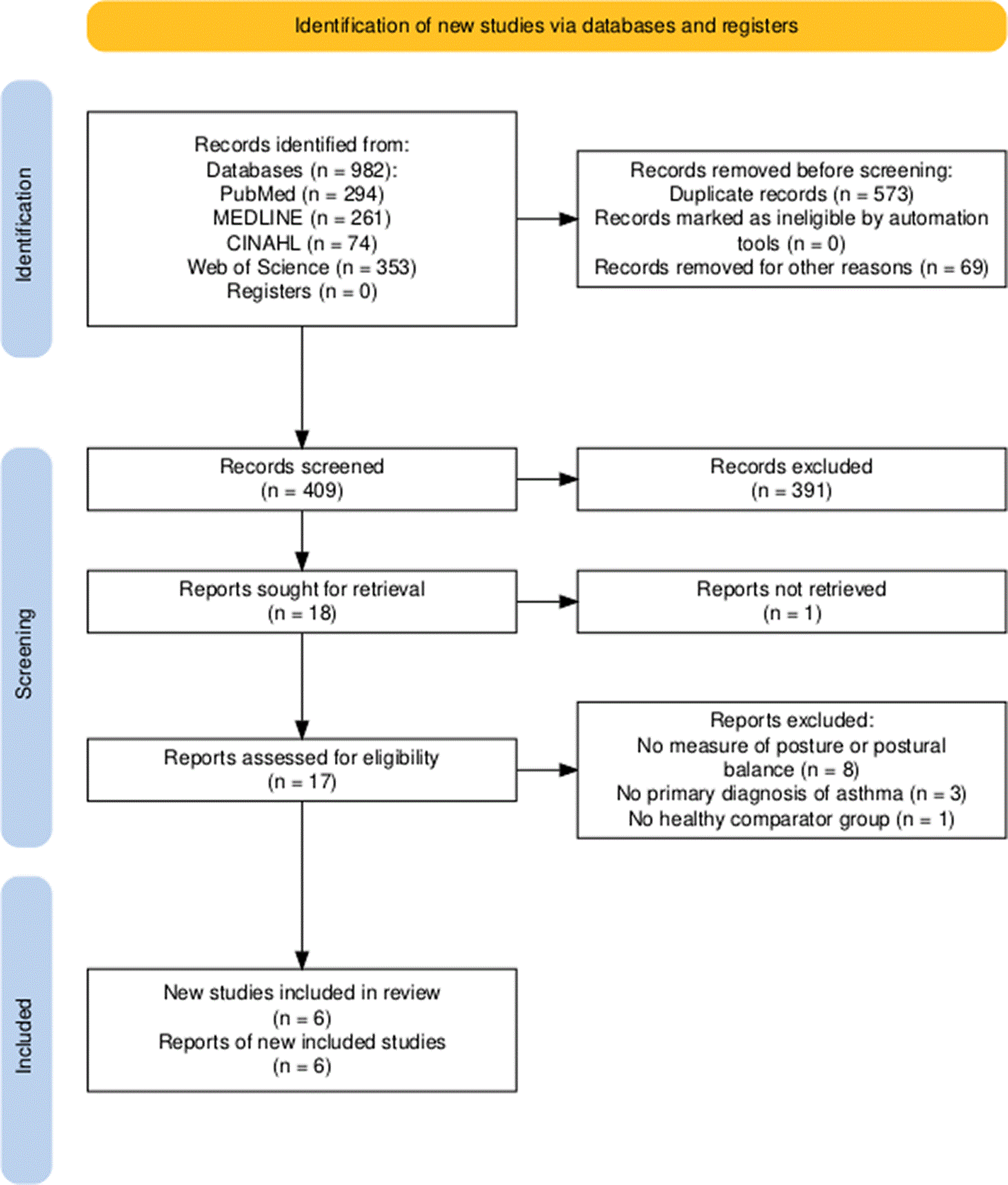
The original searches identified 982 records. After removal of 504 duplicates and 69 non-English records, 409 records were screened. Eighteen reports were sought, 17 were retrieved and five met the eligibility criteria. The publication update identified one additional eligible study, giving six included studies.12,18–22 Figure 1 summarizes study selection.23
The six analytical cross-sectional studies included 495 participants, comprising 253 participants with asthma and 242 controls. Sample sizes ranged from 20 to 192. Four studies focused on children, one on university-aged young adults and one on adults aged 18–25 years. Two studies were conducted in Brazil and one each in Poland, Slovakia, the United States and the United Arab Emirates. Asthma ascertainment varied. Most studies reported clinical diagnosis, but Kuznetsov et al. relied on self-reported asthma and Brzęk et al. combined asthma with allergy symptoms. Lopes et al. included only boys, while other studies included both sexes. Table 2 summarizes study characteristics.
Risk-of-bias concerns were present in every study. The most consistent concerns related to exposure definition, incomplete control of confounding, uncertainty regarding measurement reliability and statistical multiplicity. Kuznetsov et al. used self-reported asthma without objective confirmation. Brzęk et al. combined asthma and allergy symptoms, reducing exposure specificity. Kováčiková et al. enrolled only 20 participants and examined several stance conditions. Several studies tested numerous posture variables without adjustment for multiple comparisons. Table 3 presents domain-level judgements.
Five studies assessed posture. Methods were highly heterogeneous. Belli et al. assessed multiple frontal- and sagittal-plane angles using computed photogrammetry.18 Brzęk et al. combined plumb-line assessment, scoliometry and digital inclinometry.19 Kuznetsov et al. used inclinometers for neck and trunk measures.21 Lopes et al. used goniometric and linear measures.22 Alaparthi et al. used DIERS Formetric 4D surface topography to quantify trunk, pelvic and spinal variables.12
Head and cervical posture differed in two small studies. Kuznetsov et al. reported a more forwardly inclined neck and reduced neck extension in participants with self-reported asthma.21 Lopes et al. reported greater head protraction in severe persistent asthma, with less consistent evidence in mild persistent asthma.22 Direct comparison was not possible because anatomical landmarks, units and measurement scales differed.
Spinal findings were inconsistent. Brzęk et al. reported a higher thoracic kyphosis-depth coefficient in physically inactive children with asthma or allergy symptoms.19 Lopes et al. reported lower-thoracic straightening in severe persistent asthma,22 while Kuznetsov et al. reported a larger thoracic-spine angle in young adults with self-reported asthma.21 In the largest study, mean kyphotic angle was 51.7 degrees in the asthma group and 47.0 degrees in controls, standardized effect size 0.50, p = 0.025, but most other posture variables did not differ.12 The isolated finding should be interpreted in the context of multiple comparisons.
Lopes et al. reported greater shoulder-girdle protraction in mild and severe persistent asthma.22 Belli et al. found no consistent upper-body difference and identified only a sagittal knee-angle difference.18 The original dissertation described the asthma group as having a lower knee-flexion angle despite a numerically larger recorded angle. The more accurate interpretation is less knee flexion according to the study’s angle convention. The authors of the primary study also noted weak reproducibility for this outcome.
Three studies assessed balance or postural control. In a pilot sample of 20 children, Kováčiková et al. reported greater anterior-posterior centre-of-pressure velocity during preferred single-leg stance and greater medial-lateral velocity during non-preferred single-leg stance in the asthma group.20 The findings were based on selected outcomes across several stance conditions and were imprecise.
Kuznetsov et al. found similar center-of-pressure variability and similar visual-feedback task performance between groups.21 Participants with asthma demonstrated more regular anterior-posterior center-of-pressure dynamics. The primary authors interpreted this as a different postural-control strategy in the absence of obvious balance impairment. It should therefore not be described as instability.
Alaparthi et al. found no statistically significant group differences in overall, anterior-posterior or medial-lateral stability indices during double-leg standing with eyes open or closed.12 Effect sizes were trivial to small. For example, the eyes-closed overall stability index was 5.79 (SD 2.75) in asthma and 5.71 (SD 3.07) in controls, effect size 0.03, p = 0.988. Some weak-to-moderate correlations were reported between pulmonary function and eyes-closed stability indices, but cross-sectional associations do not demonstrate that impaired pulmonary function causes altered balance. Table 4 summarizes outcome measures and principal findings.
This review identified six comparative cross-sectional studies examining posture, postural balance or postural control in people aged 6–39 years with asthma. The evidence did not reveal a single, consistent pattern of impairment. Some small studies reported differences in forward head position, thoracic alignment, shoulder position or selected center-of-pressure variables. In contrast, the largest and most recent study found no difference in dynamic balance and no consistent difference across most postural variables. One force-platform study demonstrated altered temporal regularity of postural control but no overt impairment in sway variability or task performance.
The distinction between a statistical difference and clinically meaningful impairment is central. Posture varies with age, sex, body proportions, habitual activity, pain and measurement position. A between-group difference in one angle does not demonstrate dysfunction, limitation or a need for treatment. Likewise, center-of-pressure variables describe different dimensions of control. The direction associated with poorer performance depends on the variable and test. More regular sway dynamics, for example, cannot automatically be interpreted as instability.
Asthma severity may partly explain inconsistent findings. Lopes et al. reported several postural differences in boys with severe persistent asthma, whereas findings in mild asthma were less evident.22 Belli et al. excluded severe asthma and found little evidence of upper-body postural difference.18 Alaparthi et al. included stable mild-to-moderate childhood-onset asthma and found no balance deficit.12 These observations suggest that any clinically important association may be concentrated in people with severe or poorly controlled disease, hyperinflation, recurrent symptoms, marked deconditioning or musculoskeletal complaints. The current evidence cannot confirm this hypothesis.
Physical activity is an important potential confounder and mediator. Brzęk et al. found more favourable posture among physically active children in both the asthma/allergy and control groups.19 This suggests that habitual activity may be at least as relevant as asthma status. Body composition, sex and psychological characteristics may also affect findings. Kuznetsov et al. recruited university students and linked postural-control regularity with musculoskeletal and anxiety-related characteristics.21 Alaparthi et al. reported differences in body composition between groups and did not assess medication type, both of which could influence interpretation.12
Measurement heterogeneity prevented quantitative pooling. The included studies used photogrammetry, goniometry, inclinometers, scoliometry, plumb-line methods, surface topography, force platforms and a dynamic balance system. Anatomical landmarks, units, stance, visual conditions, trial duration and definitions of abnormality differed. Digital photogrammetry and surface topography can provide objective measurements, but validity remains specific to the anatomical variable and protocol.10,11 Simpler clinical methods may be feasible, but assessor training and reliability should be demonstrated.
The evidence is also vulnerable to multiplicity. Several studies assessed many angles, stance conditions and directional outcomes using an unadjusted p < 0.05 threshold. Isolated findings are more likely when numerous tests are undertaken in small samples. In Alaparthi et al., two posture variables differed among many comparisons, whereas all dynamic-balance comparisons were null.12 Findings should therefore be interpreted using effect magnitude, precision, consistency and plausibility rather than statistical significance alone.
Current evidence does not support routine posture or balance screening for every child, adolescent or younger adult with asthma. Clinical assessment should prioritize guideline-based evaluation of symptoms, control, exacerbation risk, lung function, treatment adherence and participation.1 Posture or balance assessment may be appropriate when an individual reports musculoskeletal pain, activity limitation, falls, dizziness, observable functional difficulty or concerns identified during physical examination.
Where assessment is undertaken, results should be interpreted against the measurement properties of the instrument, age-appropriate reference values and the person’s symptoms and function. Common postural variation should not be medicalized. Treatment should be linked to meaningful impairments and patient-centered goals rather than correction of an isolated static angle.
Future studies should move beyond small exploratory comparisons and isolated p values. Recommended methodological features include:
• confirmed asthma diagnosis using contemporary clinical criteria, with clear reporting of control, severity, exacerbations, duration and medication;
• adequately powered samples with prespecified primary posture or balance outcomes;
• matching or multivariable adjustment for age, sex, height, body mass index, body composition, physical activity, pulmonary function and relevant comorbidities;
• blinded or automated outcome assessment where feasible, with inter-rater and intra-rater reliability reported;
• standardized protocols describing anatomical landmarks, stance, footwear, support surface, visual condition, trial duration, number of trials and data processing;
• reporting of mean differences, standardized effects and 95% confidence intervals, with appropriate control of multiplicity; and
• longitudinal designs examining whether asthma severity or control precedes changes in posture, balance, pain or participation.
This review focused specifically on younger populations, separated posture from postural balance, incorporated the largest recent study and corrected important interpretive problems in the earlier dissertation. In particular, the Kuznetsov finding was reclassified as a different control strategy rather than instability, and numerical quality scoring with a modified intervention checklist was replaced by domain-based risk-of-bias assessment.
The review has important limitations. The original screening and extraction were completed predominantly by one reviewer, which increases the possibility of selection and extraction error.24 The original search was restricted to English-language reports. The publication update repeated PubMed and citation searching but did not rerun every original database, so recent records could have been missed. The included studies were cross-sectional, and most were small or selected samples. Outcomes were too heterogeneous for meta-analysis, and some reports provided limited information on asthma confirmation, measurement reliability and confounder adjustment. Two review authors were also authors of one included study, which requires transparent procedural separation and disclosure.
Evidence concerning posture and postural balance in people aged 6–39 years with asthma is limited, heterogeneous and inconsistent. Small studies have reported selected differences in head position, shoulder position, spinal alignment or center-of-pressure variables, but findings are not consistent across methods or asthma severity. The largest recent study found no dynamic-balance deficit and no broad postural difference in young adults with stable mild-to-moderate childhood-onset asthma. Current evidence therefore does not establish that asthma causes clinically important postural or balance impairment. Better-designed longitudinal studies using standardized, validated measures and appropriate control of confounding are required.
No primary datasets were generated for this systematic review. All data extracted from the included studies and used to support the review findings are presented within the article and its tables.
Open Science Framework (OSF): Posture and Postural Balance in People Aged 6–39 Years with Asthma: A Systematic Review. The repository contains the complete search strategies, screening materials, data-extraction documents, PRISMA 2020 checklist, PRISMA flow diagram and other supporting materials. Available at: https://doi.org/10.17605/OSF.IO/M7GWU.25
The author(s) declared that no grants were involved in supporting this work.
© 2026 Hundle PK et al. This is an open access article distributed under the terms of the Creative Commons Attribution License, which permits unrestricted use, distribution, and reproduction in any medium, provided the original work is properly cited.
Current Reviewer Status:
AWAITING PEER REVIEW
AWAITING PEER REVIEW
?
Key to Reviewer Statuses VIEW HIDE
ApprovedThe paper is scientifically sound in its current form and only minor, if any, improvements are suggested
Approved with reservations A number of small changes, sometimes more significant revisions are required to address specific details and improve the papers academic merit.
Not approvedFundamental flaws in the paper seriously undermine the findings and conclusions