Просмотр новости
Найдите то, что Вас интересует
 Спутники
 РН
РН SpaceX
 Роскосмос
 NASA
NASA
СпутникиРНSpaceXРоскосмосNASAIntroduction Vijayawada, also known as Bezawada, is the second-largest city and a prominent commercial centre in the Indian state of Andhra Pradesh. It forms a vital part of the Andhra Pradesh Capital Region and is strategically located on the banks of the Krishna River. The city is widely known for the famous Kanaka Durga Temple, […]
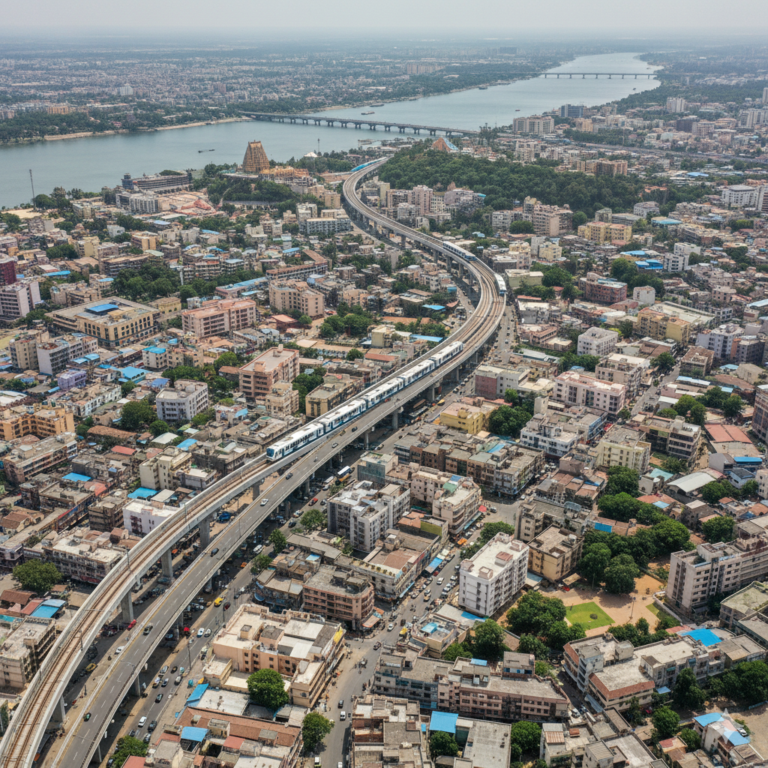
Vijayawada, also known as Bezawada, is the second-largest city and a prominent commercial centre in the Indian state of Andhra Pradesh. It forms a vital part of the Andhra Pradesh Capital Region and is strategically located on the banks of the Krishna River. The city is widely known for the famous Kanaka Durga Temple, an important Hindu shrine that attracts millions of devotees each year. Vijayawada is often regarded as the commercial, political, cultural, and educational capital of the state. In recent years, Vijayawada has emerged as one of India’s fastest-growing urban areas. Reflecting its rapid development, an Oxford Economics report has ranked the city among the top ten fastest-growing cities in the world.
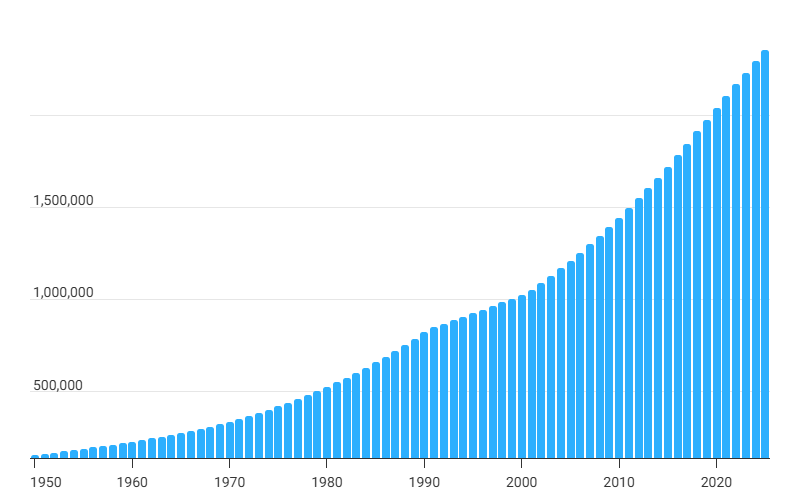
Factors Leading to the Development of the Vijayawada MetroVijayawada’s Total Population By Year
1. Rapid Population Growth: The graph shows a steady and sharp rise in Vijayawada’s population from 1950 to 2025. This growth was mainly due to rapid urbanisation and migration to the city for jobs and education. This growth substantially raised commuting demand, placing heavy pressure on the existing road network. Therefore, a reliable and high-capacity mass transit system like the Vijayawada Metro was necessary to meet future transport needs and support planned urban growth.
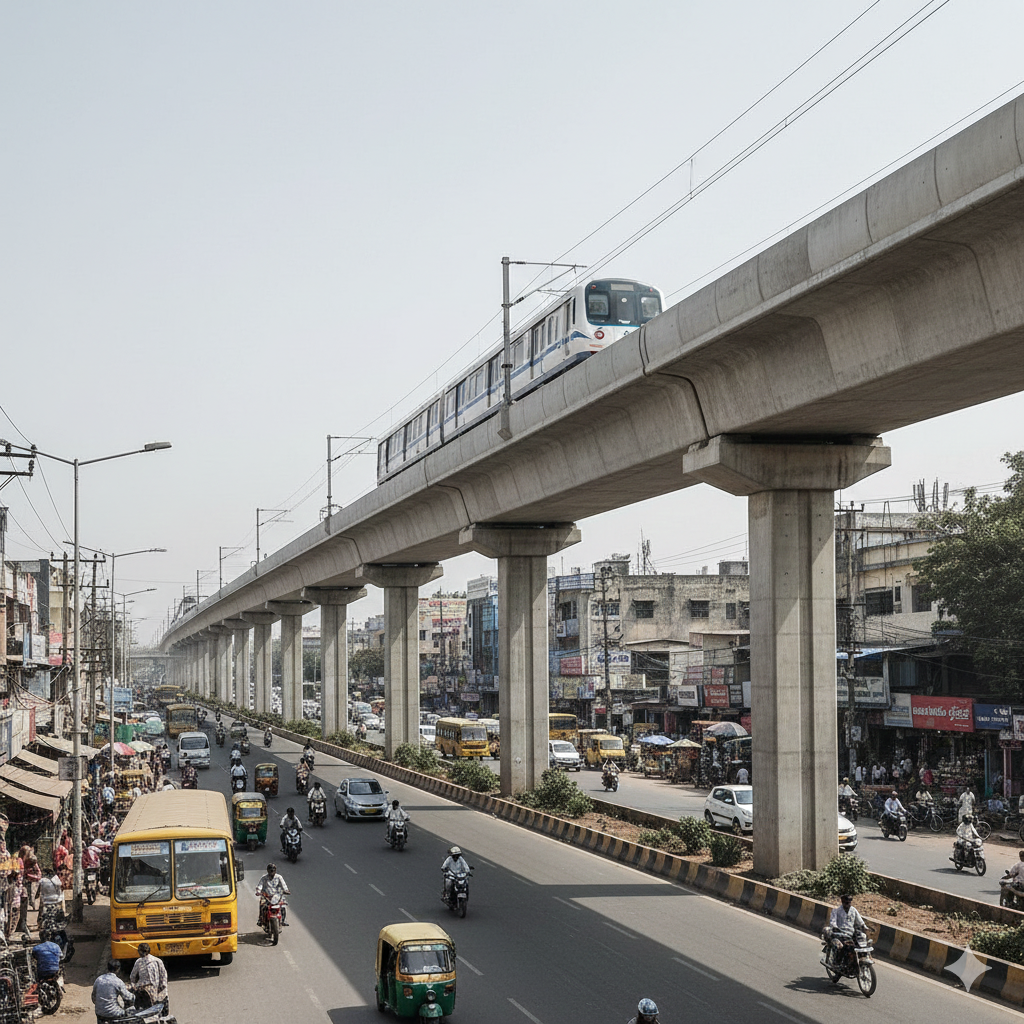
2. Rising Traffic Congestion: Vijayawada’s steadily growing population drove a surge in private vehicle ownership, which overwhelmed the city’s existing road network. This influx led to frequent traffic jams, extended commuting times, and severe congestion during peak hours. Policymakers also recognised that buses and auto-rickshaws alone could not meet long-term mobility demands. A metro rail system emerged as the preferred solution to address these challenges and alleviate road traffic in Vijayawada.
Overview
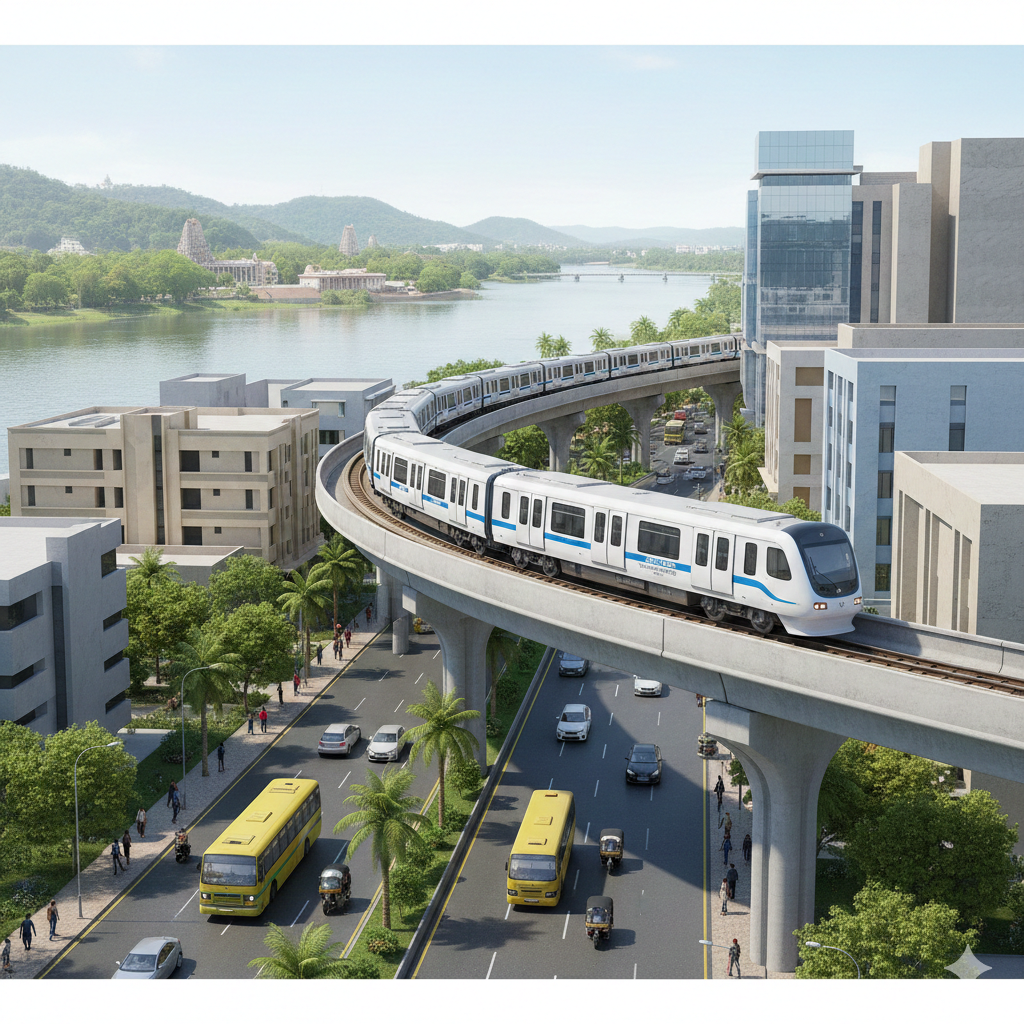
Vijayawada Light Metro is a Light Rail Transit (LRT) system which will be built in the city of Vijayawada and Amaravati, the new capital of Andhra Pradesh. Currently, the project is in the implementation stage. The project is being managed and implemented by the Andhra Pradesh Metro Rail Corporation (APMRC), formerly known as Amaravati Metro Rail Corporation (AMRC).
The Vijayawada Metro Rail Phase 1 project covers a total length of 38.4km via 2 corridors. The route details have been mentioned below:
| Corridor | Section | Length | Stations |
| Corridor-1 | PNBS – Gannavaram | 25.95 km | 22 |
| Corridor-2 | PNBS – Penamaluru | 12.45 km | 12 |
Phase 1A Route
Line-2: Pandit Nehru Bus Station (PNBS) – Vijayawada Airport at Gannavaram
Phase 1B Route
Line-1: Pandit Nehru Bus Station (PNBS) – Penamaluru
Vijayawada Metro Phase 2 Route
Line-2: Pandit Nehru Bus Station (PNBS) – Amravati Reservoir
Recent Update on Vijayawada Metro Project
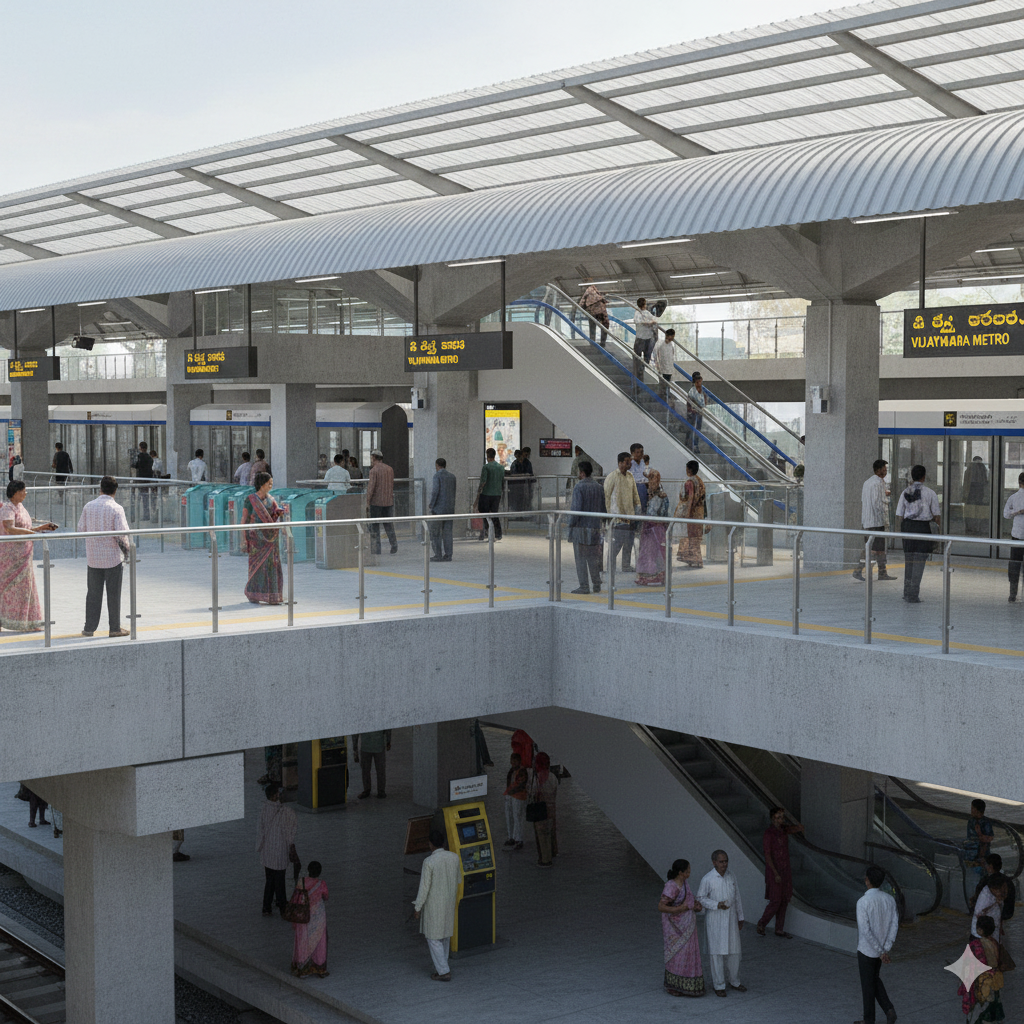
In July 2025, Andhra Pradesh Metro Rail Corporation (APMRCL) floated a tender for the first civil contract worth Rs. 4150 Crores of the Vijayawada Metro Rail Project.The contract includes the design and construction of a 38.40 km viaduct, 1 Underground metro station and 32 Elevated Metro stations for Phase 1 of the Project.
1. Improved Urban Mobility: The Vijayawada Metro Project will substantially enhance urban mobility by providing efficient and seamless connectivity across the city. The project will link major residential areas with important commercial centers and transport hubs.The metro system will support balanced urban development and improve accessibility for students, workers, and businesses in Vijayawada.
2. Minimising Traffic Congestion and Private Vehicle Usage: The Vijayawada Metro Project will reduce the traffic congestion by offering a fast, reliable, and efficient public transport alternative. With improved connectivity, the commuters will be encouraged to shift from private vehicles to metro services. This shift will decrease the number of cars and two-wheelers on busy roads, especially during peak hours. The reduced road traffic will lead to smoother vehicle movement, fewer traffic jams, and lower travel stress for commuters.
3. Environmental Sustainability: The establishment of the Vijayawada Metro system will contribute to a cleaner, more organised, and sustainable urban transport network. By reducing dependence on private vehicles, the metro will help lower fuel consumption and decrease harmful vehicular emissions, leading to improved air quality.
4. Impact on Real Estate and Economic Growth: The Vijayawada Metro Project is expected to stimulate real estate development and boost economic growth across the city. Improved connectivity around metro corridors will increase property demand, encourage commercial investments, and promote the development of residential and business hubs. Additionally, the project will also generate employment during construction and operation phases, boosting local income levels. Furthermore, enhanced mobility will also support the business expansion and commercial activity, contributing to the overall economic development of the city.
ConclusionThe Vijayawada Metro Project represents a transformative step in the city’s journey toward becoming a modern, sustainable, and well-connected urban center. As Vijayawada continues to experience rapid population growth, rising travel demand, and increasing pressure on its road infrastructure, the metro system will emerge as a strategic solution to address long-term mobility challenges. By integrating key residential zones, commercial districts, educational institutions, and transport hubs, the Vijayawada Metro will substantially improve accessibility and reduce dependence on private vehicles. Once operational, the Vijayawada Metro Project will reshape the city’s mobility landscape.
Witness the innovations & AI- powered solutions in railway & metro systems from over 200 exhibitors at the 6th edition of InnoMetro. Join India’s dedicated show for the rail transit sector which is going to held on 21-22 May 2026 at Bharat Mandapam, New Delhi
Register now: https://innometro.com/visitor-registration/
| # | Наименование новости | Тональность | Информативность | Дата публикации |
|---|---|---|---|---|
| 1 | Meerut Metro: A fast-moving dream changing the city’s direction | 0 | 16.71 | 11-07-2026 |
| 2 | Building the Pillars of Viksit Bharat: Alstom’s Role in Strengthening Urban Rail Mobility and Socio-Economic Development in India | 0 | 19.13 | 14-07-2026 |
| 3 | Lucknow Metro: A Long Road to Sustainability | 0 | 22.18 | 10-07-2026 |
| 4 | Agra Metro: Finding Balance Between Urban Need, Tourism Pressure, and Conservation Mandates | 0 | 20.25 | 01-06-2026 |
| 5 | India on the Move: Revisiting the milestones in Railway, Metro & RRTS on the 80th Independence Day | 0 | 15.28 | 15-08-2026 |
| 6 | Solar-Powered Rail Infrastructure: A Sustainable Solution for the Future | 0 | 19.67 | 13-03-2026 |
| 7 | Goa Infrastructure Boost: RVNL signed MoU as Project Executing Agency | 0 | 27.09 | 20-07-2026 |
| 8 | Kasheli Depot for Mumbai Metro Line 5 Achieves 23% Physical Progress | 0 | 22.12 | 22-07-2026 |
| 9 | Mumbai Metro: MMRDA achieved historic milestone, passenger journey crosses 300 million in 179 days | 0 | 19.23 | 05-08-2026 |