Просмотр новости
Найдите то, что Вас интересует
 Спутники
 РН
РН SpaceX
 Роскосмос
 NASA
NASA
СпутникиРНSpaceXРоскосмосNASAMalaysia previously provided incentives to encourage electric vehicle (EV) adoption, including tax exemptions for four years. But it looks like the government is thinking of going in the opposite direction, in the name of expanding the public charging network. Bernama cites Investment, Trade and Industry Minister Johari Abdul Ghani as saying that the government is […]
The post Govt Considers EV Sales Levy To Fund Public Charging Network appeared first on Lowyat.NET.
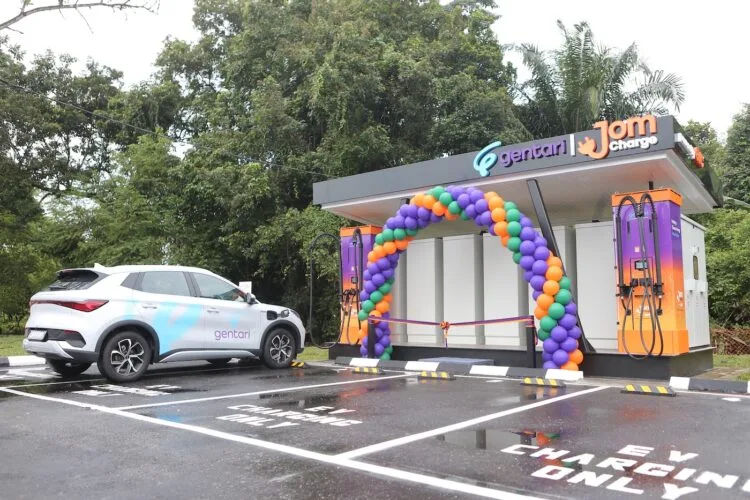
Image: Gentari
Malaysia previously provided incentives to encourage electric vehicle (EV) adoption, including tax exemptions for four years. But it looks like the government is thinking of going in the opposite direction, in the name of expanding the public charging network. Bernama cites Investment, Trade and Industry Minister Johari Abdul Ghani as saying that the government is considering imposing a levy on every EV sold to establish a fund for that purpose.
Johari said that the government is considering the proposal as it faces constraints in financing a nationwide public charging infrastructure. “We cannot rely solely on vehicle manufacturers or distributors to undertake such investments”, he said, hence the levy.

On that note, Johari also brought up the previous exemptions on import duty, excise duty and sales tax for completely built-up (CBU) electric cars. These were an effort to spur market growth and attract investment. But “after four years, when we looked for public charging stations, the investment from EV industry players was simply not there”, he said. He also mentioned that the tax exemption for CBU EVs led to RM3.3 billion in forgone revenue over the four-year period they were in place.
Separately, paultan.org cites Johari as saying that “we’re not prohibiting EVs. EVs are the future. Hybrids are the future. But let’s not be early movers in the market only to create problems for the rakyat – ultimately, the government will also have to face these problems”. The minister added that he asked China’s trade minister what led to the success of EVs in that country. “He said the Chinese government spent billions of dollars on public chargers. We, on the other hand, spent billions giving exemptions”, he said.

Having missed the previous target of having 10,000 public charging stations by 2025, MITI now says that the new target is to hit 30,000 public chargers by 2030. The ministry said that it is working closely with Tenaga Nasional Berhad to build more power substations to support the number of DC chargers.
(Source: Bernama, paultan.org)
Updated 4:38 pm, Tue, 4 August 26
Follow us on Instagram, Facebook, Twitter or Telegram for more updates and breaking news.