Просмотр новости
Найдите то, что Вас интересует
 Спутники
 РН
РН SpaceX
 Роскосмос
 NASA
NASA
СпутникиРНSpaceXРоскосмосNASAHidden in plain sight, this huge community of tree-bark microbes dines on gases — such as methane — that warm Earth’s atmosphere.
Hidden in plain sight, they sop up gases — such as methane — that warm Earth’s atmosphere
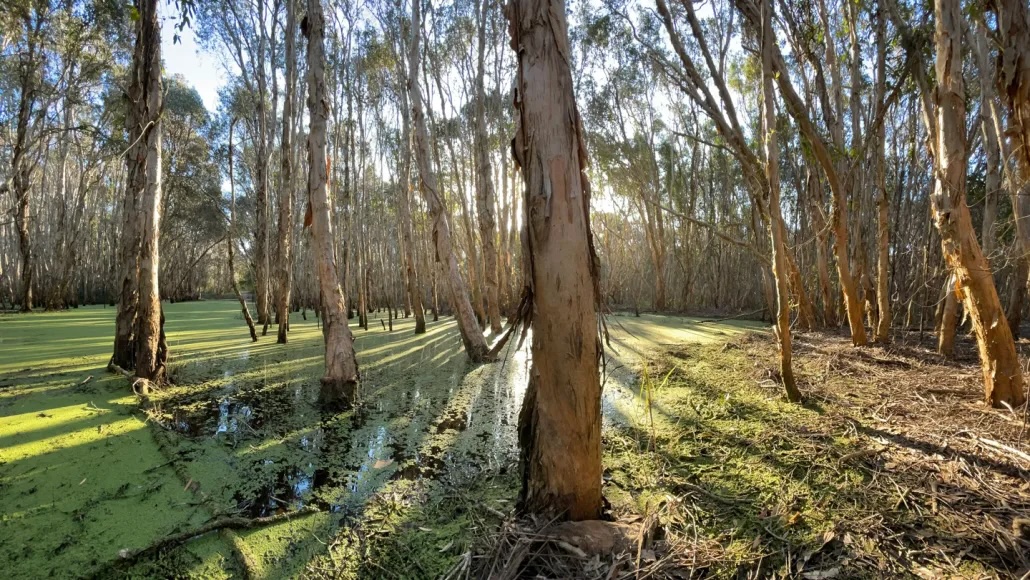
Wetlands, like the one seen here, are a major source of atmosphere-warming methane. Microbes living in tree bark consume this gas, providing an important climate benefit.
L. Jeffrey
This is a human-written story voiced by AI. Got feedback? Take our survey . (See our AI policy here .)
Carbon dioxide is a climate-warming greenhouse gas. Trees are renowned for capturing it as they grow. But through microbes in their bark, trees soak up other major climate gases, too, scientists now report.
These tree-bark microbes feast on hydrogen, methane and carbon monoxide. Over a 100-year period, methane’s climate-warming potential is 28 times that of carbon dioxide. Carbon monoxide and hydrogen boost global warming indirectly. How? They help methane hang out longer in the atmosphere.
Getting rid of these gases “is a hidden benefit of trees,” says Luke Jeffrey. A biogeochemist, he studies how compounds move through the environment and living things. He works at Southern Cross University in Lismore, Australia. Until now, scientists didn’t know that bark microbes were drawing down these gases.
Known as the bark’s microbiome, that community of microbes is big.
Some 6 trillion microbes inhabit every square meter (10.8 square feet) of tree bark, Jeffrey and his colleagues now estimate. And there’s a lot of bark. Worldwide, trees host an estimated 41 million square kilometers (15.8 million square miles) of it. That’s an area about equal to North and South America combined.
All this time, it was “hidden in plain sight,” says Jonathan Gewirtzman. He’s a forest ecologist at Yale University in New Haven, Conn., who did not take part in the project. This microbiome highlights bark as a part of the environment we still know “little about.”
Methane munchersChris Greening is a microbiologist at Monash University in Melbourne, Australia. He and Jeffrey learned about the new microbiome as they were studying methane. This gas is responsible for about one-third of human-caused climate warming.
Methane bubbles up from microbes living in the waterlogged sediments of lakes and wetlands.
Over the years, scientists had measured methane oozing up from the flooded lowlands of the Amazon. The amount leaving the ground was only about half what they had expected. Then, in 2017, other scientists realized that “missing” methane was actually seeping out of Amazon tree trunks.
People thought the trees were like chimneys, spewing methane they’d pulled from the soil. But in 2021, Jeffrey and Greening realized that wasn’t quite right.
They’d been working in Australia with broad-leaf paper-bark trees (Melaleuca quinquenervia). Their bark was emitting 35 percent less methane than the trees were picking up from the soil. Microbes in the bark must be eating some of the methane for energy, they concluded.
 Methane isn’t the only gas with a climate role that tree bark microbes consume. Others include hydrogen and carbon monoxide.L. Jeffrey
That meant these trees were removing some of an important greenhouse gas.
Jeffrey, Greening and their coworkers wanted to get a better sense of which microbes were consuming methane. They also wanted to see if bark microbes might be slurping up other gases, too. To do this, they first identified the DNA of thousands of microbial species living in paper bark trees. They also studied seven other common tree species in Australia.
The methane-eaters were a type of bacteria. Microbes that dine on hydrogen gas were even more common than the methane-eaters. Plenty of microbes ate carbon monoxide, too. The researchers shared these findings January 8 in Science.
And bark microbes don’t just use the soil-derived gases seeping up through the trees, data from live trees showed. They also suck methane, hydrogen and carbon monoxide out of the air.
Though these gases exist in the atmosphere at super low levels, they have a big impact on how much Earth’s climate warms. Worldwide, tree microbes likely consume vast amounts of them, the researchers now conclude. In terms of methane alone, they must be eating an estimated 25 million to 50 million tons (55 billion to 110 billion pounds). By removing other climate gases, tree-bark microbes boost the already big benefits that trees provide by stashing CO2.
Guiding forest restorationOne important approach to combating climate change is rebuilding forests. The new bark microbiome data could make forest restoration more effective.
The eight tree species examined in this study hosted different mixes of microbes in their bark. So their microbiomes ate different amounts of those trace gases. This new observation could help forest-building scientists choose tree species based on which will be best suited to blunt climate change.
The new idea here, Greening says, is that “you’re not just thinking about the tree you’re planting, but also the microbes within the tree.” In some cases, that could mean removing three or four climate gases with one action.
Submit your question here, and we might answer it an upcoming issue of Science News Explores
| # | Наименование новости | Тональность | Информативность | Дата публикации |
|---|---|---|---|---|
| 1 | Fuzzy microbes may fuel cows’ methane burps | 0 | 7.97 | 13-07-2026 |
| 2 | A 37-year soil experiment revealed a hidden climate threat | 0 | 7.62 | 14-07-2026 |
| 3 | Scientists discover hidden ocean methane source that could worsen global warming | 0 | 9.77 | 16-04-2026 |
| 4 | Ancient microbes may have used oxygen 500 million years before it filled Earth’s atmosphere | 0 | 7.92 | 18-02-2026 |
| 5 | Forêts et climat : l’écorce des arbres est-elle un puits ou une source de gaz à effet de serre ? | 0 | 5.81 | 18-03-2026 |
| 6 | Microplastics are undermining the ocean’s power to absorb carbon | 0 | 7.07 | 18-01-2026 |
| 7 | Japan’s hot springs hold clues to the origins of life on Earth | 0 | 8.53 | 02-10-2025 |
| 8 | The Arctic Ocean keeps permafrost carbon firmly locked | 0 | 6.77 | 31-07-2026 |
| 9 | Scientists Say: Microcin | 0 | 14.76 | 03-11-2025 |
| 10 | Beneath our feet lies a fungal superhighway stretching 68 quadrillion miles | 0 | 10.13 | 15-06-2026 |