Просмотр новости
Найдите то, что Вас интересует
 Спутники
 РН
РН SpaceX
 Роскосмос
 NASA
NASA
СпутникиРНSpaceXРоскосмосNASASome 9.1GW/33.5GWh of large-scale BESS came online globally last month, with Saudi Arabia accounting for over one-third of the figure.
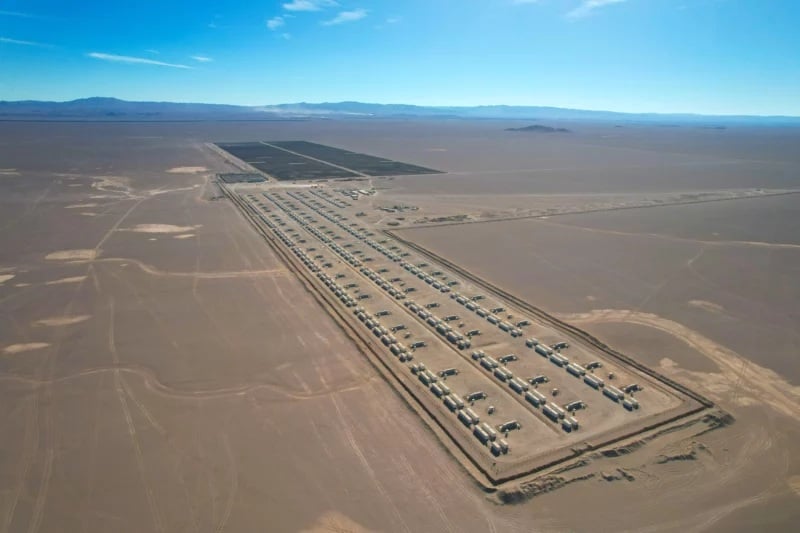 The Elena BESS in Chile, the largest in the world to come online during June. Image: Grenergy
Some 9.1GW/33.5GWh of large-scale BESS came online globally last month, with Saudi Arabia accounting for over one-third of the figure.
That’s according to the latest monthly data from Benchmark Mineral Intelligence, reported here as part of a regular series for ESN Premium.
It is the first time in the 18 months that we have been covering the figures that a region other than China accounted for the most capacity. China deployed 3,696MW/10,094MWh in June, 30.1% of the total GWh, while Saudi Arabia deployed 2.5GW/12.5GWh, 37.3% of the total.
That capacity in Saudi Arabia came entirely from five projects deployed by Saudi Electricity Company (SEC), for which the battery energy storage systems (BESS) were supplied by BYD, and built by EPC firm Alfanar. The supply deal was announced in February 2025.
This article requires Premium SubscriptionBasic (FREE) Subscription
Already a subscriber? Sign In
China’s activity appears to be slowing, related to market reforms which we’ve covered previously.
See the full figures below. A total of 125.8GWh came online in the first half of the year, 27% higher than the same period in 2025.
| Region | MW | MWh |
| Africa | 0 | 0 |
| Asia (excluding China) | 0 | 0 |
| China | 3,696 | 10,094 |
| Europe | 916 | 2,384 |
| Middle East | 2,500 | 12,500 |
| North America | 710 | 3,020 |
| Oceania | 565 | 1,960 |
| South & Central America | 700 | 3,500 |
| Total | 9,087 | 33,459 |
The largest project to come online in June was the 3.5GWh Elena BESS in Chile, part of Grenergy’s Oasis de Atacama solar-plus-storage complex. The country’s president attended its inauguration, shortly before a 1TWh night-time PPA was signed with an unnamed buyer.
Projects totalling around 1.6GWh were brought online in Utah and Australia, by rPlus and Akaysha respectively. There were 11 gigawatt-hour scale projects commissioned during the month, with three in China rounding out the list.
The Elena project accounted for the whole of the South & Central America’s figures for the month. In Europe, major projects came online in Hungary, the Netherlands and Bulgaria.
Most of North America’s figures is made up of rPlus Utah project plus Aypa Power’s 250MW/1,000MWh Pediment energy storage project in Mesa, Arizona.
All these projects used lithium-ion technology, mostly lithium iron phosphate (LFP). One major sodium-ion project came online: Power China’s Shanghai Jiading Industry Zone Standalone Energy Storage Project which combined LFP and an undisclosed sodium-ion battery chemistry, totalling 50MW/200MWh.
Benchmark Mineral Intelligence head of research Iola Hughes recently wrote a Guest Blog for Energy-Storage.news on the company’s rankings and analysis of global BESS cell and system suppliers, noting that the nameplate annual production capacity of BESS cells globally surpassed 1TWh for the first time by the end of 2025.
Energy Storage Summit Latin America brings together developers, investors, utilities and policymakers to explore how storage is advancing system stability, regulation, deployment and new revenue models across the region. With insights from Chile, Argentina, Brazil, Mexico and beyond, the Summit focuses on financing, policy clarity, hybridisation, supply chain development and project optimisation as LATAM accelerates its storage buildout.
Read Next
We caught up with the CCO of Netherlands-headquartered startup Moonwatt at last month’s Smarter E Europe trade show in Munich for a video interview.
System integrator HyperStrong will deploy sodium-ion BESS first in its home market of China, before bringing a product to the international markets, its president of technology said.
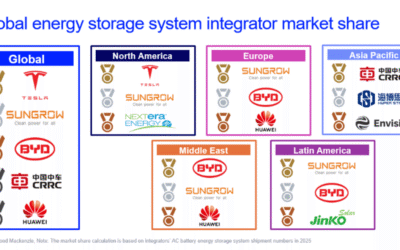
Chinese system integrators have cemented their dominance of the global battery energy storage system (BESS) market, capturing 76% of global market share in 2025.
The state-owned Saudi Power Procurement Company (SPPC) has revealed the qualified bidders for its second build own operate (BOO) BESS tender, totalling 3GW/12GWh of capacity across six projects.
US sodium-ion (Na-ion) battery startup Alsym Energy and consulting organisation for the mining and energy sectors, Erity, have signed a 9GWh strategic relationship agreement (SRA) for global mining use-cases.
Most Popular
