Просмотр новости
Найдите то, что Вас интересует
 Спутники
 РН
 SpaceX
 Роскосмос
 NASA
СпутникиРНSpaceXРоскосмосNASAOn October 15, 2026, the sports car world got two very different answers to the same question: the new Tesla Roadster and the Porsche Mission S. Tesla showed the Roadster at the SpaceX facility in McGregor, Texas, nearly a decade after Founder’s Series buyers put down $250,000 reservations. At the same time, Porsche unveiled the Mission S on the Queens dock where the 550 Spyder was photographed in 1953. So which one is actually the future of the sports car? […]
The post What the Tesla Roadster and Porsche Mission S Say About the Future of Sports Cars appeared first on Sports Car Digest.
On October 15, 2026, the sports car world got two very different answers to the same question: the new Tesla Roadster and the Porsche Mission S. Tesla showed the Roadster at the SpaceX facility in McGregor, Texas, nearly a decade after Founder’s Series buyers put down $250,000 reservations. At the same time, Porsche unveiled the Mission S on the Queens dock where the 550 Spyder was photographed in 1953. So which one is actually the future of the sports car? As with other Tesla product unveilings, in the Tesla Roadster debut there’s always a fine line between PR/marketing and real-world utility. In other words, what’s a gimmick, and what is actually useful? Does the Roadster solve a problem or offer a real benefit? Would any of its so-called “out of this world” performance features ever see the light? On the other hand, Porsche wants to carry its signature design language into the future by reinterpreting it, where form follows function, as Porsche calls it, “the shape of purpose.” Two philosophies, both looking into the future but from different perspectives.
The Tesla Roadster Is a Stunt Looking for a Problem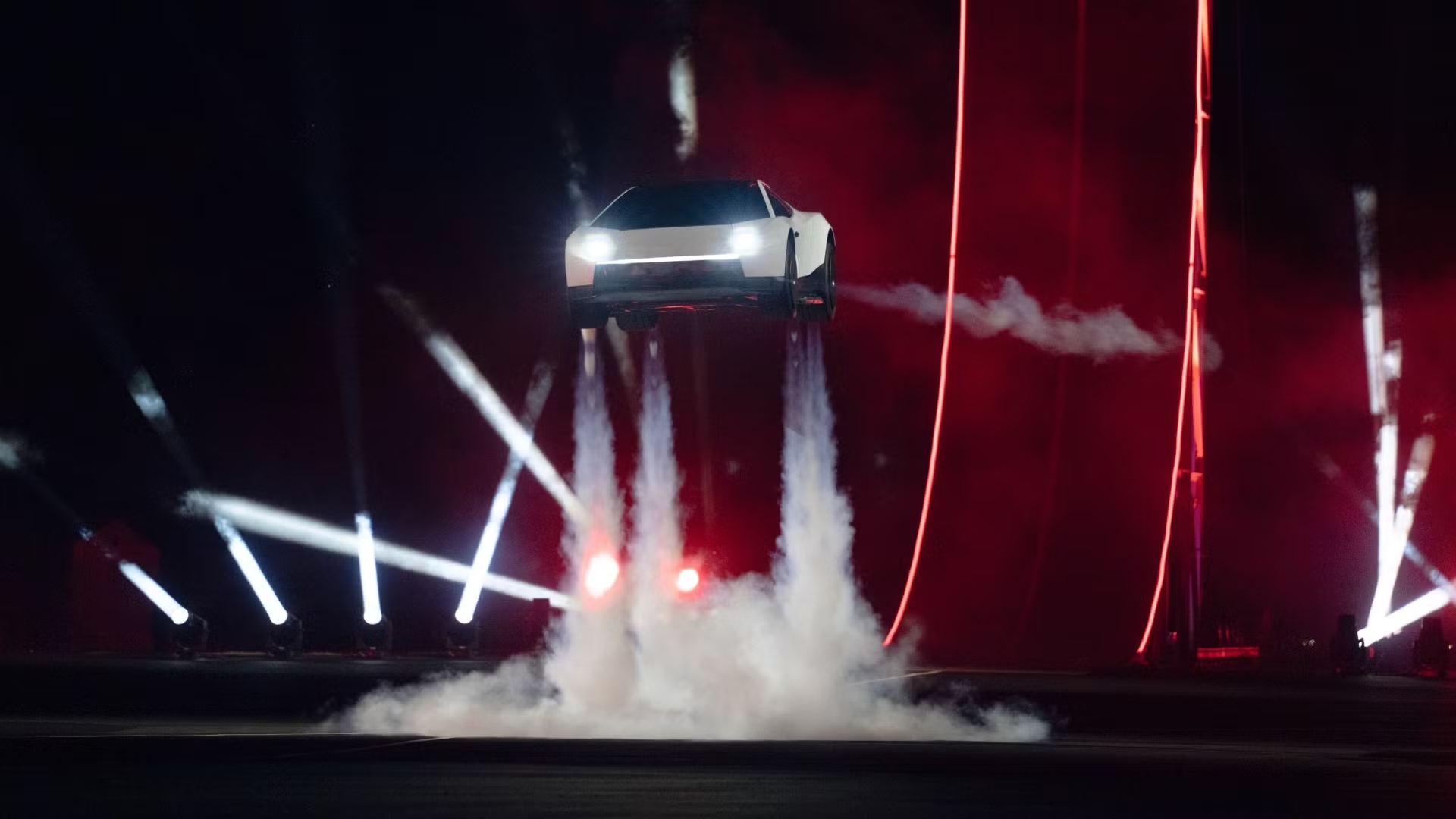 Credit: CarBuzz
Let’s start with what Tesla actually showed. With nobody behind the wheel, the Roadster climbed a giant curved ramp, held on with a fan-based suction system until it was completely upside down, then fired cold-gas thrusters developed with SpaceX to launch off the ramp, flip in midair and land. It also jumped over a row of Teslas that included a Semi, and Tesla claimed 0-60 mph in under one second with the thrusters engaged, plus a top speed above 230 mph. The system uses ten nozzles fed by two tanks with a combined 600 liters of capacity, holding about 250 kg of compressed air. As for the empty driver’s seat, Musk explained it was there to make sure nobody got killed if things went wrong.
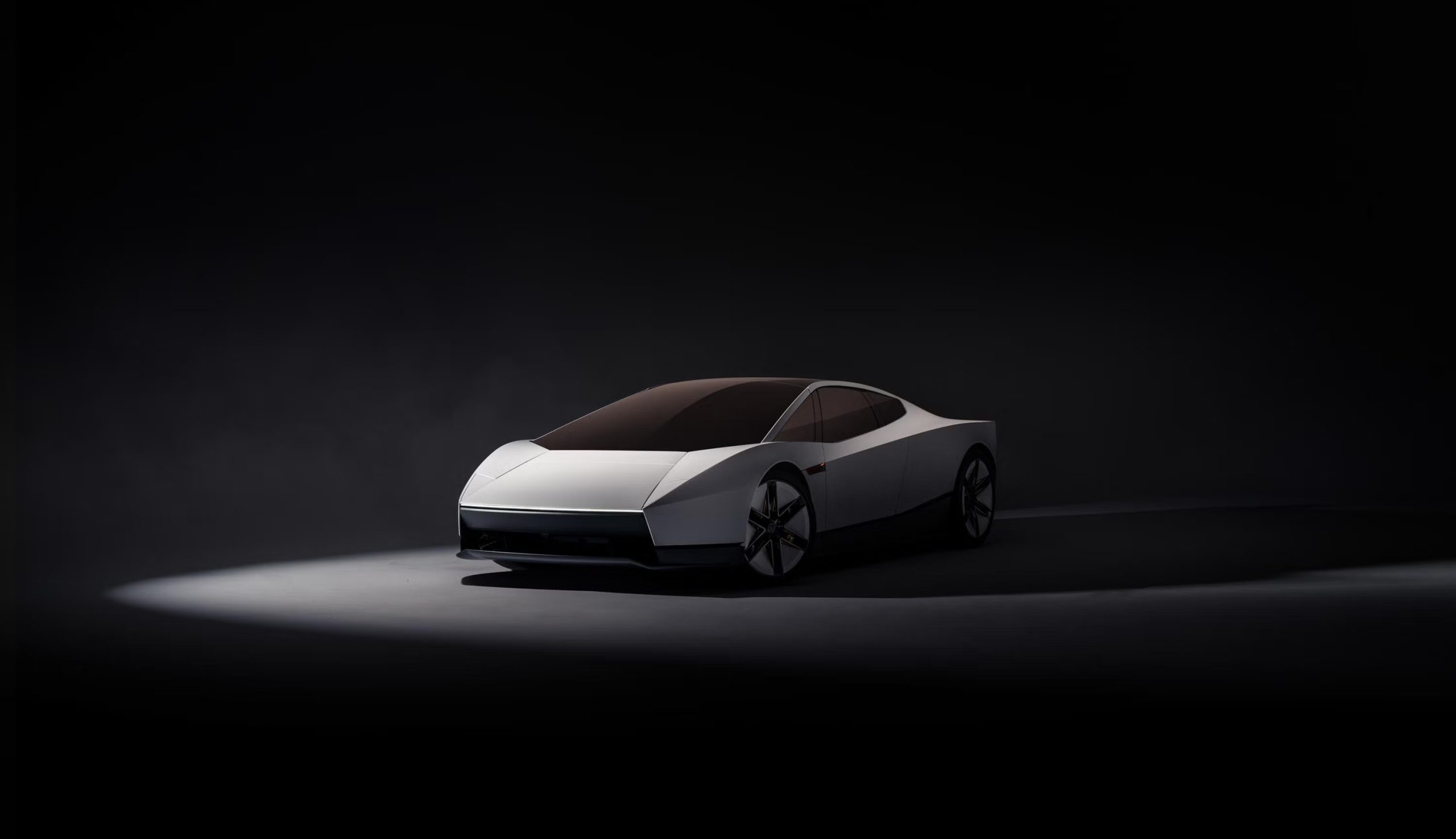 Credit: Car and Driver
Impressive? Sure. But the first question any sports car buyer should ask is whether they can actually drive the thing on the street, and here the answer gets complicated. The Roadster comes in three versions. The two-seat Performance gets the suction fans and active aero, and Tesla calls it road ready, subject to regional requirements. The Thrust adds rear-mounted thrusters for acceleration, and its availability depends on each region’s laws. The Rocket, a single-seater with thrusters around its perimeter, is the one that “flies,” and Tesla’s own website says it is not approved for public road use. When asked whether the car is street legal, Musk’s answer was that it depends on your street. In other words, the feature that made the headlines is the one you can’t use on the way to work. Even the Smithsonian’s curator of vertical flight said before the event that this is more about jumping than actual flying.
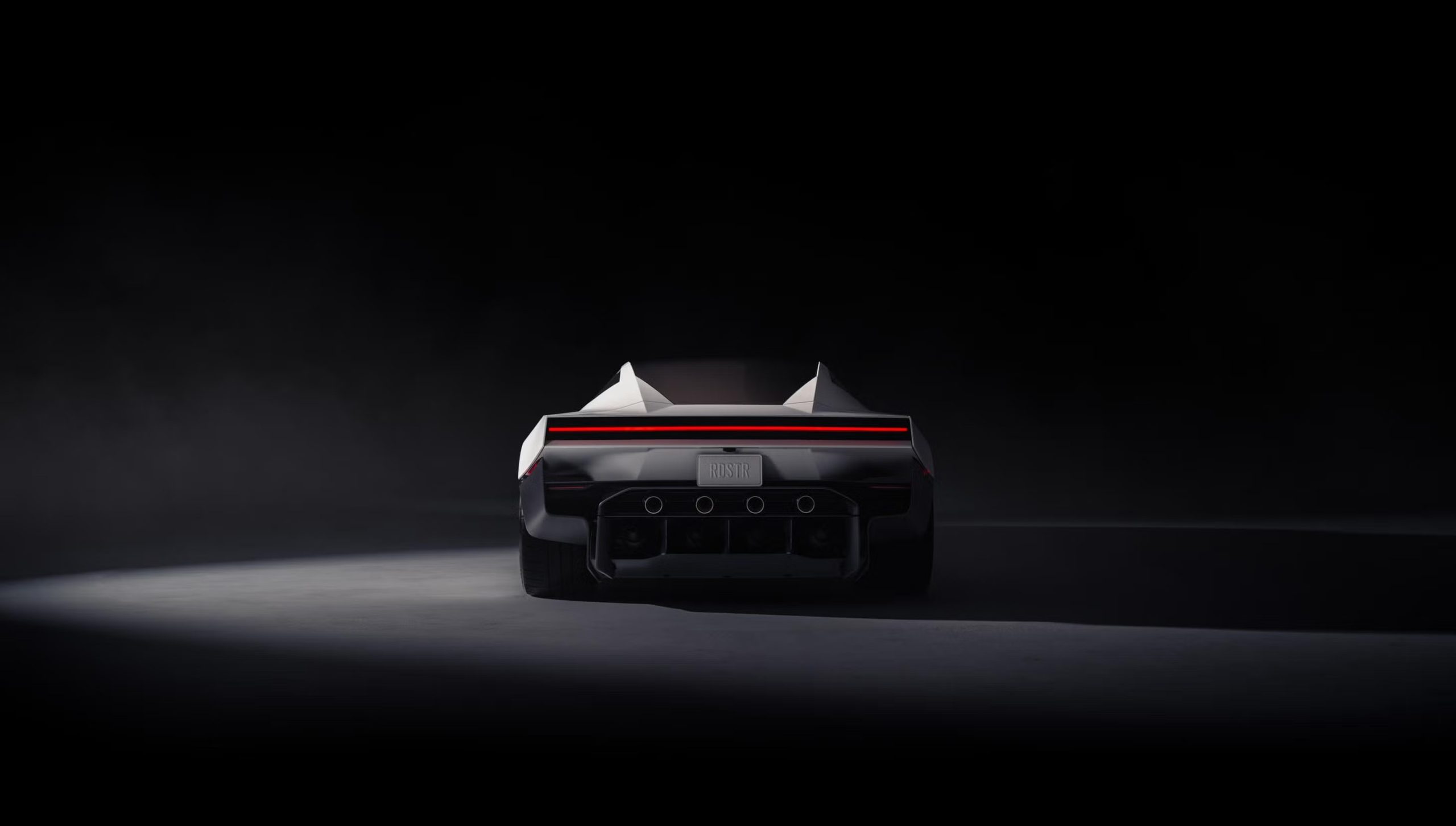 Credit: Car and Driver
The bigger issue is that none of this is new. Jim Hall’s Chaparral 2J used fans to suck itself to the track in Can-Am back in 1970, and the Brabham BT46B won the only Formula 1 race it ever entered with a fan in 1978. Gordon Murray’s T.50 proved a fan can live on a road car, and the McMurtry Spéirling drove upside down on a rotating rig in April 2025, a year and a half before Tesla’s ramp stunt. Even the thrusters aren’t a fresh idea, since Musk first floated a “SpaceX package” for the Roadster back in 2018. So the real innovation here is less the technology than the packaging, and that packaging is very good at producing viral videos.
Then there’s the hardware nobody wanted to dwell on during the show. Two tanks of ultra high-pressure gas sitting where a rear seat would normally go is not a minor detail when you think about a serious crash. Tesla has not released a final price, battery data or any safety details, so how those tanks behave in an impact, and how a suction system strong enough to hold a car upside down gets certified for public roads, remain open questions. A T.50 manages airflow under a road car. Hanging a car from a ceiling is a different conversation with regulators.
Cybertruck 2.0, or Did Tesla Learn Its Lesson?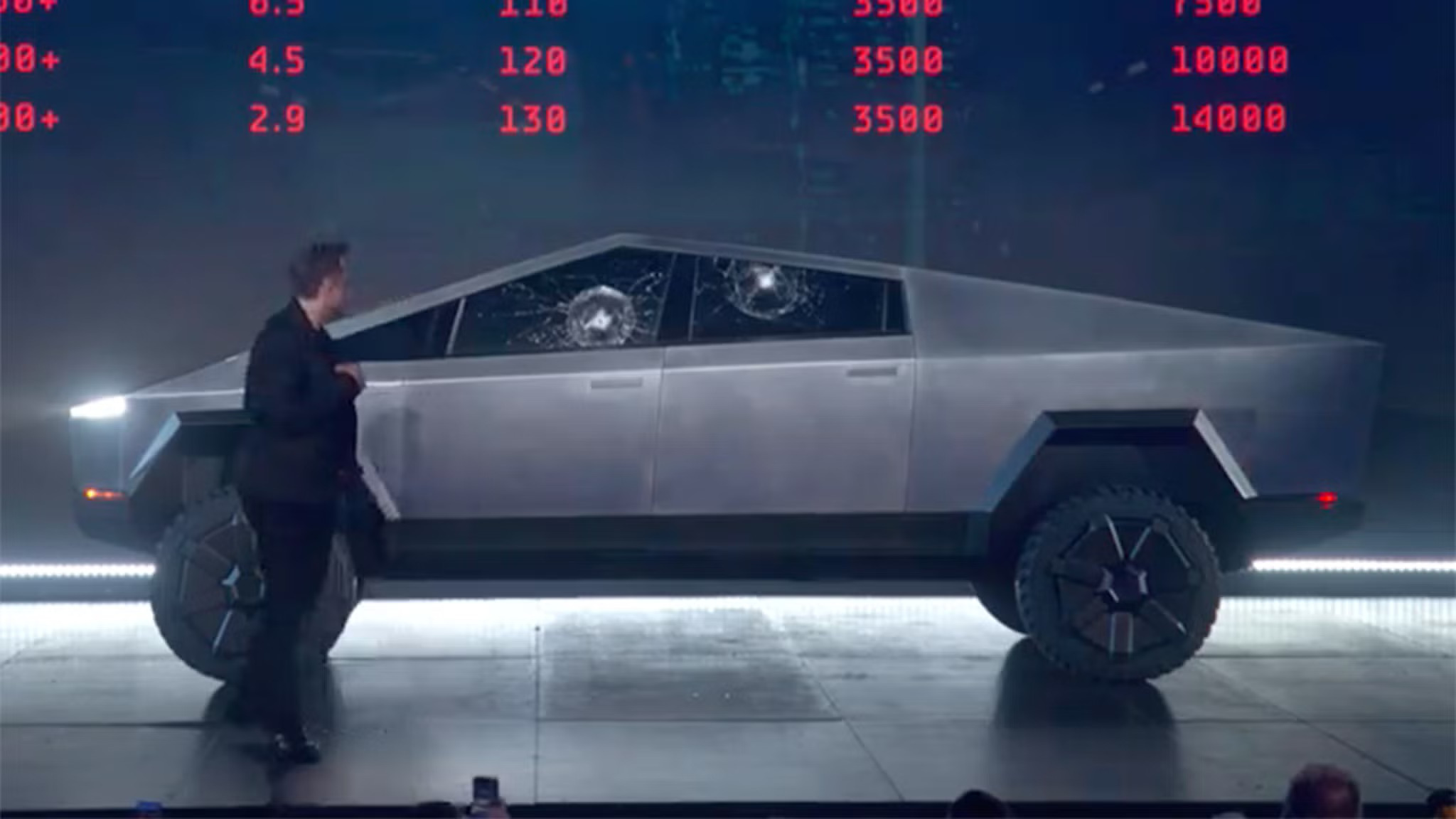 Credit: Motortrend
If all of this sounds familiar, it’s because we’ve seen this movie before. When Tesla revealed the Cybertruck in 2019, Musk promised a $39,900 starting price, a 3,500-pound payload, 14,000 pounds of towing and up to 500 miles of range, with the first versions arriving in late 2021. When deliveries finally began in late 2023, the truck started at $60,990, with a 2,500-pound payload, an 11,000-pound towing rating and a peak range of 340 miles.
Then came the quality and reliability problems. The Cybertruck has racked up 11 recalls, including one this year covering rear-wheel-drive trucks whose brake rotors could crack and, in the worst case, let a wheel come off, not to mention owner complaints about rust on a body sold as stainless steel. Sales tell the rest of the story. Musk projected more than 250,000 units a year, yet Tesla has sold roughly 66,000 in total across 2024, 2025 and early 2026. Deliveries fell to 20,237 units in 2025, the steepest decline of any EV in the U.S. that year, and only 7,133 Cybertrucks were registered in the U.S. through May 2026. It’s no surprise Bloomberg started comparing it to the Ford Edsel.
 Credit: NetCar Show
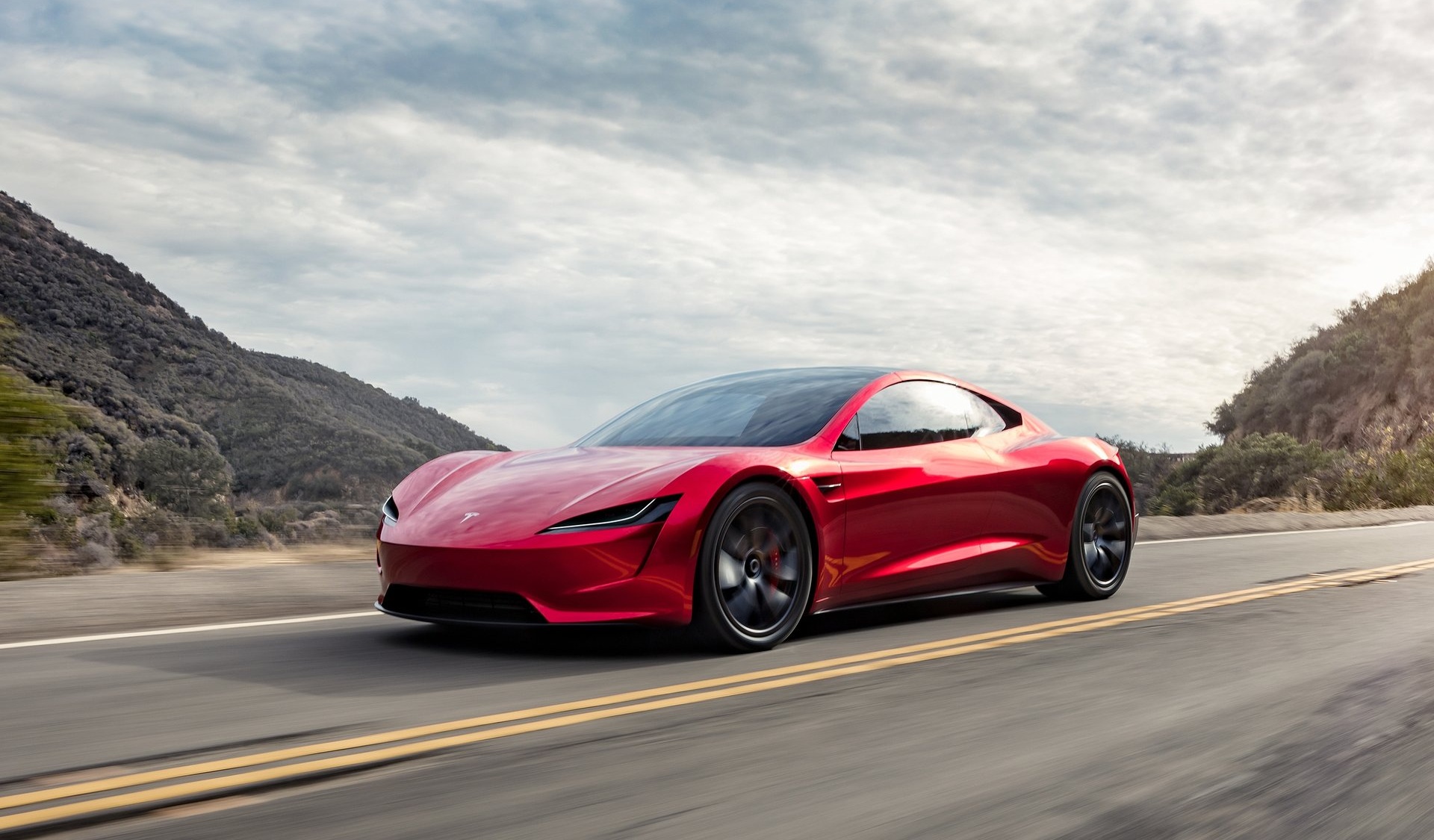
Now look at the Roadster’s own track record. When it was first announced in 2017, it promised 0-60 in 1.9 seconds, a top speed above 250 mph, up to 620 miles of range and a $200,000 starting price, with deliveries projected for 2020. Nine years later there’s still no price, no release date and no battery specs, just a production target of 2028. Sound familiar?
To be fair, there are signs Tesla learned something. This time the company is upfront that the flying Rocket isn’t meant for public roads instead of promising everything to everyone, and the base Performance trim is a fairly conventional proposition by Tesla standards. But a staged demo with an empty driver’s seat at a SpaceX test site is still a demo, not a delivery. Until Tesla puts a price, a spec sheet and a crash rating on the table, the Roadster is a promise, and Tesla’s promises have a history.
Meanwhile in Queens, Porsche Went Back to the Point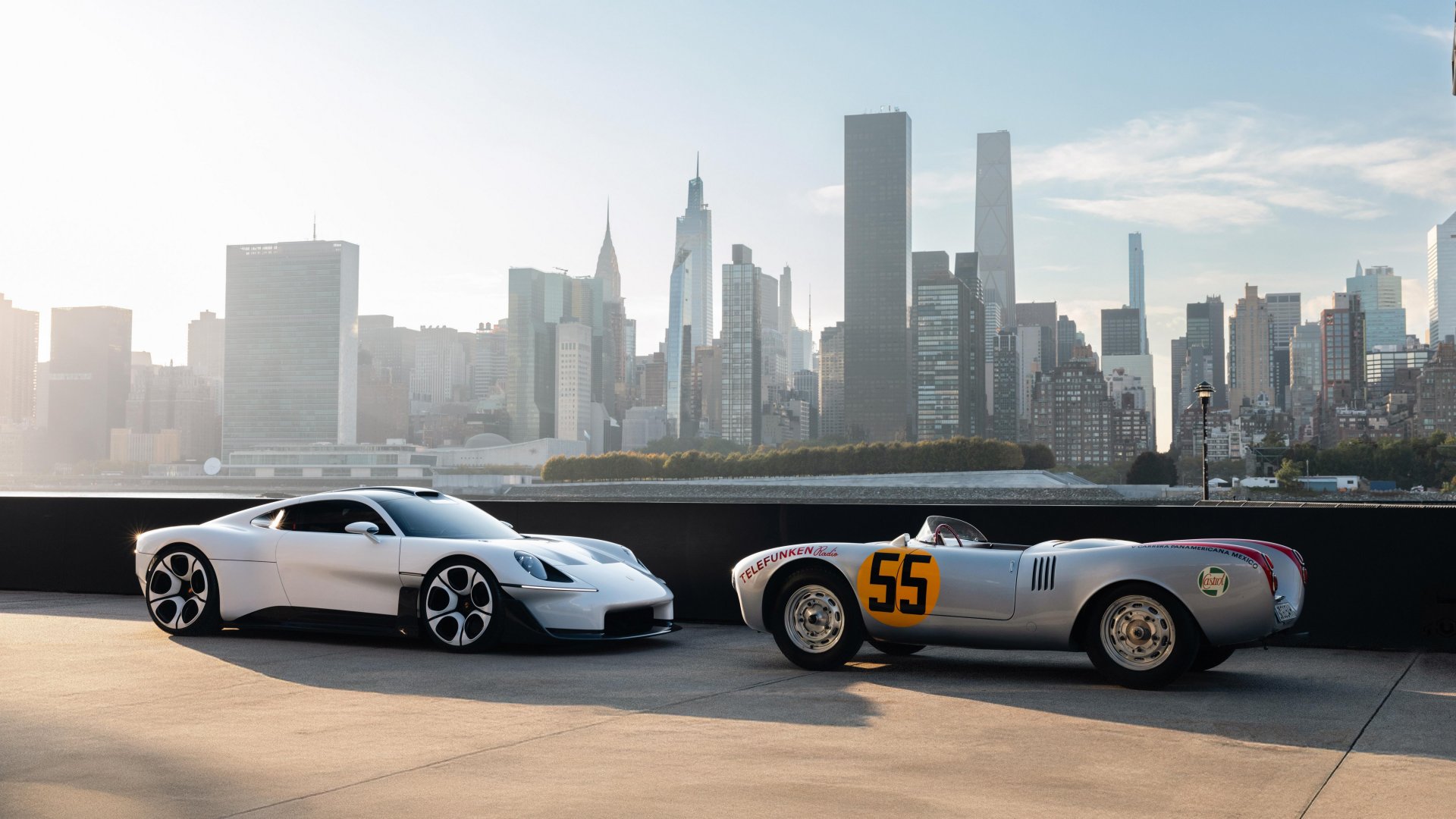 Credit: Porsche
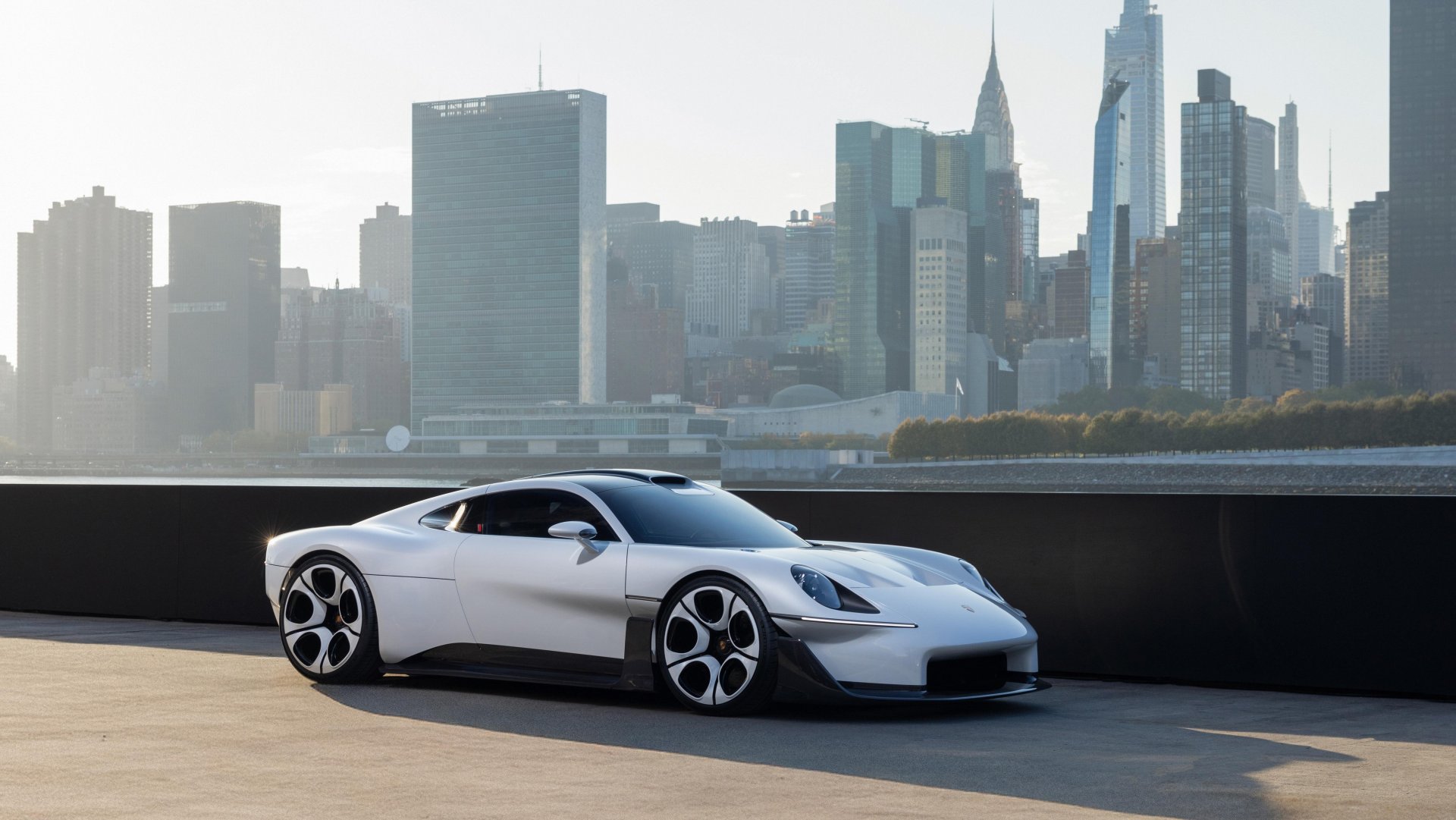
While Tesla was flipping a car over a Semi in Texas, Porsche was standing on a pier in New York with a very different message. The Mission S previews a new mid-engine model line that will sit above the 911, and unlike the Carrera GT or the 918 Spyder, it’s meant to be a permanent part of the lineup rather than a limited-run halo car. More importantly, CEO Michael Leiters ruled out pure battery-electric power for the production version, pointing to a complete lack of interest in electric hypercars. The platform underneath will accept combustion, hybrid or plug-in hybrid powertrains, and Germany’s Handelsblatt has reported it will be the first road-going Porsche with a flat-eight engine, something Porsche hasn’t confirmed.
 Credit: Porsche
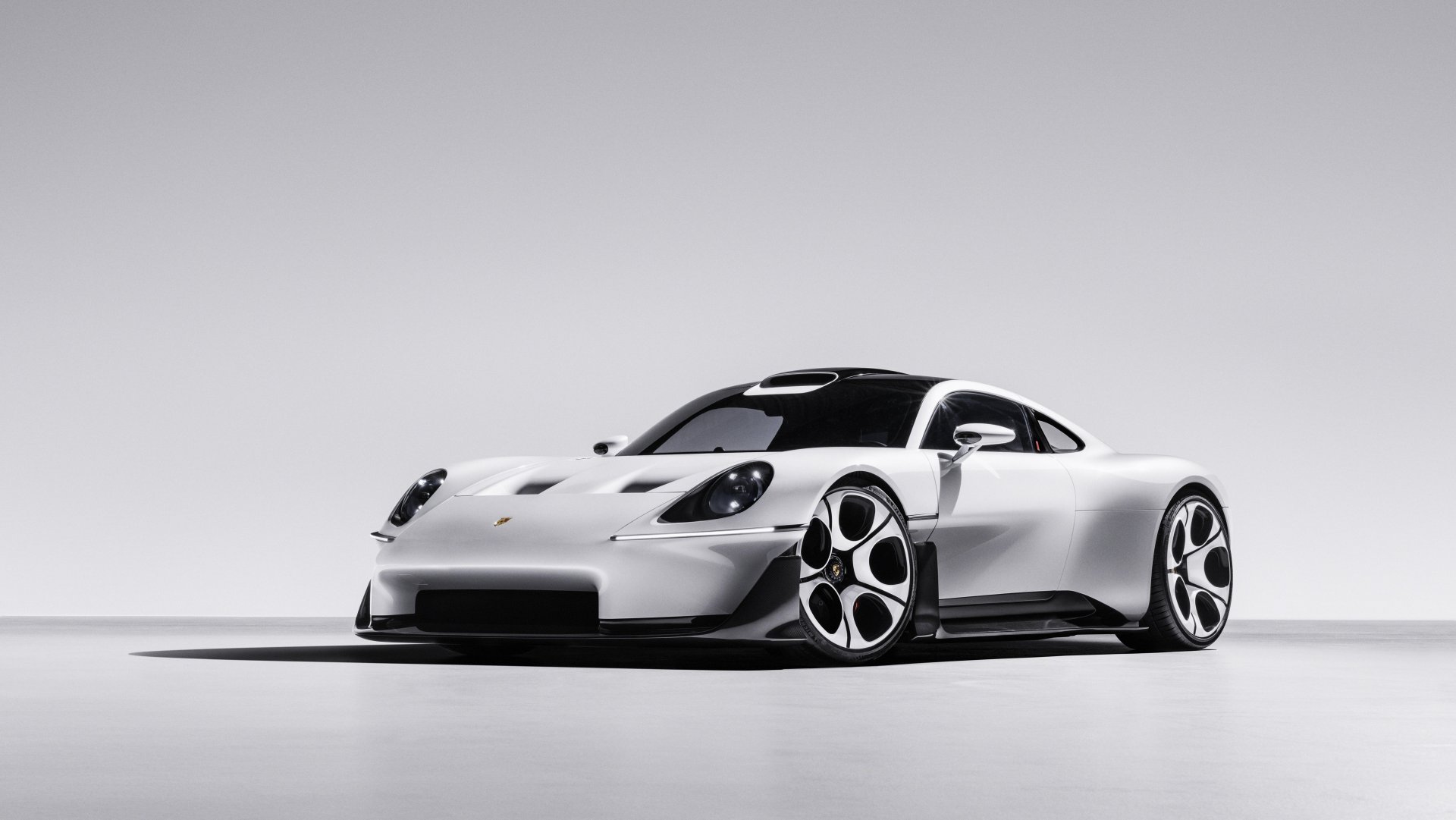
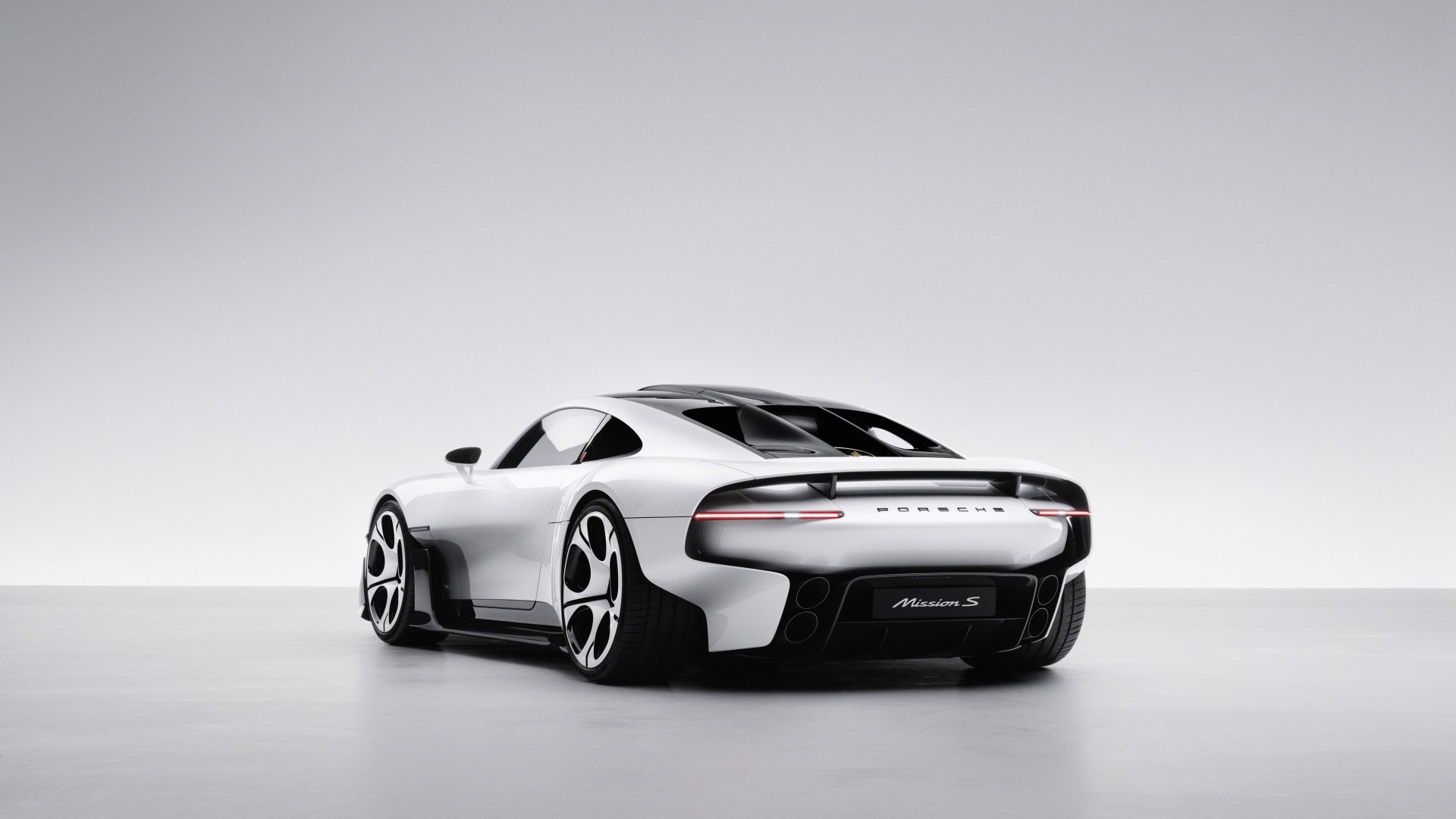
The design tells the same story. Style Porsche chief Tobias Sühlmann dug into the archive without turning the car into a retro costume: a “car-in-car” rear inspired by the 911 GT1, cooling that references the 917 and front fenders that rise above the hood. That last detail sums up the whole concept, because the fenders aren’t there for drama. According to Sühlmann, they sit higher so the driver can judge where the front wheels and the edges of the car are, the Bauhaus rule of form and function working together. And yes, the Mission S has a fan too. It just uses it to cool the car, not to hang it from a ceiling.
 Credit: Porsche
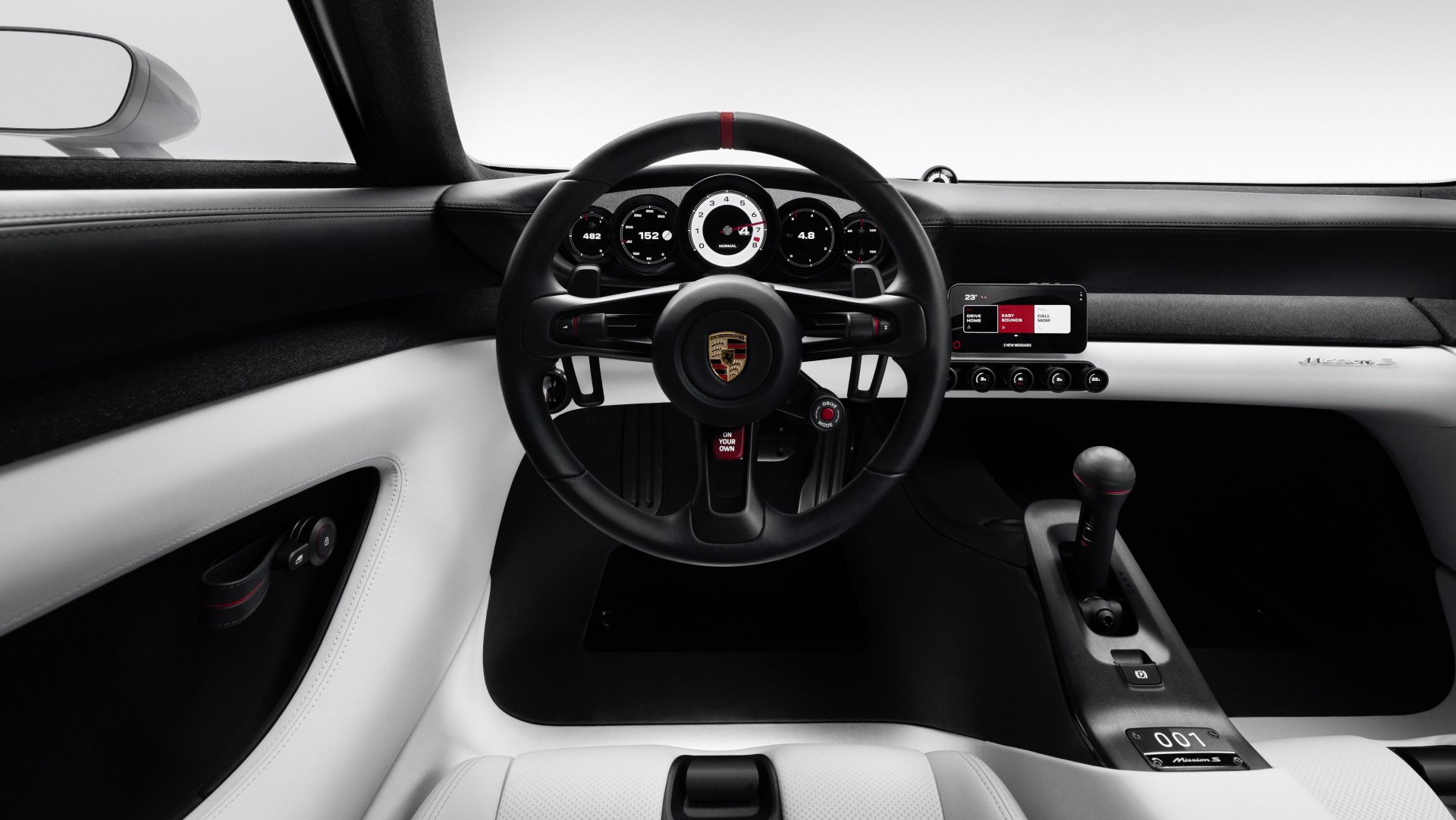
The cockpit is where Porsche really goes against the grain. There’s no fixed central touchscreen and no passenger display. Instead, Porsche installed a retractable MagSafe mount for your phone, which handles navigation and media through the My Porsche app and can even dress the instruments in classic Porsche gauge graphics. The rest is physical switches and buttons, a low seating position, bucket seats with racing harnesses and a carbon-fiber shift lever, all with the 356 and 550 Spyder as references. In an industry that spent the last decade turning dashboards into tablets, this is a statement.
 Credit: Porsche
Of course, a concept is a concept. Porsche hasn’t released a single technical spec, a price or a production date, and the Mission S arrives at a difficult moment for the company, with profits under heavy pressure. But Porsche has a solid record of turning concepts into production cars with few changes, as the Mission E did when it became the Taycan, and that alone makes its promises easier to take at face value.
Remember When Hybrids Got Sexy?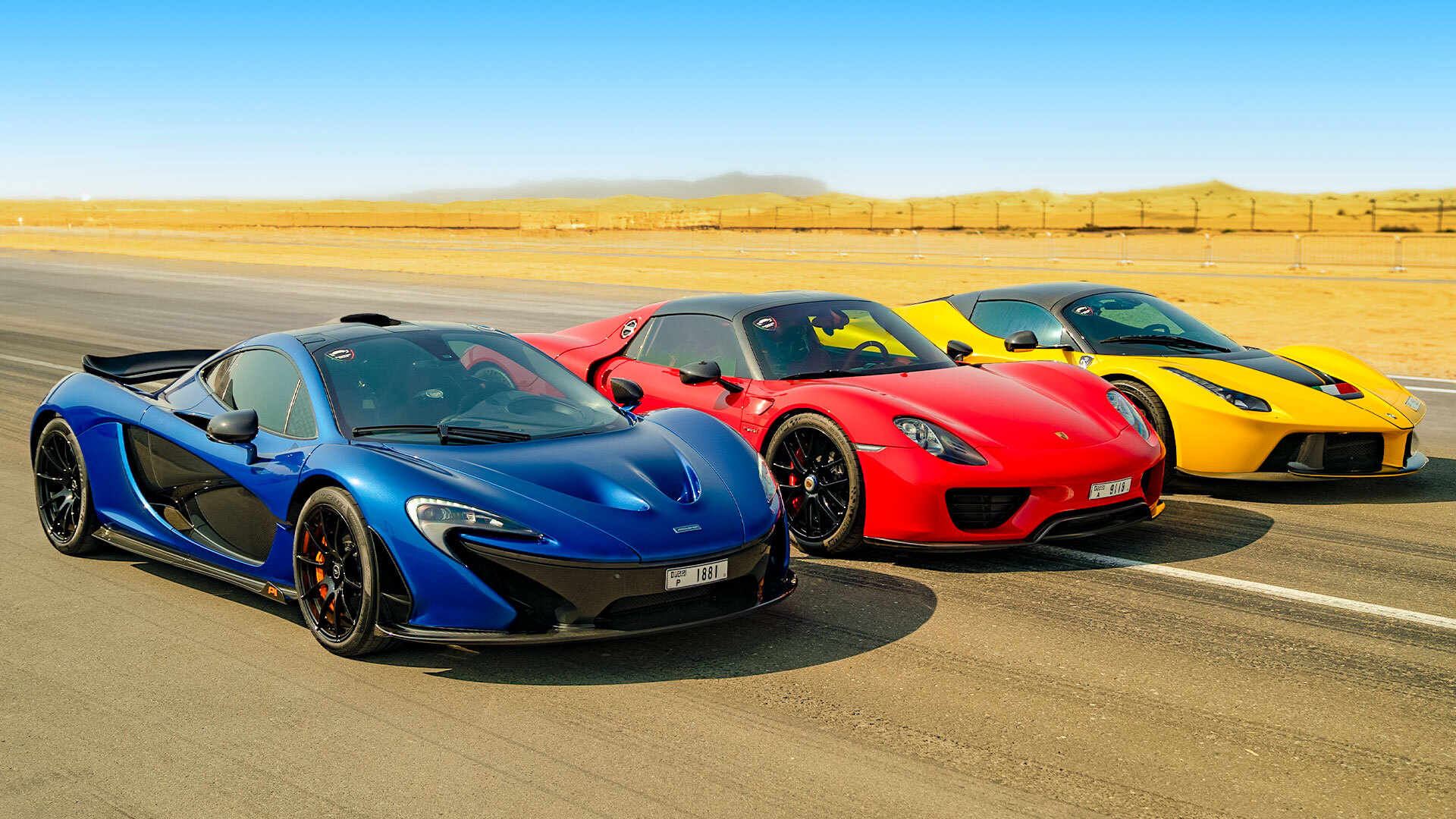 Credit
In 2013, the McLaren P1, Porsche 918 Spyder and Ferrari LaFerrari arrived within months of each other and did something few people expected: they made hybrids desirable. Until then, hybrid meant Prius. The so-called holy trinity proved that electric motors could fill torque gaps, sharpen throttle response and add performance, not just save fuel. A decade later, that idea is everywhere, from the Ferrari 296 GTB to the Corvette E-Ray and the 911 Carrera GTS T-Hybrid. So if we apply the same test to 2026, what from these two cars is actually likely to trickle down?
From the Tesla, the honest answer is very little. Cold-gas thrusters won’t be on your next crossover, and there’s no everyday use case for a car that hops. Fan-assisted downforce might spread to more high-end performance cars, but that’s a path Gordon Murray and McMurtry opened, not Tesla.
From the Porsche, the answer is more interesting. A flexible platform that takes combustion, hybrid and plug-in hybrid power reflects where the market is really going, rather than a forced all-electric future nobody at this price point asked for. And the anti-digital cockpit is already part of a broader shift. Since 2026, Euro NCAP rewards physical controls for turn signals, hazard lights, wipers, the horn and emergency calls, and Volkswagen has been bringing buttons back after customer feedback. If anything trickles down from October 15, it’s far more likely to be a button than a booster.
Spectacle vs. Sensation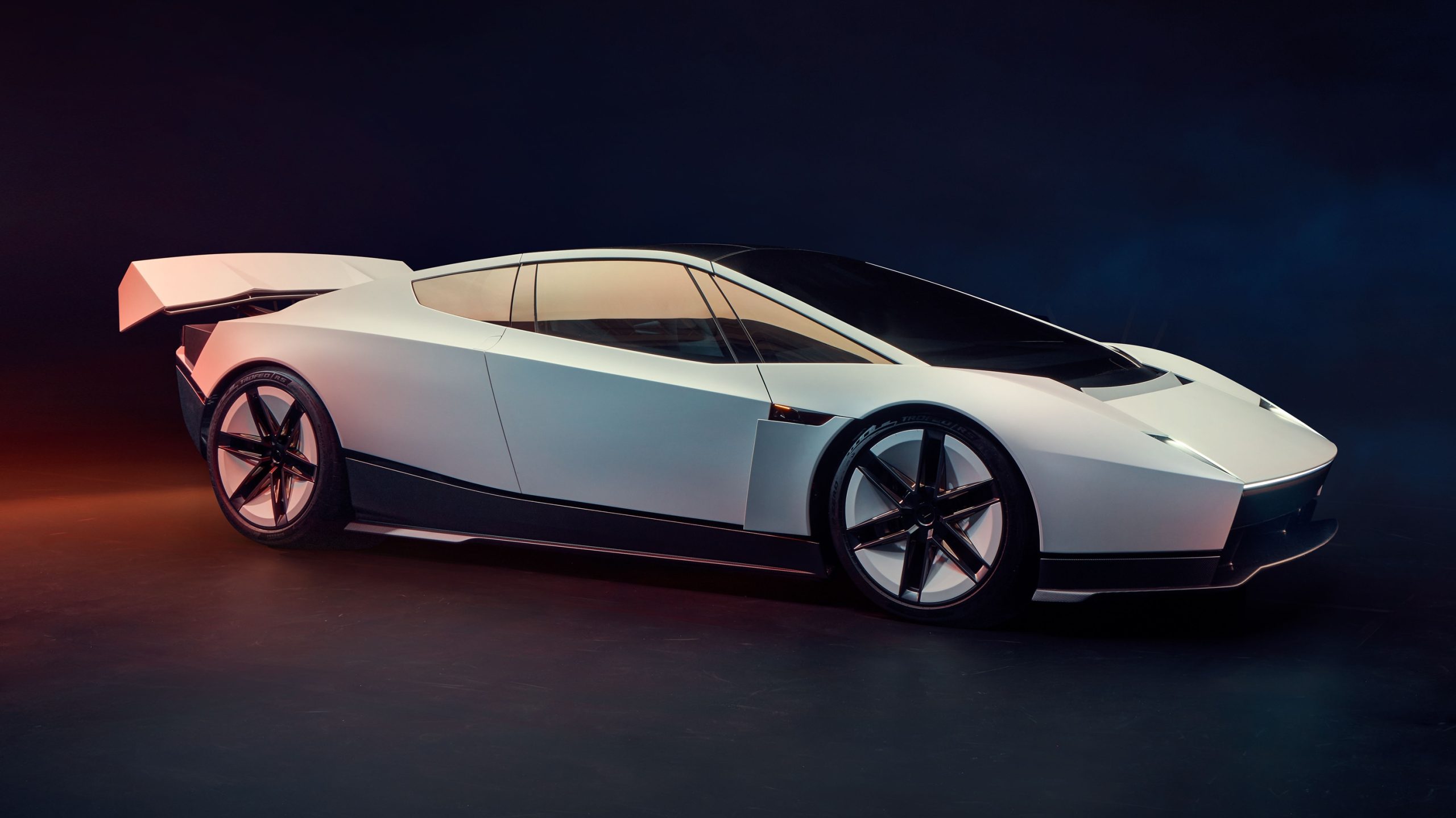 Credit: Car and Driver
This is where the two philosophies really split. Tesla measures performance in numbers and views: 0-60 in under a second, more than 230 mph, a car that drives upside down and a launch video that pulled over 10 million views on X. Porsche measures it in feel: where the fenders sit, where the shifter falls to hand, whether you can operate the car without taking your eyes off the road. Both are valid ways to sell a car, but only one of them describes a sports car.
A sports car has never been about the spec sheet alone. It’s about the connection between driver, machine and road: steering that talks to you, a chassis you can read, controls you find by touch. Sub-one-second acceleration is a remarkable figure, but on a public road it’s an experience that stops meaning anything after the second or third time, and the most dramatic version of the Roadster can’t legally go on that road anyway. When the defining feature of a sports car is something performed with nobody in the driver’s seat, the point has been missed.
See also
 Credit: Porsche
Porsche, for its part, seems to have learned this the hard way. Its all-electric Mission X hypercar concept from 2023 never reached production, and Leiters now says openly that buyers at this level aren’t interested in battery-electric hypercars. The Mission S is the correction. It takes what made the 550 Spyder and the 356 special and uses modern technology to serve the driver rather than replace or entertain them.
That doesn’t mean Porsche gets a free pass. A concept with no engine specs, no price and no date is easy to love, and the company’s upmarket push to lure Ferrari and Lamborghini buyers with lower volumes and higher prices will put this car out of reach for almost everyone. But at least Porsche is aiming at the right target.
Some Spicy TakesThe Roadster launch was as much a SpaceX commercial as a Tesla one. It was held at a SpaceX test site, the headline hardware was developed with SpaceX, and the star of the show was a thruster. The car was almost the supporting act.
A Tesla production date is a mood, not a deadline. The Roadster was supposed to arrive in 2020 and the Cybertruck in late 2021. Read “2028” accordingly.
Sub-one-second 0-60 is the new horsepower war, and it’s just as pointless on public roads. Past a certain point, faster acceleration stops making a car more fun and starts making it more of a party trick. Ask anyone who has owned a 1,000-hp car how often they used all of it.
The most radical thing revealed on October 15 was a dashboard without a screen. Anyone can add a thruster. Taking the tablet out of a 2026 car and convincing buyers it’s a feature takes real conviction.
If a sports car needs an empty driver’s seat to be demonstrated safely, it isn’t the future of driving. It might be the future of entertainment, and Tesla is very good at that. But entertainment and driving are not the same thing.
So, Where Are Sports Cars Going? Credit: Westside Auto
If October 15 is any indication, the industry is splitting into two camps. One sees the car as a stage for spectacle, a rolling billboard for a brand’s vision of the future, even if its most exciting feature never reaches a public road. The other sees the car as an instrument, something that should make the person behind the wheel more connected and more involved, not less.
The hybrid trinity showed that new technology wins when it makes driving better, not just more impressive. By that standard, the next generation of sports cars may be defined less by what they add than by what they take away: fewer screens, fewer gimmicks and more driver. Tesla could still prove the skeptics wrong in 2028, but history suggests betting on the car that remembers what a sports car is for. The Roadster might fly. The Mission S just has to drive, and for anyone who truly loves sports cars, that’s the more exciting promise.
| # | Наименование новости | Тональность | Информативность | Дата публикации |
|---|---|---|---|---|
| 1 | Porsche Mission S und Tesla Roadster: alte gegen neue Welt | 0 | 8.16 | 20-10-2026 |
| 2 | Tesla svelerà oggi la sportiva Roadster, la seconda generazione sarà dotata di tecnologia SpaceX | 0 | 7.77 | 01-01-1970 |
| 3 | Новый Tesla Roadster технологически беспрецедентен | 0 | 11.9 | 21-10-2026 |
| 4 | Tesla Roadster unveiling nears, and it will fly: The Information | 0 | 7.44 | 14-08-2026 |
| 5 | Tesla desafía la física con el nuevo Roadster: propulsores de SpaceX y una variante capaz de volar | 0 | 9.45 | 16-10-2026 |
| 6 | 🚗Tesla назначила премьеру Roadster нового поколения на 1 октября. Спорткар ... | 0 | 10.85 | 13-09-2026 |
| 7 | Tesla Roadster Event Reimagines A New 2028 Flying Car, 0-60mph in <1 second | 0 | 8.89 | 16-10-2026 |
| 8 | Tesla exec says Roadster unveil is soon — for real this time | 0 | 7.54 | 07-06-2026 |
| 9 | Porsche Unveils Mission S Concept: A Mid-Engined Super Sports Car Platform Positioned Above the 911 | 0 | 7.35 | 16-10-2026 |
| 10 | Η Porsche Mission S αξιοποιεί τη νέα πλατφόρμα για υπεραυτοκίνητα με κινητήρα στο κέντρο! | 0 | 5.54 | 21-10-2026 |