Просмотр новости
Найдите то, что Вас интересует
 Спутники
 РН
РН SpaceX
 Роскосмос
 NASA
NASA
СпутникиРНSpaceXРоскосмосNASAThe post Subsurface Hydrogen appeared first on Center for Climate and Energy Solutions.
Most hydrogen the world uses today — about 100 million metric tons a year — is derived from carbon-intensive fossil fuels. A growing body of research is exploring whether hydrogen generated and trapped naturally underground, or produced by deliberately accelerating those same conditions, could become a reliable low-carbon, cost-competitive addition to the hydrogen supply.
The science is early and significant commercial recovery remains to be demonstrated. The policy case today is to learn — not to assume. Targeted research, geologic mapping, field validation, and clearer rules will determine whether subsurface hydrogen can emerge as a new natural resource.
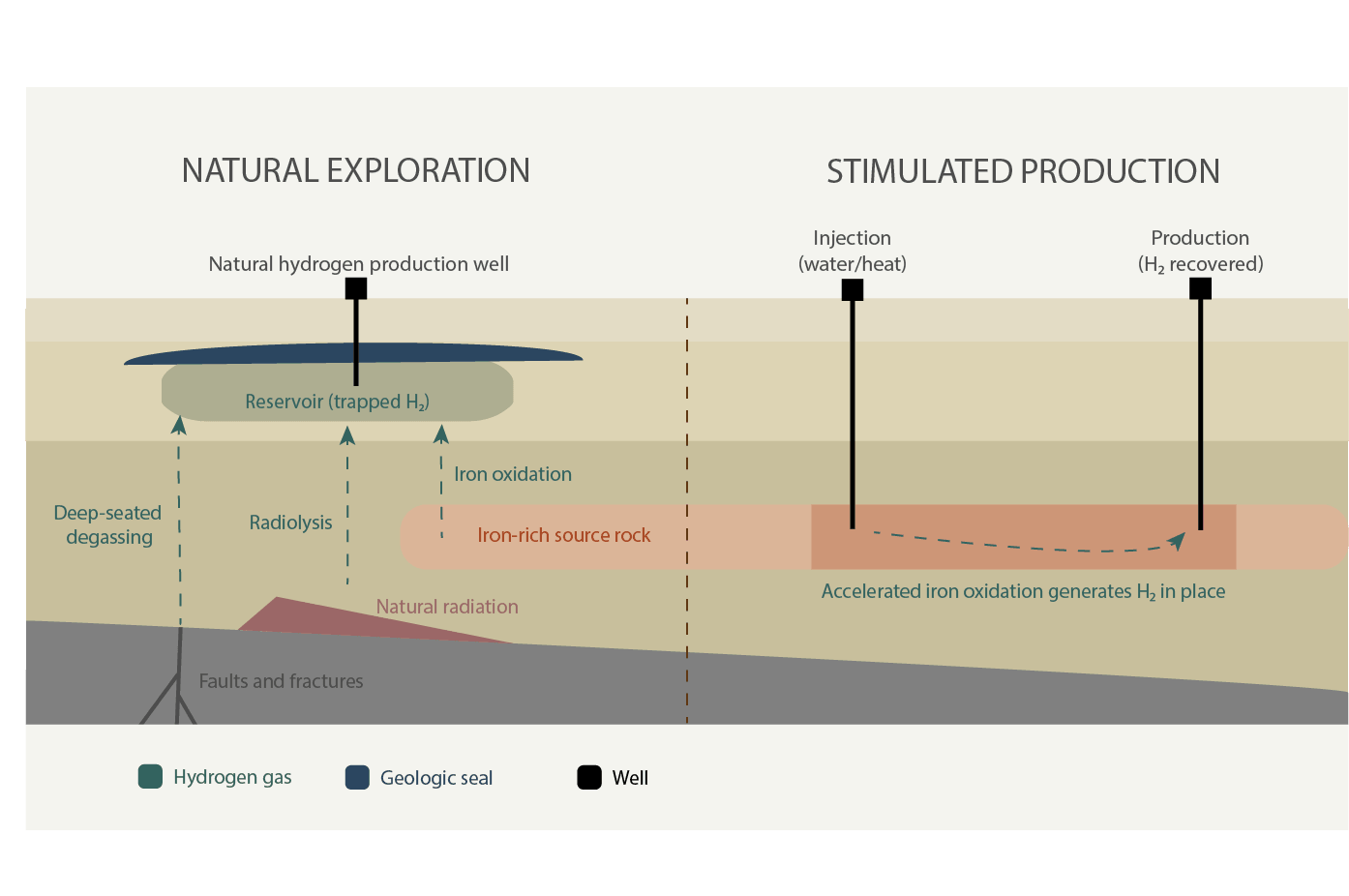
Subsurface hydrogen is molecular hydrogen gas (H2) that occurs naturally or is produced within geologic formations. Developers are pursuing two broad pathways: finding naturally accumulated hydrogen and stimulating hydrogen generation underground.
Three natural processes are believed to generate most subsurface hydrogen:
Forming hydrogen is only half the story. For a natural hydrogen deposit to matter commercially, generated hydrogen also must migrate into a porous reservoir rock, become trapped beneath a geologic seal that keeps it from escaping or reacting away, and survive — mainly by avoiding hydrogen-eating microbes. Natural hydrogen exploration seeks to locate places where all these conditions line up at once.
One resource, two development pathways
Two strategies are being pursued: find hydrogen that nature has already trapped or engineer the reaction yourself.
Natural hydrogen exploration
Search for reservoirs where naturally occurring hydrogen has migrated, accumulated, and remained trapped beneath an effective seal.
Stimulated production
Alter underground conditions to initiate or accelerate hydrogen generation, then recover the gas through production wells.
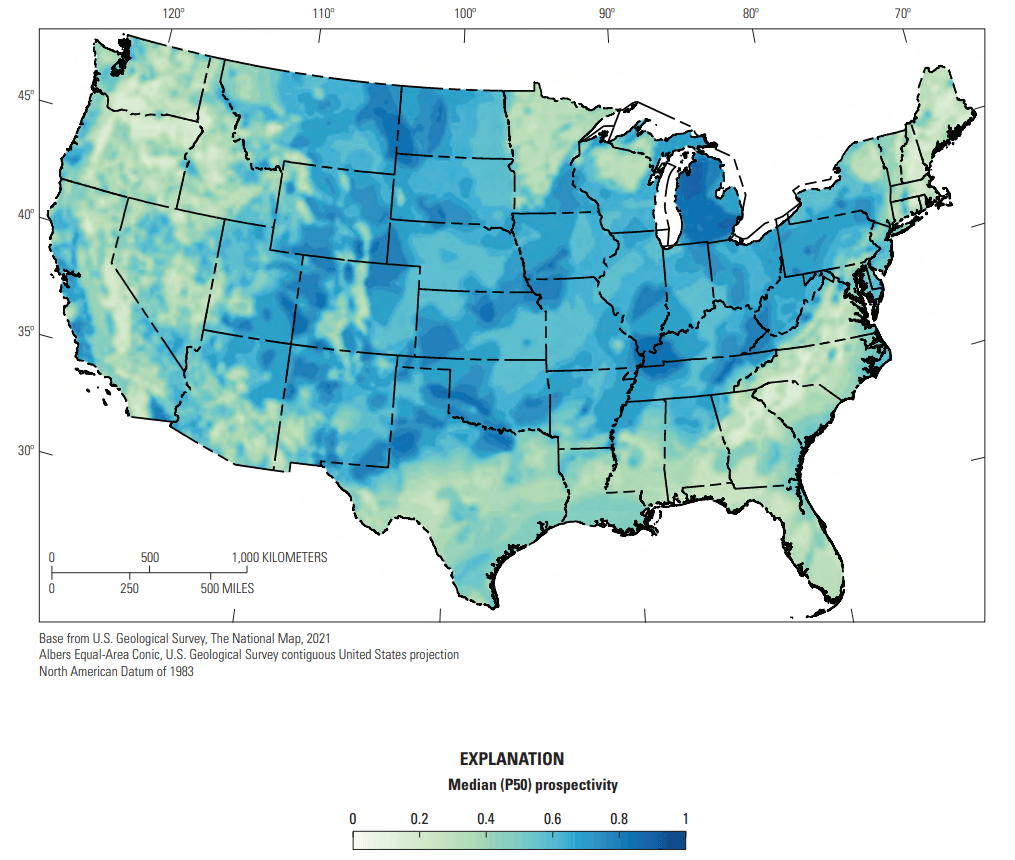
If only a fraction of the estimated hydrogen underground could be produced economically, subsurface hydrogen could become a low-cost, low-carbon addition to the hydrogen supply — strengthening U.S. industrial competitiveness and creating new markets.
100M
tons / year
Current global hydrogen demand – almost all supplied by carbon intensive methods today.i
150M
tons / year
2035 demand for low-carbon hydrogen under net zero pathway.ii
5.6T
tons (modeled)
Early estimate of global subsurface hydrogen accumulation. The recoverable share is unknown.iii
1%
of that total
Would hold roughly the energy content of Earth’s proven natural gas reserves, if recoverable.iv
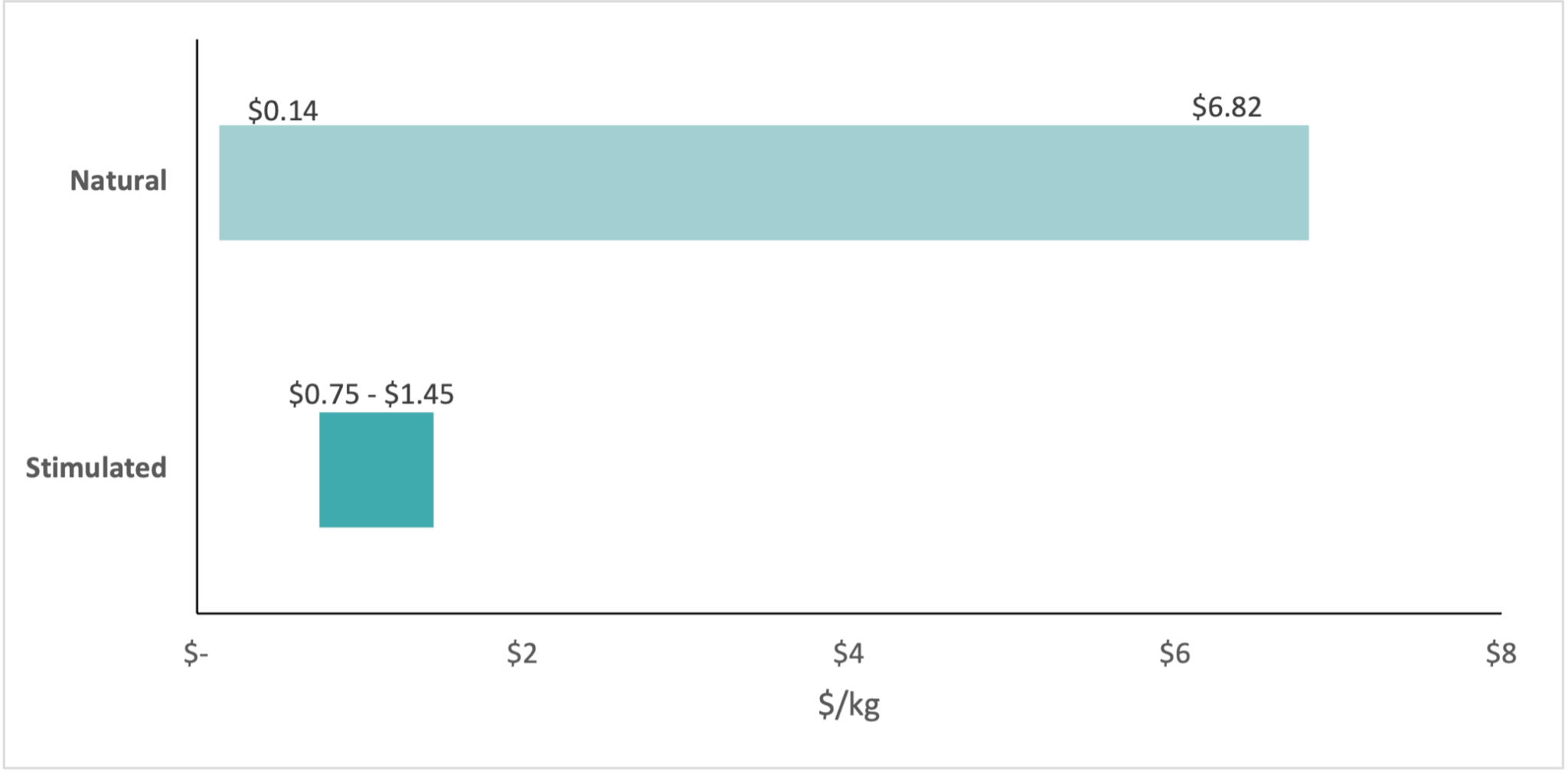
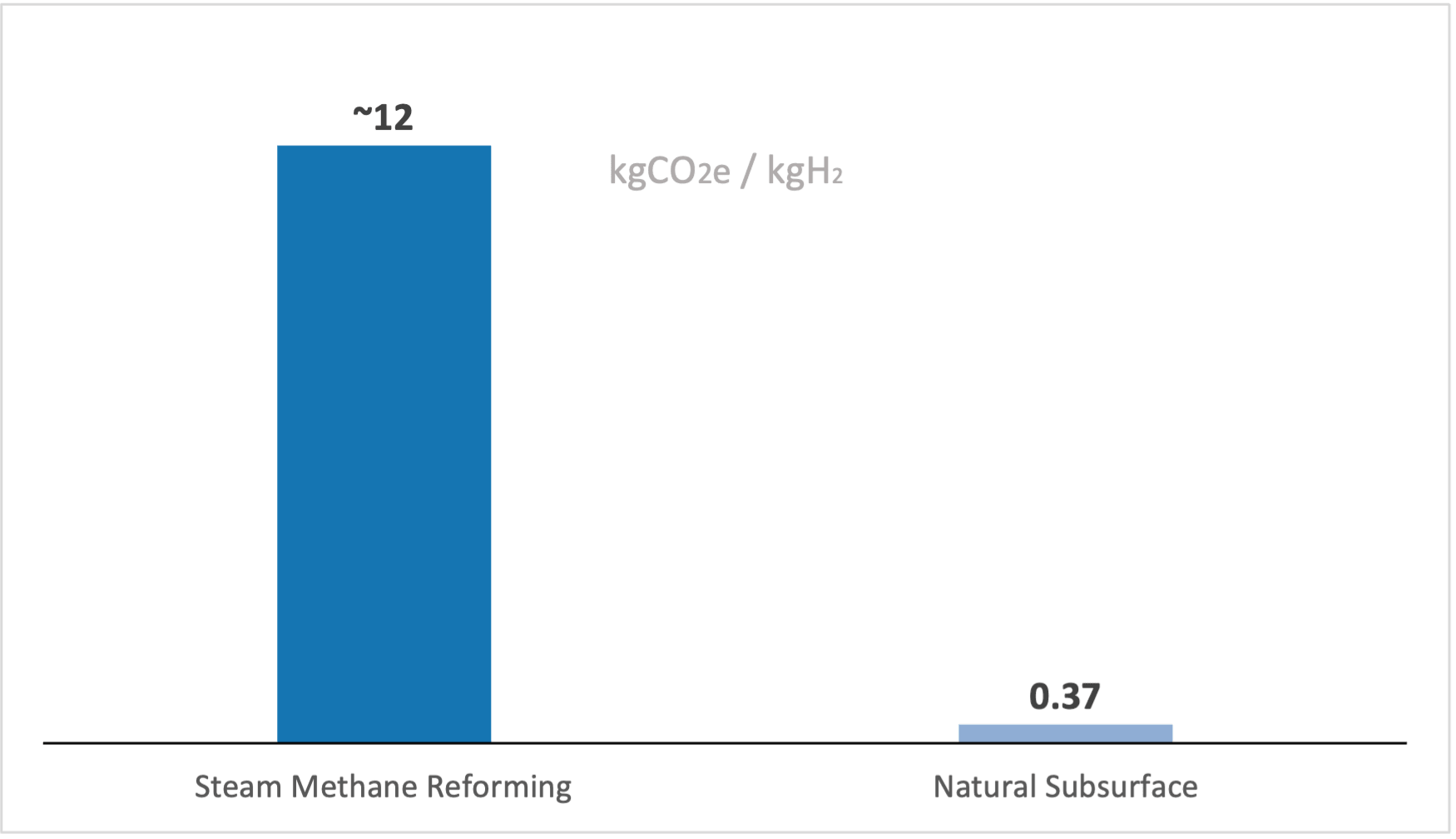
Above figures are preliminary, model-based estimates — not field-validated results. Subsurface hydrogen projects have yet to demonstrate commercial scale, purified production. Cost and emissions estimates assume flow rates, purity, and well performance that have not been proven at scale; delivered costs could rise substantially once transportation and purification processing are included.
A No-Regrets StrategySubsurface hydrogen leverages capabilities the United States already has in abundance: geoscience expertise, a large drilling and well-services industry, extensive subsurface data infrastructure, and national laboratories capable of resource characterization. Even if the resource proves smaller than hoped, the data, tools, and field experience gained would carry over directly to critical minerals exploration and next-generation geothermal development.
How Federal Policy Can HelpSubsurface hydrogen sits at the research and demonstration stage of the technology pipeline — exactly where federal support has historically been most effective at shouldering early risk that private capital typically won’t take on. C2ES recommends three coordinated federal actions.
i International Energy Agency, Global Hydrogen Review 2026 (Paris: International Energy Agency, 2026), https://www.iea.org/reports/global-hydrogen-review-2026.
ii International Energy Agency, Net Zero Roadmap: A Global Pathway to Keep the 1.5 °C Goal in Reach—2023 Update (International Energy Agency, 2023), https://www.iea.org/reports/net-zero-roadmap-a-global-pathway-to-keep-the-15-0c-goal-in-reach.
iii Geoffrey S. Ellis and Sarah E. Gelman, “Model Predictions of Global Geologic Hydrogen Resources,” Science Advances 10, no. 50 (December 13, 2024): eado0955, https://doi.org/10.1126/sciadv.ado0955.
iv Ibid.
| # | Наименование новости | Тональность | Информативность | Дата публикации |
|---|---|---|---|---|
| 1 | New Report: Untapped Potential of Subsurface Hydrogen Offers No-Regrets Investment Opportunity in the US | 0 | 8.2 | 03-09-2026 |
| 2 | Once-in-a-generation materials: how metal-organic frameworks are improving efficiency and reducing energy demand | 0 | 9.04 | 15-09-2026 |
| 3 | New Analysis Finds Federal Transmission Reforms Would Slash Power Sector Emissions, Boost Grid Reliability, and Save Consumers Billions | 0 | 5.9 | 30-09-2026 |
| 4 | Today and the Future | 0 | 7.8 | 21-09-2026 |
| 5 | The EU Emissions Trading System (ETS) is a major signal for Carbon Capture and Utilisation | 0 | 4.9 | 27-08-2026 |
| 6 | Post-2030 Renewable Energy Framework Must Also Focus on Indirect Electrification | 0 | 5.56 | 13-08-2026 |
| 7 | Growth and International Expansion | 0 | 6.53 | 14-09-2026 |
| 8 | Arctic permafrost is thawing and leaking heat-trapping gas into the atmosphere | 0 | 7 | 01-10-2026 |
| 9 | Engineering water infrastructure from concept to operation | 0 | 6.9 | 09-09-2026 |
| 10 | Europe Still Needs Molecules | 0 | 9.48 | 29-09-2026 |