Просмотр новости
Найдите то, что Вас интересует
 Спутники
 РН
РН SpaceX
 Роскосмос
 NASA
NASA
СпутникиРНSpaceXРоскосмосNASA
How a Three-Digit Number Decides Whether You Have Room for Q4
Your Amazon IPI score is a quiet little number sitting in the corner of Seller Central. Most of the year, you can pretend it does not exist. It does not send you flowers. It does not text you back. And then Q4 rolls around, you go to send in your peak-season inventory, and that quiet little number suddenly runs the whole show.
How a Three-Digit Number Decides Whether You Have Room for Q4
Your Amazon IPI score is a quiet little number sitting in the corner of Seller Central. Most of the year, you can pretend it does not exist. It does not send you flowers. It does not text you back. And then Q4 rolls around, you go to send in your peak-season inventory, and that quiet little number suddenly runs the whole show.
Here is the uncomfortable part. The Amazon IPI score matters most at the exact moment you need the most room. Not in the sleepy weeks of spring. Right when Black Friday, Cyber Monday, and holiday demand are begging you to stock up. Miss the mark, and Amazon decides how much you get to send. That is not a great time to hand over the keys.
Revenue is loud. Profit is right. And an IPI score you ignored all year is one of the loudest, most expensive ways to leak profit heading into peak.
What the Amazon IPI Score Actually MeasuresThe Inventory Performance Index is Amazon's report card for how well you manage FBA inventory. It runs on a scale from 0 to 1,000, and it rewards the boring, disciplined stuff that keeps warehouses efficient.
Four inputs move the needle:
Excess inventory
Too much aged, slow-moving stock drags you down fast.
Sell-through rate
How quickly units move relative to what you are storing.
Stranded inventory
Listings that are live in your account but not actually sellable.
In-stock rate
Keeping your best sellers available instead of dipping to zero.
Notice the theme. Amazon is not grading your revenue. It is grading your efficiency. You can post a monster sales month and still tank your score if half your warehouse footprint is dead weight. That is the trap, and it is a profit problem long before it is a storage problem.
Why This Is a Profit Story, Not a Vanity MetricAged stock does not just lower your Amazon IPI score. It charges you rent. Amazon layers on aged-inventory surcharges and storage utilization surcharges (up to $10 per cubic foot on excess) while that inventory sits there earning you nothing. So a low score is really two bills stapled together: the fees you are paying now, and the sales you will miss later when your capacity gets clipped.
The Number That Changes Everything: 400400
The Line You Don't Want to Cross
Amazon can restrict FBA storage capacity for accounts with an IPI score below 400. Drop under it, and your ability to send inventory gets capped, right when you want to be shipping the most.
0–400 · Capped
400–550 · Exposed
550+ · Breathing Room
It gets spicier. Amazon used to review this on a quarterly rhythm, which gave sluggish sellers a comfy grace period. That cushion is gone. The 400 threshold is now enforced fast, and capacity cuts can land within days of your score slipping. So the seller carrying aged stock into Q4 is playing a very dangerous game of chicken with a warehouse algorithm that does not blink.
And 400 is only the floor, not the goal. Scores in the 400 to 550 range still leave you exposed to capacity cuts during rough patches. Seasoned operators aim for 550 or higher so they have breathing room when demand swings. Think of 400 as "you can still get in the building" and 550-plus as "you actually have a desk."
Why Q4 Is the Worst Possible Time to Learn This LessonTwo forces collide in the fourth quarter, and they do not play nice.
Force One
Amazon Tightens the Room
Capacity limits are set monthly based on Amazon's warehouse availability, not just your performance. Heading into peak, that space gets precious and Amazon guards it. On top of that, the forecast window Amazon uses to calculate your allowance was trimmed from six months to five, and ASIN-level restock limits are back. Translation: even with account capacity to spare, a single hot SKU can get capped on how many units you send.
Force Two
You Want the Most Room
This is your Super Bowl. You are trying to stock up for the biggest demand spike of the year. Your instincts say "send everything." Your Amazon IPI score, if you neglected it, says "not so fast."
Put those together and you get the classic Q4 squeeze: maximum demand, minimum room, and a score you can no longer fix overnight. The sellers who win peak are the ones who protected the number back in Q3, while it was still boring.
How to Protect Your Amazon IPI Score Before PeakGood news. The inputs that drive your score are the same inputs you can actually control. You do not need a miracle. You need a plan and a head start.
Clear the Aged Stock Now, Not in NovemberExcess and aged inventory are the fastest way to sink a score and the slowest to unwind. Run a markdown, a bundle, an outlet-style promo, or a removal order on the stragglers before they age another tier. Every cubic foot you free up does double duty: it lifts your score and it opens room for the products that will actually sell in December.
Fix Stranded Listings This WeekStranded inventory is the easiest points you will ever recover. It is stock you already own, already shipped, and simply cannot sell because of a listing issue. Reconnect it and you rescue both units and score in one move.
Reorder With Precision, Not VibesOverordering is how good sellers accidentally build tomorrow's excess-inventory problem. Underordering is how you go out of stock during peak and torch your in-stock rate. The sweet spot is data-driven reorder timing and quantities, tuned to real velocity and lead times, not gut feel and hope.
Where RestockPro Comes In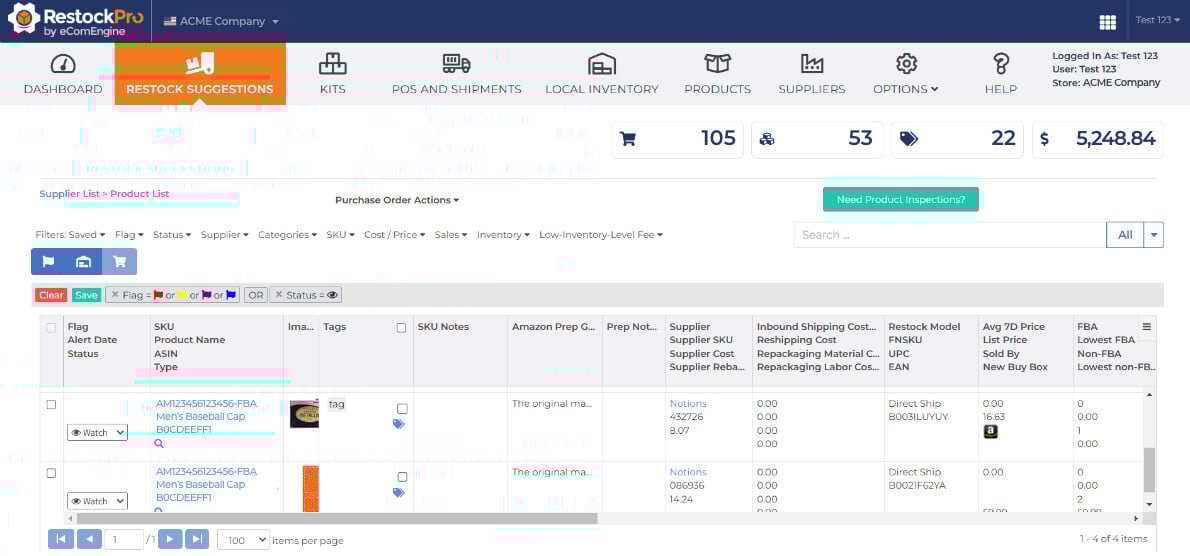
This is exactly the discipline RestockPro was built for. It watches your velocity, flags what is aging, and tells you what to reorder, how much, and when, so you are feeding the score instead of fighting it. Instead of guessing your way into another warehouse full of slow movers, you get restock decisions grounded in your actual numbers.
The result is the version of Q4 you want: healthy sell-through, a score comfortably clear of 400, capacity when you need it, and profit that is not quietly leaking out through storage fees. Protecting your Amazon IPI score stops being a scramble and starts being a system.
Do not wait for the number to matter more than you think. Get ahead of it while it is still just a quiet little number in the corner.
Frequently Asked Questions About Your Amazon IPI ScoreQ: What is a good Amazon IPI score?
A good Amazon IPI score sits at 550 or higher. Amazon can restrict FBA storage capacity for accounts below 400, so 400 is the minimum you want to stay above. Scores between 400 and 550 still risk capacity cuts, while 550-plus gives you room to scale through peak season.
Q: What happens if your IPI score drops below 400?
If your IPI score drops below 400, Amazon can restrict your FBA storage capacity and limit how much inventory you send in. Enforcement is now fast, with cuts possible within days rather than a quarterly review. You may also face storage utilization surcharges of up to $10 per cubic foot on excess inventory.
Q: How is the Amazon IPI score calculated?
Amazon calculates your IPI score from four inputs: excess inventory, sell-through rate, stranded inventory, and in-stock rate. It measures how efficiently you manage FBA stock, not how much you sell. The score runs from 0 to 1,000, and slow-moving or aged inventory is the fastest way to drag it down.
Q: How often does Amazon update the IPI score?
Amazon updates your IPI score continuously and displays it in Seller Central, with capacity limits set monthly based on warehouse availability. Because enforcement now happens quickly rather than on a quarterly cycle, a score that slips below 400 can trigger storage restrictions within days, so monitoring it regularly matters most heading into Q4.
Q: How can I improve my IPI score before Q4?
Improve your IPI score by clearing aged and excess inventory, fixing stranded listings, and reordering with precision so you avoid both overstock and stockouts. Start in Q3, since excess inventory is the slowest input to unwind. Freeing warehouse space lifts your score and opens room for products that sell during peak.
Q: Does a low IPI score cause storage fees?
A low IPI score does not directly create storage fees, but the aged and excess inventory that lowers it does. That stock triggers aged-inventory surcharges and storage utilization surcharges while earning nothing. So a low IPI score usually signals two costs at once: fees you pay now and sales you lose later from capped capacity.
Q: Can RestockPro help improve my Amazon IPI score?
Yes. RestockPro supports the exact inputs that drive your IPI score. It tracks sell-through velocity, flags aging inventory, and recommends what to reorder, how much, and when. That data-driven precision helps you avoid excess stock and stockouts, keeping your score clear of the 400 threshold before peak season demand hits.
Your Amazon IPI score is only quiet
until Q4 makes it loud.
See where your inventory health stands today and fix the leaks while you still have time.
| # | Наименование новости | Тональность | Информативность | Дата публикации |
|---|---|---|---|---|
| 1 | How Much Inventory Can You Actually Afford to Buy Before Q4? | 0 | 11.78 | 10-08-2026 |
| 2 | Stop Guessing: Building a September Q4 PO Without Overcommitting Cash | 0 | 15.59 | 18-09-2026 |
| 3 | What to Scale, Fix, or Stop Restocking Before Q4 | 0 | 10.43 | 27-07-2026 |
| 4 | The Amazon Reimbursement Clock Is Ticking — Audit Before You Lock In Q4 Cash | 0 | 9.56 | 24-08-2026 |
| 5 | Spend Less, Profit More: PPC and Inventory Strategy For Amazon Sellers | 0 | 14.18 | 02-09-2026 |
| 6 | The Reorder Point Formula Every FBA Seller Should Have Memorized by Now | 0 | 13.16 | 09-09-2026 |
| 7 | The Q4 Inventory Cash Trap: How to Avoid Restocking the Wrong Products | 0 | 5 | 15-07-2026 |
| 8 | Scale, Fix, Watch, Stop Restocking: Turning July’s Audit Into a Q4 PO | 0 | 8.19 | 04-08-2026 |
| 9 | SKU Economics 201: Turning Your Profit Audit Into a Monthly Habit | 0 | 16.84 | 21-09-2026 |
| 10 | The Prime Day Profit Scorecard: 10 Metrics Amazon Sellers Should Watch Daily | 0 | 5 | 24-06-2026 |