Просмотр новости
Найдите то, что Вас интересует
 Спутники
 РН
РН SpaceX
 Роскосмос
 NASA
NASA
СпутникиРНSpaceXРоскосмосNASATake advantage of the growing season and breathe deep of its fragrance.
Fragrance isn’t the first thing people think about when planning a garden. They think about flowers, foliage, how the gardens will be seen from inside the house, while approaching the property and walking through the gardens.
The scent of plants doesn’t really come into play until the garden is growing. Then you notice it as a side benefit while enjoying the beauty.
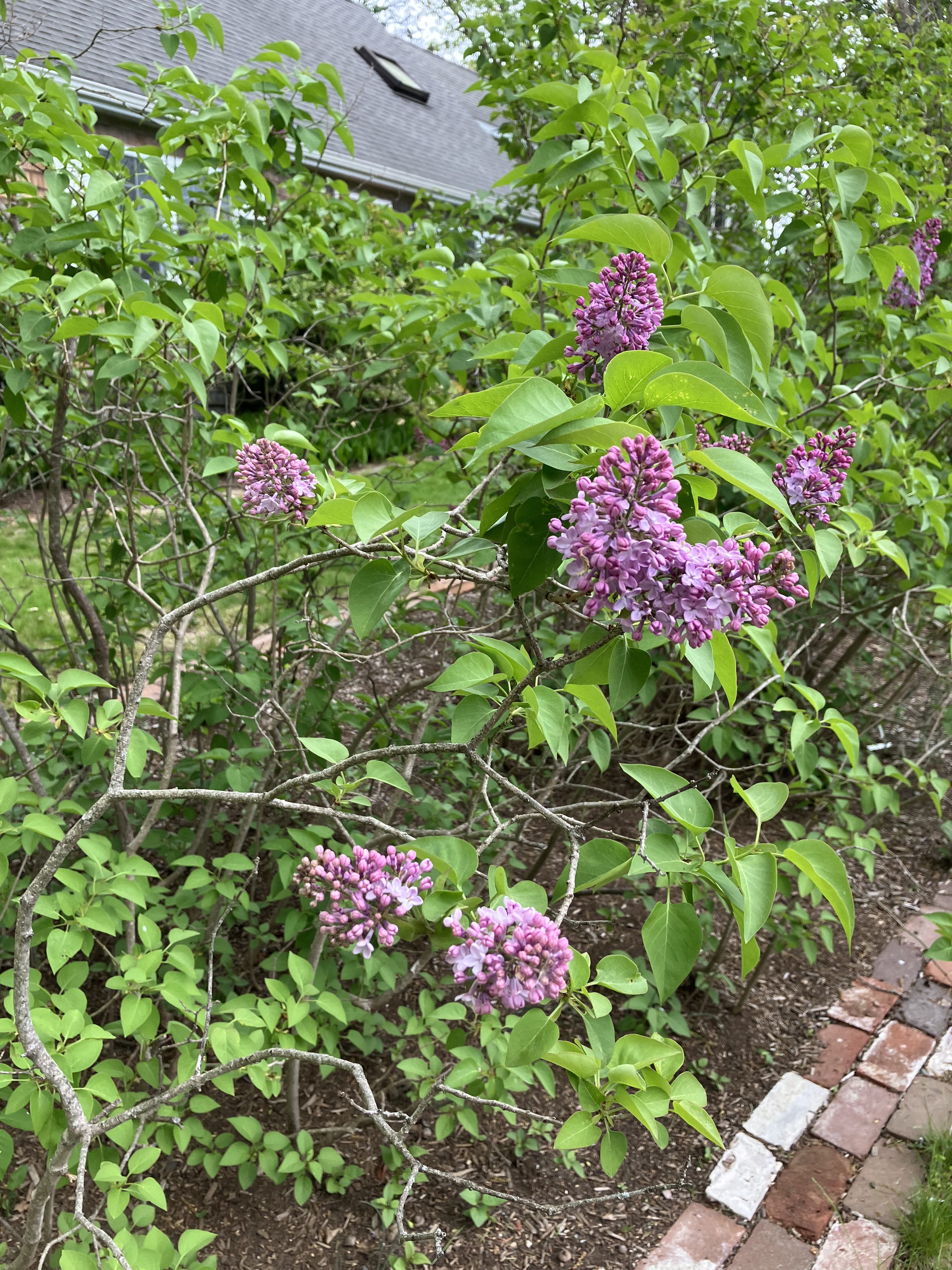 Lilacs in bloom. (Photo by Tom Atwell)
The only flowers Nancy and I plant specifically for their scent are hyacinths, which start as bulbs planted before the ground freezes in the fall and bloom shortly after the snow melts in the spring. We plant them near the primary entrance of our house. The most popular color is purple, but they also come in pink, white, almost black and even yellow. The dark blue and purple varieties tend to have the most fragrance. And while the hyacinths will come back year after year, the blooms are less prolific each year. It’s best to replant every couple of years.
Plants have fragrances for different reasons. Many flowers use it to attract bees and other pollinators so seeds can be created for future seasons. In other cases, fragrance repels predators.
In literature, writers often praise the fragrance of roses. Shakespeare wrote, “A rose by any other name would smell as sweet,” in “Romeo and Juliet,” and Cleopatra used roses to seduce Mark Antony.
But times change. As hybridizers create new roses with larger, longer-lasting blossoms, the fragrance is sometimes sacrificed.
Two of the most highly fragrant roses are considered invasive. Multiflora rose has a wonderful aroma, but can no longer be sold in Maine and people who have it in their yards are urged remove it — a task that I can say from experience is a tough job.
Rosa Rugosa can still be sold, but should not be planted near water because the seed pods float and the plant can be spread that way. We keep one Rugosa for sentimental reasons, a gift from Nancy’s grandmother.
One of the most fragrant commercial roses is Mister Lincoln, which won an All-America Rose Selections award when it was introduced in 1965. When shopping at a local nursery, the tags on the roses should mention how fragrant they are. If the information is lacking, ask an employee.
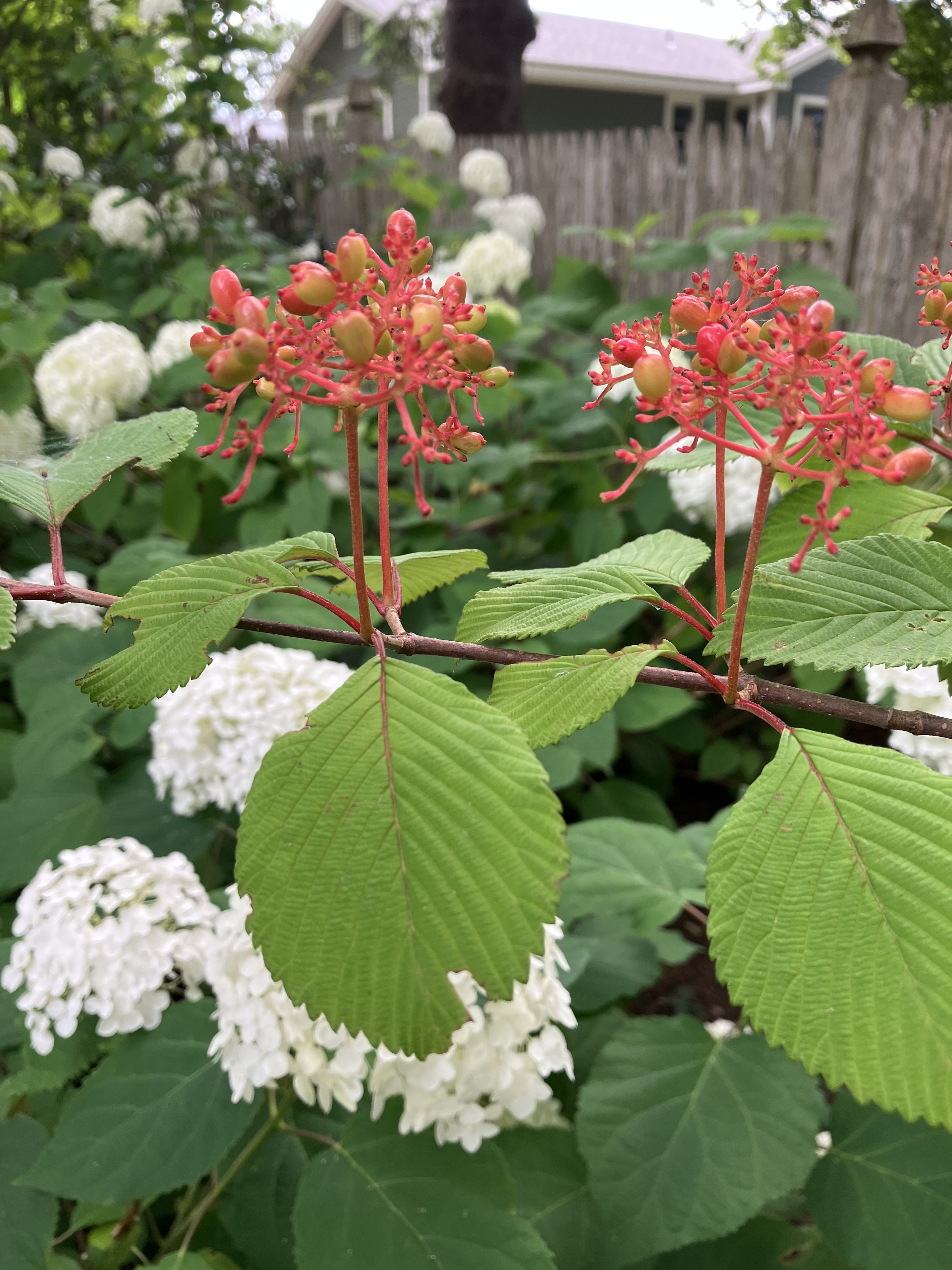 Viburnums with fruit. (Photo by Tom Atwell)
Lilacs, which are done for this season, are also highly fragrant. But they aren’t the only fragrant shrub.
Summersweet Clethra is a native shrub that can grow 5 feet tall, has spiky white or pink fragrant flowers that bloom in mid- to late summer, and yellow foliage in the fall. It is slow-growing and shade tolerant.
Viburnums are also a wonderfully attractive, easy-to-grow, fragrant shrub. A snowball viburnum was one of the first plants we purchased after our house was built in 1975. While the snowball is not native, many other viburnums are, including arrowwood, maplewood, nannyberry and cranberry viburnums, which are fragrant. Viburnums also produce berries, some of which are edible, but we leave them for the birds.
Amelanchier flowers are also fragrant, but some people find their aroma offensive. The shrub gets its common name, serviceberry, because it was in bloom in the spring when funerals were held for people who died over the winter. Ours was just producing berries when I wrote this column.
Dozens of perennial flowers have outstanding aromas in addition to being beautiful.
One favorite is daffodils, with the old-fashioned jonquils being the most highly fragrant. We grow them throughout our gardens, even in our vegetable garden.
Most irises are fragrant, but there are exceptions. German bearded irises are the most fragrant, but others, including Iris pallida, are also praised.
Lilies are also fragrant, and we still grow them despite the lily leaf beetle. Daylilies and lily of the valley, not technically lilies, are also highly fragrant. An especially fragrant variety is the old-fashioned lemon lily.
Dianthus, which has the common name of carnation, pinks or sweet William, is another highly fragrant, easy-to-grow flower. Different species are short-lived perennials, biennials or annuals — so they won’t last forever.
A few more scented plants to consider adding to your garden: Bugbane, honeysuckle, peonies, mock orange and scented geraniums (Pelargonium), which are not hardy perennials, but come in lemon, rose, citronella and more. Put them where you’ll brush up against them.
I haven’t even gotten into fragrant foliage, which can range from pine needles to all sorts of herbs, including parsley, sage, rosemary and thyme, as well as peppermint, bee balm, dill, basil, lavender, anise hyssop and fennel.
So get outside and smell the foliage, as well as the flowers.
GARDENING TASKS AND EVENTS◦ Water. Any plants in pots or those planted this year in your garden will need to be watered regularly. We use water from our rain barrels. It’s not yet time to haul out the hose. I’ll give you an update in a couple of weeks.
◦ Continue to deadhead.
◦ You can still direct sow carrots, beets, lettuce, spinach, and radishes for fall harvest.
◦ July 28, Pollinator-friendly gardening with UMaine Extension, UMaine Gardens at Tidewater Farm, 200 Presumpscot Point Road, Falmouth. Registration is $15. Register online at umaine.edu/calendar
From The Garden is published in partnership with Eat Drink Lucky and sponsored by Skillins Greenhouses.
| # | Наименование новости | Тональность | Информативность | Дата публикации |
|---|---|---|---|---|
| 1 | How to handle invasives in Maine gardens | 0 | 40.43 | 18-08-2026 |
| 2 | This Portland man is growing grapes in his backyard – and dreaming big | 0 | 35.46 | 11-08-2026 |
| 3 | Scenes from Maine’s 6th annual Wild Blueberry Weekend | 0 | 35.91 | 03-08-2026 |
| 4 | 5 places to pick blueberries west of Portland this summer | 0 | 43.09 | 22-07-2026 |
| 5 | Maine farmers want Hannaford to buy more local produce. What’s the holdup? | 0 | 34.37 | 06-08-2026 |
| 6 | Maine Apple Camp returns to Hope in August | 0 | 38.96 | 27-07-2026 |
| 7 | Coastal Rivers to host plant sale Saturday in Damariscotta | 0 | 33.99 | 17-08-2026 |
| 8 | Reference books in the greenhouse at the Cambridge Botanic Garden | 0 | 1 | 04-07-2026 |
| 9 | Some gorgeous milkvetch buried under rye and cheatgrass | 0 | 33.4 | 07-05-2026 |
| 10 | Цветущий котовник украсил клумбы майского Слуцка | 0 | 11.7 | 31-05-2026 |