Просмотр новости
Найдите то, что Вас интересует
 Спутники
 РН
РН SpaceX
 Роскосмос
 NASA
NASA
СпутникиРНSpaceXРоскосмосNASABoba, the Taiwanese drink known for its chewy tapioca pearls and wide range of flavors, is now available at several businesses across western Maine and in ready-to-drink and make-at-home forms at major retailers.
 The Black Pearl at Uncharted Tea in Portland — black tea, oat milk, maple syrup and boba — is served in 2023. (Ben McCanna/Staff Photographer)
FARMINGTON — My introduction to boba came through a Boston restaurant I had already known for years.
In the 1990s, I lived within walking distance of Buddha’s Delight in Boston’s Chinatown neighborhood. It was one of a relatively few fully vegan restaurants in the city at the time and became a regular destination for me.
I do not remember bubble tea being offered when I first began eating there, or at least I was not aware of it. I discovered boba later, after the restaurant became My Thai Vegan Cafe & Bubble Tea Bistro and moved from the ground floor to the second floor of its Beach Street building.
The familiar staff and much of the menu led me to understand it as the same business under a new name. Restaurant histories also identify My Thai as a continuation of the former Buddha’s Delight.
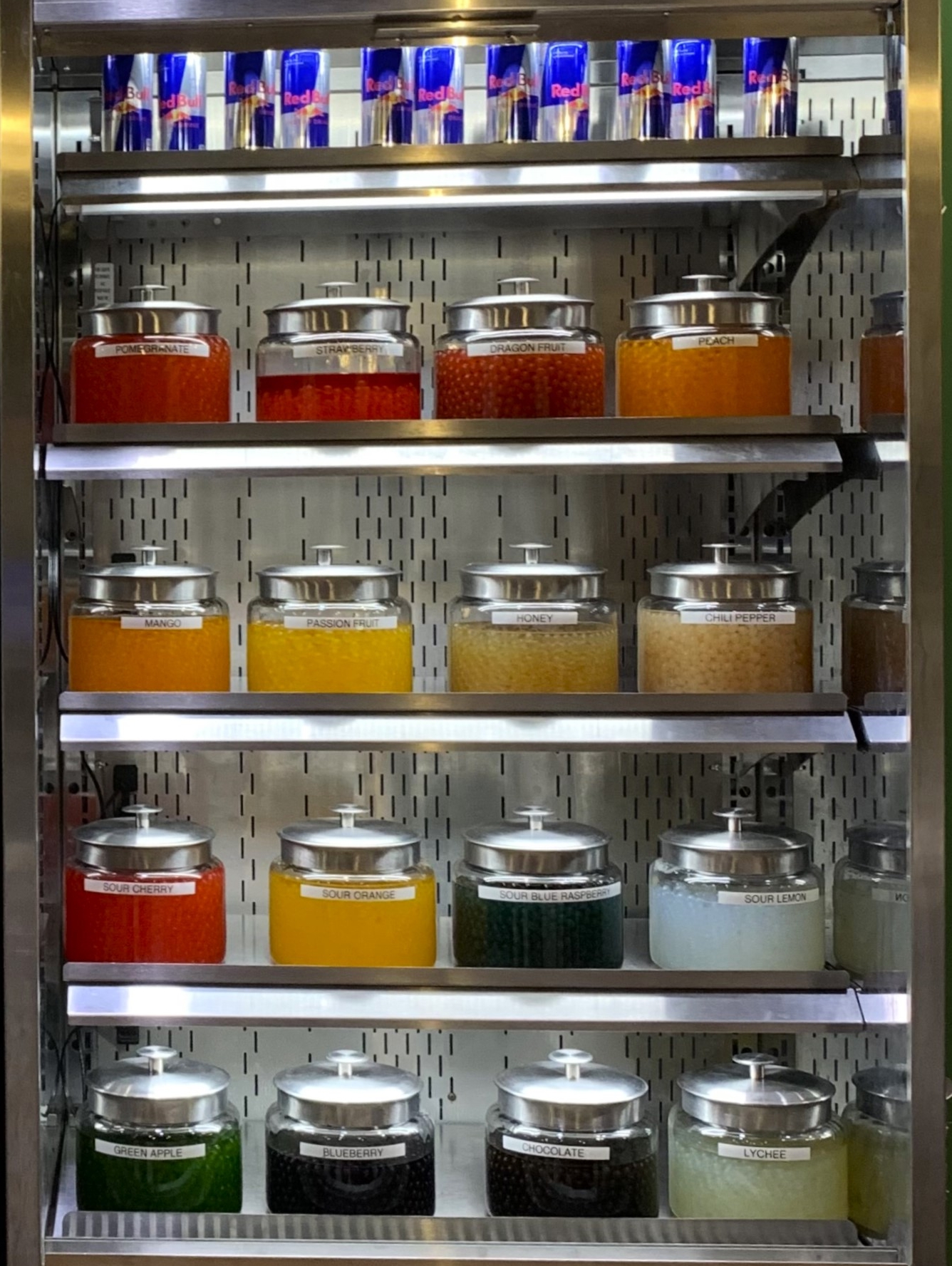 A wide variety of flavored boba is displayed in 2024 at the Boba Shoppe in the Beaver Lodge at the University of Maine at Farmington. (Courtesy photo)
Cuong Tran opened Buddha’s Delight around 1990, when fully vegetarian and vegan restaurants were much less common. A Northeastern University account of the restaurant’s history said Tran opened it because Boston’s Chinatown lacked vegetarian restaurants. His sister, Christine Tran, moved from Vietnam to Boston in 1991 and joined him at the restaurant.
My Thai remains my usual restaurant when I am in Boston and want to eat out. Boba, however, no longer requires a trip to Chinatown or another major city.
Bubble tea is now available at restaurants, a seasonal treat shop and a university dining operation in western Maine. Major retailers also sell canned bubble tea, instant mixes and kits for making it at home.
This guide explains where to find boba in Livermore Falls, Farmington, Lewiston, Rumford and Norway, how the drink developed in Taiwan and reached the United States, and the differences among milk teas, fruit teas, tapioca pearls, popping boba and other toppings.
Uncharted Tea in Portland is among Maine’s best-known dedicated boba shops, while Gong Cha USA Portland, Bubble Bliss Portland, Crunchy Poke Portland, Le’Cha Cafe Portland, Next Tea Portland, Miss Sweet Bubble Tea Portland, Watami Portland and Brunswick, Honey Boba in Westbrook, Tasty Box Cape Elizabeth, Saigon Pho in Lewiston, Thai Kitchen Orono, Fat Panda Boba Tea and Market Bangor, Quickly Boba Cafe in Brunswick and Aki Sushi Tapas Boba in Freeport have also developed substantial bubble tea menus.
 A group of friends from King Middle School in Portland chat in 2022 while they drink bubble tea in the window of Uncharted Tea in downtown Portland. The friends said getting bubble tea together is a favorite weekend activity for them. (Brianna Soukup/Staff Photographer)
WHERE TO FIND BOBA
A group of friends from King Middle School in Portland chat in 2022 while they drink bubble tea in the window of Uncharted Tea in downtown Portland. The friends said getting bubble tea together is a favorite weekend activity for them. (Brianna Soukup/Staff Photographer)
WHERE TO FIND BOBA
LIVERMORE FALLS
Softie Delite, 5 Bridge St.
Softie Delite offers bubble tea along with soft-serve ice cream and other seasonal treats.
Recent offerings have included brown sugar boba and a strawberry-watermelon boba drink. The business gives residents of Jay, Livermore and Livermore Falls a local option without traveling to Farmington or Lewiston.
Because Softie Delite is seasonal and its menu can change, customers should check current hours and available flavors before visiting.
FARMINGTON
Sabaidee Thai, 168 Front St.
Sabaidee Thai offers bubble tea as part of its Thai restaurant menu. Its online menu lists strawberry, mango, pineapple and Thai tea flavors for $5.95.
The short selection may make Sabaidee an approachable starting point for someone who wants to try boba without navigating a long list of tea bases, sweetness levels and toppings.
Customers should ask whether each flavor is prepared as a milk tea, fruit drink or another style, and whether it comes with traditional tapioca pearls or another type of topping.
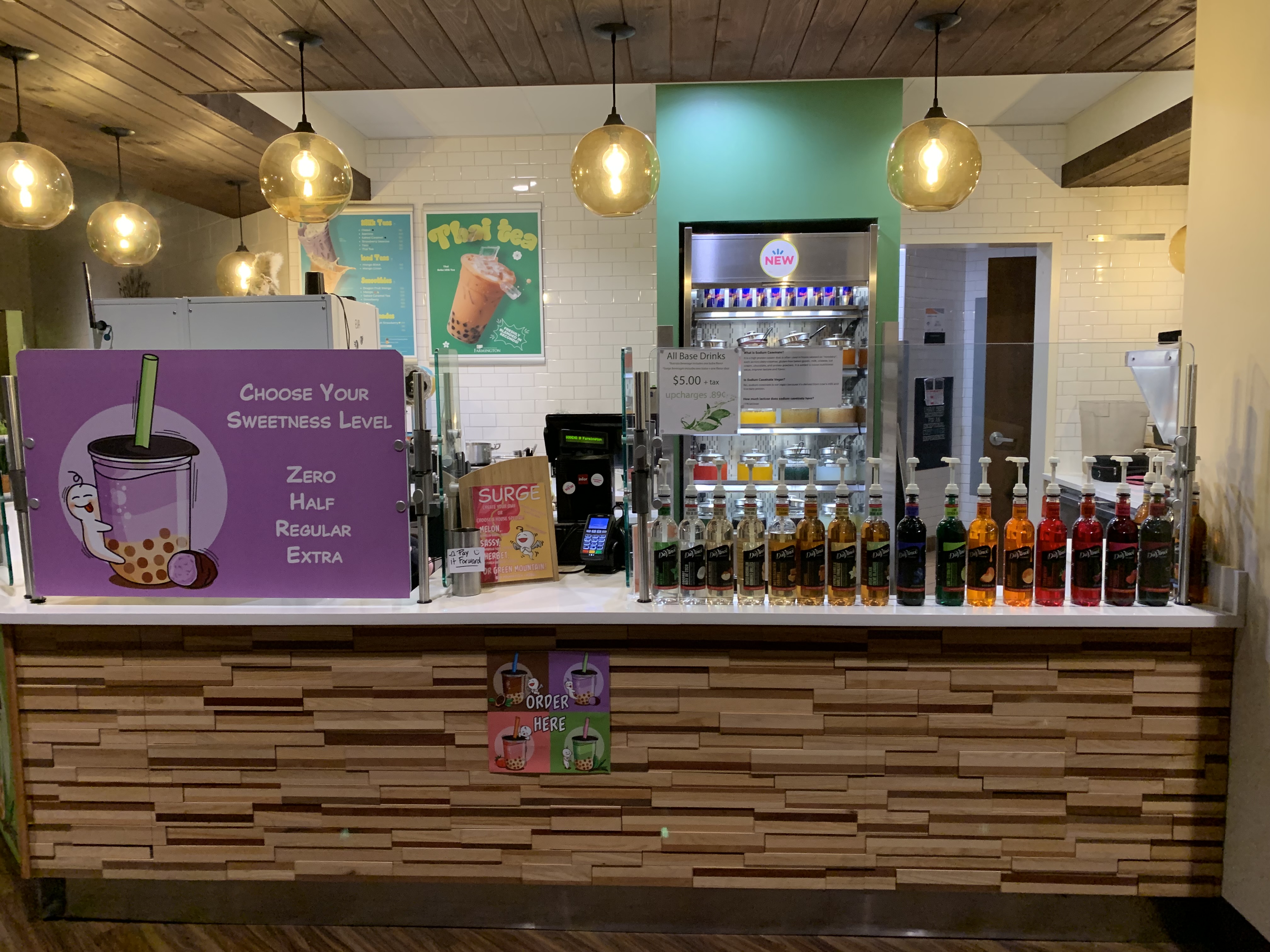 The Boba Shoppe in the Beaver Lodge at the University of Maine at Farmington offers milk teas, lemonades, smoothies and energy drinks all customizable with flavor shots and boba. (Courtesy photo)
The Boba Shoppe at the University of Maine at Farmington, Beaver Lodge, 111 South St.
The Boba Shoppe at UMF offers a more customizable experience, with iced milk teas, lemonades, smoothies and energy drinks that can be combined with flavor syrups and boba toppings.
When it opened in 2024, drinks began at $5, with additional charges for some customizations. The shop was also open to the public. Current hours and prices should be confirmed because the Beaver Lodge follows the university calendar and operates on a different schedule during academic breaks.
The campus counter is the closest western Maine option to a dedicated boba shop, where choosing the flavor and topping is part of the experience.
RUMFORD
PoWer DriVen Nutrition, 1173 Route 2
PoWer DriVen Nutrition has recently advertised boba drinks, including boba options and boba protein shakes.
Because the information comes from recent social media posts rather than a stable online menu, customers should confirm the current address, flavors and regular availability before visiting.
NORWAY
Dolce Amici Gelato & Cocktails, 427 Main St.
Dolce Amici has offered boba milk tea alongside its gelato, food and cocktail menu.
The downtown Norway business illustrates how boba has spread beyond Asian restaurants and dedicated tea shops and into businesses centered on desserts and specialty drinks.
Because its menu changes, customers planning a trip specifically for boba should confirm the current selection before visiting.
BOBA FROM THE STOREWestern Maine residents can also find packaged boba products at major retailers such as Walmart, although selections vary by store.
Options may include ready-to-drink canned bubble tea, instant kits, frozen brown sugar pearls and dry tapioca pearls. Kits and frozen pearls can be heated and added to milk, tea or coffee, while dry pearls require boiling and sweetening.
Packaged boba can provide an easy introduction, but the pearls may be smaller, softer or less chewy than those prepared fresh. Customers should check local availability online before making a special trip.
WHAT IS BOBA?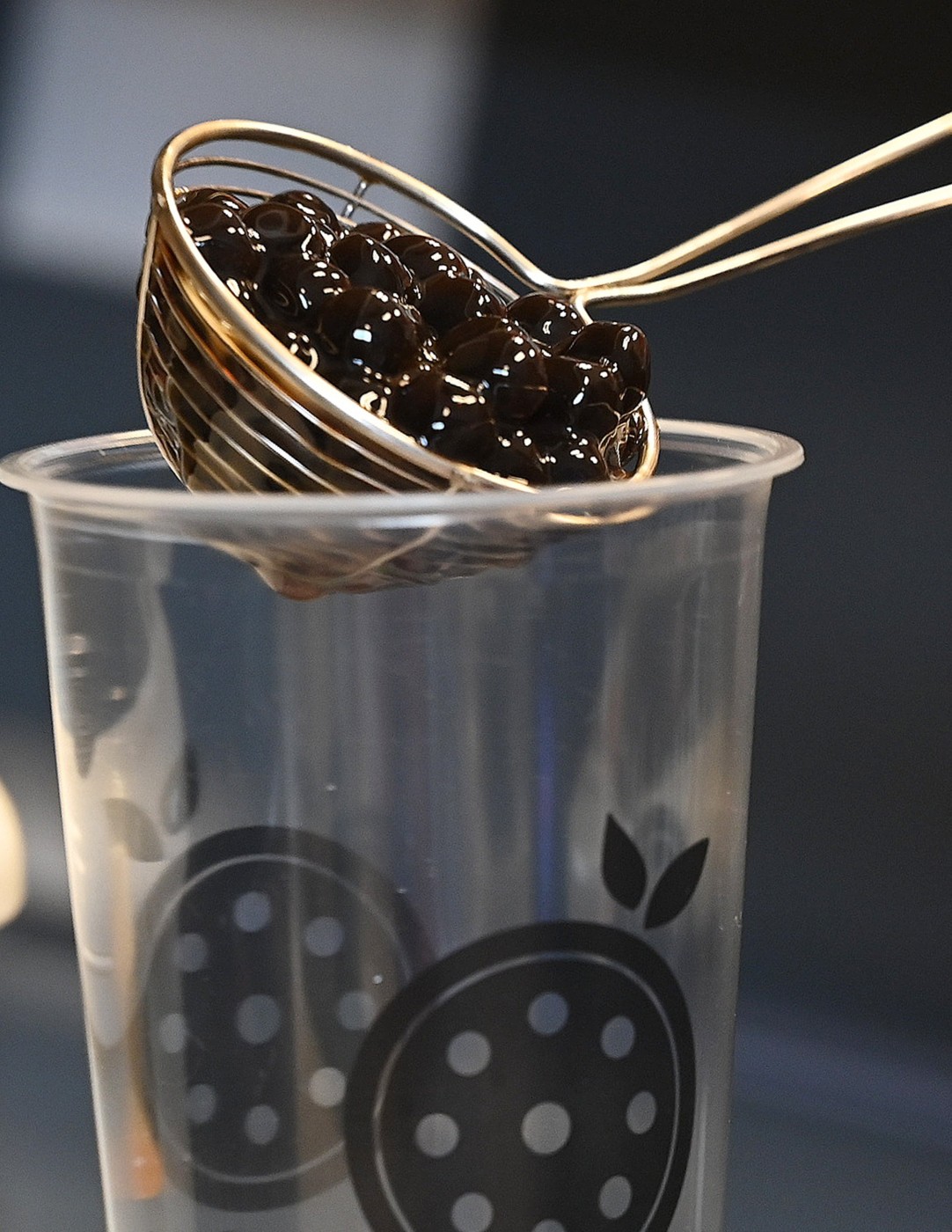 Tapioca balls are added to a cup for a Taro Milk Tea in 2023 at Quickly Boba Cafe in Brunswick. (Shawn Patrick Ouellette/Staff Photographer)
“Boba” can refer to either the chewy pearls or the complete drink. “Bubble tea,” “boba tea,” “pearl milk tea” and “tapioca tea” are commonly used for the broader category.
Traditional bubble tea combines brewed tea, milk or creamer, sweetener, ice and tapioca pearls. It is served with a wide straw large enough to carry the pearls.
The pearls are made primarily from tapioca starch, which comes from cassava root. They are boiled until they develop a dense, springy texture and are often soaked in brown sugar syrup.
The drink is meant to be sipped and chewed. In Taiwan, the desired springy or elastic texture is sometimes described as “QQ.”
One explanation for the name “bubble tea” is that it refers to the foam produced when tea, sweetener and ice are shaken, rather than to the pearls themselves.
Not everything called boba is tapioca. Shops may also offer fruit jelly, pudding, aloe, translucent crystal boba or juice-filled popping boba.
Not every drink contains milk or even brewed tea. Fruit drinks, lemonades, smoothies and flavored milk beverages are often included on modern boba menus.
WHERE DID IT BEGIN?Bubble tea emerged in Taiwan during the 1980s, although its exact inventor remains disputed.
Chun Shui Tang, a tea business in Taichung, has claimed the drink was created after tapioca balls were added to iced milk tea. Hanlin Tea Room in Tainan has offered a competing account involving tapioca balls its founder saw at a traditional market.
A court dispute did not establish a sole inventor. The drink is best understood as a Taiwanese combination of existing iced tea, milk tea and tapioca dessert traditions.
Boba reached the United States during the 1990s, largely through Taiwanese and other Asian immigrant communities. Early concentrations developed in California before shops appeared in cities including New York and Boston.
From those urban neighborhoods, boba spread to college campuses, malls, suburban shopping centers and eventually smaller communities in Maine.
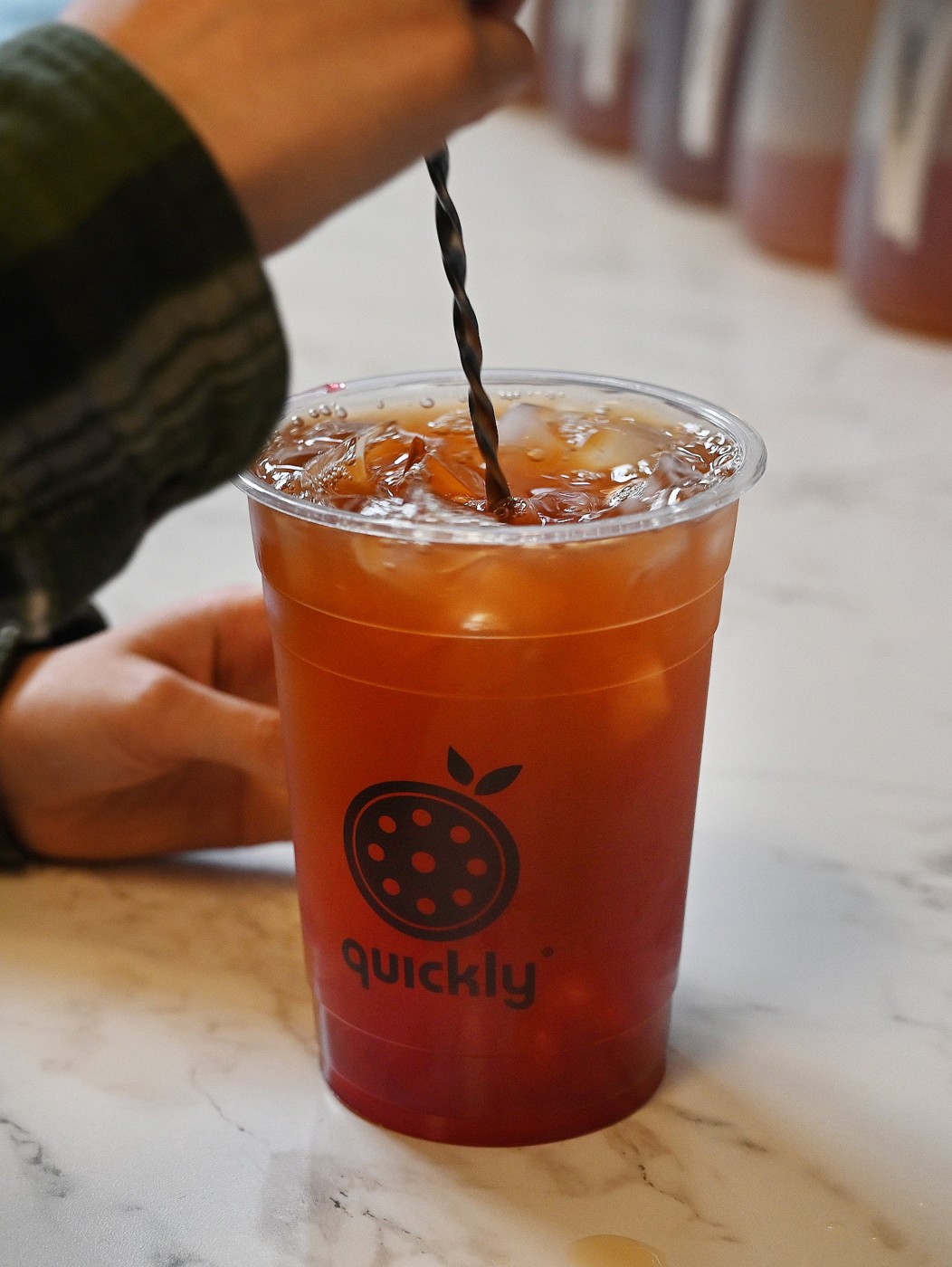 An employee stirs a strawberry green tea made with strawberry popping boba in 2023 at Quickly Boba Cafe in Brunswick. (Shawn Patrick Ouellette/Staff Photographer)
Classic milk tea: Usually made with black tea, milk or nondairy creamer, sweetener and tapioca pearls. It is the basic reference point for traditional bubble tea.
Thai milk tea: A strong, sweet and aromatic tea commonly mixed with condensed milk, evaporated milk or creamer. It is usually orange.
Taro milk tea: A creamy, mildly nutty drink that is often purple. Some businesses use cooked taro or taro paste, while others use flavored powder.
Brown sugar milk: Made with tapioca pearls cooked or coated in dark brown sugar syrup. The syrup may be streaked around the cup before milk is added. Some versions contain little or no brewed tea.
Matcha milk tea: Combines powdered green tea with milk and sweetener. It generally has a stronger and more vegetal tea flavor.
Fruit tea: Usually combines black, green, jasmine or oolong tea with juice, puree, syrup or fruit jam. Common flavors include mango, strawberry, peach, pineapple, passion fruit and lychee.
Frozen boba: A blended drink resembling a smoothie or slush. Tapioca or another topping is usually placed in the cup after the drink is blended.
Coffee boba: Iced coffee, cold brew or Thai coffee served with tapioca pearls or another topping.
CHOOSING A TOPPINGTraditional tapioca pearls are dark, dense and chewy. They provide the classic boba experience.
Popping boba is different. It consists of thin spheres filled with fruit-flavored liquid that burst in the mouth.
Crystal boba is translucent, lighter and usually firmer than tapioca. It may be made from konjac or another plant-based gelling ingredient.
Fruit jellies are commonly flavored with mango, coconut or lychee and cut into cubes or strips.
Grass jelly is dark and soft with a mild herbal flavor. Some shops also offer aloe pieces, sweet beans or custard-like pudding.
Customers should ask what topping is included rather than assuming every drink comes with traditional tapioca.
IS BOBA VEGAN?Not necessarily.
My introduction came through a fully vegan restaurant, but bubble tea may contain dairy milk, condensed milk, honey or creamer made with milk derivatives. Pudding toppings may contain milk or eggs.
Plain tapioca pearls are generally made from tapioca starch, water and sugar, although commercial recipes vary.
Fruit tea may be the simplest plant-based choice, but customers should still ask about sweeteners, flavorings and toppings. Packaged products should also be checked carefully because “nondairy” does not always mean vegan.
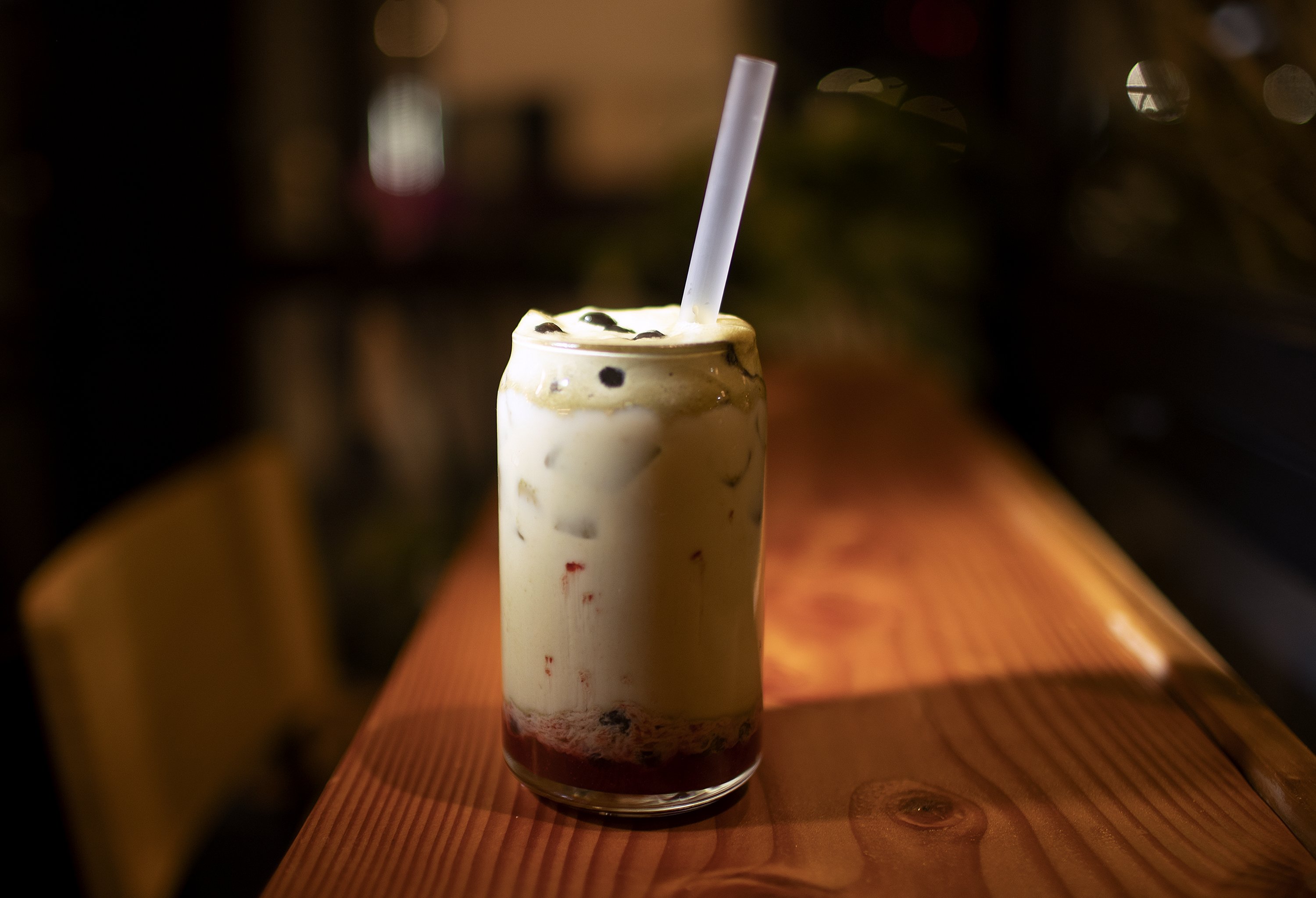 A strawberry-matcha boba in 2024 at Dok Mali Noodle Bar in South Portland. (Derek Davis/Staff Photographer)<?xml version="1.0"?>
Purchase this image
WHAT SHOULD A BEGINNER ORDER?
A strawberry-matcha boba in 2024 at Dok Mali Noodle Bar in South Portland. (Derek Davis/Staff Photographer)<?xml version="1.0"?>
Purchase this image
WHAT SHOULD A BEGINNER ORDER?
Someone seeking the traditional experience should start with black milk tea and tapioca pearls.
Thai tea is a good choice for someone who prefers a sweeter drink. Taro is creamier and more dessert-like, while matcha has a stronger tea flavor.
A mango, strawberry or passion fruit tea with popping boba may appeal to someone who does not want milk or the dense chew of tapioca.
When sweetness can be adjusted, starting below the maximum level is often sensible. Tapioca pearls are commonly soaked in syrup and add sweetness of their own.
The most important question is what kind of topping is being served. Tapioca, crystal boba and popping boba produce three very different drinks despite sharing the same general name.
Boba is still easier to find in Boston or Portland than in many western Maine towns, but it is no longer an urban novelty.
It is available at a seasonal treat shop in Livermore Falls, a Thai restaurant, university counter in Farmington, a Vietnamese restaurant in Lewiston, a nutrition shop in Rumford and, when offered, a gelato shop in Norway. Canned drinks and home kits extend its reach to communities without a boba counter.
My introduction began upstairs on Beach Street in Boston’s Chinatown. For someone in western Maine today, the first wide straw may be only a few towns away.
| # | Наименование новости | Тональность | Информативность | Дата публикации |
|---|---|---|---|---|
| 1 | The best matcha in Portland, Maine? A newbie tasted her way through | 0 | 40.03 | 09-07-2026 |
| 2 | This Press Herald reporter’s connection to this classic sandwich is personal | 0 | 36.66 | 04-08-2026 |
| 3 | Bagel shop opens in Topsham | 0 | 46.52 | 18-08-2026 |
| 4 | What is coffee cupping? I tried it at a Portland roastery. | 0 | 37.2 | 07-08-2026 |
| 5 | Holy Donut to close Brunswick store | 0 | 36.82 | 12-08-2026 |
| 6 | When it comes to groceries, Maine shoppers know where their loyalties lie | 0 | 5 | 18-06-2026 |
| 7 | Butcher shop and deli opening in Portland’s Old Port | 0 | 44.09 | 04-08-2026 |
| 8 | 3 spots for the best oysters in Biddeford, Saco and Old Orchard Beach | 0 | 35.09 | 05-08-2026 |
| 9 | Sweetfern Geometer restaurant opens on Portland’s Washington Avenue | 0 | 36.13 | 05-08-2026 |
| 10 | An's Gelato opens shop at ‘Top Gun' House in Oceanside | 0 | 8.59 | 28-07-2026 |
