Просмотр новости
Найдите то, что Вас интересует
 Спутники
 РН
РН SpaceX
 Роскосмос
 NASA
NASA
СпутникиРНSpaceXРоскосмосNASAA new grant will fund development of a software tool, MorphoCam, which will leverage AI to automatically detect and estimate distance to animals in camera trap images. The grant has been awarded to academics at Oxford’s Departments of Biology and Computer Science by the Natural and Environmental Resources Council (NERC)
Posted: 1st May 2024
A new grant will fund development of a software tool, MorphoCam, which will leverage AI to automatically detect and estimate distance to animals in camera trap images. The grant has been awarded to academics at Oxford’s Departments of Biology and Computer Science by the Natural and Environmental Resources Council (NERC).
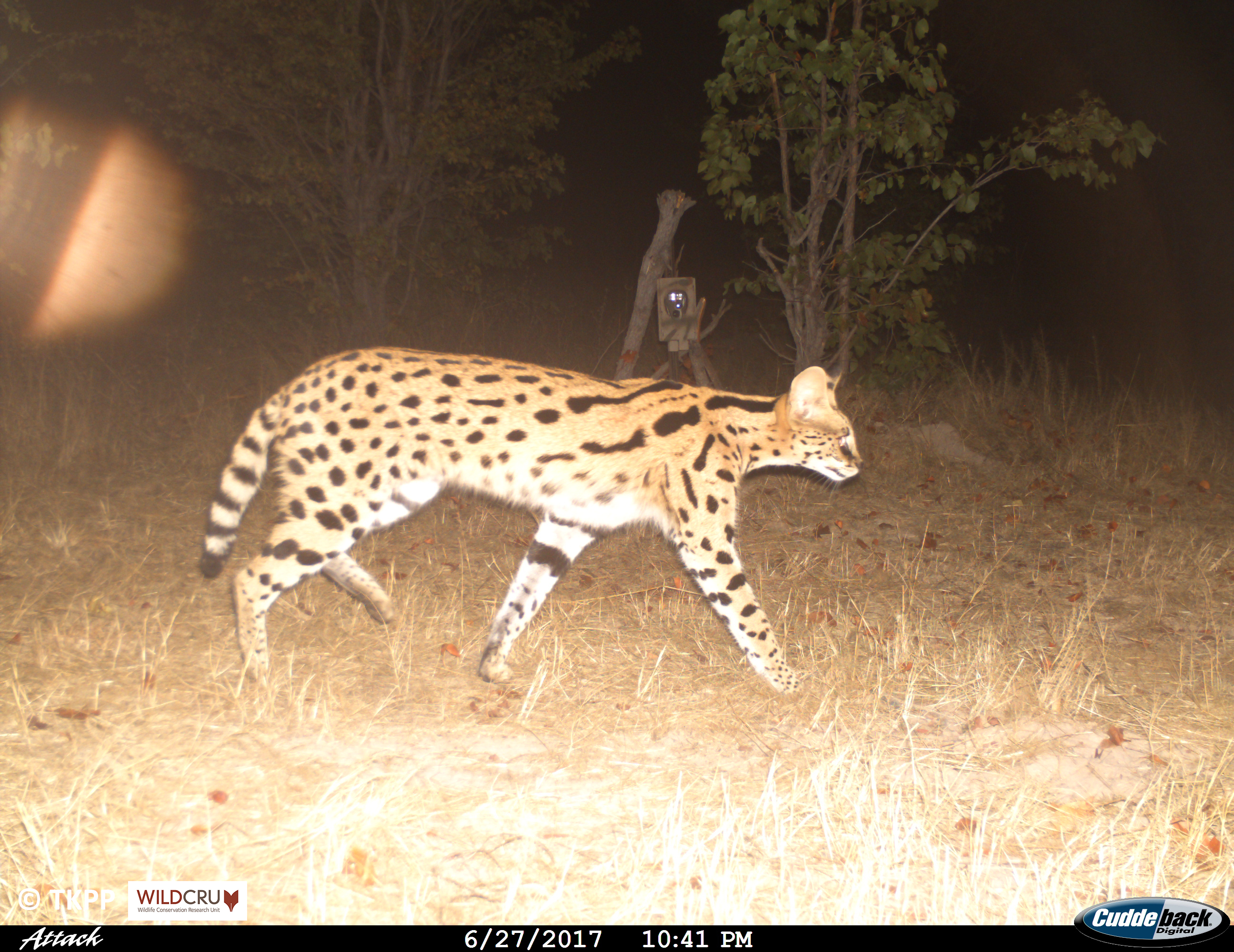 A serval caught on a camera trap. Servals are 'marked' species - having identifiable patterns. Image: WildCRU
Imaging technology is used in biodiversity monitoring projects across the world, and has been transformative in enabling widespread, automated data collection on a scale that wouldn’t be possible to carry out manually. Camera traps are one of the most popular options, with a wide range of applications from assessing population density and conservation outcomes to evaluating the health of individual animals.
However, whilst the volume of data collected has been a huge step forward for biodiversity studies, it’s also one of the biggest challenges. Several tools have been developed to automate the process by removing images without animals in them and identifying the species that are found – but assessing population density has generally only been able to be automated for marked species – those that have identifiable patterns, such as a leopard’s spots.
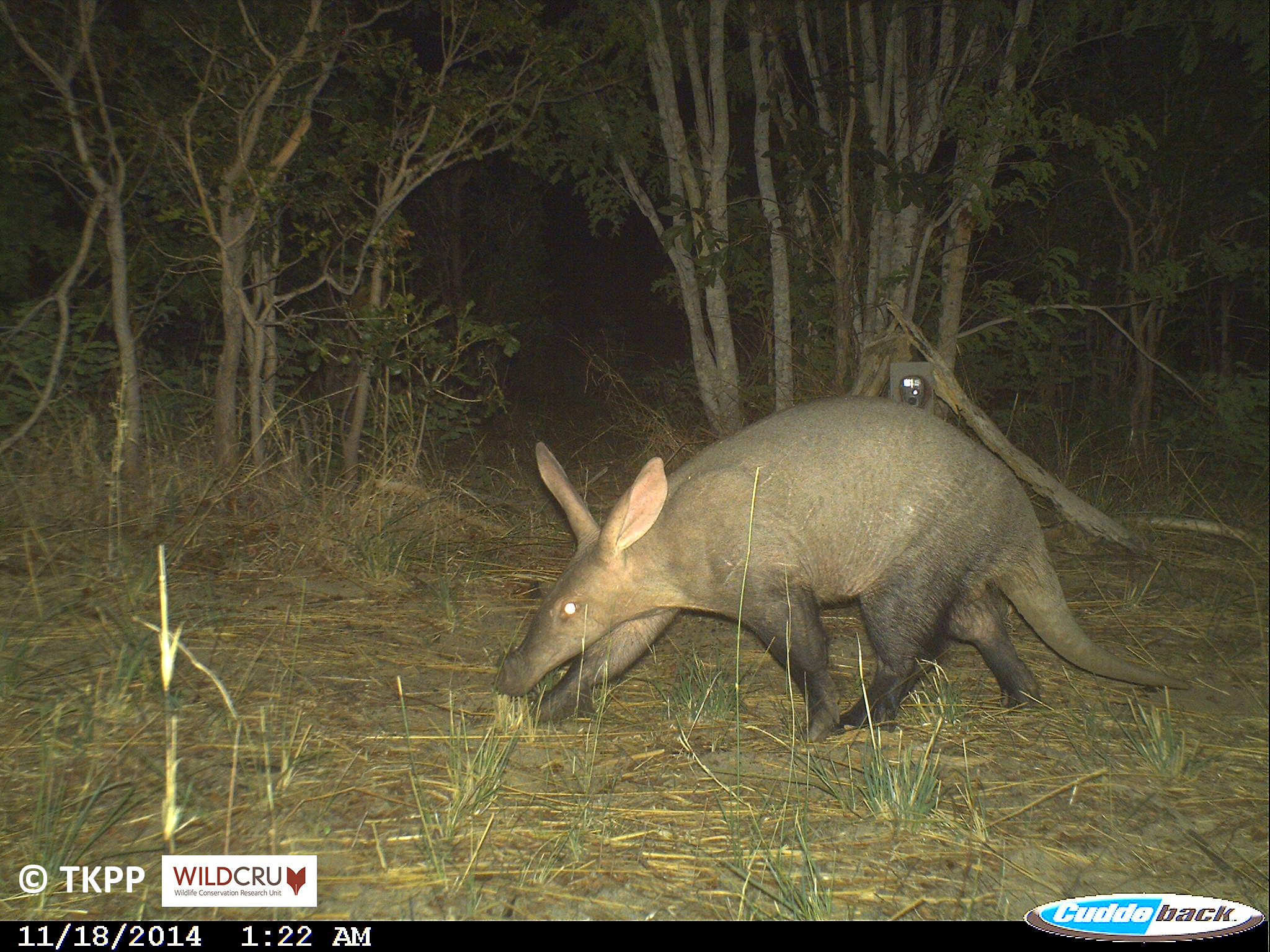 An aardvark caught on a camera trap. It is harder to automatically find the population density for 'unmarked' animals. Image: WildCRU
However, most animal species detected by camera traps are unmarked. Distance sampling is one of the most popular techniques for surveying wildlife populations, and the new software will for the first time enable the distance of animals to camera traps to be estimated automatically by leveraging AI tools from computer vision.
The tool will also allow researchers to measure body size and shape and to construct digital 3D models of photographed animals - information which can be used to estimate an animal’s age and body condition. This will give researchers a greater understanding of the age, structure and health of a population, which is important for prioritising and monitoring the impact of conservation interventions. The tool will be released as an open-source package for other researchers and scientists to use and adopt.
| # | Наименование новости | Тональность | Информативность | Дата публикации |
|---|---|---|---|---|
| 1 | Oxford researchers revolutionise 3D wildlife tracking with WildPose | 0 | 8.4 | 13-03-2025 |
| 2 | New training centre to bridge gap between environmental science and AI to address global environmental challenges | 0 | 6.47 | 31-10-2023 |
| 3 | Technology to measure chance of news being fake | 0 | 7.23 | 26-06-2018 |
| 4 | Oxford researchers awarded ARIA funding to develop safety-first AI for business | 0 | 11.02 | 10-04-2025 |
| 5 | New G-Research scholarships in machine learning | 0 | 13.77 | 04-03-2025 |
| 6 | Professor Graham Cormode joins Oxford-UBS Centre for Applied AI as Research Theme Lead | 0 | 10.95 | 16-07-2026 |
| 7 | Искусственный интеллект поможет находить дальневосточных леопардов на снимках фотоловушек | 0 | 0 | 10-07-2020 |
| 8 | ЮУрГУ запускает новые образовательные программы по искусственному интеллекту | 0 | 0 | 02-12-2021 |
| 9 | Professor Elias Koutsoupias awarded ERC Advanced Grant | 0 | 9.13 | 23-06-2026 |
| 10 | Oxford Computer Science contributes to UK-wide AI and bioscience training initiative | 0 | 10.86 | 16-12-2025 |