Просмотр новости
Найдите то, что Вас интересует
 Спутники
 РН
РН SpaceX
 Роскосмос
 NASA
NASA
СпутникиРНSpaceXРоскосмосNASAEighteen years before Colorado became a state, nuggets of gold discovered in what is now downtown Denver brought tens of thousands of prospectors to the region. Their exploits would result in one of the largest...
Eighteen years before Colorado became a state, nuggets of gold discovered in what is now downtown Denver brought tens of thousands of prospectors to the region.
Their exploits would result in one of the largest mining booms in U.S. history and would help propel Colorado to statehood in 1876. Now, as Colorado celebrates 150 years since its founding, historians say the state owes much of its success to the mining industry.
“Colorado wouldn’t even be Colorado without mining,” said Lisa Hancock, curator at the Aspen Historical Society.
Initial discoveries along the South Platte River in 1858 would lead prospectors to venture into the high country, where the search for gold gave way to an expansive mining industry that included silver, coal and precious minerals. The first mining towns were those in proximity to the Front Range, including Central City, Blackhawk, Leadville, Georgetown and Idaho Springs.
Yet despite the mining boom’s association with gold, Colorado is “not actually a gold state; we are a silver state,” said Rachel Storm, head of curatorial services and curator of business and industry at History Colorado.
The advent of silver mining was critical to building Colorado’s economy and generating enough money, so the region — then just a territory — could pay its share to the federal government as the nation’s 38th state.
“We almost immediately became a silver territory, and silver is really what got us big enough to even apply for statehood,” Storm said.
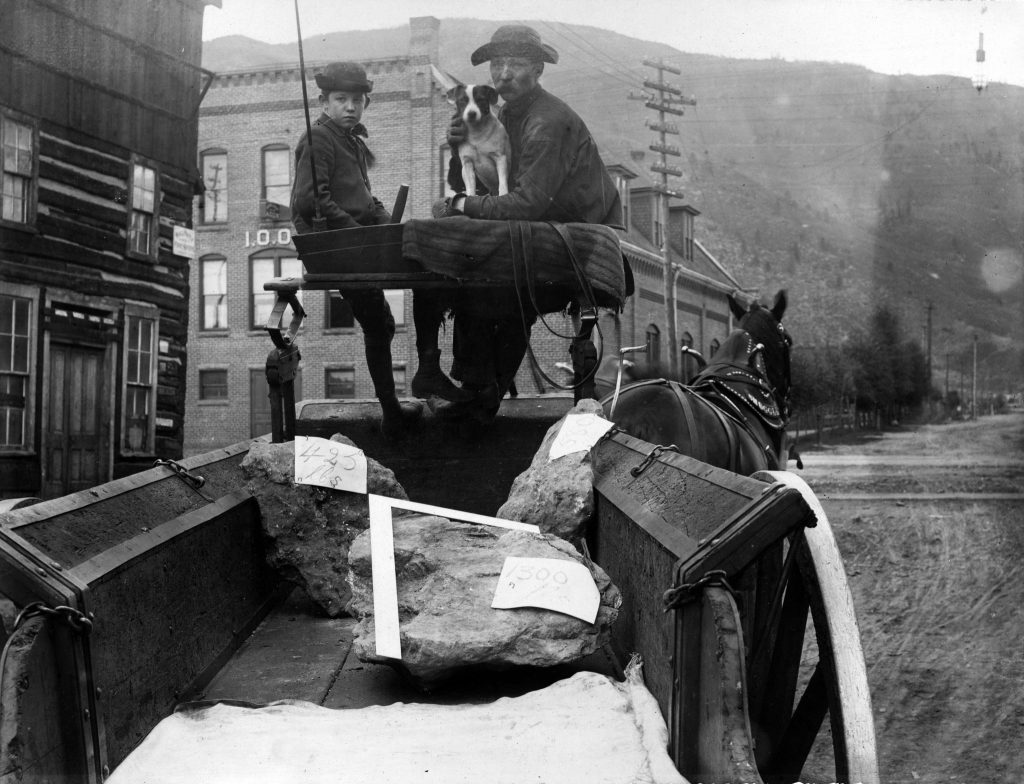
The mining industry helped shape some of Colorado’s most iconic mountain towns.
At the height of silver mining in 1893, Aspen was producing one-sixth of the nation’s silver and one-sixteenth of the world’s silver, according to Hancock. At the time, Aspen was Colorado’s third-largest city after Denver and Leadville, and its success with silver helped it to become a prosperous planned community.
“Leadville kind of had the reputation as a Wild West-type of town, whereas Aspen was, from the very beginning, planned streets and laws,” Hancock said.
But Aspen and other silver-mining towns saw upheaval in 1893, when a silver crash — spurred by multiple economic and governmental factors, including the repeal of the 1890 Silver Purchase Act — shuttered mines across the country.
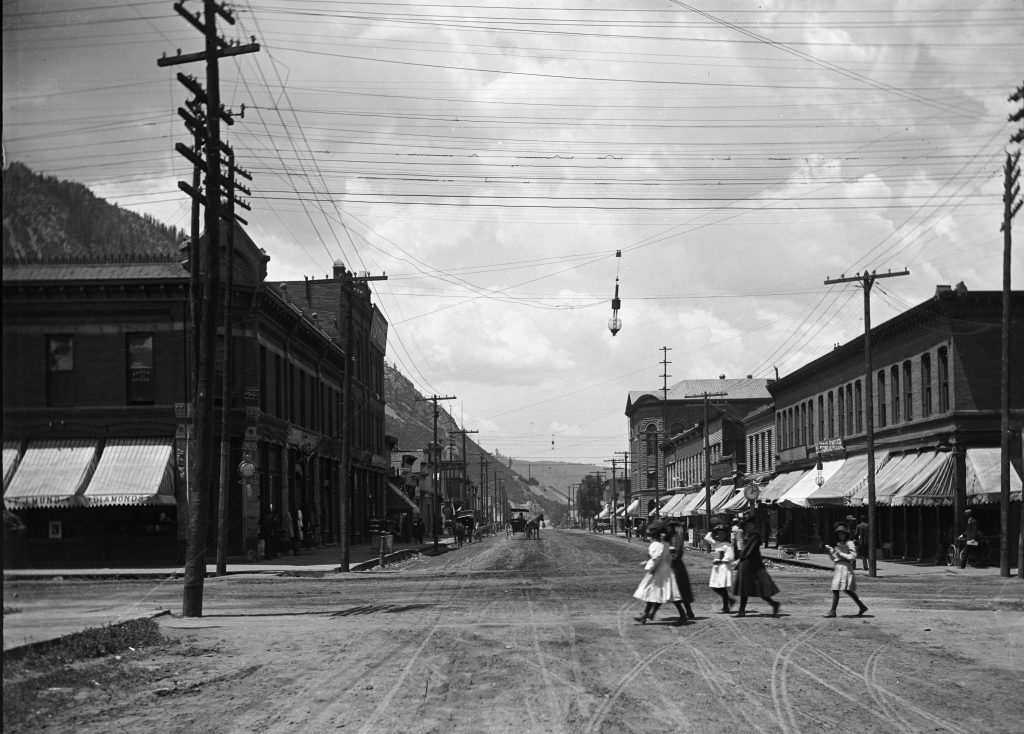
“Overnight, all of our mines shut down,” Hancock said, throwing around 2,000 miners out of work in Pitkin County.
While the mining boom began to dissipate in the late 19th Century and into the early 20th Century, the infrastructure it left behind would pave the way for mountain towns like Aspen to transform into a world-class ski mecca decades later.
“Our Victorian buildings and the whole feel of the city itself were laid down by mining,” Hancock said. “… That’s kind of what put Aspen on the map as a ski resort, that’s part of what makes Aspen what it is.”
The mining industry’s mark on modern-day Aspen is visible in other ways. Aspen Mountain, founded in 1946, features a gondola that Hancock said follows a similar path to a tram that would carry workers to a former mining town — Tourtelotte Park — that sat high atop the mountain.
“There are parallels to digging up the gold from underneath the mountain to skiing the snow on top of the mountain,” Hancock said.
‘Mining always reinvented itself’Not every mining town’s story was the same.
Breckenridge, the oldest municipality in Colorado west of the Continental Divide, maintained its status as a mining town well into the 20th Century.
“Gold is kind of the through line of Breckenridge’s mining story,” said Larissa O’Neil, executive director for Breckenridge History. “It’s where it started, and it’s kind of where it ended, too.”
The first documented discovery of gold in the Breckenridge area — found near what is now the City Market grocery store in Dillon — grew into a rich mining culture in the town and surrounding Summit County, said Bill Fountain, a historian with the Summit Historical Society who has authored 17 books on the county’s mining history.
Farncomb Hill, located on slopes east of downtown Breckenridge, had “some of the most valuable gold in the entire world,” Hill said.
The Breckenridge area also saw silver, lead, copper and zinc mining. Zinc, while initially a deterrent for miners, became critical during both World Wars as it is used to make steel, Hill said. Two of Breckenridge’s gold mines, the Country Boy Mine and Wellington Mine, served as zinc mines during World War II. The Wellington Mine remained operational up until 1972.
Historians say the town’s mining story is one of adaptability and perseverance.
“Breckenridge mining always reinvented itself,” O’Neil said. “You see that from the prospectors looking for the free gold to all the hydraulic mining happening where they were washing away hillsides to get to the gold.”

Breckenridge also stands out for its use of dredging, where barge-like boats, used to excavate silt and other debris, scoured waterways for gold.
The town was among the first and only communities in the state to deploy dredge boats, the first of which arrived in 1898 and would be used up until 1942, when most non-essential mining was halted during World War II.
Dredging also came with harsh environmental impacts, and some Breckenridge residents were opposed to allowing the boats to float through town out of concern that the large, earth-moving vessels would wreak havoc on the Blue River. Dredging removed vegetation and sediment from river beds, disrupting flows and leading to piles of rock deposits as a result of debris spewed out by the boats as they searched for gold.
The Reiling Gold Dredge, which sank in 1922 in a shallow pond just east of Breckenridge, is preserved today as a historic landmark accessible to hikers. O’Neil said the site, and the town’s greater dredging history, is emblematic of how Breckenridge has shifted its relationship with nature from one of extraction to conservation.
Years of restoration work on the Blue River have helped undo much of the damage caused by dredging, and Breckenridge and surrounding Summit County have prioritized expanding and preserving open space on what was once mining land.
“You are traversing the same steps today that miners took to get to their mine, and using them now for recreation purposes,” O’Neil said.
“Breckenridge is a story of how we’re constantly changing our connection to the land,” she added. “Breckenridge is a place that helps us remember how that relationship has changed so much in just 150 years.”
Mining in the modern dayColorado’s mining industry persists in some parts of the state even today.
What started as small coal mines established by late-19th Century homesteaders in northwest Colorado later grew to a commercial coal industry that has been the lifeblood of communities like Craig and surrounding Moffat County.
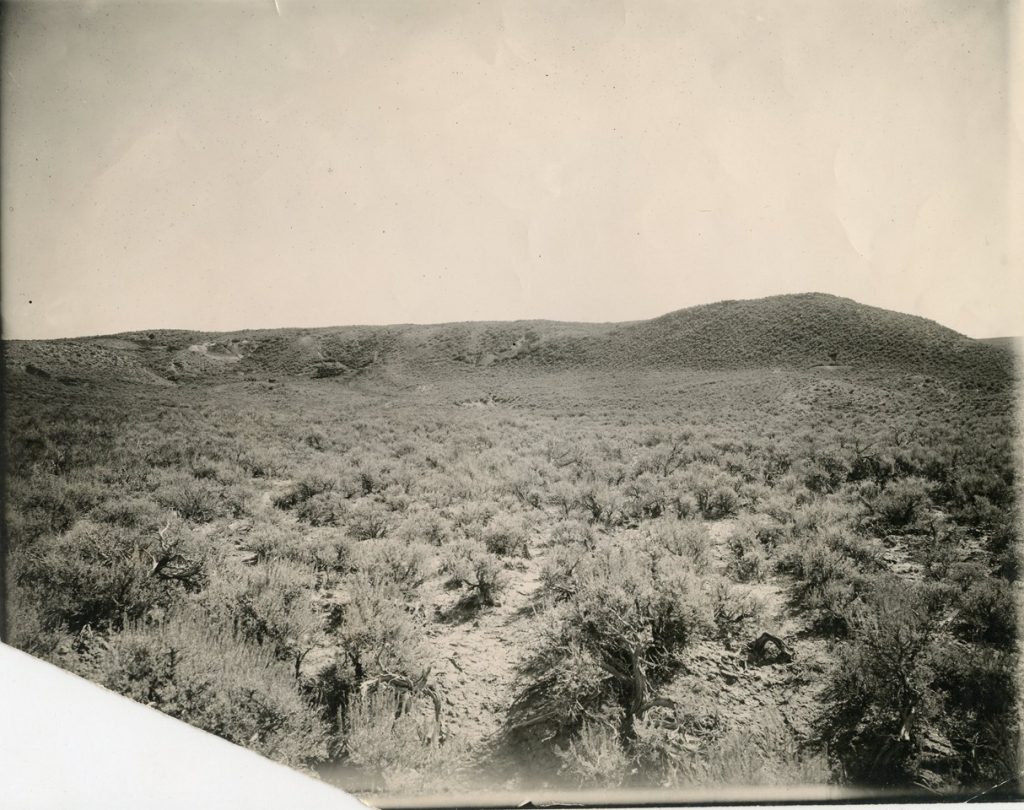
“Coal mining has always been a pretty essential economy in Colorado,” said Storm with History Colorado.
The gritty labor attitude of early homestead miners “played an important role in shaping Moffat County’s edgy, and at times, stubborn and reluctant mentality,” wrote James Neton, a history teacher at Moffat County High School, in a 2024 column for the Craig Daily Press.
The opening of the Trapper Mine in 1977 to feed the nearby Craig Station power plant helped cement Craig’s economic and cultural identity as a coal town, with the mine and power plant collectively supporting hundreds of jobs.
One of the last vestiges of Colorado’s coal mining era, Craig is now at the forefront of change as the community — spurred by state-mandated renewable energy goals and private sector decisions — shifts away from coal to other industries.
But coal — like other mining — also helped support another key Colorado industry: agriculture.
Intertwined legaciesDuring the homesteader days, the warmer summer months and the lack of need for heating meant coal mines would often shut down. To supplement their income during this time, miners would turn to ranching and farming, according to Storm.
Agriculture and mining were also intrinsically linked in non-coal communities across the Western Slope, as ranchers saw an opportunity to feed mining towns once the gold rush began in 1859.
“People were coming out in wagons, and someone’s got to feed them, and so we see cattle drives starting that very year coming from Texas,” Storm said.
The National Western Stock Show, hosted annually in Denver, celebrates that legacy with an opening parade that features longhorn cattle, a historical nod to the state’s ranching roots. Storm said neither mining nor agriculture could be supported without the other.
“If agriculture wouldn’t have come hand in hand with mining in 1859, there wouldn’t have been a mining boom in Colorado,” Storm said.
And without mining, the state Coloradans know today may have looked very different.
“Mining really set up the infrastructure that we needed for everything else,” Storm said.
| # | Наименование новости | Тональность | Информативность | Дата публикации |
|---|---|---|---|---|
| 1 | Before Colorado: A history of the Western Slope’s first residents | 0 | 8.59 | 15-08-2026 |
| 2 | Growing out west: Colorado’s early homesteaders, ranchers lay the foundation for High Country communities | 0 | 10.42 | 14-08-2026 |
| 3 | Food insecurity reaches 10-year high on Colorado’s Western Slope as federal assistance program tighten requirements | 0 | 11.28 | 14-08-2026 |
| 4 | Advocates hope new Colorado driving laws will help save lives in wake of deadly crashes | 0 | 12.56 | 14-08-2026 |
| 5 | What to expect on your Colorado ballot this November | 0 | 8.14 | 12-08-2026 |
| 6 | Great wildflower hikes in Crested Butte: Rustler’s Gulch | 0 | 6.52 | 25-07-2026 |
| 7 | Book Club Reads for Colorado’s Sesquicentennial | 0 | 20.46 | 29-07-2026 |
| 8 | Get a closer look at Colorado's hidden gems | 2 | 6 | 06-07-2026 |
| 9 | Winter in Colorado is on track to be snowier, but not colder, meteorologists say | 0 | 12.59 | 13-08-2026 |
| 10 | Toast to Colorado’s oldest bars, serving locals since the 1800s | 0 | 7.44 | 31-07-2026 |