Просмотр новости
Найдите то, что Вас интересует
 Спутники
 РН
РН SpaceX
 Роскосмос
 NASA
NASA
СпутникиРНSpaceXРоскосмосNASABefore Colorado was named after the region’s muddy, red-tinted Rio Colorado, it was known as a fabled land in the American Southwest. Without a map or successful expeditions to understand its studded landscapes, foreigners instead...
Before Colorado was named after the region’s muddy, red-tinted Rio Colorado, it was known as a fabled land in the American Southwest. Without a map or successful expeditions to understand its studded landscapes, foreigners instead associated the land with its blue waters and storied past.
“There’s a lot of myth and legend associated with the land and what is today Colorado,” said Charles Nicholas Saenz, a member of the State Historian’s Council and a history professor at Adams State University. “In the Spanish colonial time, they talked about it as ‘Teguayo,’ a name that the Pueblos gave to the land north of them.”
More than 150 years before the gold rush, homesteaders and the ski industry modernized Colorado’s Western Slope into what it is today, over 51 Tribal Nations referred to present-day Colorado as home — among them, the Ute people.
Long before Spanish explorers arrived to confirm myths of a fabled land and before settlers traveled west in search of gold, the Ute people had extensive history in the region. Colorado’s oldest continuous residents, the Ute called themselves “Nuche,” which translates to “the people” or “mountain people.”
Some historical accounts of the Ute’s origin story — passed down through tribal history and oral tradition — say they’ve lived in the region since the beginning of time.
Once seven distinct bands that spanned across Colorado and Utah, as well as parts of New Mexico, Arizona and Wyoming, the Ute people were later grouped into three federally recognized tribes. Today, the tribes — the Southern Ute Indian Tribe, Ute Mountain Ute Tribe, and Ute Indian Tribe of the Uintah and Ouray Reservation — live on reservations located in southern Colorado and eastern Utah.
Before their forced removal from the majority of their ancestral homelands in Colorado in the late 19th century, the Ute people’s vast knowledge of the region and high mountain passes became key for the survival for those who came after.
The first to call the Western Slope home were the Yamparika and Parianuche bands, later called the White River Utes.
The Parianuche band resided along the Roaring Fork and Grand River valleys seasonally, covering modern-day Glenwood Springs, while the Uncompahgre band lived in the Aspen area. The Yamparika Utes lived further north along the Yampa River valley near modern-day Steamboat Springs.
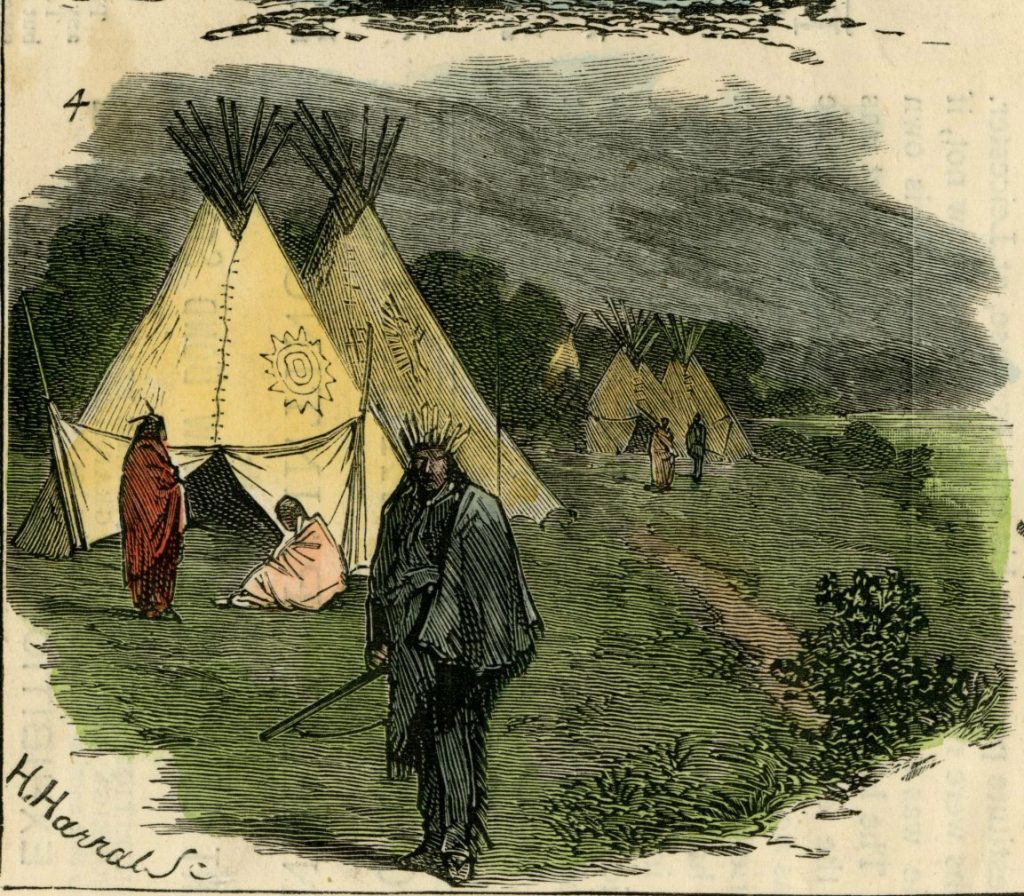
The Utes lived a nomadic lifestyle. Rather than staying in one fixed settlement, tribal bands living in the Colorado mountains would move to higher elevation valleys — like present-day Steamboat Springs — for hunting and gathering expeditions in the warmer months and descend into lower-elevation canyons with milder climates — like Glenwood Springs — during the colder months.
The Yampa Valley served as hunting grounds for the Yamparika Utes for hundreds of years. In addition to the flowing waters, fertile lands and abundance of game, the Ute people also enjoyed one of the region’s most well-known attractions in present-day Colorado: the curative geothermal waters.
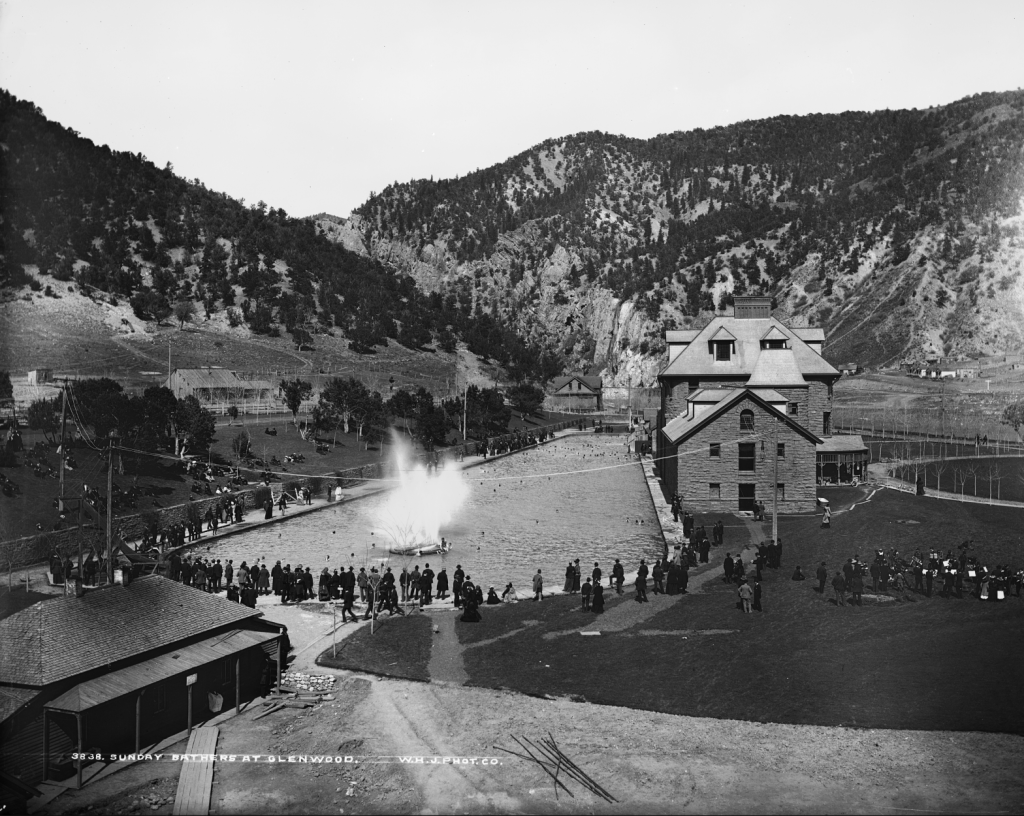
The natural mineral springs in what later became Glenwood Springs and Steamboat Springs were considered sacred areas by the Utes, who utilized the geothermal waters for healing and spiritual cleansing. After battle, Ute warriors would visit the vapor caves in Glenwood Springs — the only known set of natural vapor caves in North America — to pray and treat their injuries.
Mapping the high country: The arrival of Spanish explorersBefore Hispano settlers could build the first permanent towns in what later became known as the state of Colorado, the land had to be mapped.
“The Spanish have all these myths and legends associated with the land in the north, but no one’s actually ever been there to confirm it,” Saenz said. “There’s a lot of reasons why this expedition happens at all. Part of the story is imperial, part of the story is religious, part of the story is economic, part of the story is just plain human curiosity for what’s out there.”
The earliest expeditions of Colorado by Spanish explorers began during the mid-sixteenth century. The relationship between the Ute people and the foreign invaders was mostly amicable during this time and developed into a stable trading relationship by the 1800s.
Through goods and livestock brought by the Spanish, the Ute also became one of the first Native Americans to acquire horses, according to the Southern Ute Indian Tribe. In addition to bringing horses, however, the Spanish and other European traders also brought several Old World diseases to the Utes.
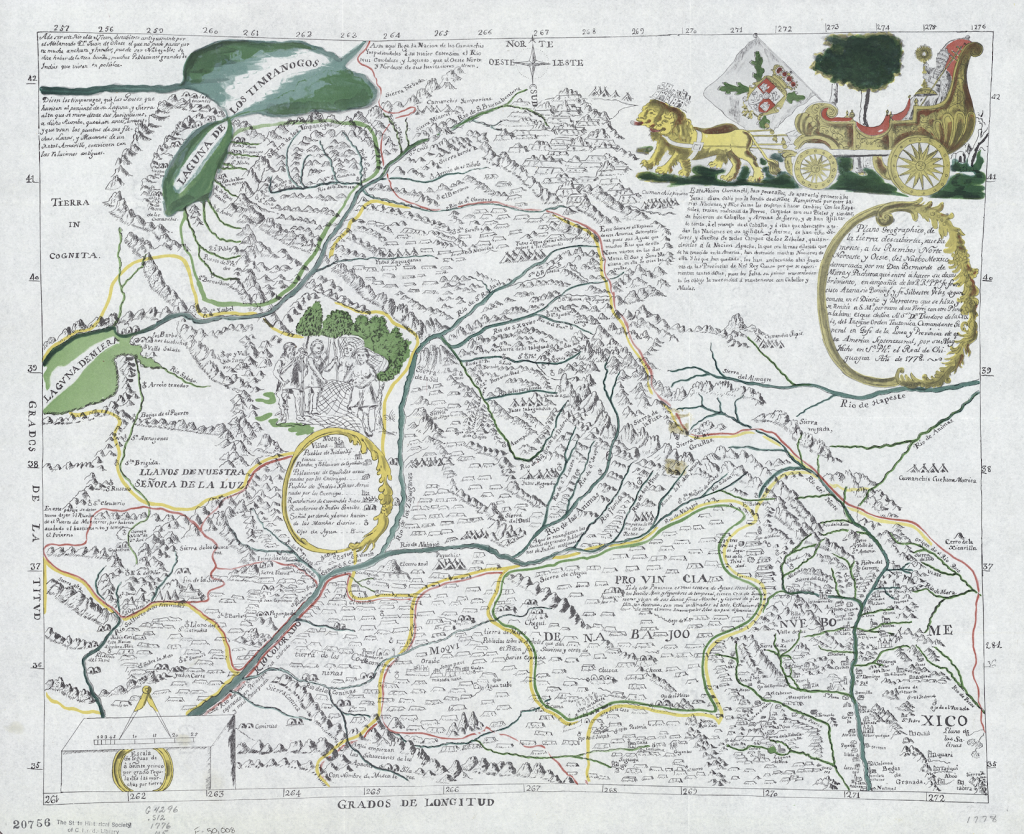
Though early expeditions by Spanish explorers began more than 200 years prior, the first surviving detailed map of Colorado was drawn during an expedition led by Franciscan priests Francisco Atanasio Domínguez and Silvestre Vélez de Escalante in 1776.
While the peaceful relationship between the Ute people and the Spanish explorers was perceived by Domínguez and Escalante as a sign of a positive reception to Christian conversion attempts, Saenz said the Ute people were more excited to have allies against their territorial rivals.
“The Ute are potentially looking for allies against the Comanche, and so here come these Spaniards who historically have not visited them. They seem to be pretty friendly,” he said. “The Spanish (may have) stumbled in and misread the situation. It’s probably not the case that they’re super excited about conversion after an hour-long sermon.”
Traversing the region was no easy task for Spanish explorers during the sixteenth century. Without assistance from the Utes, he said, they likely would not have survived.
“You could argue that (the expedition) was tremendously successful because none of them died, which is a pretty big accomplishment in that time period,” he said. “They had relatively good relations with the native communities that they encountered.”
The maps and Escalante’s diary gave the Spaniards the first detailed description of Western North America, including part of the Rocky Mountains, Saenz said. The explorers didn’t stay long, however. The presence of Utes in present-day San Luis Valley deterred them from settling, and Spanish land grants never extended into present-day Colorado.
“At some level, this is a series of maps that kind of mark the undoing of an indigenous way of life in this space because they facilitate the arrival of more Europeans and more Easterners from what is becoming the United States,” Saenz said, “who eventually will go coast to coast and force those native communities into reservations.”
It wasn’t until the mid-19th century that Hispano settlers migrated north from New Mexico and became the first farming families to build permanent towns in Colorado.
‘The border crossed us’Before Colorado became a U.S. territory, more than half of the state — including the entire Western Slope region — was part of Mexico. Eventually, many of these Mexican citizens would see the national border shift around them.
Following Mexico’s independence from Spain in 1821, the Arkansas River became the international border separating Mexico from the United States. To encourage permanent settlements, New Mexico’s governor issued land grants in the 1830s and ’40s, giving away millions of acres in southern Colorado territory to wealthy individuals and families.
Border disputes later launched Mexico and the United States into a series of battles from 1846-1848 known as the Mexican-American war. The war ended with Mexico ceding its northern half — which covered the Utes’ entire domain — to the U.S.
Many Spanish-speaking Mexican citizens became U.S. citizens overnight, later spurring the political term, “We didn’t cross the border, the border crossed us,” utilized by Mexican Americans, Chicano activists and indigenous groups alike.
“Essentially, they were given about one year to decide if they were going to move south and retain their Mexican citizenship or stay where they were and automatically become U.S. citizens,” Saenz said. “I think for many people, they were like, ‘Well, I’m in this spot. It is a tremendous feat to relocate hundreds of miles to the south. I don’t have any contacts there, I don’t have family or business connections, so I’ll stay put and try my hand with this new world dominated by the Anglos and the United States.'”
Many Mexican families lost their land overnight, as courts in the U.S. required legal documentation of land ownership that had not been required under Mexican law. The loss of homes, farms and other communal lands threw many Hispano settlers into poverty.
Saenz said the loss of social status and wealth likely spurred many to venture north to find land to farm and own, taking people into places like the San Luis Valley and eventually the southern Western Slope.
Colorado’s oldest town on record, San Luis, was established by Hispano settlers from northern New Mexico in 1851, making it the oldest continuously inhabited town in the state. Saenz said their success in establishing the town could have stemmed from the Ute people wanting Mexican allies against U.S. pioneers arriving from the East Coast.
“Right as the U.S.-Mexico war is coming to an end, Tata Atanasio Trujillo talks about coming to the San Luis Valley to settle for the first time, and he says that the Ute let him,” Saenz said. “He says he went to them, speaking in Ute — he might have been part Ute, actually — and they invited him in. So whereas they had previously chased out some settlers in the San Luis Valley, they let him and his party come in. … That doesn’t stop the flood of Americans by any means.”
Years after establishing San Luis, the Hispano settlers would look to the mountains for new land and work opportunities. Railroads arrived in Colorado in the 1870s, changing the lives of ranchers and farmers. With the railroads also came a flood of settlers who would change the region’s politics and economy.
Poorer Hispano settlers migrated into northern Colorado for work, which they obtained by laboring in mines, steel mills or sugar beet farms. Sugar beets became Colorado’s most profitable cash crop in the early 1900s, and the industry became the largest employer of Hispanics and Mexicans in the state until the 1950s. Hispanos were also the muscle behind the building of railroad lines along the Western Slope.
White River Utes are exiled from ColoradoBefore the introduction of railroads changed the lives of Hispano ranchers and settlers, the discovery of gold in the San Juan Mountains just 10 years prior marked a significant shift in the Ute’s sovereignty.
As white settlers poured into the region during the mid-19th century gold rush, Ute leaders sensed they were at a disadvantage and began making treaties with the U.S. government, which were ignored or revoked over time.
After successfully defending their lands from Spanish and Mexican colonists for decades, the Utes lost a significant portion of their land through a series of treaties with the U.S. government. By 1868, they were left with a reservation spanning the western third of the state’s territory. Much of the land encompassing the Western Slope’s central mountain towns like Glenwood Springs and Aspen were still reserved for the Ute people under these agreements.
Prospectors began routinely trespassing on Ute lands in their search for gold and silver in the following years. The federal government responded to the demand for the region’s resources by driving the Ute people to cede the mineral-rich San Juan Mountains by terms of the Brunot Agreement just five years after establishing the reservation.
“There were actually several treaties, first in the San Luis Valley, saying the Utes have to leave the San Luis Valley and go across the continental divide to where the Ute Reservation is,” Saenz said. “But then when gold is discovered, there’s concern. ‘Oh, wait, now actually we want this mineral resource in the San Juan Mountains, so we’re going to force them to sign the Brunot Agreement.’ The Bruno Agreement carves out this chunk of area so that mines and places like Telluride and Silverton can be exploited.”
Colorado became a state on Aug. 1, 1876. Shortly after, tensions over the U.S. Army’s entry into tribal lands and efforts of Indian agent Nathan Meeker to force the Ute people to become farmers triggered conflicts like the 1879 Meeker Massacre and the Battle of Milk Creek in Northwest Colorado, resulting in the deaths of Meeker, civilian workers, U.S. soldiers and Ute warriors.
“This event is attributed to the Utes, and this creates a lot of hysteria that the Utes are out of control and they need to be kind of contained further, and so that leads to further isolation,” Saenz said.
“The Utes must go” became a widespread political slogan and newspaper headline as public sentiment toward the tribes morphed into a demand for expulsion. Another agreement resulted in the loss of more acres of Ute land, and later the White River and Uncompahgre Ute bands were forcibly exiled from the state by armed forces in 1880 and 1881. The roughly 1,500 Northern Utes were relocated to the Uintah and Ouray Reservation in eastern Utah.
The Southern Ute bands remained in southwestern Colorado and split into the Southern Ute Indian Tribe and Ute Mountain Ute Tribe, which are the only two federally recognized tribes in Colorado today.
“It doesn’t matter which particular reservation you’re talking about, I think the people who live there, all of them, would say that they were displaced — if at a minimum because they can’t go to all the places that historically they were tied to,” Saenz said.
150 years later: Ute and Hispano life on the Western SlopeThe lives of the Ute people and Hispano settlers continue to shape the Western Slope to this day. Ute tribes in Colorado are fighting for tribal water access and the protection of ancient sites, while Latino advocacy groups work to enact change on the political stage.
“I think there is a powerful argument there about contributions to the origins of what today we think of as Colorado,” Saenz said.”I think that’s probably a story that is not unique to any one group, but it’s rather all these groups in collaboration that brings them to being this thing that we’re a part of today.”
Work by Chicano rights organizations and Latino advocacy leaders improved political and social power for Latino Coloradans in the 1960s. Today, census data shows that 1 in 5 Coloradans are Hispanic, Chicano or Latino, though some pockets of the Western Slope have higher concentrations.
The traditions of Colorado’s first residents are present in names, architecture and cultural landmarks. Some routes established by the Ute people during their nomadic expeditions can still be seen in the forests of Grand Mesa, according to the Southern Ute Indian Tribe.
Aspen, before being renamed in 1880, was originally called Ute City. The mountain town’s small population of roughly 300 people was largely made up of miners who arrived after hearing that the resident Ute Indians had discovered silver.
The “Yampah” hot springs and vapor caves in Glenwood Springs retain their original Ute name, meaning “Big Medicine.” Tribe members still perform ceremonies at these sacred sites, including those in Steamboat Springs.
Many areas in the mountains once traversed by the Ute people are now federally protected land, preserving the wilderness for all Coloradans today.
“You can think about native communities as the protectors of this space,” Saenz said. “(They) are, in important ways, guardians and stewards of the land, who in some ways prepared a gift for us by preserving these places that we now get to enjoy and recreate in.”