Просмотр новости
Найдите то, что Вас интересует
 Спутники
 РН
РН SpaceX
 Роскосмос
 NASA
NASA
СпутникиРНSpaceXРоскосмосNASA10 tech trends every business owner should watch in 2026, from agentic AI and hyperautomation to zero trust security and post-quantum cryptography.
The post 10 Top Tech Trends Every Business Owner Should Watch in 2026 first appeared on VentureLab.
10 technology trends that will shape how businesses operate, compete, and protect themselves in 2026, with real adoption numbers and what each trend means for owners.
A Gartner report identified AI-native development and hybrid computing as two of the top strategic technology trends for 2026. Meanwhile, 89% of small businesses are already using AI in some form, and 91% of those report revenue growth from it. But only 1% of U.S. companies have scaled AI beyond pilot stages. The gap between experimenting with technology and actually deploying it is where most business owners are stuck right now.
The 10 top tech trends every business owner should watch in 2026 are:
| Trend | Why It Matters | Timeline | Business Size |
|---|---|---|---|
| Agentic AI | AI agents handle multi-step tasks autonomously | Now (early adoption) | All sizes |
| Hyperautomation | Automate entire workflows, not just single tasks | Now (scaling) | Mid-market to enterprise |
| No-code AI platforms | Build AI workflows without developers | Now (mature) | Small business, SMB |
| Zero trust security | Required for insurance and public sector work | Now (mandatory) | All sizes |
| AI-native development | Ship software faster with smaller teams | 2026-2027 | Startups, tech companies |
| Edge computing | Faster processing, lower cloud costs | 2026-2028 | Manufacturing, retail, logistics |
| Post-quantum cryptography | Future-proof encryption before quantum arrives | 2026-2030 | Finance, healthcare, government |
| Predictive analytics | Forecast demand and identify risks early | Now (scaling) | All sizes |
| AI-driven cybersecurity | Detect threats faster than human analysts | Now (essential) | All sizes |
| Hybrid computing | Combine cloud, edge, and on-premise for cost and speed | 2026-2028 | Mid-market to enterprise |
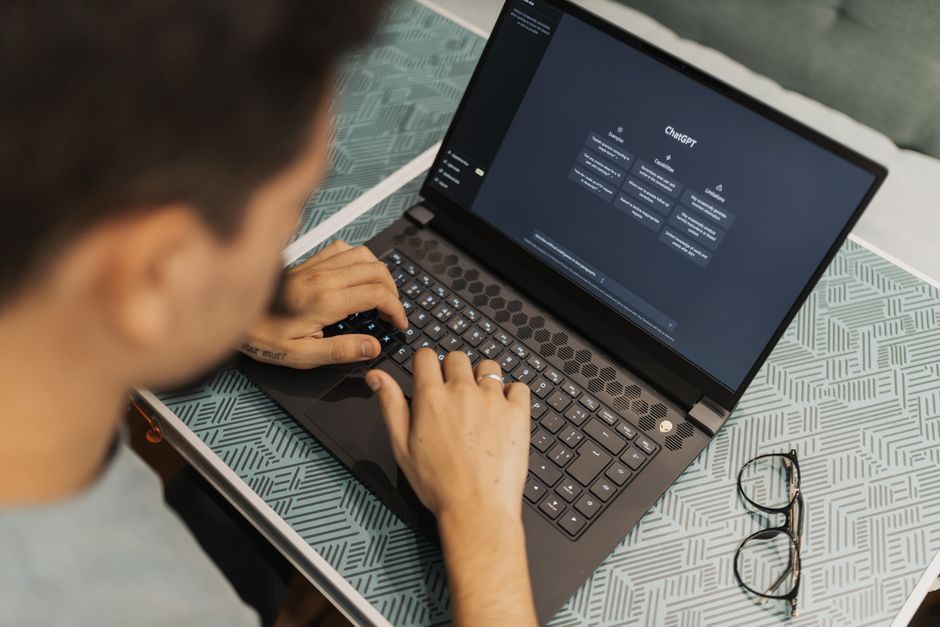
Best for understanding: Business owners who have used ChatGPT or similar tools and are wondering what comes next.
Agentic AI is the shift from “AI answers questions” to “AI completes tasks.” Instead of asking a chatbot to draft an email, an AI agent books the meeting, sends the follow-up, updates the CRM, and flags the deal for review. It chains multiple actions together without waiting for human approval at every step.
Deloitte’s Tech Trends 2026 report found that only 11% of organizations have AI agents in production, even though 38% are actively piloting them. That gap tells you where the opportunity is: the 27% who are testing but have not deployed are your competitors in 12 months.
For small business owners, agentic AI shows up first in customer support (AI agents that resolve tickets without escalation), sales (agents that qualify leads and schedule calls), and operations (agents that reorder inventory when stock hits a threshold). You do not need to build custom agents. Platforms like HubSpot, Salesforce, and Intercom are already embedding agentic features into their existing tools.

Best for understanding: Business owners who have automated individual tasks (like email sequences) but still have manual handoffs between systems.
Hyperautomation is what happens when you stop automating tasks and start automating workflows. A task automation sends a Slack message when a form is submitted. A hyperautomation takes the form submission, creates the customer record in your CRM, generates a quote from your pricing sheet, sends the quote for e-signature, and triggers onboarding when the signature is received. End to end. No human touches.
Around 90% of large enterprises now list hyperautomation as a strategic priority. The small-business version is simpler: tools like Zapier, Make (formerly Integromat), and n8n let you connect 5-10 apps into workflows that run while you sleep. The difference between a $5 million business and a $50 million business increasingly comes down to how many processes run without someone monitoring them.
Best for understanding: Business owners who do not have a developer on staff but want to use AI beyond ChatGPT.
No-code AI is the reason the “I do not have a tech team” excuse is expiring. Platforms like Akkio, Obviously AI, and Create.xyz let you upload a spreadsheet of customer data and build a churn prediction model in an afternoon. No Python. No data science degree. Point, click, train, deploy.
Slight detour, but this matters. The real value of no-code AI is not replacing developers. It is letting the person who understands the business problem also be the person who builds the solution. Your marketing manager knows which leads convert. Your ops lead knows which orders get returned. When those people can build their own AI models without submitting a ticket to engineering, the feedback loop shrinks from weeks to hours.

Best for understanding: Business owners who think cybersecurity is only a problem for large enterprises.
Zero trust means every access request is verified, every time, regardless of where it comes from. Your employee sitting in your office on your Wi-Fi still gets checked before accessing a file. The old model (“inside the network = trusted”) died when remote work went permanent and attackers started logging in with stolen credentials that looked legitimate.
In 2026, zero trust is no longer optional in two specific ways. First, cyber insurance providers increasingly require zero trust architecture as a condition of coverage. Second, any business doing government or public sector work must demonstrate zero trust compliance. If you lose either your insurance eligibility or your government contracts, the financial impact outweighs whatever the implementation costs.
For small businesses, zero trust starts with three steps: enforce multi-factor authentication on every account, use role-based access controls (employees only access what they need), and monitor login activity for unusual patterns. You do not need a six-figure security consultant. You need your IT person to turn on the features your existing tools already have.
Best for understanding: Business owners who build or maintain custom software, internal tools, or client-facing web applications.
Gartner named AI-native development platforms as a top trend for 2026. The core idea: instead of writing code and then asking AI to review it, the development environment is built around AI from the start. AI suggests code as you type, generates tests, identifies bugs before you run the program, and handles boilerplate so human developers focus on logic and architecture.
The practical impact for business owners: smaller teams ship faster. A two-person engineering team using Cursor, GitHub Copilot, or Replit Agent can produce output that previously required five people. That does not mean you need fewer developers. It means your current developers can take on projects that were previously out of scope.
An r/Entrepreneur thread about 2026 business models surfaced this pattern repeatedly. Solo founders building and launching SaaS products in 4-8 weeks instead of 4-8 months, powered by AI coding tools. The barrier to building custom software dropped so fast that “just build it yourself” is now a legitimate answer to most tool-gap problems.

Best for understanding: Business owners in manufacturing, retail, logistics, or any industry where data is generated at physical locations.
Edge computing processes data where it is created instead of sending everything to a central cloud server. A security camera that analyzes footage on-site rather than streaming raw video to AWS. A factory sensor that detects anomalies at the machine instead of sending readings to a data center 500 miles away. The data stays local, the response is faster, and your cloud bill shrinks.

For most small businesses, edge computing is invisible. It shows up inside products you already buy: point-of-sale systems that process payments locally when the internet drops, smart thermostats that adjust without calling home, and warehouse robots that navigate without constant cloud connectivity. The trend matters because it changes what you should expect from your vendors. If a vendor’s product stops working when Wi-Fi goes down, their architecture is behind.
Best for understanding: Business owners in finance, healthcare, legal, or any industry that handles sensitive data with long shelf lives.
Quantum computers do not exist at scale yet. But they will. And when they arrive, they will break the encryption that currently protects your banking transactions, customer data, health records, and legal documents. The attack is already happening in reverse: adversaries are collecting encrypted data today with the intention of decrypting it once quantum hardware matures. This is called “harvest now, decrypt later.”
The EU and Canada have already begun mandating post-quantum cryptography migration plans for organizations handling sensitive data. NIST finalized its first post-quantum cryptographic standards in 2024. If your business stores data that needs to remain confidential for 10+ years (medical records, financial records, legal agreements), the migration timeline is now, not when quantum computers arrive.
Best for understanding: Business owners who make decisions about inventory, staffing, pricing, or marketing spend based on historical patterns and intuition.
Predictive analytics is not new. What changed in 2026 is that tools previously available only to enterprises with data science teams are now embedded in software that small businesses already use. Shopify predicts which products will sell out. QuickBooks flags customers likely to pay late. HubSpot scores leads by probability of conversion. You do not need to understand the math. You need to trust the data you are feeding it.
For what it is worth, the most impactful use case for small business owners is demand forecasting. Knowing that your best-selling product will spike in September (not August) based on three years of order data changes when you place your inventory order, how much safety stock you hold, and how much cash you tie up in warehouse space. The difference between guessing and knowing is working capital.
Best for understanding: Business owners who rely on traditional antivirus software and a firewall for protection.
Attackers are using AI. Phishing emails generated by large language models are grammatically perfect, contextually relevant, and personalized to your employees. Automated vulnerability scanners probe your systems at machine speed. The old approach of signature-based antivirus (checking files against a list of known threats) cannot keep up with threats that are generated fresh for each target.
AI-driven cybersecurity flips the model. Instead of matching known threats, it learns what normal looks like for your network and flags deviations. An employee logging in from a new country at 3 AM? Flagged. A sudden bulk download from the accounting folder? Flagged. An email that matches your CEO’s name but comes from a different domain? Blocked before it hits the inbox.
Look, this is the trend where the gap between large and small businesses is closing fastest. Platforms like CrowdStrike, SentinelOne, and even Microsoft Defender for Business now offer AI-powered detection at price points that small businesses can afford. The question is not whether you can afford AI security. It is whether you can afford to be the company without it when the phishing email lands.
Best for understanding: Business owners who moved everything to the cloud and are now questioning the monthly bill.
Gartner predicts that by 2028, over 40% of leading enterprises will use hybrid computing architectures in critical workflows, up from just 8% today. Hybrid computing means running some workloads in the cloud, some at the edge, and some on-premise, choosing the location based on cost, speed, and compliance requirements rather than defaulting to one approach for everything.
The “everything in the cloud” strategy made sense when cloud was cheaper than maintaining your own servers. In 2026, cloud costs have grown with usage, and many businesses discovered that their most predictable workloads (like running a database that processes the same volume every month) are cheaper to run on owned hardware. Hybrid computing lets you keep burst-capacity workloads in the cloud (where you pay for what you use) while moving steady-state workloads back on-premise (where you pay a fixed cost).
Backing up a step. This trend is most relevant for businesses spending $5,000+/month on cloud infrastructure. If your cloud bill is $200/month for email and file storage, this does not apply to you yet. But if you are running databases, analytics, or customer-facing applications in the cloud and the bill keeps climbing, a hybrid approach may cut costs by 30-50%.
We selected these 10 trends by cross-referencing three sources: published analysis from Gartner and Deloitte identifying strategic technology shifts, real adoption data showing what businesses are actually deploying (not just discussing), and recurring patterns in business and startup communities where owners describe the technology decisions they are making right now. Each trend was included because it meets two criteria: it has measurable adoption momentum in 2026, and it requires a specific action or decision from business owners within the next 12 months.
The Bottom LineStart with three trends, not ten. If your business has not implemented zero trust security, that is trend number one because insurance and compliance are already requiring it. If your team spends hours copying data between systems, hyperautomation or no-code AI is your second priority. If you are making inventory, staffing, or pricing decisions based on gut feel, predictive analytics built into tools you already pay for is the third. The remaining seven trends are on a 12-36 month horizon. Awareness now means readiness later.
Frequently Asked Questions What are the top tech trends business owners should watch in 2026?The top tech trends for business owners in 2026 are agentic AI, hyperautomation, no-code AI platforms, zero trust security, AI-native software development, edge computing, post-quantum cryptography, predictive analytics, AI-driven cybersecurity, and hybrid computing architectures. Among these, agentic AI (autonomous task completion) and zero trust security (mandatory access verification) have the most immediate impact because they are moving from optional to required in multiple industries.
Is AI-native development better than traditional software development?AI-native development is faster, not necessarily better. It allows smaller teams to ship code more quickly by using AI for code generation, testing, and bug detection. Gartner identified it as a top 2026 trend because it lets nimble teams build enterprise-ready software. The tradeoff is that AI-generated code still requires human review for security vulnerabilities and logic errors. For business owners, the practical impact is that custom tools and internal apps that previously required large engineering teams can now be built by teams of 1-3 developers.
Do small businesses need zero trust security?Yes. In 2026, zero trust is required for cyber insurance coverage from many providers and mandatory for any business doing government or public sector work. For small businesses, zero trust starts with enforcing multi-factor authentication, implementing role-based access controls, and monitoring login activity. Most small business tools (Google Workspace, Microsoft 365, cloud accounting platforms) already have these features built in. You do not need expensive security infrastructure. You need to turn on what you already have.
What is the difference between automation and hyperautomation?Automation handles a single task: sending an email when a form is submitted. Hyperautomation chains multiple automations across systems into a complete workflow: the form submission creates a CRM record, generates a quote, sends it for signature, and triggers onboarding when signed. Around 90% of large enterprises list hyperautomation as a strategic priority. For small businesses, tools like Zapier, Make, and n8n provide hyperautomation capabilities at accessible price points.
Should my business worry about quantum computing in 2026?If your business stores data that must remain confidential for 10+ years (medical records, financial data, legal contracts), yes. Adversaries are collecting encrypted data now with plans to decrypt it when quantum computers mature. The EU and Canada are mandating post-quantum cryptography migration plans. NIST finalized post-quantum standards in 2024. Ask your IT provider whether your encryption is on the NIST migration path. If your business only handles short-lived data, this trend is lower priority but worth monitoring.
| # | Наименование новости | Тональность | Информативность | Дата публикации |
|---|---|---|---|---|
| 1 | 10 Best Business Tools for Solopreneurs Running One-Person Companies in 2026 | 0 | 14.42 | 06-07-2026 |
| 2 | 12 Email Marketing Trends in 2026 (Deliverability, AI Personalization, and New KPIs) | 0 | 11.66 | 21-06-2026 |
| 3 | 10 Black Hat Growth Hacks You Should Never Try in 2026 | 0 | 9.61 | 08-07-2026 |
| 4 | Top leadership trends in business for 2026 | 0 | 5 | 21-10-2025 |
| 5 | 10 drone startups to watch in 2026, according to VCs | 0 | 26.1 | 14-08-2026 |
| 6 | 12 Product-Led Growth Trends in 2026 (Activation, AI Onboarding, and New Benchmarks) | 0 | 16.14 | 21-06-2026 |
| 7 | 10 Non-Negotiable Clauses Every Freelance Business Contract Must Have | 0 | 14.09 | 17-07-2026 |
| 8 | Top tech companies in the world 2026: Global leaders in innovation | 0 | 5 | 25-11-2025 |
| 9 | 12 Non-Negotiable Business Insurance Types Every LLC Owner Should Have | 0 | 12.19 | 17-07-2026 |
| 10 | Top digital marketing trends for 2026: What professionals need to know | 0 | 7 | 12-02-2026 |