Просмотр новости
Найдите то, что Вас интересует
 Спутники
 РН
РН SpaceX
 Роскосмос
 NASA
NASA
СпутникиРНSpaceXРоскосмосNASAThere is almost 1000 pages on the papers describing the work and plan for creating molecular manufacturing workstations. This work (primarily the 2026 CBN Nano paper and the closely related inverted-mode STM paper arXiv:2512.24431) demonstrates a substantial, practical portion of the early tool system needed for a Molecular Workstation as outlined in rep059.pdf (Molecular Workstation ... Read more
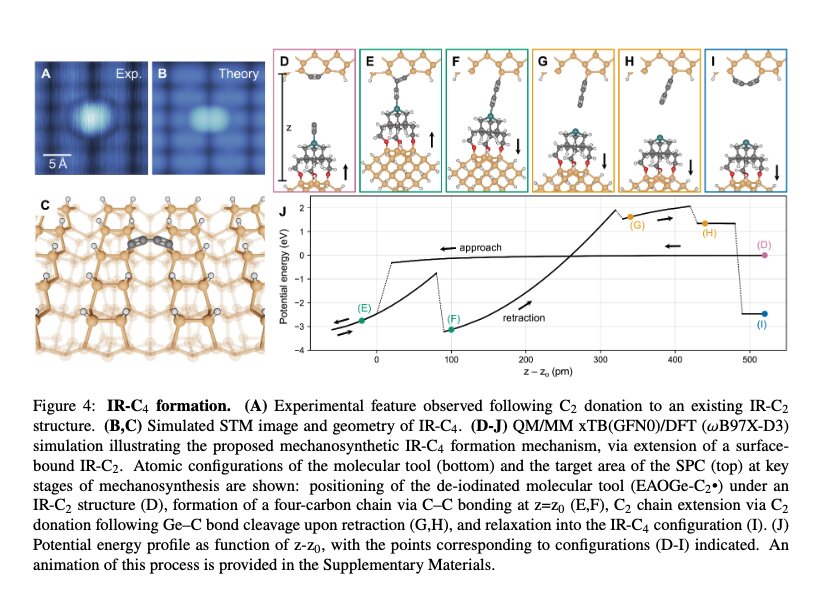
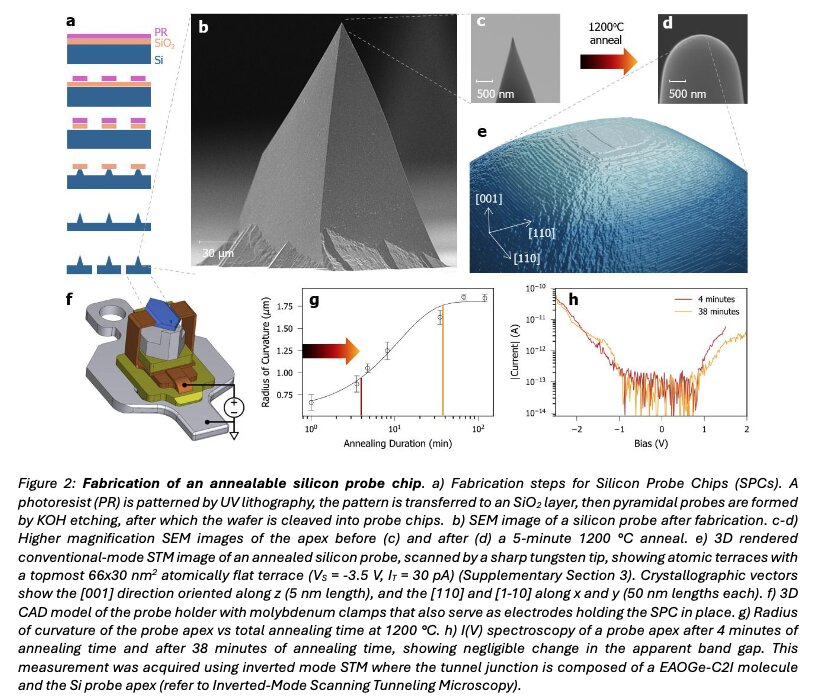
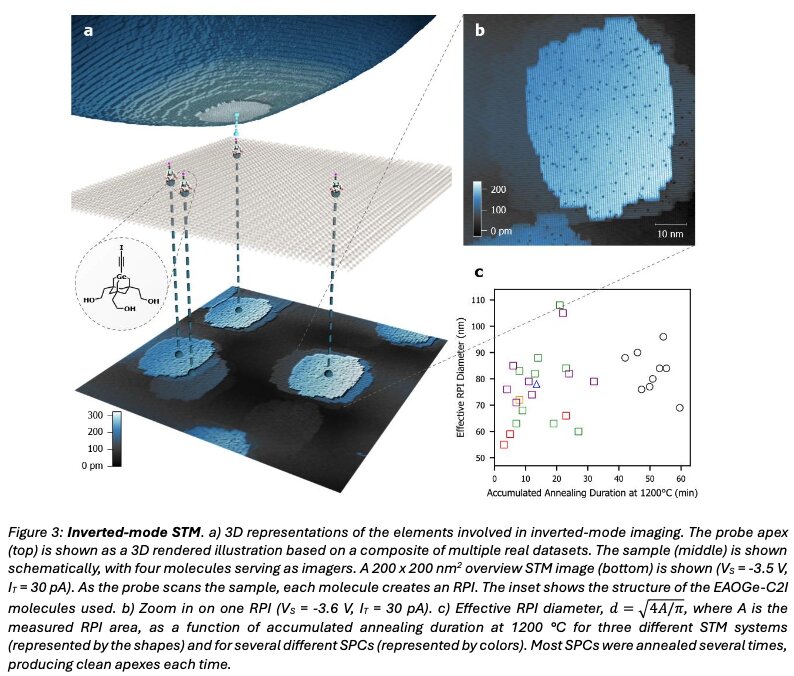
This work (primarily the 2026 CBN Nano paper and the closely related inverted-mode STM paper arXiv:2512.24431) demonstrates a substantial, practical portion of the early tool system needed for a Molecular Workstation as outlined in rep059.pdf (Molecular Workstation Roadmap I). It shows mechanically/positionally controlled chemical reactions (zero-bias hydrogen abstraction and tip-induced deiodination/activation) using custom molecular tools in an inverted-mode STM platform. This is a clear experimental realization of key Phase I capabilities from the roadmap. They used their molecular tools to precisely move hundreds of carbon dimers as shown in the research paper.
Inverted-Mode Scanning Tunneling Microscopy
for Atomically Precise Fabrication, 2025
 Screenshot
 Screenshot
 Screenshot
Project Background and Scale From AI Summary of Public Info
Barton joined the stealth startup Nanofactory Inc. in 2009 as the second employee. The effort focused on “direct-to-diamondoid” atomically precise manufacturing using scanning probe methods and custom molecular tools.
It grew into CBN Nano Technologies Inc. (incorporated ~2017), a subsidiary/project of Canadian Bank Note Company (CBN). The goal shifted toward commercial-scale atomically precise manufacturing, initially for advanced security features (fraud-proof documents) with broader applications in quantum computing, medicine, etc.
Major support came from the Canadian government’s Strategic Innovation Fund (SIF) — a $40 million contribution agreement (announced ~2019, Agreement 813022) specifically for this nanotechnology project. Total funding for CBNNT reached ~$30.6M in one report. CBN itself made a large internal R&D investment.
Barton has publicly referred to the team we built over fifteen years. The 2026 paper lists ~40–50 co-authors (many explicitly affiliated with CBNNT), plus acknowledgments of “many other colleagues.” Job creation announcements mentioned hundreds of highly skilled positions tied to the broader project.
Extremely secretive (stealth startup). Barton has said he could not discuss actual results publicly until recently. The focus was on building experimental capabilities in surface science, vacuum technology, and precision instrumentation.
Key areas of progress (inferred from patents, the 2026 paper, Barton’s statements, and related outputs)
Theoretical & Simulation Foundation (ongoing throughout)
Extensive computational work on tooltips, reaction pathways, build sequences, and error analysis (hundreds of thousands of CPU-hours in related efforts by Freitas/Merkle collaborators).
Design of minimal toolsets for DMS.
Updated roadmaps (including rep058, rep059 and rep060 in 2025).
Experimental Infrastructure & Capabilities (core of Barton’s role — he explicitly said his job was “to build the experimental program”)Advanced surface science and vacuum labs (UHV, cryogenic conditions).
Custom inverted-mode STM (scanning tunneling microscopy) systems for high-precision positional control.
Development and synthesis of specialized molecular tools (e.g., Ge-substituted adamantane derivatives with C₂ groups and protective caps) that act as both imaging probes and mechanosynthetic reagents.
Surface preparation techniques (hydrogen-passivated Si(100)) and dangling-bond patterning via bias pulsing.
Integration of theory (simulations) with experiment for mechanistic understanding (QM/MM, DFT validation of reaction pathways).
Core Mechanosynthesis Breakthrough
(culmination of the effort, published 2026)The May 2026 arXiv paper (2605.27250) is the main public deliverable.
Demonstrated controlled, positionally precise C₂ donation (addition of carbon dimers) to specific sites on a silicon surface.
Multi-site patterning and stepwise C–C bond formation to build extended structures (e.g., polyyne-like chains).
High reproducibility (yields 84–97%), low off-target reactions, and simultaneous spatial + chemical control.
Barton has described this as the team successfully validating “diamondoid mechanosynthesis theories” after 15 years — “foundational experimental work that fully validates the theories developed over the past forty years” and a direct realization of Feynman’s vision at the atomic level.
Multiple patents on mechanosynthesis systems, tips, build sequences, mechanical computing, and related methods (many listing Barton, Freitas, Merkle, and CBNNT colleagues as inventors).
Internal development of workflows combining chemistry, surface science, physics, engineering, and simulations.
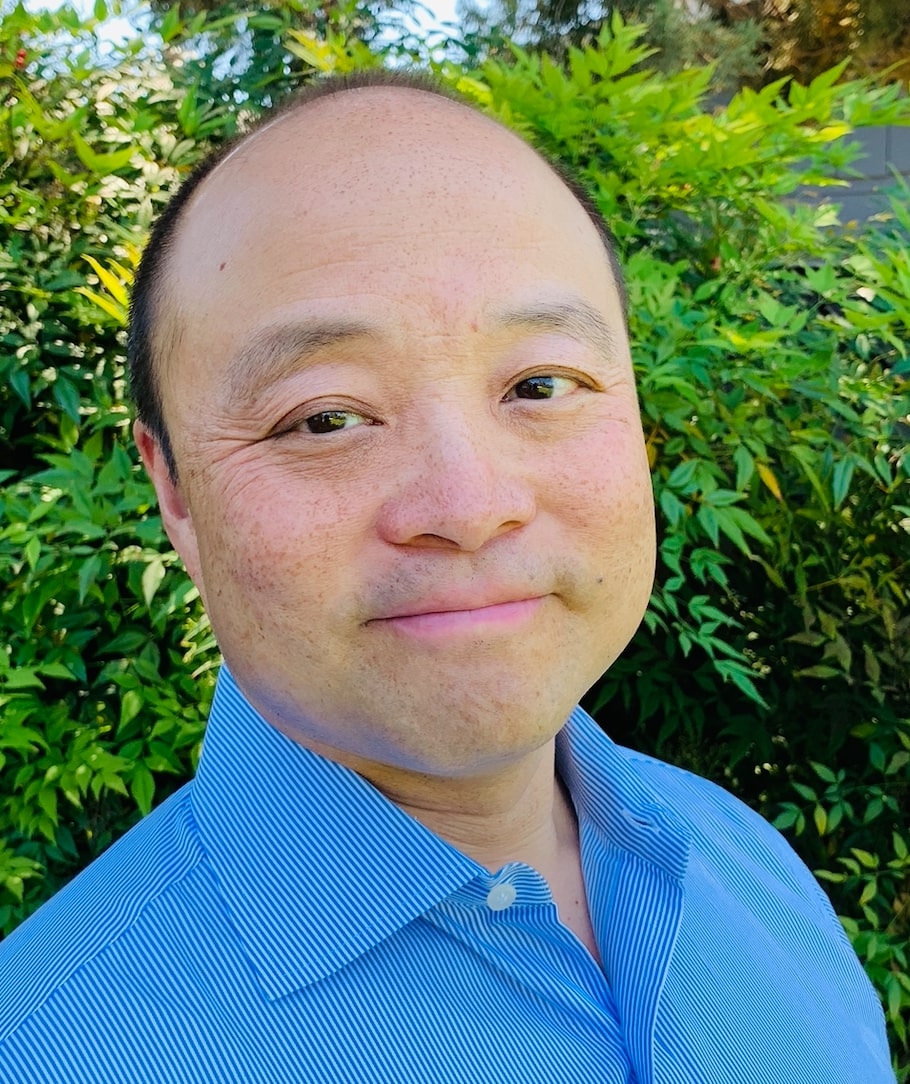
Brian Wang is a Futurist Thought Leader and a popular Science blogger with 1 million readers per month. His blog Nextbigfuture.com is ranked #1 Science News Blog. It covers many disruptive technology and trends including Space, Robotics, Artificial Intelligence, Medicine, Anti-aging Biotechnology, and Nanotechnology.
Known for identifying cutting edge technologies, he is currently a Co-Founder of a startup and fundraiser for high potential early-stage companies. He is the Head of Research for Allocations for deep technology investments and an Angel Investor at Space Angels.
A frequent speaker at corporations, he has been a TEDx speaker, a Singularity University speaker and guest at numerous interviews for radio and podcasts. He is open to public speaking and advising engagements.