Просмотр новости
Найдите то, что Вас интересует
 Спутники
 РН
РН SpaceX
 Роскосмос
 NASA
NASA
СпутникиРНSpaceXРоскосмосNASAAbstract* Background Psychological resources are increasingly recognized as important determinants of nursing performance and healthcare quality. Although emotional intelligence and nursing resilience have been associated with positive work outcomes, limited qualitative evidence has explored how these resources influence nursing work efficiency through employee engagement. This study explored the mediating role of employee engagement in the relationship between nursing resilience, emotional intelligence, and nursing work efficiency among nurses in a tertiary healthcare setting in Saudi Arabia. Methods A qualitative study using thematic analysis was conducted among 25 registered nurses at King Fahad Specialist Hospital, Qassim Health Cluster, Saudi Arabia. Participants were purposively recruited from intensive care, emergency, medical, surgical, and outpatient departments. Data were collected through semi-structured in-depth interviews, supported by limited observations and document review. Interview transcripts were analysed manually using thematic analysis with the assistance of NVivo version 14. Trustworthiness was established through methodological triangulation and Lincoln and Guba’s criteria. Results Four interconnected themes emerged: emotional intelligence as a psychological resource for effective nursing practice, nursing resilience as an adaptive psychological capacity, employee engagement as the motivational pathway linking psychological resources to work performance, and nursing work efficiency as the outcome of strengthened psychological resources. Participants consistently described emotional intelligence and resilience as essential for managing workplace challenges and sustaining high-quality patient care. Employee engagement emerged as the key mechanism through which these psychological resources enhanced nurses’ motivation, adaptability, and work efficiency. Conclusions Employee engagement plays a central mediating role in translating emotional intelligence and nursing resilience into improved nursing work efficiency. Healthcare organizations should strengthen psychological resources through supportive leadership, resilience-building initiatives, emotional intelligence training, and strategies that foster employee engagement to enhance nursing performance and healthcare quality.
Corresponding author: Hanan Saad A Alayed Competing interests: No competing interests were disclosed.
Grant information: The author(s) declared that no grants were involved in supporting this work.
Copyright: © 2026 Alayed HSA and Hassan HC. This is an open access article distributed under the terms of the Creative Commons Attribution License, which permits unrestricted use, distribution, and reproduction in any medium, provided the original work is properly cited. How to cite: Alayed HSA and Hassan HC. Exploring the Mediating Role of Employee Engagement in the Relationship Between Nursing Resilience, Emotional Intelligence, and Work Efficiency: A Qualitative Study in Saudi Arabia [version 1; peer review: awaiting peer review]. F1000Research 2026, 15:1201 (https://doi.org/10.12688/f1000research.186183.1) First published: 22 Jul 2026, 15:1201 (https://doi.org/10.12688/f1000research.186183.1) Latest published: 22 Jul 2026, 15:1201 (https://doi.org/10.12688/f1000research.186183.1)
Healthcare systems worldwide increasingly depend on the competence, resilience, and effectiveness of nursing professionals to deliver safe, high-quality, and patient-centered healthcare services. As the largest group of healthcare providers, nurses play a pivotal role in maintaining patient safety, improving healthcare quality, coordinating multidisciplinary care, and supporting overall organizational performance (Gotterson et al., 2021; Cummings et al., 2021). In contemporary healthcare environments, nurses are expected not only to provide direct patient care but also to manage complex clinical situations, respond rapidly to emergencies, educate patients and families, and collaborate effectively with multidisciplinary teams. Consequently, nurses’ work efficiency has become an essential indicator of healthcare quality and organizational effectiveness.
Despite their critical role, nurses are increasingly exposed to demanding workplace conditions characterized by heavy workloads, emotional exhaustion, staffing shortages, and growing expectations for high-quality healthcare delivery. These challenges have intensified alongside the increasing complexity of patient conditions and the continuous transformation of healthcare systems. Prolonged exposure to occupational stress has been associated with burnout, reduced productivity, lower quality of patient care, and compromised patient safety (Htay & Whitehead, 2021; Kaushik et al., 2021; Dyrbye et al., 2020; Shanafelt et al., 2022). These circumstances highlight the importance of identifying psychological resources that enable nurses to maintain high levels of work efficiency despite demanding clinical environments.
Among these psychological resources, emotional intelligence has received considerable attention because it enables healthcare professionals to recognize, understand, regulate, and appropriately express emotions in challenging interpersonal and clinical situations (Salovey & Mayer, 2020). In nursing practice, emotional intelligence facilitates effective communication, empathy, teamwork, conflict management, and sound clinical decision-making. Nurses with higher emotional intelligence have consistently demonstrated greater adaptability to occupational stress, stronger interpersonal relationships, and improved professional performance (Kim et al., 2022; Zhang et al., 2023; Budler et al., 2022). These findings suggest that emotional intelligence represents an important personal resource supporting nurses’ effectiveness in increasingly complex healthcare settings.
Another important determinant of nursing performance is psychological resilience, defined as the ability to adapt positively to adversity, recover from stressful experiences, and maintain effective functioning under pressure (Connor & Davidson, 2003). Within healthcare settings, resilience enables nurses to cope with emotional demands, maintain motivation, and sustain professional performance despite continuous workplace challenges. Previous studies have demonstrated that resilient nurses experience lower levels of burnout, greater psychological well-being, and improved work performance compared with those who possess lower resilience (Godoy et al., 2022; Lee et al., 2024; Gotterson et al., 2021). Accordingly, resilience has become an increasingly important construct in contemporary nursing workforce research.
In addition to individual psychological resources, employee engagement has emerged as an important organizational factor influencing healthcare professionals’ performance. Employee engagement describes a positive work-related psychological state characterized by vigor, dedication, and absorption (Schaufeli et al., 2020). According to the Job Demands–Resources (JD–R) Theory, personal resources such as emotional intelligence and resilience strengthen employee engagement, which subsequently enhances work performance and organizational effectiveness (Bakker & Demerouti, 2020). Similarly, the Conservation of Resources (COR) Theory suggests that individuals strive to acquire and preserve psychological resources that enable them to cope effectively with workplace stress and maintain high levels of functioning (Hobfoll, 2011). Together, these theoretical perspectives provide a strong conceptual foundation for understanding how psychological resources may influence nurses’ work efficiency through employee engagement.
Although numerous quantitative studies have reported significant relationships between emotional intelligence, resilience, employee engagement, and work performance, important knowledge gaps remain. Most previous studies have focused primarily on direct statistical associations or mediation models without exploring how nurses themselves perceive and experience these interrelationships in their everyday clinical practice. Furthermore, relatively limited qualitative evidence is available from specialist hospitals in the Middle East, particularly within Saudi Arabia, where healthcare organizations are undergoing rapid transformation under Saudi Vision 2030. Differences in organizational culture, healthcare delivery systems, and workplace demands may influence how psychological resources are developed and translated into efficient nursing practice, emphasizing the need for context-specific qualitative evidence.
A qualitative approach provides an opportunity to explore the experiences, perceptions, and contextual factors that cannot be adequately captured through quantitative methods alone. By examining nurses’ perspectives, qualitative inquiry can offer a richer understanding of how emotional intelligence and resilience contribute to employee engagement and ultimately influence work efficiency within real-world clinical settings. Such evidence may complement existing quantitative findings and provide practical insights for designing organizational strategies that promote workforce well-being and healthcare quality.
Therefore, this study aimed to explore the mediating role of employee engagement in the relationship between nursing resilience, emotional intelligence, and work efficiency among nurses working at King Fahad Specialist Hospital, Qassim Health Cluster, Saudi Arabia. The findings are expected to contribute to a deeper theoretical understanding of the psychological mechanisms underlying nursing work efficiency while providing practical recommendations for strengthening employee engagement and supporting sustainable nursing workforce performance.
This study employed a qualitative research design using thematic analysis to explore nurses’ perceptions of the mediating role of employee engagement in the relationship between nursing resilience, emotional intelligence, and work efficiency. An interpretive qualitative approach was adopted to obtain an in-depth understanding of nurses’ experiences and perceptions regarding the psychological factors influencing their work efficiency. The study was conceptually informed by the Job Demands-Resources (JD-R) Theory, the Conservation of Resources (COR) Theory, and Emotional Intelligence Theory, which guided data collection, analysis, and interpretation of the findings.
The study was conducted at King Fahad Specialist Hospital, Qassim Health Cluster, Saudi Arabia, a tertiary referral hospital characterized by a large nursing workforce, high clinical workload, and complex healthcare services. The hospital plays an important role in supporting Saudi Vision 2030 through initiatives aimed at strengthening the healthcare workforce and improving healthcare quality. Data were collected between January and March 2026, with recruitment continuing until data saturation was achieved.
Participants were recruited using purposive sampling to ensure the inclusion of nurses with experiences relevant to the study objectives. Eligible participants were registered nurses employed at King Fahad Specialist Hospital who had at least six months of clinical experience, were actively involved in patient care, and were able to communicate effectively in English or Arabic. Nurses on extended leave, those with health conditions preventing participation in interviews, and individuals who did not complete the interview process were excluded. Recruitment continued until data saturation was achieved, resulting in interviews with 25 nurses representing the intensive care unit, emergency department, medical ward, surgical ward, and outpatient department. The diversity of clinical settings enabled the collection of a broad range of perspectives regarding workplace challenges and nursing work efficiency.
Data were collected using three complementary techniques: semi-structured in-depth interviews, limited non-participant observations, and document review. In-depth interviews served as the primary data source and were conducted face-to-face in quiet and private rooms within the hospital using a semi-structured interview guide. The interviews explored participants’ experiences of managing emotions in clinical practice, coping with workplace pressures, maintaining employee engagement, and sustaining work efficiency in patient care.
Limited non-participant observations were conducted to better understand the clinical work environment, interpersonal interactions, and organizational dynamics influencing employee engagement and work efficiency. In addition, relevant institutional documents, including hospital policies related to staff well-being, psychological support programmes, and nursing competency development initiatives, were reviewed to provide contextual information and support the interpretation of interview findings.
In qualitative research, the researcher served as the primary research instrument responsible for conducting interviews, observing the research setting, interpreting participants’ narratives, and analysing the data. To enhance consistency throughout the study, several supporting instruments were used, including a semi-structured interview guide, observation checklist, digital voice recorder, and field notes. The interview guide was developed based on the study constructs of nursing resilience, emotional intelligence, employee engagement, and work efficiency, and was informed by the JD-R Theory, COR Theory, and Emotional Intelligence Theory.
Interview recordings were transcribed verbatim and analysed using thematic analysis. The analysis involved repeated familiarization with the interview transcripts, open coding to identify meaningful statements, grouping related codes into categories and themes, interpreting the themes using the JD-R Theory, COR Theory, and Emotional Intelligence Theory, and developing narrative descriptions of participants’ experiences. Interview transcripts were analysed manually using thematic analysis. NVivo version 14 was used to facilitate data management, coding, and the organization of themes throughout the analytical process.
The trustworthiness of the findings was established using the framework proposed by Lincoln and Guba, encompassing credibility, transferability, dependability, and confirmability. Credibility was enhanced through methodological triangulation by integrating data obtained from in-depth interviews, limited observations, and supporting documents. Transferability was supported by providing detailed descriptions of the research setting, participants, and study procedures. Dependability and confirmability were strengthened by maintaining clear documentation of the data analysis process and theme development throughout the study.
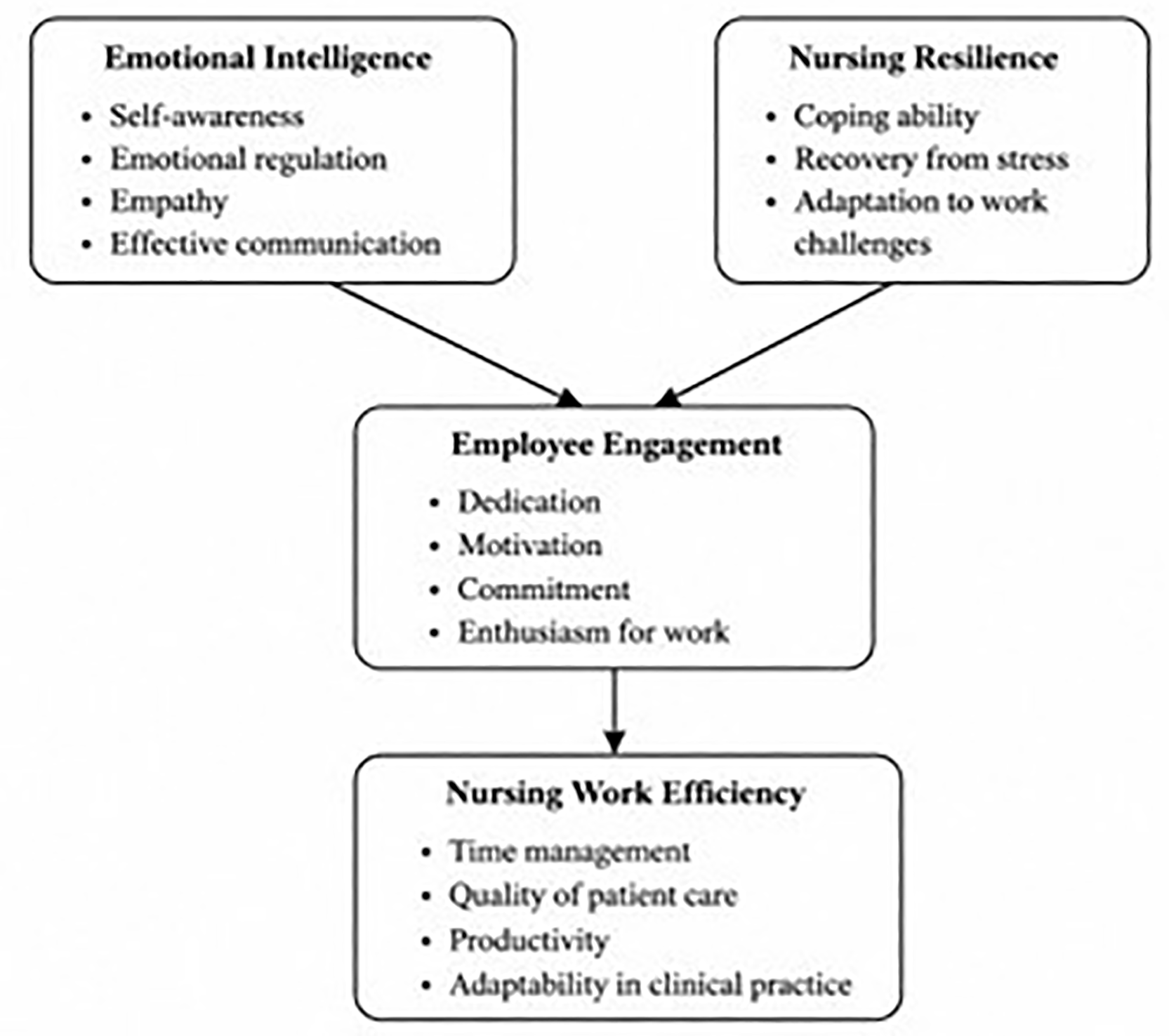
A total of 25 registered nurses participated in this study. Participants were purposively recruited from five major clinical departments, including the intensive care unit (ICU), emergency department, medical ward, surgical ward, and outpatient department. All participants had at least six months of clinical experience and were actively involved in direct patient care. The diversity of clinical settings provided a broad range of perspectives regarding emotional intelligence, nursing resilience, employee engagement, and work efficiency. Four major themes emerged from the thematic analysis ( Table 1). The conceptual relationships among these themes are illustrated in Figure 1.
Participants consistently described emotional intelligence as a fundamental psychological resource that enabled them to regulate emotions, communicate effectively, and maintain professional performance in demanding clinical situations. Nurses emphasized that emotional regulation facilitated therapeutic communication with patients and families, reduced interpersonal conflict, and supported clinical decision-making during high-pressure situations. Observational data also indicated that nurses who demonstrated greater emotional control remained calm, focused, and maintained effective interpersonal communication despite busy clinical environments.
One participant explained: “When working in the ICU, we must remain calm even in highly emotional situations. If we cannot control our emotions, patient care may be disrupted.” (Participant 9).
The second theme highlighted nursing resilience as an important adaptive mechanism for maintaining professional performance under demanding working conditions. Participants described resilience as the capacity to remain psychologically strong, recover from emotionally challenging situations, and continue delivering high-quality patient care despite heavy workloads and repeated exposure to stressful clinical events. Nurses working in critical care units particularly emphasized the importance of resilience in sustaining motivation and preventing emotional exhaustion.
One participant stated: “Sometimes we work under intense pressure for hours. Without strong mental endurance, it is very easy to feel exhausted and lose motivation.” (Participant 3).
Participants consistently identified employee engagement as a psychological state characterized by enthusiasm, commitment, and a strong sense of purpose in their work. Nurses explained that feeling engaged encouraged collaboration with colleagues, strengthened their dedication to patient care, and motivated them to undertake additional responsibilities when necessary. Engagement was perceived as an important source of energy that enabled nurses to maintain high-quality healthcare services despite increasing workplace demands.
One participant commented: “When I feel engaged with my work, I have more energy to help patients and collaborate with the team.” (Participant 9).
Participants viewed work efficiency as more than completing tasks quickly. Instead, efficient nursing practice was described as the ability to deliver safe, accurate, and high-quality patient care while effectively managing time, prioritizing clinical responsibilities, and maintaining professional standards under demanding conditions. Participants perceived that emotional intelligence, resilience, and employee engagement collectively contributed to improving work efficiency and sustaining healthcare quality.
One participant explained: “When emotional conditions are stable and work motivation is high, the work becomes more organized and the quality of service improves.” (Participant 11)
This study explored nurses’ perceptions of the mediating role of employee engagement in the relationship between nursing resilience, emotional intelligence, and work efficiency within a tertiary referral hospital in Saudi Arabia. Four interconnected themes emerged from the thematic analysis: emotional intelligence as a psychological resource for effective nursing practice, nursing resilience as an adaptive psychological mechanism, employee engagement as the motivational pathway, and work efficiency as the outcome of psychological resources. Collectively, these findings suggest that emotional intelligence and resilience enhance nurses’ work efficiency not only by strengthening individual psychological resources but also by fostering greater employee engagement, which motivates nurses to maintain high-quality clinical performance. These findings are consistent with the Job Demands-Resources Theory, which proposes that personal resources facilitate work engagement and subsequently improve performance outcomes (Bakker & Demerouti, 2017), as well as the Conservation of Resources Theory, which emphasizes that individuals utilize psychological resources to cope with workplace demands and sustain effective functioning (Hobfoll, 2011).
The findings indicate that emotional intelligence represents an essential psychological resource enabling nurses to regulate emotions, communicate effectively, and maintain professional performance under emotionally demanding clinical conditions. Participants consistently described emotional regulation as fundamental to maintaining therapeutic relationships with patients and families while reducing interpersonal conflict within multidisciplinary healthcare teams. These findings support Emotional Intelligence Theory, which argues that recognizing, understanding, and managing emotions contribute to effective interpersonal functioning and professional performance (Salovey & Mayer, 1990). Previous studies have likewise demonstrated that emotionally intelligent nurses exhibit stronger communication skills, greater empathy, lower emotional exhaustion, and improved quality of patient care (Kim et al., 2022; Zhang et al., 2023). Within the context of Saudi Arabia’s rapidly evolving healthcare system, emotional intelligence may become increasingly important as nurses encounter greater clinical complexity and higher expectations for patient-centered care.
The second major finding emphasizes nursing resilience as an adaptive psychological capacity that enables nurses to maintain professional performance despite continuous workplace challenges. Participants described resilience as the ability to recover from emotionally demanding situations, remain psychologically strong, and sustain motivation despite heavy workloads and repeated exposure to stressful clinical events. These findings align closely with the Conservation of Resources Theory, which proposes that psychological resources protect individuals from stress-related resource depletion and facilitate adaptive coping strategies (Hobfoll, 2011). Previous studies similarly report that resilient nurses experience lower burnout, greater psychological well-being, and stronger work performance in high-pressure healthcare environments (Hart et al., 2014; Delgado et al., 2022; Lee et al., 2024). The present findings therefore reinforce resilience as an essential component of sustainable nursing practice within specialist hospitals.
One of the most important findings of this study is that employee engagement emerged as the central motivational mechanism connecting emotional intelligence and resilience with nurses’ work efficiency. Rather than functioning as an independent psychological characteristic, employee engagement appeared to translate nurses’ psychological resources into greater enthusiasm, dedication, and commitment toward patient care. Participants consistently described engagement as providing meaning, motivation, and energy that enabled them to sustain high-quality healthcare services despite challenging working conditions. This interpretation strongly supports the motivational pathway proposed by the Job Demands–Resources (JD–R) Theory, whereby personal resources enhance work engagement, ultimately leading to improved work performance (Bakker & Demerouti, 2017). Similar conclusions have been reported in previous nursing and organizational studies demonstrating that work engagement mediates the relationship between psychological resources and employee performance (Mousa et al., 2020; Schaufeli, 2021).
The findings have important implications for nursing management and healthcare organizations. Improving nurses’ work efficiency should extend beyond strengthening technical competencies alone and should also incorporate strategies that enhance emotional intelligence, resilience, and employee engagement. Hospital administrators may consider implementing emotional intelligence training, resilience development programmes, psychological support services, mentorship initiatives, and leadership approaches that foster supportive work environments. Such interventions may strengthen nurses’ psychological resources, improve employee engagement, and ultimately contribute to higher-quality patient care and organizational performance. These recommendations are particularly relevant within the context of Saudi Vision 2030, which emphasizes healthcare workforce development and continuous quality improvement across Saudi healthcare institutions.
This study provides an in-depth exploration of the psychological mechanisms influencing nurses’ work efficiency by integrating Emotional Intelligence Theory, the Job Demands-Resources Theory, and the Conservation of Resources Theory within a qualitative research design. The use of multiple data sources, including in-depth interviews, observations, and document review, strengthened the credibility of the findings through methodological triangulation. However, the study was conducted in a single specialist hospital within one health cluster, which may limit the transferability of the findings to other healthcare settings. In addition, the qualitative design was intended to provide rich contextual understanding rather than statistical generalization. Future studies employing longitudinal or mixed-methods designs across multiple healthcare institutions may provide a broader understanding of the relationships among psychological resources, employee engagement, and nursing work efficiency.
This qualitative study provides an in-depth understanding of the relationships among emotional intelligence, nursing resilience, employee engagement, and nursing work efficiency within a tertiary healthcare setting in Saudi Arabia. The findings indicate that emotional intelligence and nursing resilience function as important psychological resources that enable nurses to cope with workplace challenges, regulate emotions effectively, and maintain professional performance. More importantly, employee engagement emerged as the key mechanism through which these personal resources were translated into improved work efficiency, fostering greater motivation, commitment, adaptability, and the delivery of high-quality patient care.
These findings emphasize that improving nursing work efficiency requires a comprehensive organizational approach that extends beyond strengthening clinical competencies alone. Healthcare organizations should prioritize interventions that promote emotional intelligence, resilience, and employee engagement through supportive leadership, professional development, psychological support programmes, and positive workplace cultures. Such strategies may contribute to sustainable improvements in workforce well-being, organizational performance, and healthcare quality. Future research involving multiple healthcare institutions and employing mixed-methods or longitudinal designs is recommended to further examine the dynamic relationships among these psychological resources in different healthcare contexts. Ultimately, investing in nurses’ psychological resources should be recognized as a strategic priority for strengthening healthcare systems and achieving sustainable improvements in patient-centered care.
Ethical approval for this study was obtained from the Research Ethics Committee (Institutional Review Board) of Lincoln University College, Malaysia (Approval No. LUC/MKT/SP/033/223). Institutional permission to conduct the study was also obtained from King Fahad Specialist Hospital, Qassim Health Cluster, Saudi Arabia. Written informed consent was obtained from all participants prior to the interviews. Participation was entirely voluntary, and participants were informed of their right to withdraw from the study at any stage without consequences. To protect participants’ confidentiality, all interview transcripts were de-identified using anonymous participant codes, and no personally identifiable information was included in the study. Audio recordings, field notes, and study documents were stored securely and were accessible only to the research team for research purposes.
The qualitative interview data supporting the findings of this study are not openly available because the transcripts contain contextual information that could potentially identify individual participants despite de-identification. In accordance with the ethical approval granted by the Research Ethics Committee (Institutional Review Board) of Lincoln University College, participant confidentiality and privacy must be protected.
Researchers who wish to access the de-identified interview data for non-commercial academic research may contact the corresponding author at [email protected]. Each request will be reviewed individually, and access may be provided where the proposed use is consistent with the approved ethical protocol and institutional requirements for safeguarding participant confidentiality.
Zenodo. Exploring the Mediating Role of Employee Engagement in the Relationship Between Nursing Resilience, Emotional Intelligence, and Work Efficiency: A Qualitative Study in Saudi Arabia. https://doi.org/10.5281/zenodo.21229889
Citation: Alayed, H. S. A., & Hassan, H. C. (2026). Exploring the Mediating Role of Employee Engagement in the Relationship Between Nursing Resilience, Emotional Intelligence, and Work Efficiency: A Qualitative Study in Saudi Arabia [Data set]. Zenodo. https://doi.org/10.5281/zenodo.21229889
This project contains the following underlying data:
• Interview_Guide.pdf (Semi-structured interview guide used for data collection.)
• COREQ_Checklist.pdf (Completed Consolidated Criteria for Reporting Qualitative Research (COREQ) checklist.)
Data are available under the terms of the Creative Commons Attribution 4.0 International (CC BY 4.0) licence.
This study is reported in accordance with the Consolidated Criteria for Reporting Qualitative Research (COREQ) guideline. The completed COREQ checklist is available in the Zenodo repository. Repository: Zenodo: Title: Exploring the Mediating Role of Employee Engagement in the Relationship Between Nursing Resilience, Emotional Intelligence, and Work Efficiency: A Qualitative Study in Saudi Arabia. DOI: https://doi.org/10.5281/zenodo.21147931
The authors gratefully acknowledge Lincoln University College for its support.
The author(s) declared that no grants were involved in supporting this work.
© 2026 Alayed HSA and Hassan HC. This is an open access article distributed under the terms of the Creative Commons Attribution License, which permits unrestricted use, distribution, and reproduction in any medium, provided the original work is properly cited.
Current Reviewer Status:
AWAITING PEER REVIEW
AWAITING PEER REVIEW
?
Key to Reviewer Statuses VIEW HIDE
ApprovedThe paper is scientifically sound in its current form and only minor, if any, improvements are suggested
Approved with reservations A number of small changes, sometimes more significant revisions are required to address specific details and improve the papers academic merit.
Not approvedFundamental flaws in the paper seriously undermine the findings and conclusions