Просмотр новости
Найдите то, что Вас интересует
 Спутники
 РН
РН SpaceX
 Роскосмос
 NASA
NASA
СпутникиРНSpaceXРоскосмосNASAAbstract* Background Indonesia’s agricultural labour force is ageing sharply, with millennial farmers aged 19–39 comprising only 21.93% of the total farm population according to the 2023 Census of Agriculture. The Duta Petani Milenial (DPM) programme is a national farmer regeneration initiative established under Ministerial Decree No. 434/KPTS/SM.020/M/8/2021, yet systematic evidence on the motivations driving young people into agribusiness remains limited. This study maps motivational pathways among DPM participants in Central Java. Methods An exploratory qualitative design was used. A total of 120 in-person interviews were conducted with DPM participants (90% response rate) across ten Central Java regencies with the highest DPM concentrations. Responses to one open-ended question—“What inspires you to become a millennial farmer?”—were analysed using hybrid inductive–deductive thematic coding. A predefined codebook comprising four themes and 15 subcodes was applied to meaning units. Code co-occurrences were tabulated and visualised as an undirected network in Gephi 0.10.1. Results The analysis identified 263 coded meaning units. Market opportunities and business prospects (3C, n = 66, 55%) was the most frequently coded motive, followed by family business continuity (1A, n = 36, 30%), passion, hobby, or interest (3A, n = 33, 27.5%), and community empowerment and farmer economic justice (4B, n = 24, 20%). Most respondents (n = 97, 80.8%) combined two or more motivations in the same account. Network analysis identified market opportunities as the central node (Betweenness Centrality = 12.17). Conclusion Indonesian millennial farmers entered agribusiness through layered motivations rather than single drivers. Family resources, market prospects, work transition, independence, and social purpose often appeared together. Farmer regeneration programmes should therefore support not only youth motivation, but also market access, business incubation, finance, digital marketing, value-added processing, and local farmer leadership.

Dharmawan M, Mulyo PR, Tenis AB et al. Motivational Pathways of Indonesian Millennial Farmers: A Qualitative Study of Duta Petani Milenial (DPM) Programme Participants [version 1; peer review: awaiting peer review]. F1000Research 2026, 15:1227 (https://doi.org/10.12688/f1000research.184310.1)
Brief Report
[version 1; peer review: awaiting peer review]
https://orcid.org/0009-0007-3393-6920
1, Panca Rahadi Mulyo1, Amon Bernabas Tenishttps://orcid.org/0009-0007-4634-3243
2, [...] Wiwit Utami1, Sularso Sularso3, Dinda Naura Agustin Albasasa4, Anggityas Werdining Pangesti1, Supriyatin Supriyatin5,6, Veronika Sofia Jaquelin Talan7, Sulmiyati Sulmiyati3,8, Muhammad Idil Fitri4https://orcid.org/0009-0007-3393-6920
1, Panca Rahadi Mulyo1, [...] Amon Bernabas Tenishttps://orcid.org/0009-0007-4634-3243
2, Wiwit Utami1, Sularso Sularso3, Dinda Naura Agustin Albasasa4, Anggityas Werdining Pangesti1, Supriyatin Supriyatin5,6, Veronika Sofia Jaquelin Talan7, Sulmiyati Sulmiyati3,8, Muhammad Idil Fitri41 Department of Agricultural Socio-Economics, Universitas Gadjah Mada, Yogyakarta, Special Region of Yogyakarta, 55281, Indonesia
2 Department of Language and Literature, Universitas Gadjah Mada, Yogyakarta, Special Region of Yogyakarta, 55281, Indonesia
3 Department of Animal Product Technology, Universitas Gadjah Mada, Yogyakarta, Special Region of Yogyakarta, 55281, Indonesia
4 Department of Extension and Development Communication, The Graduate School,, Universitas Gadjah Mada Sekolah Pascasarjana, Yogyakarta, Special Region of Yogyakarta, 55281, Indonesia
5 Department of Animal Nutrition and Feed Science, Universitas Gadjah Mada, Yogyakarta, Special Region of Yogyakarta, 55281, Indonesia
6 Department of Animal Science, Faculty of Animal Science, Marine, and Fisheries, Universitas Nusa Cendana, East Nusa Tenggara, Indonesia
7 Department of Animal Husbandry Socio-Economics, Universitas Gadjah Mada, Yogyakarta, Special Region of Yogyakarta, 55281, Indonesia
8 Department of Animal Science, Faculty of Animal Science, Universitas Gadjah Mada, Yogyakarta, Special Region of Yogyakarta, Indonesia
Mahdaviqia Dharmawan
Roles: Conceptualization, Data Curation, Formal Analysis, Funding Acquisition, Investigation, Methodology, Project Administration, Software, Visualization, Writing – Original Draft Preparation, Writing – Review & Editing
Panca Rahadi Mulyo
Roles: Conceptualization, Methodology, Supervision, Validation, Writing – Original Draft Preparation, Writing – Review & Editing
Amon Bernabas Tenis
Roles: Formal Analysis, Validation, Writing – Original Draft Preparation, Writing – Review & Editing
Wiwit Utami
Roles: Investigation, Supervision, Validation, Writing – Review & Editing
Sularso Sularso
Roles: Funding Acquisition, Investigation, Project Administration, Supervision, Writing – Review & Editing
Dinda Naura Agustin Albasasa
Roles: Investigation, Supervision, Validation, Writing – Review & Editing
Anggityas Werdining Pangesti
Roles: Formal Analysis, Funding Acquisition, Investigation, Supervision, Writing – Review & Editing
Supriyatin Supriyatin
Roles: Funding Acquisition, Investigation, Resources, Validation, Writing – Review & Editing
Veronika Sofia Jaquelin Talan
Roles: Investigation, Resources, Validation, Writing – Review & Editing
Sulmiyati Sulmiyati
Roles: Resources, Supervision, Validation, Writing – Review & Editing
Muhammad Idil Fitri
Roles: Supervision, Validation, Writing – Review & Editing
OPEN PEER REVIEW
REVIEWER STATUS AWAITING PEER REVIEW
Indonesia’s agricultural labour force is ageing sharply, with millennial farmers aged 19–39 comprising only 21.93% of the total farm population according to the 2023 Census of Agriculture. The Duta Petani Milenial (DPM) programme is a national farmer regeneration initiative established under Ministerial Decree No. 434/KPTS/SM.020/M/8/2021, yet systematic evidence on the motivations driving young people into agribusiness remains limited. This study maps motivational pathways among DPM participants in Central Java.
MethodsAn exploratory qualitative design was used. A total of 120 in-person interviews were conducted with DPM participants (90% response rate) across ten Central Java regencies with the highest DPM concentrations. Responses to one open-ended question—“What inspires you to become a millennial farmer?”—were analysed using hybrid inductive–deductive thematic coding. A predefined codebook comprising four themes and 15 subcodes was applied to meaning units. Code co-occurrences were tabulated and visualised as an undirected network in Gephi 0.10.1.
ResultsThe analysis identified 263 coded meaning units. Market opportunities and business prospects (3C, n = 66, 55%) was the most frequently coded motive, followed by family business continuity (1A, n = 36, 30%), passion, hobby, or interest (3A, n = 33, 27.5%), and community empowerment and farmer economic justice (4B, n = 24, 20%). Most respondents (n = 97, 80.8%) combined two or more motivations in the same account. Network analysis identified market opportunities as the central node (Betweenness Centrality = 12.17).
ConclusionIndonesian millennial farmers entered agribusiness through layered motivations rather than single drivers. Family resources, market prospects, work transition, independence, and social purpose often appeared together. Farmer regeneration programmes should therefore support not only youth motivation, but also market access, business incubation, finance, digital marketing, value-added processing, and local farmer leadership.
millennial farmers, farmer regeneration, agripreneurship, motivational pathways, Indonesia, qualitative research, Duta Petani Milenial
Corresponding author: Mahdaviqia Dharmawan Competing interests: No competing interests were disclosed.
Grant information: This study received financial support from the Indonesia Endowment Fund for Education (Lembaga Pengelola Dana Pendidikan – LPDP), Ministry of Finance of the Republic of Indonesia. No specific grant number was assigned.
The funders had no role in study design, data collection and analysis, decision to publish, or preparation of the manuscript.
Copyright: © 2026 Dharmawan M et al. This is an open access article distributed under the terms of the Creative Commons Attribution License, which permits unrestricted use, distribution, and reproduction in any medium, provided the original work is properly cited. How to cite: Dharmawan M, Mulyo PR, Tenis AB et al. Motivational Pathways of Indonesian Millennial Farmers: A Qualitative Study of Duta Petani Milenial (DPM) Programme Participants [version 1; peer review: awaiting peer review]. F1000Research 2026, 15:1227 (https://doi.org/10.12688/f1000research.184310.1) First published: 27 Jul 2026, 15:1227 (https://doi.org/10.12688/f1000research.184310.1) Latest published: 27 Jul 2026, 15:1227 (https://doi.org/10.12688/f1000research.184310.1)
Farm populations are ageing in many countries (Suess-Reyes & Fuetsch 2016; Zou et al. 2018), and Indonesia reflects this pattern sharply (Ngadi et al. 2023). Based on the 2023 Census of Agriculture in Indonesia, 18.73 million farmers (66.44%) are above 45 years old, whereas only 6.18 million (21.93%) farmers are aged 19–39, the group officially referred to as millennial farmers (BPS-Statistics Indonesia 2023a). The declining participation of younger generations in agriculture is often framed as the “young farmer problem” (Mattas et al. 2024; Eistrup et al. 2019). This trend has economic, environmental, and institutional consequences (Coopmans et al. 2021; Vera-Toscano et al. 2026; Wang 2025; Zollet and Maharjan 2021). The implications are serious since demographically compressed agricultural workforces limit growth opportunities (Liu et al. 2023), slow the transition towards more sustainable and digitalised farming systems (Mao et al. 2025), reduce rural vitality (Rogelj et al. 2024), and raise an important question of agricultural labour force regeneration: who will farm in the future?
In Indonesia’s policy response, young people have increasingly been framed as agribusiness actors who are expected to transform agricultural value chains (Toumbourou et al. 2023), often as part of farmer regeneration (Ambarwati et al. 2025; Ardyanti et al. 2023). Farmer regeneration can be understood as part of a broader generational renewal that deals with sustaining the viability of agriculture through farmers’ succession (Consentino et al. 2026; Bădan 2020; Dwyer et al. 2019). It involves the intergenerational transfer of agricultural practices, livelihoods, and skills (Shin et al. 2024). One example is the “Duta Petani Milenial” programme (Millennial Farmer Ambassador, hereafter DPM), established through Ministerial Decree No. 434/KPTS/SM.020/M/8/2021. Yet aggregate labour patterns suggest that these efforts have not produced a stronger presence of this cohort (Ambarwati et al. 2024). Indonesia’s National Labour Force Survey (Survei Angkatan Kerja Nasional, Sakernas) shows that the number of agricultural workers aged 15–39 declined at a compound annual growth rate (CAGR) of −0.95% during 2020–2024, while total workers in the same age group grew at +1.29% nationally (BPS-Statistics Indonesia 2020, 2021, 2022, 2023b, 2024). This divergence suggests that regeneration initiatives still face non-farm pull factors and agricultural entry barriers (Griffin et al. 2024; Girdziute et al. 2022).
Extensive literature documents barriers and drivers shaping young people’s entry into farming (Ayyıldız et al. 2025; Consentino et al. 2023; Mulema et al. 2021; Šimpachová Pechrová et al. 2018). However, we still lack systematic accounts of motivational pathways: configurations of motives that appear within the same agribusiness entry accounts and connect through co-occurrence. This gap matters because farmer regeneration concerns meaning, legitimacy, and livelihood viability as much as labour supply. Listening to young farmers is an empirical requirement for designing interventions aligned with the motivations sustaining entry and commitment (Mattas et al. 2024; Geza et al. 2021). This study addresses that gap by mapping motivational pathways among Indonesian millennial farmers in the DPM policy setting. The analysis is guided by two questions: (1) Which motivations and co-occurring configurations are most salient in DPM respondents’ accounts of entering agribusiness? and (2) What do these layered motivational pathways reveal about viability and the design of farmer regeneration interventions?
This study used an exploratory qualitative design to examine the motivational pathways of millennial farmers from a larger study (see Dharmawan et al. 2024). The data were gathered using in-person interviews conducted in June 2023. The analysis focused on one specific open-ended question: “What inspires you to become a millennial farmer?” This study was conducted in ten Central Java regencies with the highest DPM concentrations (Figure 1; total population N = 133).
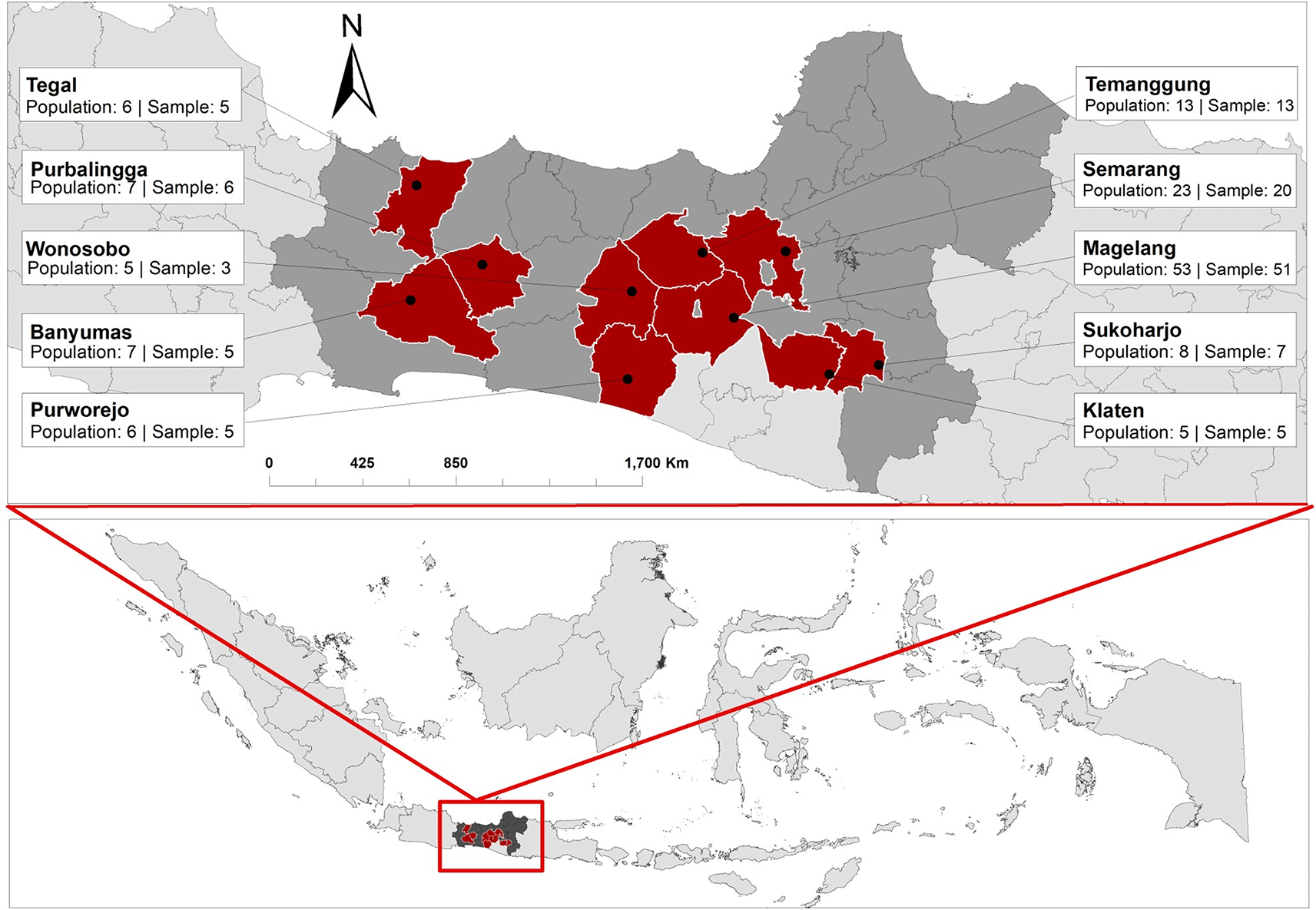
The sampling frame adhered to the guidelines set out in Ministerial Decree No. 434/KPTS/SM.020/M/8/2021 from the Ministry of Agriculture, Republic of Indonesia (2021). Eligibility required respondents to be within the ages of 19–39 years, officially identified as DPM according to the guidelines, and involved in agribusiness for at least two years as producers, processors, or marketers of food crops, horticulture, livestock, and their derivatives. Using an attempted census approach, 120 respondents were recruited (90% response rate) through in-person visits to homes or business sites; the remaining cases were non-contacts. Figure 1 shows the number of population and samples in this study which are spread across 10 regencies.
Data were collected through face-to-face interviews conducted by trained enumerators under the supervision of the research team. Interviews lasted approximately 30–45 minutes. Before the interviews, all participants received information about the purpose of the study, the voluntary nature of participation, the interview procedure, and the use of anonymised responses for research publication. Written informed consent was obtained from all participants before data collection. Participants could decline to answer any question or withdraw from the interview. All responses were anonymised before analysis. Responses were transcribed verbatim in Bahasa Indonesia. Quotations presented in this article were translated into English by the authors and checked against the original Indonesian transcripts during quote selection.
Responses were analysed using thematic coding guided by a predefined codebook and applied to meaning units. Multiple codes could be assigned to a single response when multiple motivations were present. Coding followed a hybrid inductive–deductive approach (Fereday & Muir-Cochrane 2006; Swain 2018): initial codes were derived from the responses, then reviewed against the research questions and principles of motivational pathway analysis (Geza et al. 2021). Coding was led by the first author and iteratively reviewed with the research team through code-definition checks, documented discussions of ambiguous cases, and respondent-level co-occurrence matrices, which were used descriptively to identify recurring motivational configurations rather than causal pathways.
The codebook contained four themes—family succession, career reorientation, agripreneurship and business independence, and social orientation—and 15 subcodes. Frequencies and respondent-level co-occurrences were tabulated to identify layered motivational pathways, and the co-occurrence structure was visualised as an undirected network in Gephi 0.10.1. Co-occurrence indicates that motivations appeared within the same response; it is not interpreted as a causal relationship. While the targeted sample limits generalisability beyond policy-supported millennial farmers, these localised data show how motives cluster within DPM respondents’ entry narratives.
A total of 120 in-person interviews were analysed. The responses generated 263 coded meaning units. Figure 2 shows the betweenness centrality and co-occurrence frequency of each code. Only 23 respondents gave single-motive accounts, while 97 combined two or more motives. This indicates that entry into agribusiness was usually explained through several connected reasons rather than one single motivation.
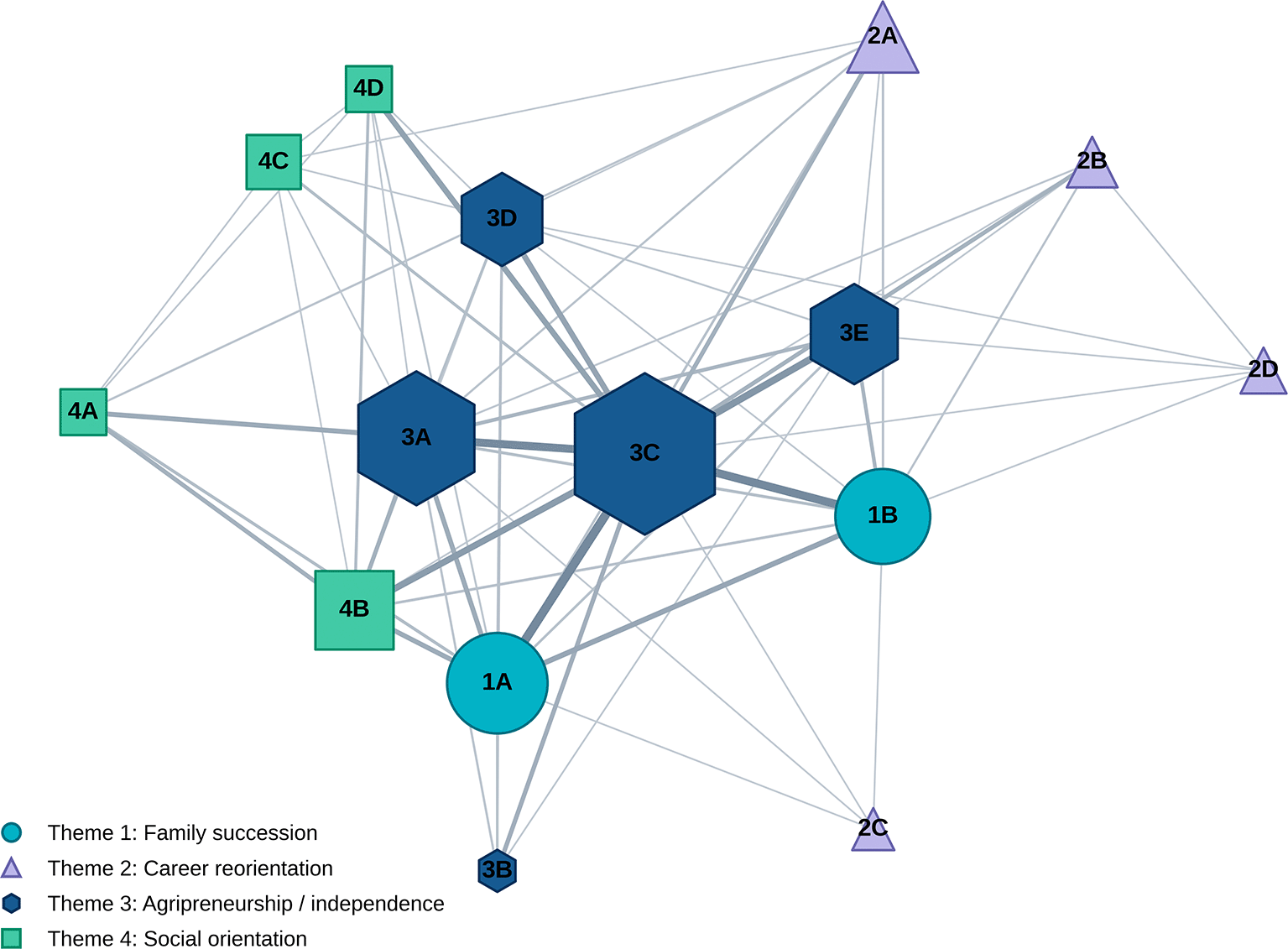
Note: Node size indicates betweenness centrality, edge weight indicates co-occurrence frequency, and the network is undirected.
Family succession was related to parents’ occupation, inherited land, family businesses, and support from relatives. At the subcode level, family succession was represented by family business continuity (n = 36; 30.0%) and family asset inheritance and support (n = 20; 16.7%). Participants stated that family background helped them enter farming, but inherited resources were often reconsidered through business opportunity.
“My parents were rice farmers, so this motivated me to become a farmer. I chose melon because the cash turnover is faster.” Male, 30 years.
“I come from a farming family, and then I saw that rice seedling production had large profits and the process was not as long as producing rice.” Male, 26 years.
Others explained that land or family assets made farming possible because they reduced the initial barrier to entry.
“It was inherited from my parents, so there was land available, and there was also an opportunity to farm.” Male, 30 years.
These accounts show that family succession was not only about continuing parents’ work. It provided resources that could be turned into a new agribusiness pathway.
Career reorientation appeared when participants entered farming after disruption or dissatisfaction with previous work. This included the COVID-19 pandemic, resignation, failed business, boredom with non-farm jobs, and return migration. At the subcode level, career reorientation was represented by pandemic impact (n = 7; 5.8%), resignation or job boredom (n = 4; 3.3%), prior job or business failure (n = 3; 2.5%), and return migration to the village (n = 2; 1.7%).
“Because of the pandemic, I first tried planting vegetables and found it profitable. Then I saw that the papaya market was promising and the maintenance was quite easy.” Male, 20 years.
“Because of COVID-19, my work was disrupted and I decided to resign. Then I used the available land to start farming.” Male, 28 years.
These accounts suggest that farming became possible when previous work was no longer stable or satisfying. However, participants did not describe farming only as a fallback option. They continued when farming offered profit, available land, and more independent work.
Agripreneurship and business independence formed the most frequent theme. Participants described farming as a business opportunity involving demand, profit, faster turnover, commodity choice, value-added processing, and digital marketing. At the subcode level, agripreneurship and business independence was represented by market opportunities and business prospects (n = 66; 55.0%), passion, hobby, or interest (n = 33; 27.5%), independence or work autonomy (n = 20; 16.7%), innovation and technology pull (n = 10; 8.3%), and education and skills background (n = 9; 7.5%). Market opportunity and business prospects was the most frequent sub-code and the most central node in the co-occurrence network.
“The demand for livestock in Solo Raya is high, so the opportunity for this business is wide open.” Male, 29 years.
“I saw an opportunity in the digital era and tried to enter agriculture by using digital media for marketing.” Male, 27 years.
Some participants also emphasised independence. Farming allowed them to manage their own time, target, capital, and income.
“I prefer having my own business. I do not want to be pressured by other people, and I can determine the target according to my own capital.” Male, 34 years.
These accounts show that participants viewed farming not only as traditional work, but as self-employment and agribusiness.
Social orientation was related to farmer regeneration, community empowerment, sustainability, local commodities, and regional identity. At the subcode level, social orientation was represented by community empowerment and farmer economic justice (n = 24; 20.0%), farmer regeneration (n = 14; 11.7%), regional identity development (n = 11; 9.2%), and environmental sustainability (n = 4; 3.3%). Participants stated that farming was also a way to respond to the ageing farmer population and weak youth interest in agriculture.
“Farmers are mostly old, and young people rarely want to farm.” Male, 22 years.
“Because of passion and awareness that agriculture is not progressing, I wanted to change young people’s mindset about farming by entering farming directly.” Female, 34 years.
Some accounts also connected agribusiness with fairer market relations and stronger farmer bargaining power.
“The business was passed down by my parents, and I saw that local people could still be developed by building awareness, improving farmers’ bargaining power, and encouraging market actors to partner with farmers through fair price setting.” Male, 28 years.
These accounts show that social purpose was part of the decision to farm. For some participants, agribusiness combined income with contribution to local agriculture.
This study shows that DPM respondents entered agribusiness through layered motivations (Phiboon et al. 2019). Most participants did not describe farming as a single decision based only on family, passion, or economic need. They combined family resources, market prospects, work transition, independence, and social purpose (Firdaus et al. 2024).
The main finding is that farming had to be economically viable. Market opportunity appeared as the most frequent and central motivation. Participants talked about demand, profit, turnover, digital marketing, and value-added products (Unay-Gailhard & Brennen 2022). This suggests that young people were not attracted to farming only because of tradition (Ruiz Salvago et al. 2019). Farming became attractive when it could work as a business.
Family succession also mattered, but mainly as access. Inherited land, parental businesses, and family support reduced the cost and risk of starting (Filloux et al. 2019; Grubbström et al. 2014). However, participants often changed the commodity, production system, or marketing strategy. Succession was therefore not a simple repetition of parents’ farming. It was adaptation of family resources into a more viable agribusiness model.
Career reorientation shows that farming can become attractive during livelihood disruption. The pandemic, resignation, business failure, or return migration opened space for participants to try agriculture (Mwaura 2017; LaRue et al. 2021). However, continued engagement depended on practical conditions such as land, market demand, and autonomy.
Finally, social orientation shows that some young farmers saw agribusiness as local development work. They wanted to create jobs, support farmer regeneration, strengthen bargaining power, and develop local commodities. Farmer regeneration policy should not rely only on campaigns asking young people to farm (Yami et al. 2019; Phiboon et al. 2019). It should support market access, business incubation, finance, digital marketing, value-added processing, and local farmer leadership. Regeneration is more likely when farming is economically viable, socially meaningful, and practically supported.
This study received institutional research approval from the Institute for Research and Community Service (Lembaga Penelitian dan Pengabdian kepada Masyarakat/LPPM), Universitas Sebelas Maret, Indonesia, under approval number 848/UN27.22/KP.06.00/2023, issued on 29 May 2023. As part of the institutional approval process for this applied research scheme, the research proposal was assessed for research feasibility, including ethical considerations. For this research scheme, no separate institutional review board or ethics committee approval letter was issued by the institution.
In addition, fieldwork permission was supported by a Research Recommendation Letter issued by the Investment and One-Stop Integrated Services Office of the Government of Central Java Province (Dinas Penanaman Modal dan Pelayanan Terpadu Satu Pintu Provinsi Jawa Tengah), Number 070/603/2023, issued on 16 May 2023. This letter provided administrative permission for the fieldwork and set out requirements for responsible research conduct, including prior reporting to relevant local authorities or institutions and submission of the research results after completion.
The study was designed as a low-risk qualitative interview study involving adult participants aged 19–39 years. The interviews focused on participants’ motivations for entering agribusiness and did not involve clinical procedures, biomedical intervention, vulnerable minors, deception, or the collection of directly identifying personal information.
Research ethics and participant wellbeing were addressed through prior information about the study, written informed consent, voluntary participation, the right to decline any question or withdraw from the interview, anonymisation of responses before analysis, and restricted access to potentially identifiable interview data. Written informed consent was obtained from all participants before data collection. No directly identifying information is reported in this article.
OpenAI ChatGPT (GPT-5.5 Thinking) was used to support language editing, manuscript formatting checks, and consistency checking. The tool was used to improve clarity, grammar, structure, and compliance with F1000Research submission requirements. It was not used to collect data, generate empirical findings, code interview responses independently, fabricate references, or conduct the substantive qualitative analysis. All AI-assisted outputs were reviewed, edited, verified, and approved by the authors, who take full responsibility for the accuracy, integrity, and final content of the manuscript.
The raw interview transcripts, respondent-level code matrix, coded meaning-unit table, and full respondent-level co-occurrence dataset are not publicly available because they contain contextual information that could compromise participant confidentiality. The Duta Petani Milenial (DPM) programme is a small and highly connected policy-recognised farmer network. Even after removal of direct identifiers, combinations of age, regency, business type, commodity choice, family background, work transition history, family asset information, and agribusiness entry narratives could allow participants to be indirectly identified.
Requests for access to restricted data may be directed to the corresponding author, Mahdaviqia Dharmawan, at [email protected]. Requests should include the requester’s name, institutional affiliation, research purpose, specific data requested, intended use of the data, and evidence of ethics approval, waiver, or institutional authorisation where applicable. Access will only be considered for legitimate academic research purposes and will require approval from the relevant institutional authority, a signed data use agreement, and a written commitment not to attempt participant re-identification, not to redistribute any restricted data accessed under the agreement, and not to use the data beyond the approved purpose. Any approved data access will also require secure data storage.
Open Science Framework: Motivational Pathways of Indonesian Millennial Farmers: Extended Data for a Qualitative Brief Report. https://doi.org/10.17605/OSF.IO/PJ4U6 (Dharmawan et al., 2026).
This project contains the following extended data:
• 00_readme.txt. Description of the repository contents, study context, ethics approval, data restriction rationale, software, licence, and citation guidance.
• 01_dpm_codebook_final_f1000_v1.xlsx. Final aggregate codebook and non-identifying analysis workbook containing the coding framework, themes, subcodes, operational definitions, coding keywords, aggregate frequencies, theme summaries, stack distribution, co-occurrence pathway summaries, network metrics, and repository notes.
• 02_dpm_coreq_checklist_v1.docx. Completed COREQ checklist for reporting qualitative research.
• 03_dpm_interview_topic_guide_v1.docx. Interview topic guide and the primary analytic question used in the qualitative analysis.
• 04_dpm_informed_consent_form_blank_v1.docx. Blank information sheet and consent form.
• 05_data_access_restriction_statement_v1.txt. Explanation of why respondent-level and transcript-level data are restricted.
• 06_license_cc_by_4_0.txt. Licence information for the public extended materials in this repository.
• 07_figure_1_dpm_regency_distribution_v1.tif. Distribution map of DPM respondents across ten selected regencies in Central Java.
• 08_figure_2_code_cooccurrence_network_v1.tiff. Co-occurrence network of motivational codes. Node size indicates betweenness centrality, edge weight indicates co-occurrence frequency, and the network is undirected.
Extended data are available under the terms of the Creative Commons Attribution 4.0 International Licence (CC BY 4.0).
The authors thank the Duta Petani Milenial participants in Central Java who agreed to take part in the interviews. The authors thank the Agribusiness Management and Innovation Research Group (Riset Grup Manajemen dan Inovasi Agribisnis), Universitas Sebelas Maret, especially Prof. Haris, Prof. Erlyna, Prof. Kusnandar, and Mrs. Isti Khomah, for their supervision and support during the research. The authors also thank the enumerators and local contacts who assisted with field access and data collection.
This study received financial support from the Indonesia Endowment Fund for Education (Lembaga Pengelola Dana Pendidikan – LPDP), Ministry of Finance of the Republic of Indonesia. No specific grant number was assigned.
The funders had no role in study design, data collection and analysis, decision to publish, or preparation of the manuscript.
© 2026 Dharmawan M et al. This is an open access article distributed under the terms of the Creative Commons Attribution License, which permits unrestricted use, distribution, and reproduction in any medium, provided the original work is properly cited.
Current Reviewer Status:
AWAITING PEER REVIEW
AWAITING PEER REVIEW
?
Key to Reviewer Statuses VIEW HIDE
ApprovedThe paper is scientifically sound in its current form and only minor, if any, improvements are suggested
Approved with reservations A number of small changes, sometimes more significant revisions are required to address specific details and improve the papers academic merit.
Not approvedFundamental flaws in the paper seriously undermine the findings and conclusions
Open Peer Review
AWAITING PEER REVIEW
Sign up for content alerts
Alongside their report, reviewers assign a status to the article:
Approved - the paper is scientifically sound in its current form and only minor, if any, improvements are suggested
Approved with reservations - A number of small changes, sometimes more significant revisions are required to address specific details and improve the papers academic merit.
Not approved - fundamental flaws in the paper seriously undermine the findings and conclusions