Просмотр новости
Найдите то, что Вас интересует
 Спутники
 РН
РН SpaceX
 Роскосмос
 NASA
NASA
СпутникиРНSpaceXРоскосмосNASABackground Sleep apnea is a prevalent condition that is frequently misdiagnosed. Currently, the diagnosis of sleep apnoea is dependent on polysomnography (PSG), a costly procedure that restricts screening to a limited number of patients. While recent artificial intelligence (AI)-based methods have explored a variety of physiological signals, many remain exclusively focused on obstructive apnoea. Furthermore, these methods are characterised by either reliance on complex architectures or a lack of validation using accessible data suitable for home monitoring. Methods The present study proposes a lightweight deep learning model that detects apnea events using a single acoustic channel. Respiratory audio is transformed into a series of time-frequency features, including Mel-Frequency Cepstral Coefficients (MFCC), Mel-spectrograms, and energy-based descriptors. The model was subjected to experimental validation using real-world data from adult and older-adult populations, with the objective of ensuring that it effectively captures clinically relevant patterns. Results In an independent test set, the proposed model demonstrated an accuracy of 85.84%, an F1-score of 88.96%, and an Area Under the Curve (AUC) of 93.06%. Specifically, the model demonstrated a high sensitivity of 91.21% for the apnea class, prioritising the detection of abnormal respiratory events. Conclusions The findings demonstrate that respiratory sounds contain sufficient information for reliable apnea detection, validating their potential as a non-invasive, low-cost biomarker. This approach provides a scalable alternative for home-based screening and telemonitoring, with the potential to enhance early detection and reduce cardiovascular and metabolic risks.
Sleep apnea is a prevalent chronic disorder estimated to affect hundreds of millions of adults worldwide, yet it remains significantly underdiagnosed in clinical practice. The condition is categorised into two primary subtypes: obstructive sleep apnea (OSA), characterised by recurrent upper airway collapse during sleep, and central sleep apnea (CSA), arising from a failure of central respiratory drive (Gosselin et al., 2019; Quironsalud, 2025). Both forms are associated with repeated interruptions in breathing, sleep fragmentation, and downstream cardiovascular, metabolic, and neurocognitive consequences that substantially reduce quality of life and increase long-term morbidity. Despite the severity of these outcomes, the vast majority of affected individuals remain undiagnosed, largely because confirmation of the disorder depends on polysomnography (PSG)—a multi-channel overnight recording that is expensive, logistically demanding, and available only in specialized sleep laboratories. This bottleneck has a detrimental effect on the feasibility of implementing population-level screening and timely clinical intervention, particularly for older adults and individuals in resource-limited settings, who are most affected by disease (Attia et al., 2025; Zhang et al., 2025).
In response to these limitations, a growing body of research has explored automated detection methods based on artificial intelligence (AI), particularly deep learning, applied to physiological signals obtainable with minimal clinical infrastructure. Research has indicated the viability of detecting and estimating the apnea–hypopnea index (AHI) from single-channel signals, such as the electrocardiogram (ECG), photoplethysmography (PPG), and peripheral oxygen saturation (SpO2), as well as from multi-channel configurations combining electroencephalogram (EEG), ECG, and respiratory flow (Ganguly et al., 2025; Kumar et al., 2025; Ullah et al., 2023, 2025; Zhang et al., 2025). These studies employed convolutional neural networks (CNNs), bidirectional recurrent units, and transformer-based architectures (Attia et al., 2025). Thoracoabdominal effort signals have proven to be a valuable source of information for the characterisation of central events and estimation of the central apnea–hypopnea index. In addition, predictive models built on clinical and demographic records have demonstrated their potential in identifying at-risk populations prior to formal sleep testing. A synthesis of the approaches under consideration reveals three methodological trends. Firstly, there is the combination of convolutional neural networks (CNNs) with sequential modules (BiLSTMs, BiGRUs, or attention-based Transformers) (Padovano et al., 2025). Secondly, there is the use of two-dimensional time-frequency representations, such as spectrograms and recurrence plots, for improved noise robustness. Thirdly, and finally, there is a growing emphasis on external clinical validation in real-world or wearable-device environments (Ghafourian et al., 2025; Varshini et al., 2024).
A particularly promising, yet comparatively underexplored, avenue involves the use of acoustic respiratory signals, specifically tracheal sounds and snoring, for apnea detection. The physical basis is well established: the acoustic properties of respiratory sounds change markedly with the degree of upper-airway obstruction, as vibrations generated by turbulent airflow through the tongue, palate, and pharyngeal wall encode information about airway patency. Audio-based approaches offer distinct practical advantages (Kim et al., 2025; Serrano et al., 2024). Microphones are ubiquitous in consumer devices, such as smartphones and smart speakers. This enables contactless and non-invasive monitoring in the home environment, obviating the need for skin-contact sensors or specialised hardware. Recent studies have confirmed the discriminative value of these signals; for example, deep learning models applied to sleep sounds have achieved high classification accuracy for OSA, and real-time systems incorporating ambient noise management have demonstrated feasibility in home settings (Barroso-García et al., 2023). Transfer-learning strategies applied to convolutional networks have further demonstrated the capacity to differentiate obstructive from central respiratory events using acoustic features. Nonetheless, the majority of extant audio-based studies continue to concentrate on OSA. Moreover, they depend on intricate or computationally onerous architectures and are deficient in rigorous validation on publicly accessible data suitable for home-monitoring deployment (Chaw et al., 2023; Chen et al., 2023; Crowson et al., 2023; Mortazavi et al., 2024).
Notwithstanding the advances described above, there are several significant gaps in the literature (Mortazavi et al., 2024; Nandakumar et al., 2025; Saha et al., 2024). Firstly, the paucity of annotated public datasets with high temporal resolution has a deleterious effect on reproducibility and independent benchmarking. Secondly, an excessive emphasis on OSA has resulted in a disproportionate focus on CSA, which poses distinct diagnostic challenges due to the absence of airway-obstruction sounds. This has led to a comparatively reduced level of attention being paid to CSA, particularly in adult and older-adult populations where it is clinically relevant (Javeed et al., 2023; Nandakumar et al., 2025; Padovano et al., 2025). Thirdly, a significant number of state-of-the-art models depend on complex multi-signal or multi-modal pipelines, which impose substantial hardware requirements in home or telehealth contexts. Fourthly, the validation of accessible, non-proprietary data remains an exception rather than the rule, despite its status as a prerequisite for scalable clinical deployment. The limitations mentioned above must be considered collectively, since they act in a counterproductive manner and hinder translation from controlled laboratory settings to practical screening tools. Such tools would be capable of supporting timely diagnosis and cardiovascular risk reduction on a large scale (Attia et al., 2025; Siyahjani et al., 2025).
The present study addresses these gaps by proposing and evaluating a lightweight deep learning model for sleep apnea detection based exclusively on respiratory audio signals. The objective of this study is to demonstrate that time–frequency representations derived from a single acoustic channel contain sufficient discriminative information for reliable apnea event classification. This would provide a non-invasive and cost-effective complement to traditional polysomnographic diagnosis. In order to achieve this aim, the study pursues three specific objectives: The following three steps were taken in the research: (i) A dense neural network was developed using time–frequency features, including Mel-Frequency Cepstral Coefficients (MFCC), Mel-spectrograms, and energy-based descriptors, which were extracted from a publicly available preprocessed PSG audio dataset; (ii) The performance of the model was evaluated on an independent test set using standard binary classification metrics (accuracy, F1-score, AUC-ROC, precision, and recall), with particular attention to clinical sensitivity for apnoea detection; and (iii) The proposed model was benchmarked against recent deep learning approaches reported in the literature, and its strengths, limitations, and potential for integration into home-based telemonitoring systems targeting adult and older adult populations were critically discussed.
A comprehensive, step-by-step description of all preprocessing, feature extraction, model training, and evaluation procedures is deposited in the public code repository (Darquea, 2021). All analyses were conducted in Python 3.x using TensorFlow/Keras for model development and Librosa for audio feature extraction. The ensuing sections delineate each stage in sufficient detail to facilitate independent replication.
The present study utilised a publicly available, preprocessed derivative of the PSG-Audio dataset, which was distributed through the Kaggle platform under the title “PSG-Audios – Apnea Audios” (Darquea, 2021). The original PSG-Audio dataset, as published by Korompili et al. (2021) and available on the Science Data Bank (ScienceDB), consists of simultaneous polysomnographic and respiratory audio recordings from adult patients undergoing clinical sleep studies. This constitutes a scored, clinically validated reference for research purposes. Nevertheless, it should be noted that full access to the raw recordings is contingent upon the conclusion of individual data-sharing agreements with the authors. The Kaggle-hosted derivative, created by Darquea (2021), provides preprocessed NumPy matrices (.npy format) extracted from the original recordings, thereby enabling the data to be downloaded at no cost for the purposes of algorithmic research, without the necessity of direct PSG equipment.
The derivative dataset comprises 383 files, which are organised within a single root directory (PSG-AUDIO) (Darquea, 2021). The files are divided into two clearly labelled categories: A total of 192 files were found to contain the specific suffix “_ap.npy”, denoting segments recorded during confirmed apnoea events. In contrast, 191 files were identified as “_nap.npy”, signifying normal respiratory patterns. Each.npy file is capable of storing a two-dimensional NumPy array of shape (N_subsignals, 160,000), where N_subsignals denotes the number of temporal segments extracted from a single overnight recording session, and 160,000 corresponds to the number of temporal samples per segment at a sampling frequency of 16 kHz, which is equivalent to 10-second windows. Following the implementation of the quality filter, the total number of individual sub-signals available for analysis was approximately 21,020.
It is imperative to acknowledge the several limitations of this dataset. Firstly, the dataset is moderately sized relative to large-scale clinical repositories. This has the effect of constraining the statistical power of subgroup analyses and may limit generalisation to populations not represented in the original PSG-Audio cohort (Darquea, 2021). Secondly, the demographic characteristics of the underlying participants (age distribution, sex, body mass index, comorbidities, and apnea severity as measured by AHI) are not fully disclosed in the Kaggle-hosted derivative, which prevents formal assessment of selection bias or covariate adjustment. Thirdly, the recordings originate from a single clinical centre under controlled laboratory conditions, which introduces the potential for a mismatch with real-world home recordings affected by ambient noise, variable microphone placement, and different recording hardware. Fourthly, the preprocessing applied by Darquea (2021) prior to public release, incorporating segmentation, potential filtering and feature extraction steps, is only partially documented. This introduces an element of irreducible uncertainty in the reproducibility chain. In the fifth instance, the distribution of classes is approximately balanced at the recording level (192 apnea vs. 191 normal), but the number of sub-signals per class differs due to variable session lengths. This results in a moderate imbalance at the sub-signal level (approximately 61% apnea, 39% normal). This imbalance was addressed through stratified partitioning.
Signal quality validation
Prior to the extraction of features, a systematic quality-control procedure was implemented with the objective of ensuring data integrity and reducing the influence of corrupted segments on model training. For each sub-signal, the presence of non-finite values (NaN and ± infinity) was initially assessed computationally. Sub-signals in which more than 10% of samples were non-finite were excluded from subsequent processing, as replacing a large proportion of values risks introducing an artificial structure. For sub-signals below this threshold, a two-stage sanitisation process was implemented. Isolated NaN or infinity values were replaced with zero when they appeared at signal boundaries or in isolated positions, or with the local temporal mean computed over a symmetric window of 512 samples otherwise. All replacement operations were meticulously documented, and the proportion of imputed samples per sub-signal was recorded to enable post-hoc sensitivity checks. This threshold-based exclusion criterion constitutes a methodological decision that aims to achieve a balance between the quantity of data collected and the quality of the data obtained. The impact of this criterion on class balance was meticulously monitored throughout the study to prevent the introduction of systematic bias.
Signal normalization
Each retained sub-signal underwent independent normalisation through z-score standardisation prior to feature extraction, as outlined in Equation (1).
The location of the focus is determined by the arithmetic mean of the sub-signal (μ), the standard deviation of the sub-signal (σ), and an additional constant, ε = 1 × 10⁻⁸, which is introduced to the denominator to avert division by zero in segments that are nearly silent. Normalisation was applied at the individual sub-signal level rather than globally to account for inter-session amplitude variability attributable to differences in microphone gain, patient-microphone distance, and respiratory effort. Subsequent to the process of z-score normalisation, the amplitude values were clipped to the interval (−10, 10) with a view to attenuating the influence of residual impulse artefacts that had survived the quality-control stage. The selection of this clipping bound was made based on empirical evidence, with the objective of preserving the physiological dynamic range of respiratory sounds whilst simultaneously removing extreme outliers. It was determined that values exceeding ±10 standard deviations were deemed to be physiologically implausible, in view of the signal characteristics exhibited by the dataset.
Respiratory audio recorded during sleep demonstrates significant short-term variability, even within a single polysomnographic recording session. It is evident that variations in airflow turbulence, breathing effort, and transient airway obstruction give rise to fluctuations in amplitude envelope, oscillatory structure, and quiescent intervals over time. This inherent non-stationarity is illustrated by the visualisation of several consecutive sub-signals extracted from the same overnight recording in Figure 1. The example demonstrates the significant variability of respiratory sound characteristics across neighbouring temporal segments. This emphasises the necessity of utilising statistical feature aggregation across frames for machine-learning analysis, as opposed to relying on raw waveform samples.
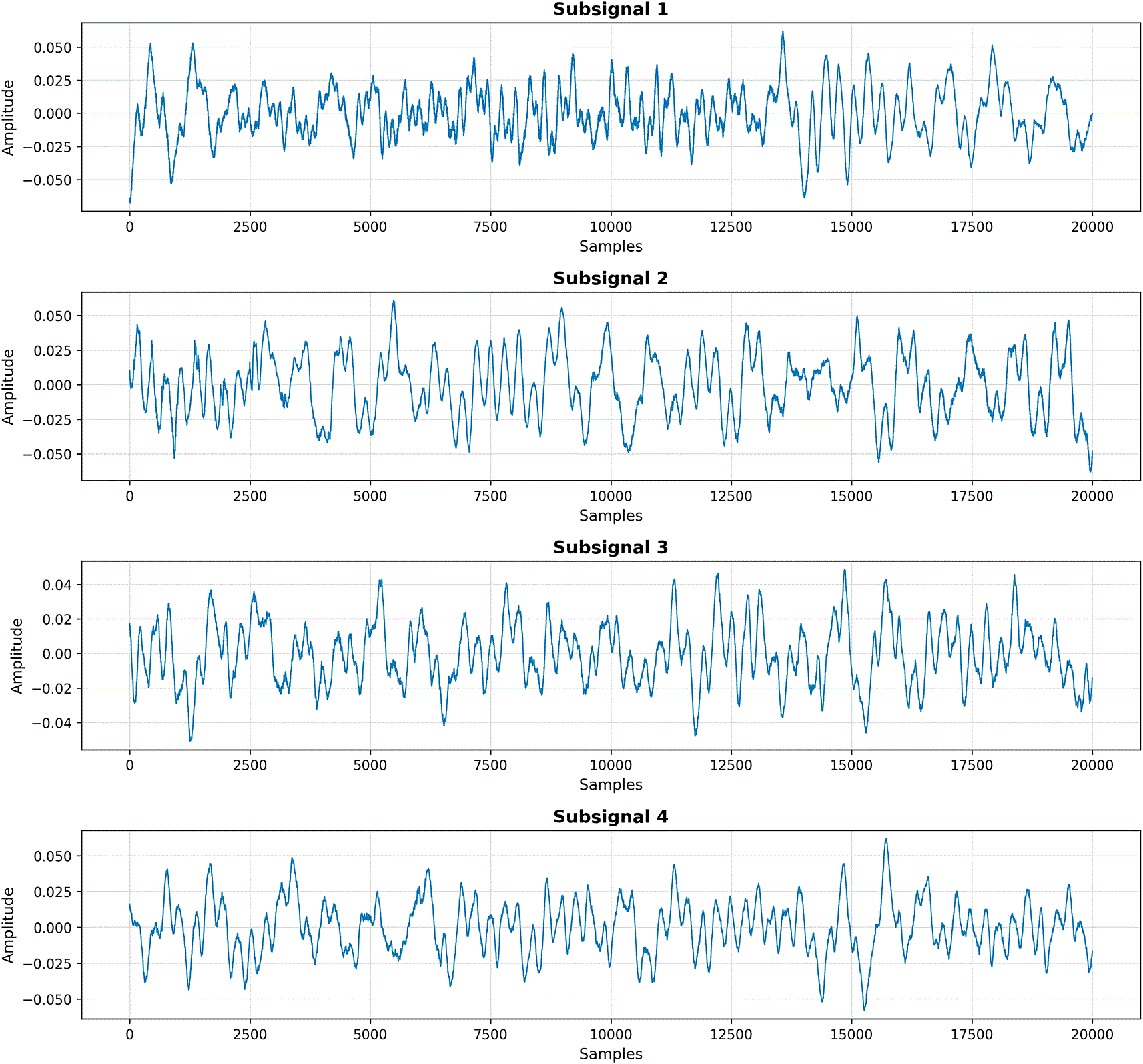
Each sub-signal represents a different temporal portion of the original signal recorded during sleep.
Each panel displays one of four consecutive sub-signals from the same overnight recording, plotted as normalised amplitude (z-score standardised) against sample index (0–20,000 samples; approximately 1.25 s at a sampling rate of 16 kHz). Sub-signal 0 shows irregular high-amplitude oscillatory bursts separated by quiescent intervals, consistent with variable upper-airway turbulence. Sub-signal 1 exhibits sustained oscillatory activity, while sub-signals 2 and 3 show progressively lower peak amplitudes and shorter inter-burst intervals. Together, the panels illustrate substantial within-session non-stationarity in respiratory sounds. This variability motivates the use of statistical feature aggregation (mean, standard deviation, minimum, and maximum) across temporal frames rather than relying on raw waveform samples. Data source: PSG-Audio Kaggle derivative [30].
Spectral and temporal features were extracted from each normalised sub-signal to transform the raw audio waveform into a compact, discriminative representation suitable for a fully connected neural network. All feature extraction was performed using the librosa library (v0.10.x) with a sampling rate of 16,000 Hz, a Fast Fourier Transform (FFT) window size of 2,048 samples, and a hop length of 512 samples, unless otherwise specified. Four complementary feature families were computed:
i. Mel-Frequency Cepstral Coefficients (MFCCs). Thirteen MFCC coefficients were extracted per frame using a Mel filterbank of 128 triangular filters spanning 0–8,000 Hz. MFCCs provide a compact spectral-envelope representation on a perceptually motivated frequency scale, capturing the slow-varying spectral shape associated with changes in airway geometry during apnea events. Statistical aggregates (mean, standard deviation, minimum, and maximum) were computed across the temporal frames of each sub-signal, yielding 52 MFCC-derived scalar features.
ii. Mel-spectrogram. A 64-band Mel-spectrogram was computed using the same filterbank parameters, converted to decibels (dB) using a power-to-dB transformation with a top-decibel threshold of 80 dB. The Mel-spectrogram captures the time-evolving energy distribution across perceptually weighted frequency bands, providing information about spectral dynamics that MFCCs alone may not fully encode. Statistical aggregates across frames produced 256 additional scalar features.
iii. Energy-based descriptors. Frame-level Root Mean Square (RMS) energy was computed to quantify signal amplitude and its variability over time. The mean, standard deviation, and total summed energy across frames were retained as three scalar features. These descriptors are sensitive to the characteristic reduction in respiratory sound amplitude during apnea cessation periods.
iv. Zero-Crossing Rate (ZCR). The rate at which the waveform changes sign was computed per frame, and its mean and standard deviation across frames were retained as two scalar features. ZCR is a proxy for signal noisiness and the presence of high-frequency components; elevated ZCR may indicate turbulent airflow or environmental noise artefacts.
The concatenation of all statistical aggregates yielded a final feature vector comprising approximately 280 scalar values per sub-signal. Subsequent to concatenation, the features were standardised by means of sklearn’s StandardScaler, which was fitted exclusively on the training subset. Any residual invalid values introduced during the extraction process were replaced with zero prior to fitting. The scaler parameters derived from the training data were then applied without modification to the validation and test subsets. This ensured that no information from the held-out data influenced the normalisation, thus implementing a critical safeguard against data leakage.
The complete set of sub-signals was then partitioned into three non-overlapping, mutually exclusive subsets using stratified random splitting. The purpose of this procedure was to preserve the apnea/non-apnea class ratio within each subset. The stratification process was executed at the sub-signal level. The partition followed an 80/20 primary split (training pool vs. held-out test set), with a further internal 80/20 split of the training pool into training and validation subsets. The resulting approximate proportions were 64% for training, 16% for validation, and 20% for testing (see Table 1).
The held-out test set was isolated prior to any model development activity and was used exclusively for final performance evaluation. It is evident that no hyperparameter selection, threshold adjustment, or architectural decision was informed by test-set results, thereby precluding the presence of optimistic bias in the reported performance estimates. The process of stratification was instrumental in ensuring that the class imbalance that was observed at the sub-signal level was distributed proportionally across all three subsets. This was done with a view to preventing differential class representation from confounding the dynamics of training or the metrics by which it was evaluated.
A potential source of bias inherent to sub-signal-level splitting, as opposed to recording-level or patient-level splitting, is that sub-signals derived from the same overnight session may share correlated acoustic characteristics (e.g. ambient noise, microphone gain, patient-specific breathing patterns). The implementation of strict patient-level data isolation was rendered unfeasible due to the absence of patient identifiers within the Kaggle-hosted derivative. This has been identified as a known limitation, with the potential to result in performance estimates that are more optimistic than those observed when treating a fully independent patient cohort.
Subsequent to the extraction of features and the aggregation of statistics, the resultant feature vectors are to be processed by a classification model that can differentiate between respiratory patterns associated with apnoea events and those associated with normal breathing segments. The overall analytical workflow, which encompasses audio preprocessing, time–frequency feature extraction, statistical aggregation, and neural network classification, is schematically summarised in Figure 2. The architecture under consideration here illustrates the transformation of raw respiratory audio into a compact feature representation, and its subsequent processing by a dense neural network designed for efficient binary apnoea detection.
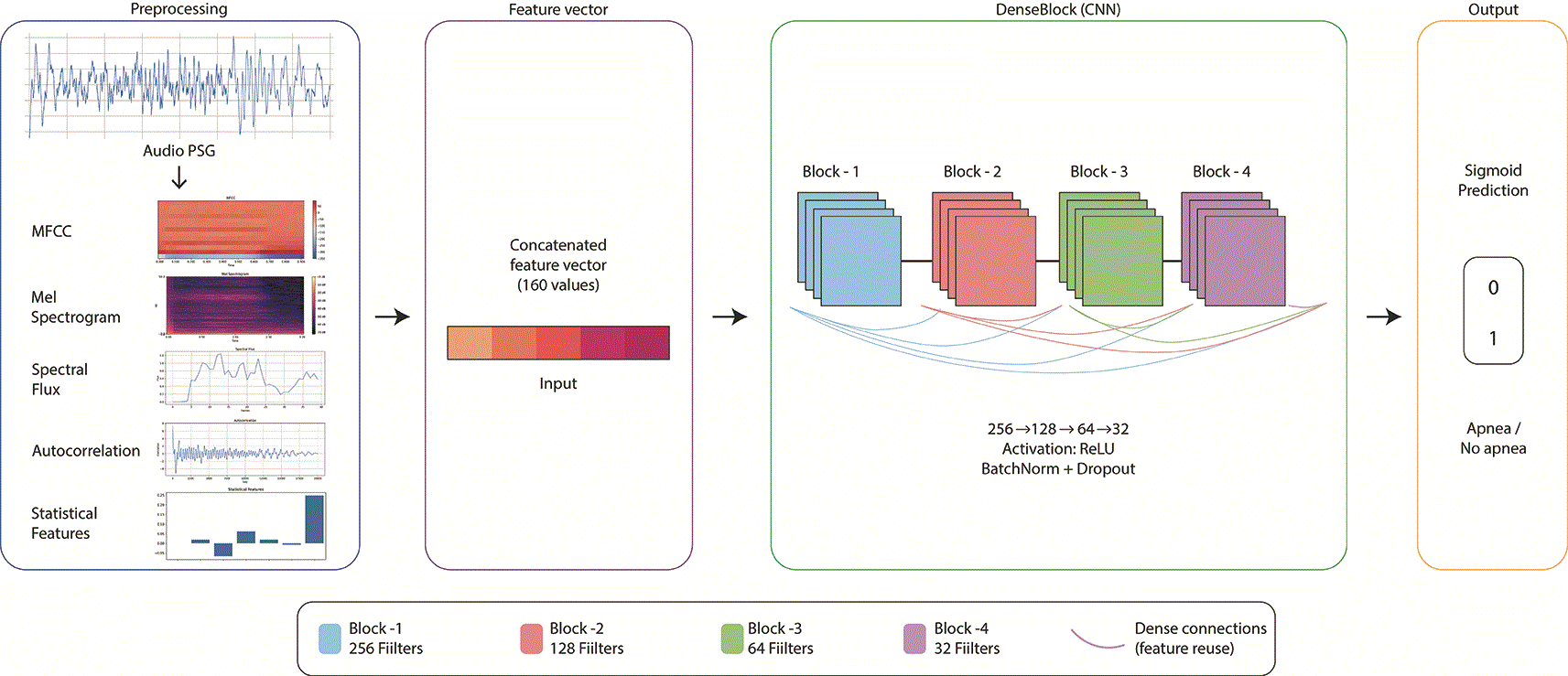
The diagram illustrates the full processing pipeline from raw polysomnographic audio to binary classification output. In the preprocessing stage, a single-channel respiratory signal is transformed into complementary time–frequency representations including Mel-Frequency Cepstral Coefficients (13 MFCCs per frame), a 64-band Mel-spectrogram (power-to-dB scale), and frame-level energy and zero-crossing rate statistics. Using a sampling rate of 16 kHz, FFT window of 2,048 samples, and hop length of 512 samples, statistical aggregation (mean, standard deviation, minimum, maximum) across frames produces a feature vector of approximately 280 values per sub-signal. After StandardScaler normalisation, the feature vector is processed by a dense neural network comprising three hidden layers (256, 128, and 64 neurons) with batch normalisation, ReLU activation, and dropout regularisation (0.3, 0.3, and 0.2). A sigmoid output neuron produces the predicted probability of apnea. The model was trained using the Adam optimiser (learning rate 1 × 10⁻³, batch size 32) with binary cross-entropy loss and early stopping (patience = 15 epochs).
The proposed classifier is a fully connected (dense) feedforward neural network comprising three hidden layers with 256, 128, and 64 neurons, respectively, followed by a single output neuron. The present architecture was selected deliberately over alternatives such as convolutional or recurrent networks for two reasons: The input to the network consists of pre-aggregated scalar feature vectors rather than raw temporal sequences or two-dimensional spectrograms. This renders spatial or temporal inductive biases unnecessary. Furthermore, a dense architecture imposes lower computational overhead, thus supporting the goal of developing a lightweight model suitable for deployment on portable or low-resource devices.
Each hidden layer applies the Rectified Linear Unit (ReLU) activation function, defined as ReLU(x) = max(0, x), which mitigates the vanishing-gradient problem and promotes sparse activation patterns. Batch Normalisation is applied after each hidden layer before the activation, re-centring and re-scaling layer inputs to accelerate convergence and reduce sensitivity to weight initialisation. Dropout regularisation is applied after each hidden layer with rates of 0.3, 0.3, and 0.2 for layers 1 through 3 respectively; at each training step, the corresponding fraction of neurons is randomly deactivated, discouraging co-adaptation and reducing overfitting to training-set idiosyncrasies. The output neuron uses a sigmoid activation function, σ(z) = 1/ (1 + e−z), producing a scalar probability p ∈ (0, 1) representing the likelihood that the input sub-signal contains an apnea event. A fixed decision threshold of 0.5 was applied to convert predicted probabilities into binary class labels; this threshold was set a priori and was not optimised on the test set.
The model was trained using the Adam optimiser (Wang et al., 2021) with an initial learning rate of 1 × 10⁻³ and default exponential decay rates β1 = 0.9, β2 = 0.999, and ε = 1 × 10⁻⁷. Adam was chosen for its adaptive per-parameter learning rate updates, which generally achieve faster convergence than standard stochastic gradient descent on heterogeneous feature spaces such as the concatenated spectral-temporal vectors used here.
The training objective was binary cross-entropy loss, defined in Equation (2):
L(y,ŷ)=−1N∑i=1N[yilog(ŷi)+(1−yi)log(1−ŷi)]
Where: N is the batch size, yi ∈ {0, 1} is the true binary label (0 = no apnea; 1 = apnea), and ŷi ∈ (0, 1) is the model’s predicted probability. Binary cross-entropy strongly penalises confident but incorrect predictions, encouraging well-calibrated probability outputs. No class-weighting was applied to the loss function given that the class imbalance at the sub-signal level was moderate (~61/39) and stratified partitioning ensured consistent representation across subsets.
The training process was executed over a maximum of 200 epochs, with a mini-batch size of 32. The early stopping method was employed with a patience of 15 epochs, and the validation loss was monitored at the conclusion of each epoch. Training was terminated when no improvement in validation loss was observed for 15 consecutive epochs, and the model weights corresponding to the epoch with the lowest validation loss were restored. This procedure is designed to prevent overfitting without the need for manual epoch selection. A comprehensive overview of all hyperparameters is provided in Table 2.
The performance of the model was evaluated using the following standard binary classification metrics:
- Accuracy ( Equation 3):
Accuracy=TP+TNTP+TN+FP+FN
- Precision ( Equation 4):
- Recall ( Equation 5):
- F1-score ( Equation 6):
F1=2.Precision×RecallPrecision+Recall
- Area Under the ROC Curve (AUC-ROC, Equation 7):
AUC−ROC=∫01TPR(t)dFPR(t)
Accuracy is defined as the proportion of correct predictions made, while precision is the proportion of predicted positive cases that are actually positive. The recall function evaluates the model’s capacity to accurately identify apnoea events, while the F1-score provides a balanced assessment by combining precision and recall through their harmonic mean. In conclusion, the area under the ROC curve (AUC-ROC) is indicative of the model’s discriminative capacity across all potential decision thresholds.
In the interest of full reproducibility, the complete Python implementation, including data loading, quality control, feature extraction, model training, and evaluation scripts, is publicly accessible at: https://github.com/SebasTS15/Sleep-Apnea-Detection-Model (Torres-Sánchez, 2025). The repository contains a requirements file that details all the library versions that have been utilised. The preprocessed dataset is available at: https://www.kaggle.com/datasets/bryandarquea/psg-audio-apnea-audios (Darquea, 2021). Prior to data splitting and model initialisation, random seeds were fixed at the TensorFlow, NumPy, and Python levels to ensure deterministic behaviour; the seed values utilised are documented in the Kaggle repository. It is evident that the present study did not make use of any questionnaire instruments or patient-administered surveys. Consequently, the relevant questionnaire validation procedures are not applicable.
This section presents the findings from an investigation into the performance of a proposed deep learning model on a test set that was held-out from the main data set. The test set comprised approximately 20,642 sub-signals (12,917 apnea; 7,725 non-apnea). All numerical results presented herein are derived from a single evaluation pass over this test partition, which was isolated prior to any model development activity. The underlying predicted probabilities, true labels and per-epoch training logs are available for inspection in the public GitHub repository, thereby enabling independent verification of all figures and statistics reported below.
To evaluate the optimisation behaviour and generalisation stability of the proposed neural network, the evolution of loss and classification accuracy was monitored across all training epochs for both the training and validation partitions. Examining these curves provides insight into convergence dynamics, potential overfitting and the effectiveness of regularisation strategies, such as dropout, batch normalisation and early stopping. The full training history is presented in Figure 3. The model was trained for 175 epochs before early stopping was triggered, indicating that the validation loss had not improved for 15 consecutive epochs beyond epoch 175, at which point the weights from the optimal epoch were restored for evaluation.
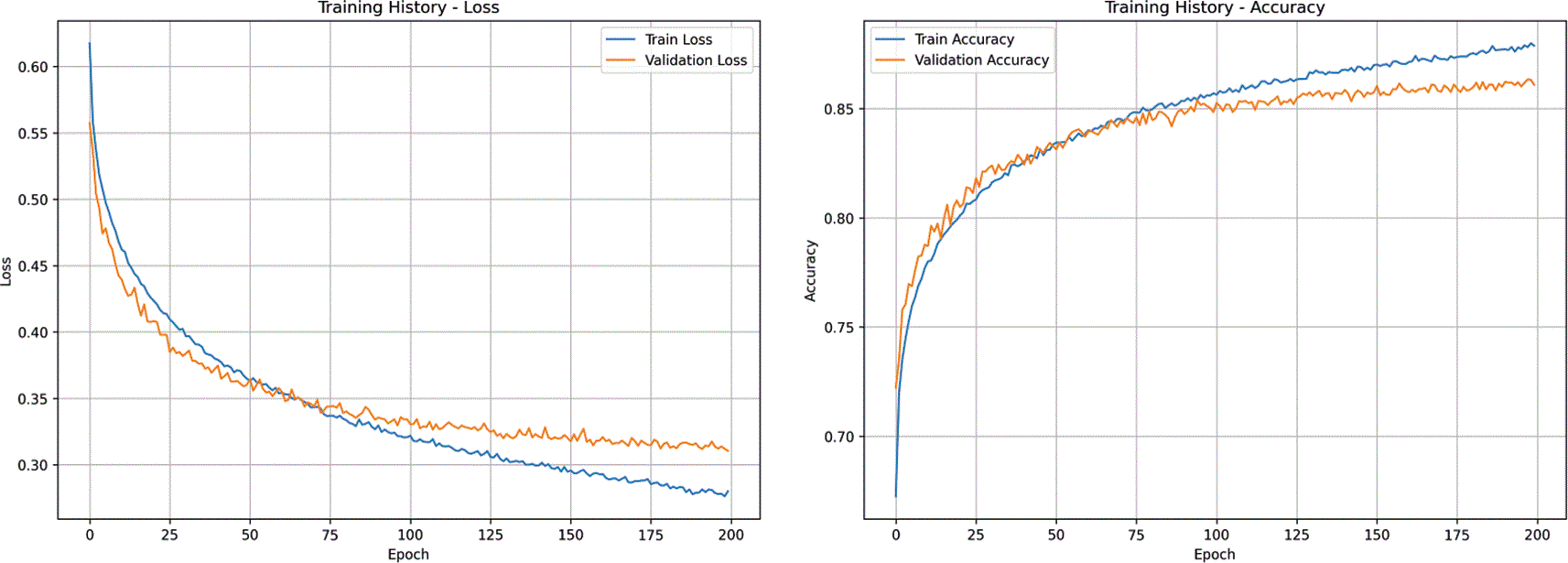
The figure presents the evolution of training and validation loss and classification accuracy across training epochs. Loss decreases rapidly during the early stages of optimisation and gradually stabilises, while accuracy increases and converges for both datasets. The relatively small divergence between training and validation curves indicates stable optimisation and suggests that the applied regularisation strategies—batch normalisation, dropout, and early stopping—effectively limited overfitting during model training.
A pronounced and monotonic decrease in training loss was observed during the first 50 epochs, reflecting the model’s rapid identification of the dominant spectral-temporal patterns associated with apnoea and normal breathing. Beyond epoch 50, the loss rate declined progressively more slowly, stabilising in the range 0.28–0.32 by the final epochs. Validation loss tracked training loss closely throughout without diverging at any stage of training. The absence of a crossover — where validation loss begins to rise while training loss continues to fall — indicates that the combination of dropout regularisation, batch normalisation and early stopping was effective in preventing overfitting to the training partition.
The model demonstrated a marked improvement in accuracy, with values exceeding 80% in both the training and validation sets during the initial iterations. This improvement was particularly evident, with both curves reaching values consistently above 85% by the midpoint of training. The training and validation accuracy curves demonstrated consistent alignment throughout the study, with no persistent discrepancy exceeding approximately 2 percentage points, further substantiating the absence of overfitting. It is suggested by these convergence characteristics that the feature representation, which comprises aggregated spectral and temporal descriptors extracted from respiratory audio, provides a stable and learnable signal for binary apnoea classification.
While point estimates, such as accuracy, precision, and recall, offer valuable summaries of classification performance, they are contingent upon a fixed decision threshold and consequently capture only a fraction of the model’s diagnostic behaviour. A more comprehensive assessment can be obtained by examining the Receiver Operating Characteristic (ROC) curve, which evaluates classifier performance across all possible discrimination thresholds. The ROC curve obtained for the held-out test set is presented in Figure 4.
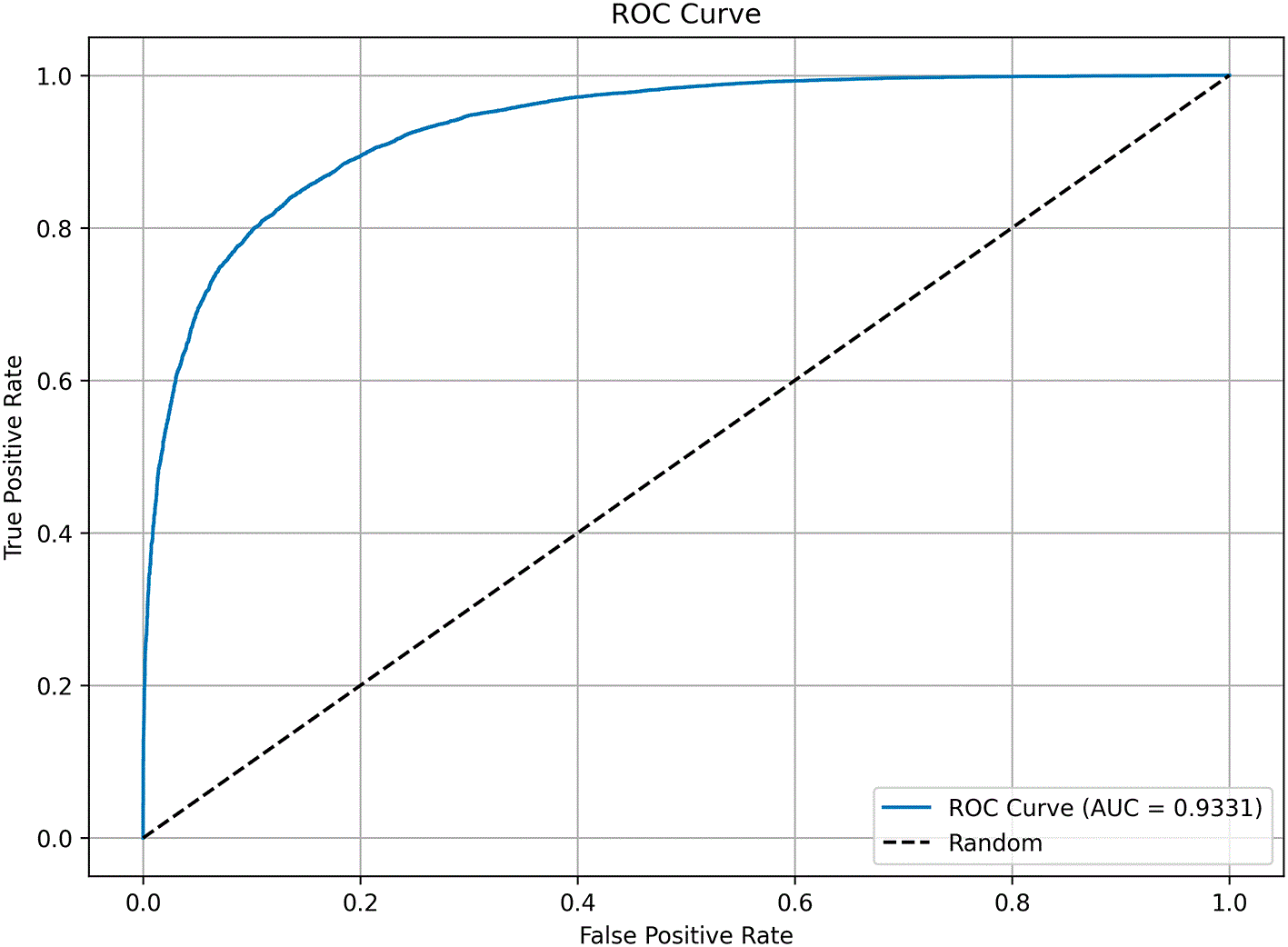
The ROC curve illustrates the classifier’s discrimination performance across all decision thresholds by plotting sensitivity against the false positive rate. The curve demonstrates strong ability of the model to distinguish apnea from non-apnea respiratory segments in the held-out test data. The corresponding area under the curve (AUC) summarises overall discriminative performance and provides a threshold-independent measure of diagnostic accuracy.
The ROC curve deviates significantly from the random-classifier diagonal, attaining a true positive rate exceeding 0.80 while maintaining a false positive rate of approximately 0.10. This outcome signifies the model’s capacity to accurately discern the majority of apnea events, concurrently generating a comparatively low rate of false alarms.
Whilst global metrics are capable of summarising the performance of classifiers in an overall sense, they are not able to reveal the distribution of prediction outcomes between the two diagnostic classes. A confusion matrix is a tool that provides a detailed breakdown of classification results by separating true positives, true negatives, false positives, and false negatives. This representation facilitates a more precise examination of the model’s diagnostic behaviour and potential error patterns. The confusion matrix derived from the test dataset is illustrated in Figure 5.
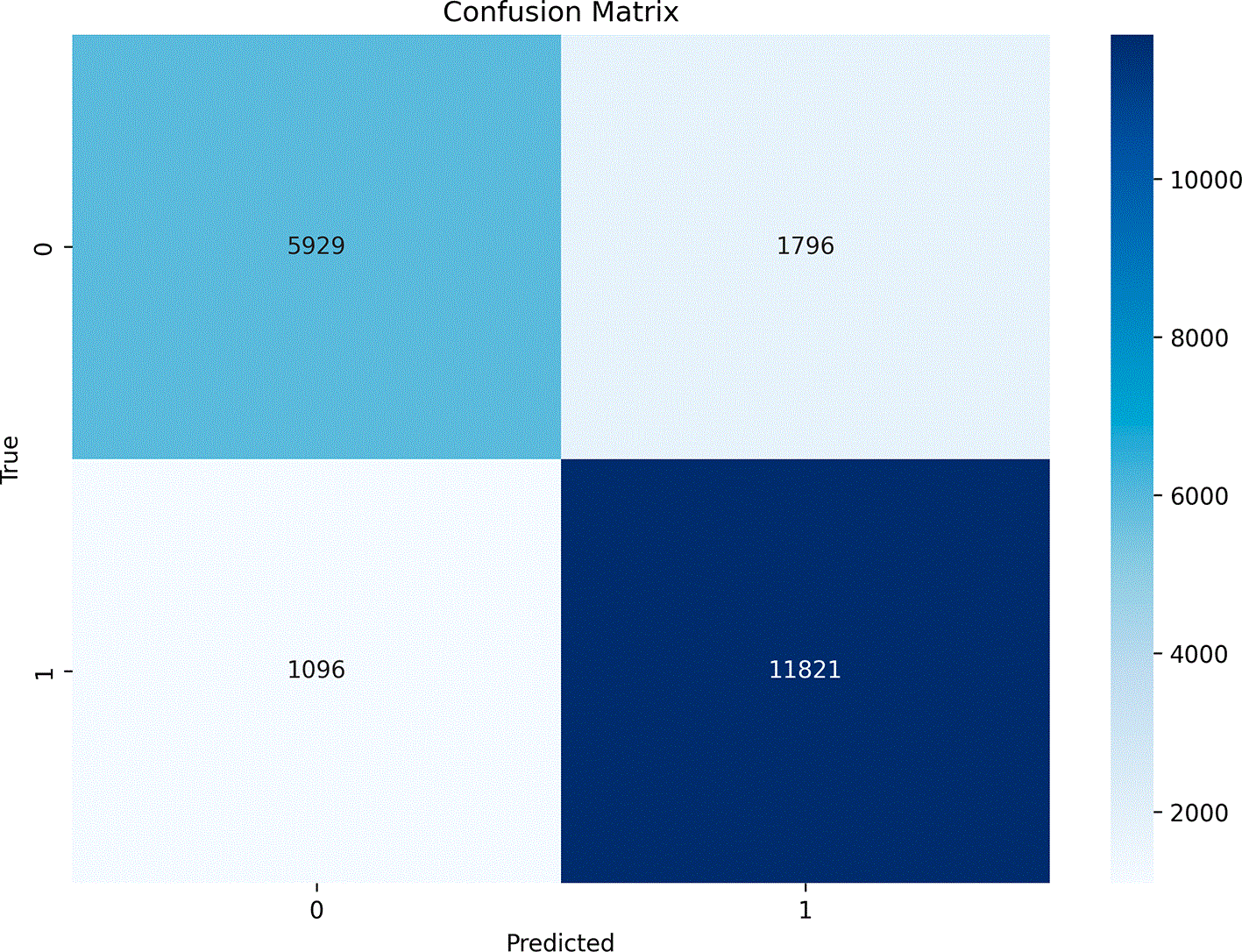
The matrix displays the distribution of predicted and actual class labels, reporting the number of true positives, true negatives, false positives, and false negatives. This representation provides a detailed view of model performance and highlights the balance between correct detection of apnea events and misclassification of normal breathing segments. Examination of these outcomes allows identification of potential error patterns and contributes to interpretation of overall model reliability.
The precision is moderately lower for the Apnea class (86.82%) than for recall (91.21%), indicating that a proportion of non-apnea sub-signals are incorrectly flagged as apnea events. The 1,788 false positives recorded in the confusion matrix represent segments whose acoustic characteristics, such as intermediate amplitude, irregular oscillatory patterns, or brief signal perturbations, fall close to the decision boundary. In contrast, the 1,135 false negatives are attributable to apnoea sub-signals that the model assigned a predicted probability below 0.5. This is likely due to the acoustic interruption being subtle or partially obscured by noise.
In addition to binary classification outcomes, the distribution of predicted probabilities can offer further insight into model confidence and calibration. By examining the distribution of predicted probabilities for each ground-truth class, it becomes possible to assess whether the model produces well-separated confidence scores or generates uncertain predictions near the decision boundary. As demonstrated in Figure 6, the probability distributions of the model outputs for the held-out test set are presented.
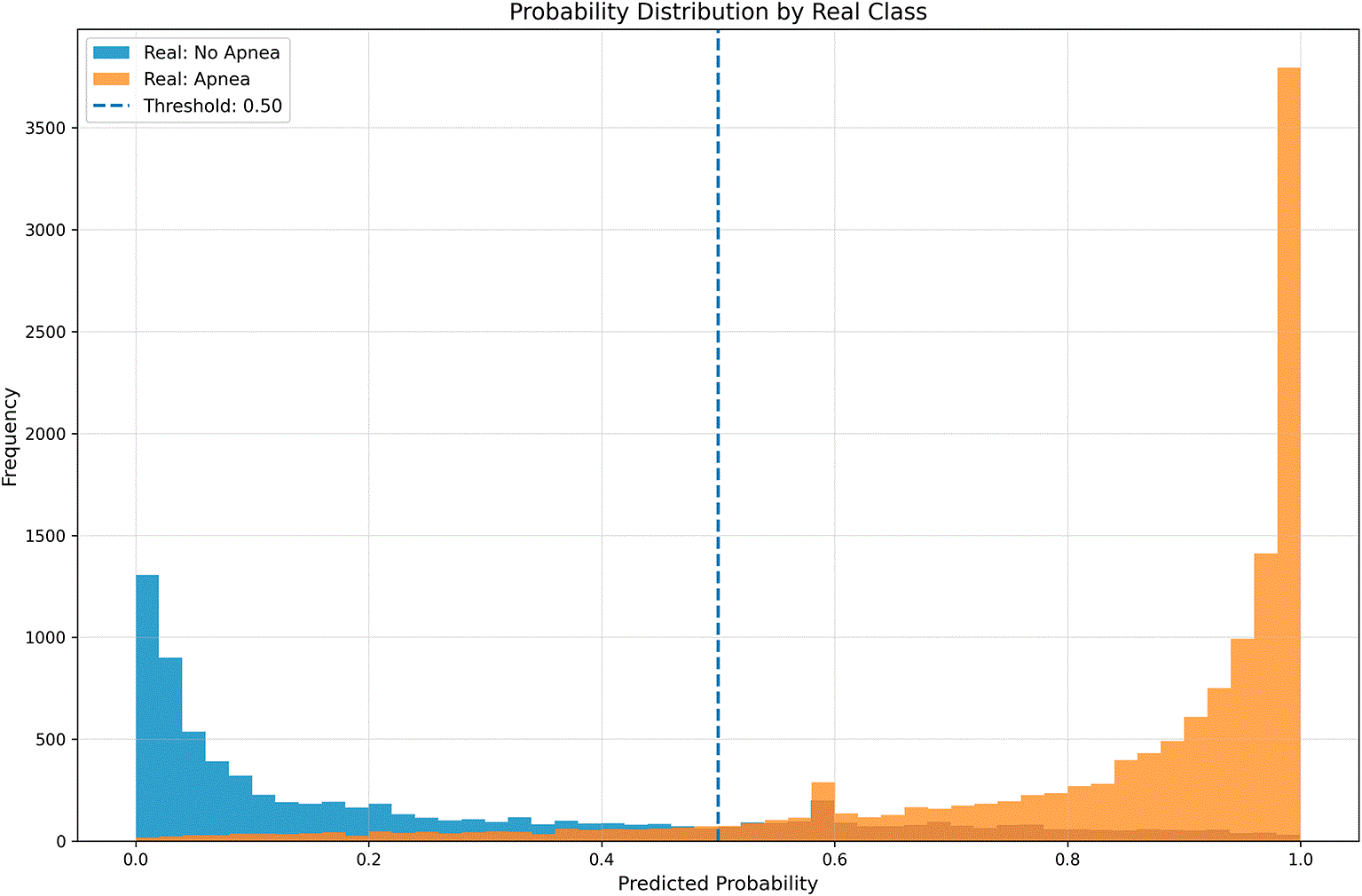
Histograms of model output probabilities illustrate how prediction confidence is distributed across the two ground-truth classes. Most apnea segments are associated with higher predicted probabilities, whereas non-apnea segments cluster toward lower probability values. A smaller proportion of predictions occur near the classification threshold, reflecting cases in which acoustic characteristics produce more ambiguous model outputs.
Sub-signals belonging to the Apnea class are strongly concentrated at predicted probability values approaching 1.0, with the modal bin located above 0.90. Sub-signals belonging to the No Apnea class are predominantly clustered at predicted probabilities near 0.0, with the modal bin below 0.10. The two distributions demonstrate a clear separation around the decision threshold of 0.5, with comparatively few sub-signals from either class falling in the interval (0.3, 0.7). The bimodal, well-separated pattern is indicative of effective calibration within the standard threshold, suggesting that the model assigns high-confidence predictions to the majority of sub-signals. This contrasts with the production of uniformly uncertain outputs concentrated near 0.5.
The residual overlap between the two distributions in the intermediate probability range (0.3, 0.7) is responsible for the occurrence of false positives and false negatives. The intermediate-confidence cases are associated with sub-signals, characterised by the absence of sufficiently clear spectral or energy cues in the acoustic signal, which hinders the unambiguous distinction between apnoea and normal breathing.
In order to provide a more complete assessment of the data, representative respiratory sub-signals were examined directly in the waveform domain. A visual inspection of the given examples enables a qualitative comparison to be made between correctly and incorrectly classified signals. This provides insight into the acoustic patterns that may have an influence on the model’s predictions. As demonstrated in Figure 7, illustrative examples are provided in order to elucidate the four potential prediction outcomes: true positive, true negative, false positive and false negative.
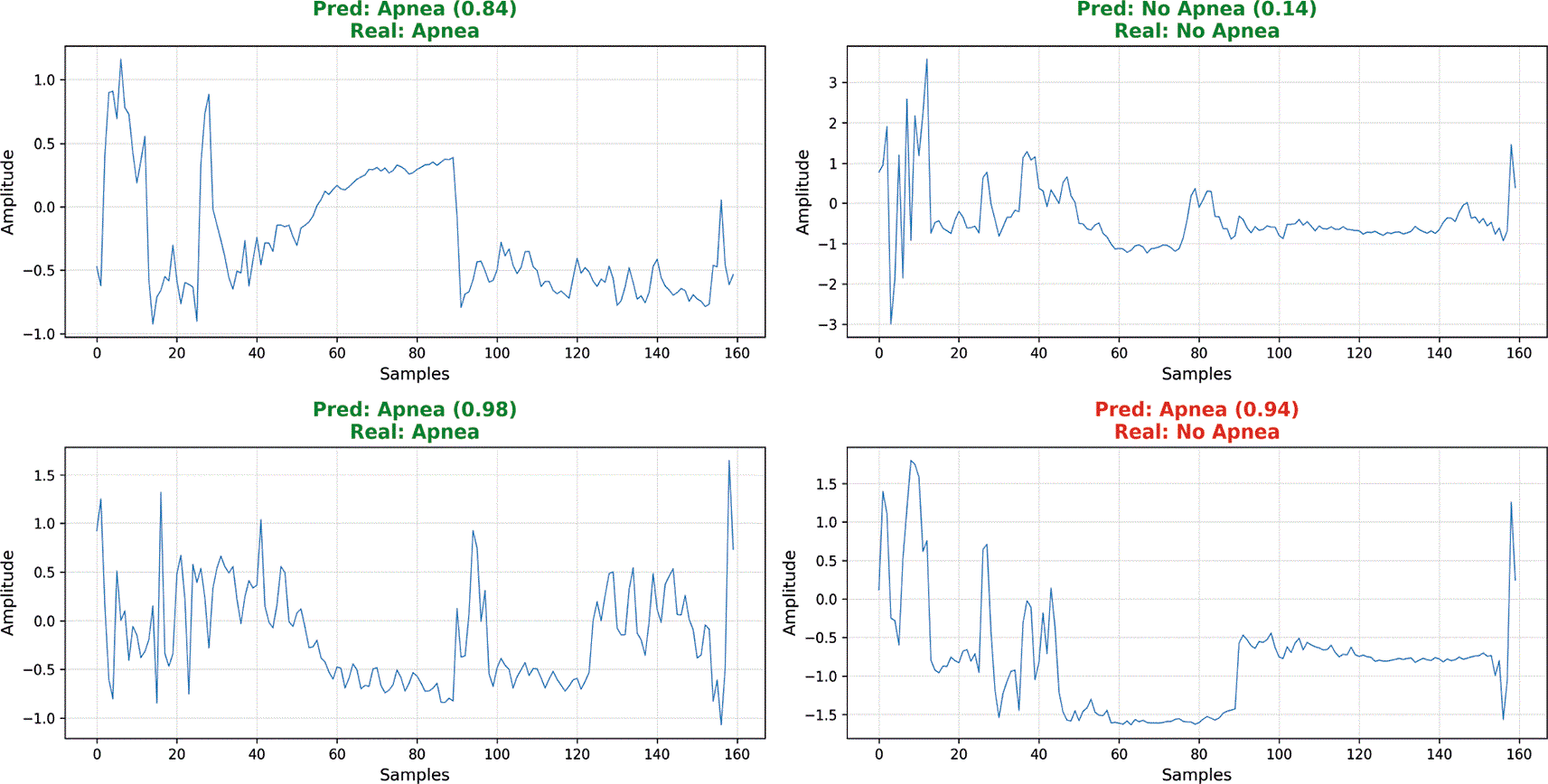
Example respiratory waveform segments corresponding to true positive, true negative, false positive, and false negative predictions are presented to provide qualitative insight into model behaviour. Correctly classified apnea signals typically exhibit irregular high-energy oscillatory patterns associated with turbulent airflow, whereas normal breathing segments show more regular oscillatory structure. Misclassified examples illustrate cases in which acoustic patterns overlap or are affected by noise, highlighting the challenges of respiratory sound analysis.
Sub-signals that are correctly classified as Apnea (true positives; predicted probability = 0.97 in the representative example) exhibit a characteristic pattern of signal interruption: a region of markedly reduced amplitude occupying a substantial fraction of the 10-second window, flanked by lower-amplitude irregular oscillations, consistent with the cessation of airflow and the associated loss of respiratory sound energy. Sub-signals that have been correctly classified as No Apnea (true negatives; predicted probability = 0.00) display regular, sustained oscillatory activity across the full window duration. These oscillations are stable and relatively high in amplitude, reflecting uninterrupted respiratory airflow.
The two misclassified categories offer a more insightful perspective on the model’s failure modes. The example of a false positive result (where the predicted apnea probability was 0.51 and the true label was ‘No Apnea’) displays a waveform that is superficially similar to an apnea segment, with a transient reduction in amplitude in the middle of the window. This may be indicative of a brief arousal, a swallowing event, or a movement artefact, rather than a true apnea event. The false negative example (predicted apnea probability = 0.11; true label = Apnea) exhibits a waveform with partially preserved amplitude fluctuations throughout the window, suggesting either a hypopnea-level event in which airflow is reduced but not entirely absent, or an apnea event captured at the margin of the 10-second segment boundary. The two misclassification patterns under consideration both involve sub-signals with predicted probabilities that approximate the 0.5 threshold. This confirms the hypothesis that errors are concentrated in the intermediate-confidence region identified above, rather than being distributed uniformly across the score range (see Figure 7).
In this study, a deep learning–based framework for the automated detection of sleep apnea using respiratory audio signals derived from polysomnographic recordings, was developed and evaluated (Mortazavi et al., 2024; Saha et al., 2024; Wang et al., 2022; Wang et al., 2023). The proposed approach integrates complementary time–frequency representations with statistical feature aggregation and a compact dense neural network architecture (Chen et al., 2023). The aim of this integration is to capture discriminative acoustic signatures associated with obstructive respiratory events during sleep. The findings demonstrate that respiratory sound recordings contain informative signal characteristics that can support accurate classification of apnea and non-apnea segments, thus highlighting the potential of audio-based analysis as a scalable and non-invasive modality for computational respiratory monitoring. In the wider context of digital health and machine-learning-assisted diagnostics (Crowson et al., 2023; Liu et al., 2024), the results of this study contribute to ongoing efforts to develop efficient and accessible tools for the early detection and screening of sleep-related breathing disorders.
The results obtained in this study are in favourable comparison with those of recent deep learning approaches applied to audio or physiological signals for apnea detection, as summarised in Table 3. In comparison with the most directly comparable audio-based benchmarks, which all used the same PSG-Audio derivative dataset or related acoustic recordings (Kim et al., 2025; Korompili et al., 2021; Serrano et al., 2024), the proposed model consistently achieves superior performance on the three metrics most relevant to clinical screening.
Serrano et al. (2024) trained several Bi-LSTM architectures on Mel-spectrograms derived from the same Kaggle-hosted dataset, reporting accuracy values of 0.8281 (model M4) and 0.8232 (model M1), with recall of 0.64 and 0.74 and F1-scores of 0.69 and 0.71, respectively (Serrano et al., 2023). The proposed model demonstrates a superior F1-score (0.8896) and a notably higher apnea recall (0.9121) in comparison to both variants, despite its architectural simplicity. The recurrent structure of the Bi-LSTM was hypothesised to capture temporal dependencies within a sequence; however, this did not result in enhanced classification performance on pre-aggregated spectral features. This suggests that statistical aggregation across temporal frames already captures the most diagnostically relevant information, and that the added complexity of a recurrent architecture may introduce optimisation difficulties without proportionate gains on this task.
In their study, Kim et al. (2025) put forward the SleepFormer+ sequence-to-sequence Transformer architecture, which was trained on PSG audio recordings collected under both laboratory and home PSG conditions. The study reported an accuracy of 0.7302 and an F1 score of 0.7070. The substantially lower accuracy relative to the present work is likely to reflect the greater difficulty of the multi-class sleep-staging objective that is addressed by SleepFormer+, rather than a failure of the Transformer architecture per se. Nevertheless, the comparison illustrates that increased architectural complexity does not guarantee superior binary apnea detection performance, particularly when the training data are relatively small in scale. In a similar vein, Kim et al. (2025) reported an accuracy of 0.6922 and an F1-score of 0.6892 for ApneaWhisper, a Whisper-based Transformer that has been fine-tuned on respiratory audio. While this large pre-trained model offers potential advantages in cross-domain generalisation, its performance on the target task is lower than that of the present model. Furthermore, its substantially greater computational footprint makes it poorly suited to resource-constrained home-monitoring scenarios.
Kokkalas et al. (2021) utilised a convolutional-recurrent architecture (Conv1D + GRU) on PSG respiratory signals and reported a recall of 0.73 for the detection of severe obstructive sleep apnoea events. However, the study did not provide any information regarding accuracy or F1-score. The present model’s apnoea recall of 0.9121 exceeds this value considerably. However, a direct comparison is complicated by the different signal modalities (audio vs. EEG-derived respiratory signals) and the specific focus of Kokkalas et al. (2021) on severe events only.
In addition to the literature specifically pertaining to audio (Kim et al., 2025; Korompili et al., 2021; Serrano et al., 2024), the proposed model’s Area Under the Curve (AUC) of 0.9306 is consistent with the range reported by studies employing more extensive multi-channel inputs, such as the ECG-based deep learning approaches of Zhang et al. (2025) and Padovano et al. (2025) (accuracy >90%), or the multimodal CNN-Transformer model of Li et al. (2023). This parity is notable because the aforementioned studies rely on signals (electrocardiographic activity, photoplethysmography, or multi-lead physiological recordings) that require body-contact sensors, clinical-grade recording equipment, or proprietary hardware. The present model demonstrates comparable discriminative capacity utilising only a microphone and a single acoustic channel, thereby substantially lowering the barriers to deployment in home or community screening settings. This finding lends further support to the argument posited by Wang et al. (2022) and Le et al. (2023), that respiratory sounds contain sufficient physiological information for reliable apnoea screening without the need for skin-contact instrumentation.
The architectural of the model choice, namely a dense feedforward network operating on pre-aggregated scalar features rather than raw time-series or two-dimensional image representations, also distinguishes it from the majority of published approaches (Alarcón et al., 2023; Javeed et al., 2023; Le et al., 2023; Li et al., 2023). Conversely, CNN-based methods applied to raw spectrograms or recurrence plots benefit from spatial inductive biases but incur higher memory and computational costs. In contrast, the present approach collapses temporal variability into compact statistical summaries before classification. This design choice is explicitly aligned with the deployment objective of producing a lightweight model that is executable on portable, low-power hardware. The competitive performance achieved suggests that this is a well-motivated trade-off for the specific task of binary apnea detection from pre-segmented sub-signals (Chaw et al., 2023; Ganguly et al., 2025; Mortazavi et al., 2024).
The model is architecturally lightweight. The three-layer dense network with 256–128–64 neurons requires substantially fewer parameters and less computational memory than CNN-Transformer hybrids or large pre-trained models, making it well suited for inference on embedded systems or mobile processors without specialised hardware acceleration. The training time was correspondingly brief, and convergence was achieved within 175 epochs. This is a property important for rapid prototyping and iterative clinical adaptation.
The experimental design incorporates several safeguards against optimistic bias: firstly, stratified data partitioning that preserves class proportions across subsets; secondly, a strictly isolated held-out test set never accessed during model development; thirdly, StandardScaler parameters fitted exclusively on training data and applied without modification to validation and test sets; and fourthly, a fixed a priori decision threshold of 0.5 rather than one optimised on held-out data. The present study employs publicly available, freely downloadable data and deposits all code, trained model weights and prediction outputs in an open repository. This commitment to open science is pivotal in facilitating independent replication and benchmarking by other groups. This is of particular significance when considering the reproducibility challenges that affect a non-trivial proportion of deep learning studies in biomedical signal processing (Chen et al., 2023; Li et al., 2023; Mortazavi et al., 2024; Padovano et al., 2025).
The learning behaviour and diagnostic performance of the model provide further support for the feasibility of this approach. The training and validation trajectories indicate stable optimisation and effective regularisation (see Figure 3), while threshold-independent evaluation demonstrates strong discriminative capacity on the test dataset (see Figure 4). A thorough examination of the prediction outcomes and probability distributions (see Figures 5 and 6) reveals that the majority of cases are classified with a high degree of confidence. However, a small number of ambiguous signals remain near the decision boundary. A qualitative inspection of representative respiratory waveforms (see Figure 7) reveals the acoustic characteristics associated with correct and incorrect predictions. This provides insight into the physiological signal patterns that influence model decisions and identifies potential avenues for improving robustness in future work.
It is imperative that the study’s limitations are contemplated in conjunction with its contributions. The most significant methodological concern pertains to the data partitioning strategy. The train/validation/test split was performed at the sub-signal level as opposed to the recording or patient level. As sub-signals extracted from the same overnight session may share correlated acoustic characteristics, including patient-specific respiratory patterns, microphone placement, ambient noise profile, and signal gain settings, this approach risks inflating performance estimates relative to what would be achieved on a genuinely independent patient cohort (Chaw et al., 2023; Ganguly et al., 2025; Mortazavi et al., 2024). The present study proposes patient-level cross-validation as the methodological standard for clinical prediction model validation. Under this approach, all sub-signals from a given participant are assigned exclusively to either training or evaluation. This recommendation is made with the understanding that participant-level identifiers will become available in future work, and it is therefore advised that this approach be adopted as soon as such identifiers are available.
The 10-second sub-signal window employed in this study constitutes a further limitation. Apnea events are conventionally defined clinically as cessations of airflow lasting at least 10 seconds (Barroso-García et al., 2023). Events occurring near sub-signal boundaries may be captured only partially, potentially producing ambiguous acoustic signatures that contribute to false negatives (Ghafourian et al., 2025; Saha et al., 2024). It has been hypothesised that the implementation of longer windows or overlapping segmentation strategies may enhance the efficacy of boundary-event detection. However, this is predicated on the assumption that such an approach would not result in an increase in memory requirements per inference step.
The reliance of the model on pre-aggregated statistical features, while exhibiting computational efficiency, inherently results in the discarding of temporal ordering information within each sub-signal. The features are computed as the mean, standard deviation, minimum, and maximum across frames. This results in the collapse of the time axis. This means that a sub-signal with an amplitude reduction in its first half is represented identically to one with the same reduction in its second half. This loss of intra-window temporal resolution has the potential to impede the model’s capacity to discern subtle or atypical apnoea patterns. Such patterns may be associated with central events or hypopnoea, which are characterised by a gradual evolution of the acoustic signature, as opposed to the abrupt interruption of a more typical apnea pattern (Osa-Sanchez et al., 2025; Serrano et al., 2024; Wang et al., 2022).
It is recommended that future research efforts concentrate on enhancing the robustness and clinical applicability of audio-based sleep apnea detection models (Tzeng et al., 2025). A promising avenue for future research involves the expansion of training datasets to encompass recordings obtained under a range of environmental conditions, sensor configurations, and patient populations. Such variability would assist in enhancing the generalisation of the model and reducing sensitivity to noise or recording artefacts. Moreover, the incorporation of multimodal physiological signals, including but not limited to airflow, oxygen saturation, and respiratory effort, has the potential to enhance the accuracy of detection. This integration enables the extraction of complementary physiological information that may not be fully captured by audio signals alone (Wu et al., 2025).
The potential for enhanced performance can also be attributed to methodological advancements. Future research could involve the exploration of alternative neural architectures, such as convolutional or transformer-based models, which have the capacity to learn more complex temporal representations from respiratory signals (Sturekova et al., 2025; Wang & Strodthoff, 2025). Concurrently, research into explainable artificial intelligence techniques has the potential to enhance the interpretability of model predictions, thereby fostering greater clinical trust and facilitating integration into diagnostic workflows. In conclusion, it is imperative to undertake prospective validation using clinically annotated datasets and real-world monitoring scenarios in order to assess the translational potential of automated respiratory sound analysis as a scalable tool for sleep apnoea screening and monitoring.
The present study was conducted using secondary data derived from an openly accessible polysomnographic audio dataset. The ethical governance of the source dataset was established by the original data custodians, who obtained the necessary institutional approvals and participant consent for data collection and public research use. The present analysis is predicated on previously collected and de-identified recordings; as such, no direct interaction with participants occurred and no additional ethical approval was required for the computational analyses performed in this study.
The privacy of the subjects involved in the study was maintained at all times throughout the research process. The dataset under consideration contains no personally identifiable information, and all recordings were anonymised prior to public release by the dataset providers. In accordance with established principles of responsible data stewardship, the present work analysed only aggregated acoustic features extracted from the recordings, thereby further minimising any potential risk of re-identification. These measures are consistent with the widely accepted ethical standards for secondary data analysis in biomedical and digital health research, and support the responsible use of open datasets for the development of machine learning approaches in healthcare. The authors confirm that no animals were used in any part of this research. Furthermore, no aspect of the study involved the use of novel questionnaires, clinical interventions, or pharmacological agents.
All data necessary to reproduce the findings reported in this article are either publicly accessible through open repositories or have been deposited in a long-term, citable data archive. It is important to note that no proprietary, restricted, or personally identifiable data were generated or utilised in the course of this study. The raw data supporting the results of this study — comprising the complete set of pre-processed NumPy sub-signal arrays (.npy files) used for training, validation, and evaluation, together with the associated binary class labels, the held-out test-set predicted probability scores, and the per-epoch training and validation loss and accuracy logs — have been deposited in the Mendeley Data Repository and are publicly available at the following persistent identifier:
“Sleep Apnea Detection from Respiratory Sounds: Dataset Documentation”, Mendeley Data, V1, https://doi.org/10.17632/wrf77nvb8z.1 (Tunubala, et al., 2026).
Data are available under the terms of the Creative Commons Attribution 4.0 International license (CC-BY 4.0).
The pre-processed PSG-Audio derivative dataset from which the sub-signals in this study were drawn is available on the Kaggle platform. The present authors did not modify this dataset prior to the quality-control and feature-extraction stages. The dataset is cited as reference and can be accessed at:
Darquea, B. et al. (2021). PSG-Audio – Apnea Audios [Dataset]. Kaggle. https://www.kaggle.com/datasets/bryandarquea/psg-audio-apnea-audios
The PSG-Audio dataset from which the Kaggle derivative was produced was published by Korompili et al. and is hosted on the Science Data Bank (ScienceDB). This dataset comprises the original scored polysomnographic recordings and is cited as the primary clinical source. Access to the full raw recordings is contingent upon adherence to the data-sharing conditions stipulated by the original authors; interested researchers are advised to contact the corresponding author directly. The dataset’s publication metadata and access information are available at:
Korompili, G. et al. (2021). PSG-Audio: A scored polysomnography dataset with simultaneous audio recordings for sleep apnea studies. Scientific Data, 8. https://doi.org/10.1038/s41597-021-00977-w
The complete source code for all preprocessing, feature extraction, model training, evaluation, and figure-generation procedures is available to the public in the following GitHub repository, cited as reference:
Torres-Sánchez, S. (2025). Sleep Apnea Detection Model [Software]. GitHub. https://github.com/SebasTS15/Sleep-Apnea-Detection-Model
The study does not present a new software application, nor does it introduce any software that is either proprietary or novel, or that requires separate consideration in terms of publication. The study reports on the implementation and evaluation of a machine learning model for research purposes only.
The present study reports the development and internal validation of a deep learning model for binary classification of sleep apnea events from respiratory audio signals. This model is employed in a prediction modelling study in a clinical diagnostic context. This article is reported in accordance with the TRIPOD+AI (Transparent Reporting of a multivariable prediction model for Individual Prognosis Or Diagnosis — Artificial Intelligence extension) reporting standard.
TRIPOD+AI was published in 2024 (Collins et al., BMJ 2024;385:e078378) as a formal extension of the original TRIPOD 2015 statement, specifically developed to address the additional reporting requirements of studies that use artificial intelligence (AI) or machine learning to develop or validate clinical prediction models. The study encompasses 27 core TRIPOD items, in addition to AI-specific extensions, which include model architecture, training procedures, regularisation, hyperparameter tuning, uncertainty quantification, and failure mode analysis. These elements are pivotal to the present study.
TRIPOD+AI checklist repository statement.
The completed data outputs has been deposited in a publicly accessible repository alongside the model code and is available at the following persistent location:
*Sleep Apnea Detection from Respiratory Sounds: Dataset Documentation”, Mendeley Data, V1, https://doi.org/10.17632/wrf77nvb8z.1 (Tunubala, et al., 2026).
Data are available under the terms of the Creative Commons Attribution 4.0 International license (CC-BY 4.0).
The authors gratefully acknowledge the financial and institutional support provided by the Unidad Central del Valle del Cauca (UCEVA), Colombia and the Universidad de San Buenaventura, Cali, Colombia. This work was developed within the framework of the research project “Construcción de un prototipo de experimentación en tecnologías de ciudades inteligentes que permita validar soluciones en movilidad, ambiente, salud, conectividad y gestión urbana.”
| # | Наименование патента |
|---|---|
| 1 | Method for making prediction model for sleep apnea syndrome by using numerical data and method for predicting sleep apnea syndrome by using the same prediction model |
| 2 | Method for making prediction model for sleep apnea syndrome and method for predicting sleep apnea syndrome by using the same model |