Просмотр новости
Найдите то, что Вас интересует
 Спутники
 РН
РН SpaceX
 Роскосмос
 NASA
NASA
СпутникиРНSpaceXРоскосмосNASAAbstract Introduction Perforation of the gallbladder is a benign and common complication during laparoscopic cholecystectomy. However, it may result in stone spilling, which potentially can lead to serious postoperative complications. Case report A 70-year-old male underwent laparoscopic cholecystectomy for acute cholecystitis. The procedure was complicated by perforation of the gallbladder and spilling of gallstones. More than a year after the procedure, the patient developed subcutaneous abscesses containing some of the spilled stones, a computed tomography revealed a complex intraabdominal and intrathoracic fistula with communication from the abdominal cavity to pleura and ultrasonic imaging found a lost gallstone in the thorax. After two years, the patient developed pleural empyema and sepsis secondary to the condition. Presently, the patient awaits surgery for the fistula and empyema. Conclusion Proper care should be taken to avoid stone spilling during laparoscopic cholecystectomy. However, if perforation and stone spilling occur, all visible stones should be removed during the procedure and the complication should be noted in the medical records. Furthermore, the patient should be thoroughly informed. This may help accelerate diagnosis if the patient later suffers from a complication related to lost stones.

Klubien J, Borgersen DW, Rosenberg J and Pommergaard HC. Case Report: Multiple complications after laparoscopic cholecystectomy with perforation and spilled gallstones [version 3; peer review: 1 approved, 2 approved with reservations]. F1000Research 2026, 5:2322 (https://doi.org/10.12688/f1000research.9490.3)
Case Report
Revised
[version 3; peer review: 1 approved, 2 approved with reservations]
Jeanett Klubien1,2, Dorte Winther Borgersen3, Jacob Rosenberg
https://orcid.org/0000-0002-0063-1086
1,2, Hans-Christian Pommergaard4Jeanett Klubien1,2, Dorte Winther Borgersen3, Jacob Rosenberg
https://orcid.org/0000-0002-0063-1086
1,2, Hans-Christian Pommergaard41 Center for Perioperative Optimization, Department of Surgery, Herlev Hospital, Herlev, Denmark
2 Faculty of Health and Medical Sciences, University of Copenhagen, Copenhagen, Denmark
3 Department of Surgery, Herlev Hospital, Herlev, Denmark
4 Department of Surgery, Hvidovre Hospital, Hvidore, Denmark
Jeanett Klubien
Roles: Investigation, Visualization, Writing – Original Draft Preparation, Writing – Review & Editing
Dorte Winther Borgersen
Roles: Conceptualization, Writing – Original Draft Preparation, Writing – Review & Editing
Jacob Rosenberg
Roles: Conceptualization, Supervision, Writing – Original Draft Preparation, Writing – Review & Editing
Hans-Christian Pommergaard
Roles: Conceptualization, Supervision, Writing – Original Draft Preparation, Writing – Review & Editing
OPEN PEER REVIEW
REVIEWER STATUS
Perforation of the gallbladder is a benign and common complication during laparoscopic cholecystectomy. However, it may result in stone spilling, which potentially can lead to serious postoperative complications.
Case reportA 70-year-old male underwent laparoscopic cholecystectomy for acute cholecystitis. The procedure was complicated by perforation of the gallbladder and spilling of gallstones. More than a year after the procedure, the patient developed subcutaneous abscesses containing some of the spilled stones, a computed tomography revealed a complex intraabdominal and intrathoracic fistula with communication from the abdominal cavity to pleura and ultrasonic imaging found a lost gallstone in the thorax. After two years, the patient developed pleural empyema and sepsis secondary to the condition. Presently, the patient awaits surgery for the fistula and empyema.
ConclusionProper care should be taken to avoid stone spilling during laparoscopic cholecystectomy. However, if perforation and stone spilling occur, all visible stones should be removed during the procedure and the complication should be noted in the medical records. Furthermore, the patient should be thoroughly informed. This may help accelerate diagnosis if the patient later suffers from a complication related to lost stones.
Laparoscopic cholecystectomy, spilled gallstones, lost gallstones, abscess, fistula, empyema, case report
Corresponding author: Jeanett Klubien Competing interests: No competing interests were disclosed.
Grant information: The author(s) declared that no grants were involved in supporting this work.
Copyright: © 2026 Klubien J et al. This is an open access article distributed under the terms of the Creative Commons Attribution License, which permits unrestricted use, distribution, and reproduction in any medium, provided the original work is properly cited. How to cite: Klubien J, Borgersen DW, Rosenberg J and Pommergaard HC. Case Report: Multiple complications after laparoscopic cholecystectomy with perforation and spilled gallstones [version 3; peer review: 1 approved, 2 approved with reservations]. F1000Research 2026, 5:2322 (https://doi.org/10.12688/f1000research.9490.3) First published: 14 Sep 2016, 5:2322 (https://doi.org/10.12688/f1000research.9490.1) Latest published: 09 Jul 2026, 5:2322 (https://doi.org/10.12688/f1000research.9490.3)
In response to the reviewer's comments, we have revised the Discussion to further address the clinical decision-making, acknowledge the lack of microbiological and antibiotic data as a limitation, and expanded the discussion of the proposed mechanism of fistula formation.
See the authors' detailed response to the review by Emre Gonullu
See the authors' detailed response to the review by Gabriel Sandblom
See the authors' detailed response to the review by Tatsuhiro Masaoka
Perforation of the gallbladder during laparoscopic cholecystectomy (LC) is a well-known and common complication (8–40%)1 that may lead to intraabdominal spilling of gallstones and some of the spilled stones may not be retrieved despite all efforts. The incidence of lost stones during LC is less frequent and varies in the literature from 0.1 to 20%.1–3 Although considered a benign complication, it is reported that 0.03–8.5% of the lost stones will lead to a postoperative complication.2,3
We present a case of multiple complications after perforation of the gallbladder and subsequent stone spilling during LC. This case report is reported according to the CARE statement.4
A 70-year-old Caucasian male, with a medical history of hypertension, was admitted in March 2014 after four days of diffuse abdominal pain and fever up to 39°C. A computed tomography (CT) scan identified multiple gallstones in an inflamed gallbladder. To verify the diagnosis, abdominal ultrasonic imaging confirmed multiple gallstones and thickening of the gallbladder wall as signs of acute cholecystitis. The patient underwent acute LC with the intraoperative finding of a severely inflamed gallbladder. In addition, the procedure was complicated by perforation of the gallbladder, and gallstones were spilled. The gallbladder was removed using an endoscopic bag after complete dissection to prevent further stone spilling, and all visible stones were removed. Lastly, the peritoneal cavity was irrigated with saline to retrieve any additional gallstones. The complication was noted in the medical records.
One year after the procedure, the patient was admitted with tenderness in the right upper quadrant. A CT was performed and showed a swelling in the upper right part of the abdominal wall and between the liver and the lower lobe of the right lung with calcifications at both sites assumed to be lost gallstones ( Figure 1). The patient did not receive any treatment for the swellings.
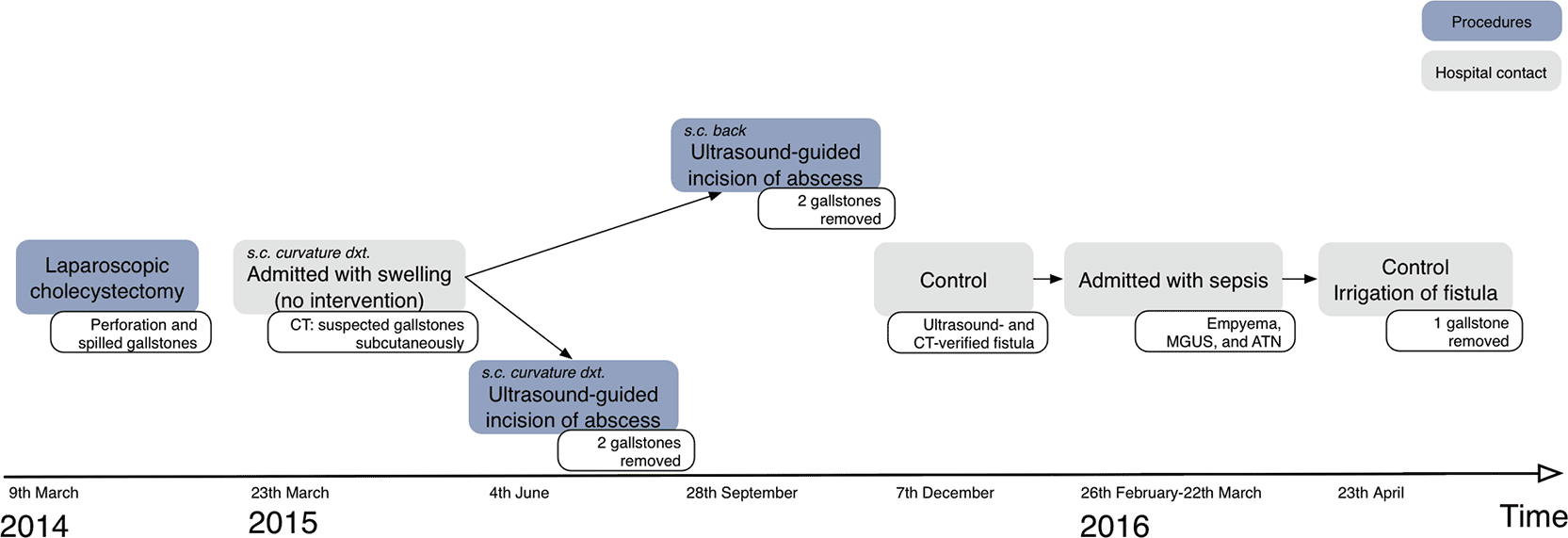
An overview of the patient’s hospital contacts and procedures after the laparoscopic cholecystectomy. s.c. subcutaneous, dxt. dexter, CT computed tomography, MGUS monoclonal gammopathy of undetermined significance, ATN acute tubular necrosis.
During the period between 15 and 18 months following the LC, the patient returned to the hospital two times due to subcutaneous abscesses below the right rib curvature and the right side of the lower back. The suspected lost gallstones were assumed to have migrated to the subcutaneous tissue causing abscess formation. The diagnosis was confirmed by CT and compared with the previous CT ( Figure 2). Both abscesses were located deep in the subcutaneous tissue and due to location and size, these were treated with ultrasound-guided incision and drainage. Additional information regarding bacterial culture or antibiotic treatment were, unfortunately, not retrieved from the patient’s medical record. During these procedures, four gallstones were located and removed from the abscess cavities. Afterwards, the patient was followed as an outpatient because of daily secretion from the abscess cavity on the patient’s back. Because of the unhealed abscess cavity, CT and ultrasound scans were performed 18 months after the LC. The CT revealed a complex intraabdominal and intrathoracic fistula with external opening in the lower right side of the back with communication to pleura. The ultrasonic imaging revealed a lost gallstone in the lower right side of thorax. The fistula was treated conservatively with drainage.
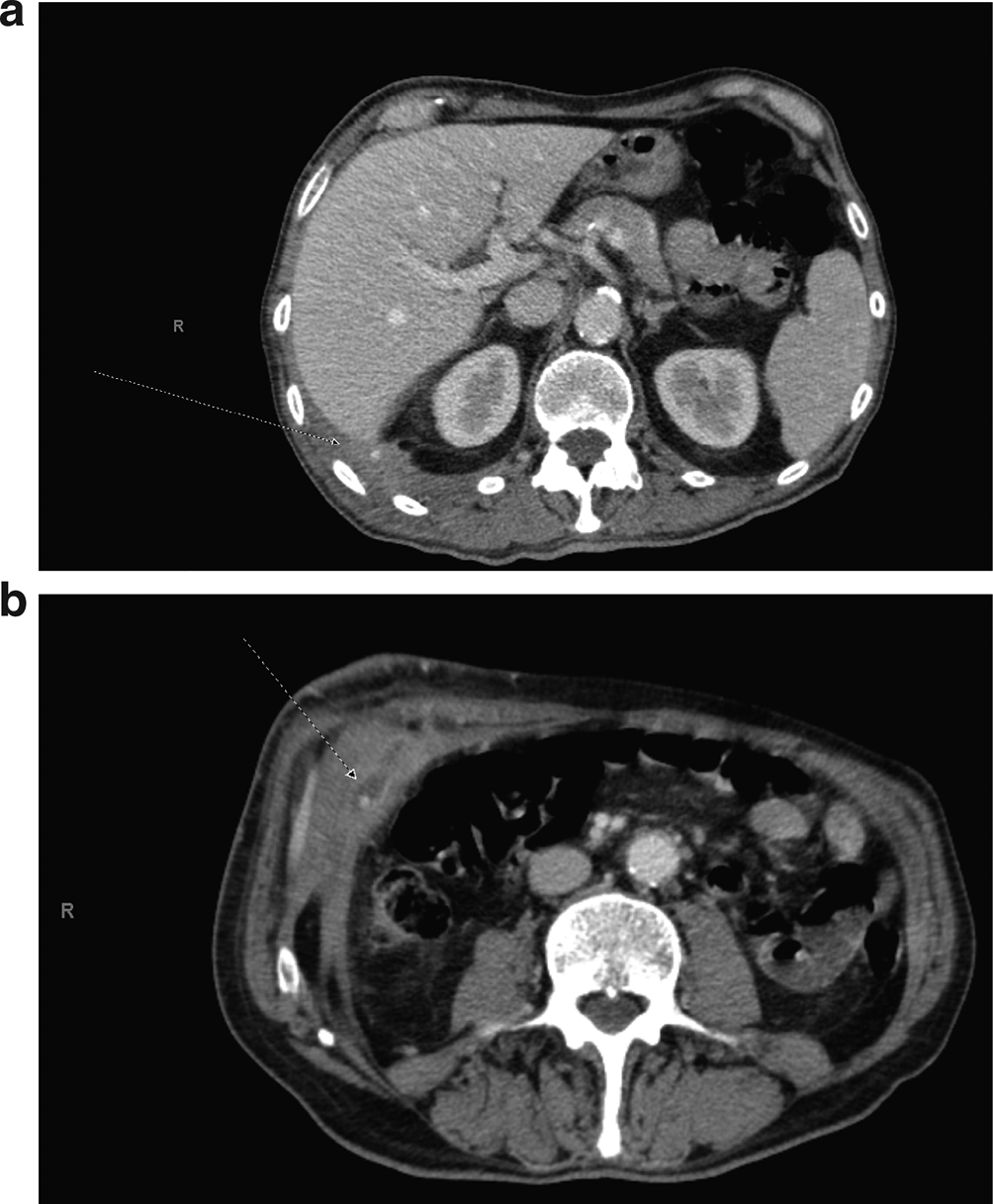
An abdominal computed tomography showing spilled gallstones at different levels 15 months after the laparoscopic cholecystectomy (dotted arrows). (a) Shows a gallstone behind the liver and (b) shows a gallstone in the abdominal wall.
In February 2016, the patient was admitted to the hospital because he had developed sepsis and pleural empyema secondary to the condition. The patient had a short stay in the intensive care unit and was discharged from the hospital after one month. During this month, the patient developed monoclonal gammopathy and acute tubular necrosis due to the infection in the fistula. After hospitalization, the fistula was rinsed daily with saline solution, and during one of these procedures, another gallstone was excavated. Presently, the patient awaits surgery for the fistula and empyema.
This case is an example of serious complications caused by spilled gallstones. Migration of lost stones, as in this case, can cause both local and systemic complications. However, stone spillage is unavoidable in some patients despite precautionary measures.
The spilled stones may be harmless, but efforts should be made during the procedure to locate and remove all stones to prevent future local and systemic complications. Retained gallstones in the peritoneal cavity may over time cause a local inflammatory reaction, leading to abscess formation. Persistent inflammation may result in erosion into adjacent tissues and subsequent fistula formation. This is a rare complication after LC, but has been reported previously, including bronchobiliary and colonic fistula formation.5,6 The postoperative complications due to lost gallstones may develop weeks to several years after the primary procedure and are not necessarily located in the right upper quadrant.2,7,8 Together with a lack of awareness or documentation in the medical records, this may contribute to a delayed diagnosis of a stone complication. However, delayed diagnosis may also be due to the fact that some gallstones are not visible on CT. Predisposing factors for complications of the spilled gallstones include older age, male sex, perihepatic localization of lost stones, acute cholecystitis, spilling of pigment stones compared with cholesterol stones, multiple stones (>15 stones), and large stone size (>1.5 cm).1
It is not mandatory to convert to open surgery for retrieving stones after perforation has occurred during LC,3,8 due to a subsequent low incidence of severe postoperative complications2,3 and since conversion to open surgery is associated with a higher rate of systemic complications compared with laparoscopic surgery.3 In this case report, the surgeon chose not to convert to open surgery to look for more lost gallstones, which goes well in hand with the recommendations found in the literature.3,8 However, proper care should be taken to avoid stone spilling and thereby possible postoperative complications. All visible stones should be removed during the laparoscopic procedure and the gallbladder should be retrieved in an endoscopic bag upon dissection to prevent further stone spilling when a perforation has occurred.9 In this case, the gallstones were found on CT before complications developed. In most cases, retained gallstones remain clinically silent. In this case, the retained gallstones were identified on CT one year after laparoscopic cholecystectomy; however, as the patient was asymptomatic, conservative management was chosen, given the low incidence of clinically significant complications and the morbidity associated with reoperation. With hindsight, earlier intervention may have altered the subsequent clinical course.
A limitation of this case report is that microbiological findings, including bacterial cultures, isolated organisms, and details of antibiotic treatment, could not be retrieved from the patient’s medical records. These data would have provided additional and relevant insight into the infectious course and management of this patient.
In conclusion, stone spillage is an unavoidable and well-known problem to LC. If perforation and stone spillage occur, it should be noted in the medical records and the patient should be thoroughly informed about the lost stones and their possible postoperative complications. This may help the clinicians and accelerate the diagnosis if the patient later on suffers from a complication due to lost stones.
Written informed consent was obtained from the patient for publication of this case report and any accompanying images and/or other details that could potentially reveal the patient’s identity.
JK, DW, JR, and HCP conceived the study. JK and HCP prepared the first draft of the manuscript. DWB, JR and HCP did the revision and all authors have read and approved the final version of the manuscript.
No data availability associated with the manuscript.
The author(s) declared that no grants were involved in supporting this work.
Published: 09 Jul 2026, 5:2322
Published: 13 May 2026, 5:2322
Published: 14 Sep 2016, 5:2322
© 2026 Klubien J et al. This is an open access article distributed under the terms of the Creative Commons Attribution License, which permits unrestricted use, distribution, and reproduction in any medium, provided the original work is properly cited.
Current Reviewer Status: ?
Key to Reviewer Statuses VIEW HIDE
ApprovedThe paper is scientifically sound in its current form and only minor, if any, improvements are suggested
Approved with reservations A number of small changes, sometimes more significant revisions are required to address specific details and improve the papers academic merit.
Not approvedFundamental flaws in the paper seriously undermine the findings and conclusions
Version 3
VERSION 3
PUBLISHED 09 Jul 2026
Revised
Reviewer Report 10 Jul 2026
Emre Gonullu, Sakarya University Training and Research Hospital, Sakarya, Turkey
Approved
VIEWS 0
References
1. Demirbas B, Gulluoglu B, Aktan A: Retained Abdominal Gallstones After Laparoscopic Cholecystectomy. Surgical Laparoscopy, Endoscopy & Percutaneous Techniques. 2015; 25 (2): 97-99 Publisher Full TextCompeting Interests: No competing interests were disclosed.
Reviewer Expertise: Gastrointestinal Surgery
CloseVersion 2
VERSION 2
PUBLISHED 13 May 2026
Revised
Reviewer Report 23 Jun 2026
Emre Gonullu, Sakarya University Training and Research Hospital, Sakarya, Turkey
Approved with Reservations
VIEWS 0
Is the background of the case’s history and progression described in sufficient detail?
Yes
Are enough details provided of any physical examination and diagnostic tests, treatment given and outcomes?
Partly
Is sufficient discussion included of the importance of the findings and their relevance to future understanding of disease processes, diagnosis or treatment?
Yes
Is the case presented with sufficient detail to be useful for other practitioners?
Yes
Competing Interests: No competing interests were disclosed.
Reviewer Expertise: Gastrointestinal Surgery
CloseVersion 1
VERSION 1
PUBLISHED 14 Sep 2016
Reviewer Report 10 Oct 2016
Tatsuhiro Masaoka, Department of Internal Medicine, Keio University School of Medicine, Tokyo, 160-8582, Japan
Approved with Reservations
VIEWS 0
Competing Interests: No competing interests were disclosed.
CloseReviewer Report 26 Sep 2016
Gabriel Sandblom, Department of Clinical Sciences, Intervention and Technology, Karolinska Institute, Stockholm, Sweden
Approved with Reservations
VIEWS 0
Competing Interests: No competing interests were disclosed.
CloseOpen Peer Review
Alongside their report, reviewers assign a status to the article:
| Invited Reviewers | |||
|---|---|---|---|
| 1 | 2 | 3 | |
| Version 3 (revision) 09 Jul 26 | read | ||
| Version 2 (revision) 13 May 26 | read | ||
| Version 1 14 Sep 16 | read | read | |
Sign up for content alerts
Alongside their report, reviewers assign a status to the article:
Approved - the paper is scientifically sound in its current form and only minor, if any, improvements are suggested
Approved with reservations - A number of small changes, sometimes more significant revisions are required to address specific details and improve the papers academic merit.
Not approved - fundamental flaws in the paper seriously undermine the findings and conclusions