Просмотр новости
Найдите то, что Вас интересует
 Спутники
 РН
РН SpaceX
 Роскосмос
 NASA
NASA
СпутникиРНSpaceXРоскосмосNASAWe have all done it at one time or another. That is driving our cars and trucks above the speed limit. But what if I told you that one state had a law that let you set your own speed limit? Montana was where you could travel at a speed that was “reasonable and prudent” […]
We have all done it at one time or another. That is driving our cars and trucks above the speed limit. But what if I told you that one state had a law that let you set your own speed limit? Montana was where you could travel at a speed that was “reasonable and prudent” on country highways from 1995 to 1999. Yes, that stipulation was plenty vague, and that’s exactly what the Montana Supreme Court ruled in 1998. The state legislature changed the speed limit on highways to 75 miles per hour in 1999.
The “reasonable and prudent” era was pretty good fun for many Montana drivers. They could use their own judgment based on the conditions. Wintry weather with lots of snow naturally made people slow down. And people who drove over 100 miles per hour on sunny days were pulled over and only issued a warning.
Nixon Told All Americans to Slow Down on the Highways“Reasonable and prudent” speed was also the policy in the 1950s and 1960s.
But in 1974, President Richard Nixon, through the Emergency Energy Highway Conservation Act, required all states to set a 55-mile-per-hour limit on highways. The people of Montana had to slow down. But policymakers and police still winked at the 55-mile-per-hour limit.
Patrolmen could pull you over, but the speeding ticket was only $5.
Many Montanans simply kept a few $5 bills in their glove box, paid the fine, and went on their way, skirting the 55-mile-per-hour limit.
You Can Get a Speeding Ticket NowNowadays, most people drive 5 to 10 miles over the speed limit. Montana is a rural state, and there are relatively fewer people on the roads, especially at night. If you get caught speeding, the fine is still only between $20 and $40.
That’s if you are doing 1 to 10 miles over the limit. It’s a $75 charge for 10-20 miles over what is posted.
One Had to Slow Down in the 1800sJim Harmon of the Missoula Current looked back on the history of speed limits in the United States. It turns out speed was regulated as far back as the 1800s. The authorities wanted to limit the velocity of horses and carts.
Keep the speed down, or you will pay the price.
Harmon turned the clock back to the late 19th century to examine how Montana treated speeding. “Pedestrians, proclaimed the 1895 Weekly Missoulian, have been compelled to ‘meekly suffer inconvenience and undergo dangers at the hands of both evils!’” Harmon discovered.

Dodge Charger Hellcat. Image Credit: Dodge.
Bicycles were also considered dangerous to pedestrians because they were relatively quiet compared to horses and buggies. An unsuspecting walker could burst out in front of a bike and be hurt in a nasty collision, so the police were on the lookout for cyclists traveling too fast.
In 1903, the Missoula City Council passed a law setting “the speed of all autos, bicycles, carriages, horses, and all other modes of conveyance at 8 miles per hour within the city limits.”
Whoa NellieA horse or mule had to slow down to a paltry 4 miles per hour when crossing bridges. It is not clear how the police would have enforced these measures, as speed guns were not in use at the time.
In fact, speed radars were not used by authorities in the United States until 1947, when the Connecticut State Police needed a way to monitor traffic without relying on the naked eye and estimation.
A Fight in the Courts Ensued in the Late 1990sAs for the Montana law that used “reasonable and prudent” as the measurement for speed? This was challenged by a crusty, rebellious, and speedy driver named Rudy Stanko.
He was not happy with a ticket he received for going 85 miles per hour on a rural highway. Stanko did not think this was unreasonable or imprudent, and he took his case to court twice, losing both times. Undeterred, he decided to appeal to the district court, and the case was placed on the Montana Supreme Court docket in 1998.
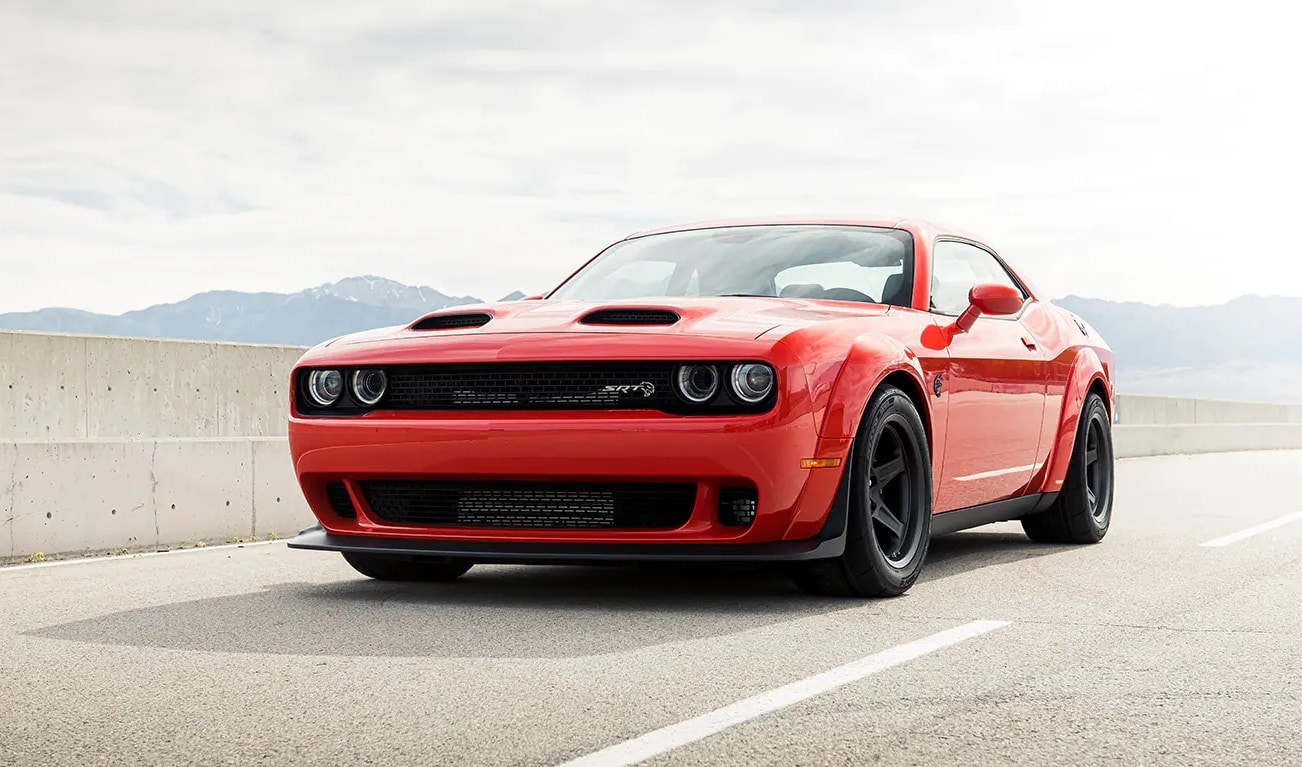
2022 Dodge Challenger. Image Credit: Dodge
“That court, in a four-to-three ruling, reversed the district court’s judgment. It called the ‘reasonable and prudent’ clause vague on the grounds that it impermissibly delegates basic policy matters to policemen, judges, and juries for resolution on an ad hoc and subjective basis,” according to Car and Driver Magazine.
This Was Not FairThe Montana Supreme Court also ruled that the “reasonable and prudent” stipulation denied speeders their due process.
Keep It SafeNow there would be the 75-mile-per-hour limit that was passed by the state legislature the next year.
Montanans have Stanko to thank for ending the no-limit era. All he had to do was pay a fine and be done with it, and the courts would likely not have changed policy.
Those were the days when an open-ended, inexact guideline governed highway speed.
Who knows? That might have ended drag racing, too. It was time for people in Montana to slow down and pay speeding tickets like other Americans. But what a glorious time it was for motorheads to show off their cars and trucks.
What was reasonable and prudent for some meant a fast, fun time in Montana vehicles in a bygone age.
About the Author: Dr. Brent M. EastwoodAuthor of now over 3,500 articles on defense issues, Brent M. Eastwood, PhD, is the author of Don’t Turn Your Back On the World: A Conservative Foreign Policy and Humans, Machines, and Data: Future Trends in Warfare, plus two other books. Brent was the founder and CEO of a tech firm that predicted world events using artificial intelligence. He served as a legislative fellow for US Senator Tim Scott and advised the senator on defense and foreign policy issues. He has taught at American University, George Washington University, and George Mason University. Brent is a former US Army Infantry officer. He can be followed on X @BMEastwood.
| # | Наименование новости | Тональность | Информативность | Дата публикации |
|---|---|---|---|---|
| 1 | Could reducing speed limits to 20 mph make Portland roads safer? | 0 | 37.55 | 31-07-2026 |
| 2 | ‘Nothing Would Have Been More Destructive’: The Navy’s Montana-Class Battleship Had 1 Flaw It Could Never Escape | 0 | 5 | 07-05-2026 |
| 3 | Минтранс поддержал снижение ненаказуемого лимита скорости для автомобилистов до 10 км/ч | 0 | 0 | 17-10-2019 |
| 4 | На дорогах изменят скоростные ограничения — к чему готовиться водителям | 0 | 5 | 28-06-2026 |
| 5 | Visalia Police push ‘slow the fast down’ campaign | 0 | 7 | 08-07-2026 |
| 6 | Variable speed limits removed from I-465 after spending $446,000 on them two years ago | -2 | 6 | 16-07-2026 |
| 7 | Ограничивать скорость на дорогах будут по новым правилам | 0 | 5 | 01-07-2026 |
| 8 | Повышенный скоростной режим вводится на М-4 и М-11 после зимних ограничений | 0 | 0 | 21-04-2025 |
| 9 | Скоростные ограничения изменят в России | 0 | 5 | 30-06-2026 |
| 10 | Водителям рассказали, повысят ли скорость на новых трассах России | 0 | 5 | 29-06-2026 |