Просмотр новости
Найдите то, что Вас интересует
 Спутники
 РН
РН SpaceX
 Роскосмос
 NASA
NASA
СпутникиРНSpaceXРоскосмосNASAThe U.S. Navy is retiring its last seven Ticonderoga-class cruisers by 2030, ending a decades-long era of missile-heavy carrier escorts. A $3.7 billion modernization program couldn't overcome aging hulls, cracks, and corrosion — leaving the Navy to shift Tomahawk strikes and carrier defense to other ships even as China's fleet expands.
The U.S. Navy Waves Goodbye to the Ticonderoga-class Cruiser: Is this the end of the era for the U.S. Navy’s cruiser program? The cruiser has always been a key part of the maritime force. They are fast and chock with weapons. Cruisers can serve in an aircraft carrier strike group, providing a protective umbrella with the vaunted Aegis Combat System. Cruisers can also stage counter-attacks if needed and punish the enemy with missiles fired from their decks.
But the Navy has other plans, and all Ticonderoga-class cruisers may be retired in three years. Most of the cruisers from the class had already been taken out of service in prior decades. Twenty of twenty-seven Ticonderoga-class ships are no longer serving the Navy. The next seven will leave the service by 2030.
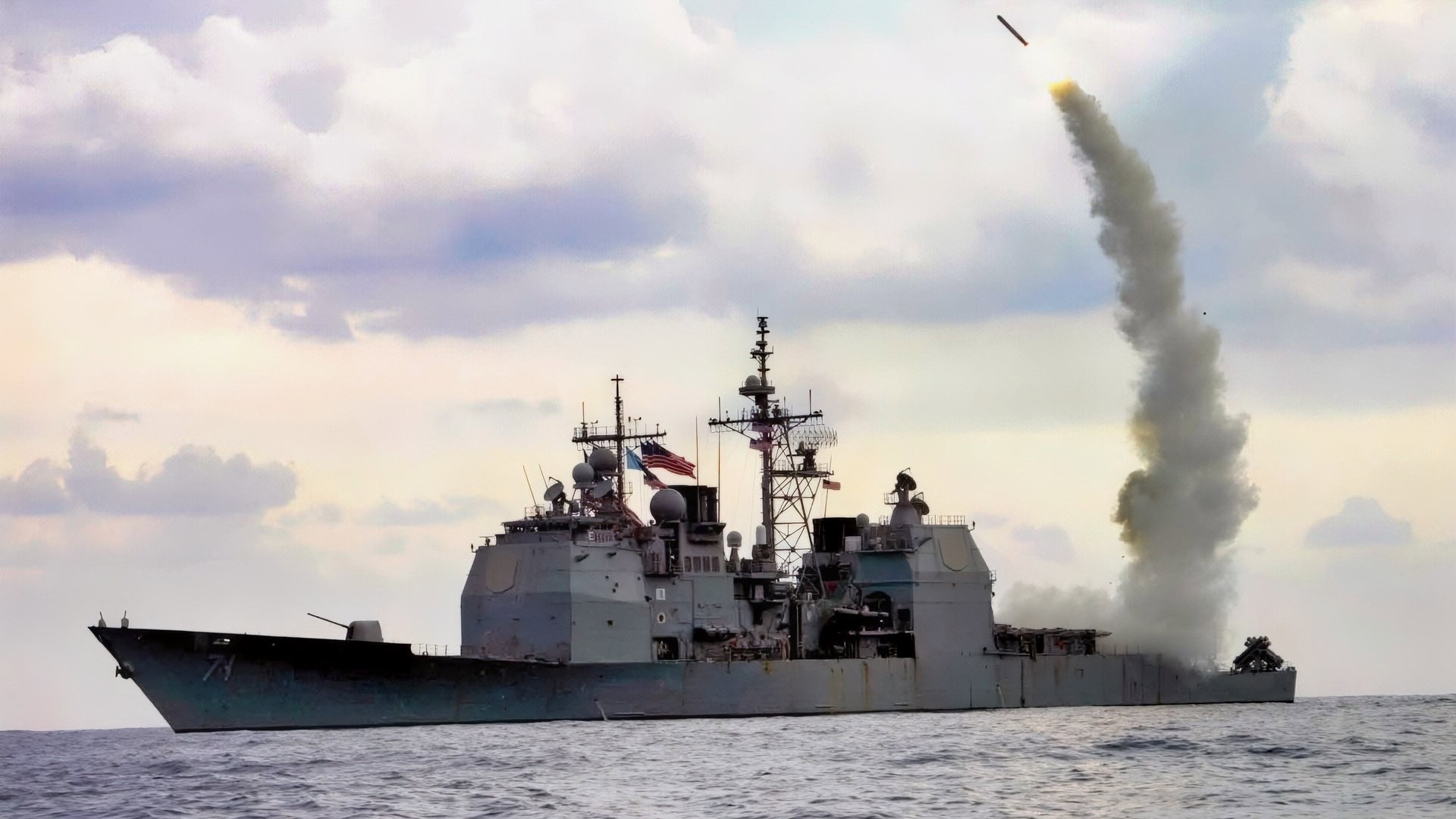
ABOARD USS CAPE ST. GEORGE (CG 71) AT SEA — A Tomahawk cruise missile launches from USS Cape St. George, operating in the eastern Mediterranean Sea in support of Operation Iraqi Freedom. (Photo by IS1 Kenneth Moll, USS Cape St. George) (Released by Sixth Fleet Public Affairs)
Ticonderoga-class ships have been busy over the years. They have patrolled the Mediterranean and Middle East, firing Tomahawk cruise missiles at will. They use those projectiles to punish ground targets and make the jobs of soldiers and Marines easier with thunderous air support. Plus, they offer protection against attacks on carrier strike groups. Defensive surface-to-air missiles like the SM-2, SM-3, and SM-6 have been dominant for years. The Ticonderoga-class will be missed.
American Shipbuilders Could Not Keep Up with Maintenance RequirementsBut difficulties with the U.S. shipbuilding industry have trimmed the effectiveness of the group of cruisers. The older ships have required extensive maintenance, and many have been taken out of service for repairs and upkeep. There are simply not enough shipyards and workers to maintain the ships, prompting many naval analysts to look for a new way to protect carriers and achieve dominance on the high seas.
Modernization Program Hoped to Save the CruisersCongress did not want to see the Ticonderoga-class go away.
Lawmakers created the Cruiser Modernization Program, which was funded by a $3.7 billion set-aside. The idea was to upgrade the Ticonderoga-class ships to keep them up to date. New electronics and weapons guidance systems would be replaced along with radars and sonars. The cruisers could then be more relevant, as Military Watch explained.
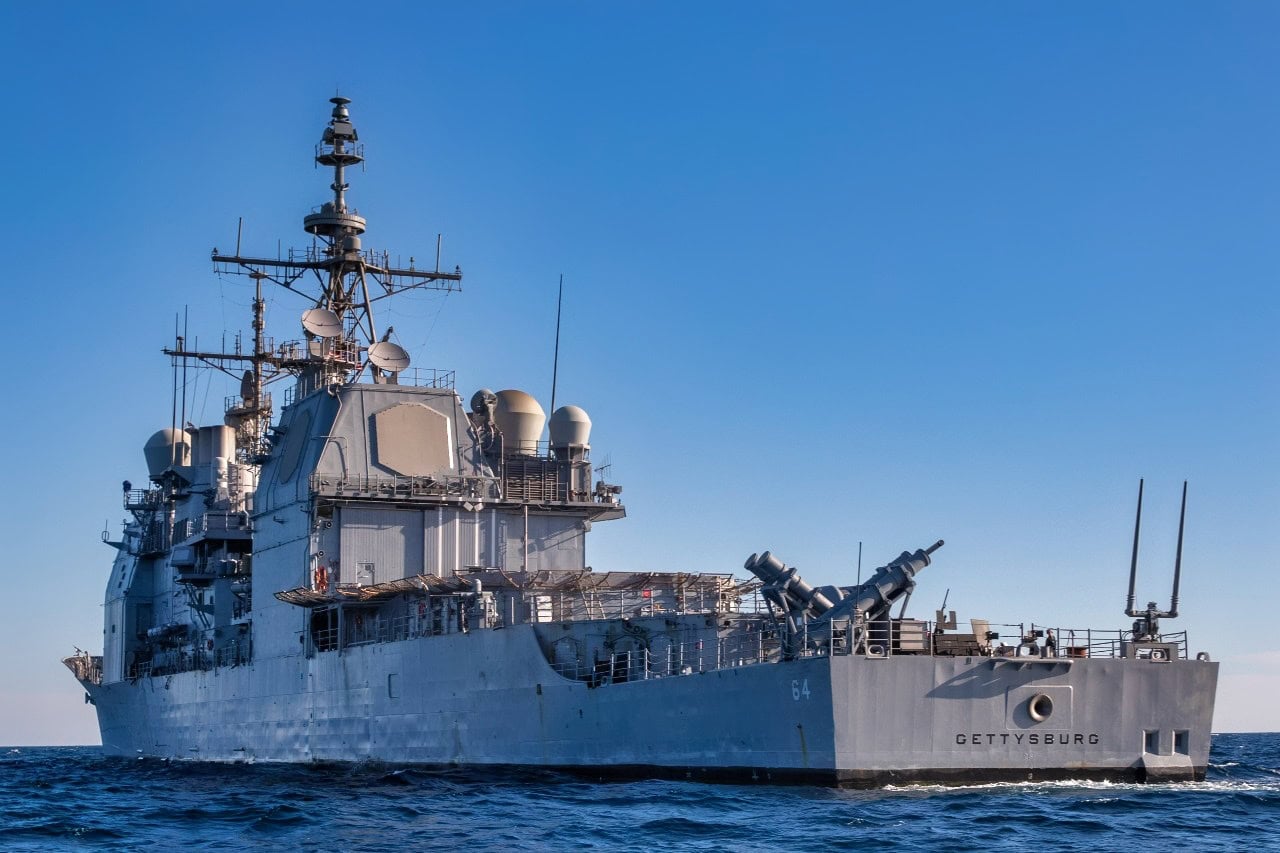
(Feb. 18, 2025) The Ticonderoga-class guided-missile cruiser USS Gettysburg (CG 64) sails in the U.S. Central Command area of responsibility. (Official U.S. Navy photo)
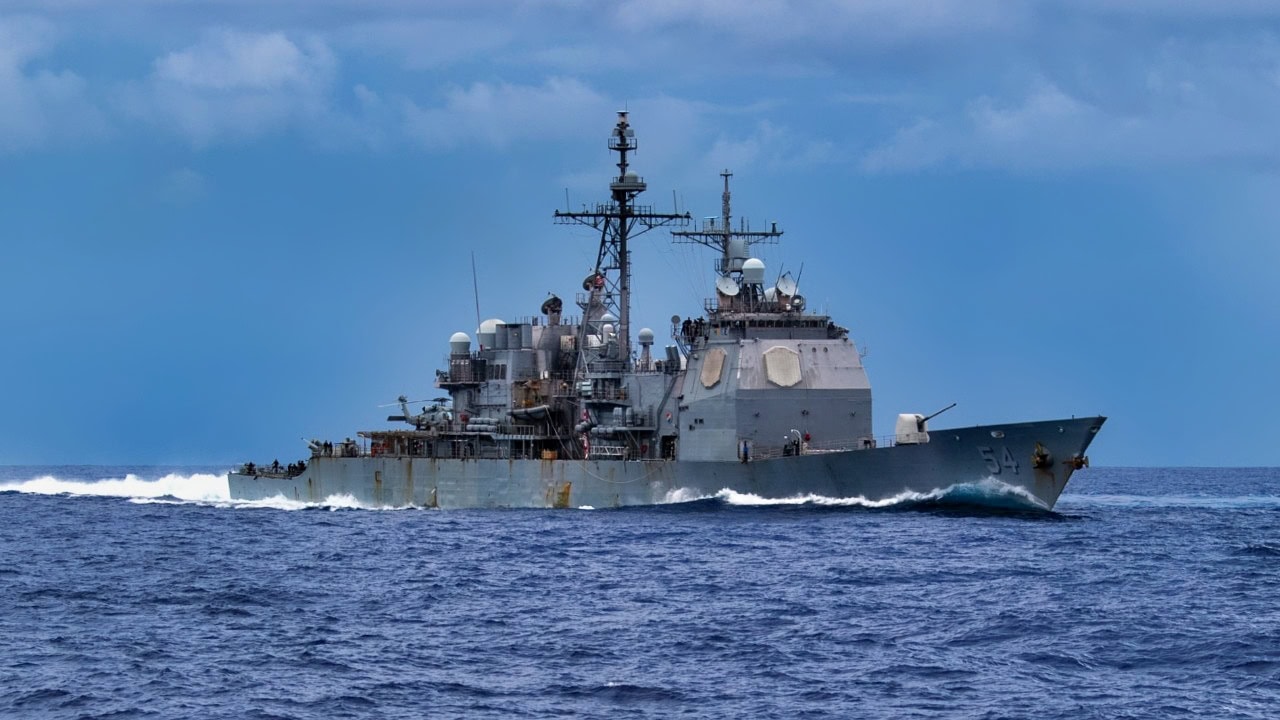
PACIFIC OCEAN (Sept. 14, 2020) The Ticonderoga-class guided-missile cruiser USS Antietam (CG 54) moves in formation during exercise Valiant Shield 2020. Valiant Shield is a U.S. only, biennial field training exercise (FTX) with a focus on integration of joint training in a blue-water environment among U.S. forces. This training enables real-world proficiency in sustaining joint forces through detecting, locating, tracking, and engaging units at sea, in the air, on land, and in cyberspace in response to a range of mission areas. (U.S. Navy photo by Mass Communication Specialist 2nd Class Nick Bauer)
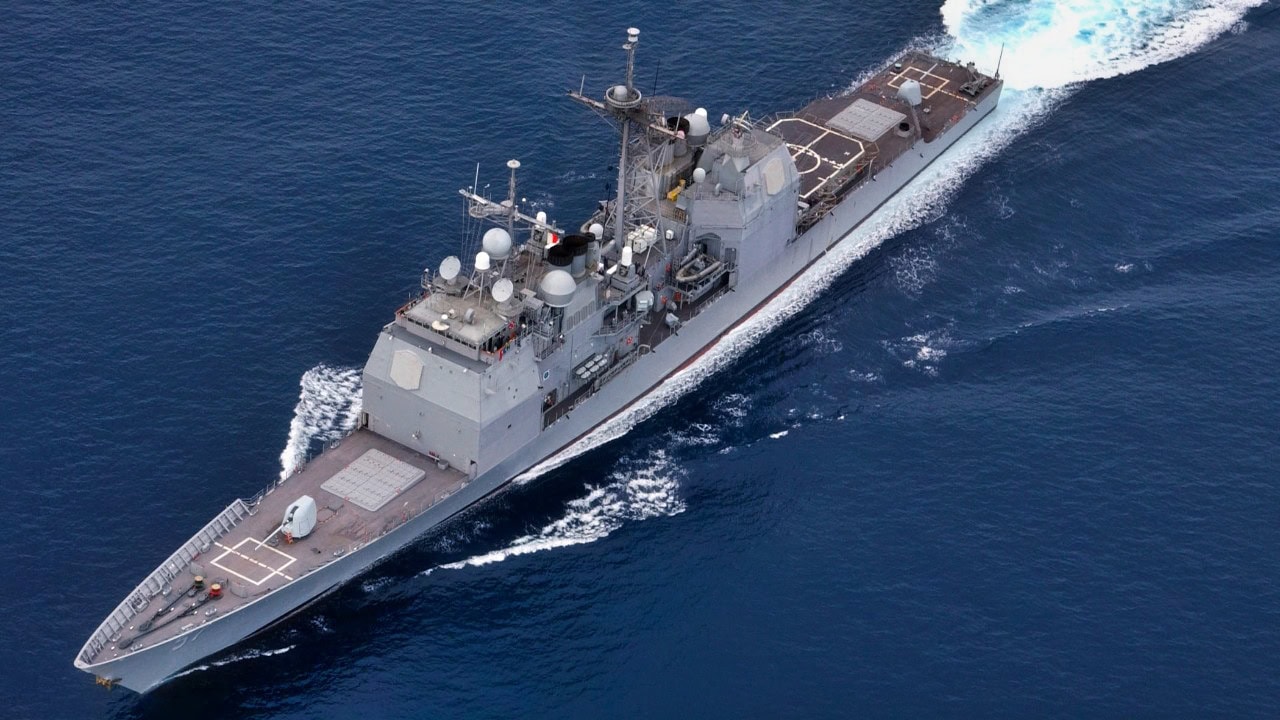
Ticonderoga-Class.
This did not quite improve the combat readiness of the Ticonderoga-class. Many ships were still growing antiquated. The budgeted dollars were significant, but the hulls were still old, and Congress finally agreed to retire all Ticonderoga-class cruisers by 2021.
Extending the Service LifeHowever, the Pentagon and lawmakers saw the need to extend some to continue service. Russia invaded Ukraine, and Europe was considered a new hotspot. China increased its carrier and submarine forces. President Donald Trump ordered an attack on Iran. Cruisers with heavy firepower were still needed.
Modernization Efforts Were Not WorkingMeanwhile, the Cruiser Modernization Program was struggling with cost overruns and schedule slips. The Ticonderoga-class was considered too old for a custom set of upgrades to make the ships more relevant for 21st-century warfare. China kept developing more anti-ship missiles. Cruise missile capability could be carried out by submarines, and other ships could be outfitted with the Aegis system to protect carriers.
The Ticonderoga-class Had Too Many Negative AspectsAs Military Watch Magazine wrote, “According to the Chief of Naval Operations, Admiral Michael Gilday, the cruisers were showing signs of serious material decline. ‘We’re seeing cracks … we’re seeing challenges in the material conditions’ in ships that average over 30 years old, he observed. He further warned that the modernization program was unpredictable, stressing that some of the older radar systems were ‘approaching obsolescence’ in the face of modern missile threats. Many Ticonderoga-class ships are approaching or exceeding 35 years of service, with corrosion, fatigue, and mechanical wear having increased maintenance requirements significantly.”
Make Due Without ThemThe old ships thus entered a period of decline that presaged a retirement. The 300 to 400 sailors serving onboard could be redeployed to other ships, and the missions that the Ticonderoga-class excelled in – missile strikes and strike group protection were transferred to different vessels.
Replacement Is Not AssuredWhat is next for the Ticonderoga-class? There was once an effort to create a new class of cruisers called the next-generation CG(X), but this also resulted in cost overruns and delays. The Navy and Congress determined that the idea yielded no real gains in ships and canceled the effort in 2010.
Geopolitical Risk AboundsThe cruiser’s demise is not a good development for the United States. China has a bigger navy. The Middle East sees no signs of peace. North Korea is even developing a fleet of fast, heavily armed destroyers.
The Americans are looking for new ships that can still pack a punch and carry the Aegis system to better protect against enemy aircraft and projectiles.
This is a new era for the Navy, though. The Tomahawk cruise missile strikes are still needed, but these can be fired by other vessels. The Navy is looking for ships that do not need such a high level of maintenance. Perhaps the new Virginia-class fast-attack submarines will be better able to deliver cruise missiles to address hot spots that have cropped up even more. The cruiser has seen better days, and that is a disappointment to naval historians who have documented their great combat record over the decades.
MORE – K9 Thunder – the Artillery from South Korea NATO Loves
About the Author: Dr. Brent M. EastwoodAuthor of now over 3,500 articles on defense issues, Brent M. Eastwood, PhD, is the author of Don’t Turn Your Back On the World: A Conservative Foreign Policy and Humans, Machines, and Data: Future Trends in Warfare, plus two other books. Brent was the founder and CEO of a tech firm that predicted world events using artificial intelligence. He served as a legislative fellow for US Senator Tim Scott and advised the senator on defense and foreign policy issues. He has taught at American University, George Washington University, and George Mason University. Brent is a former US Army Infantry officer. He can be followed on X @BMEastwood.