Просмотр новости
Найдите то, что Вас интересует
 Спутники
 РН
РН SpaceX
 Роскосмос
 NASA
NASA
СпутникиРНSpaceXРоскосмосNASAFerrell’s brash ladies man and loser golfer could have been hilarious. But comedy has sped up over the last two decades, and all the genital gags and dodgy references fall flatIn the 2000s, American comedy had a rude awakening. While the preceding decade had been all attractive sophisticates bantering in big cities, the new millennium arrived in a miasma of crude, cartoonish buffoonery: Austin Powers, American Pie, Dude, Where’s My Car? These were, sadly, the sacred texts of a millennial adolescence.In comparison, the work of the Frat Pack – a group of comic actors that included Ben Stiller, Will Ferrell, Steve Carell, Seth Rogen and Luke and Owen Wilson, plus writer-director Judd Apatow – seemed almost highbrow. By the middle of the decade, this cohort had funnelled ribald irreverence into much better films, including Zoolander, Dodgeball and Anchorman. Eventually, though, the worm turned; as chin-stroking dramedy and nerdy Marvel wisecracking took hold of the zeitgeist, this PC-needling silliness fell out of fashion. Continue reading...
In the 2000s, American comedy had a rude awakening. While the preceding decade had been all attractive sophisticates bantering in big cities, the new millennium arrived in a miasma of crude, cartoonish buffoonery: Austin Powers, American Pie, Dude, Where’s My Car? These were, sadly, the sacred texts of a millennial adolescence.
In comparison, the work of the Frat Pack – a group of comic actors that included Ben Stiller, Will Ferrell, Steve Carell, Seth Rogen and Luke and Owen Wilson, plus writer-director Judd Apatow – seemed almost highbrow. By the middle of the decade, this cohort had funnelled ribald irreverence into much better films, including Zoolander, Dodgeball and Anchorman. Eventually, though, the worm turned; as chin-stroking dramedy and nerdy Marvel wisecracking took hold of the zeitgeist, this PC-needling silliness fell out of fashion.
Is it time it made a comeback? Ferrell seems to think so. Whereas most of his peers have moved with the times (see Carell’s line in witty streamer fare and Rogan’s Emmy-sweeping meta-showbiz hit The Studio), the 59-year-old has stuck to the broad comedy that made his name. In his new Netflix show, he doubles down on this by resurrecting two major Frat Pack archetypes – the underdog sports yarn and (Ferrell’s speciality) the brash, unreconstructed ladies man – and stretching them out into five hours of television.
The Hawk revolves around Lonnie Hawkins, a once famous golfer on a long losing streak. But no level of failure can dampen this man’s spirit! From the moment he careers on to a tournament course in his big silver bus (easily the funniest visual of the series), we understand Hawkins to be a maverick who answers to nobody. Aesthetically eye-watering – garishly patterned polyester, a complexion that veers between ruddy and Trumpian orange – and a slave to his own id, the Hawk causes a scene wherever he goes.
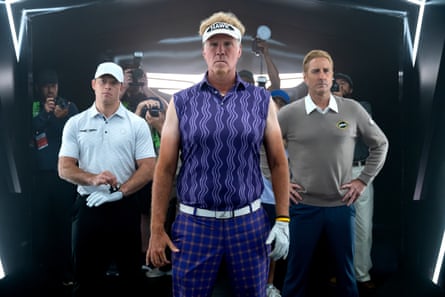
Are we supposed to be rooting for him? I honestly cannot tell. Not because he’s a complex character, but because he’s both comprehensively awful and undeniably charismatic. After a miraculous return to form, Hawkins finds himself competing against his son Lance, a fellow pro golfer who resents his father’s attention-seeking ways, and his longtime rival Golden Fisk (an enjoyably smarmy Luke Wilson) in the US Open. Lonnie is obnoxious, lascivious and horribly selfish – episode one: he steals a watch from the corpse of a close friend – but Lance, a stroppy cheat, is hardly sympathetic. Go Fisk?!
In theory, The Hawk could work as a comfort watch: there is something cosily retro about seeing Ferrell clown around, while the complete lack of meaty subject matter means the show is clearly designed to be consumed absent-mindedly. But the appeal of such nostalgia is highly variable. There are endless jokes about men being gay. At one point, Hawkins explains the difference between a hot streak and a run using a graphic metaphor about defecating. Chamillionaire’s 2006 hit Ridin’ gets a spin, while Sisqó’s Thong Song soundtracks Hawkins cavorting on the golf course in red underwear. His estranged wife Stacy (Ferrell’s 1990s Saturday Night Live castmate Molly Shannon) is perpetually furious and foul-mouthed, but while the script is clearly aiming for amusing profanity, she just ends up repeatedly threatening to rip off men’s genitals. Yet the thing that feels most dated is the sheer length of the comic riffs: what you presume to be a two-line gag about, say, Hawkins wearing a women’s top, seems to go on for ever. Comedy has clearly sped up over the past two decades.
The world has changed in other ways too. The Hawk’s protagonist is a destructive chancer whose cult-like following admire his unfiltered idiocy; Ferrell’s ability to infuse such a character with his own trademark charm can be infuriating. Do we really need this kind of “underdog” success story in the current political climate? Hawkins might not belong in the manosphere, but seeing him rewarded for his many toxic traits still leaves a sour taste.
Maybe none of this would matter if The Hawk was properly funny. But it takes very few big comic swings – it’s never bracingly outrageous or distinctively odd. In fact, belying Ferrell’s inimitable performance is a rather generic script. One problem is that the show isn’t actually poking fun at anything in particular – not even golf itself (perhaps because the PGA tour is a producing partner) – which means it lacks the specificity or sharpness even stupid comedy requires. Not so much a return to form, then, as a reminder that past glories are hard to revive.