Просмотр новости
Найдите то, что Вас интересует
 Спутники
 РН
РН SpaceX
 Роскосмос
 NASA
NASA
СпутникиРНSpaceXРоскосмосNASAChristopher Nolan’s film adaptation of the ancient Greek epic has sparked a new appetite for an old classic. Here are the translations, podcasts and audiobooks that make the Homeric world more approachableThe Odyssey was once all Greek to me. I struggled to keep up with the characters, the mass of heroes and villains, the swarms of sons and daughters. I found the Homeric formula – repeated stock phrases passed down from the oral tradition – confusing and tiring. The prose in my 1946 EV Rieu translation, revised by his son DCH Rieu, felt laboured and laborious. I have put the Odyssey down, several times, in the course of my life. But, like Sirens, difficult books tend to have a hold on us. The recent film adaptation pushed me to once again try reading the Odyssey, so I decided on a new approach. I spoke to classicists and conducted research, aiming to render the inaccessible accessible.To read the Odyssey, start by avoiding the Odyssey. “Begin with contextualisation” – get to grips with themes and content – Antony Makrinos, associate professor in classics at UCL and director of the Summer School in Homer 2026, told me. He sent me an exhaustive list of recommendations, and I found myself in the British Museum, mid-heatwave, learning about Mycenaean civilisation and ancient Greece. I cooled down that evening with a Simon Armitage documentary, Gods and Monsters: an intriguing assessment of our flawed hero. Continue reading...
The Odyssey was once all Greek to me. I struggled to keep up with the characters, the mass of heroes and villains, the swarms of sons and daughters. I found the Homeric formula – repeated stock phrases passed down from the oral tradition – confusing and tiring. The prose in my 1946 EV Rieu translation, revised by his son DCH Rieu, felt laboured and laborious. I have put the Odyssey down, several times, in the course of my life. But, like Sirens, difficult books tend to have a hold on us. The recent film adaptation pushed me to once again try reading the Odyssey, so I decided on a new approach. I spoke to classicists and conducted research, aiming to render the inaccessible accessible.
To read the Odyssey, start by avoiding the Odyssey. “Begin with contextualisation” – get to grips with themes and content – Antony Makrinos, associate professor in classics at UCL and director of the Summer School in Homer 2026, told me. He sent me an exhaustive list of recommendations, and I found myself in the British Museum, mid-heatwave, learning about Mycenaean civilisation and ancient Greece. I cooled down that evening with a Simon Armitage documentary, Gods and Monsters: an intriguing assessment of our flawed hero.
But the best recommendation was a podcast. Instant Classics, presented by Mary Beard and Charlotte Higgins, is a lot of fun. I wish I loved anything as much as the presenters love the Odyssey. Their enthusiasm is contagious, their insight fascinating. I learned that Homer’s Odyssey was likely not written by Homer, nor is it simply about Odysseus. I discovered the book anticipates postmodernism by nearly three-thousand years, with its penchant for non-linearity and self-reference. I learned the Odyssey is about Odysseus’s journey back to Ithaca, but it is also a coming-of-age story, a travelogue and a family saga.
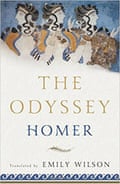
After a few episodes, I was itching to read. Picking the right translation is vital. Rebecca Laemmle, professor of Greek Literature at The University of Cambridge, recommended the new Daniel Mendelsohn translation. Makrinos, Beard and Higgins nudge the general reader towards the Emily Wilson translation. I bought the Norton Critical Edition of Wilson’s translation because of its detailed footnotes, maps, appendices and book-by-book summaries, helping to situate the struggling reader.
My previous Rieu translation has its merits, but accessible prose from 1946 can feel stale in 2026. And I’m not sure the 1991 update needed to reintroduce Homeric formula. DCH Rieu called the repetitions “familiar friends” but I found them annoying cousins. Wilson’s translation, in contrast, felt alive. The original Greek relies on the complex metre of dactylic hexameter, but Wilson opts for the iambic pentameter, familiar to anglophone readers, which establishes a driving rhythm. She reinterprets the formula, deviating from the orthodoxies of the oral tradition but creating a more inviting reading experience.
“Whenever I read a book with a big cast of characters,” Laemmle told me, “I map out the relations on a sheet of paper.” I found that, despite sharper prose and greater context, I still struggled with the characters, particularly in Books 1–4. I decided to map out all the big guns, noting their roles, relationships and anything else that piqued my curiosity. The cheat sheet proved a glorious mess, smothered in black ink, but it helped me follow every strand of the story.
Armed with context, the right translation and a cheat sheet, I found the Odyssey far more approachable. But if you’re still struggling, embrace the oral tradition. “If the repetitiveness is off-putting for first-time readers,” Laemmle explained, “they might more readily warm up to it when being read to.” Audiobooks bring the Odyssey to life, harking back to its original form. Homeric oral poetry was often chanted to a lyre, if you have one spare, but Ian McKellen reciting the Robert Fagles translation will do nicely. One final bit of advice, which applies to life and the Odyssey: avoid AI Michael Caine.
After years of struggling, I finally finished The Odyssey. It felt surprising, modern, and fast-paced. Odysseus is the great flawed hero, capable of so many bad decisions. Books 9–11 were a hurricane, whisking us through the greatest tales ever told. Antonius proved an arsehole for the ages and Book 22 felt intensely satisfying, then grim. And I may be alone, but I was completely devastated by a moment in Book 17 when Argos the dog recognises Odysseus, wags his tail and Odysseus cries because he’s unable to greet him.
Finishing the Odyssey is not the end of the adventure. The epic is one of the oldest, and arguably best works of world literature, and artists remain in constant conversation with the text. I may continue my journey with Margaret Atwood’s The Penelopiad or Madeline Miller’s Circe. Or maybe I’ll turn to brilliant poets such as Derek Walcott or Michael Longley. Or perhaps I’ll drive myself mad and re-read Ulysses. But first, I think I’ll grab some popcorn and settle down with the film.