Просмотр новости
Найдите то, что Вас интересует
 Спутники
 РН
РН SpaceX
 Роскосмос
 NASA
NASA
СпутникиРНSpaceXРоскосмосNASAHowever, the researchers stress that this should not be viewed as a positive outcome of climate change, as rising temperatures continue to threaten ecosystems and biodiversity
A new study by scientists from the Indian Institute of Tropical Meteorology (IITM), Pune, highlighted that the Western Ghats could become one of India’s strongest natural carbon sinks by the end of this century. However, the researchers stress that this should not be viewed as a positive outcome of climate change, as rising temperatures continue to threaten ecosystems and biodiversity.
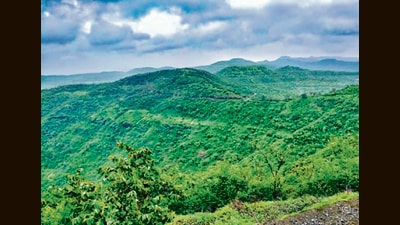
The study, ‘Temporal Dynamics of Gross Primary Productivity in India: From Historical to High Emission Scenarios’, was published on July 7 in the ‘International Journal of Climatology’. The research was led by Smrati Gupta, with Yogesh K. Tiwari serving as the corresponding author. The study analysed Gross Primary Productivity (GPP) — the amount of carbon dioxide absorbed by plants during photosynthesis — using the latest CMIP6 Earth System Models under a high-emission climate scenario.
The researchers found that India’s vegetation productivity has increased over the past three decades and is projected to continue rising until 2100. The most significant future gains are expected in the Western Ghats, Western Himalayas and Northeast India, indicating these regions could play a greater role in removing carbon dioxide from the atmosphere.
“The increase in GPP is mainly driven by rising atmospheric carbon dioxide, which enhances photosynthesis, along with projected increases in rainfall over many parts of India,” said Dr Smrati Gupta, lead author of the study. “However, this does not mean climate change is beneficial for forests. Higher temperatures continue to suppress plant productivity during warmer years by increasing heat and moisture stress.”
The study found that while increased rainfall generally supports vegetation growth, temperature extremes have the opposite effect. After removing long-term climate trends, researchers observed that rainfall anomalies boosted plant productivity, whereas unusually warm conditions reduced it.
“Our findings show that ecosystems respond differently to rainfall and temperature,” said Dr. Yogesh K Tiwari, corresponding author of the study. “Even if overall vegetation productivity increases, more frequent heatwaves, droughts and extreme weather events can weaken ecosystem resilience and affect biodiversity in the long run.”
The study also highlights limitations in current climate models. While they successfully capture long-term trends, they underestimate the overall magnitude of GPP compared with satellite observations and flux tower measurements. Researchers say improving the representation of hydroclimatic processes and biosphere-atmosphere interactions is essential for making more accurate projections of carbon storage and ecosystem responses in monsoon-dependent regions like India.
According to the researchers, the findings are significant for India’s climate mitigation and carbon budgeting efforts, as forests and other terrestrial ecosystems absorb a substantial share of the country’s carbon emissions. However, although stronger natural carbon sinks could support these efforts, the study cautions that increased carbon uptake alone cannot offset the wider ecological impacts of climate change.
| # | Наименование новости | Тональность | Информативность | Дата публикации |
|---|---|---|---|---|
| 1 | From lush green to dry sands? These 10 US cities could see major climate impact by 2080 | -2 | 6 | 09-07-2026 |
| 2 | Эксперты считают, что разлив дизтоплива на Таймыре не скажется на климате | 0 | 0 | 05-06-2020 |
| 3 | Ученые: растения теряют способность поглощать углекислый газ | 0 | 0 | 25-01-2019 |
| 4 | Песков: экономические потери РФ от потепления климата в перспективе 20 лет могут возрасти | 0 | 0 | 22-10-2020 |
| 5 | India’s patchy industrial climate strategy | 0 | 7 | 23-06-2026 |
| 6 | Africa’s forests have flipped from carbon sink to carbon source | 0 | 7.51 | 13-04-2026 |
| 7 | Эксперт: аномальная жара в Якутии может привести к нарушению экосистем | 0 | 0 | 07-07-2020 |
| 8 | Trees keep absorbing carbon long after they stop growing | 0 | 7.35 | 09-07-2026 |
| 9 | Вильфанд: максимальные значения температуры воздуха в РФ фиксируются в XXI веке | 0 | 0 | 10-03-2025 |
| 10 | Ученые: болота Западной Сибири играют ключевую роль в формировании парникового эффекта | 0 | 0 | 22-10-2018 |